Understanding measurements Normal Worksheets for Ages 6-7
8 filtered results
-
From - To
Discover our engaging "Understanding Measurements" worksheets designed specifically for children aged 6-7. These printable resources help young learners grasp essential measurement concepts through fun and interactive activities. Our worksheets focus on various measurement topics, including length, weight, and capacity, fostering a solid foundation in math. With vibrant illustrations and clear instructions, children will enjoy exploring full-of-practice exercises that enhance their skills in real-life applications. Tailored to align with early learning standards, our materials make measurement exploration exciting and accessible. Dive into our collection today to support your child's educational journey and boost their confidence in understanding measurements!
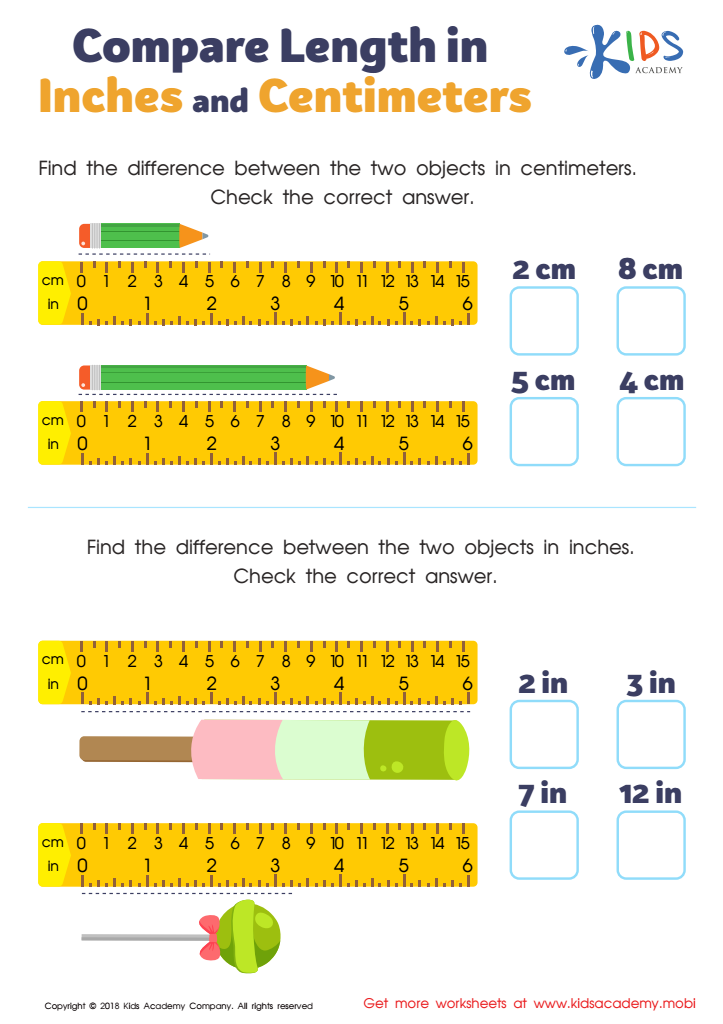
Compare Length in Inches and Centimeters Worksheet
 Assign to My Students
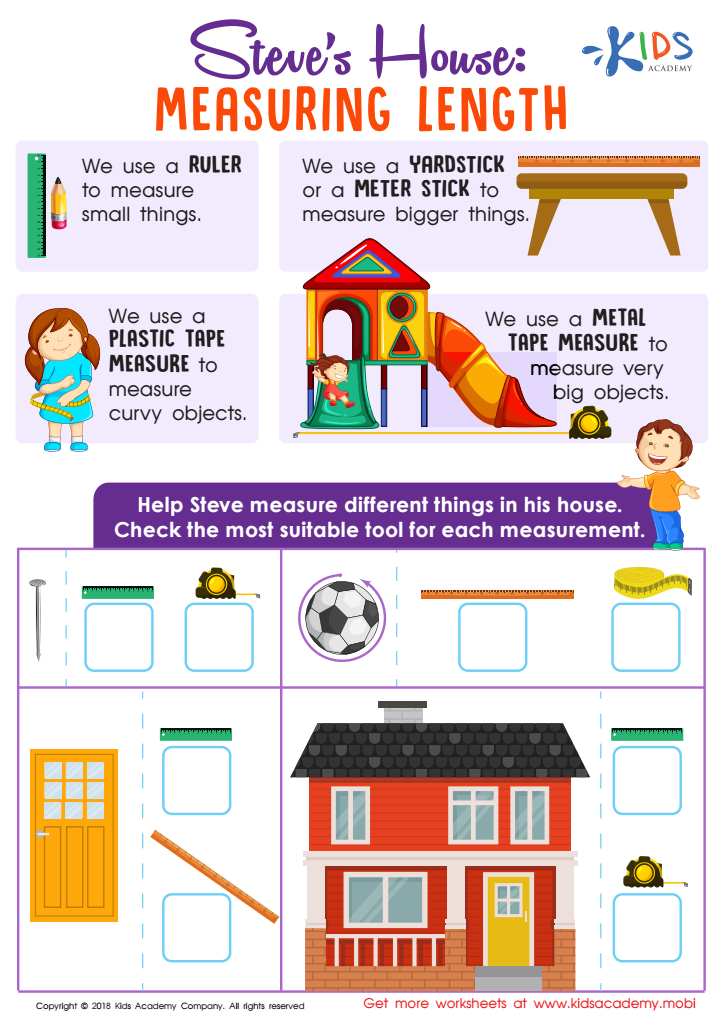
Steve's House: Measuring Length Worksheet
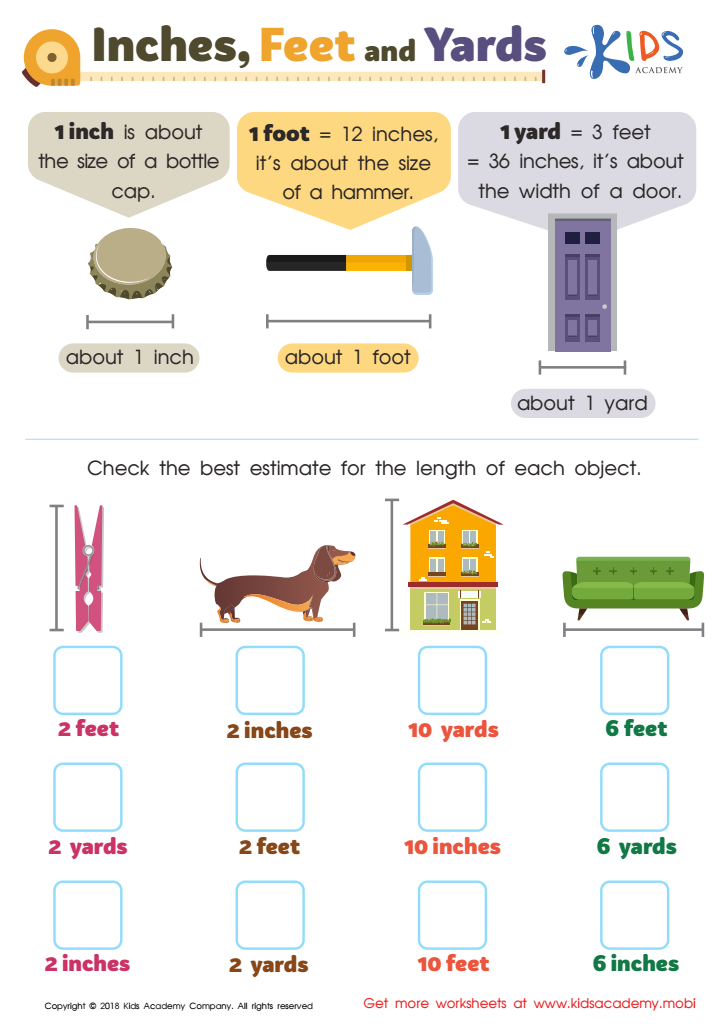
Inches, Feet and Yards Worksheet
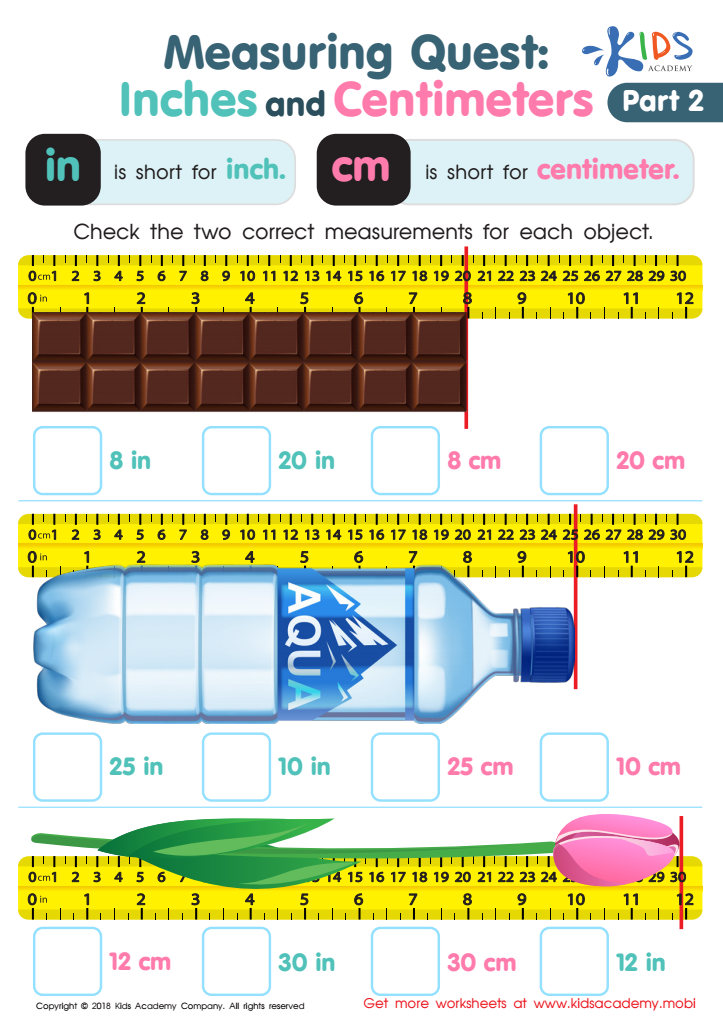
Measuring Quest: Inches and Centimeters - Part 2 Worksheet
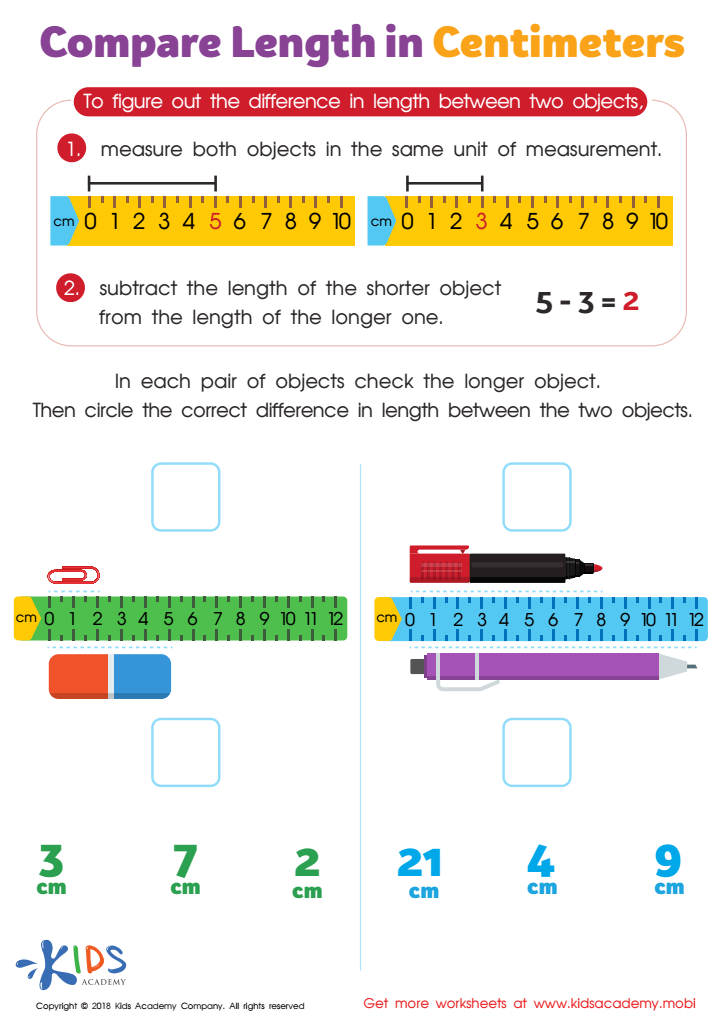
Compare Length in Centimeters Worksheet
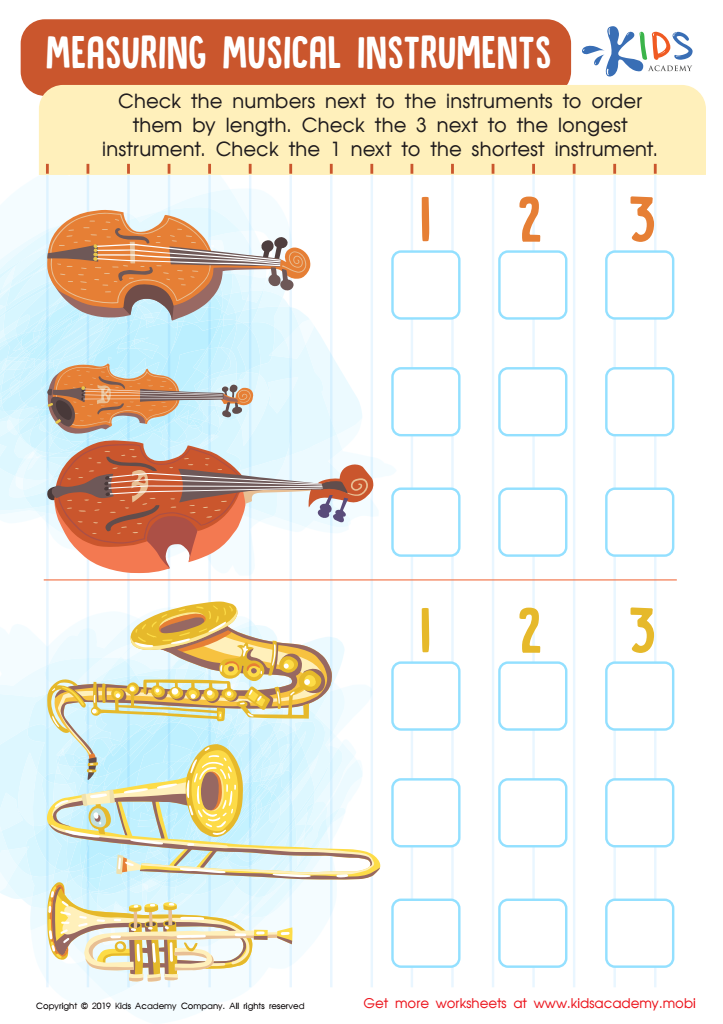
Measuring Musical Instruments Worksheet
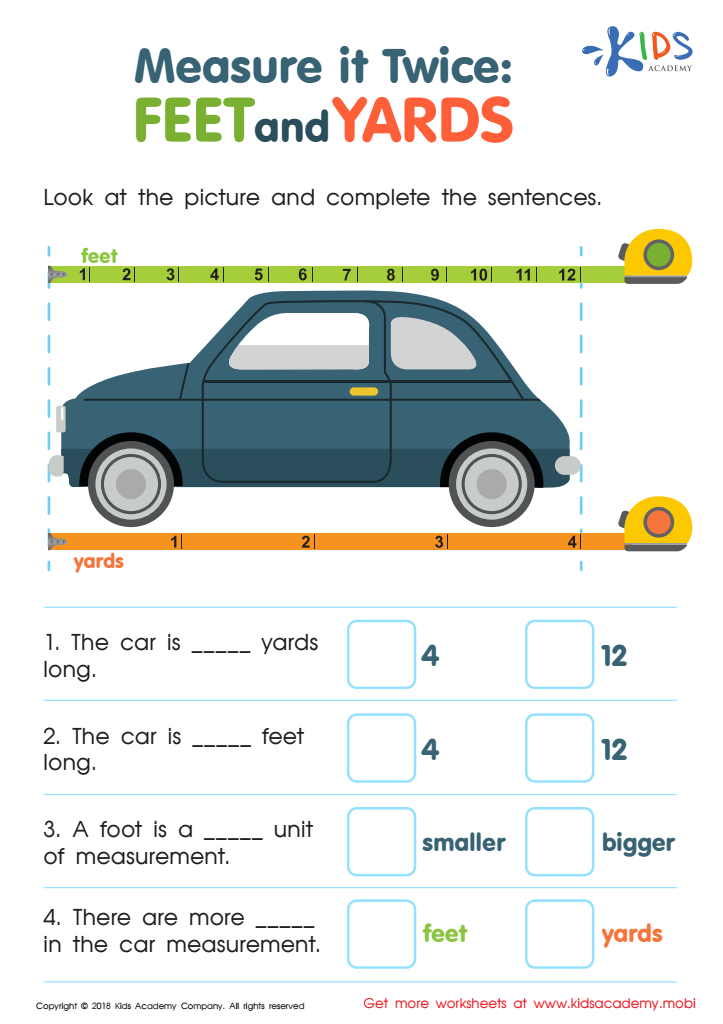
Measure It Twice: Feet and Yards Worksheet
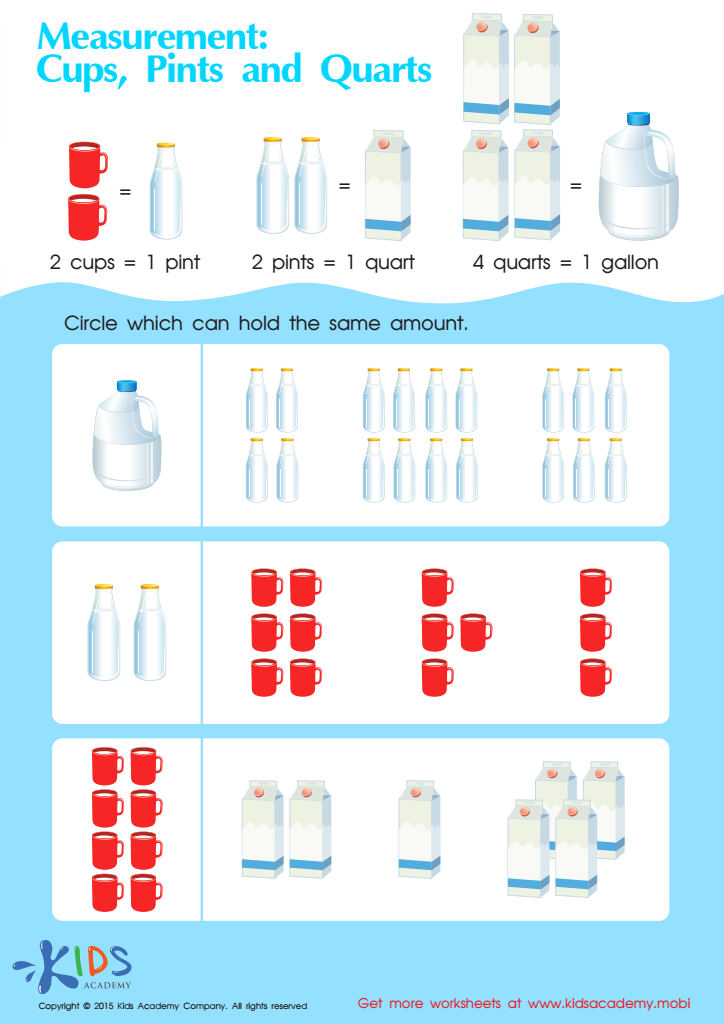
Cups, Pints and Quarts 2 Worksheet








Understanding measurements is crucial for children aged 6-7, and parents and teachers play a vital role in facilitating this learning. At this age, children are naturally curious about the world around them. Engaging them in measurement activities fosters this curiosity and aids in their cognitive development. Measurements help children develop a sense of size, volume, and weight, which are foundational concepts in math and science.
Moreover, grasping measurement concepts enhances problem-solving skills. It allows children to compare, combine, and categorize objects in their environment, fostering critical thinking. Practical experiences with measuring—like cooking or gardening—make learning tangible and can be reinforced through hands-on activities.
Additionally, understanding measurements prepares children for more advanced math concepts in the future. As they transition to more complex tasks, a solid foundation in measurement will support their confidence and competence in mathematics. Lastly, instilling a love for measurement can turn everyday experiences into learning moments, encouraging exploration and creativity.
In conclusion, parents and teachers should actively engage children with measurement concepts to support their academic growth, practical life skills, and overall development. This foundational knowledge will benefit children as they continue their educational journey and navigate the world around them.








