
Mental math skills Normal Addition & Subtraction Worksheets for Ages 6-7
10 filtered results
Difficulty Level
Grade
Age
-
From - To
Subject
Activity
Standards
Enhance your child’s mathematical abilities with our "Mental Math Skills: Normal Addition & Subtraction Worksheets" tailored for ages 6-7. These engaging worksheets focus on building confidence and fluency in basic addition and subtraction, encouraging children to perform calculations mentally. Designed with fun themes and colorful illustrations, your child will enjoy practicing essential skills that set the foundation for future math success. Each worksheet progressively challenges young learners, fostering problem-solving skills and enhancing cognitive development. Perfect for classroom or at-home practice, these worksheets are a fantastic resource for parents and educators looking to reinforce foundational math concepts through enjoyable learning activities.
Favorites
With answer key
Interactive
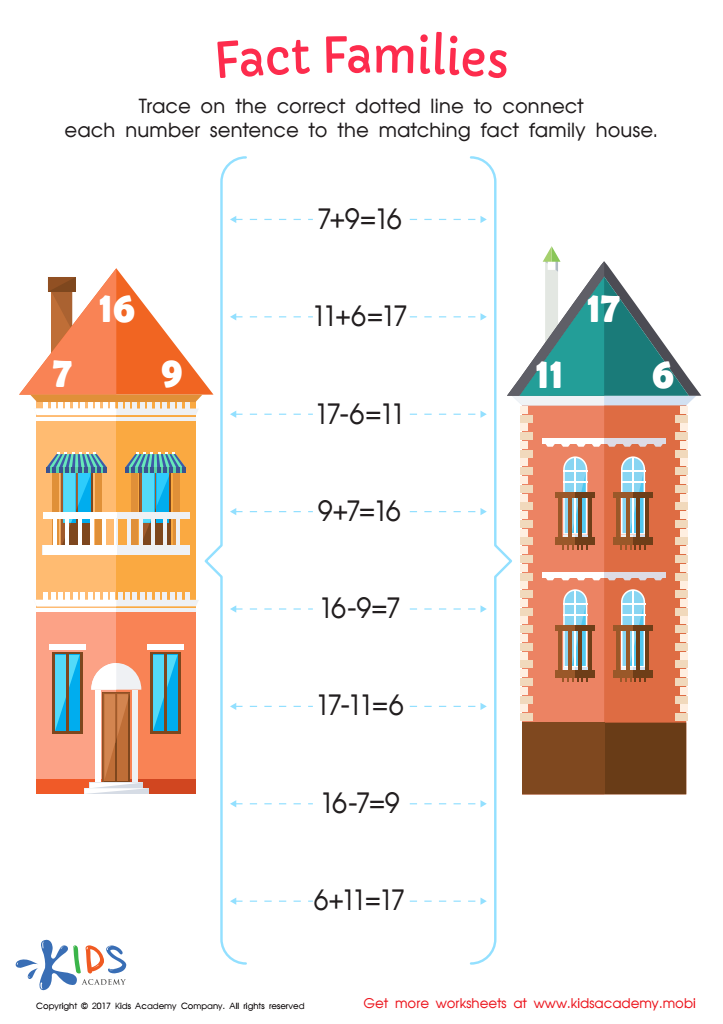
Fact Families — Add and Subtract Worksheet
Kids will love seeing how families of numbers "live" in their own houses!
 Assign to My Students
Fact Families — Add and Subtract Worksheet
Worksheet
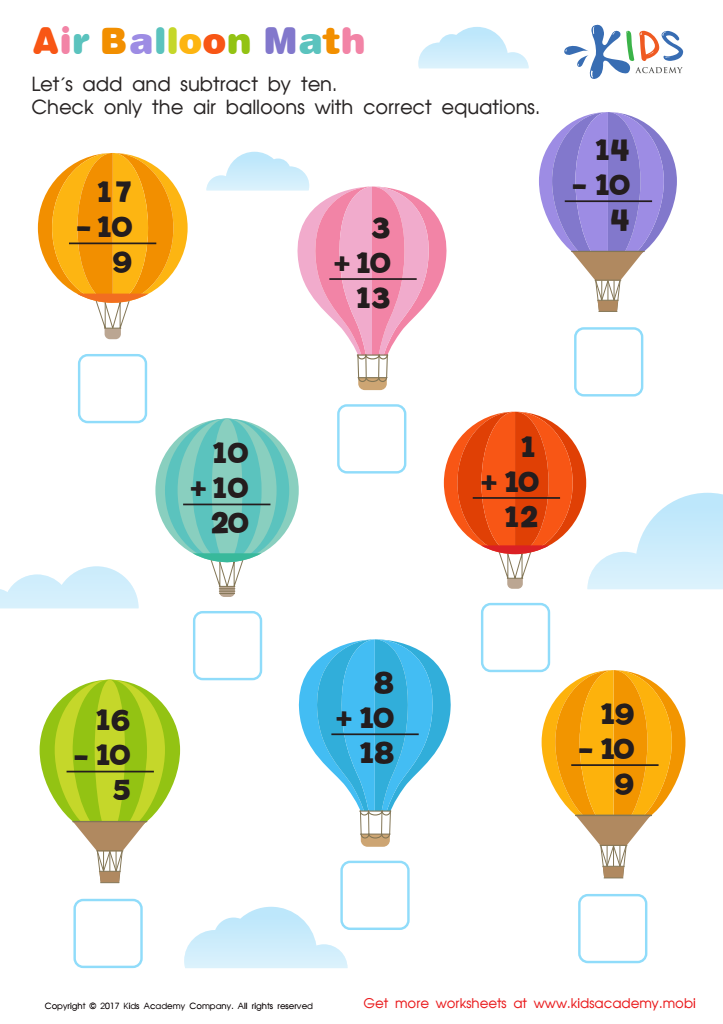
Air Balloon Math Worksheet
Revised:
Review your child's addition and subtraction skills with this fun worksheet. Featuring hot air balloons filled with math equations, help your child add or subtract by ten before ticking the boxes with the right answers. Working through the equations one-by-one is a great way to make math practice enjoyable!
Air Balloon Math Worksheet
Worksheet
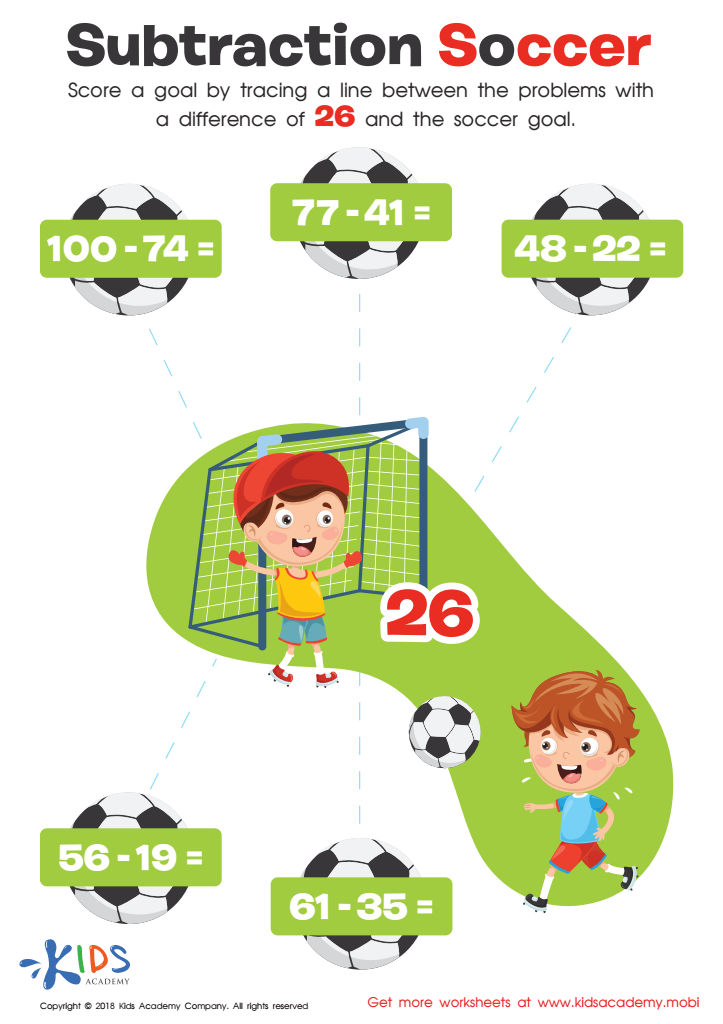
Subtraction Soccer Worksheet
Soccer is a fun sport your child likely enjoys. Math, on the other hand, might not be so exciting. You can show them mathematics can be fun with this traceable worksheet. The kids in the sheet are playing a game of soccer. Ask your child to help them score a goal by tracing a line between the problems with a difference of 26 and the soccer ball. Have fun!
Subtraction Soccer Worksheet
Worksheet
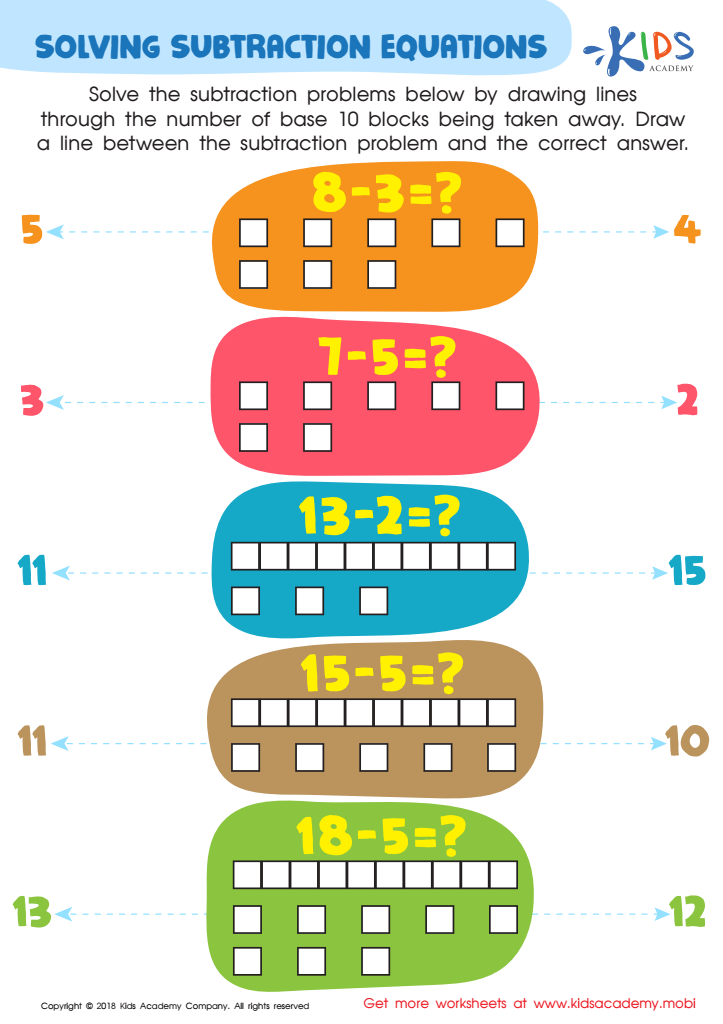
Solving Subtraction Equations Worksheet
Encourage your kids to engage their brains by completing this fun math worksheet! They'll soon realise that the subtraction problems aren't so daunting after all. Assist by drawing a line between each problem and the correct answer, using base 10 blocks to illustrate how many need to be taken away. Your kids will love the colourful printout and gain a better understanding of subtraction.
Solving Subtraction Equations Worksheet
Worksheet
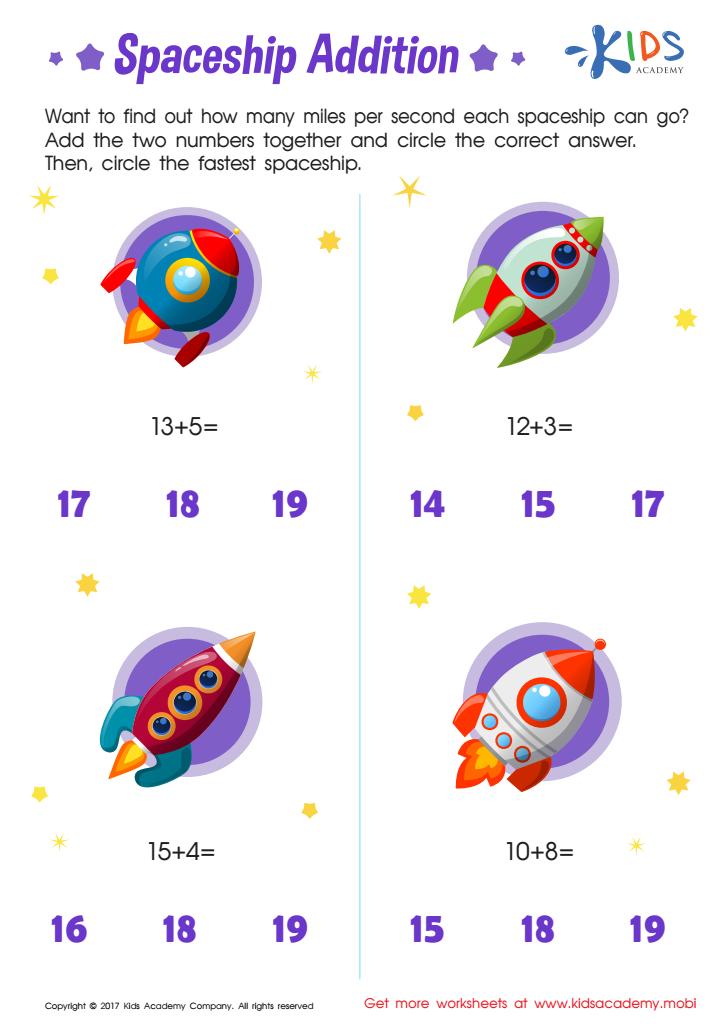
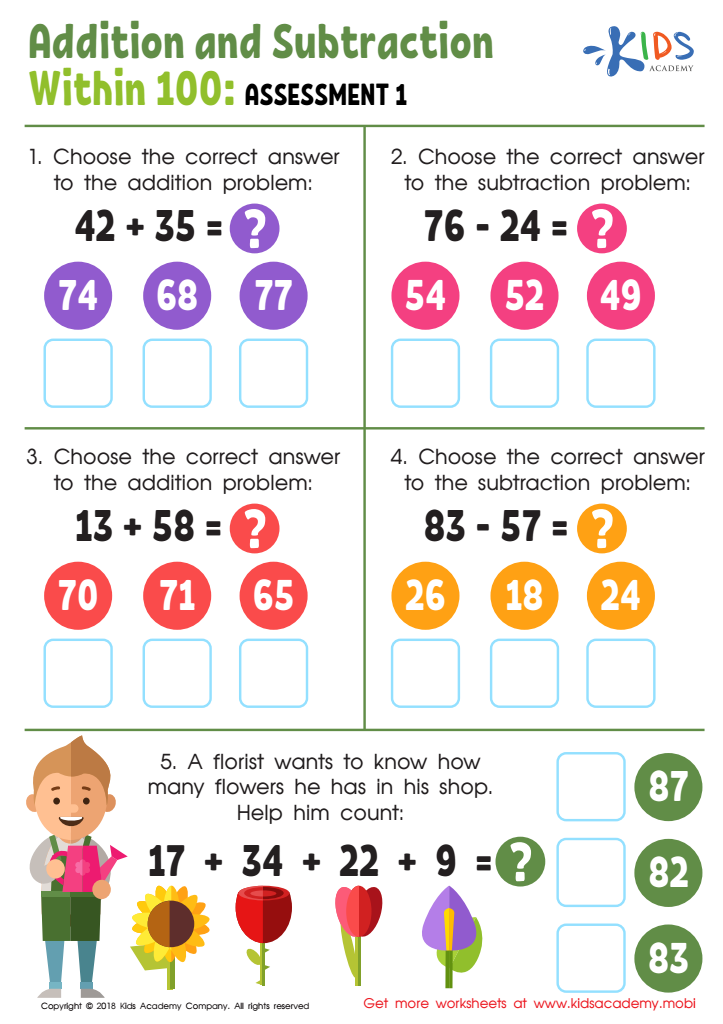
Addition and Subtraction Within 100 Worksheet
This worksheet has four math problems for your child to solve. It's perfect for building their addition and subtraction skills. Read each problem aloud and help them pick the right answer. With your guidance, your child will soon be able to complete such tasks on their own.
Addition and Subtraction Within 100 Worksheet
Worksheet
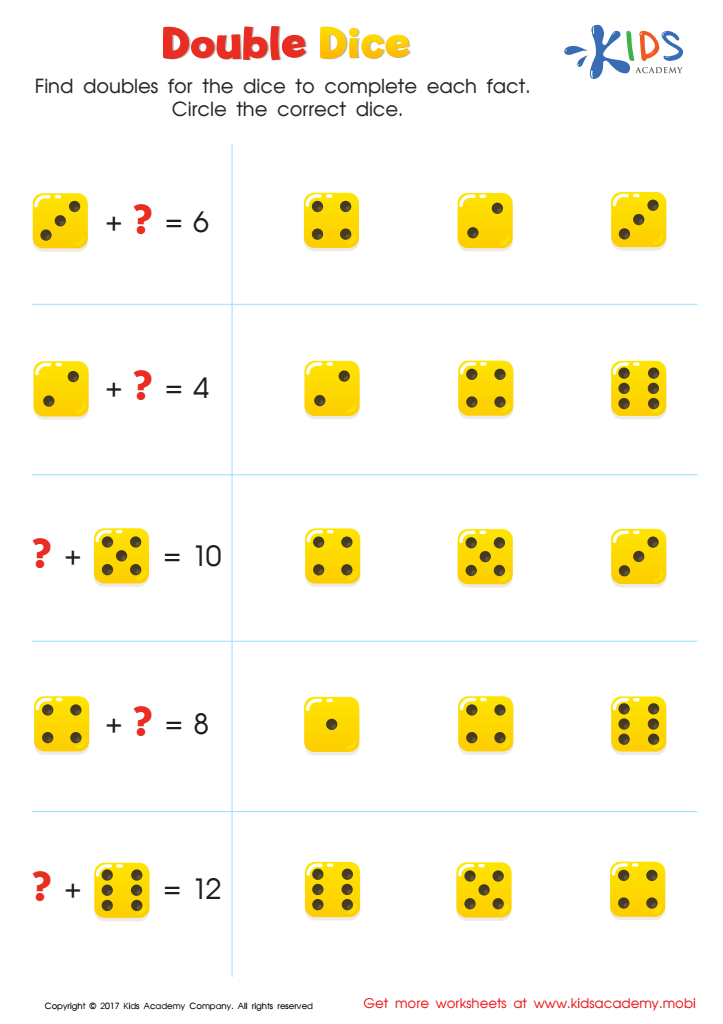
Addition Facts: Double Dice Worksheet
Are you looking for ways to make maths more engaging for kids? Maths can be a bore, but by teaching kids from an early age that it can be fun, they won't struggle with it. This worksheet is a great way to start: your child needs to identify the number on the left dice and find its double on the right. The sum of the two dice is also given.
Addition Facts: Double Dice Worksheet
Worksheet
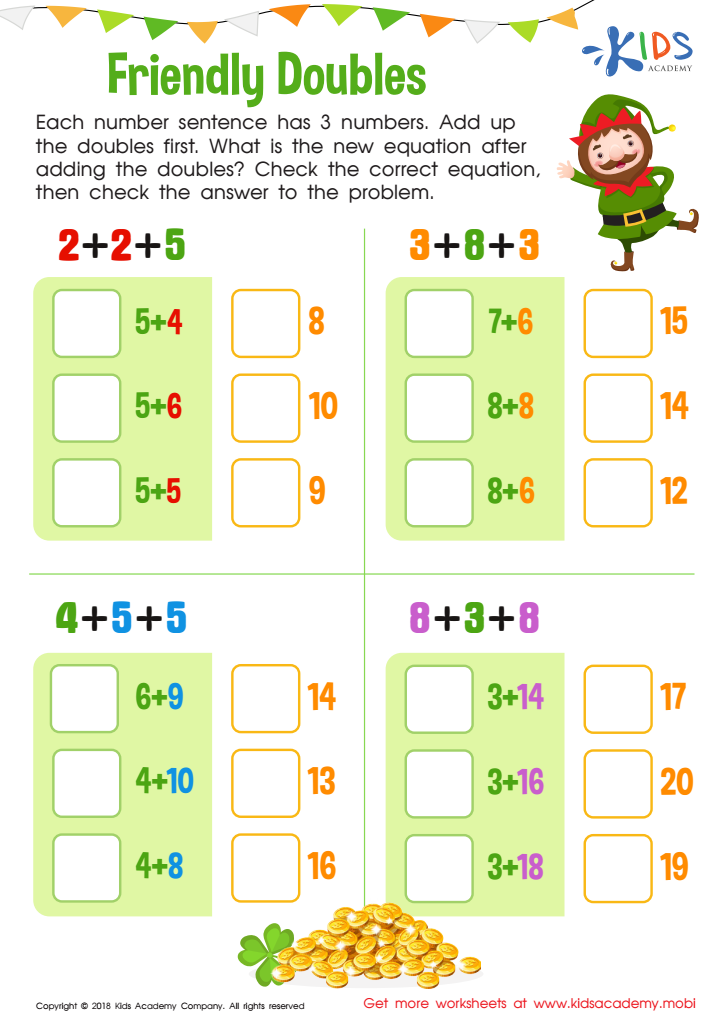
Friendly Doubles Worksheet
Kids will love this animated worksheet with bright colors! It helps them learn how to use doubles facts to answer three addend addition problems. It boosts their math skills, making computation easier, faster and more efficient. It also assists with adding and subtracting larger numbers. Let the power of doubles get them started!
Friendly Doubles Worksheet
Worksheet
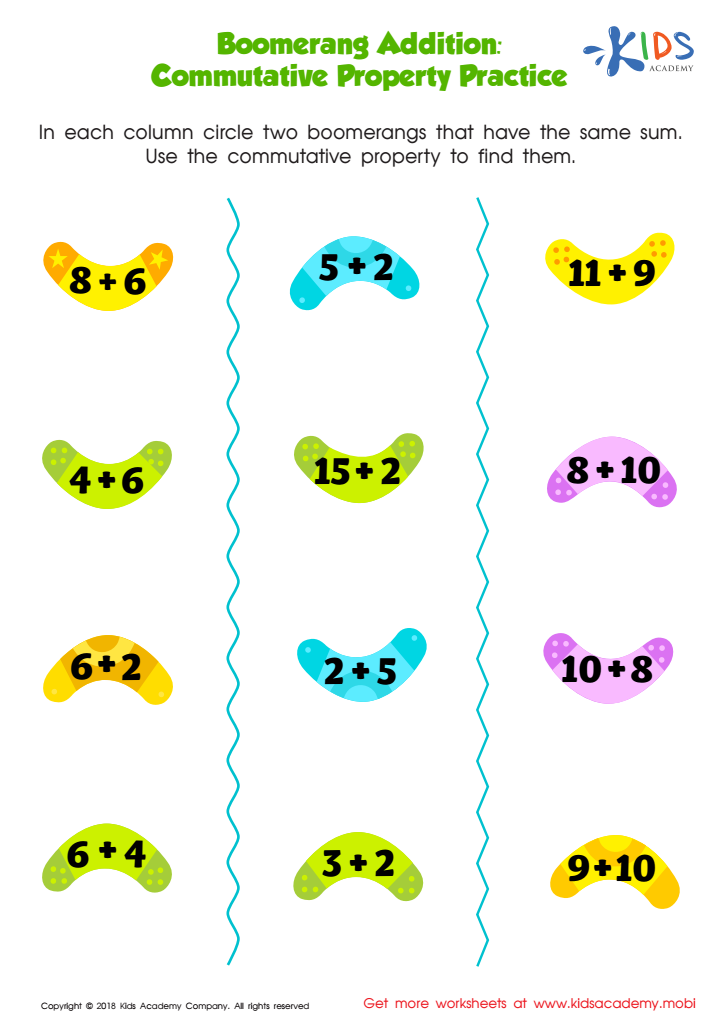
Boomerang Addition Worksheet
Kids know that when a boomerang is thrown, it reverses its path back. The same goes for addition: numbers can be rearranged and the sum will remain the same. Use this worksheet to find matching pairs of colorful boomerangs and equations. Look through each column and use the commutative property to find the pairs with the same sum.
Boomerang Addition Worksheet
Worksheet
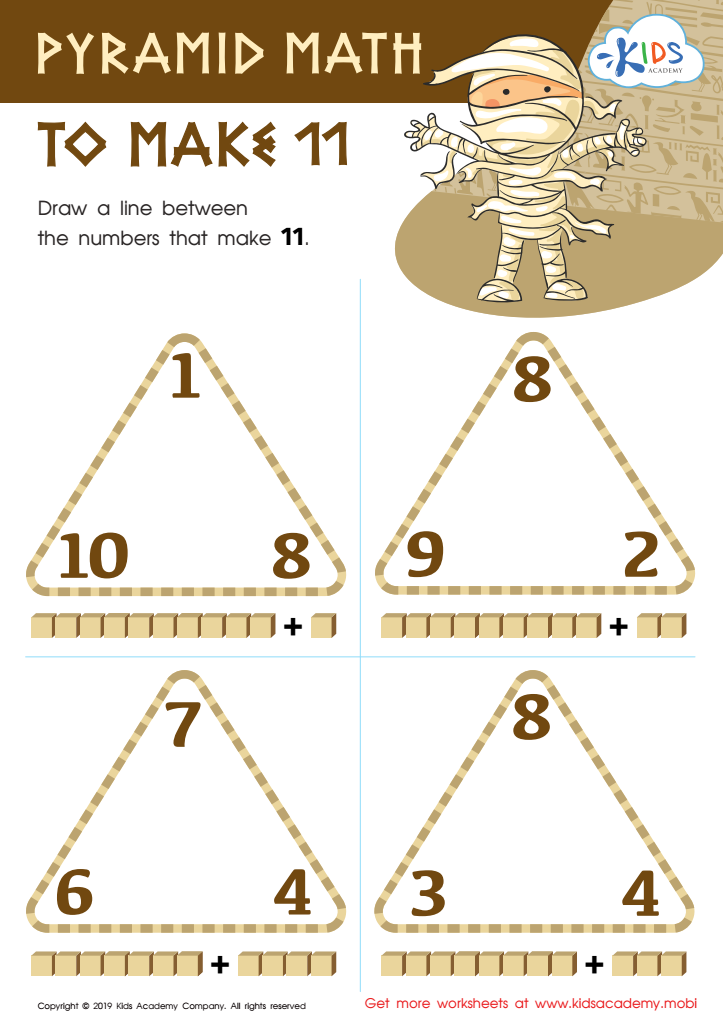
Pyramid Math to Make 11 Worksheet
Have your kids look at the picture of the Egyptian pyramids and tell you what they see. Then, help them do simple math by adding up the numbers in the pyramids and connecting those that make 11. This worksheet is perfect for teaching your kids about history, mathematics, and problem-solving.
Pyramid Math to Make 11 Worksheet
Worksheet
Join Kids Academy for Free
Who is primarily going to use this learning content?








Mental math skills, particularly in normal addition and subtraction, are crucial for children aged 6-7. At this developmental stage, children begin establishing foundational math concepts, which significantly influence their future learning. By fostering mental math skills, parents and teachers can help children develop confidence in their mathematical abilities, making them more eager to engage in math-related activities.
Additionally, mental math encourages children to think critically and solve problems efficiently. When children practice addition and subtraction mentally, they strengthen their number sense and enhance their ability to work with numbers in various contexts. This skill promotes cognitive flexibility, enabling them to approach problems from different angles and develop resilience in tackling challenges.
Furthermore, strong mental math skills lay the groundwork for more advanced mathematical concepts, including multiplication and division, which they will encounter in subsequent grades. This early investment in their mathematical understanding can lead to improved academic performance overall.
Finally, mastering mental math provides students with essential life skills, such as budgeting or planning. Encouraging mental math doesn't just help in the classroom; it prepares children for real-life situations, instilling them with the tools they need to succeed both academically and personally. Thus, it is vital for educators and families to prioritize these skills.








