Number Sequencing Normal Addition & Subtraction Worksheets for Ages 6-7
4 filtered results
-
From - To
Discover our engaging Number Sequencing Normal Addition & Subtraction Worksheets, designed specifically for children aged 6-7! These worksheets support the development of essential math skills, allowing your child to practice addition and subtraction in a fun and interactive way. With a focus on number sequences, young learners will build their understanding of number patterns, enhance their problem-solving abilities, and boost their confidence in math. The variety of exercises caters to different learning styles, ensuring every child finds enjoyment while mastering these fundamental concepts. Perfect for classroom use or at-home practice, our worksheets make learning math an exciting adventure!
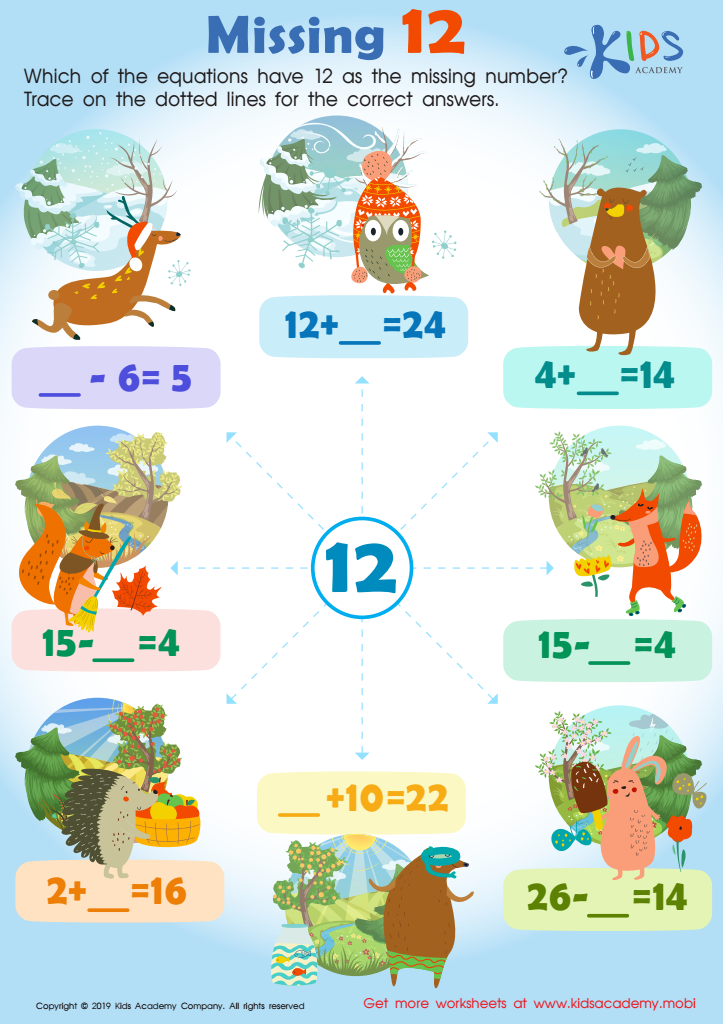
Missing 12 Worksheet
 Assign to My Students
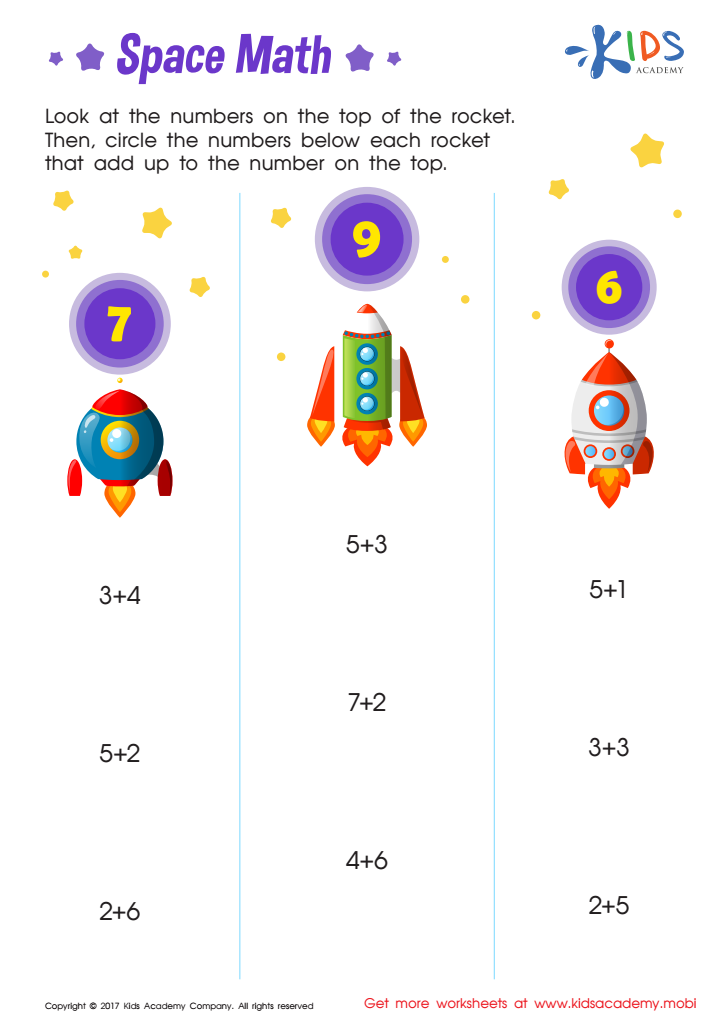
Addition: Space Math Worksheet
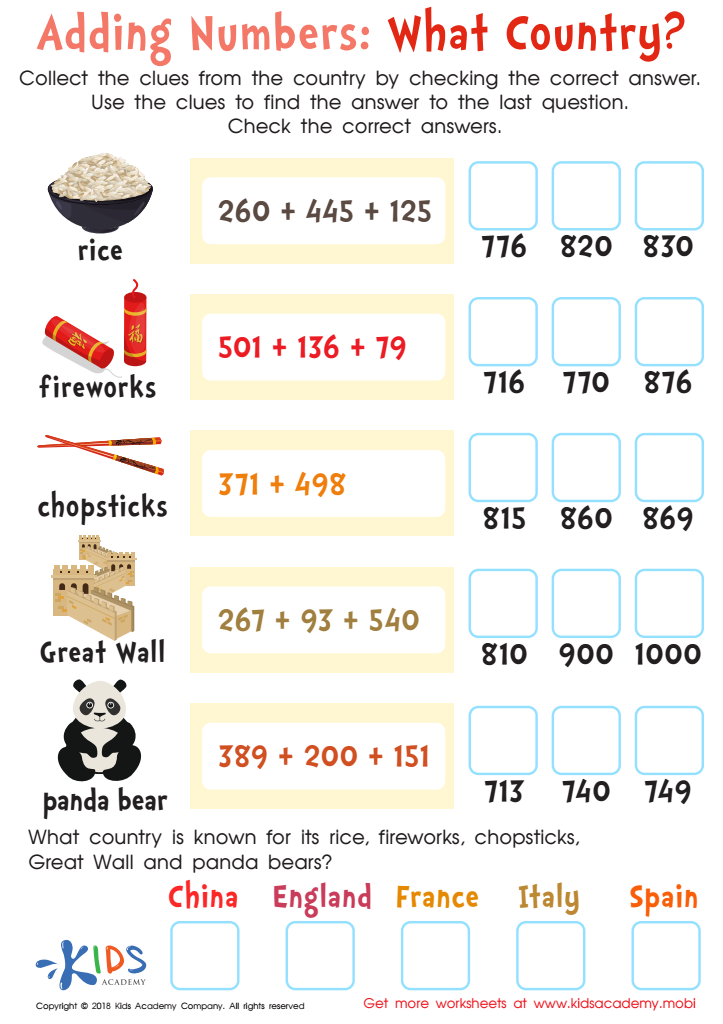
Adding Numbers: What Country Worksheet
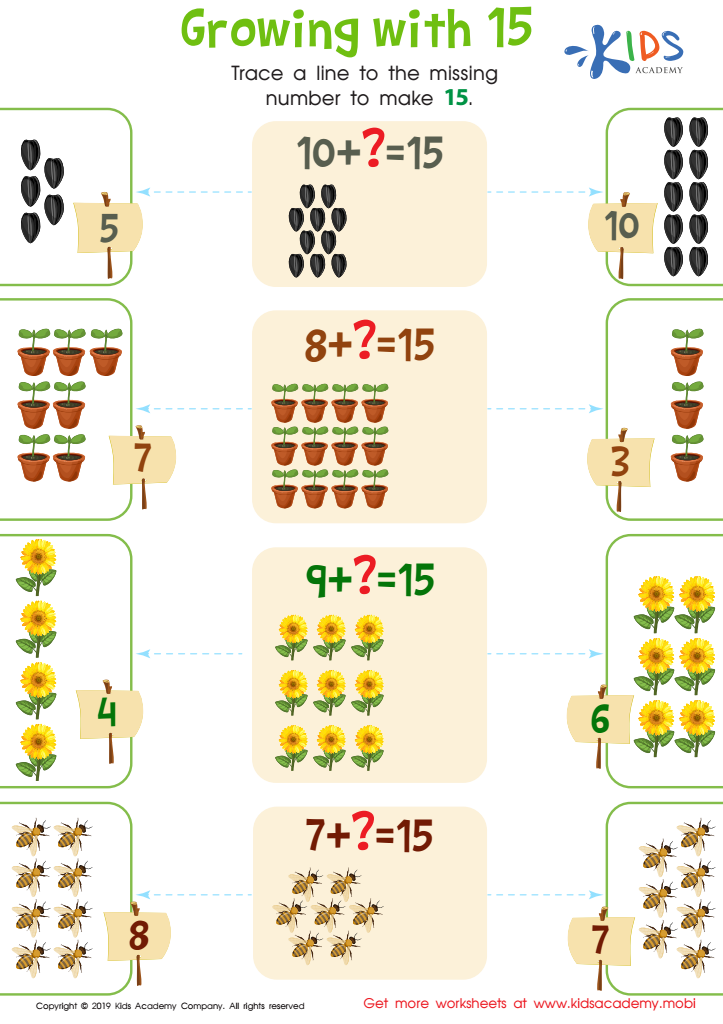
Growing with 15 Worksheet








Number sequencing, normal addition, and subtraction are foundational skills that shape a child’s understanding of mathematics and its applications in everyday life. For children aged 6-7, mastering these concepts is crucial for several reasons.
Firstly, number sequencing helps children recognize patterns and understand the numerical order, thereby enhancing their counting skills and logical thinking. This mental framework prepares them for more complex math topics in the future, such as multiplication and division.
Secondly, normal addition and subtraction introduce children to problem-solving and critical thinking. These operations are not just abstract concepts; they are vital tools for navigating daily tasks, like counting change, measuring ingredients for a recipe, or dividing treats among friends.
Moreover, achieving proficiency in these skills boosts a child's confidence and enthusiasm for learning, making them more likely to engage in spirited mathematics discussions and activities. As children learn to approach problems methodically and develop a strong number sense, they are better equipped to tackle more advanced mathematical concepts as they progress in school.
Ultimately, parents and teachers play a crucial role in recognizing the significance of these basic math skills, ensuring students are not only prepared academically but also empowered to use mathematics in real-world situations.








