
Understanding fractions Normal Math Worksheets for Ages 6-7
6 filtered results
Difficulty Level
Grade
Age
-
From - To
Subject
Activity
Standards
Explore our engaging Normal Math Worksheets designed specifically for children aged 6-7 to master the concept of fractions! Our curated resources help young learners grasp essential skills like identifying fractions, comparing them, and understanding parts of a whole through fun activities. Each worksheet is tailored to provide clear instructions and colorful visuals, making learning enjoyable and effective. These worksheets encourage hands-on practice and enhance critical thinking, allowing kids to build a solid foundation in mathematics. Perfect for classroom use or at-home learning, our fractions worksheets support early education and foster a love for math. Discover the joy of learning about fractions today!
Favorites
With answer key
Interactive
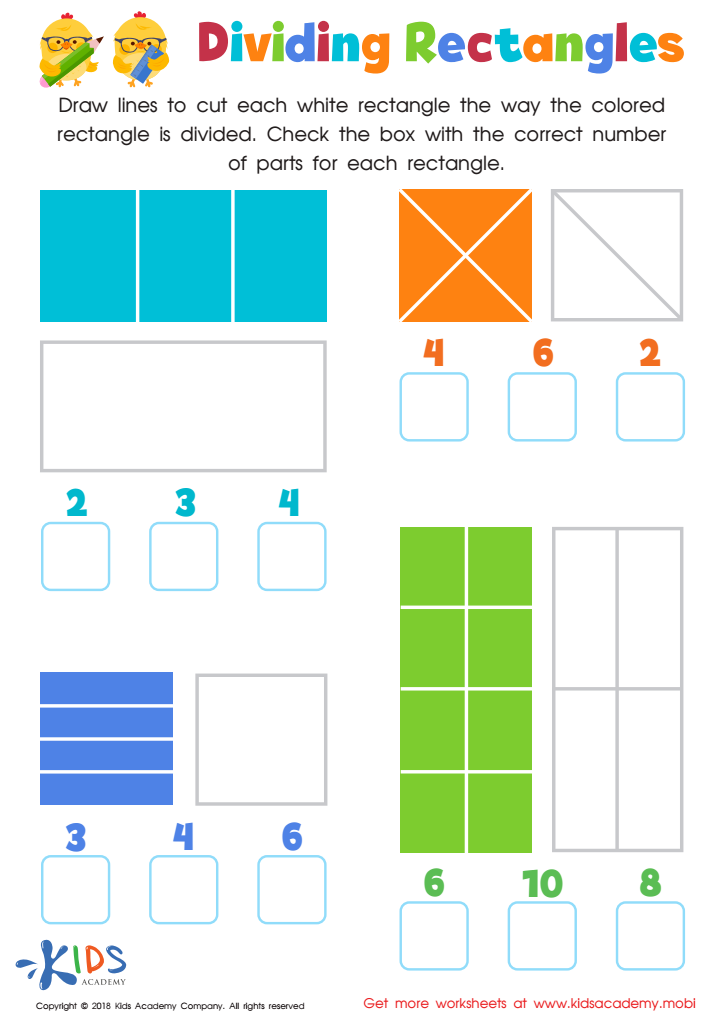
Dividing Rectangles Worksheet
Ask your child to draw lines to divide the white rectangles like the colored ones. Then, have them count the parts in each and choose the correct number. This worksheet will help them practice counting and dividing.
 Assign to My Students
Dividing Rectangles Worksheet
Worksheet
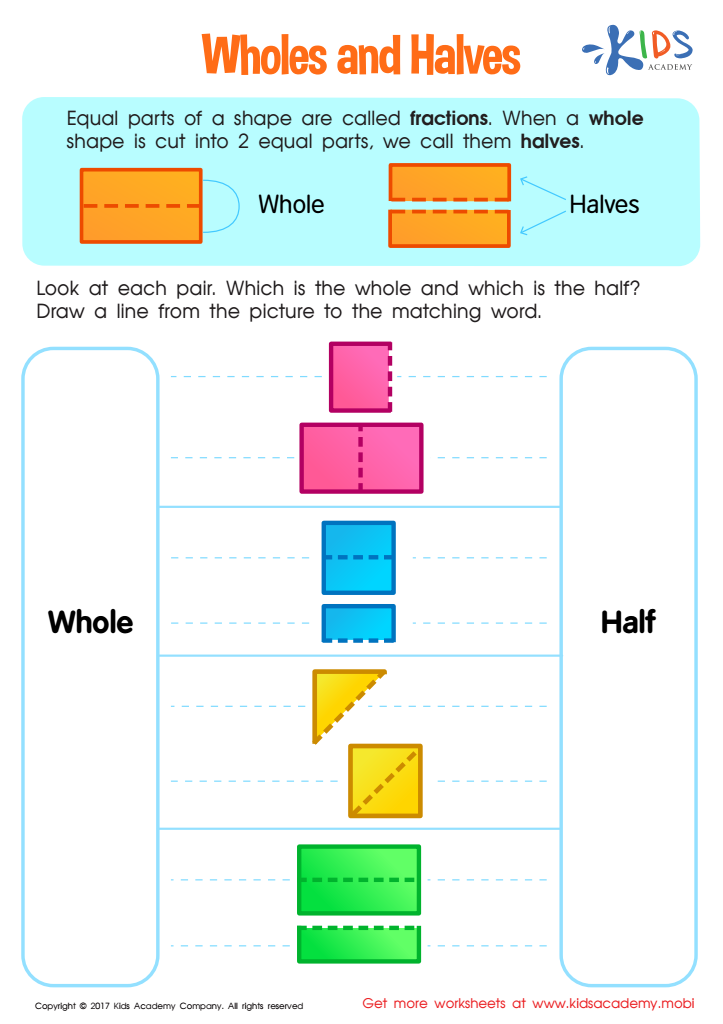
Wholes and Halves Worksheet
Students can feel overwhelmed with fractions. Help take the stress off by using a colorful worksheet to explain whole shapes and how to find halves. Ask them to identify the whole and point to the matching word for the half. A free printout can help guide them.
Wholes and Halves Worksheet
Worksheet
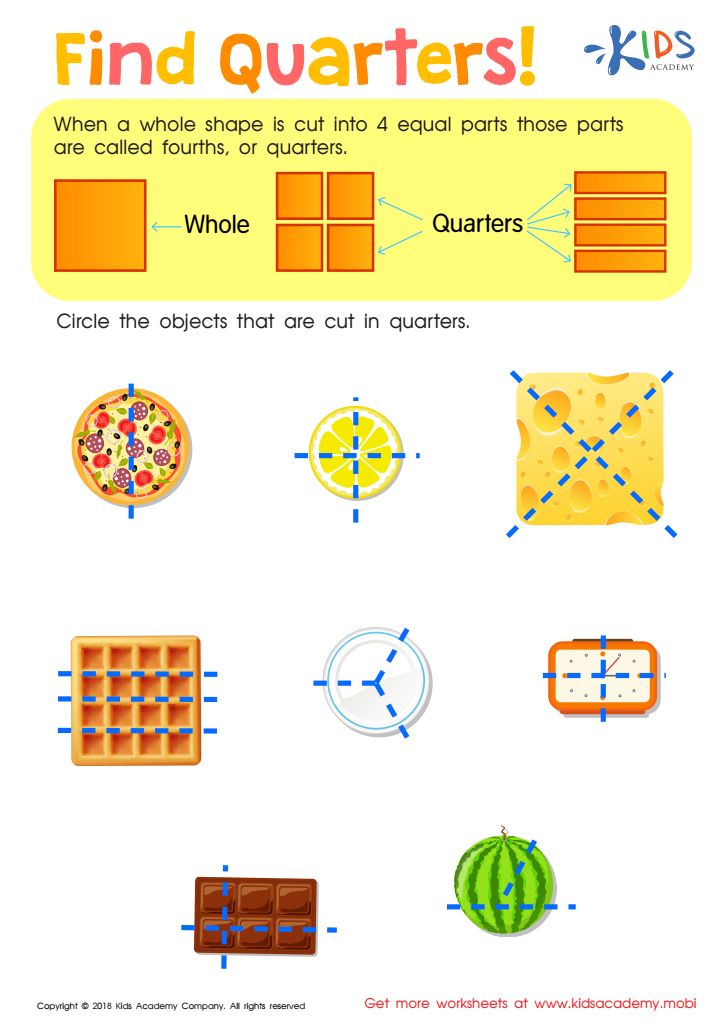
Find Quarters Worksheet
Ask your child if they know what it is called when a shape is cut into two equal parts. If yes, introduce them to quarters. Tell them that when a shape is cut into 4 equal parts, each part is called a quarter. Have them do this exercise by finding and circling objects split into quarters.
Find Quarters Worksheet
Worksheet
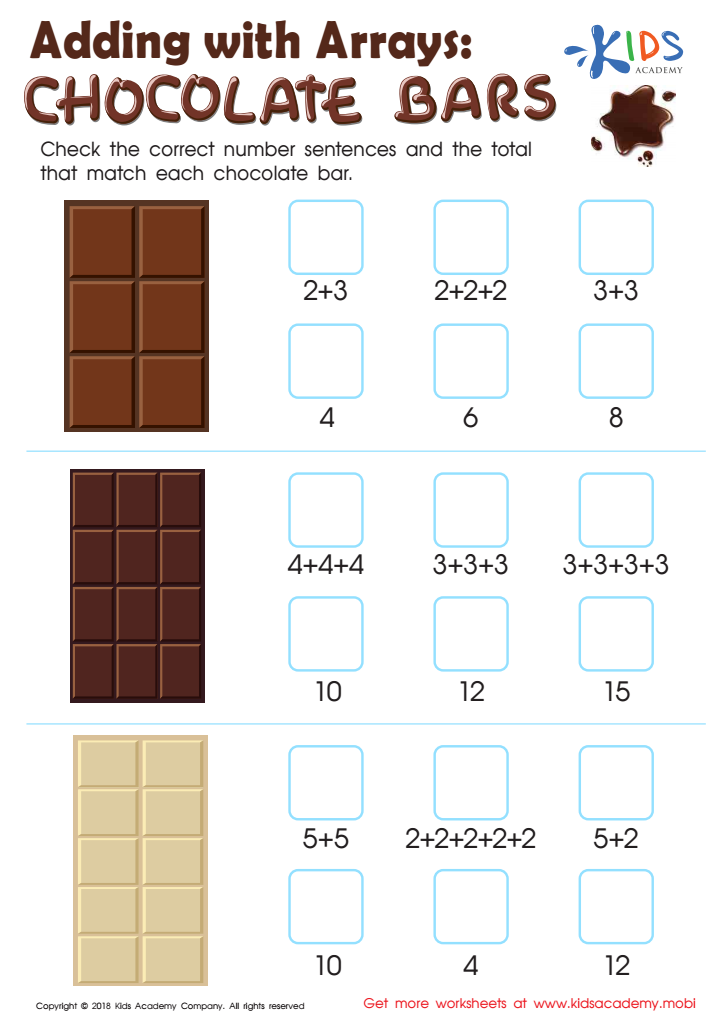
Adding with Arrays: Chocolate Bars Worksheet
Kids love chocolates! Gauge how enthused your kids get when you mention them. This worksheet is a fun exercise about chocolates - get your kids to check the correct number sentences and totals for each chocolate bar. Reward their hard work with some chocolates - extra incentive for a job well done!
Adding with Arrays: Chocolate Bars Worksheet
Worksheet
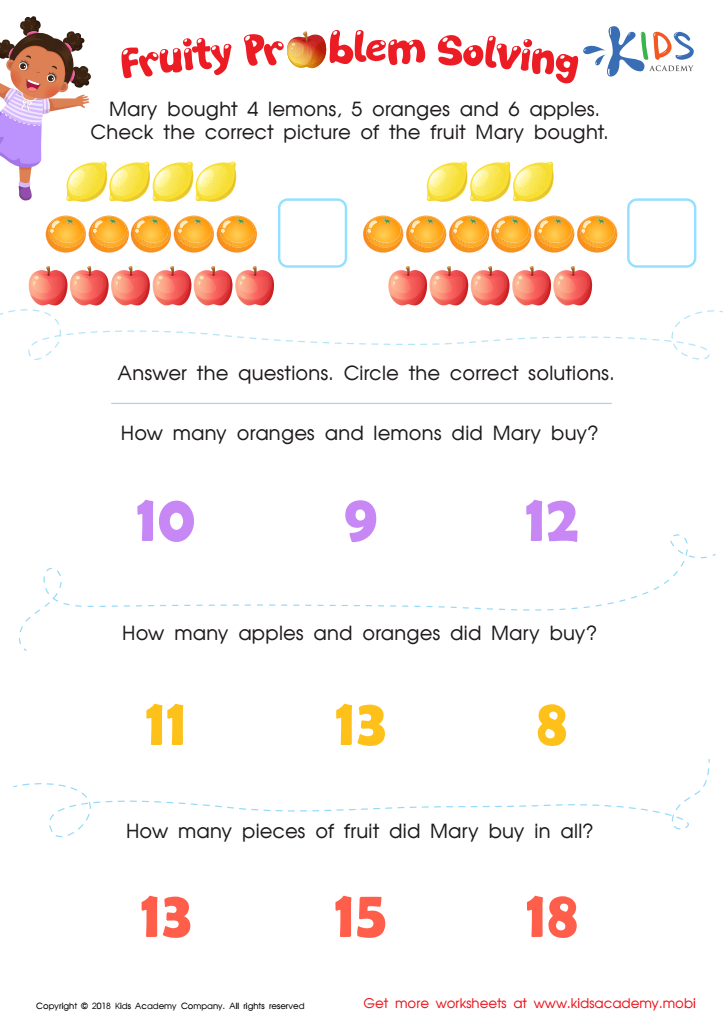
Fruity Problem Solving Worksheet
Practice addition word problems with young mathematicians using this PDF worksheet featuring fruit. As they read each problem carefully and circle the correct sums, they'll reinforce attention to detail and fine motor skills. Tangible representations are key to helping them with basic addition.
Fruity Problem Solving Worksheet
Worksheet
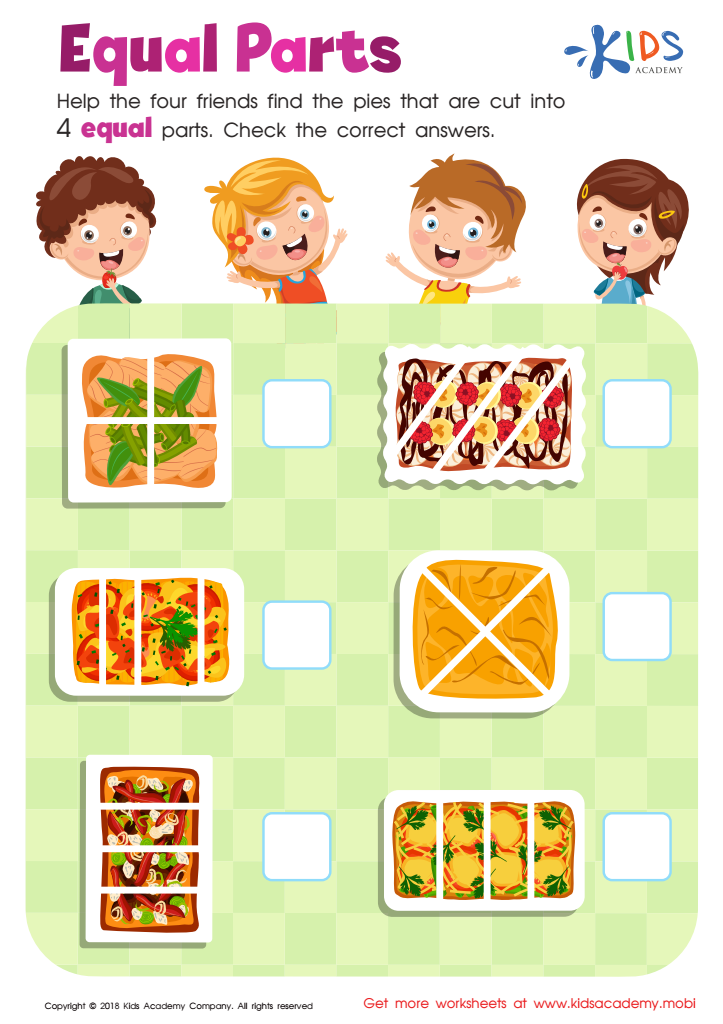
Equal Parts: Food Worksheet
Kids love pies! In this worksheet, they must help four friends share one equally. Six pictures of pies cut in different ways are provided. Your child must choose the one where the pie is divided into four equal parts. That way, each friend gets an equal share.
Equal Parts: Food Worksheet
Worksheet
Join Kids Academy for Free
Who is primarily going to use this learning content?




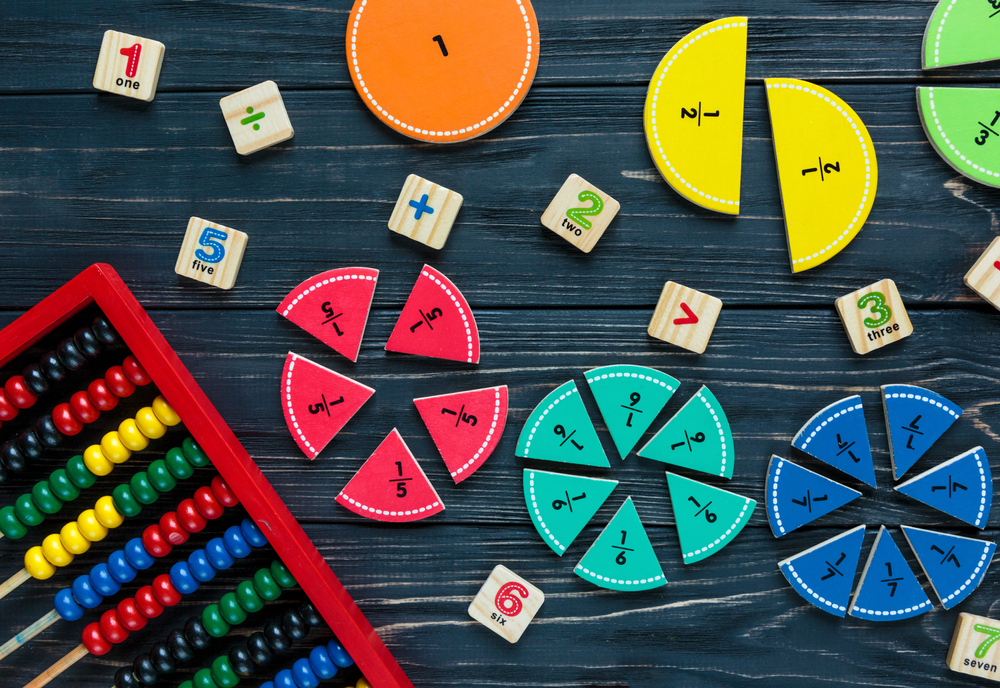

Understanding fractions at an early age is crucial for the development of mathematical skills in children aged 6-7. At this stage, children are beginning to grasp basic concepts of numbers and relationships, making it the perfect time to introduce fractions. Mastering fractions lays the groundwork for more complex mathematics concepts they will encounter later, such as division and ratios.
Teaching fractions helps children develop critical thinking and problem-solving skills. It encourages them to visualize and compare parts of a whole, enhancing their spatial awareness. For instance, using visual aids like pie charts or fraction bars can make learning interactive and engaging, fostering enthusiasm for math.
Furthermore, when parents and teachers prioritize understanding fractions, they contribute to a child's overall cognitive development. By learning to recognize fractions in everyday situations—like slicing pizza or measuring ingredients in a recipe—children see the practical applications of math, making learning relevant and relatable.
Lastly, a strong foundation in fractions boosts confidence in mathematical abilities, reducing anxiety associated with math in older grades. By supporting early fraction understanding, parents and teachers can ensure children are better prepared for future academic challenges and can appreciate the beauty of mathematics in everyday life.








