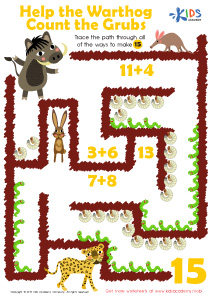
Subtraction practice Normal Subtraction Worksheets for Ages 6-7
5 filtered results
-
From - To
Discover our engaging Normal Subtraction Worksheets designed specifically for children ages 6-7! Perfect for reinforcing foundational math skills, these worksheets feature a variety of fun exercises that make subtraction practice enjoyable. Young learners will tackle simple subtraction problems, helping them develop confidence and fluency in their mathematical abilities. Each worksheet is tailored to cater to the learning pace of early graders, ensuring an effective and interactive experience. Whether used at home or in the classroom, these resources provide essential practice for mastering subtraction concepts. Start your child's journey to math success today with our thoughtfully designed subtraction worksheets!
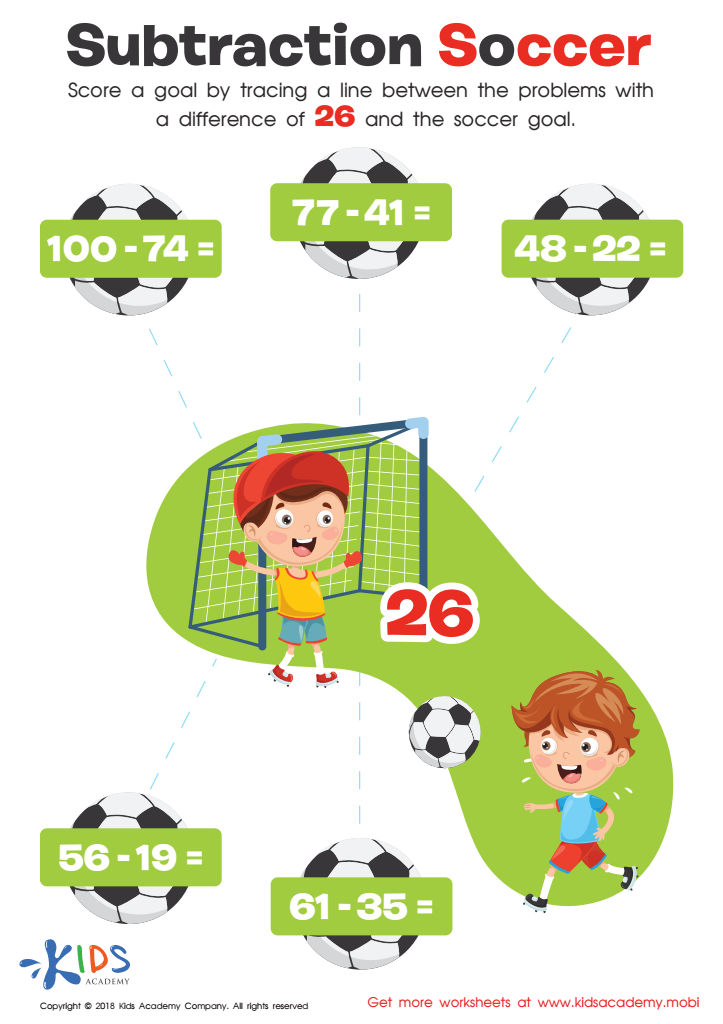
Subtraction Soccer Worksheet
 Assign to My Students
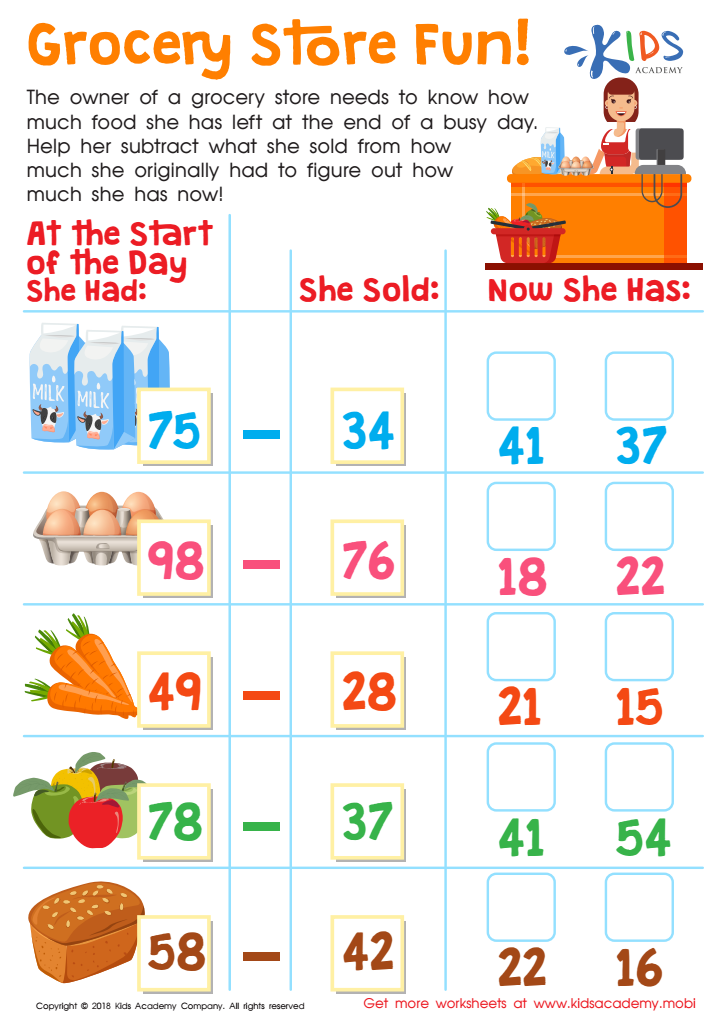
Grocery Store Fun! Worksheet
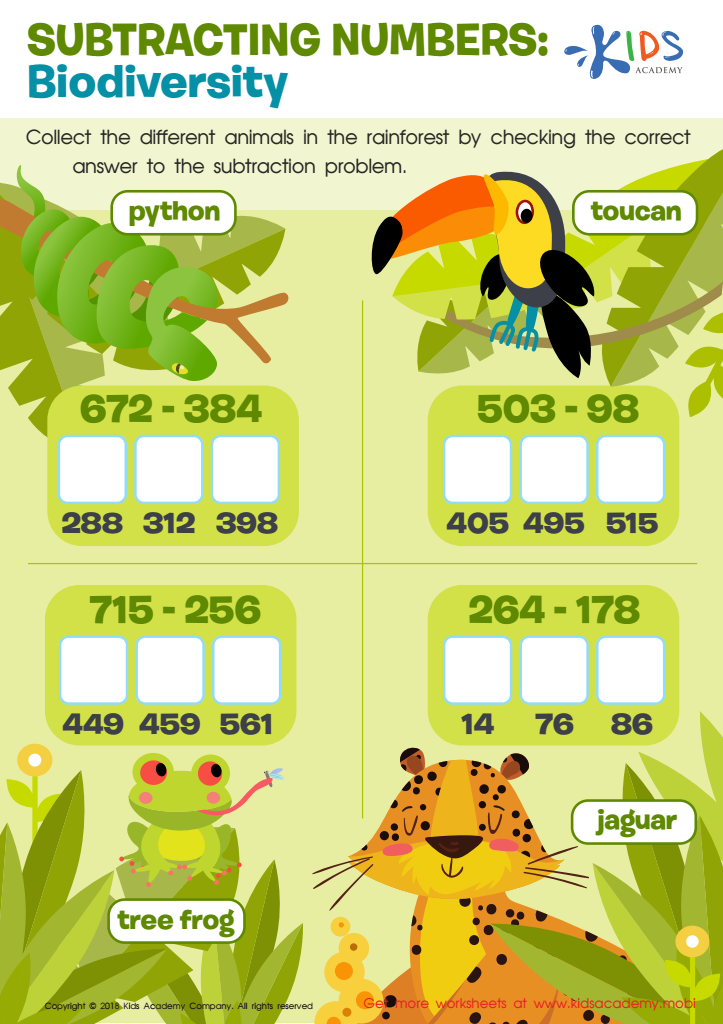
Subtracting Numbers: Biodiversity Worksheet
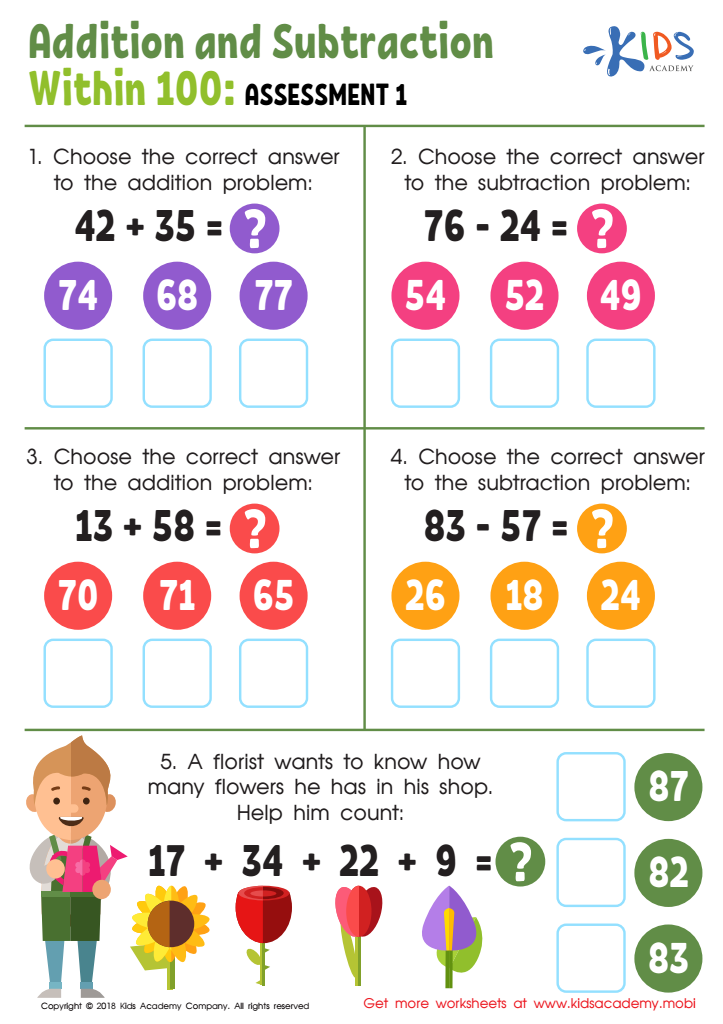
Addition and Subtraction Within 100 Worksheet
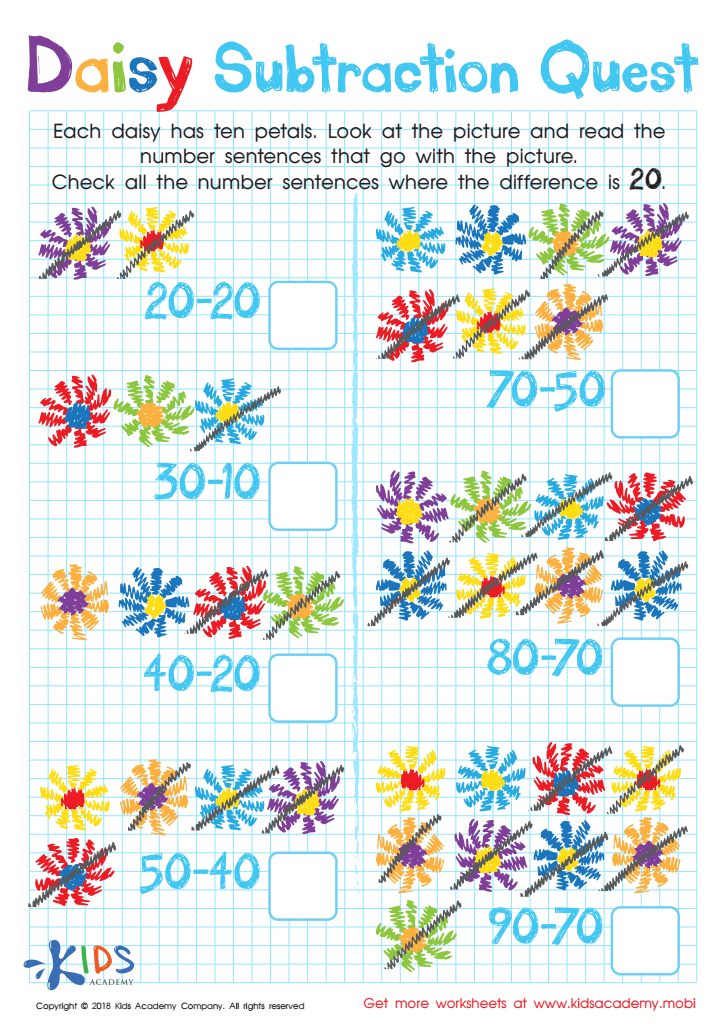
Daisy Subtraction Quest Worksheet








Subtraction is a fundamental mathematical skill crucial for daily life and advanced learning. For children aged 6-7, mastering normal subtraction lays the groundwork for more complex arithmetic concepts. Parents and teachers should prioritize subtraction practice during this developmental stage to enhance cognitive abilities and number sense.
Firstly, fluency in subtraction helps children develop problem-solving skills. As they learn to subtract, they also learn to break down larger problems and think logically. This skill translates to everyday situations, such as budgeting allowances or sharing snacks, fostering independence and confidence.
Secondly, practices in subtraction aid in building perseverance and focus. As children confront challenges with subtraction problems, they learn to persist until they arrive at the correct solution, which cultivates a growth mindset – a belief that effort leads to improvement.
Moreover, frequent subtraction practice can highlight any gaps in understanding. Early intervention ensures that children are not left struggling as they progress to higher levels of math, where subtraction is frequently used as a foundational tool. Ultimately, nurturing subtraction skills equips children for academic success while reinforcing critical thinking and resilience. Thus, parents and teachers play a vital role in developing these essential skills during this formative period.