Filters

9 filtered results

Clear all filters
Favorites
With answer key
Interactive

9 filtered results

Difficulty Level

Grade


Subject

    Discover our engaging Normal Beginning Consonants Worksheets designed specifically for children aged 6-8. These worksheets promote early literacy skills by helping young learners identify and practice consonant sounds. Each activity encourages exploration through fun exercises that combine letters and pictures, making learning enjoyable. Our worksheets foster phonemic awareness, crucial for reading development, as they guide students in recognizing and articulating beginning consonant sounds. Perfect for classroom use or at-home practice, these resources support educators and parents in nurturing confident readers. Access a variety of colorful and interactive worksheets today to enhance your child's reading journey and strengthen their language foundation!

    Check out this FREE Trial Lesson on Beginning Consonants for age 6-8!

    The Letter H Sound

    Favorites
    With answer key
    Interactive
    • 6-8
    • Beginning Consonants
    • Normal
    Vowel and Consonant Sounds: Assessment Worksheet
    Vowel and Consonant Sounds: Assessment Worksheet

    Vowel and Consonant Sounds: Assessment Worksheet

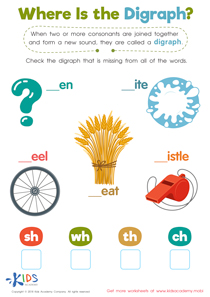
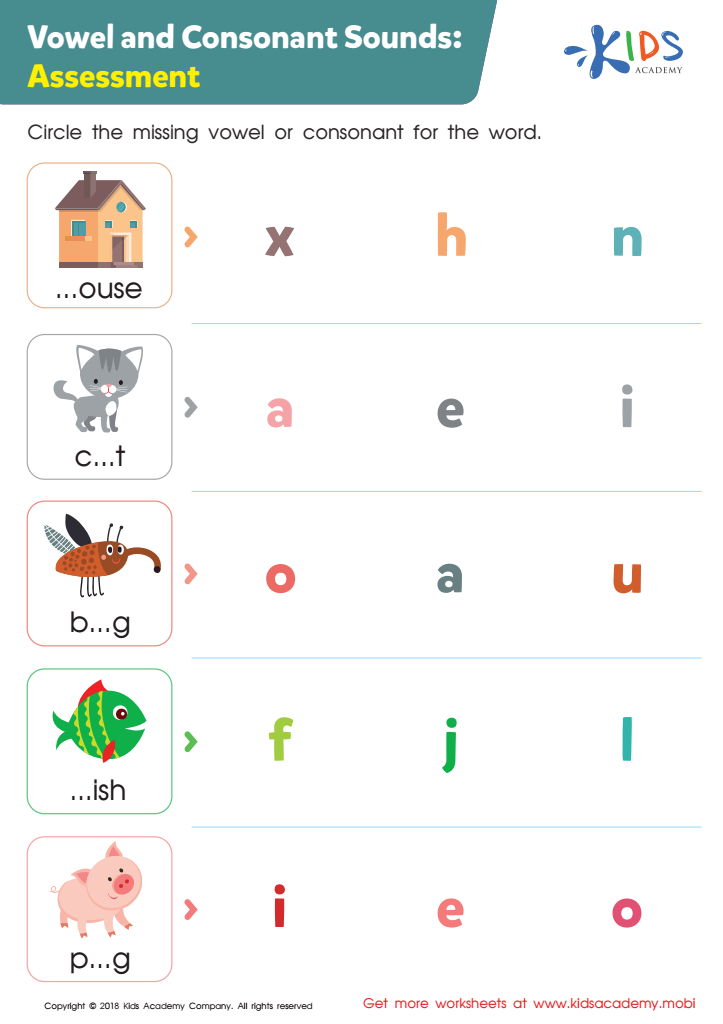
    Test young elementary students on vowel and consonant sounds with this friendly phonics assessment worksheet. Get kids to name each image and look at the word underneath. Ask them to sound out the word, then circle the missing letter to complete. This will help assess their knowledge and skills!
    Vowel and Consonant Sounds: Assessment Worksheet
    Worksheet
    Words with sound h Reading Worksheet
    Words with sound h Reading Worksheet

    Words with sound h Reading Worksheet

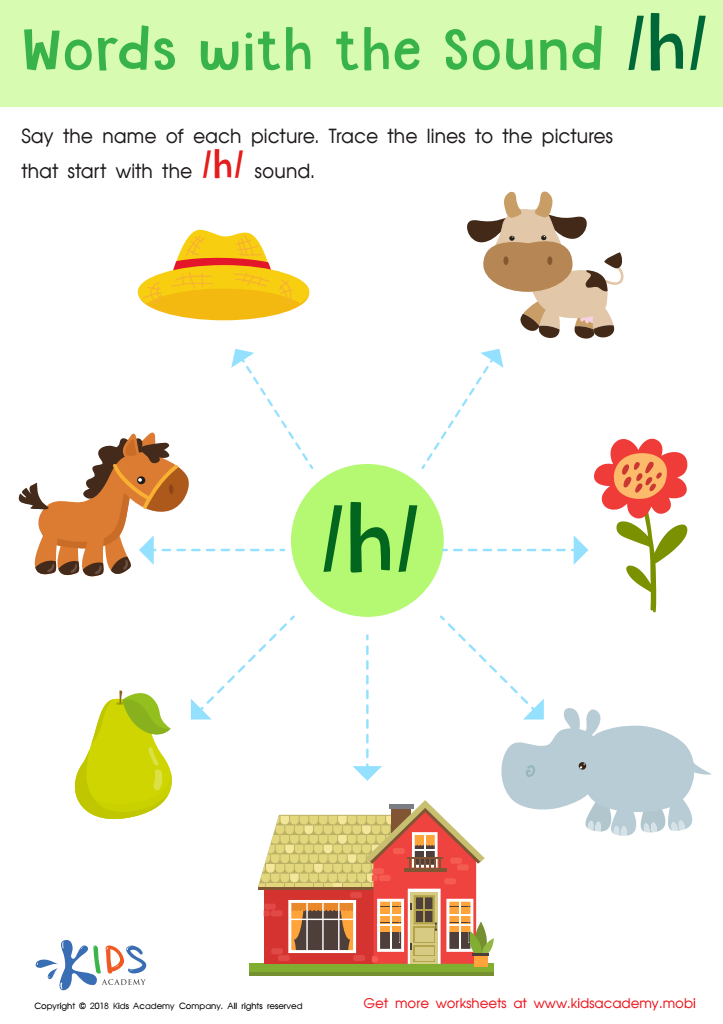
    The letter H can often be heard in words! Check your child's knowledge with an engaging worksheet from Kids Academy. Ask them to go around a circle and name each image aloud. Listen for the starting sound and trace the line from the middle letter to the images with the sound. This is a great way to practice phonics!
    Words with sound h Reading Worksheet
    Worksheet
    Twin Onset Worksheet
    Twin Onset Worksheet

    Twin Onset Worksheet

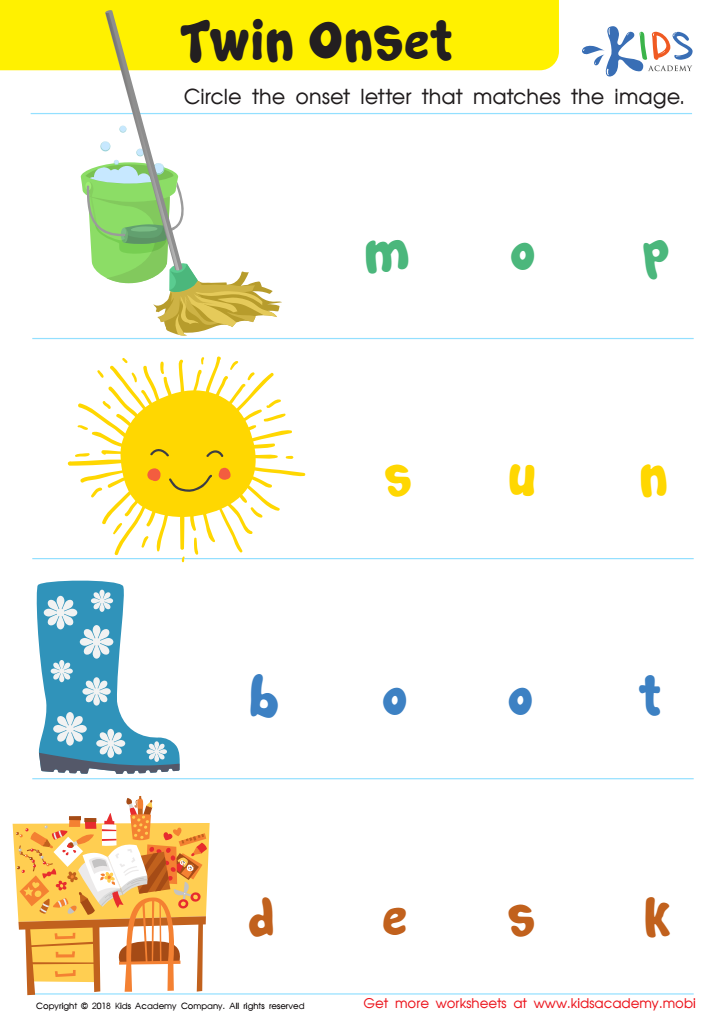
    Children's phonological skills and reading/spelling strategies are strengthened by isolating initial consonants. This fun PDF worksheet encourages kids to trace the correct onset letter and hone fine motor skills. It's a great way to introduce early reading and spelling.
    Twin Onset Worksheet
    Worksheet
    Matching Consonant Sounds - Part 3 Worksheet Preview
    Matching Consonant Sounds - Part 3 Worksheet Preview

    Matching Consonant Sounds: Part 3 Worksheet
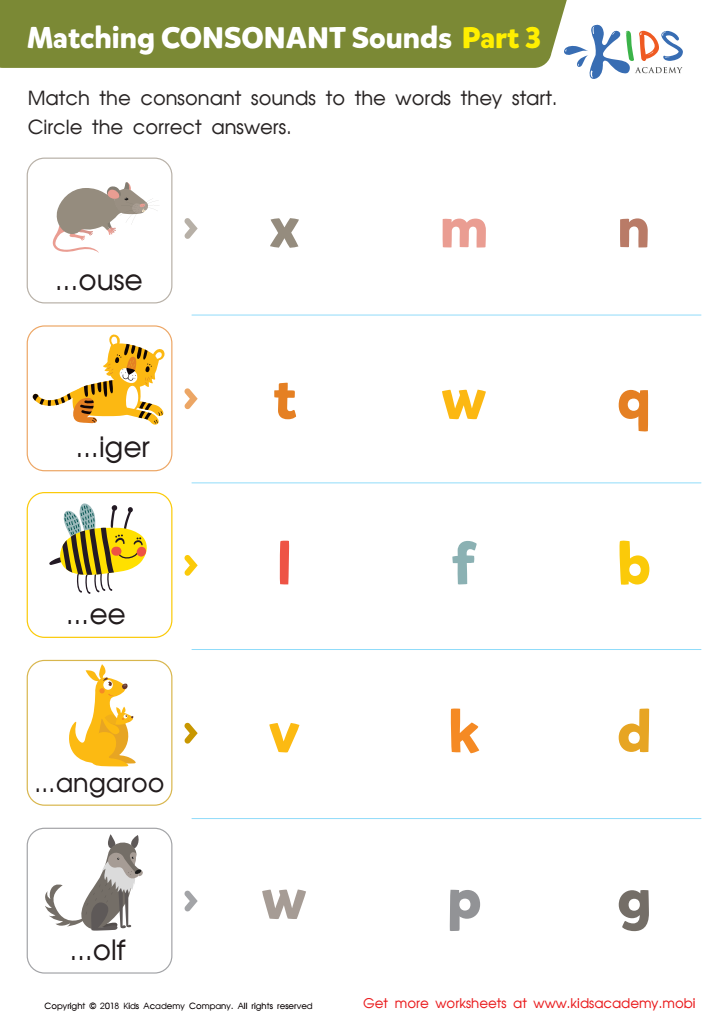
    Help your early learner match consonant sounds to words with this fun worksheet! Have them name the pictures and try out each letter in the corresponding column. When they hear the sound that matches, circle it. Have them write the letter in the box to complete the word. Work their way down the page until the critters' names all match with consonants!
    Matching Consonant Sounds: Part 3 Worksheet
    Worksheet
    Words with sound p Reading Worksheet
    Words with sound p Reading Worksheet

    Words with sound p Reading Worksheet

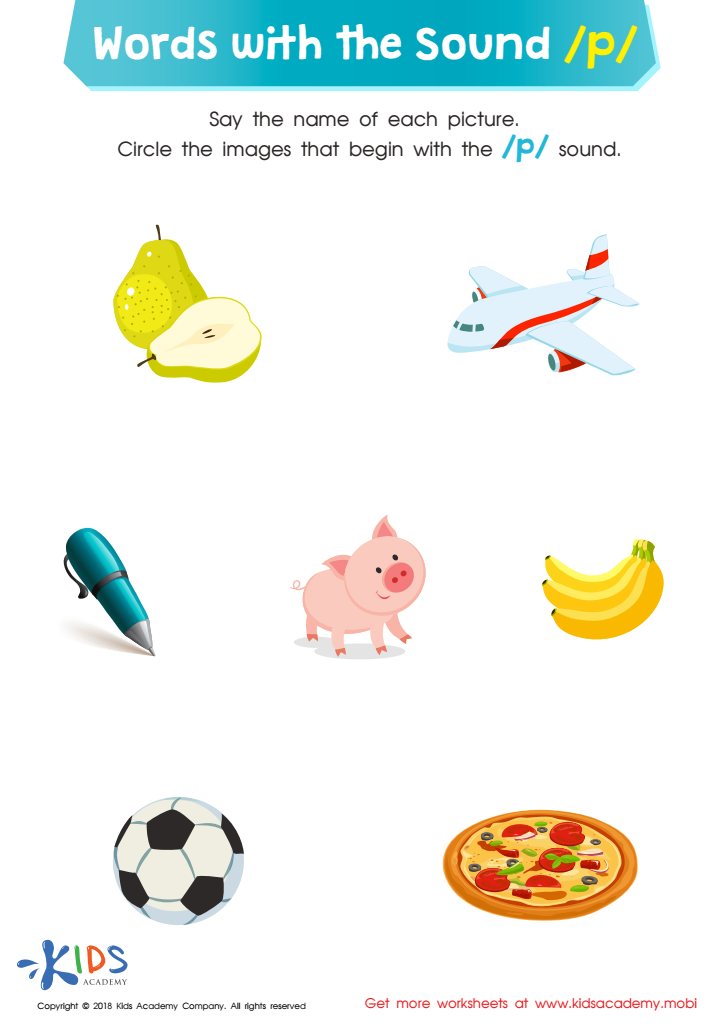
    Working on this fun worksheet? Name each picture aloud and listen carefully before circling those that start with the letter «p»! Pizza, pig, plane, or banana - practice phonics to help your child recognize the letter «p» sound for successful early reading and decoding!
    Words with sound p Reading Worksheet
    Worksheet
    Matching Consonant Sounds - Part 2 Worksheet Preview
    Matching Consonant Sounds - Part 2 Worksheet Preview

    Matching Consonant Sounds: Part 2 Worksheet
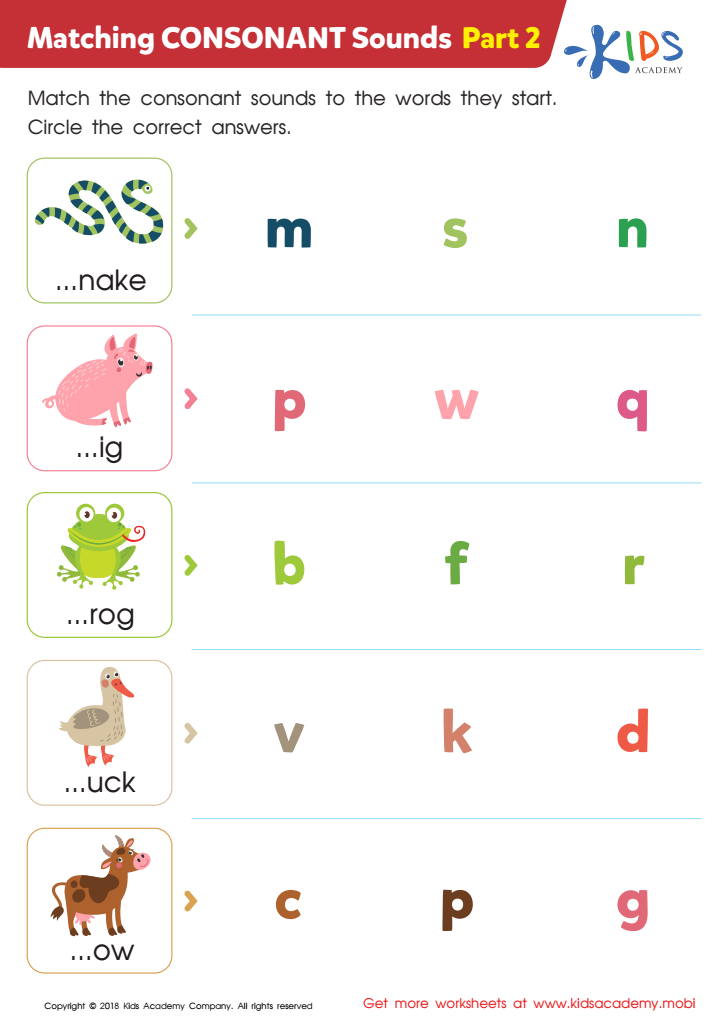
    Look at the picture, say the word and match the consonant sound with the letter. Coach your child to name the animal and complete the word. For extra challenge, write the missing letter in the box! This PDF worksheet helps kids learn to read words with familiar animal pictures.
    Matching Consonant Sounds: Part 2 Worksheet
    Worksheet
    Words with sound f Reading Worksheet
    Words with sound f Reading Worksheet

    Words with sound f Reading Worksheet

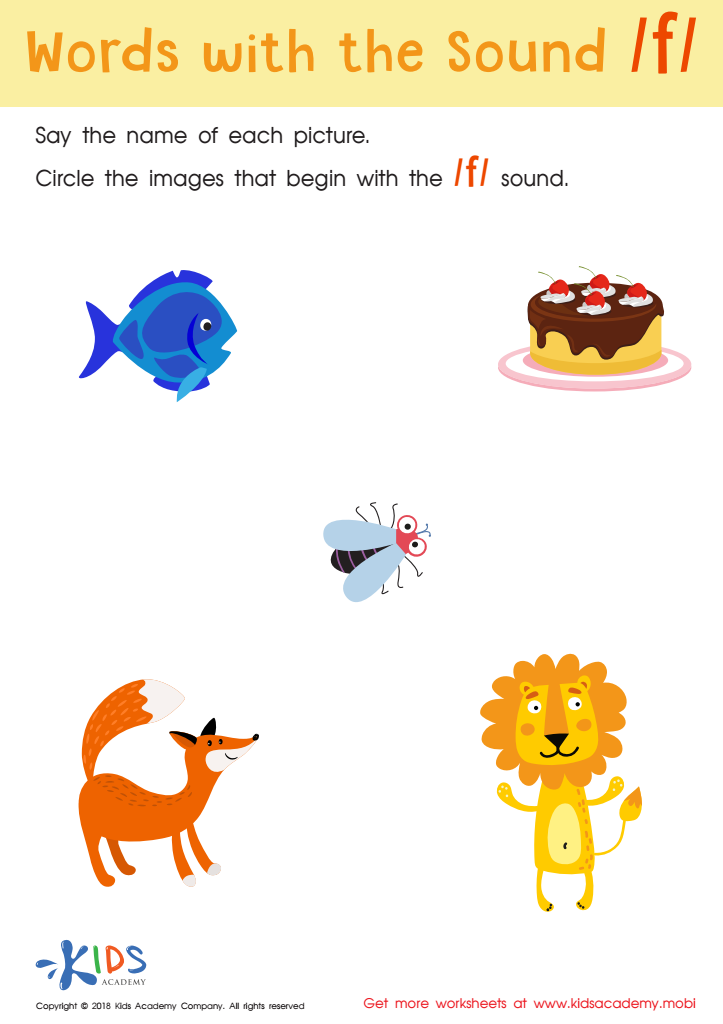
    This illustrated phonics worksheet is ideal for preschool or kindergarten. It helps boost learners' literacy skills with a focus on the letter "f". Ask your child to name all the pictures, listening for that sound. Examples are fish, fox, lion, bug. When they can identify which words start with "f", have them circle the images. Congratulate them on a job well done!
    Words with sound f Reading Worksheet
    Worksheet
    Matching Consonant Sounds - Part 1 Worksheet Preview
    Matching Consonant Sounds - Part 1 Worksheet Preview

    Matching Consonant Sounds: Part 1 Worksheet
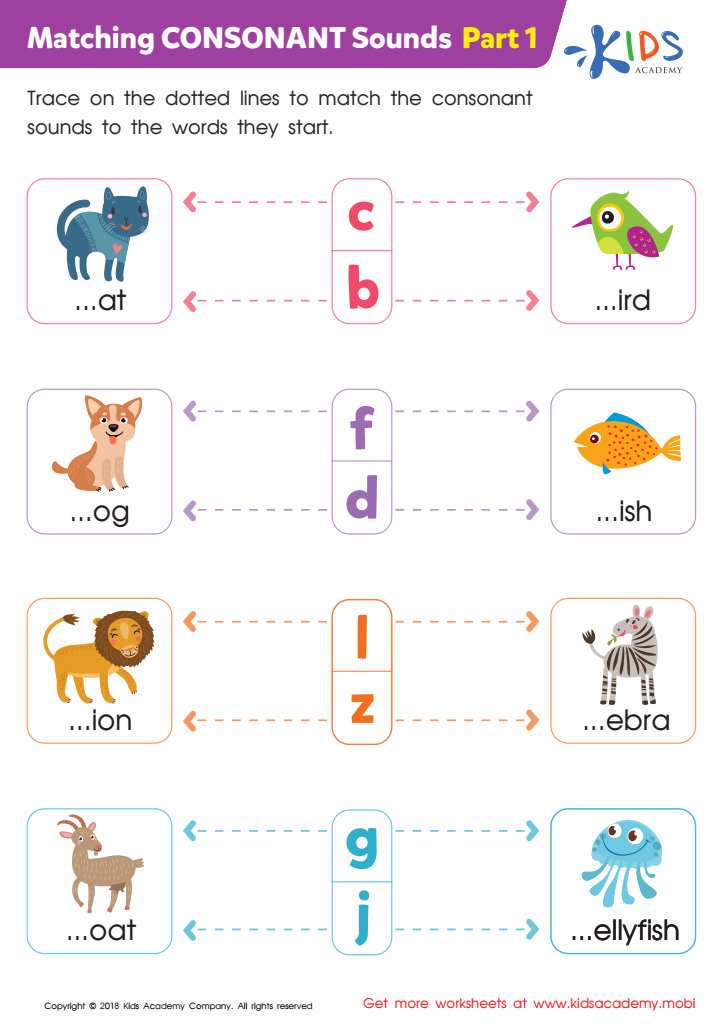
    Decide which letter matches each word and picture in this fun phonics worksheet. Slide your finger over each word, trying out each letter to check for matches. Once each pair is solved, trace the dotted lines with pencil to complete the printable. Who knew learning could be so enjoyable?
    Matching Consonant Sounds: Part 1 Worksheet
    Worksheet
    Words with Sound M Reading Worksheet

    Words with Sound M Reading Worksheet

    Words with Sound M Reading Worksheet

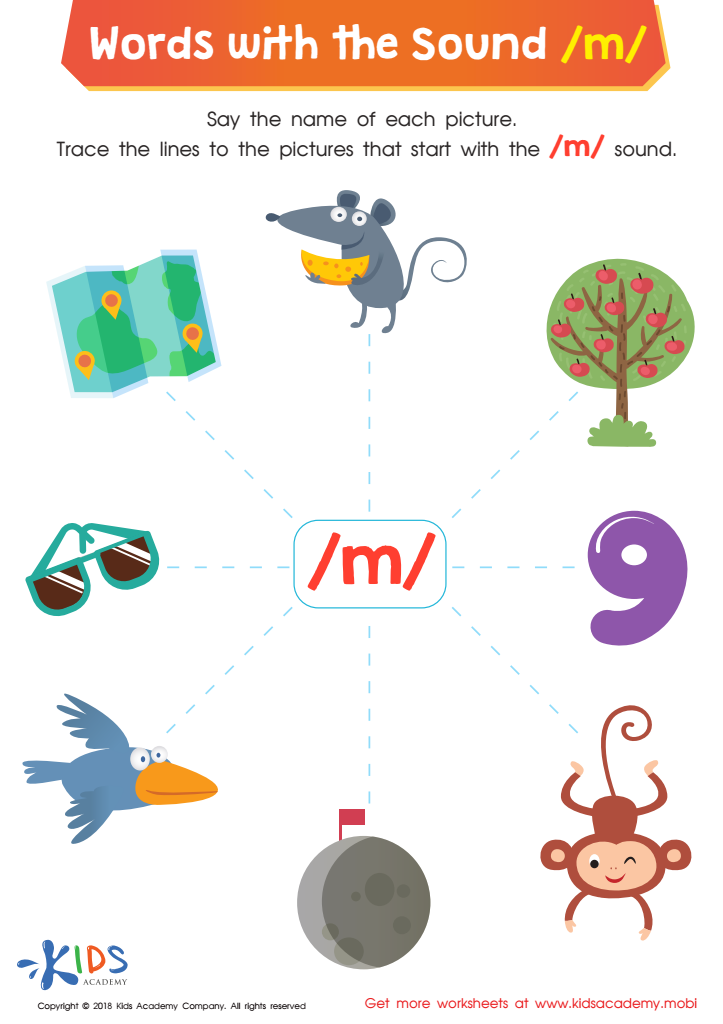
    Emerging readers will use this traceable worksheet to name and trace pictures with the letter sound «m». Bright, engaging pictures make this fun and build confidence while strengthening fine motor skills. They won't even know they're also working on reading skills!
    Words with Sound M Reading Worksheet
    Worksheet


    Normal Beginning Consonants, the sounds that start words, play a crucial role in early literacy development for children aged 6-8. Learning these sounds aids in phonemic awareness, which is the ability to recognize and manipulate the individual sounds in spoken words. Mastery of beginning consonant sounds helps children decode words, making reading more accessible and enjoyable.

    For parents and teachers, nurturing this skill is vital not only for reading but also for overall language development. Coupled with phonics instruction, understanding beginning consonants supports spelling and vocabulary growth, laying a foundational stone for academic success. Engaging children in activities that emphasize beginning consonants, such as letter-sound matching games or sound sorting, fosters a natural curiosity and enthusiasm for language.

    Furthermore, those early interventions can have long-lasting benefits, such as improved reading fluency and comprehension as children progress in their education. By caring about and focusing on these fundamental skills, parents and teachers can ensure children build confidence in their abilities, leading to a more positive learning environment. In sum, attention to normal beginning consonants is integral to literacy, influencing not just current learning, but future academic achievement.