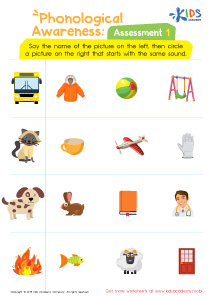
Normal Ending Sounds Worksheets for Ages 6-8
4 filtered results
-
From - To
Introducing our "Normal Ending Sounds Worksheets for Ages 6-8," a captivating collection designed to enhance phonemic skills through interactive activities. Perfectly crafted for early learners, these worksheets help children identify and practice common ending sounds in words, paving the way for better reading and spelling. Kids will enjoy a variety of exercises, from matching objects to filling in missing letters, that strengthen their understanding of phonetics. Accessible and engaging, these worksheets support both classroom learning and at-home practice, making them an essential resource for parents and teachers aiming to boost their child's literacy skills.
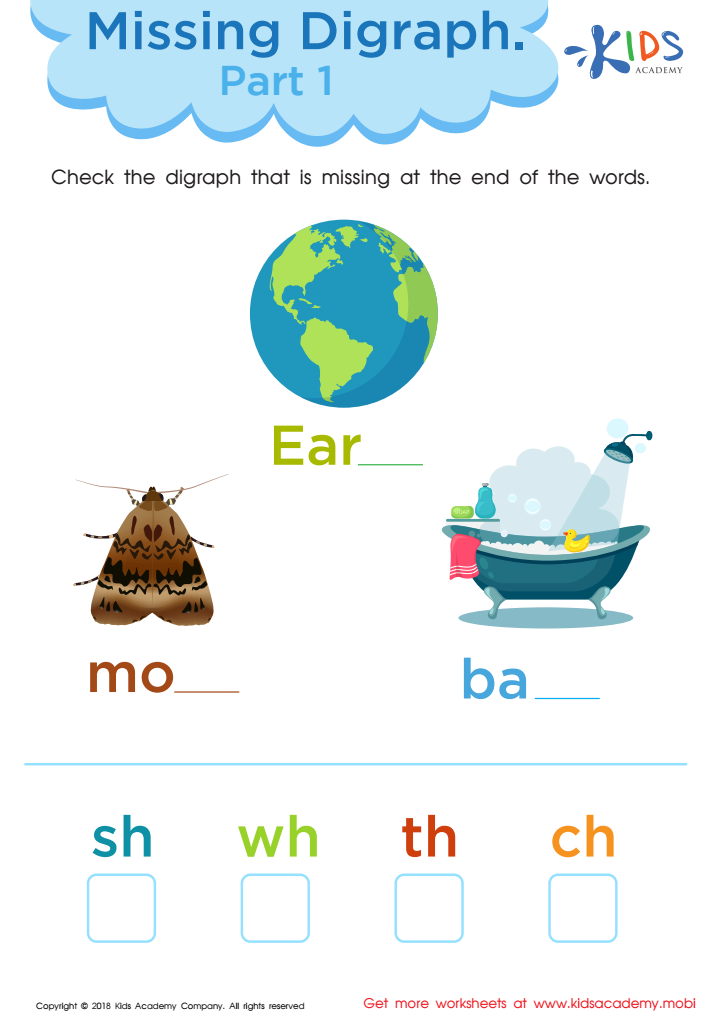
Missing Digraph: Part 1 Worksheet
 Assign to My Students
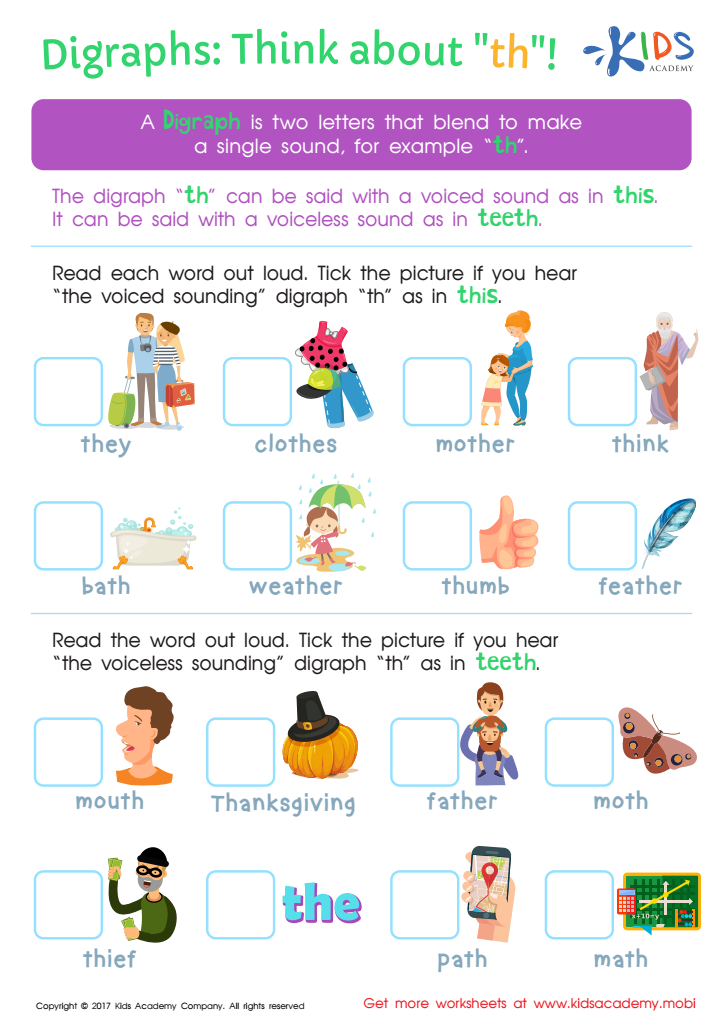
Digraphs: Think About "th" Worksheet
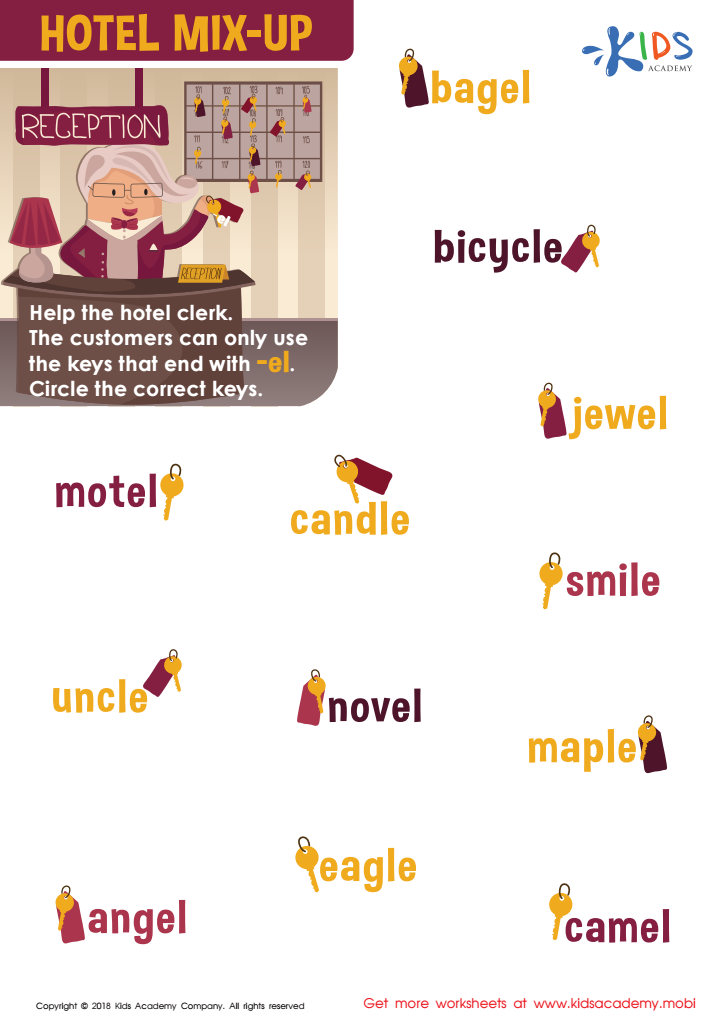
Hotel Mix-up Worksheet
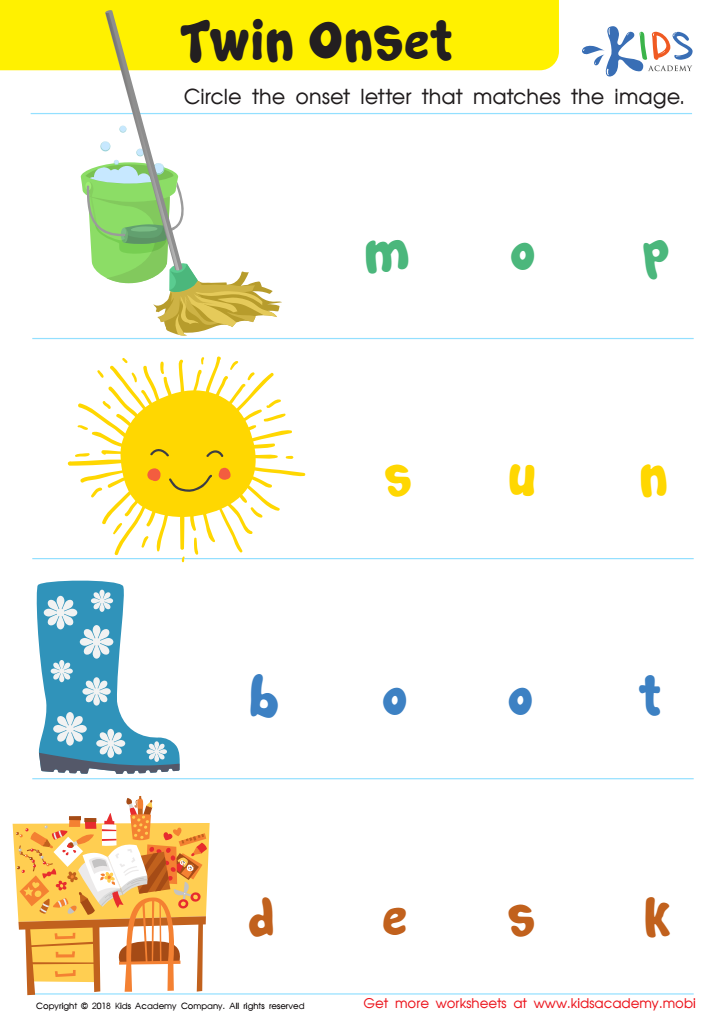
Twin Onset Worksheet






Parents and teachers should care about normal ending sounds for ages 6-8 because these sounds significantly impact a child's reading and writing development. By this age, children are typically transitioning from basic phonetic knowledge to more advanced literacy skills. Understanding ending sounds is essential for decoding words when reading, as they help children predict and recognize word patterns. This foundational skill assists in improving reading fluency and comprehension, enabling children to read more smoothly and understand texts better.
Moreover, accurate use of normal ending sounds enhances spelling skills. As children become familiar with common word endings, they can spell words more confidently and accurately. This knowledge also plays a crucial role in expanding vocabulary, as many words share similar endings but have different prefixes or root words.
In addition, mastering ending sounds contributes to effective written communication. Proper use of word endings ensures that children convey their thoughts clearly, reducing misunderstandings. Lastly, attention to normal ending sounds supports overall language development by reinforcing grammatical rules and pluralization, which are vital for constructing sentences correctly.
Overall, proficiency in normal ending sounds lays a sturdy foundation for ongoing academic success and effective communication, making it a critical focus for parents and teachers during these formative years.