Filters

9 filtered results

Clear all filters
Favorites
With answer key
Interactive

9 filtered results

Difficulty Level

Grade


Subject

    Enhance children's reading skills with our engaging Normal Letter Sounds Worksheets for Ages 6-8. Designed by educational experts, these printable resources help young learners master the fundamental phonetic sounds essential for reading proficiency. Our collection covers all letters of the alphabet, providing myriad activities for students to practice recognizing, pronouncing, and matching sounds. Featuring fun illustrations and interactive tasks, these worksheets foster active participation and retention. Ideal for classroom use or home study, our educational tools support early literacy development, making learning seamless and enjoyable. Download now to give youngsters a strong phonics foundation!

    Check out this FREE Trial Lesson on Letter Sounds for age 6-8!

    Review

    Favorites
    With answer key
    Interactive
    • 6-8
    • Letter Sounds
    • Normal
    Is It m or n? Worksheet
    Is It m or n? Worksheet

    Is It m or n? Worksheet

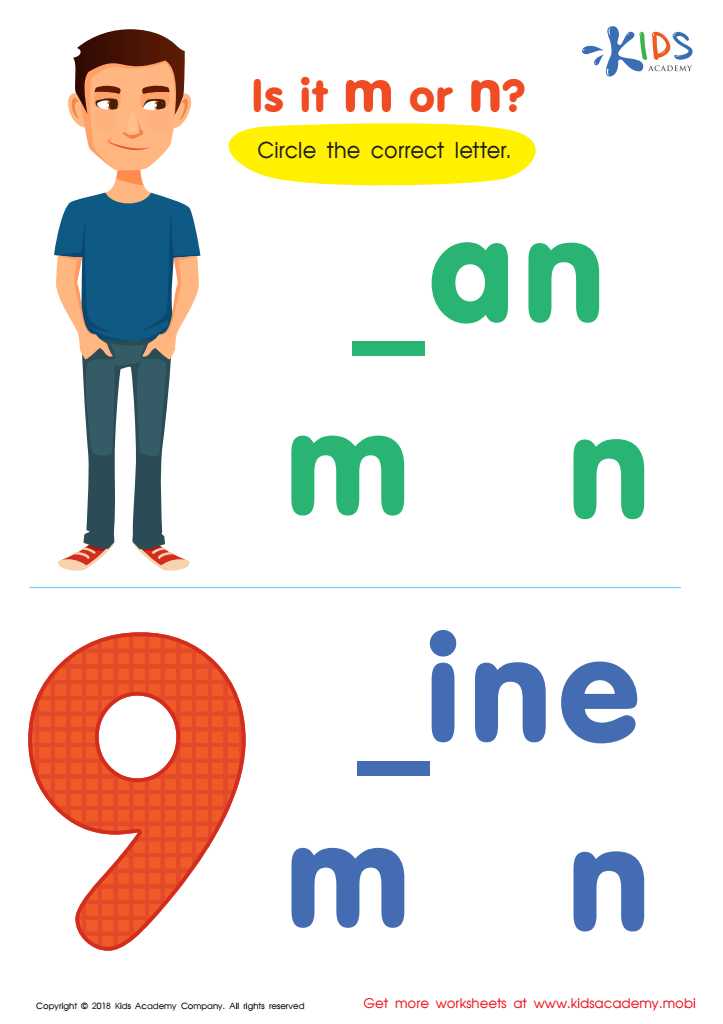
    Help your child circle the letter that begins the words "man" and "nine" in the picture. This is a great way for them to learn the alphabet.
    Is It m or n? Worksheet
    Worksheet
    What Do You Hear? Worksheet
    What Do You Hear? Worksheet

    What Do You Hear? Worksheet

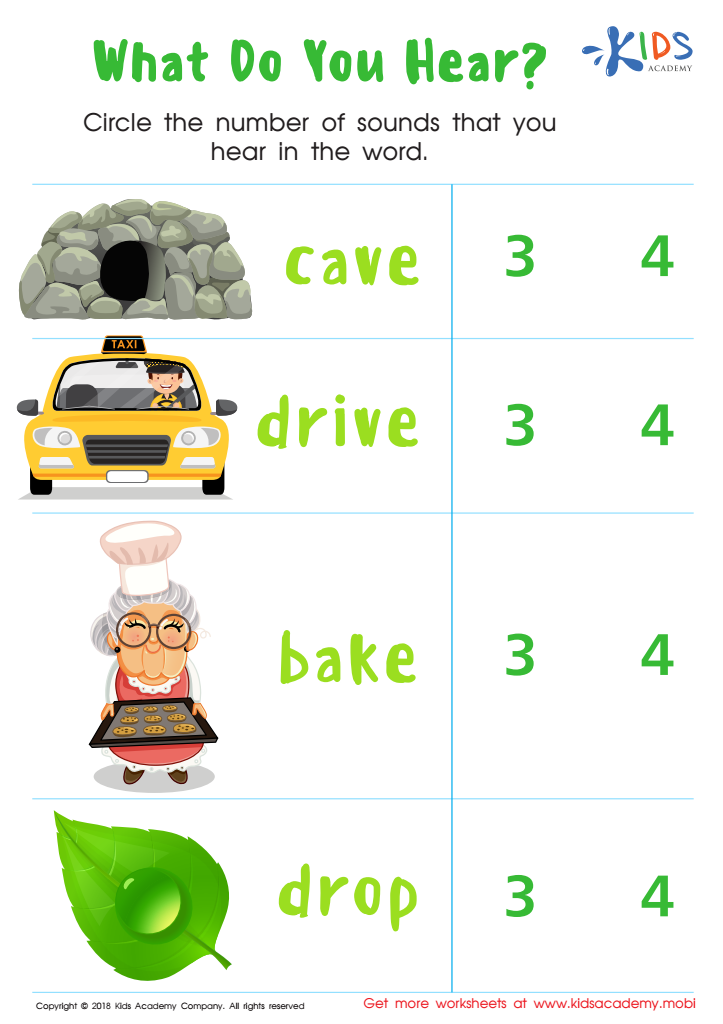
    New readers can develop phonological awareness with this fun worksheet. They'll isolate sounds in words and count them, then circle the number of sounds heard. It'll help build their auditory discrimination and decoding skills, leading to more fluent reading. Without even knowing it, their reading skills are improving!
    What Do You Hear? Worksheet
    Worksheet
    Listen to the Sounds Worksheet
    Listen to the Sounds Worksheet

    Listen to the Sounds Worksheet

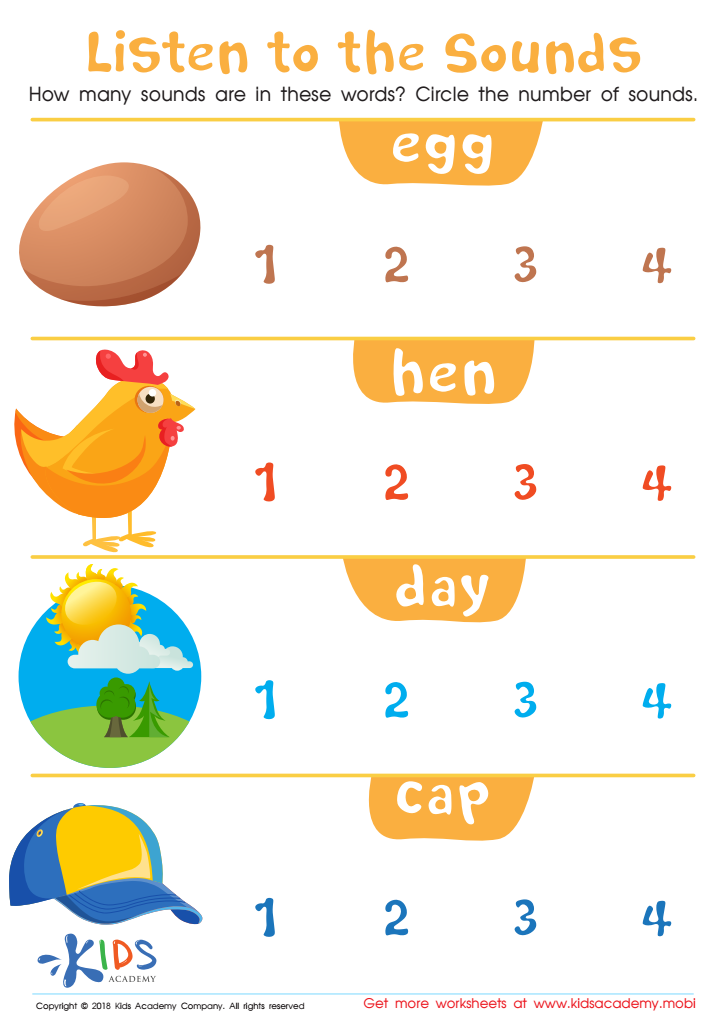
    This worksheet builds emerging readers' skills in using sounds for reading and spelling. It helps strengthen auditory processing by having them count the sounds in each word, then trace the corresponding number. Fun and cheerful!
    Listen to the Sounds Worksheet
    Worksheet
    Identify the Written Words Worksheet
    Identify the Written Words Worksheet

    Identify the Written Words Worksheet

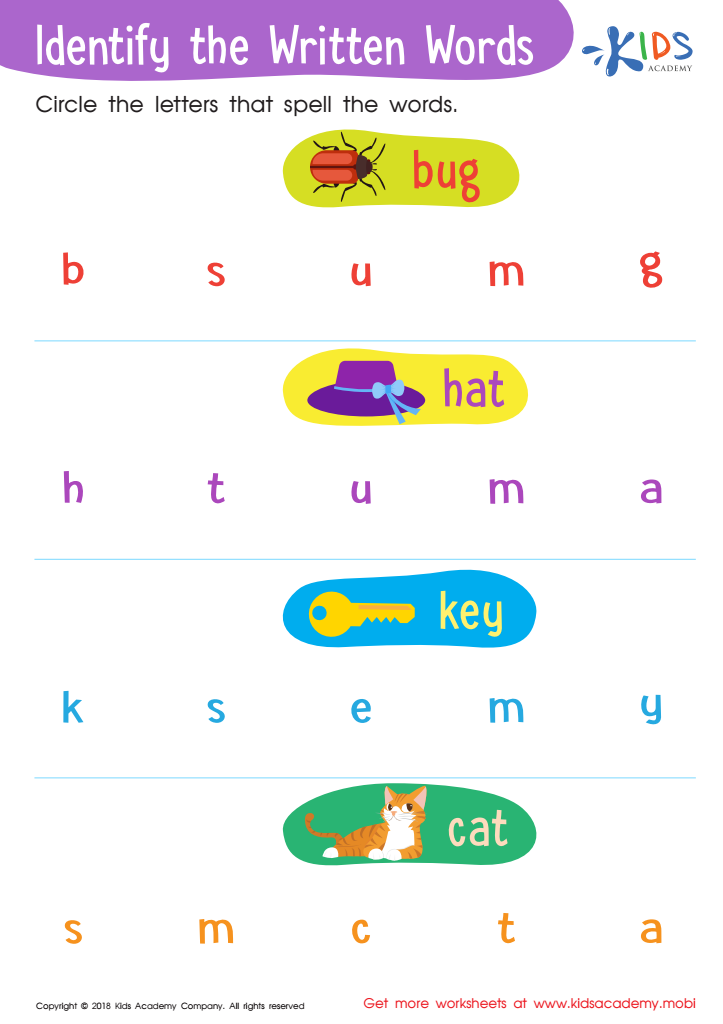
    Have your students identify the objects on the printout, then spell the words. If they already know how to spell, this exercise should be easy. Help them circle the correct letters from the set to spell out the words. This is a great way to reinforce reading and spelling skills. Max 80 words.
    Identify the Written Words Worksheet
    Worksheet
    3 Sounds Worksheet
    3 Sounds Worksheet

    3 Sounds Worksheet

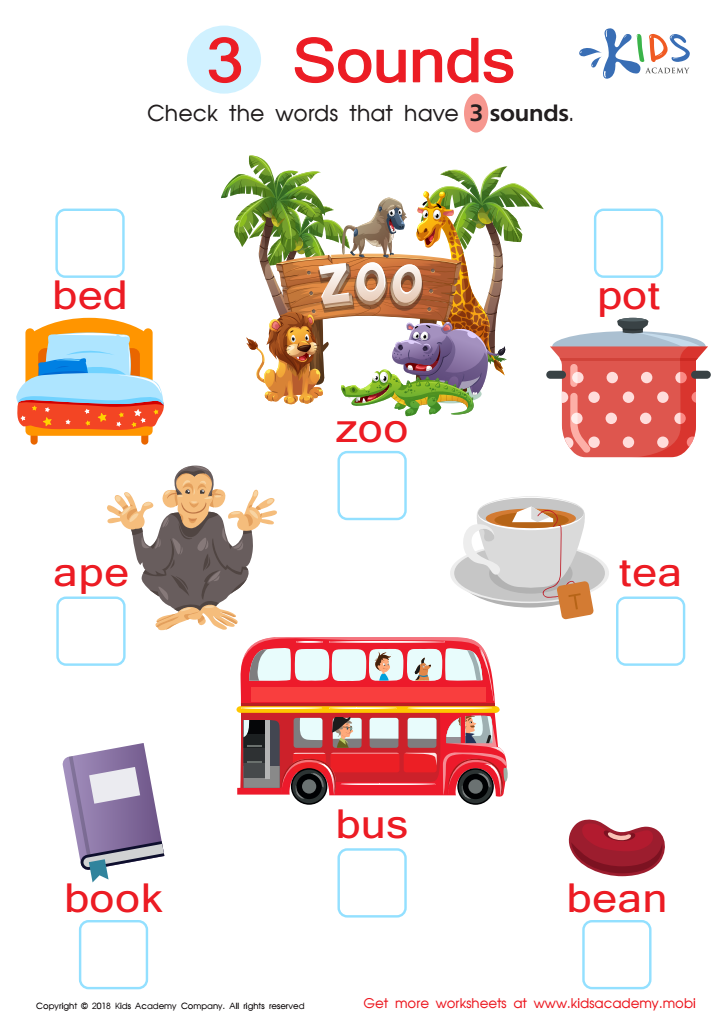
    Kids will love learning with this free, colorful worksheet. It's full of familiar words they can name and sound out with three distinct sounds. This helps build decoding skills, plus they get to check off words they read. It's a fun way to teach children to identify and use sounds.
    3 Sounds Worksheet
    Worksheet
    Let's Count the Sounds Worksheet
    Let's Count the Sounds Worksheet

    Let's Count the Sounds Worksheet

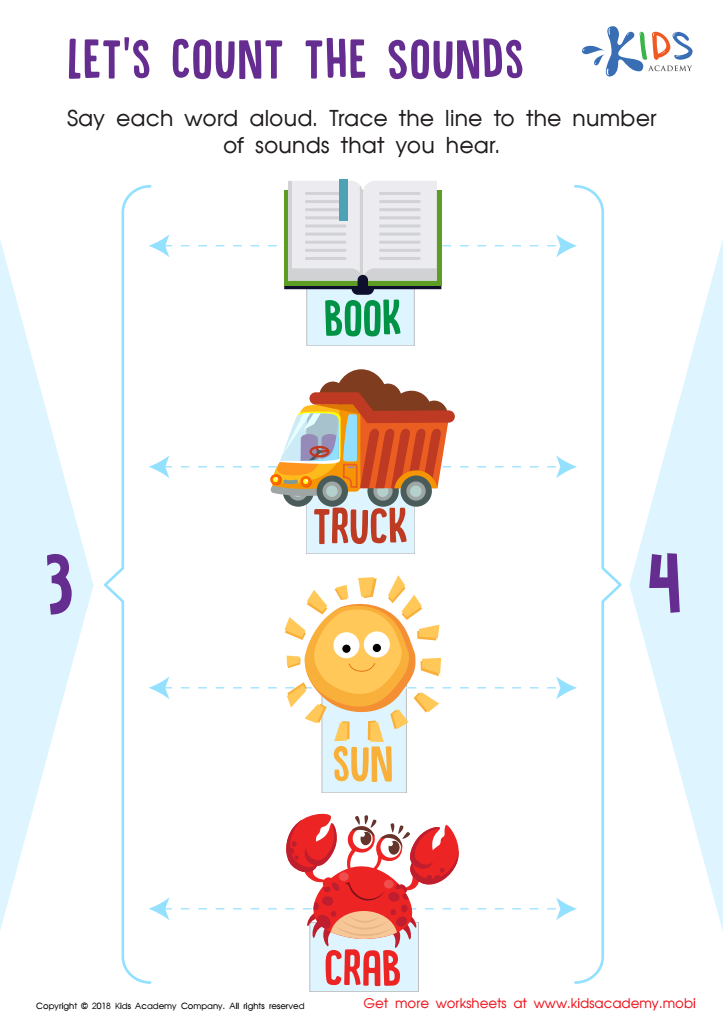
    This bright and cheery traceable worksheet encourages children to practice auditory discrimination and phonological awareness. Using picture clues, they read each word and trace the line that represents the number of sounds heard. This builds decoding skills and helps them become successful readers.
    Let's Count the Sounds Worksheet
    Worksheet
    Finding the Sounds Worksheet
    Finding the Sounds Worksheet

    Finding the Sounds Worksheet

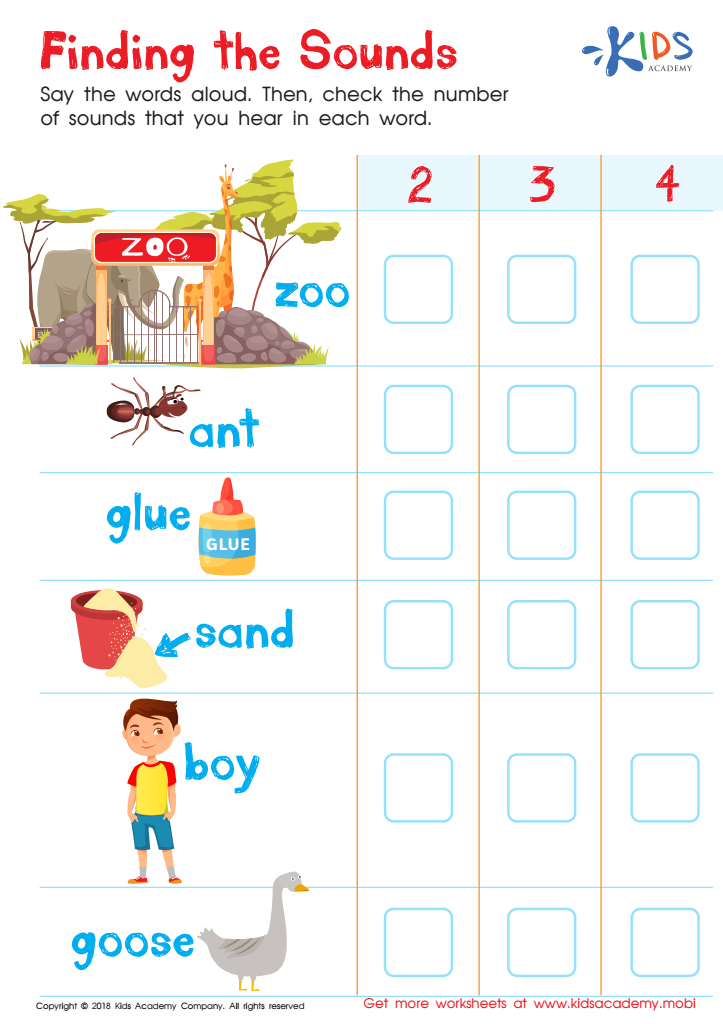
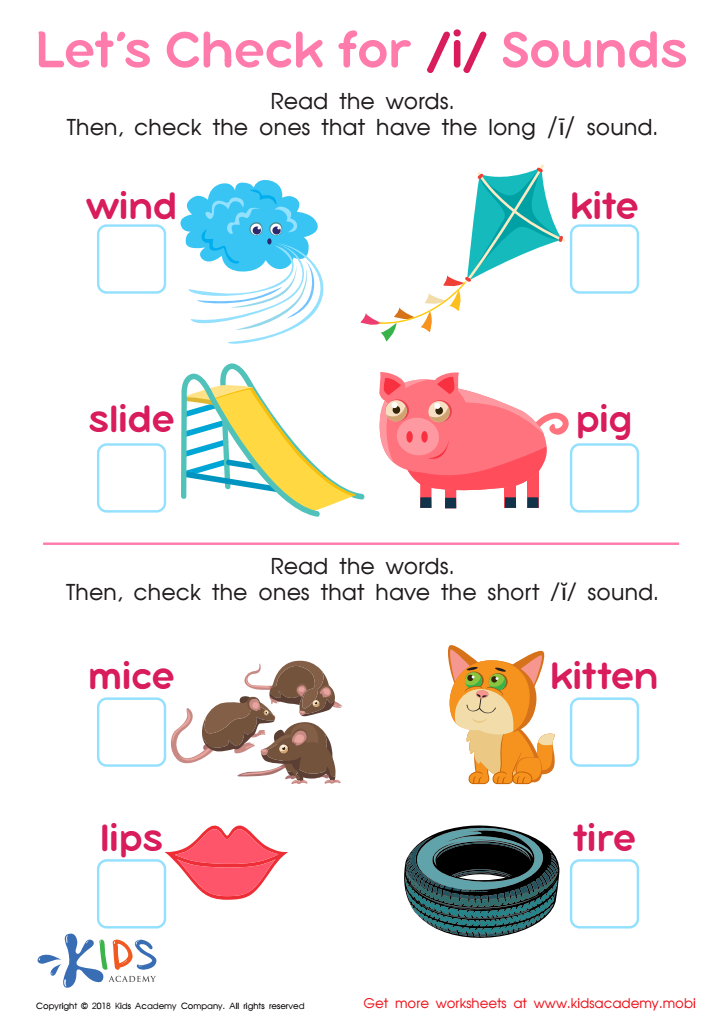
    This free colorful worksheet assists children in learning words and breaking them down into sounds. It boosts auditory discrimination, phonological awareness and fine motor skills. Picture clues help them read confidently, and they can check the appropriate boxes to practice their reading skills.
    Finding the Sounds Worksheet
    Worksheet
    Let's Check for «i» Sounds Worksheet
    Let's Check for «i» Sounds Worksheet

    Let's Check for «i» Sounds Worksheet

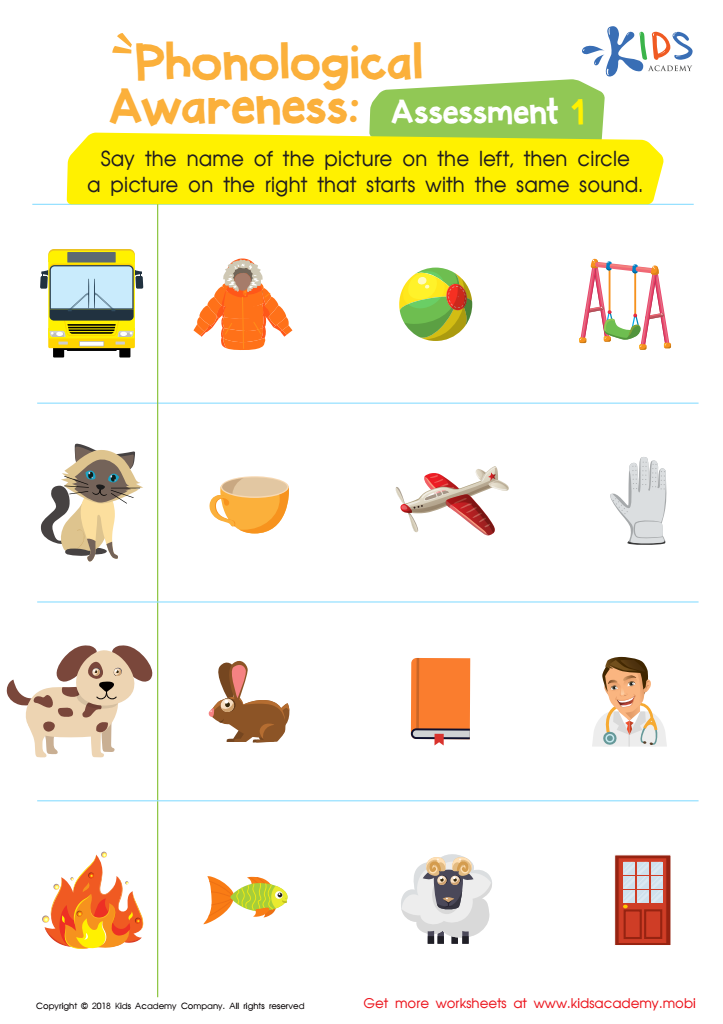
    This fun worksheet with pictures boosts phonics skills - differentiating between long «ī» and short «i» sounds in 1- and 2-syllable words. Kids use picture clues to read words, then check off the correct ones. It's a great way for new readers to practice early reading skills and find success on their own.
    Let's Check for «i» Sounds Worksheet
    Worksheet
    Hungry Dragon Worksheet

    Hungry Dragon Worksheet

    Hungry Dragon Worksheet

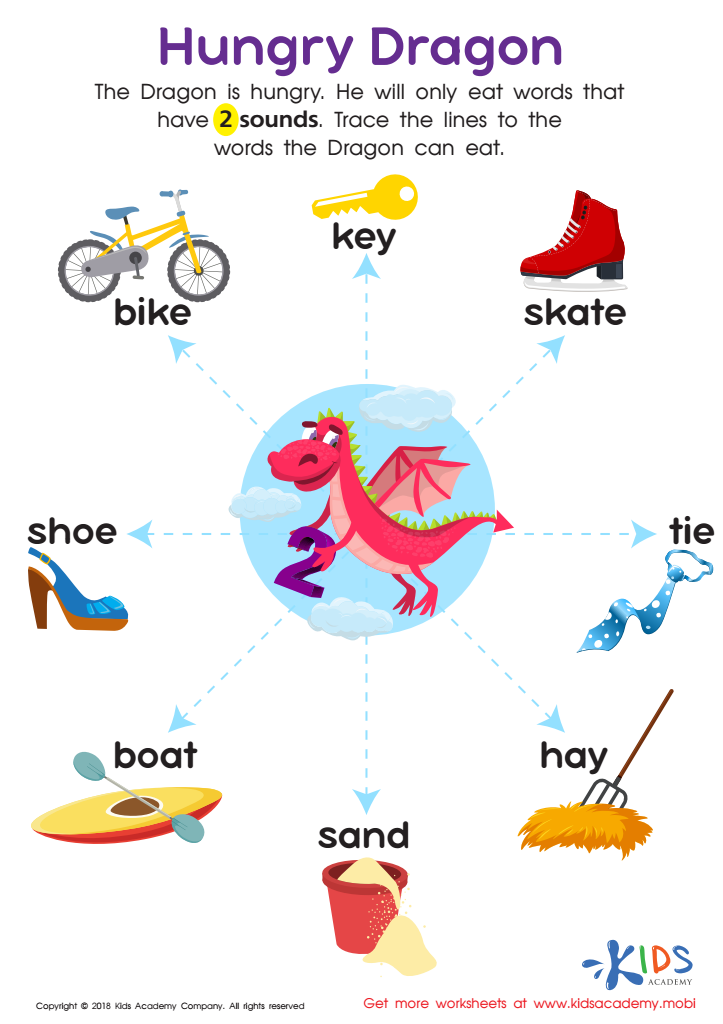
    Feed the dragon words and watch your child strengthen their phonological awareness and auditory discrimination skills! Download this free PDF for tracing exercises that build their fine motor skills too. Kids will love spending time with the cute dragon while they unwittingly learn reading skills!
    Hungry Dragon Worksheet
    Worksheet


    Parents and teachers should care about normal letter sounds for children ages 6-8 because this foundational skill is critical for literacy development. At this stage, children transition from recognizing the alphabet to blending sounds to form words, a crucial step in learning to read and write proficiently. Understanding letter sounds helps children decode new words, enhancing their reading fluency and comprehension.

    When children grasp letter sounds, they can better understand the relationship between written and spoken language, making reading a meaningful and enjoyable activity. This capability boosts their confidence and fosters a positive attitude towards learning. Phonics, or the understanding of letter-sound relationships, is also linked to better spelling skills since children can sound out words and apply spelling rules more effectively.

    If children struggle with these skills early on, they might face difficulties that could affect their academic progress in later years. Early intervention by parents and teachers can identify potential reading challenges and address them before they escalate. Therefore, investing in developing normal letter sounds in children not only supports their immediate educational needs but also sets the groundwork for lifelong literacy and learning success.