
Pronoun identification Normal Worksheets for Ages 6-9
3 filtered results
Difficulty Level
Grade
Age
-
From - To
Subject
Activity
Standards
Discover our engaging Pronoun Identification Normal Worksheets designed specifically for children aged 6-9! These printable resources help young learners master the art of identifying pronouns in sentences, enhancing their reading and writing skills. With colorful illustrations and age-appropriate exercises, each worksheet features fun activities that make learning enjoyable. Whether used in the classroom or at home, our worksheets encourage kids to practice recognizing and using pronouns correctly. Foster their language development and boost their confidence with these effective educational tools. Explore the fun ways to enhance language skills with our Pronoun Identification worksheets today!
Favorites
With answer key
Interactive
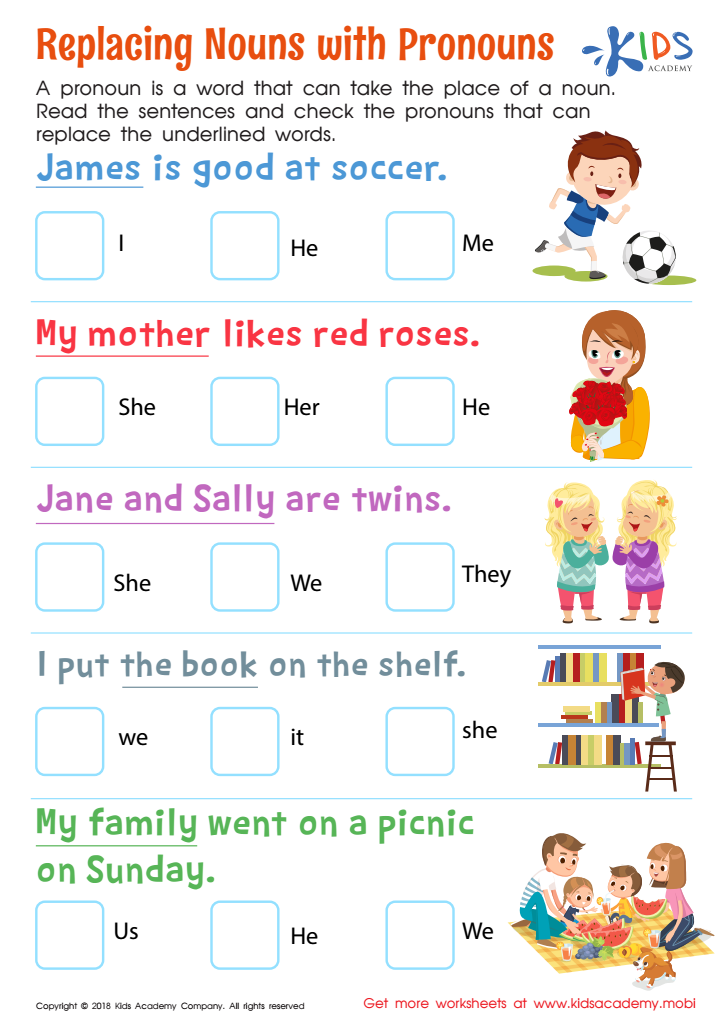
Replacing Nouns with Pronouns Worksheet
This colorful worksheet helps kids grow their writing skills by replacing nouns with pronouns. Read each sentence and select a pronoun for the underlined phrase. Then read the sentence again with the new pronoun.
 Assign to My Students
Replacing Nouns with Pronouns Worksheet
Worksheet
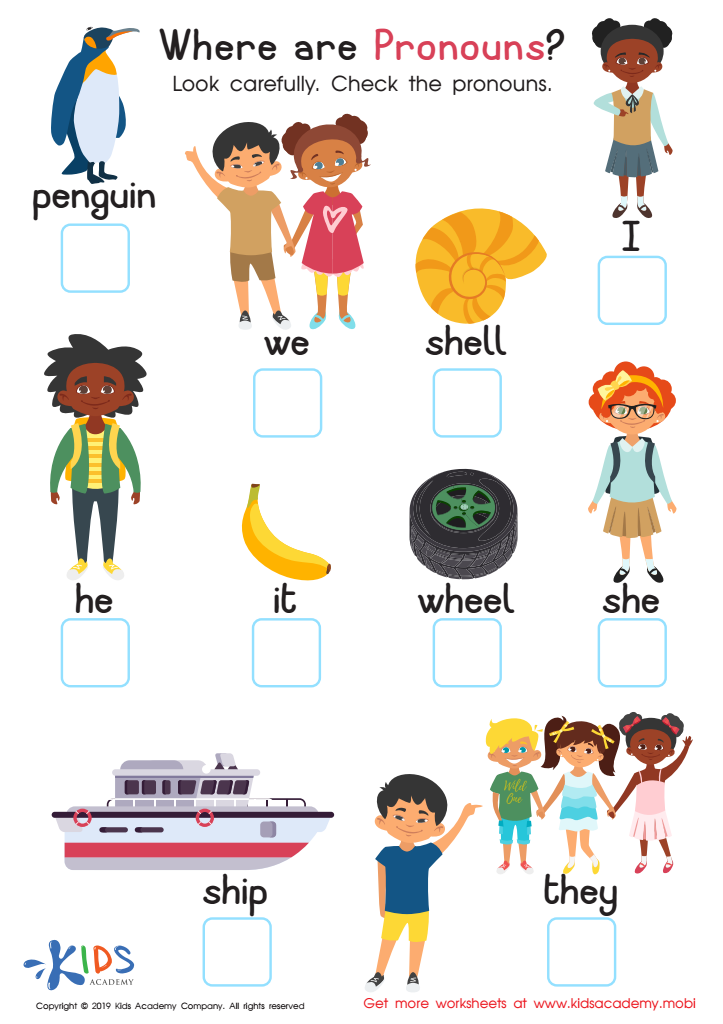
Where Are Pronouns? Worksheet
Pronouns make language flow, substituting "he" or "she" for names. Kids know and use them in their speech, but identifying pronouns in grammar helps build writing skills. This worksheet challenges kids to pick out pronouns from other nouns. Go through the worksheet, view the pictures and read the words. Ask kids to check boxes in front of pronouns to mark answers.
Where Are Pronouns? Worksheet
Worksheet
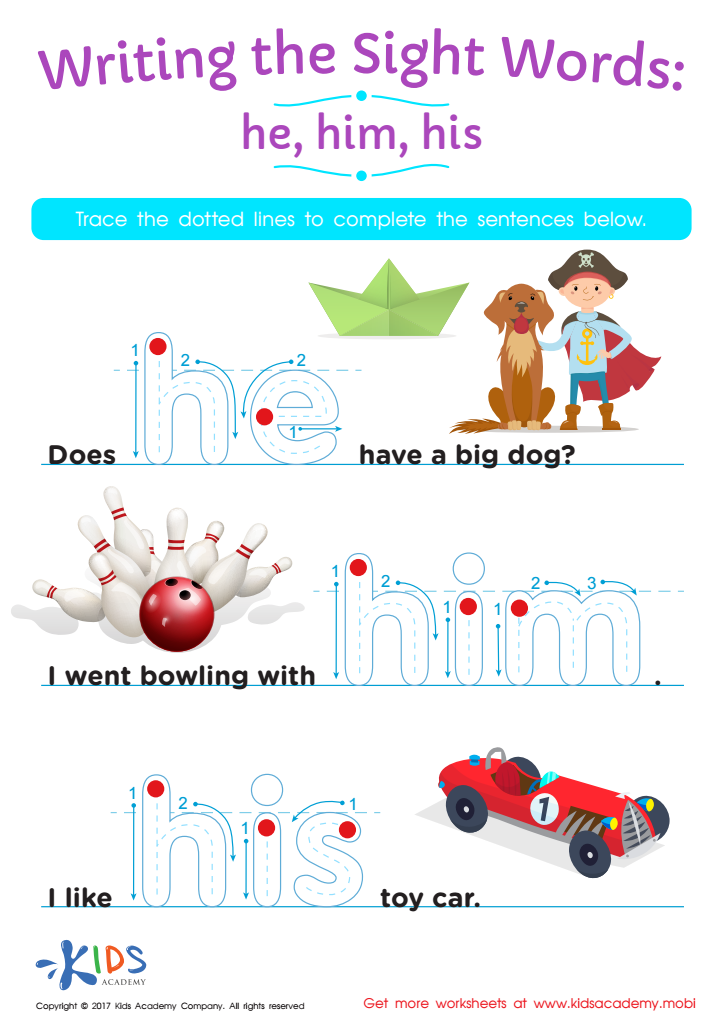
He, Him, His Printable Sight Words Worksheet
He, Him, His worksheet includes colorful pictures, simple sentences, and lots of fun. Guaranteed to engage and make learning enjoyable!
He, Him, His Printable Sight Words Worksheet
Worksheet
Join Kids Academy for Free
Who is primarily going to use this learning content?



%20(1).jpg)

Pronoun identification is crucial for children aged 6-9, as it plays a pivotal role in their language development and social understanding. At this stage, children are rapidly expanding their vocabulary and beginning to form more complex sentences. Mastering pronouns allows them to express themselves clearly, improving their overall communication skills.
Understanding pronouns such as "he," "she," "they," and "it" helps children develop perspective-taking abilities. It allows them to understand that people have different identities and experiences, fostering empathy and respect for diversity. This knowledge becomes especially important as conversations around gender identity evolve. By acknowledging and using a child's preferred pronouns, adults can create inclusive environments that validate their identities and feelings.
Moreover, using pronouns correctly enhances reading comprehension skills. Children learn to track characters and their actions in stories, making connections that boost engagement and understanding.
Ultimately, encouraging pronoun identification in young learners not only supports their language skills but also nurtures a sense of belonging and respect in a diverse world. Parents and teachers can play a significant role in shaping attitudes and building foundational skills that will benefit children socially and academically throughout their lives.








