Story sequencing Normal Worksheets for Ages 6-9
18 filtered results
-
From - To
Discover engaging Story Sequencing Worksheets for kids aged 6-9 at Kids Academy. Our expertly designed activities help young learners understand narrative structure by arranging events in the right order. These fun, captivating exercises enhance critical thinking, comprehension, and sequencing skills. Perfect for home or classroom use, our worksheets support literacy development and boost confidence in reading and storytelling. Integrate these easy-to-use, printable resources into your daily learning routine and watch as your child becomes a proficient storyteller. Visit Kids Academy now and explore our diverse collection to kickstart your child's orderly world of reading!
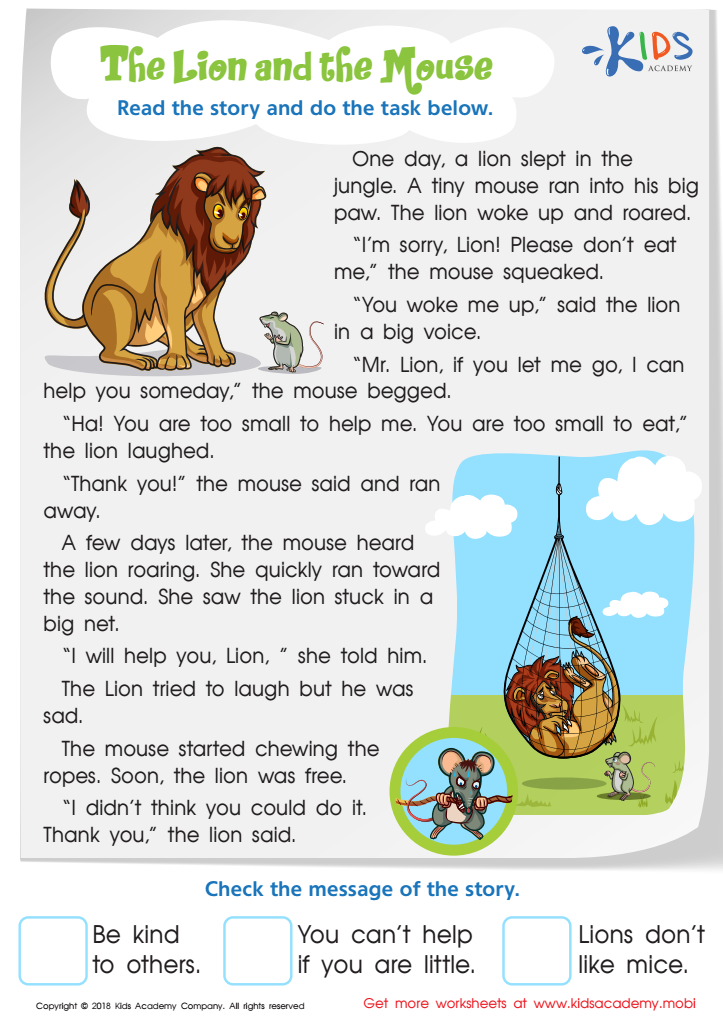
The Lion and the Mouse Worksheet
 Assign to My Students
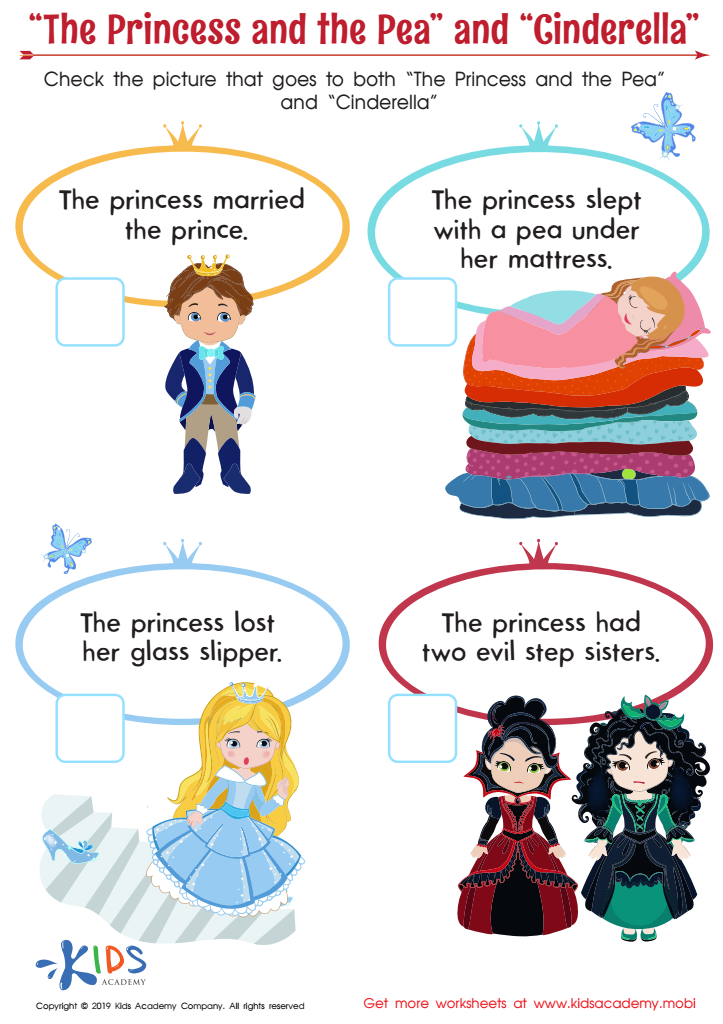
“The Princess and the Pea” and “Cinderella” Worksheet
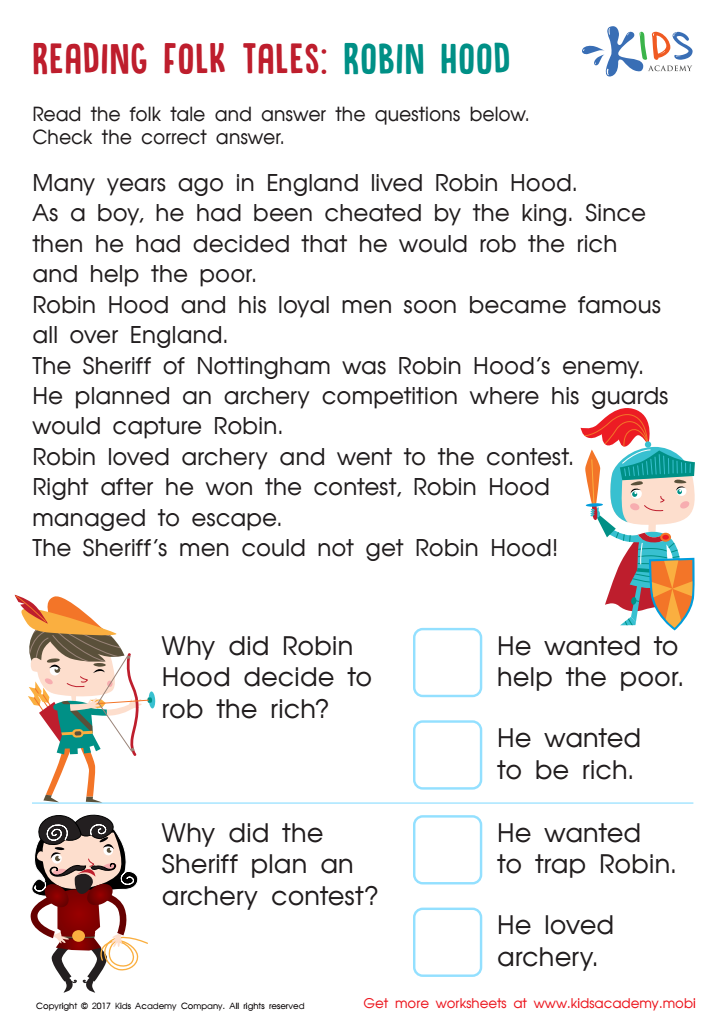
Robin Hood Folktale Worksheet
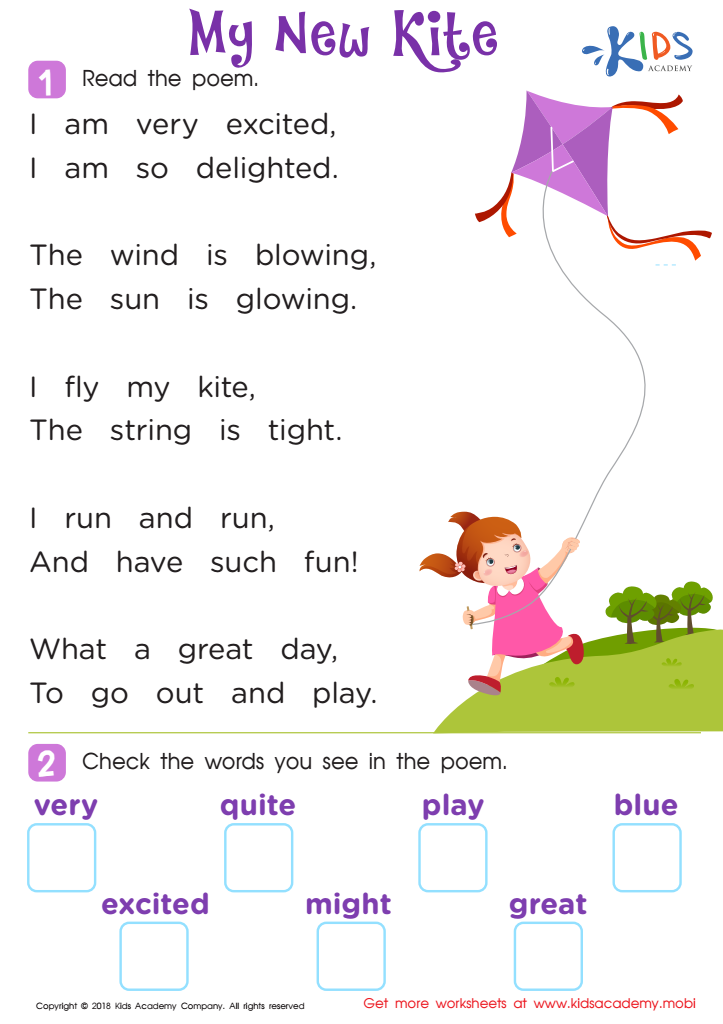
Poem: My New Kite Worksheet
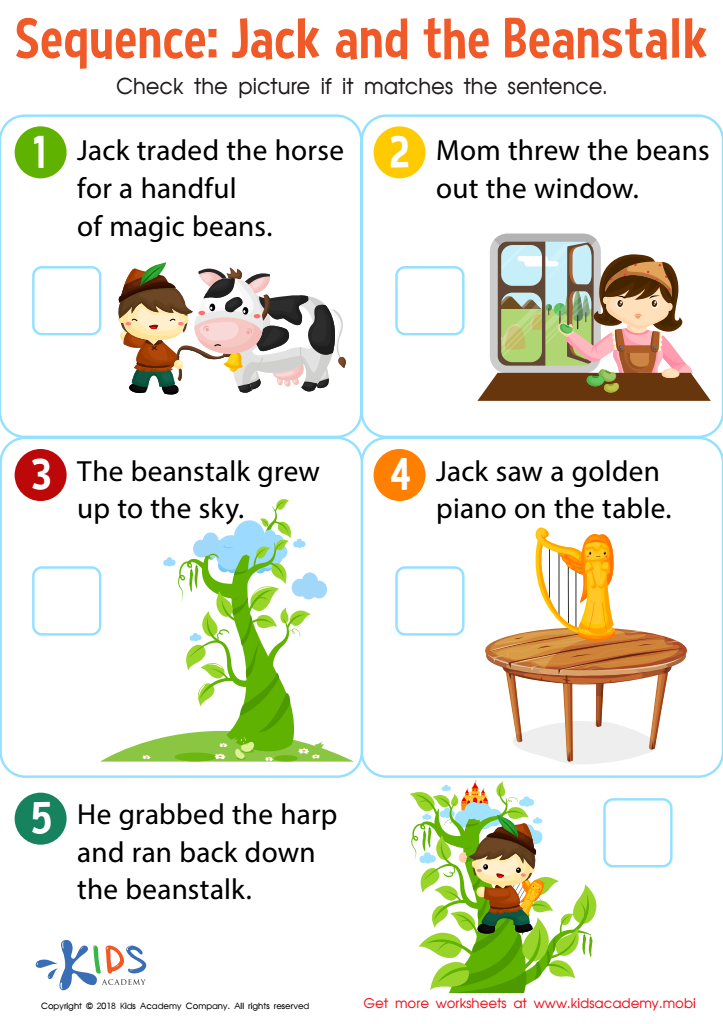
Sequence: Jack and The Beanstalk Worksheet
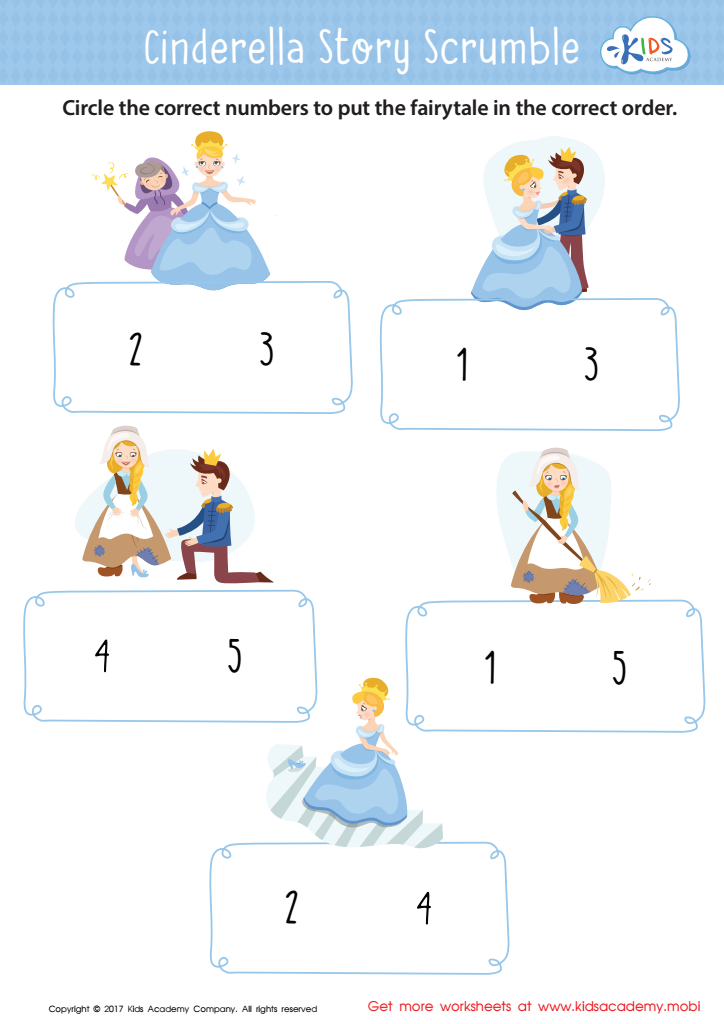
Cinderella Story Sequencing Worksheet
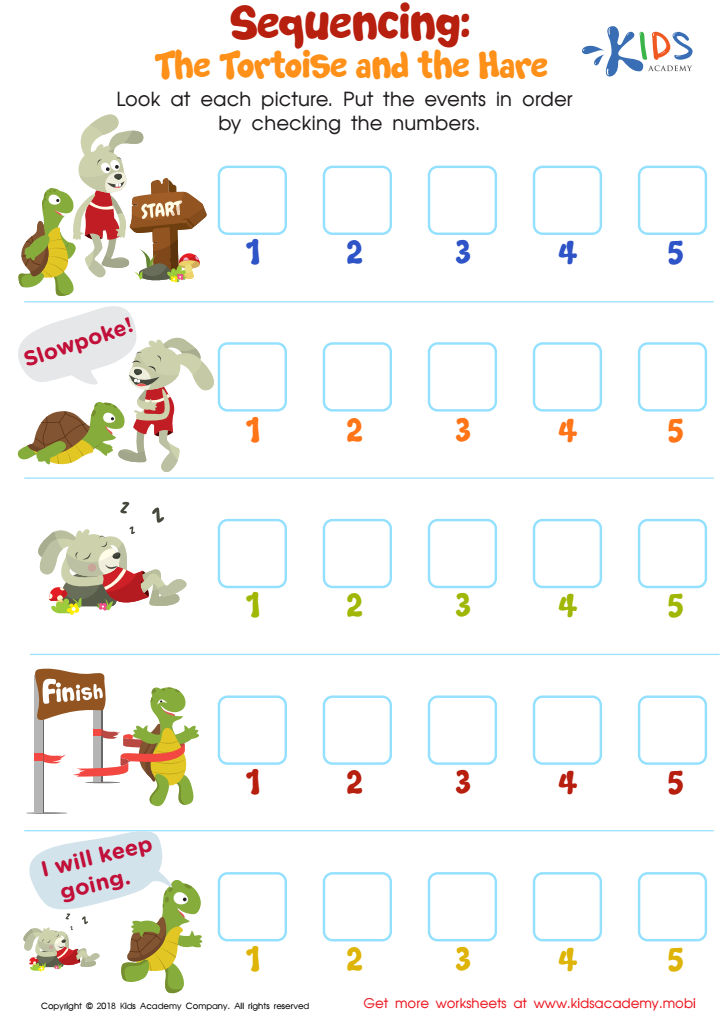
Sequencing: The Tortoise and the Hare Worksheet
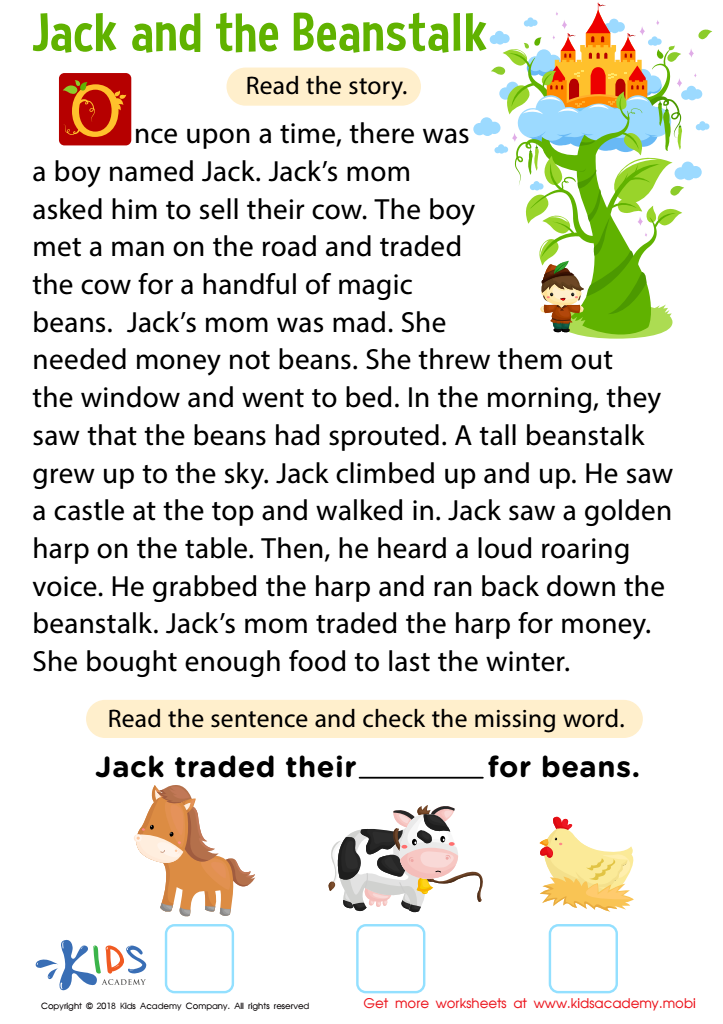
Jack and Beanstalk Worksheet
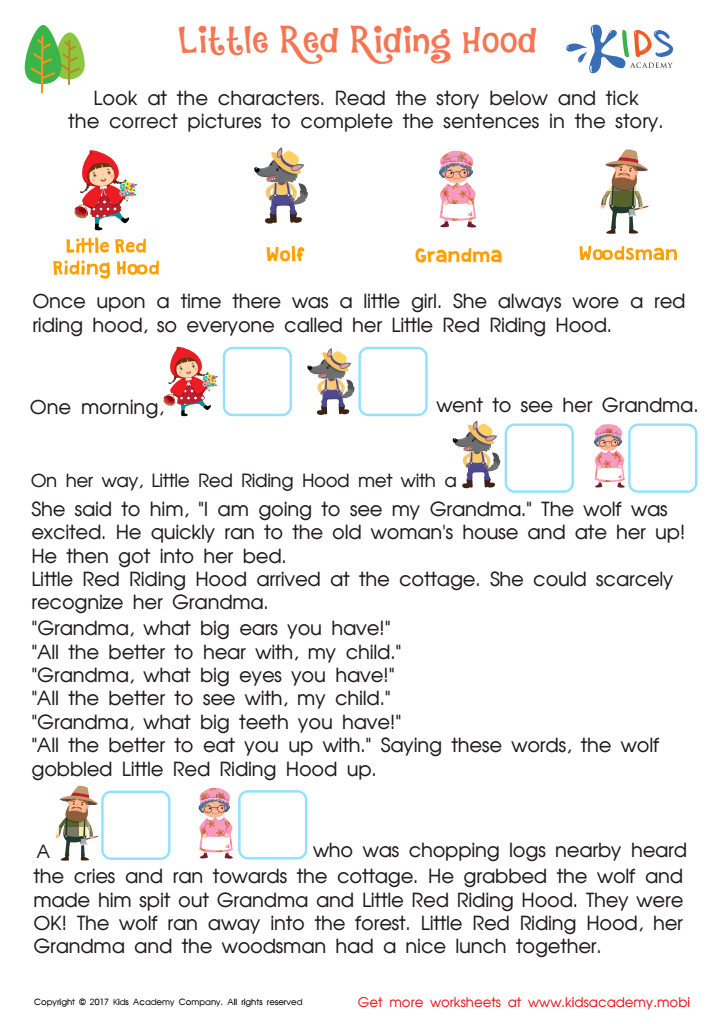
Little Red Riding Hood Printable
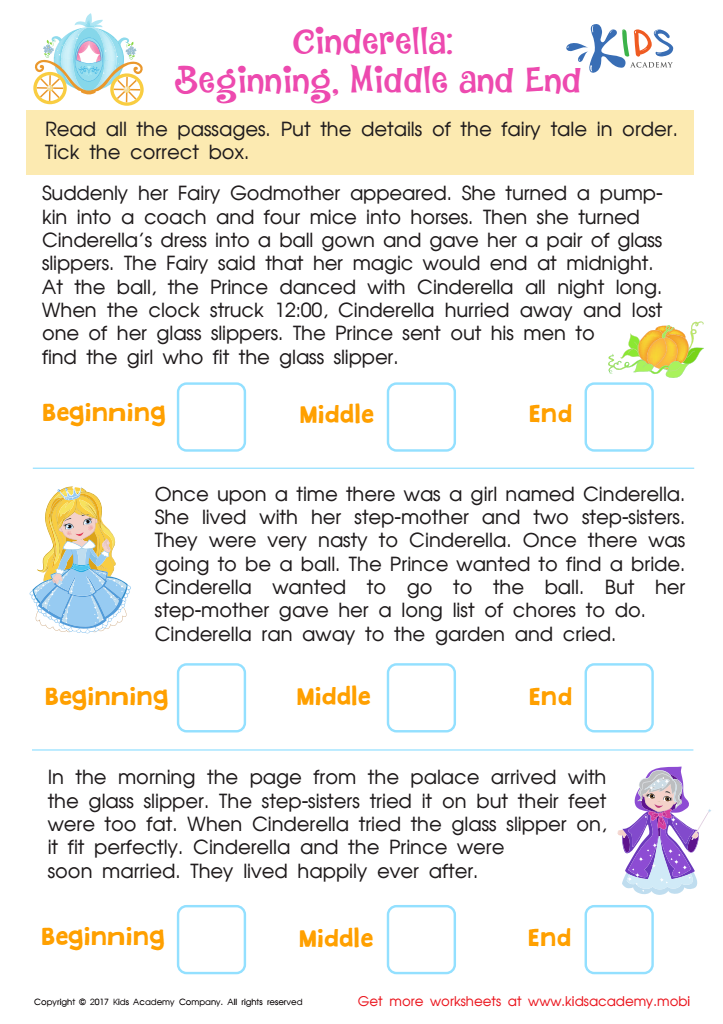
Cinderella: Beginning, Middle and End Worksheet
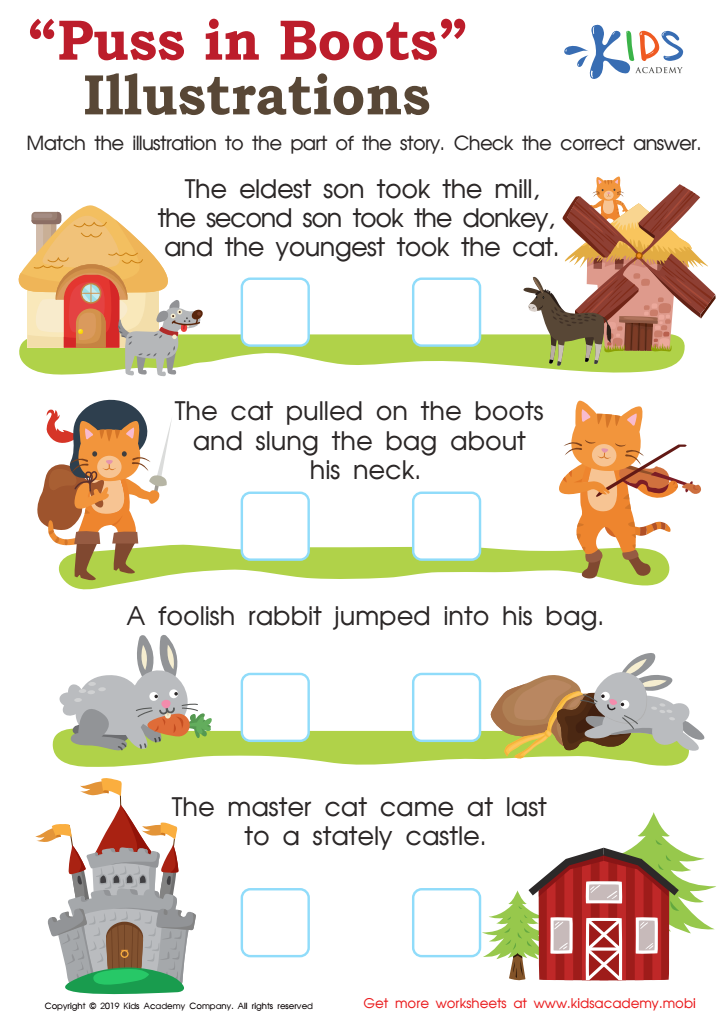
Puss in Boots Illustrations Worksheet
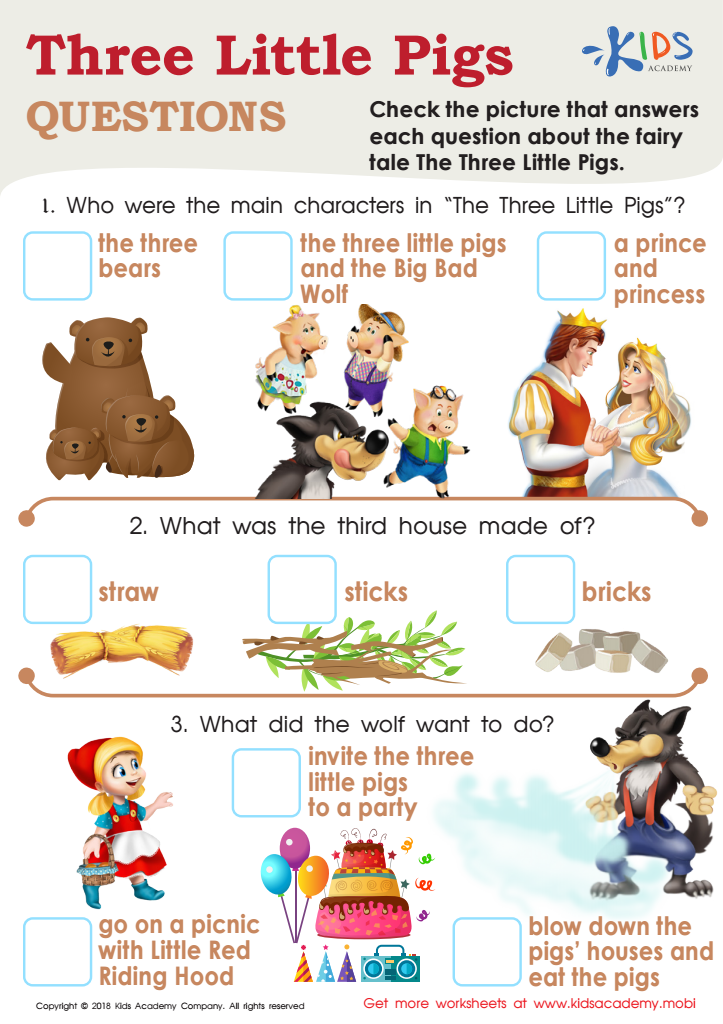
Three Little Pigs Questions Worksheet
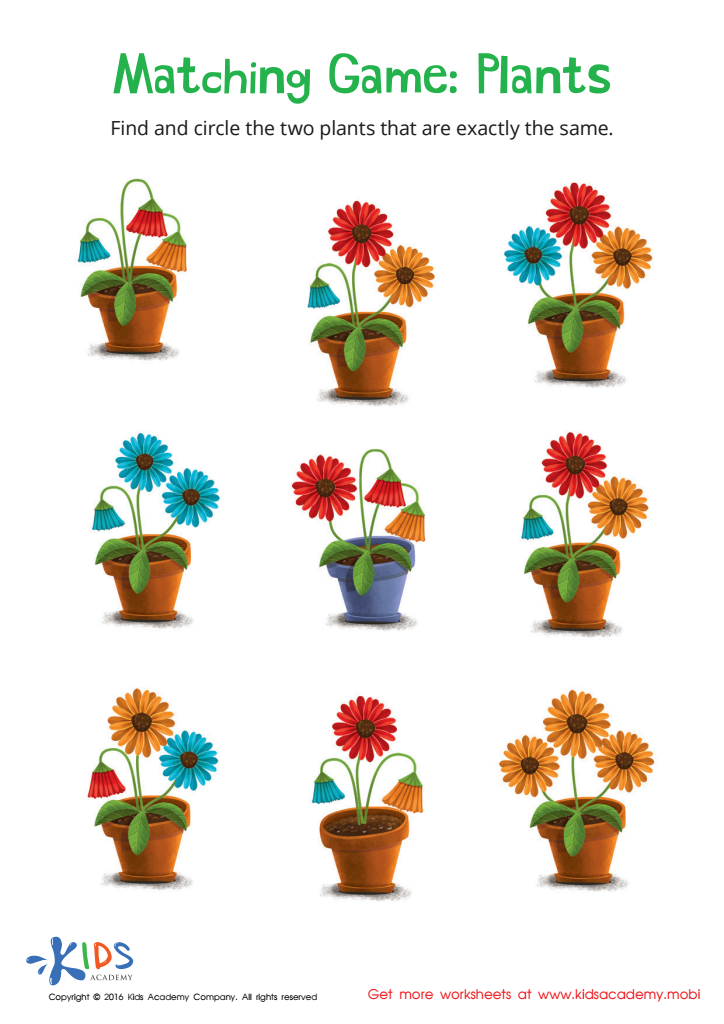
Matching: Plants Worksheet
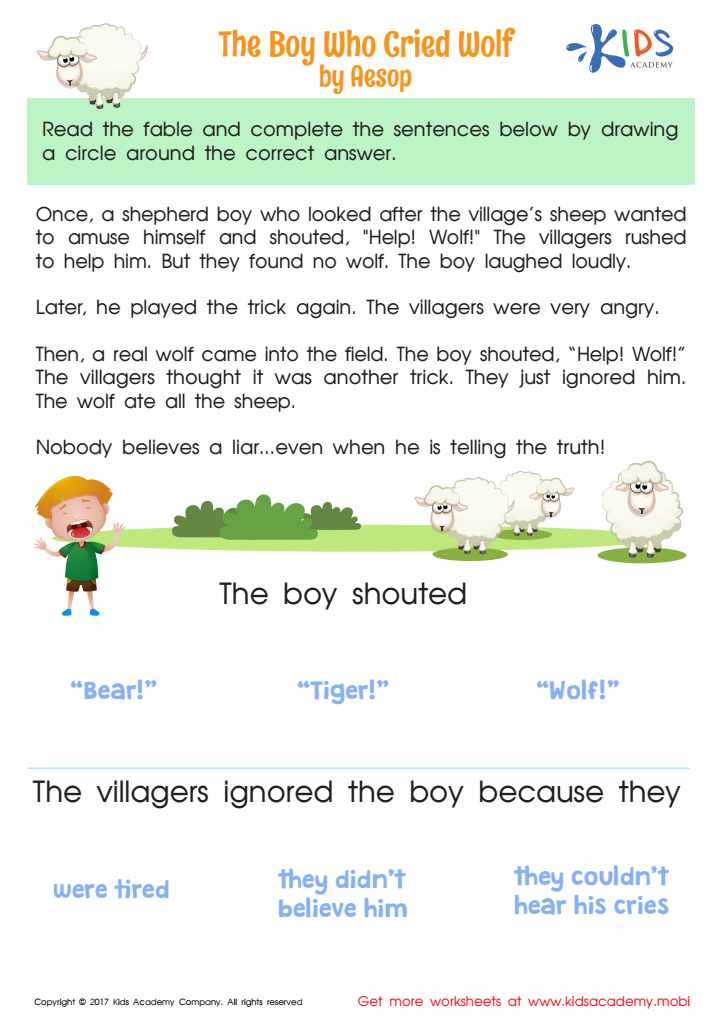
The Boy Who Cried Wolf Worksheet
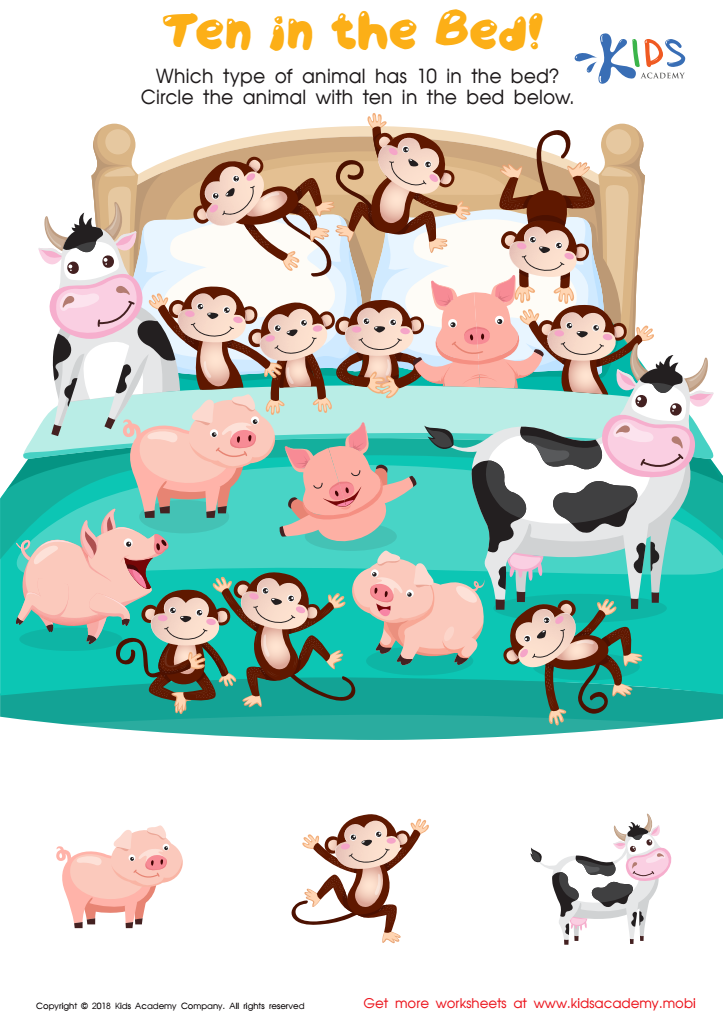
Ten in the Bed Worksheet
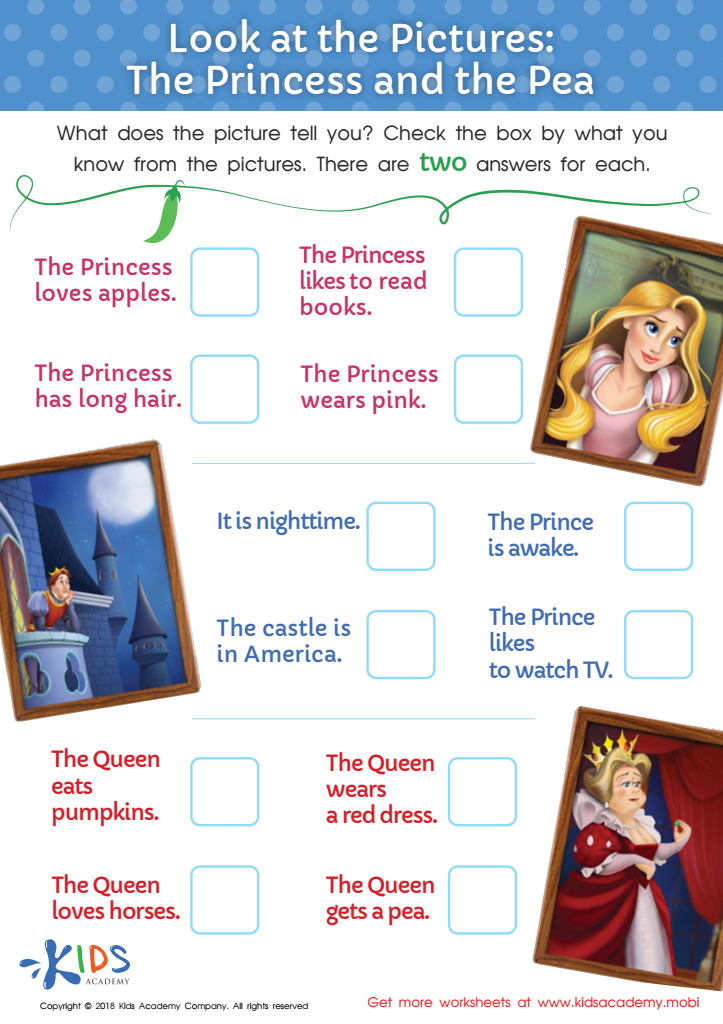
Look at the Pictures: The Princess and the Pea Worksheet
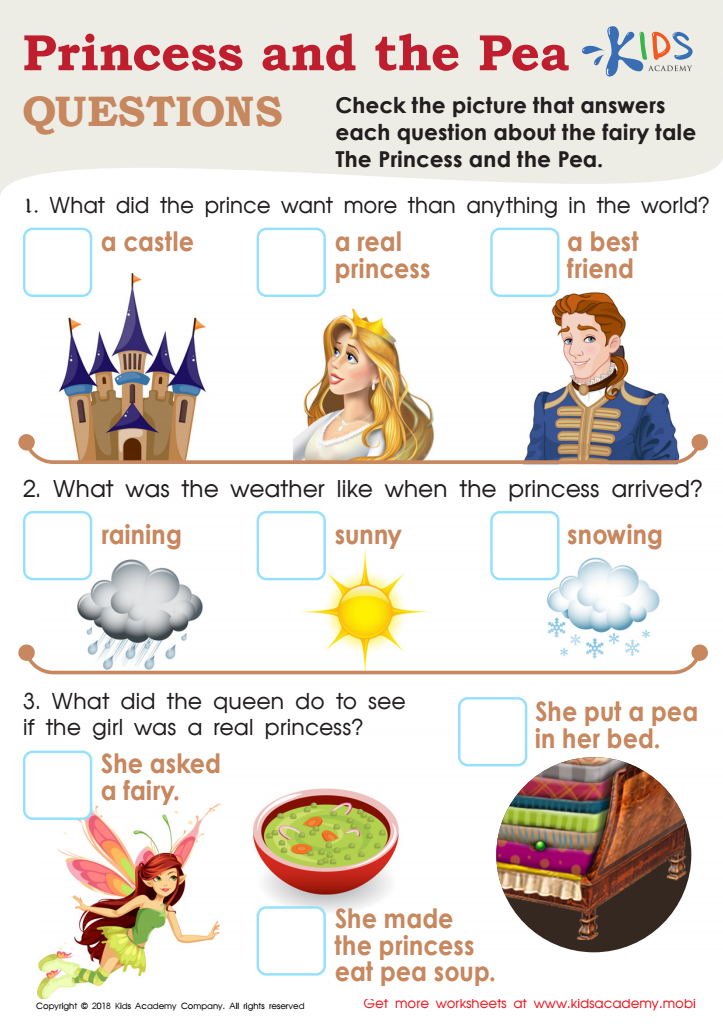
Princess and the Pea Questions Worksheet
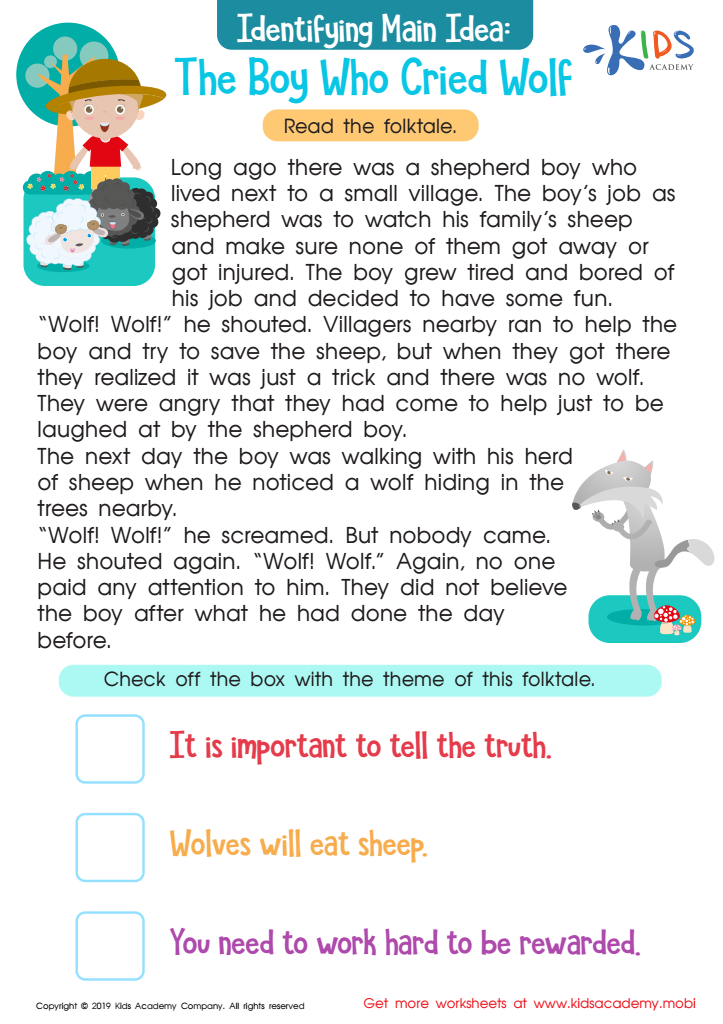
The Boy Who Cried Wolf Part 2 Worksheet


.jpg)




Story sequencing is a critical skill for young children, typically between the ages of 6-9, which forms the basis for both reading comprehension and effective communication. For parents and teachers, supporting this development reaps significant benefits. By mastering the ability to organize events in a logical order, children improve their comprehension and retelling abilities, enabling them to grasp narrative structures better when reading. This not only helps in academics but also in everyday storytelling, enhancing their expressive language skills.
Additionally, story sequencing encourages critical thinking and problem-solving capabilities. Children learn to recognize cause-and-effect relationships, make predictions, and infer outcomes, which are vital cognitive skills. This builds a foundation for more complex thinking and writing tasks they'll encounter later on.
Struggling with sequencing can indicate issues with other developmental areas, such as attention, memory, and understanding of language constructs. Early identification allows for timely interventions, ensuring that gaps are addressed before they hinder further academic progress.
Moreover, sequencing activities can be highly engaging, providing valuable hands-on learning opportunities. Whether through picture cards, story tapes, or interactive apps, these resources can turn learning into an enjoyable experience. Thus, supporting story sequencing not only nurtures essential academic skills but also fosters creativity and a love for storytelling.








