Cognitive Development Normal Geometry Worksheets for Ages 6-9
6 filtered results
-
From - To
Enhance your child's cognitive development with our specially designed Geometry Worksheets for ages 6-9. Featuring a variety of engaging activities, these worksheets are crafted to improve critical thinking, spatial awareness, and problem-solving skills in young learners. Each worksheet encourages hands-on learning and exploration of geometric concepts, including shapes, symmetry, and patterns. Ideal for both home and classroom use, our worksheets provide fun and educational challenges to boost your child's confidence in math while fostering essential cognitive growth. Give your child the tools they need for academic success with our expertly curated geometry resources.
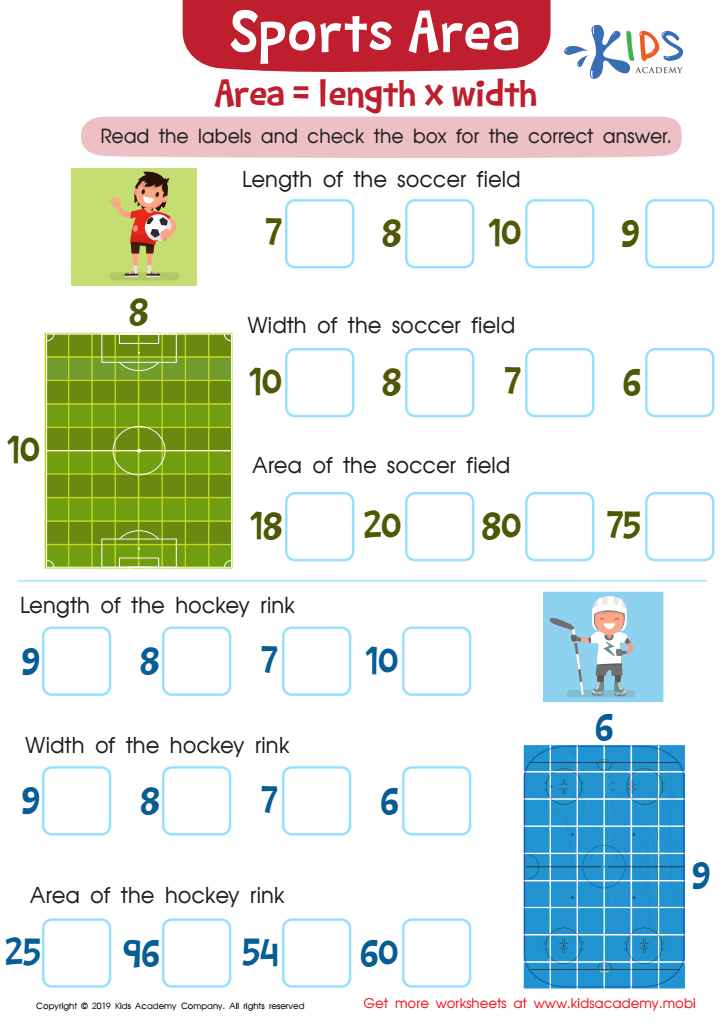
Sports Area Worksheet
 Assign to My Students











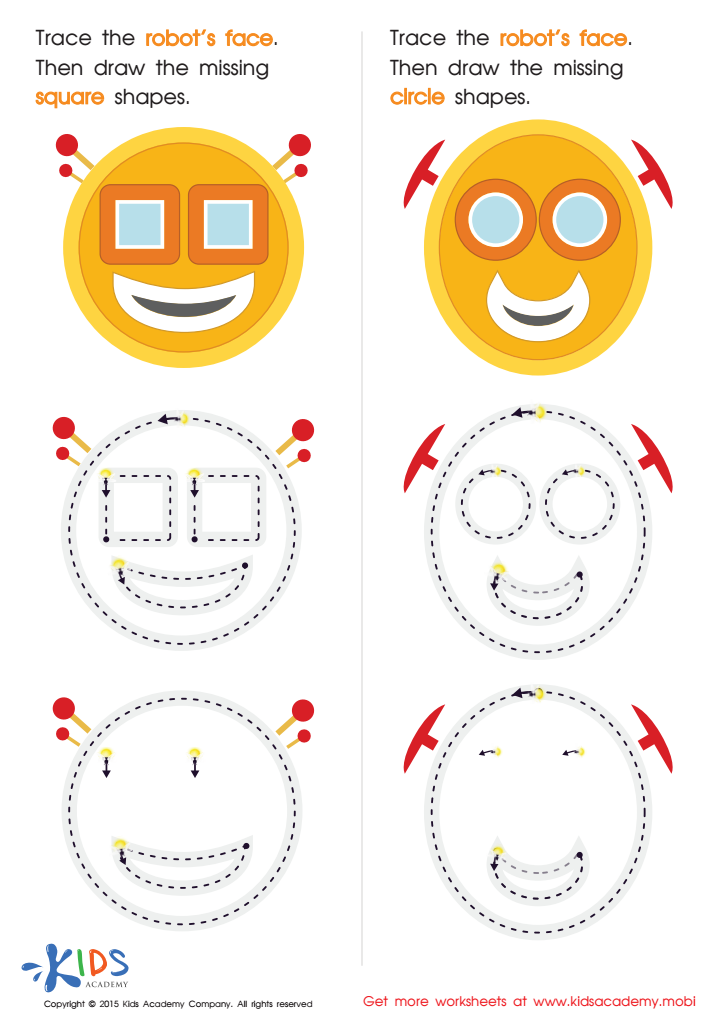
Practicing to Draw Circles And Squares Printable
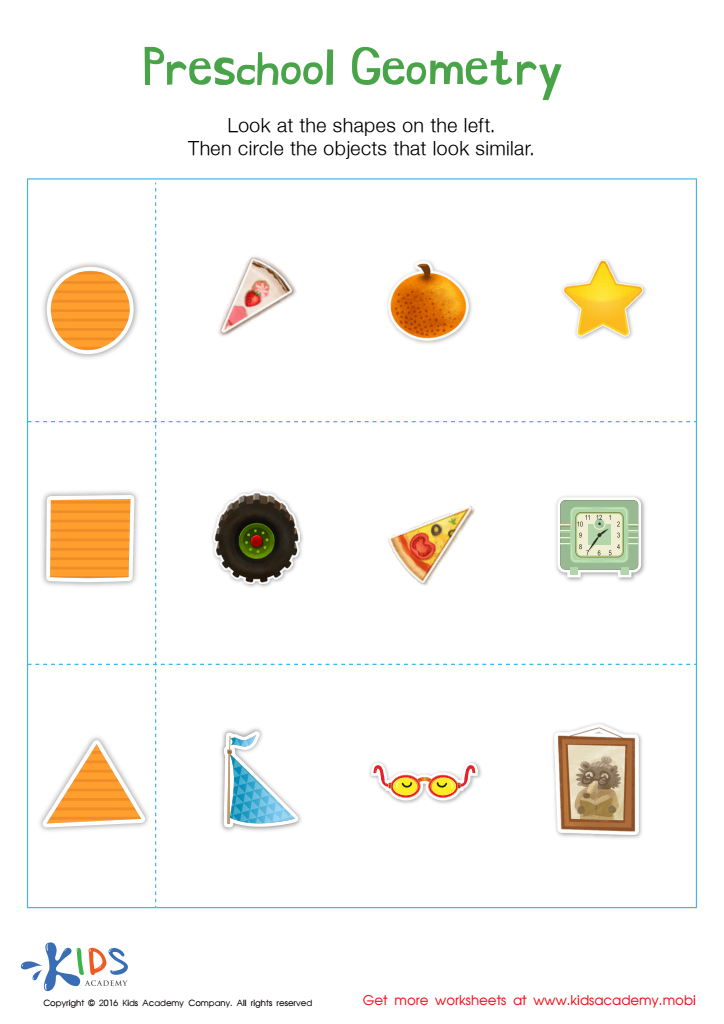
Preschool Geometry Match Up Worksheet
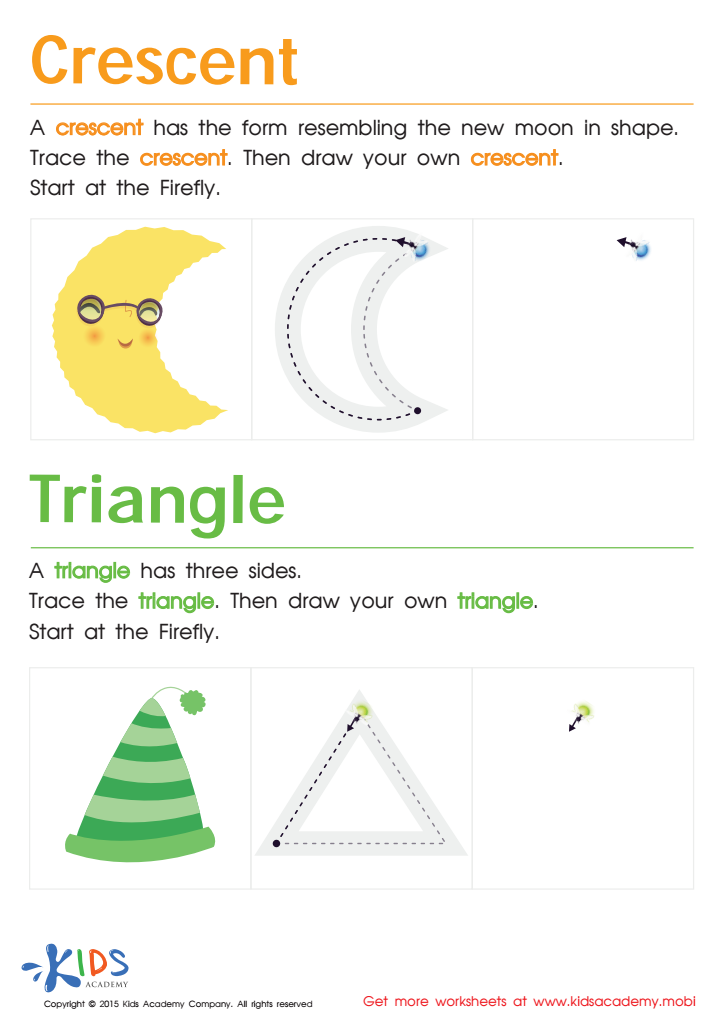
Learning to Draw Crescents And Triangles Worksheet
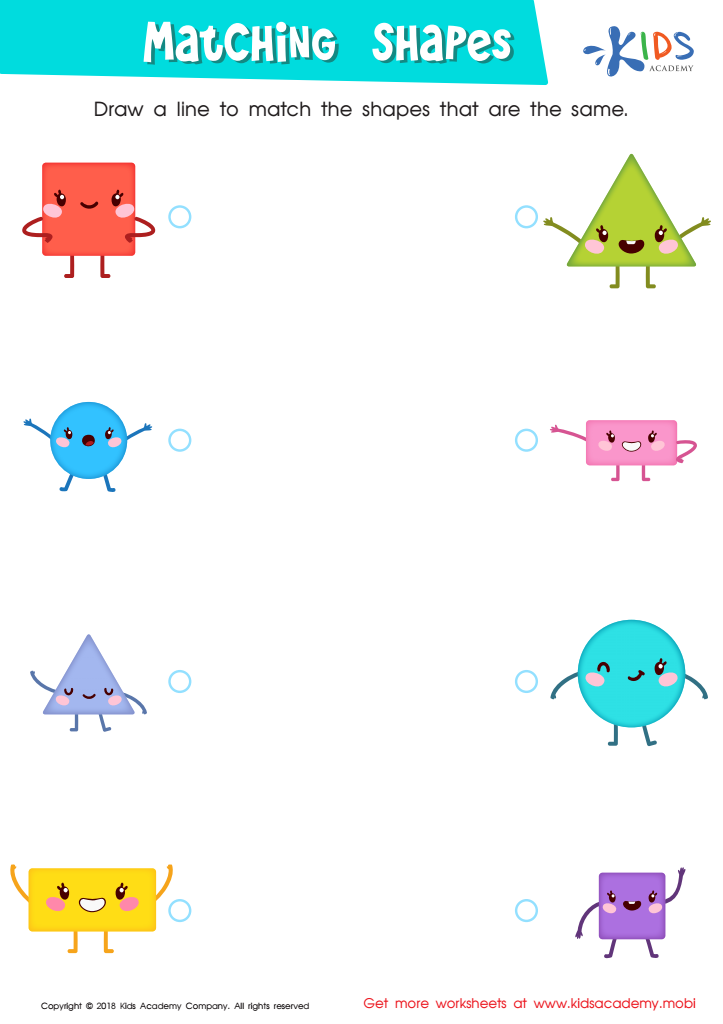
Matching Shapes Worksheet
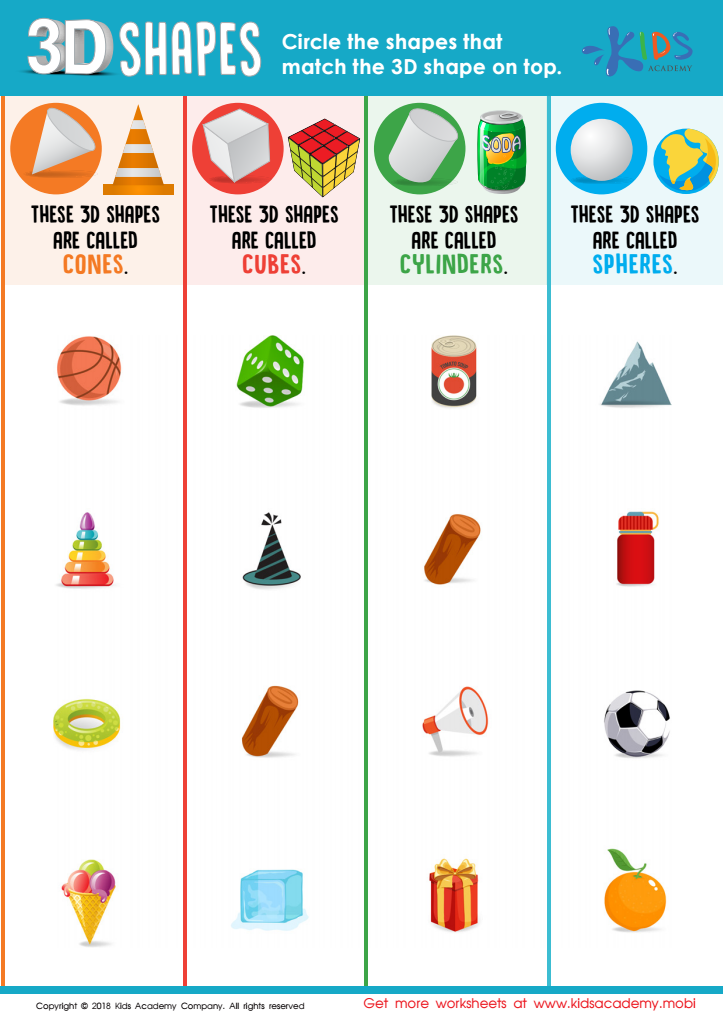
3D Shapes Worksheet








Parents and teachers should care about cognitive development in normal geometry for children ages 6-9 because it lays a foundational framework for critical thinking, problem-solving, and spatial awareness, which are essential for everyday life and future academic success. Cognitive development during these formative years is supercharged; young children are highly receptive to learning new concepts and honing their analytical skills.
Introducing geometry to children helps them understand and describe the world around them. For instance, recognizing shapes, sizes, patterns, and spatial relationships such as "above," "below," "next to," or "opposite" aids in their overall comprehension of spatial dynamics. These skills are not confined to math classes but extend to a wide range of activities, from reading maps to understanding graphs in science.
Moreover, early exposure to geometric concepts enhances visual-spatial intelligence, which is crucial in arts and sciences, including fields like engineering, architecture, and even technology-based areas like computer graphics and gaming. By nurturing these skills, parents and teachers provide children with the tools to become more adept thinkers and more competent learners. Encouraging structured play, using puzzles, drawing shapes, and simple hands-on geometric activities can engage children's minds in a fun and educational manner, helping them to develop a love for learning and a curious mind that seeks to understand the world in structured ways.








