Visual perception Normal Math Worksheets for Ages 7-9
5 filtered results
-
From - To
Discover our engaging Visual Perception Normal Math Worksheets designed for kids aged 7-9. These worksheets promote essential visual skills, including shape recognition, spatial reasoning, and pattern identification, all while reinforcing math concepts. Each activity is crafted to make learning enjoyable and interactive, supporting young learners in developing critical thinking and problem-solving abilities. With colorful graphics and age-appropriate challenges, these worksheets are perfect for home practice or classroom use. Enhance your child's numerical aptitude and visual skills today—set them on the path to math success with our easily accessible and printable resources. Dive into the world of engaging math learning!
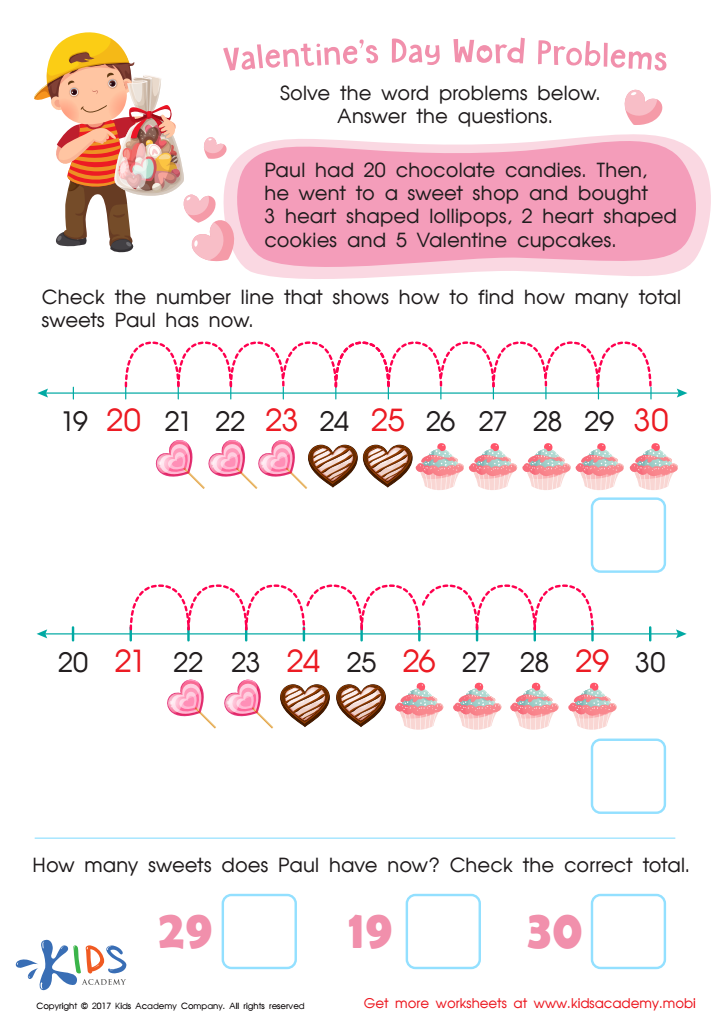
Valentines Day 2 Printable
 Assign to My Students
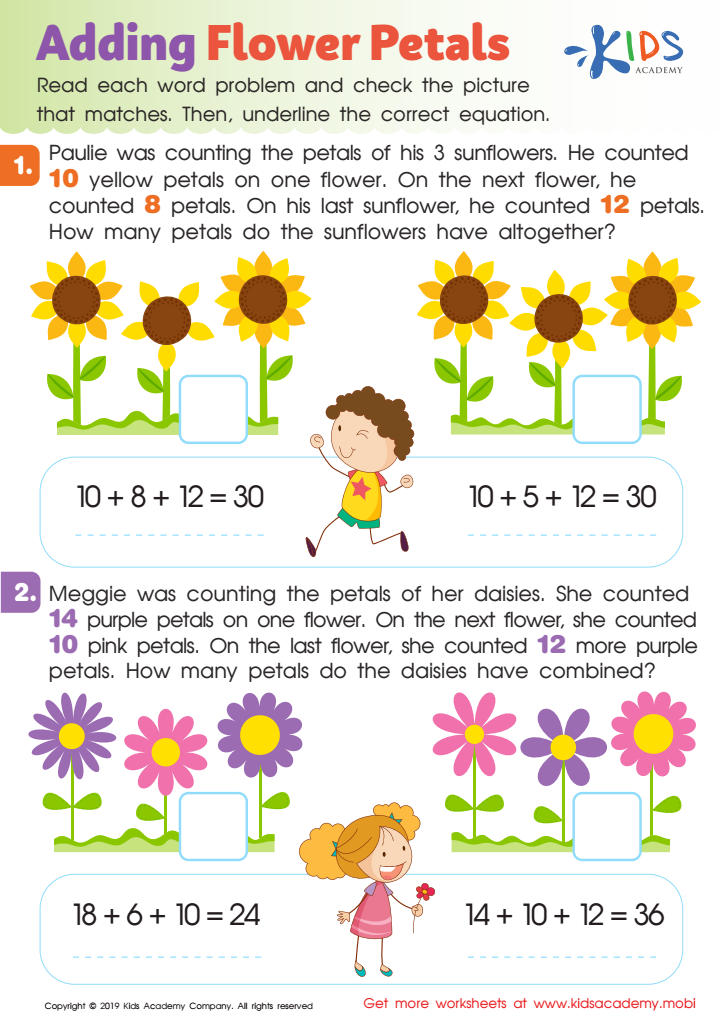
Adding Flower Petals Worksheet
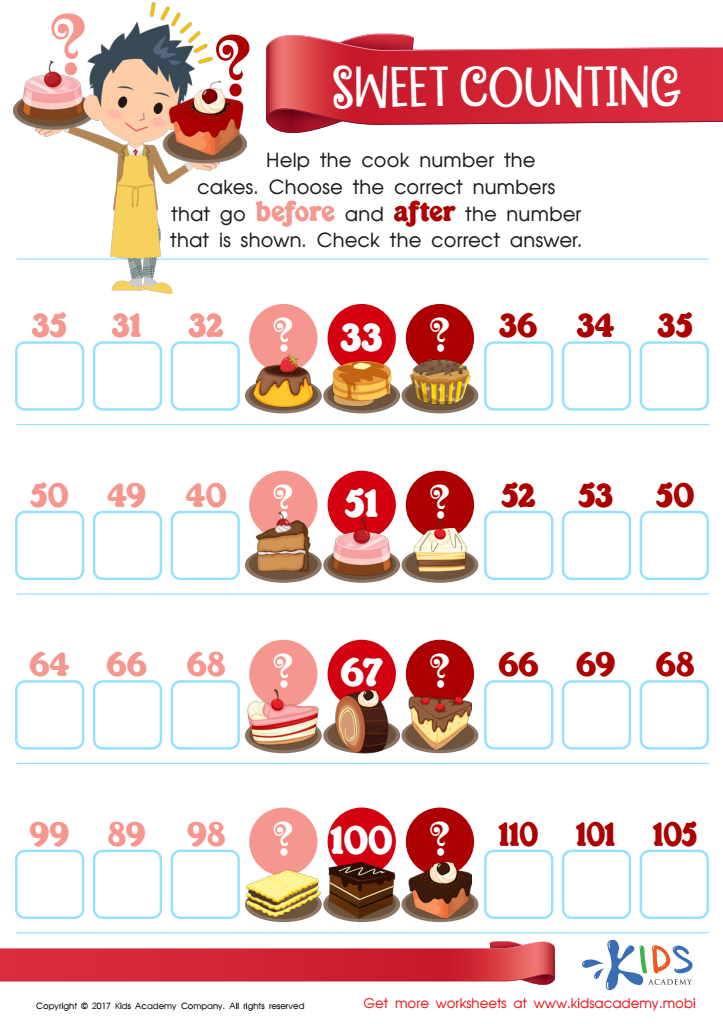
Sweet Counting - Part 1 Worksheet
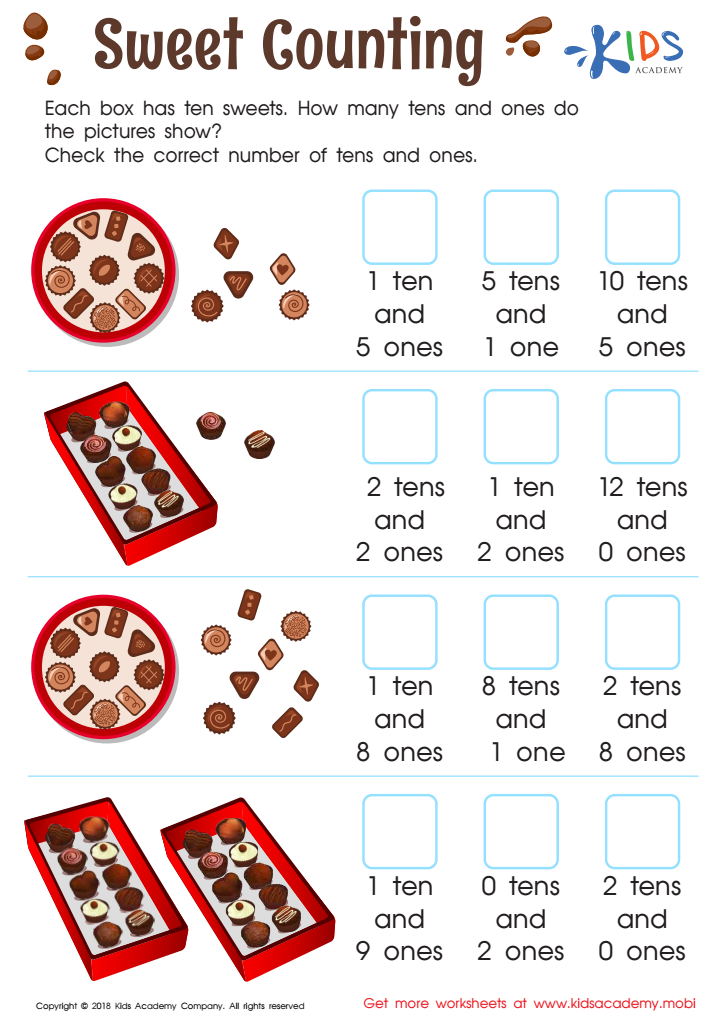
Sweet Counting - Part 2 Worksheet

Count the Animal Shadows Worksheet








Visual perception is essential for children aged 7-9 as it plays a critical role in their ability to understand and engage with mathematical concepts. This developmental stage is a pivotal time for building foundational skills necessary for more complex mathematical learning. Good visual perception aids children in recognizing patterns, understanding spatial relationships, and solving problems, which are all key aspects of effective mathematical reasoning.
When parents and teachers prioritize visual perception, they equip children with the tools needed to interpret and work with numbers and shapes visually. This skill allows for greater ease in grasping concepts such as geometry, measurement, and even basic arithmetic. For example, the ability to recognize a number's shape or visualize geometric forms enhances a child's competence in solving math problems.
Moreover, children who struggle with visual perception may experience difficulties in math, leading to frustration and decreased motivation. Thus, proactive support in strengthening these visual skills can not only aid academic achievement but also promote a positive attitude towards learning. By fostering visual perception, parents and teachers help ensure that children develop a robust math foundation that will serve them throughout their educational journey and beyond.








