
Interpreting data Normal Math Worksheets for Ages 8-9
3 filtered results
Difficulty Level
Grade
Age
-
From - To
Subject
Activity
Standards
Unlock the power of data analysis for your 8-9-year-olds with our Interpreting Data Normal Math Worksheets. These expertly designed worksheets make learning fun and engaging by helping children grasp key concepts such as reading graphs, understanding data sets, and analyzing patterns. Developed to align with standard curriculum goals, each worksheet provides step-by-step exercises to build strong mathematical foundations. Boost your child's confidence and analytical skills as they interpret bar graphs, line plots, and tables. Start transforming data into understandable, actionable insights with our insightful, educational resources. Ideal for both classroom and at-home learning.
Favorites
With answer key
Interactive
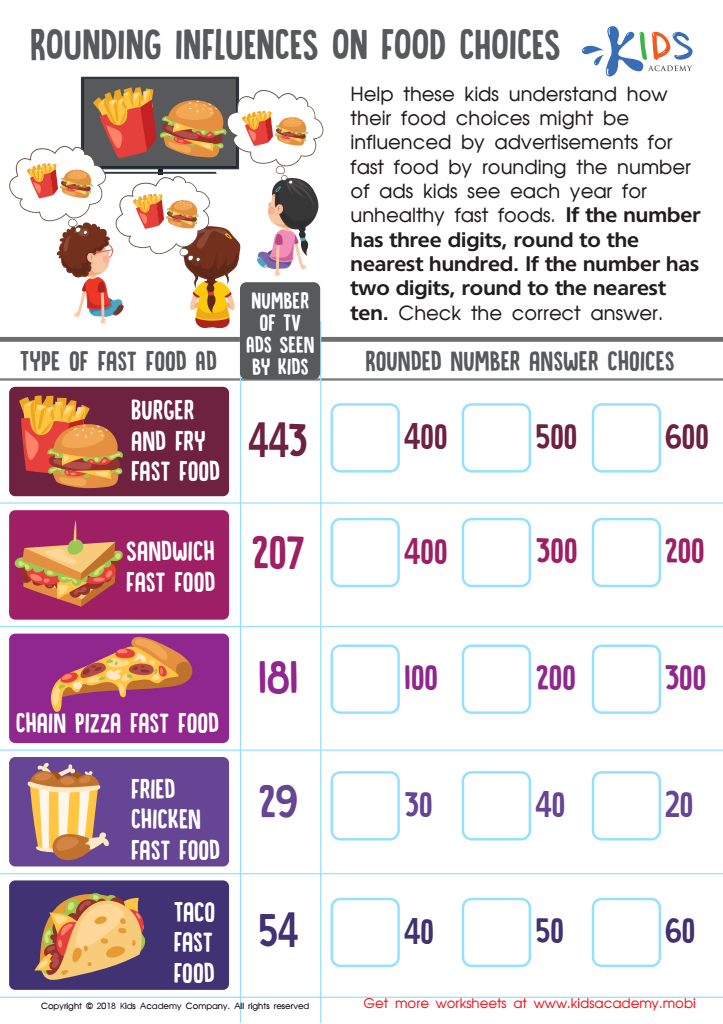
Rounding Influences Food Choices Worksheet
Kids find math more enjoyable when it reflects real-life scenarios. This free worksheet combines math and health! Kids view data on the number of ads they're exposed to in a year and must round the numbers to the nearest ten or hundred. Solve and check the correct answers to finish.
 Assign to My Students
Rounding Influences Food Choices Worksheet
Worksheet
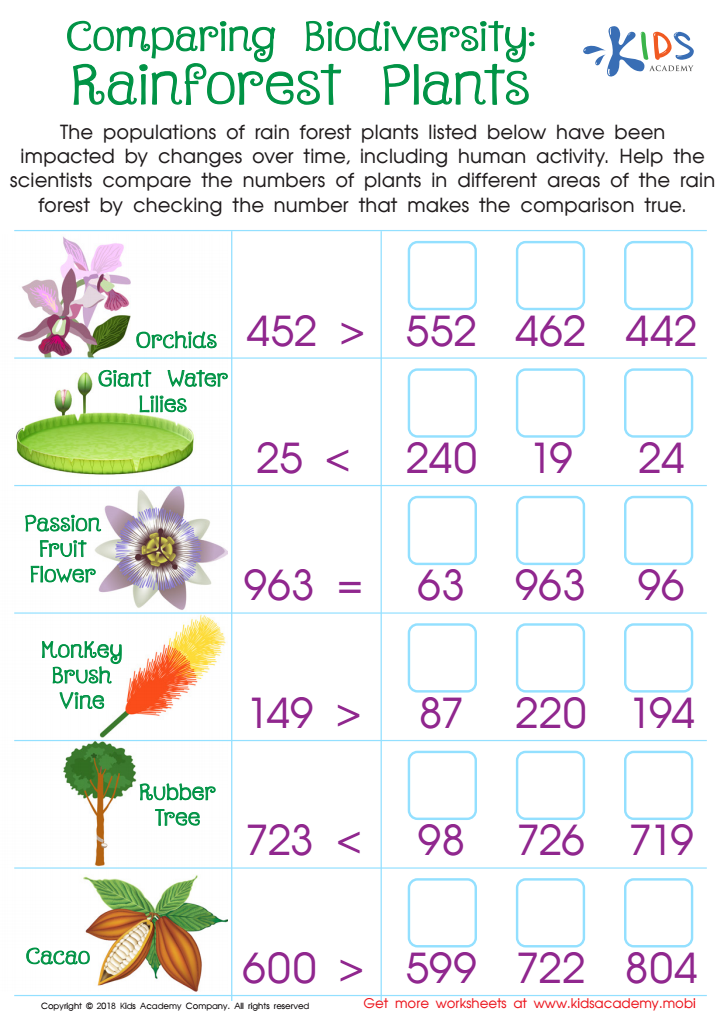
Comparing Biodiversity: Rainforest Plants Worksheet
Have your students learn about biodiversity in the rainforest and practice number sense and reasoning with this colorful PDF worksheet. Comparing the numbers of plants found in different areas of the rainforest, they'll combine eco-friendly science and math to make the number comparisons true.
Comparing Biodiversity: Rainforest Plants Worksheet
Worksheet
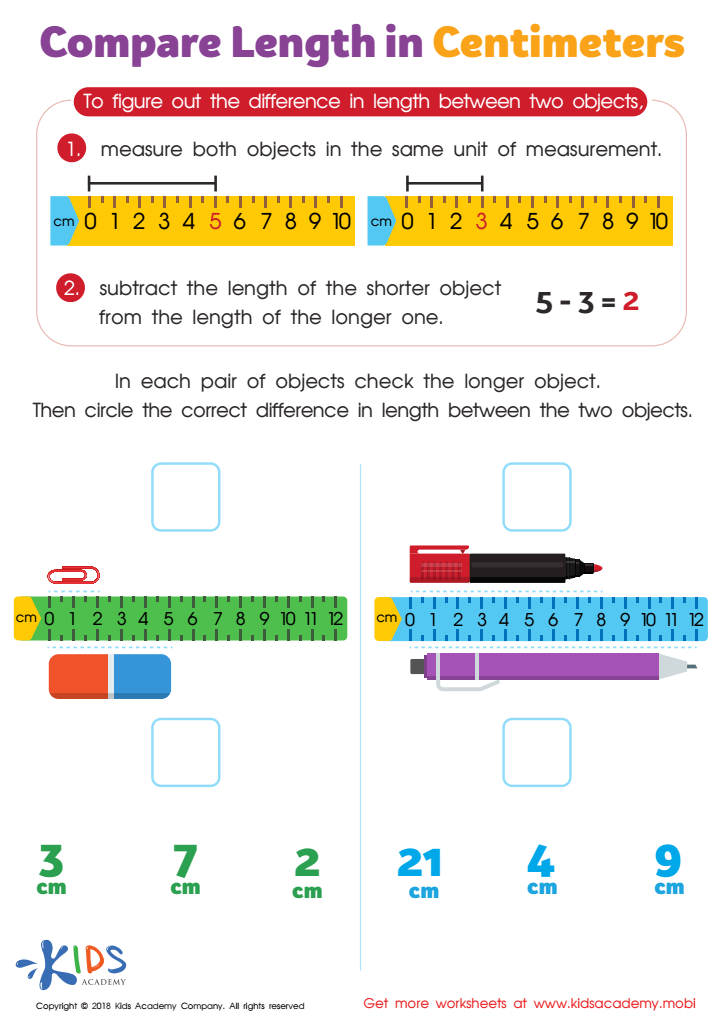
Compare Length in Centimeters Worksheet
To do this worksheet, your child needs to be able to measure accurately, add and subtract. They must measure both items and subtract the shorter from the longer to work out the difference in length.
Compare Length in Centimeters Worksheet
Worksheet
Join Kids Academy for Free
Who is primarily going to use this learning content?








Interpreting data is a fundamental skill that lays the foundation for logical thinking and problem-solving, especially in children aged 8-9. At this age, kids are naturally curious and capable of grasping basic mathematical concepts. Introducing them to data interpretation helps nurture these interests and abilities.
For parents and teachers, it's crucial to recognize that data interpretation is not just about numbers; it involves critical thinking, pattern recognition, and deductive reasoning. When children learn to interpret data, they develop skills in assessing information, spotting trends, and making informed decisions. These skills are relevant in both everyday life and academic contexts, from understanding simple charts and graphs to evaluating more complex information.
In the digital age, where data is ubiquitous, the ability to understand and analyze information becomes even more vital. Kids who cultivate these abilities early on are better equipped to navigate a world inundated with data. Additionally, these skills foster self-confidence and independence in learning, allowing children to approach problems systematically and with a greater sense of control.
Moreover, encouraging children at a young age to engage with data interpretation makes mathematics more practical and engaging, which can elevate their interest and proficiency in the subject. This early foundation can spark a lifelong interest in STEM (Science, Technology, Engineering, and Math) fields, enriching their academic and professional futures.








