
Understanding fractions Normal Worksheets for 8-Year-Olds
15 filtered results
Difficulty Level
Grade
Age
-
From - To
Subject
Activity
Standards
Unlock the world of fractions with our engaging "Understanding Fractions Normal Worksheets" designed specifically for 8-year-olds. These worksheets provide a fun and interactive way for young learners to grasp the concept of fractions, including identifying, comparing, and simplifying them. Each activity is tailored to reinforce essential skills while sparking curiosity and fostering a love for math. Our easy-to-follow exercises are perfect for classroom use or at-home learning, promoting independent thinking and problem-solving. Help your child build a strong mathematical foundation with our carefully crafted resources, ensuring a smooth journey in understanding this crucial math concept. Explore the wonders of fractions today!
Favorites
With answer key
Interactive
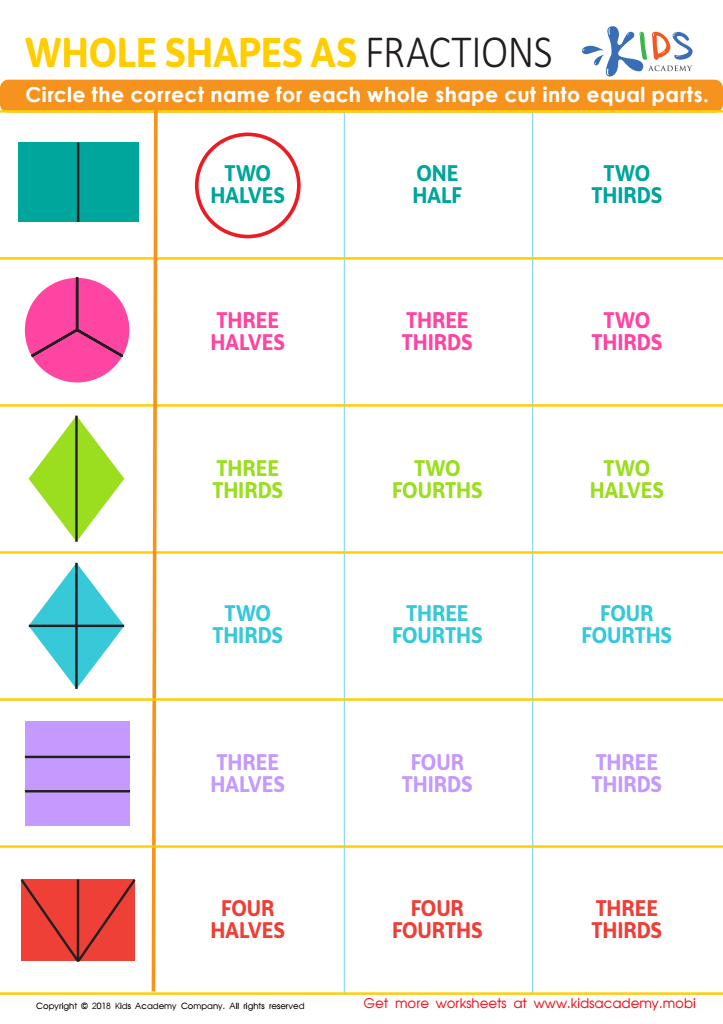
Whole Shapes as Fractions Worksheet
Introduce your child to fractions! After they can draw whole shapes, have them represent them as fractions using a simple worksheet. This will help improve their understanding of naming whole shapes cut into equal parts.
 Assign to My Students
Whole Shapes as Fractions Worksheet
Worksheet
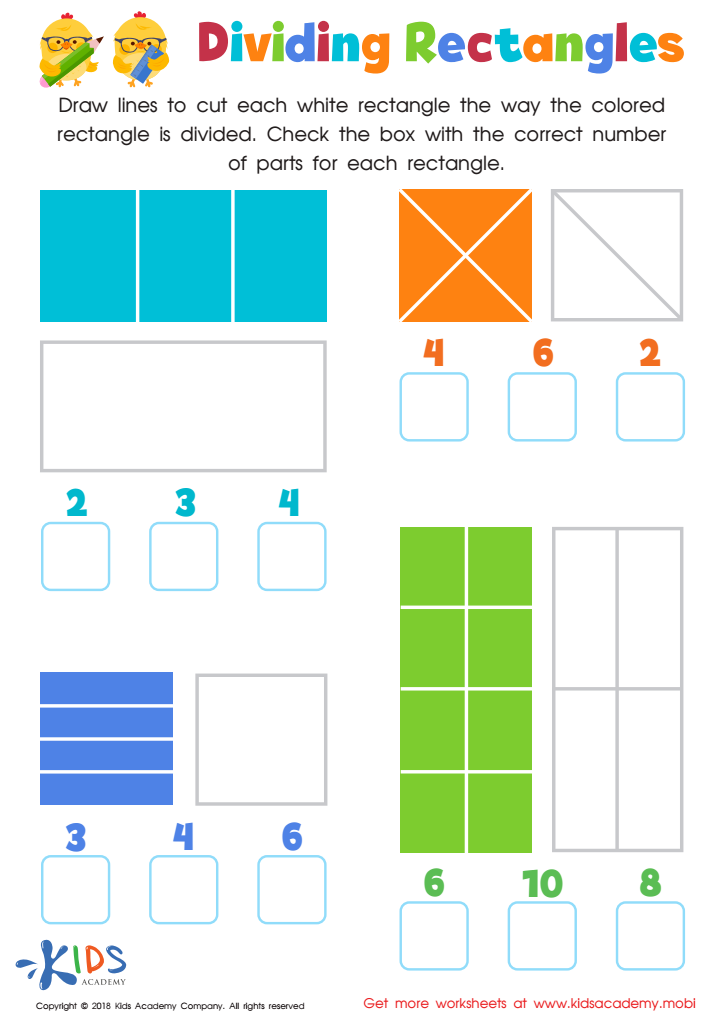
Dividing Rectangles Worksheet
Ask your child to draw lines to divide the white rectangles like the colored ones. Then, have them count the parts in each and choose the correct number. This worksheet will help them practice counting and dividing.
Dividing Rectangles Worksheet
Worksheet
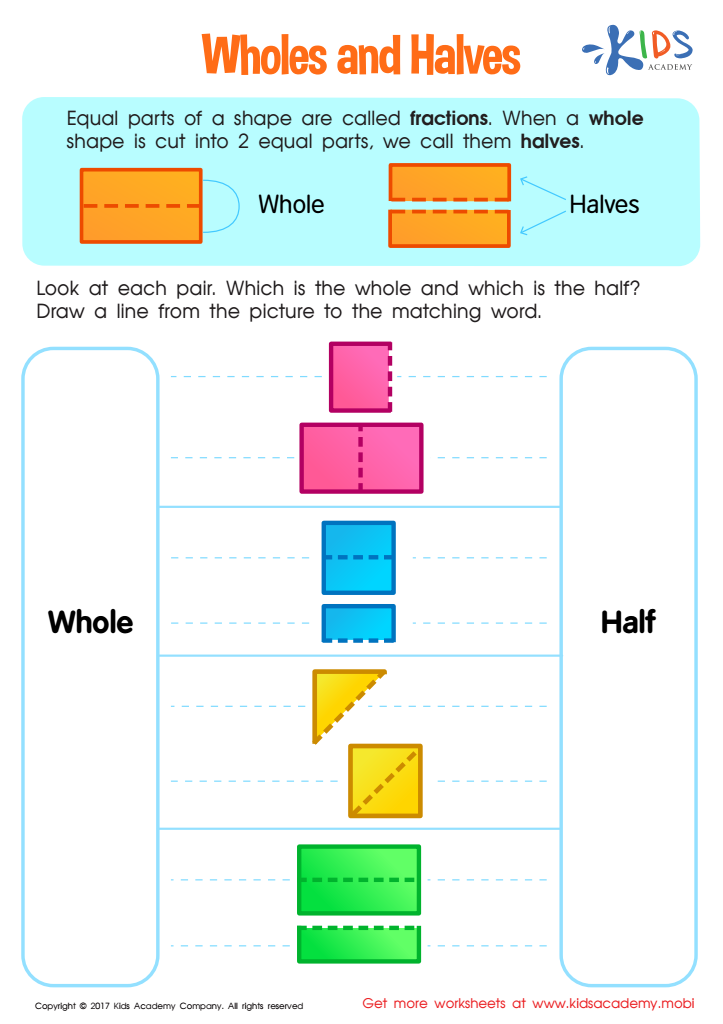
Wholes and Halves Worksheet
Students can feel overwhelmed with fractions. Help take the stress off by using a colorful worksheet to explain whole shapes and how to find halves. Ask them to identify the whole and point to the matching word for the half. A free printout can help guide them.
Wholes and Halves Worksheet
Worksheet
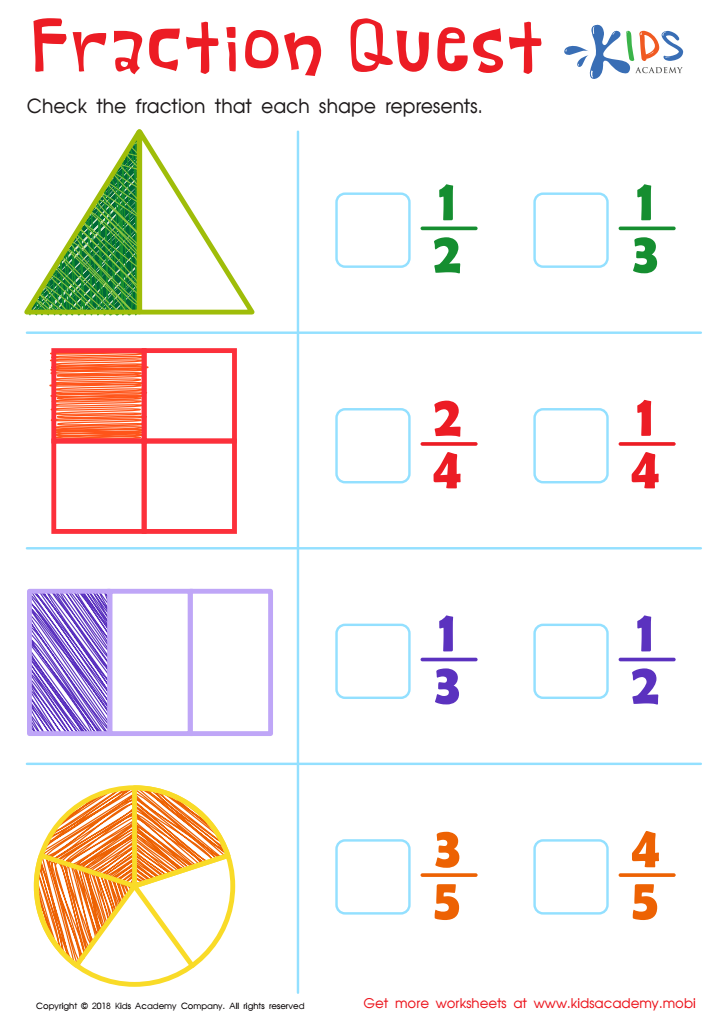
Fraction Quest Worksheet
This colorful and educative worksheet can help kids conquer their fractions struggles. Ask them to identify the four shapes, then the fractions they represent. They can then check the correct answers from the options given.
Fraction Quest Worksheet
Worksheet
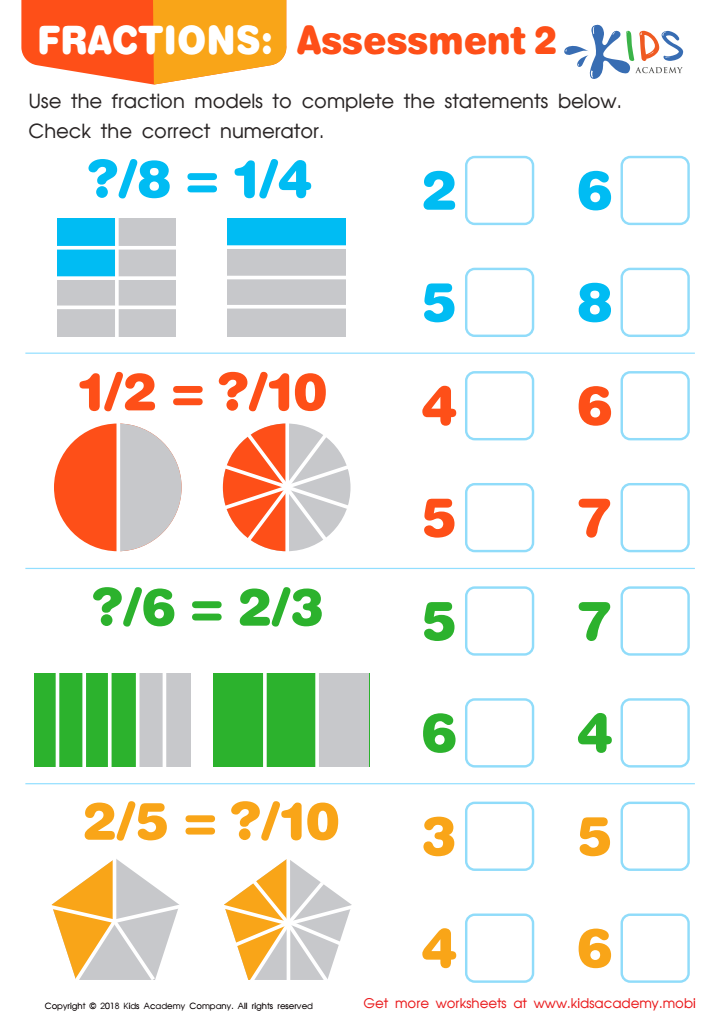
Fractions: Assessment 2 Worksheet
Help your kids understand fractions better with this worksheet. Ask them to complete the fraction statements using the fraction models on the left and then check the correct numerators. This can help clear up any confusion they may have with fractions and fraction models.
Fractions: Assessment 2 Worksheet
Worksheet
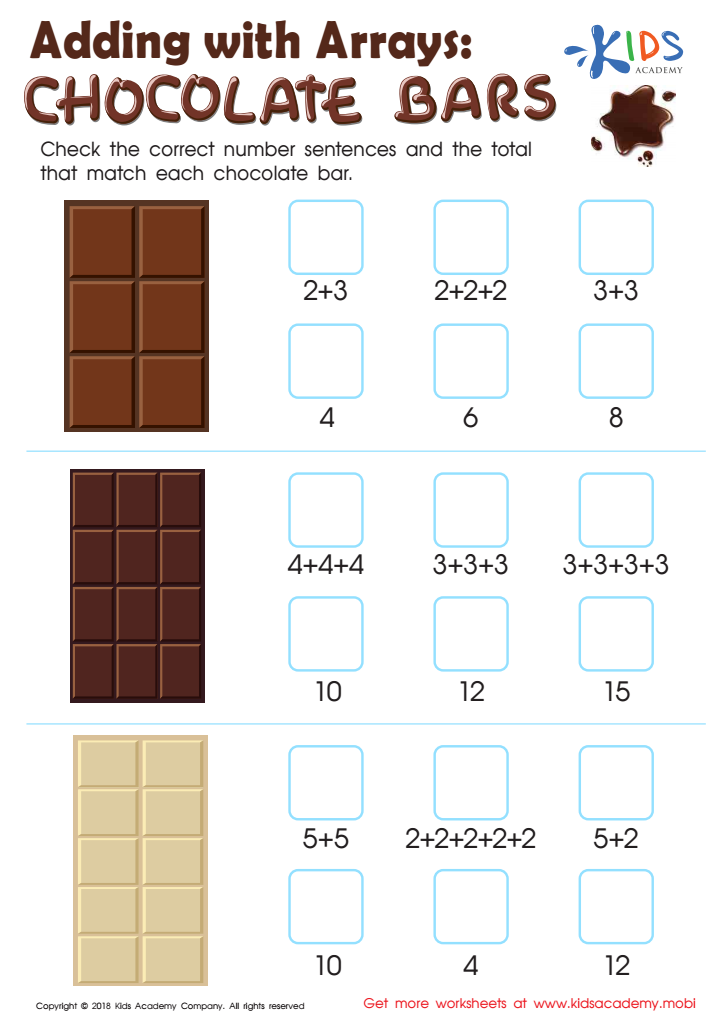
Adding with Arrays: Chocolate Bars Worksheet
Kids love chocolates! Gauge how enthused your kids get when you mention them. This worksheet is a fun exercise about chocolates - get your kids to check the correct number sentences and totals for each chocolate bar. Reward their hard work with some chocolates - extra incentive for a job well done!
Adding with Arrays: Chocolate Bars Worksheet
Worksheet
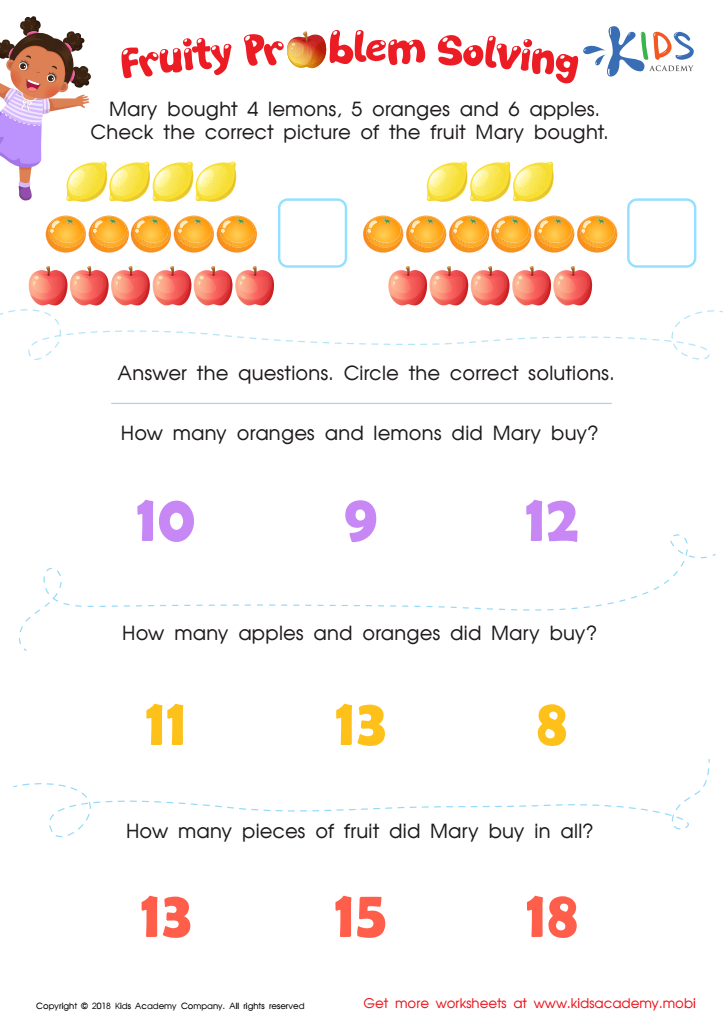
Fruity Problem Solving Worksheet
Practice addition word problems with young mathematicians using this PDF worksheet featuring fruit. As they read each problem carefully and circle the correct sums, they'll reinforce attention to detail and fine motor skills. Tangible representations are key to helping them with basic addition.
Fruity Problem Solving Worksheet
Worksheet
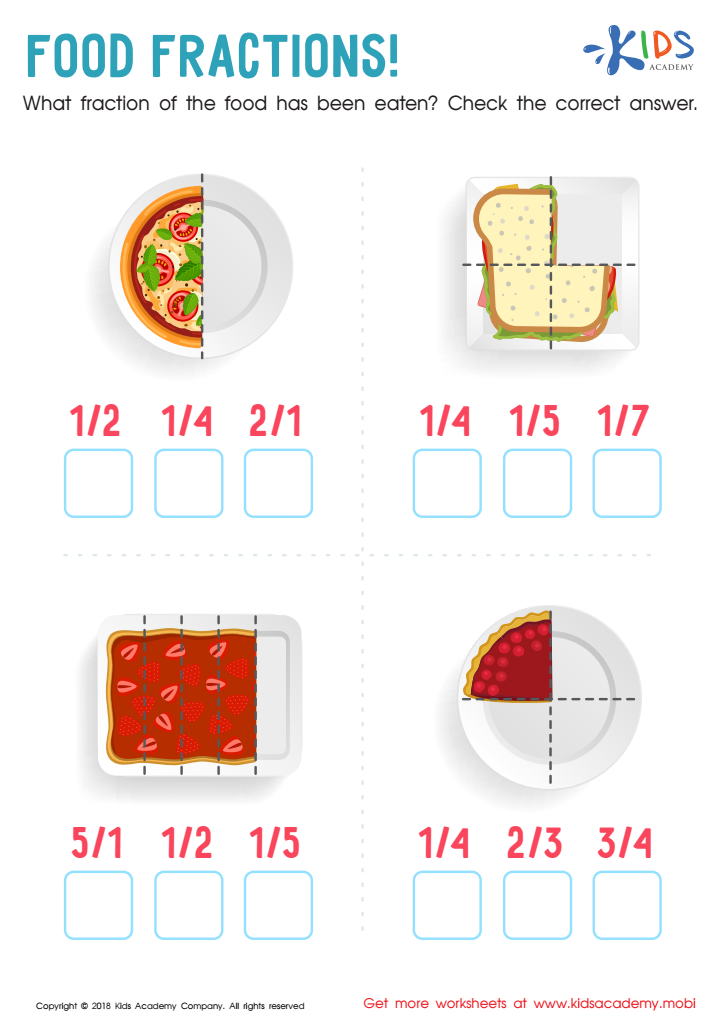
Food Fractions Worksheet
Test your child's understanding of fractions with this Food Fractions worksheet. Ask them to identify what fraction of the food in the four pictures has been eaten and select the correct answer from the options provided. See how well they understand your lessons!
Food Fractions Worksheet
Worksheet
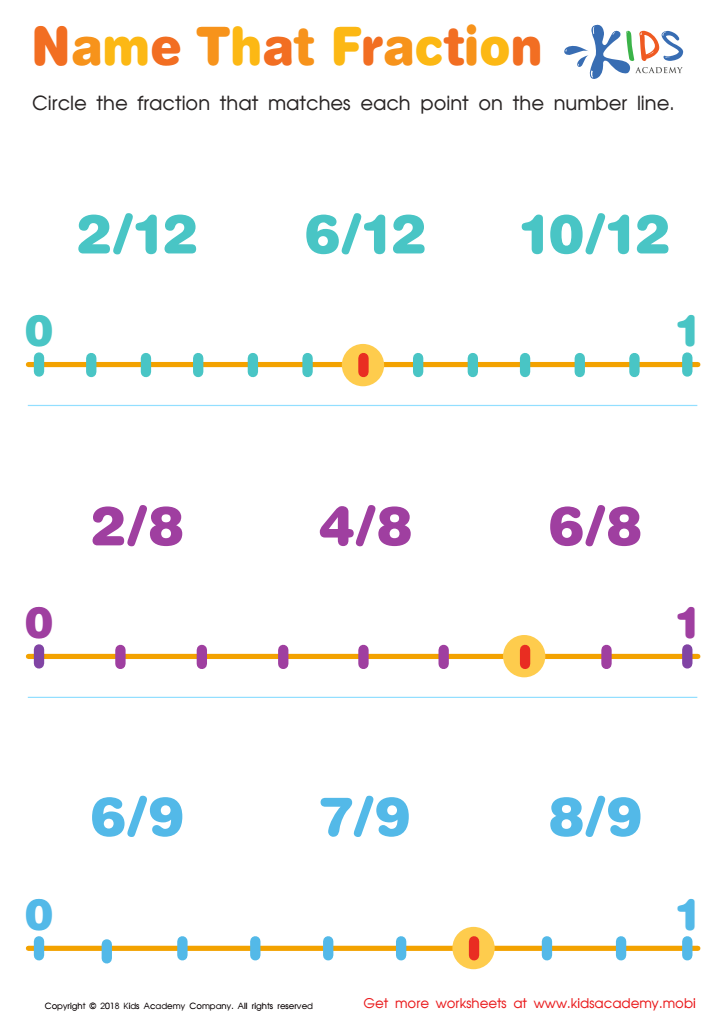
Name That Fraction Worksheet
Kids must learn to identify and name fractions to solve equations. Included in this worksheet are three equations that need solving. Have your child match each point on the number line with the correct fraction and circle it. This exercise helps build their fraction skills.
Name That Fraction Worksheet
Worksheet
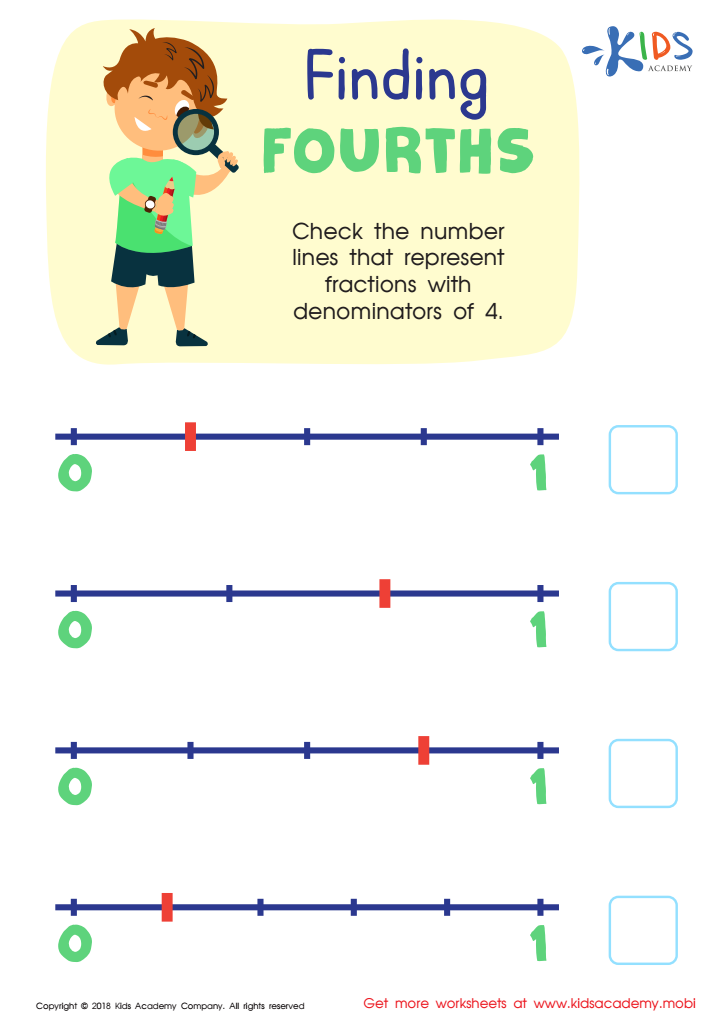
Finding Fourths Worksheet
Help your kids sharpen math skills with extra homework, stimulating exercises, and fun worksheets. This printout features four equations with fractions and number lines. Your child's task is to check the number lines with denominators of 4. Enough to get them thinking and learning.
Finding Fourths Worksheet
Worksheet
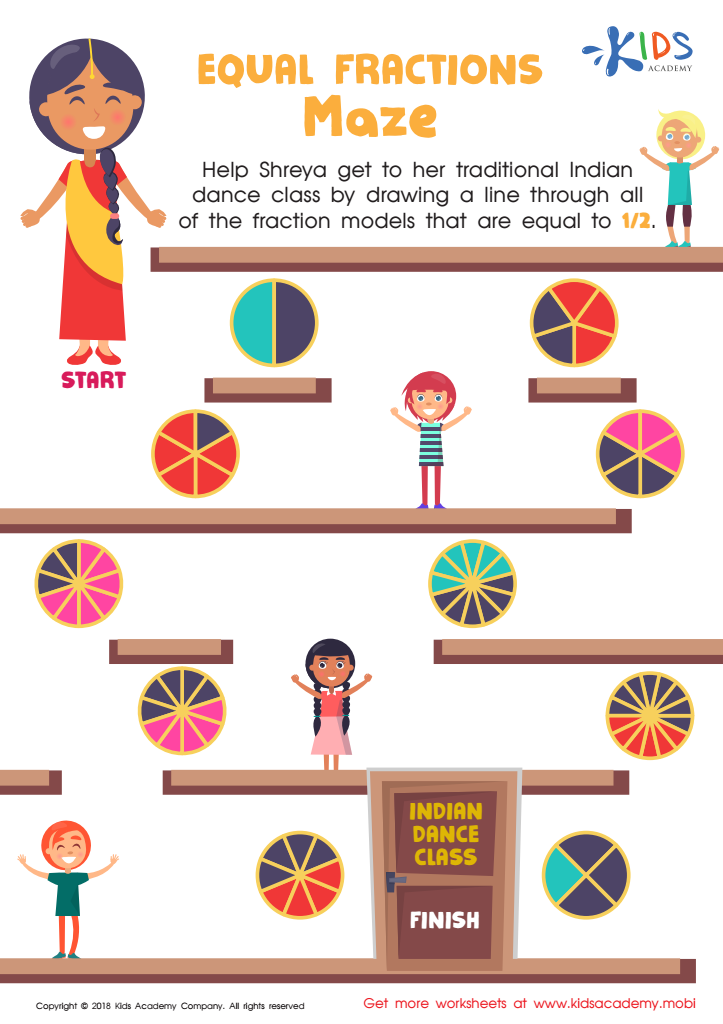
Equal Fractions Maze Worksheet
Help Shreya get to dance class! Draw a line through all fraction models that are equal to ½, starting at the entrance marked 'start'. Guide your kids through the maze paths and help Shreya -- she's an Indian girl who practices her cultures and traditions -- reach the door to her class.
Equal Fractions Maze Worksheet
Worksheet
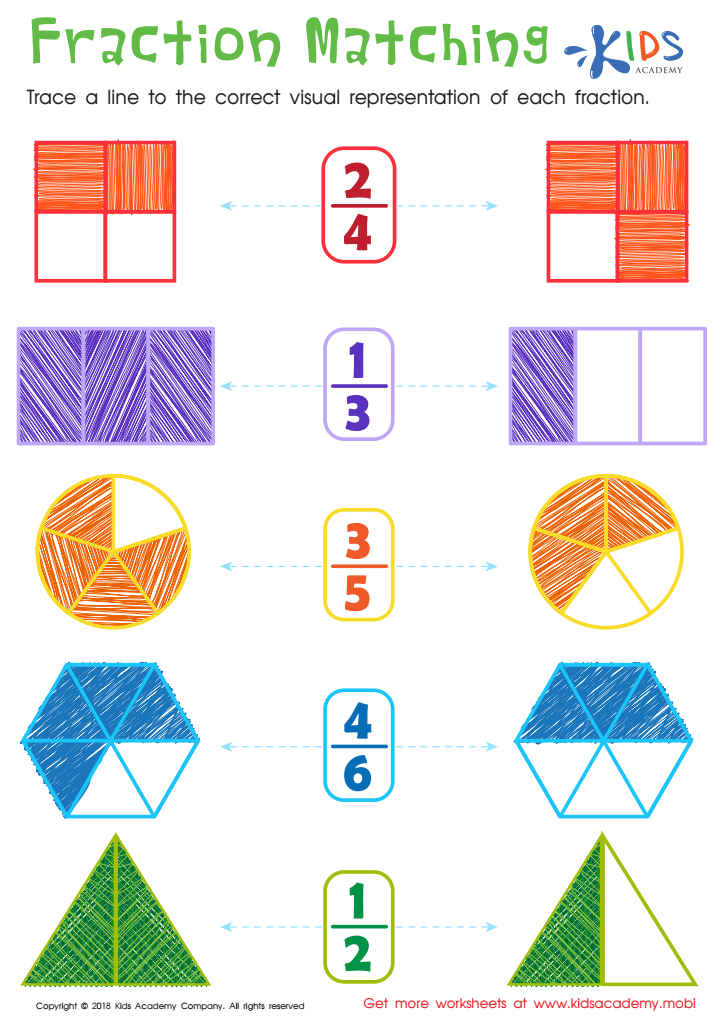
Fraction Matching Worksheet
Teach your kindergartners fractions with this colorful worksheet. Make sure they understand numerators and denominators, then have them trace a line to the correct visual representation of each equation. There are five fractions for them to work on. With the foundation of fractions, mathematics will be much easier for them.
Fraction Matching Worksheet
Worksheet
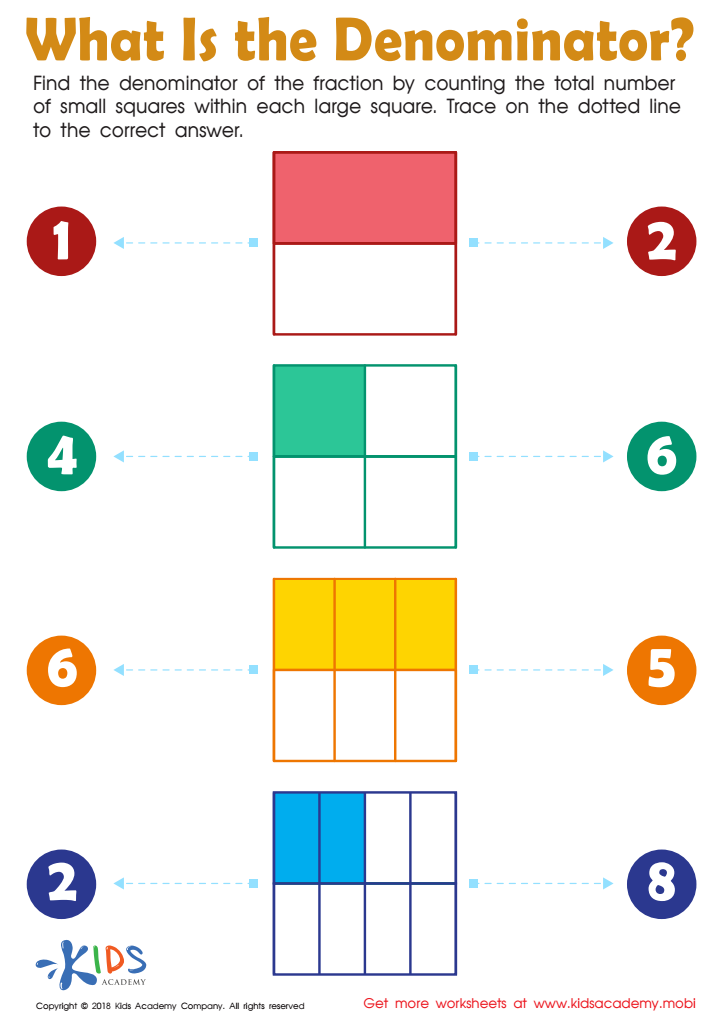
What Is the Denominator? Worksheet
If your kindergartener is struggling with fractions, don't worry. Use this worksheet to help them understand better. Ask them to count the total small squares in each large square to find the denominator, then trace on the dotted line to answer. This printable tracing sheet will help them learn fractions easier.
What Is the Denominator? Worksheet
Worksheet
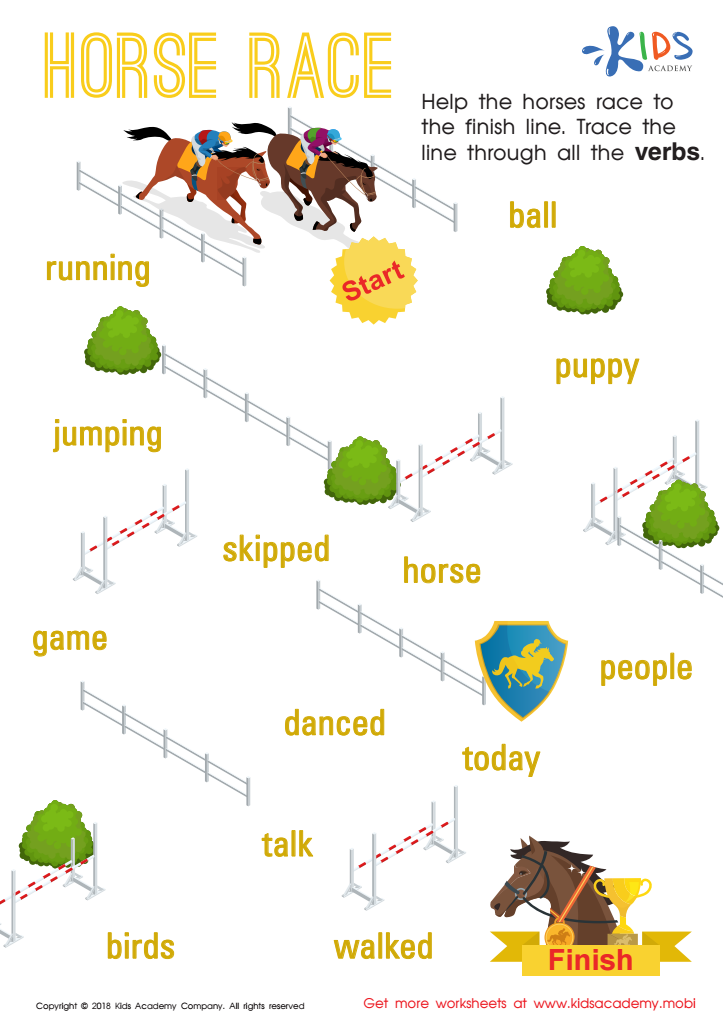
Horse Race Worksheet
This tracing sheet is perfect for horse-loving kids! Start by confirming they know what a verb is - it's a word that shows an action (e.g. jump, talk, walk, play, read). Then ask them to give you some more examples. Finally, help them trace the line through all the verbs. They'll be delighted!
Horse Race Worksheet
Worksheet
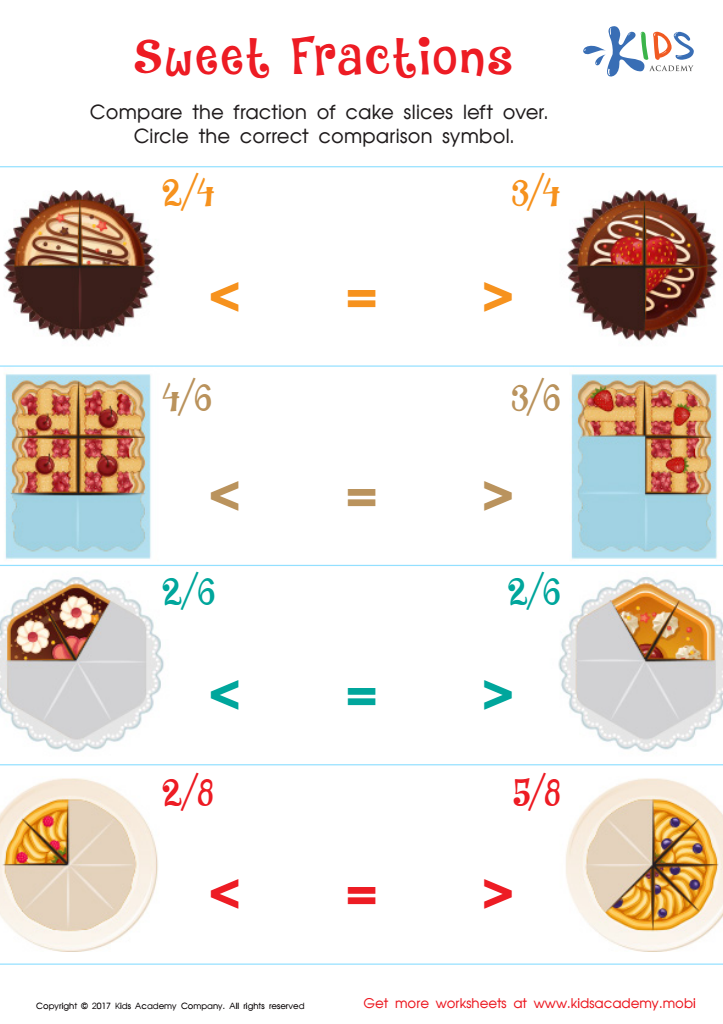
Compare Fractions Worksheet
This compare fractions worksheet is great for 3rd graders to learn and understand fractions in a fun way. Let them explore fractions visually with the help of sweet treats!
Compare Fractions Worksheet
Worksheet
Join Kids Academy for Free
Who is primarily going to use this learning content?






Understanding fractions is crucial for 8-year-olds as it lays the foundation for future mathematical concepts. At this age, children transition from intuitive, concrete thinking to more abstract reasoning, making it vital for them to grasp the concept of parts of a whole. Fractions introduce essential skills like comparison, equivalency, and basic operations, which are applicable in numerous everyday situations, such as cooking or dividing items.
Moreover, a strong grasp of fractions enhances critical thinking and problem-solving abilities. When children understand fractions, they can make connections between numbers, measurements, and real-life scenarios, fostering a deeper numerical literacy. Additionally, mastering fractions helps to prepare students for more advanced topics, such as ratios, percentages, and algebra, promoting their overall success in mathematics.
For parents and teachers, nurturing an understanding of fractions in children supports their confidence in math, reduces anxiety around the subject, and cultivates a love for learning. Engaging children with interactive and hands-on methods, like dividing pizza slices or using visual aids, not only makes learning enjoyable but also reinforces their comprehension. Therefore, it is imperative that parents and educators prioritize encouraging an understanding of fractions in young learners.








