
Visual Learning Normal Math Worksheets for 8-Year-Olds
4 filtered results
Difficulty Level
Grade
Age
-
From - To
Subject
Activity
Standards
Welcome to our Visual Learning Normal Math Worksheets for 8-Year-Olds! Designed to enhance mathematical skills through engaging visual aids, our worksheets promote comprehension and retention for young learners. Each worksheet incorporates colorful graphics and interactive elements, making math both fun and approachable. Covering various topics, including addition, subtraction, and problem-solving, these resources cater to diverse learning styles, ensuring that every child can grasp essential concepts. Perfect for classroom instruction or at-home practice, our worksheets help young students build confidence while developing foundational math skills. Explore our collection and inspire a love for learning through visual engagement!
Favorites
With answer key
Interactive
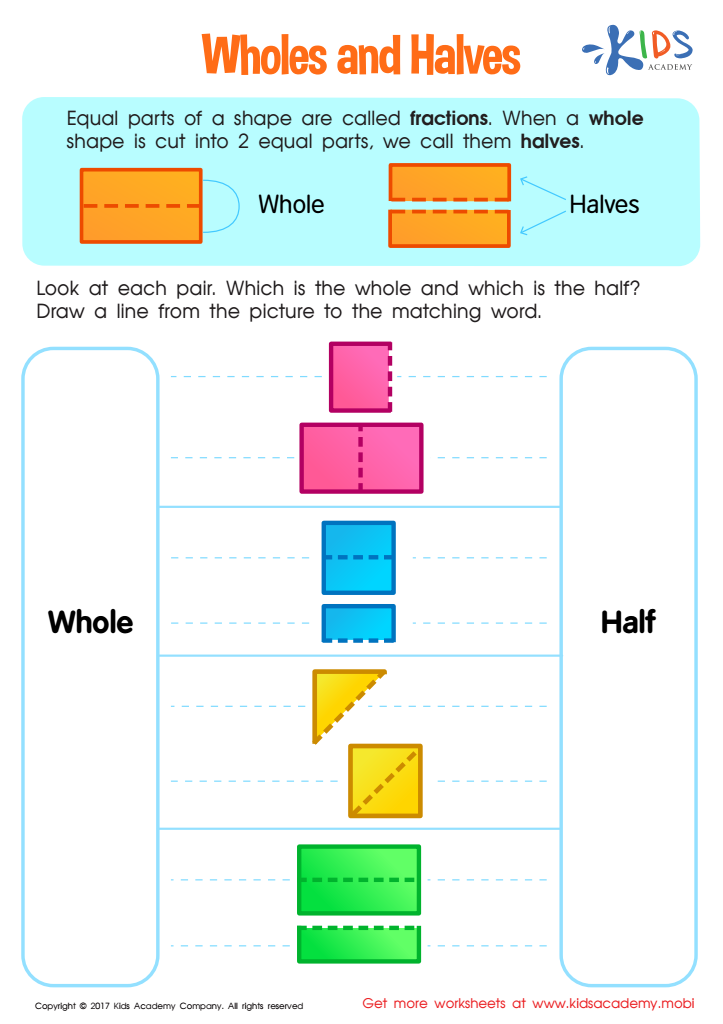
Wholes and Halves Worksheet
Students can feel overwhelmed with fractions. Help take the stress off by using a colorful worksheet to explain whole shapes and how to find halves. Ask them to identify the whole and point to the matching word for the half. A free printout can help guide them.
 Assign to My Students
Wholes and Halves Worksheet
Worksheet
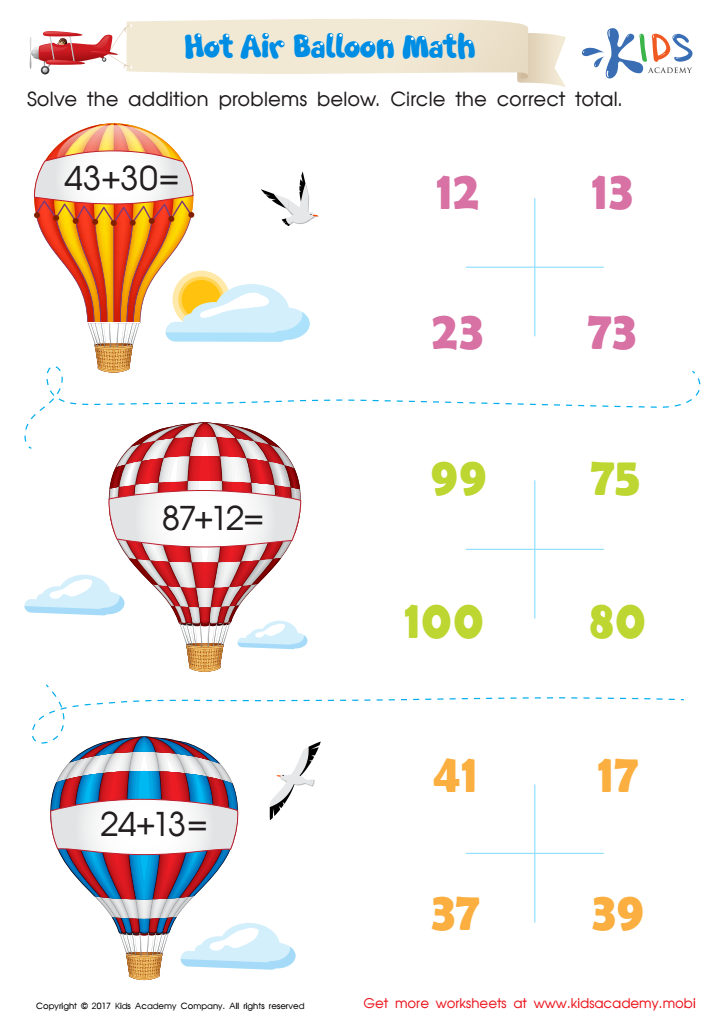
Hot Air Balloon Math Worksheet
It uses engaging pictures and a hot air balloon theme to keep your child interested, and it’s designed to build addition confidence.
Hot Air Balloon Math Worksheet
Worksheet
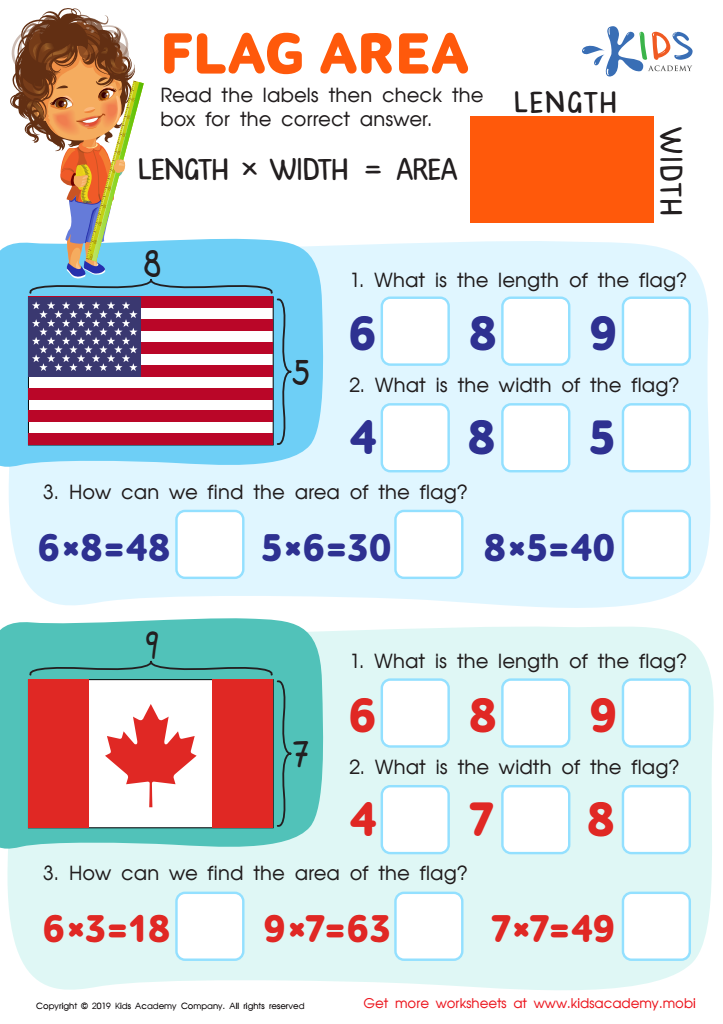
Flag Area Worksheet
Test your child's knowledge of flags by asking which ones they can identify in the image. Then, study the worksheet together. There are 6 questions with labels. Have them read each label and check the box for the correct answer.
Flag Area Worksheet
Worksheet
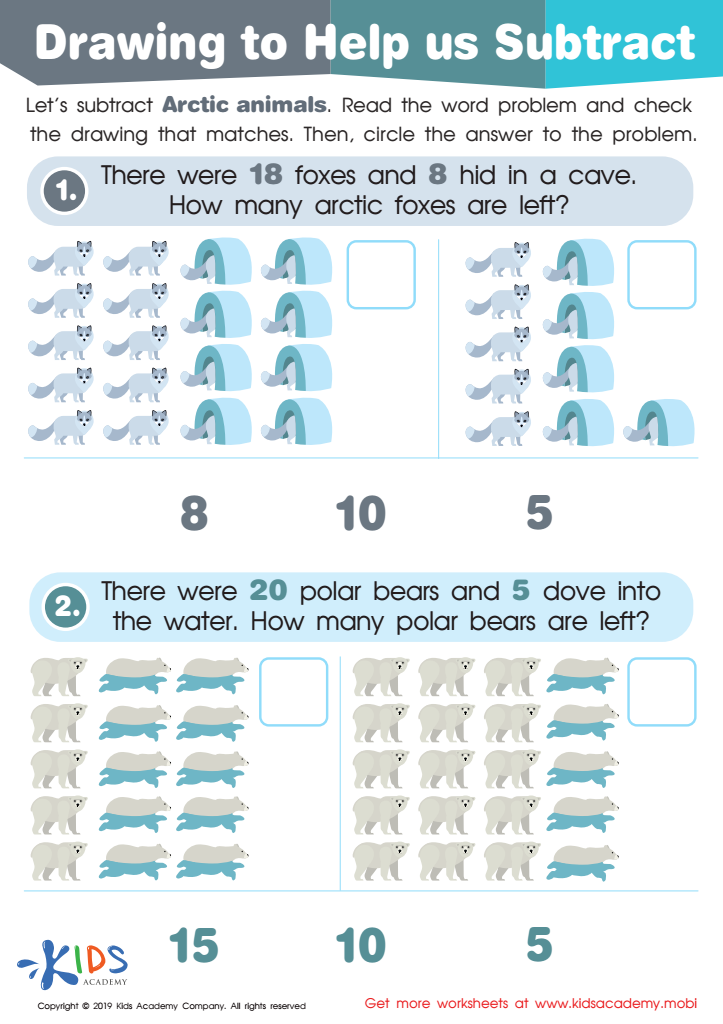
Drawing to Help Us Subtract Worksheet
Math is made fun with this free worksheet featuring Arctic animal pictures to solve basic subtraction word problems. Kids read the problem and choose the correct drawing of the animals to represent the solution. They'll have a blast with their cool animal friends while learning math!
Drawing to Help Us Subtract Worksheet
Worksheet
Join Kids Academy for Free
Who is primarily going to use this learning content?







Visual Learning in math for 8-year-olds is crucial for several reasons. At this age, children are developing critical thinking and problem-solving skills, and visual learning strategies cater to their developmental needs by making abstract concepts more concrete. By using visual aids, such as charts, diagrams, and manipulatives, children can better understand mathematical ideas, which promotes deeper comprehension and retention.
For parents and teachers, fostering a visual learning environment can significantly enhance a child’s engagement and interest in mathematics. When students can see problems represented visually, they often feel more confident and capable of tackling complex concepts, leading to a more positive attitude towards math as a whole. This approach also accommodates diverse learning styles; some children may grasp concepts more easily through visual means than traditional verbal or logical explanations.
Additionally, visual learning encourages exploration and experimentation. It fosters a classroom or home environment where children are more likely to explore multiple solutions, enhancing creativity and critical thinking. Ultimately, embracing Visual Learning practices supports not just the acquisition of math skills, but also empowers children to become independent thinkers, equipping them with tools necessary for future academic success in STEM fields and beyond. Parents and teachers should champion these methods for robust, well-rounded mathematical development.








