Matching skills Normal Geometry Worksheets
3 filtered results
-
From - To
Enhance your students' understanding of geometry with our Matching Skills Normal Geometry Worksheets! These engaging resources are designed for early learners, helping them develop critical thinking and problem-solving abilities as they match shapes, patterns, and geometric concepts. Each worksheet features vibrant illustrations that capture children's attention while reinforcing essential skills in a fun, interactive way. Perfect for classroom activities or at-home practice, these worksheets support visual learning and promote a deeper grasp of geometry. Foster your child's confidence and competence in mathematics with these thoughtfully crafted matching exercises today! Explore our collection and watch your little learners thrive!
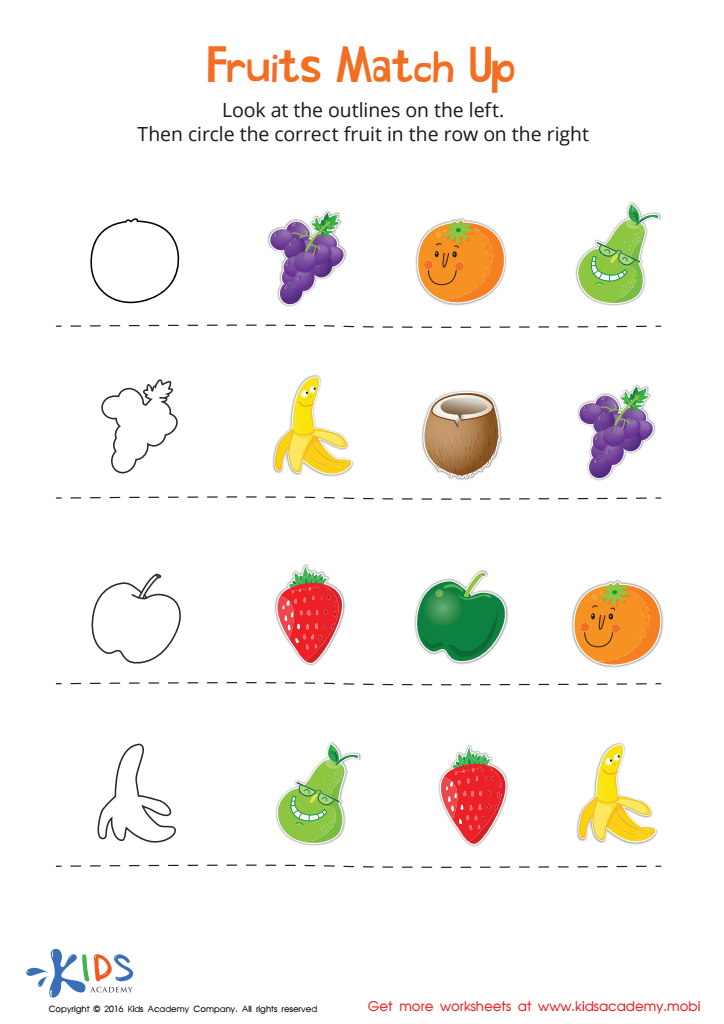
Fruits Match Up Worksheet
 Assign to My Students











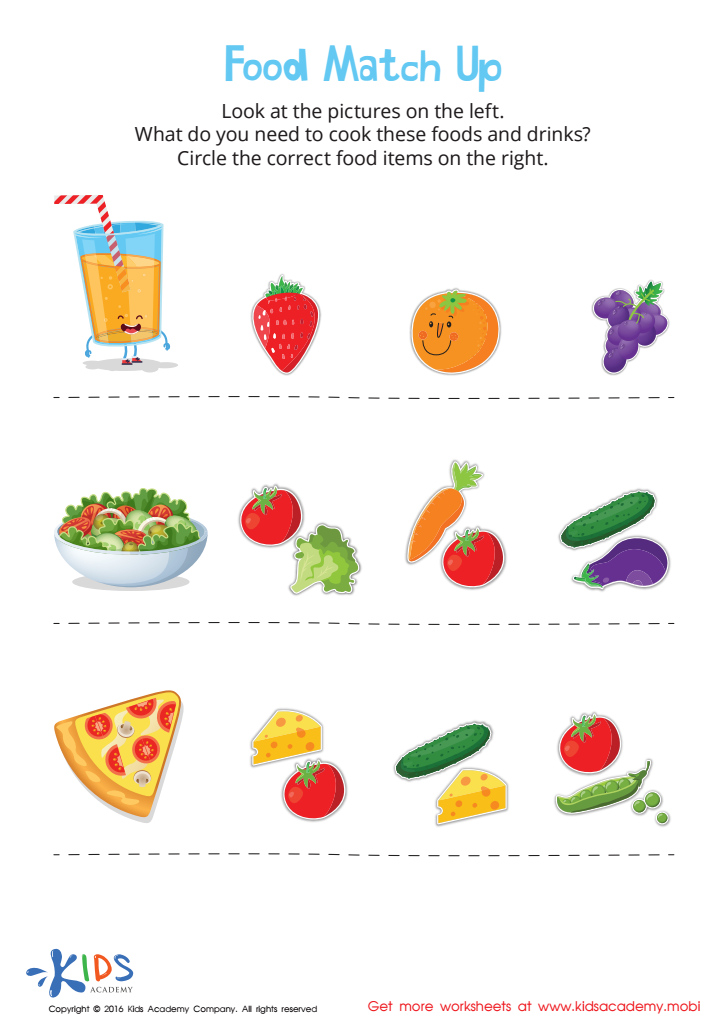
Food Match Up Worksheet
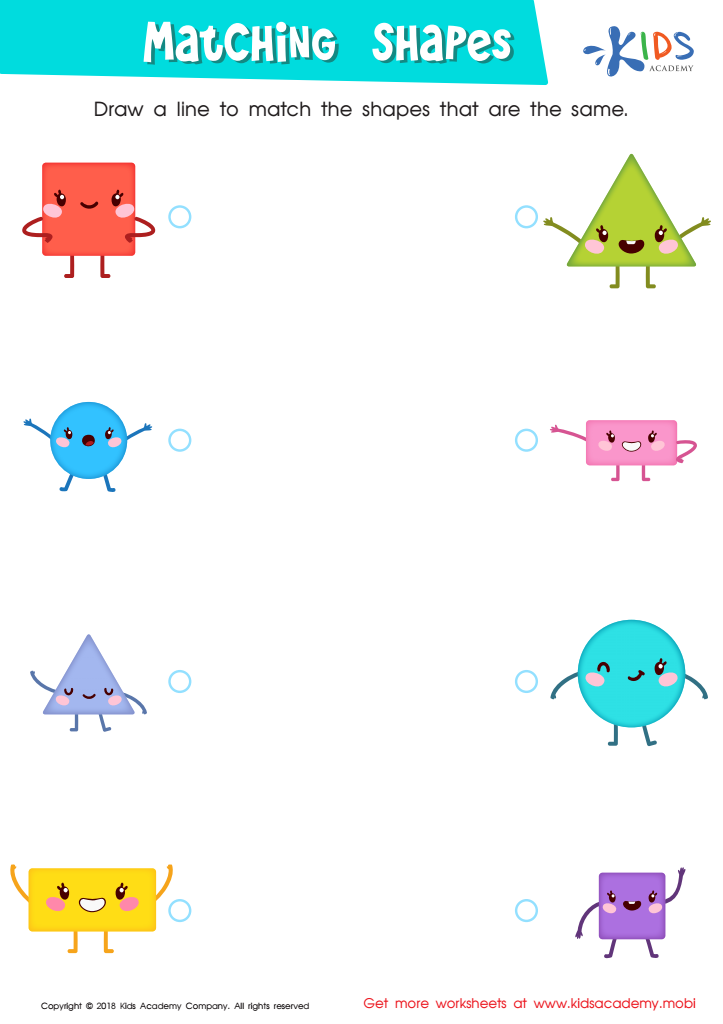
Matching Shapes Worksheet








Parents and teachers should care about matching skills in the context of Normal Geometry as these foundational skills play a critical role in a child’s cognitive and educational development. Matching skills in geometry involve recognizing and associating different shapes, their attributes, and relationships, which are vital for more advanced mathematical concepts.
Developing these skills helps children improve their spatial reasoning, which enhances their ability to visualize and manipulate objects mentally. This skill is not only essential for mathematics but also supports problem-solving and critical thinking in various subjects. For example, being able to visualize geometric relationships enables students to excel in science, art, and even everyday tasks.
Integrating matching skills into early education also fosters engagement through hands-on learning experiences, making math enjoyable and relatable. It encourages collaboration and communication as students discuss and compare shapes with peers.
Furthermore, a strong grounding in geometry helps build confidence, prepares children for future academic challenges, and instills a love for learning. When parents and teachers prioritize matching skills in Normal Geometry, they lay the groundwork for not only improved mathematical ability but also a well-rounded intellectual development that benefits children across all areas of study.








