Comparative analysis Normal Math Worksheets
3 filtered results
-
From - To
Discover our Comparative Analysis Normal Math Worksheets designed to elevate your child’s math skills. These engaging resources help students understand comparisons through various concepts such as greater than, less than, and equal to. Our worksheets incorporate vibrant illustrations and interactive exercises, making learning enjoyable and effective. Perfect for early grade teachers, parents, and homeschooling activities, these worksheets cater to diverse learning styles, promoting critical thinking and problem-solving skills. Designed with age-appropriate content, Students will gain confidence and competence in their math abilities. Explore our collection today and empower your child to master mathematical comparisons for a strong foundational understanding.
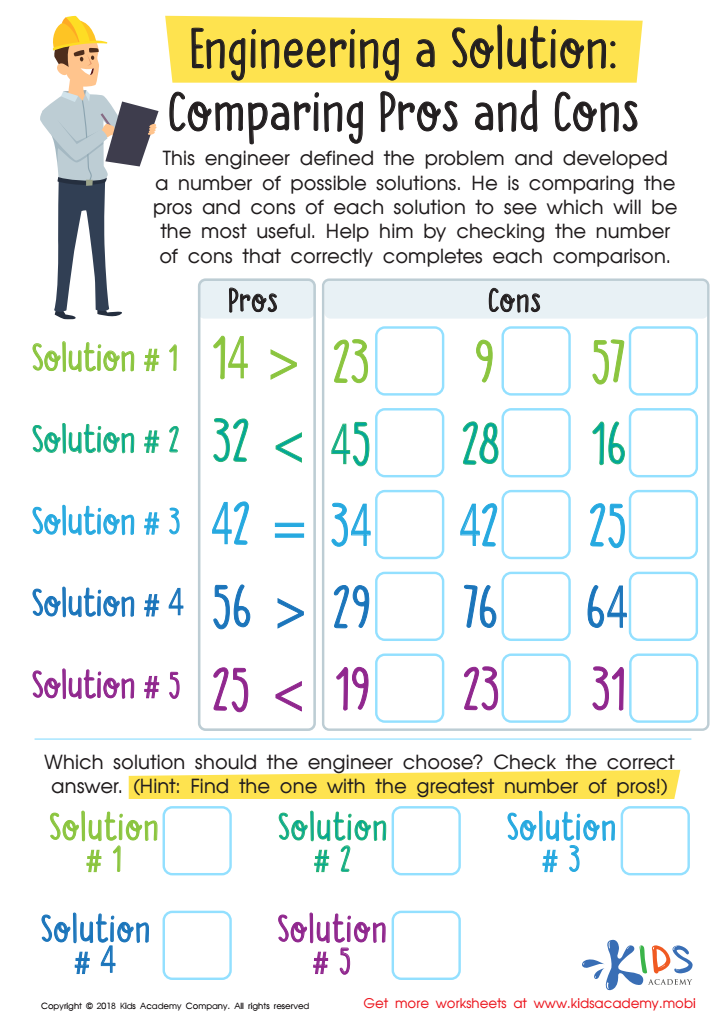
Engineering a Solution: Comparing Pros and Cons Worksheet
 Assign to My Students
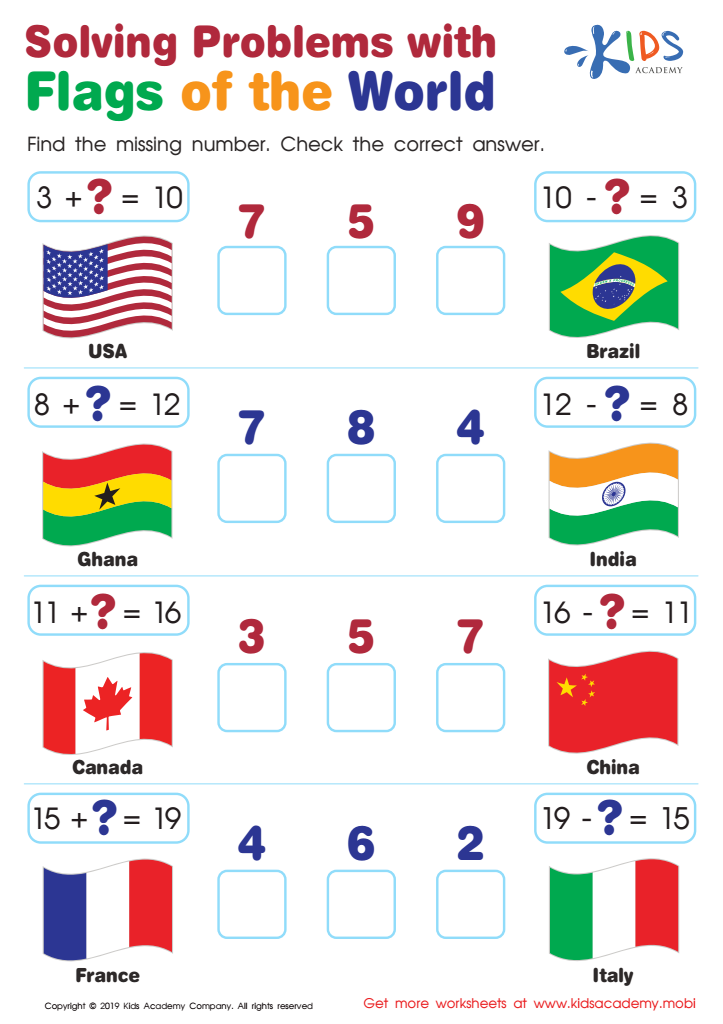
Solving Problems with Flags of the World Worksheet
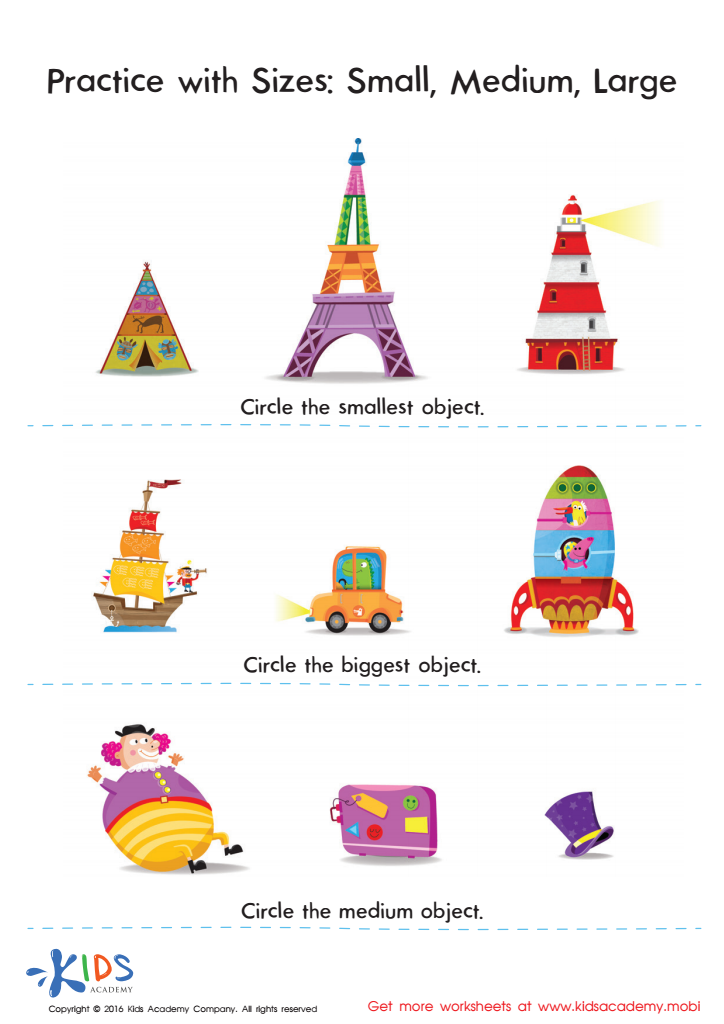






Parents and teachers should care about comparative analysis in normal math because it fosters critical thinking and deeper understanding of mathematical concepts among students. By comparing different problem-solving approaches or strategies, children learn to evaluate the effectiveness of various methods, promoting a more comprehensive understanding of mathematics. This analytical skill extends beyond numbers, encouraging students to make informed decisions in everyday life.
Moreover, comparative analysis helps identify mathematical patterns and relationships, leading to stronger conceptual foundations. When students engage in comparative exercises, they sharpen their reasoning and problem-solving abilities, vital skills in our increasingly complex world. This cognitive process also supports differentiated learning, allowing educators to tailor their instruction based on individual student needs.
Additionally, parents can engage in this analysis at home, reinforcing classroom learning and creating a collaborative learning environment. As students articulate their reasoning and reasoning of peers, they develop communication skills and confidence in presenting ideas. Ultimately, embracing comparative analysis in normal math not only enhances student performance academically but also prepares them to tackle real-world challenges creatively and independently. Therefore, it is essential for parents and teachers to prioritize this approach to math education.








