Vocabulary expansion Normal Grade 2 Reading Comprehension Worksheets
10 filtered results
Difficulty Level
Grade
Age
-
From - To
Subject
Activity
Standards
Enhance your child's vocabulary and reading skills with our engaging Grade 2 Reading Comprehension Worksheets. Designed by educational experts, these worksheets aim to expand vocabulary through thoughtfully crafted passages and exercises tailored for second graders. Each worksheet encourages young readers to explore new words within context, boosting both comprehension and fluency. Packed with age-appropriate material, our resources foster a love for reading while building essential learning skills. Perfect for classroom use or additional practice at home, our vocabulary expansion worksheets pave the way for academic success and confident reading. Download today and watch your child's vocabulary blossom!
Favorites
With answer key
Interactive
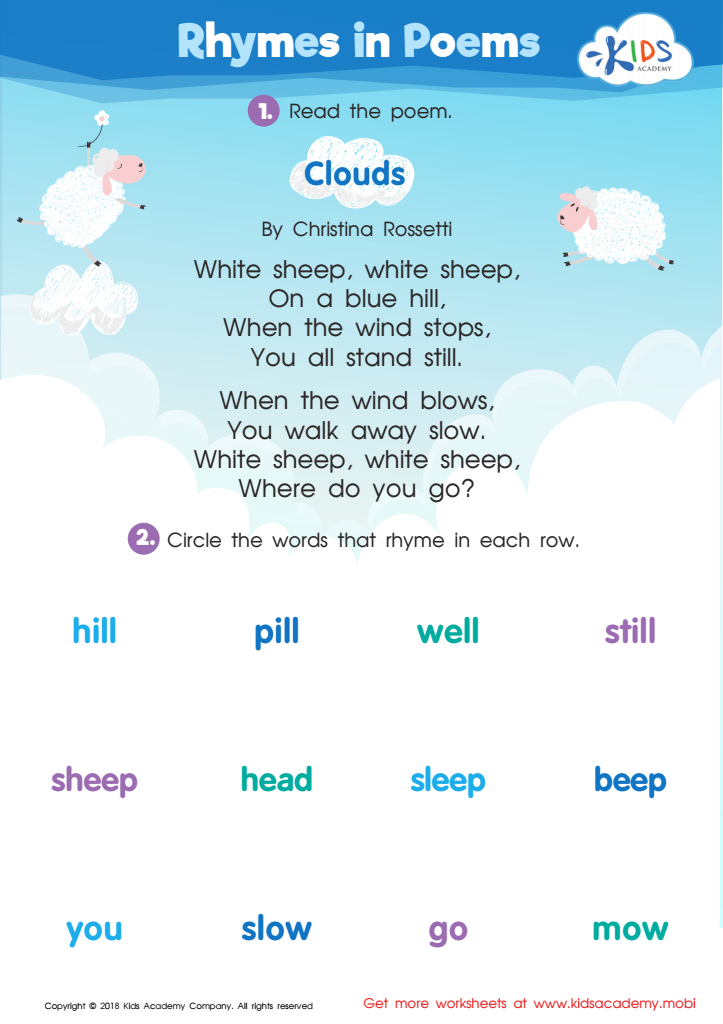
Rhymes in Poems Worksheet
Poems are lovely works of literature; some with rhymes, and some without. This poem for kids is full of rhymes and tells the tale of a sheep. Read it aloud to your kids, then help them circle the rhyming words.
 Assign to My Students
Rhymes in Poems Worksheet
Worksheet
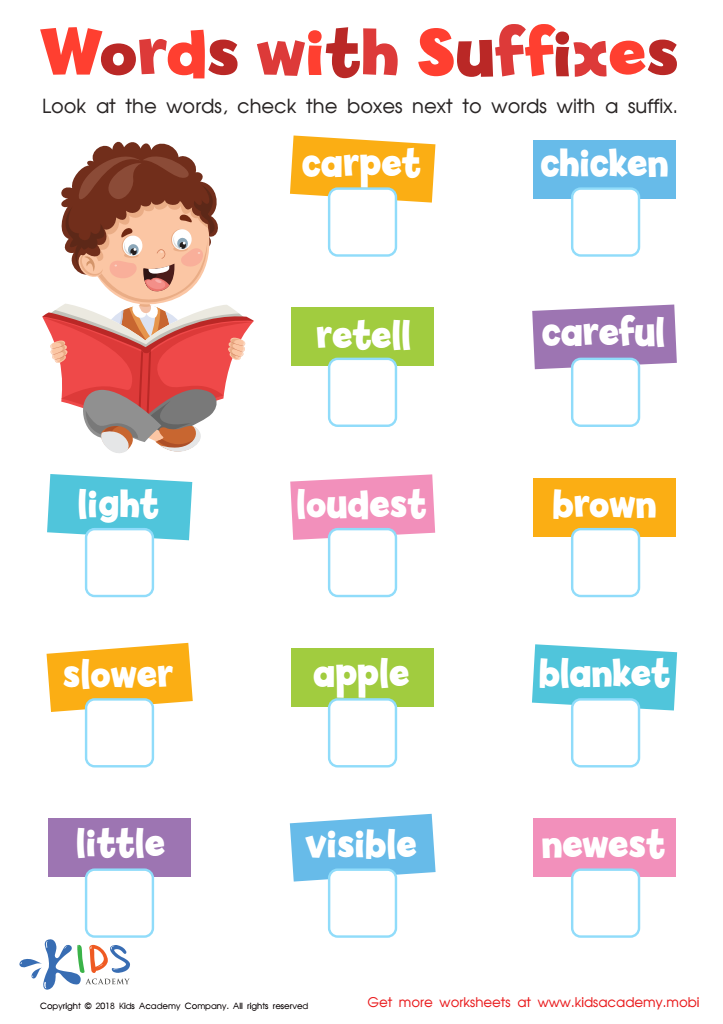
Reading: Words With Suffixes Worksheet
Help your students understand suffixes and build reading fluency with this worksheet. Have them read each word, then choose the ones with a suffix. Practicing this will lead to better comprehension and more confident reading. Save it for future use in language and reading classes.
Reading: Words With Suffixes Worksheet
Worksheet
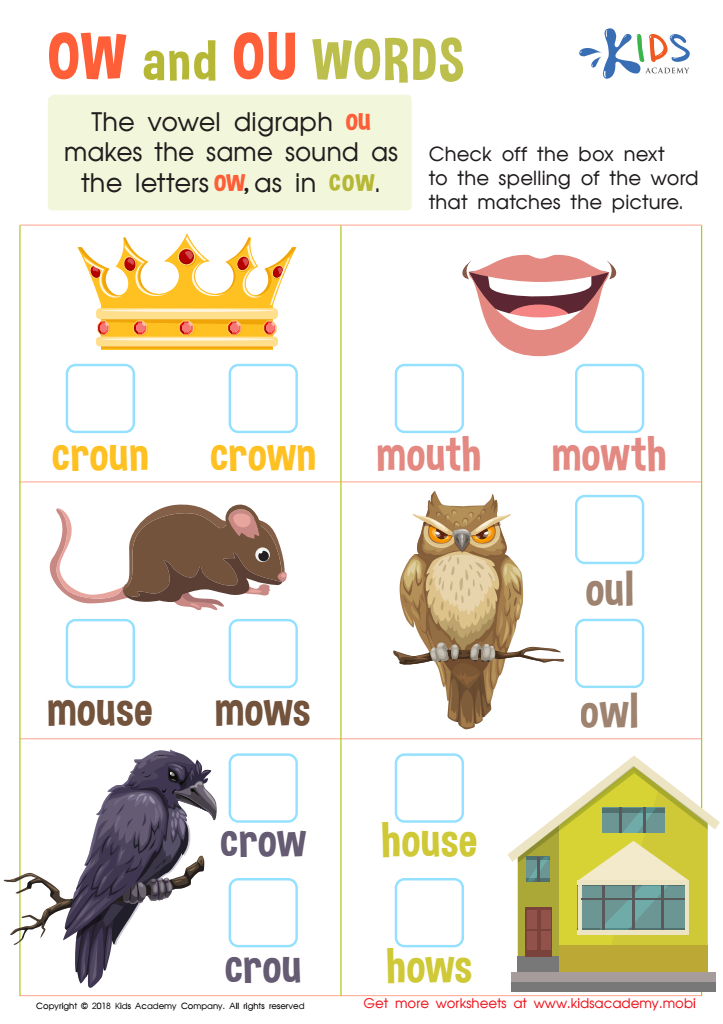
Reading: OW and OU Words Worksheet
Help your kids learn phonetics! Explain the different sounds and long/short variations. Emphasize that some vowel sounds are the same, e.g. ou = ow in cow. For practice, have them read aloud the words in the worksheet and check the box next to the spelling that matches the picture.
Reading: OW and OU Words Worksheet
Worksheet
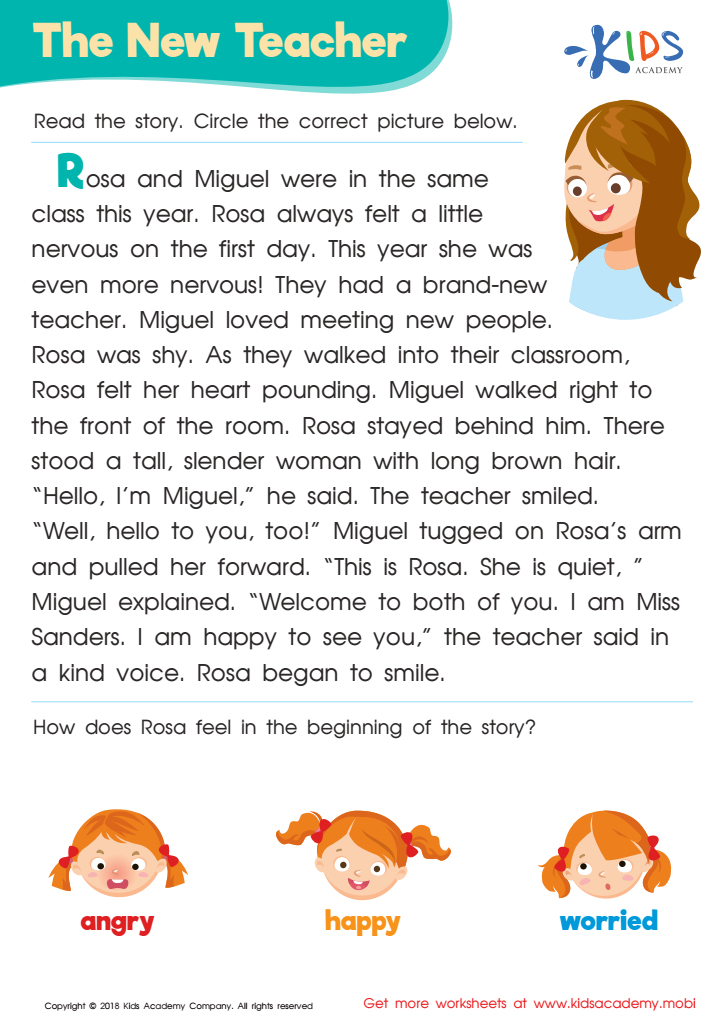
The New Teacher Worksheet
Encourage your kids to write their own short story before doing this exercise. It's about Rosa and Miguel on their first day of school, meeting their teacher. Read the story aloud and ask them to focus on Rosa's feelings. Then, help them circle the correct picture for the question.
The New Teacher Worksheet
Worksheet
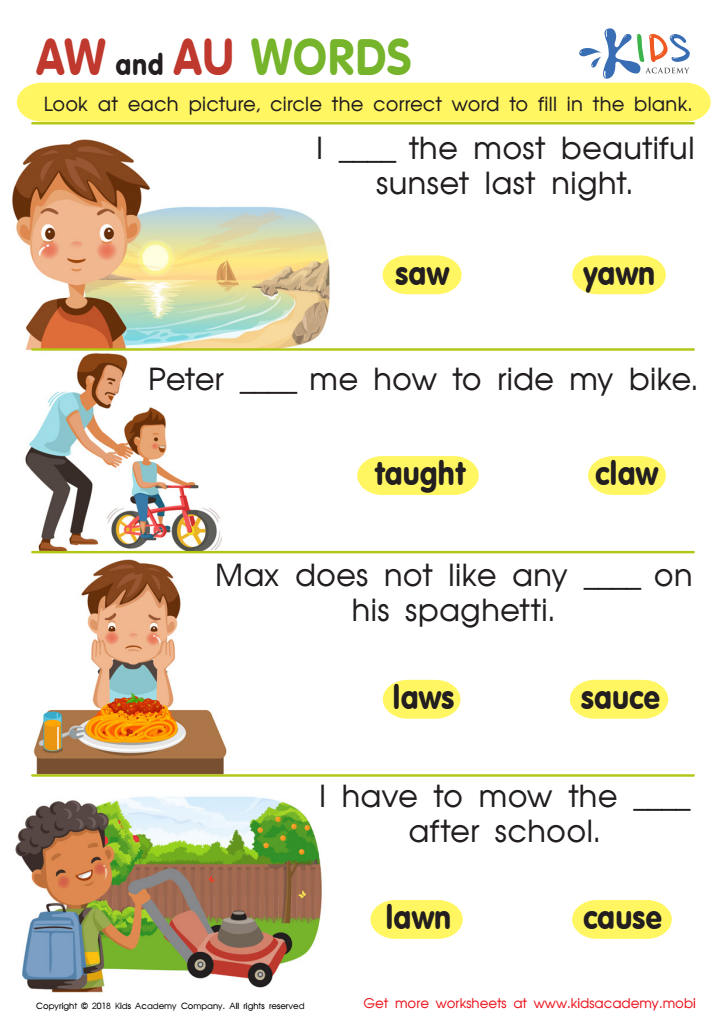
Reading: AW and AU Words Worksheet
This worksheet helps kids recognize that /au/ and /aw/ can make the same sound. Students read sentences and pick the correct word with one of the digraphs. Understanding digraphs improves decoding and reading fluency. Perfect for reading and phonics classes.
Reading: AW and AU Words Worksheet
Worksheet
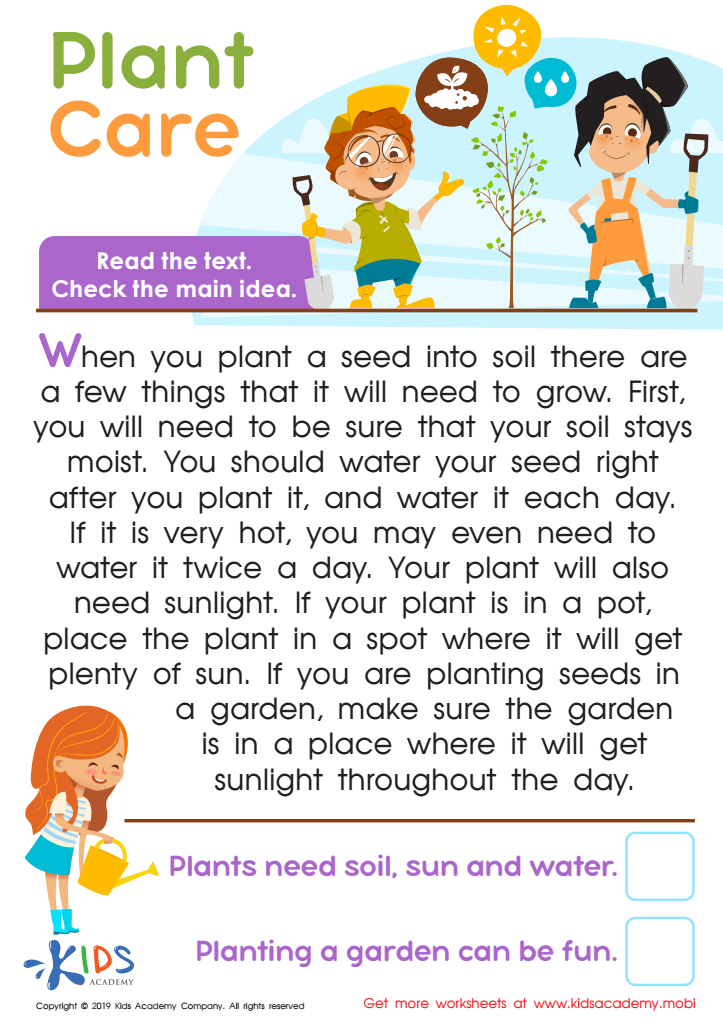
Plant Care Worksheet
Encourage your children to read by helping them practice. Print out the worksheet and read the text with them. Help them understand the words and find the main idea. This will improve their reading skills and prepare them for school.
Plant Care Worksheet
Worksheet
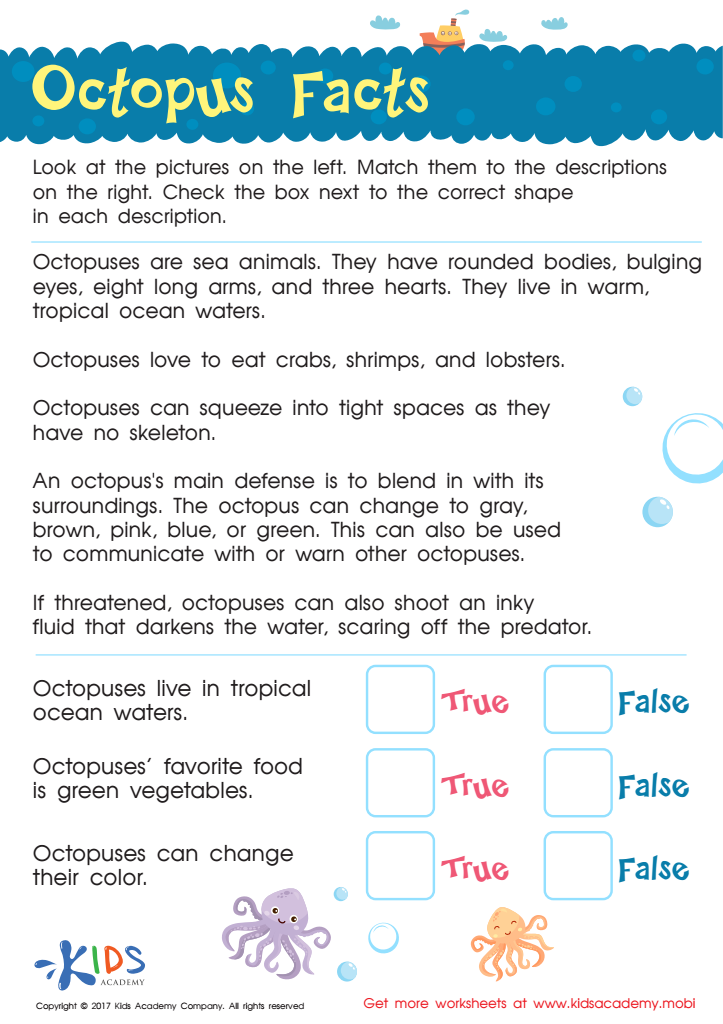
Octopus Facts Worksheet For Kids
Let your child dive into the world of octopuses with this fun worksheet. It offers invaluable practice in reading non-fiction texts, while they learn interesting facts about these strange sea creatures. It's a great way to help them hone their skills in reading comprehension.
Octopus Facts Worksheet For Kids
Worksheet
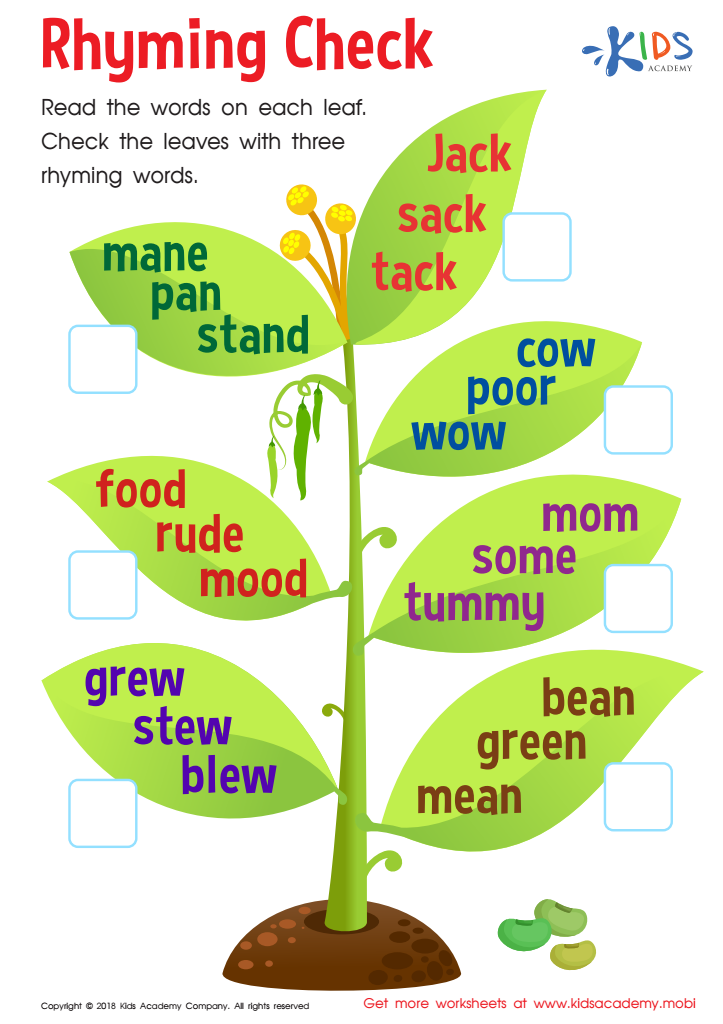
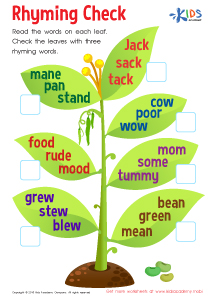
Rhyming Check Worksheet
Help your child read the words on each leaf of a worksheet. Make sure they know that spellings can be misleading and tricky. When finished, ask them to identify the leaves with three rhyming words. This exercise helps their pronunciation skills and encourages critical thinking.
Rhyming Check Worksheet
Worksheet
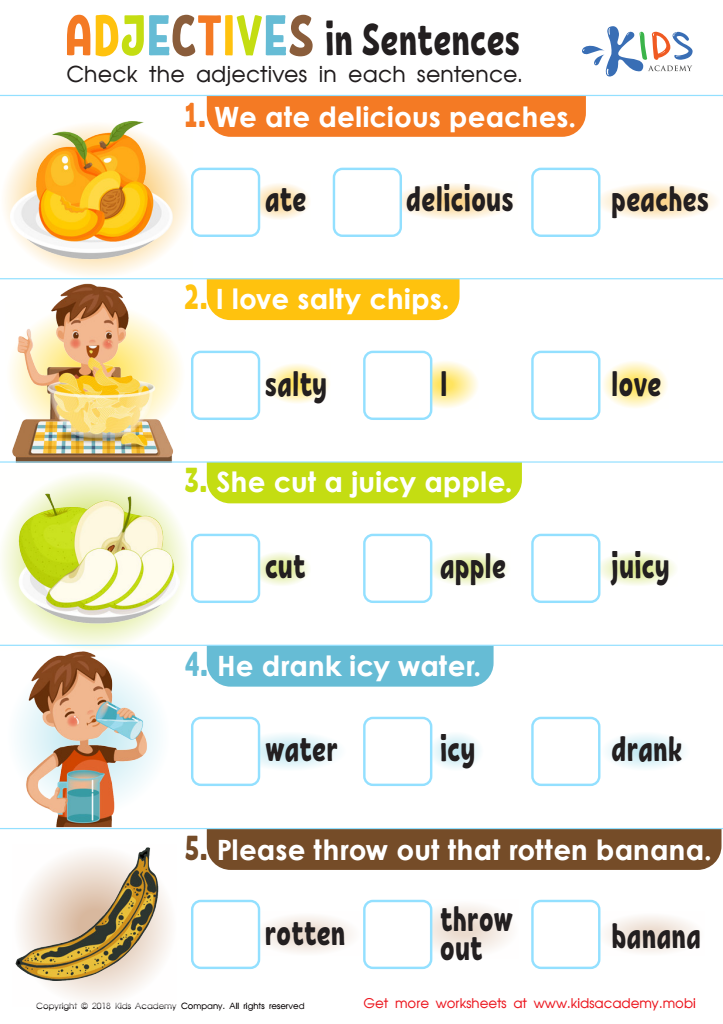
Adjectives in Sentences Worksheet
Our learners can find it hard to use writing to add detail, but adjectives can help. With this fun worksheet, kids can identify adjectives that describe food and drink. Guide them through each sentence, discussing the words and having them choose the one that gives information about the food/drink.
Adjectives in Sentences Worksheet
Worksheet
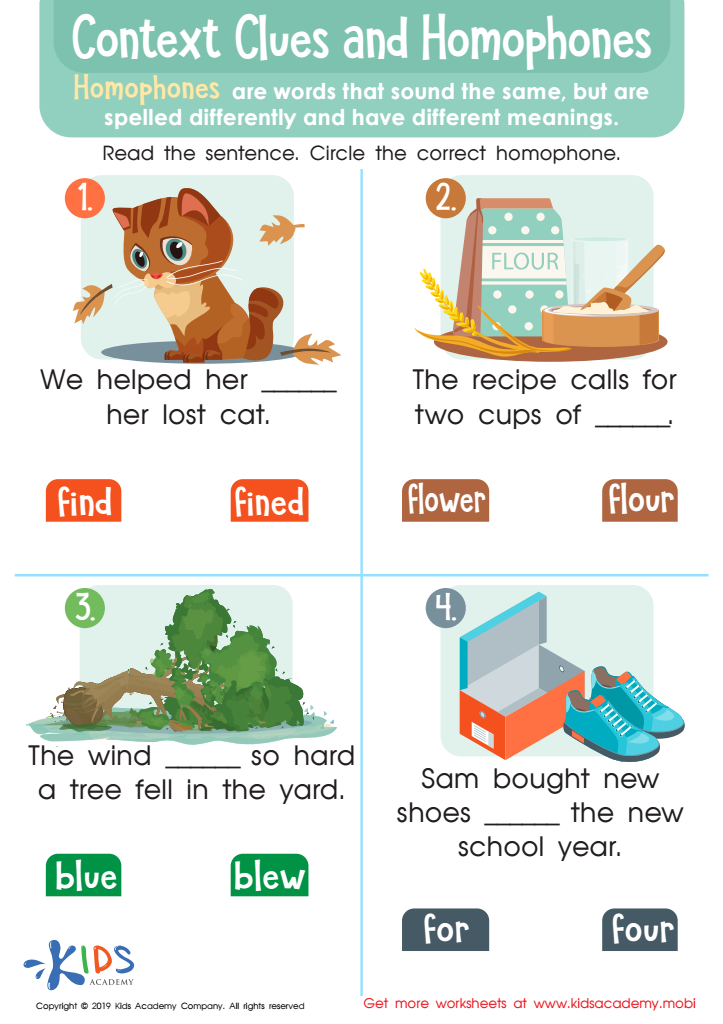
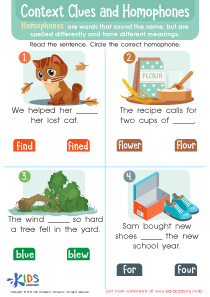
Context Clues and Homophones Worksheet
Make sure kids understand what homophones are (words that sound the same, different spellings, meanings). Give examples and look at the printout. Read each sentence and sound out words. Help them pick the right one and circle it.
Context Clues and Homophones Worksheet
Worksheet
Join Kids Academy for Free
Who is primarily going to use this learning content?








Vocabulary expansion is fundamental for Grade 2 reading comprehension, and parents and teachers should prioritize it for several reasons. Firstly, a robust vocabulary allows children to understand the texts they read fully. In Grade 2, students encounter more complex narratives and informational texts. If they are unfamiliar with key vocabulary, they may struggle to grasp the central ideas and details.
Secondly, vocabulary growth helps improve overall communication skills. As children learn new words, they become better at expressing themselves both verbally and in writing. This enhanced ability to articulate thoughts is critical for academic success across all subjects, not just reading.
Additionally, a rich vocabulary boosts confidence and fosters a love of learning. When children understand and can use a wide array of words, they find reading more enjoyable and less frustrating, which encourages frequent and diverse reading habits that are crucial for lifelong literacy.
Finally, expanding vocabulary helps build cognitive connections. Each new word represents a concept, and understanding these concepts broadens a child’s worldview and critical thinking skills.
Parents and teachers should actively engage students in vocabulary-building activities such as reading diverse books, playing word games, and encouraging conversation. These efforts provide a strong foundation for academic achievement and personal growth.