Count to tell the number of objects. - Page 4
74 filtered results
-
From - To
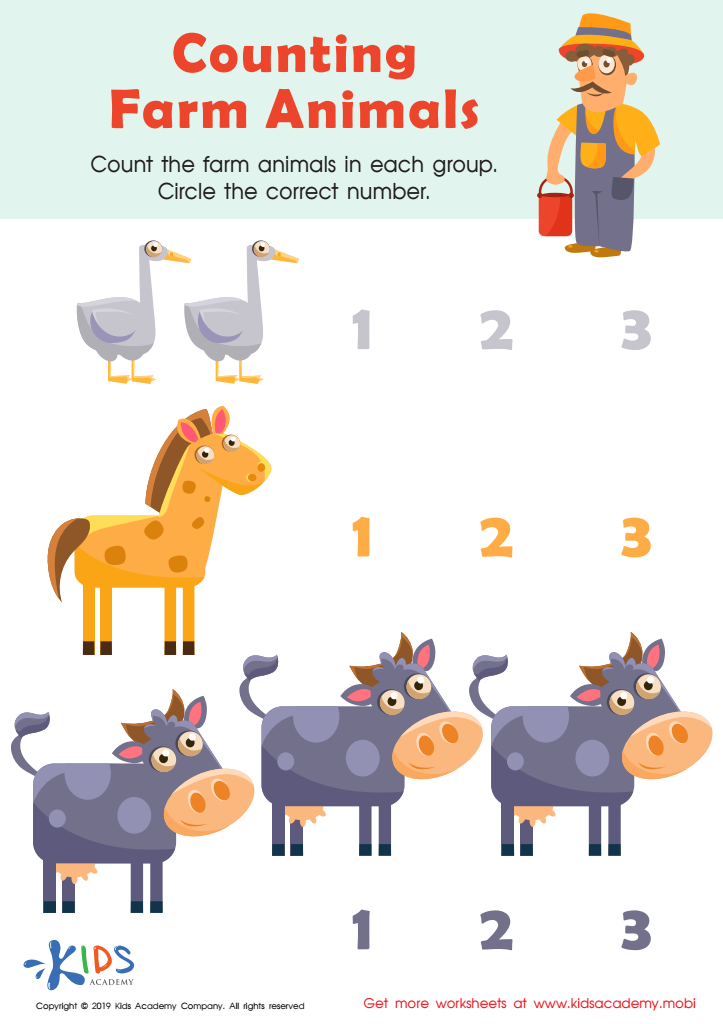
Counting Farm Animals Worksheet
 Assign to My Students
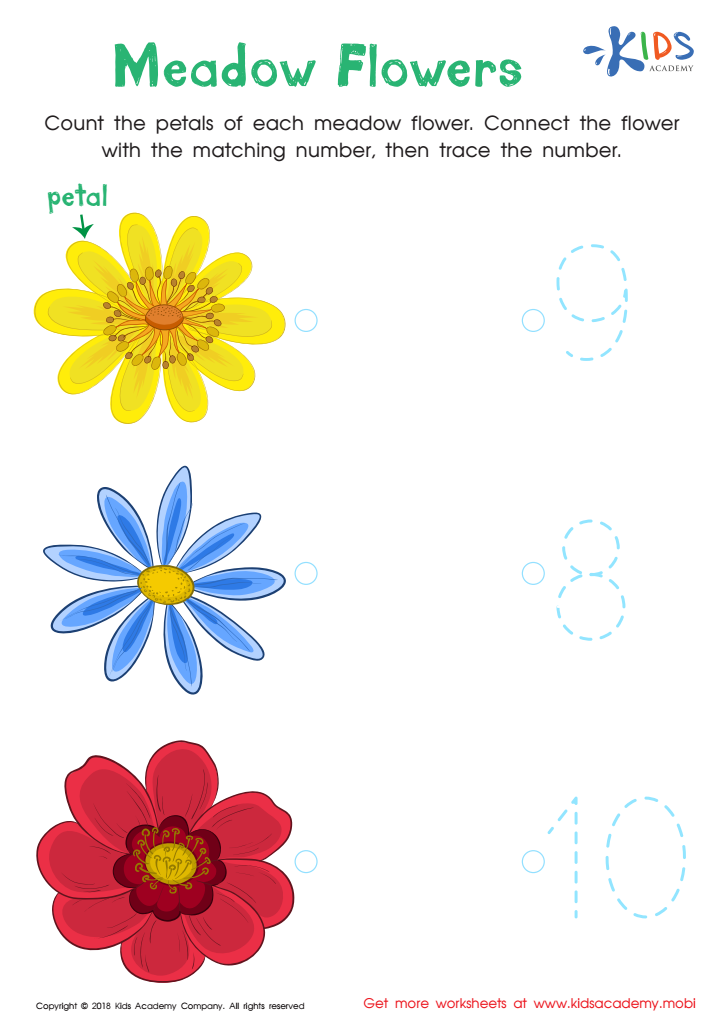
Kindergarten Number Tracing: Medow Flowers Worksheet




.jpg)


Count to tell the number of objects is a fundamental concept in early childhood education, serving as the foundation for mathematical understanding. Parents and teachers should prioritize this skill as it promotes cognitive development crucial for later academic success. When children learn to count, they enhance their ability to recognize quantities and make comparisons between different sets of objects, fostering problem-solving skills.
Understanding counting equips students with the tools needed to approach basic arithmetic operations, such as addition and subtraction. It also supports language development, as children learn the names and values of numbers, contributing to their overall communication skills. Moreover, counting develops logical thinking and spatial awareness, which are essential in everyday life, from activities like sharing snacks to identifying patterns and sequences.
Encouraging counting through playful activities makes learning engaging and enjoyable. Incorporating counting in real-world scenarios, like during shopping or cooking, not only reinforces the concept but also highlights its relevance. In an increasingly data-driven world, a strong numerical foundation is vital, as it prepares children for more complex mathematical concepts in later years. Therefore, fostering counting skills is a collaborative effort between parents and teachers, setting the stage for a lifelong appreciation for mathematics.