
Reading Non-Fiction worksheets activities for Ages 5-6
2 filtered results
Difficulty Level
Grade
Age
-
From - To
Subject
Activity
Standards
Unlock the world of informational text with our Reading Non-Fiction worksheets activities! Designed to engage and challenge students, these worksheets offer a diverse range of topics and exercises aimed at enhancing comprehension, critical thinking, and analytical skills. Our carefully curated activities encourage learners to delve into the fascinating realm of non-fiction, from historical documents to scientific discoveries, cultivating an appreciation for factual content. Each worksheet is meticulously crafted to support curriculum standards, making them a perfect resource for educators seeking to enrich their classroom instruction. Dive into our Reading Non-Fiction worksheets activities today and elevate your students' reading journey!
Favorites
With answer key
Interactive
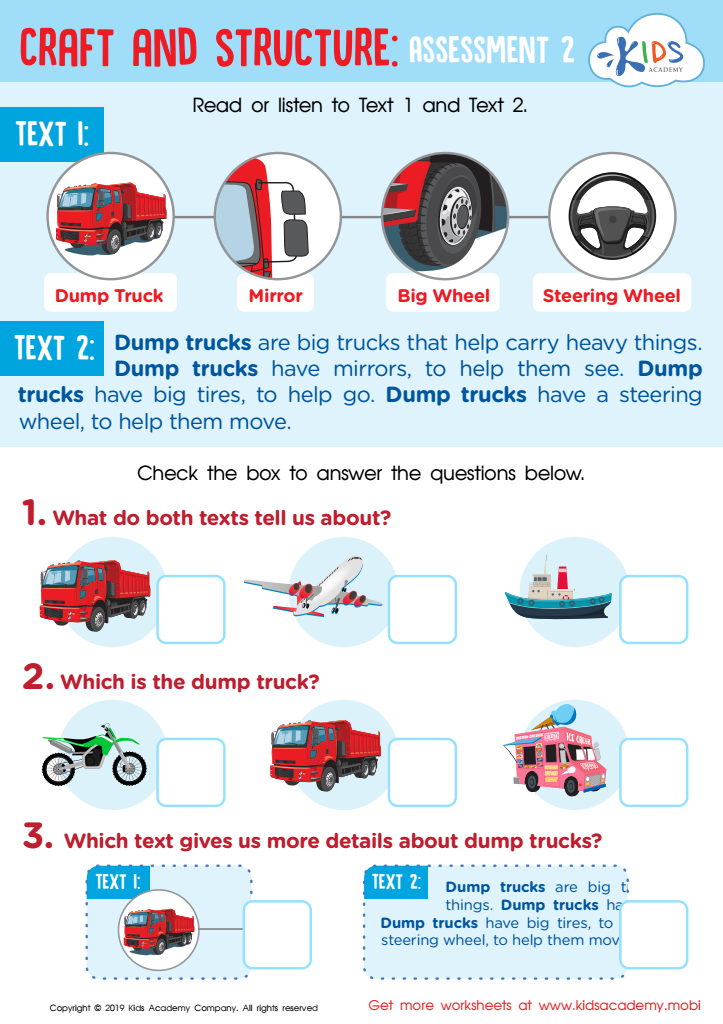
Craft and Structure: Assessment 2 Worksheet
Good readers need to analyze text features and use picture clues to understand. This assessment worksheet gives your child info in different formats and they can show understanding using answer options to check the correct answers. (80 words)
 Assign to My Students
Craft and Structure: Assessment 2 Worksheet
Worksheet
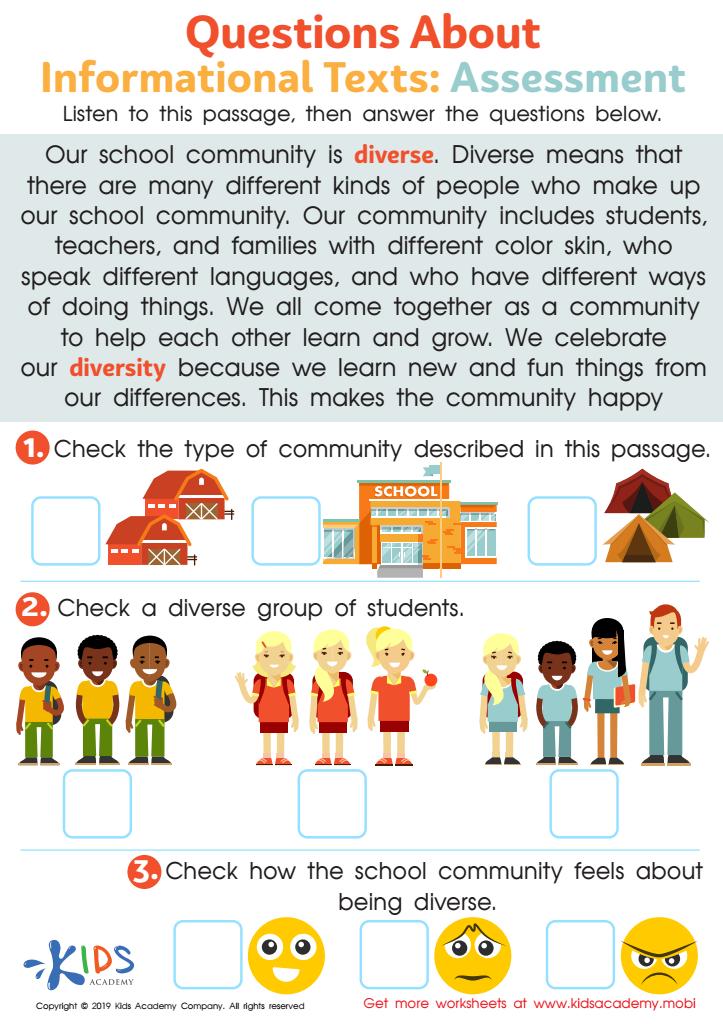
Questions About Informational Texts: Assessment 1 Worksheet
Ask your students: What comes to mind when we talk about a community? What different habits do people practice? What do fellow students do that seems strange? Read this passage aloud to your kindergartners and make sure they understand it. Then, answer the questions at the bottom of the page. (80 words)
Questions About Informational Texts: Assessment 1 Worksheet
Worksheet
Join Kids Academy for Free
Who is primarily going to use this learning content?






Reading Non-Fiction worksheets activities are an invaluable tool in the educational landscape, offering a multifaceted approach to learning that benefits students in numerous ways. These activities are designed to enhance comprehension, analytical thinking, and engagement with real-world topics, making them an essential component of a robust learning program.
Firstly, Reading Non-Fiction worksheets activities are instrumental in improving comprehension skills. Non-fiction texts cover a wide range of subjects, from history and science to technology and social studies, providing students with the opportunity to learn about the world around them. Worksheets guide students through these texts, asking targeted questions that challenge them to analyze, summarize, and critically think about the information presented. This not only enhances their understanding but also encourages a deeper engagement with the material.
Moreover, these activities are key in developing critical thinking and analytical skills. Reading Non-Fiction worksheets often include activities that require students to compare and contrast information, identify cause and effect relationships, and evaluate arguments. By engaging in these exercises, students learn to approach texts with a critical eye, discerning biases, and forming their own informed opinions. This skill is invaluable, not just in academic settings, but in navigating the vast amounts of information encountered daily in the modern world.
Additionally, Reading Non-Fiction worksheets activities make learning more interactive and engaging. These worksheets are designed to be thought-provoking, often incorporating puzzles, quizzes, and discussion prompts that make learning dynamic and fun. By transforming reading into an active process, students are more likely to develop a genuine interest in the subjects they are studying.
In conclusion, Reading Non-Fiction worksheets activities are a cornerstone of effective learning. They enhance comprehension, foster critical thinking, and make learning an engaging experience. By incorporating these activities into the curriculum, educators can provide students with the tools they need to succeed both in and out of the classroom.








