Tracing Shapes worksheets activities for 6-Year-Olds
16 filtered results
-
From - To
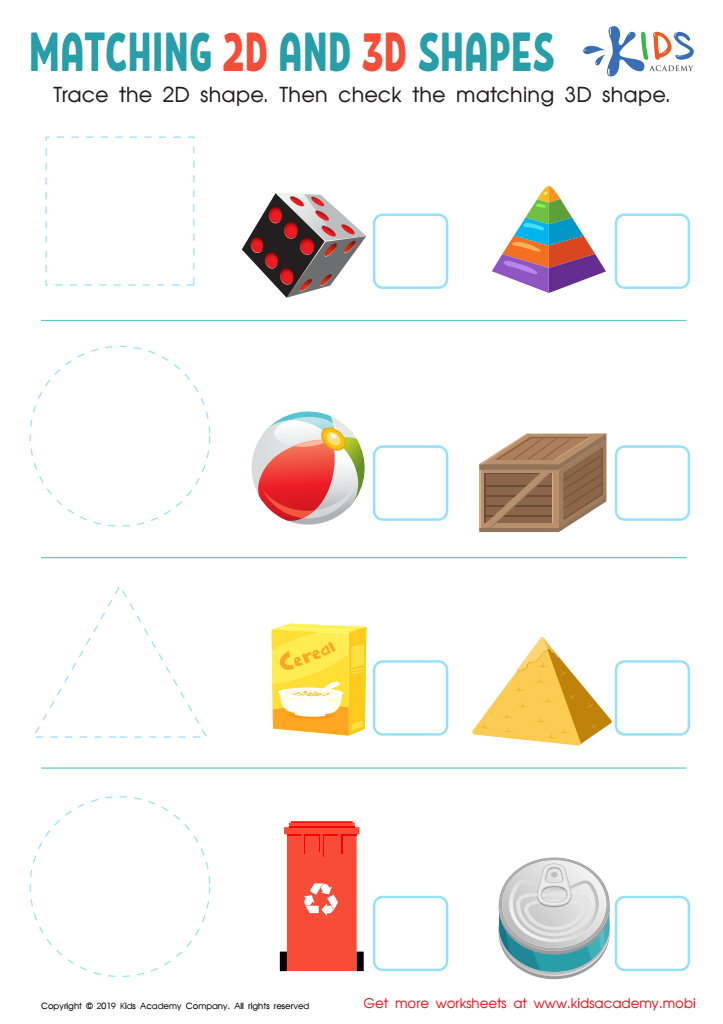
Matching 2D and 3D Shapes Worksheet
 Assign to My Students
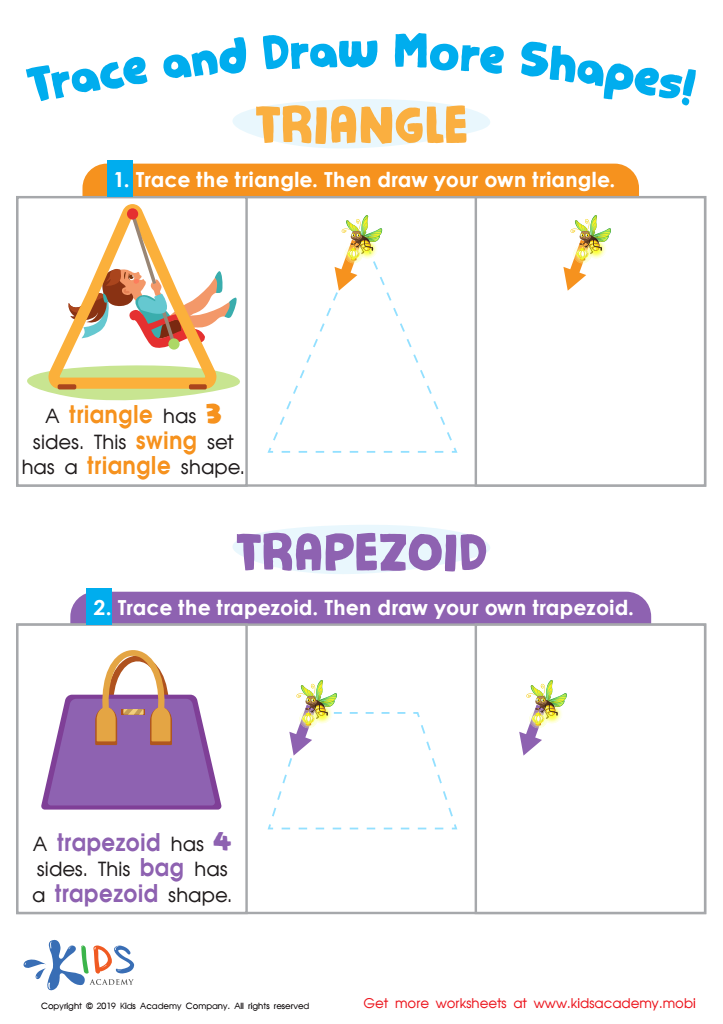
Trace and Draw More Shapes Worksheet
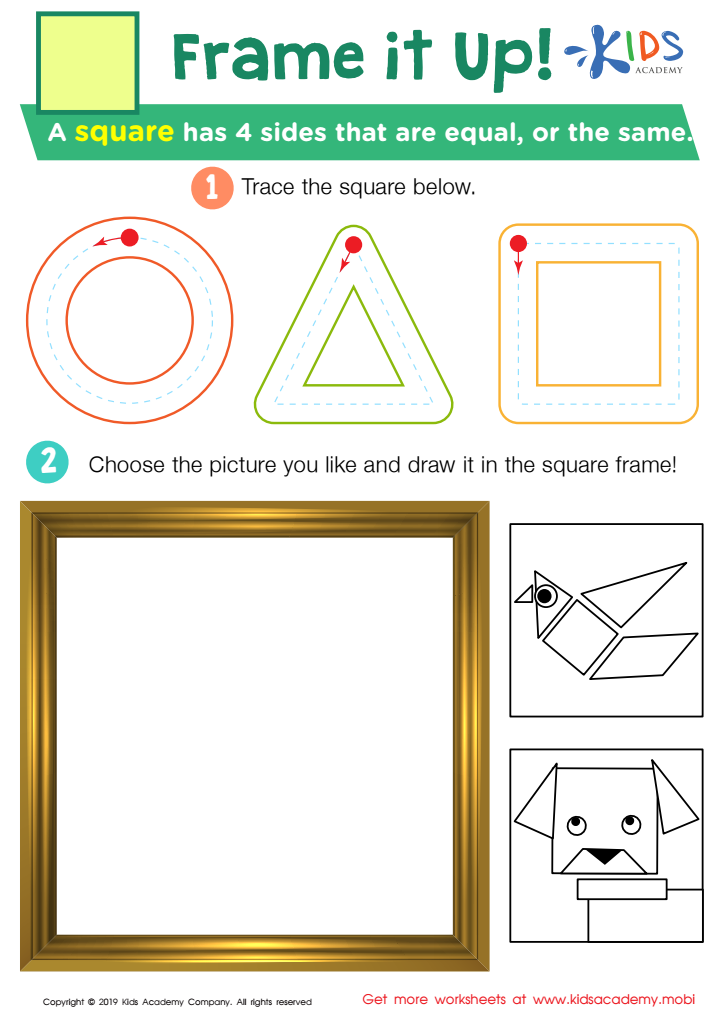
Frame it Up Worksheet
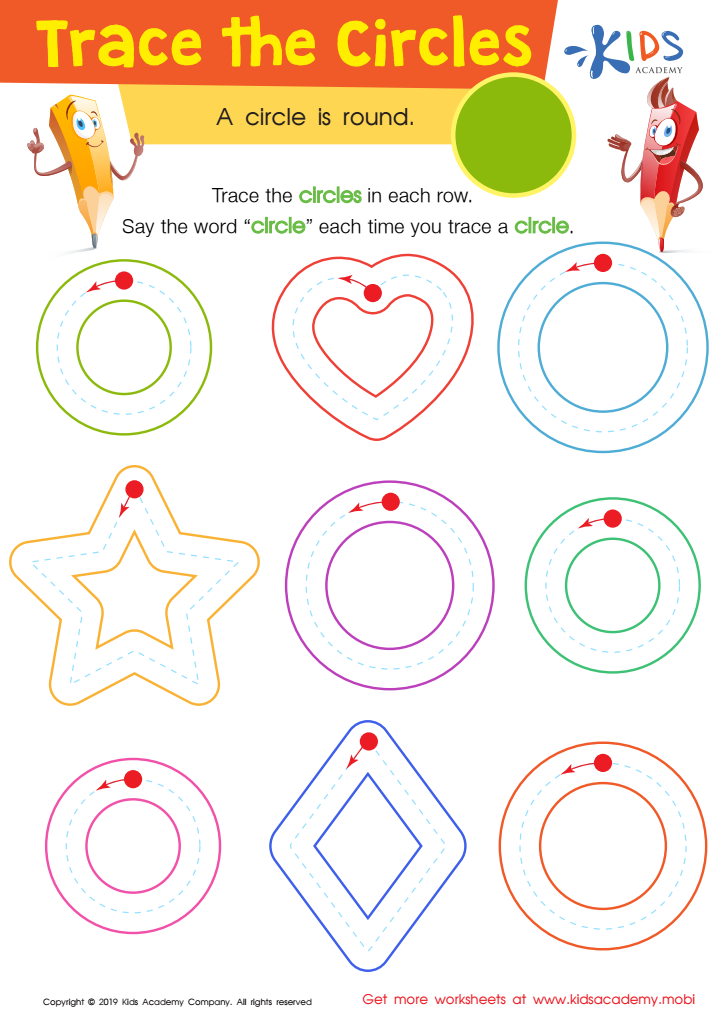
Trace The Circles Worksheet
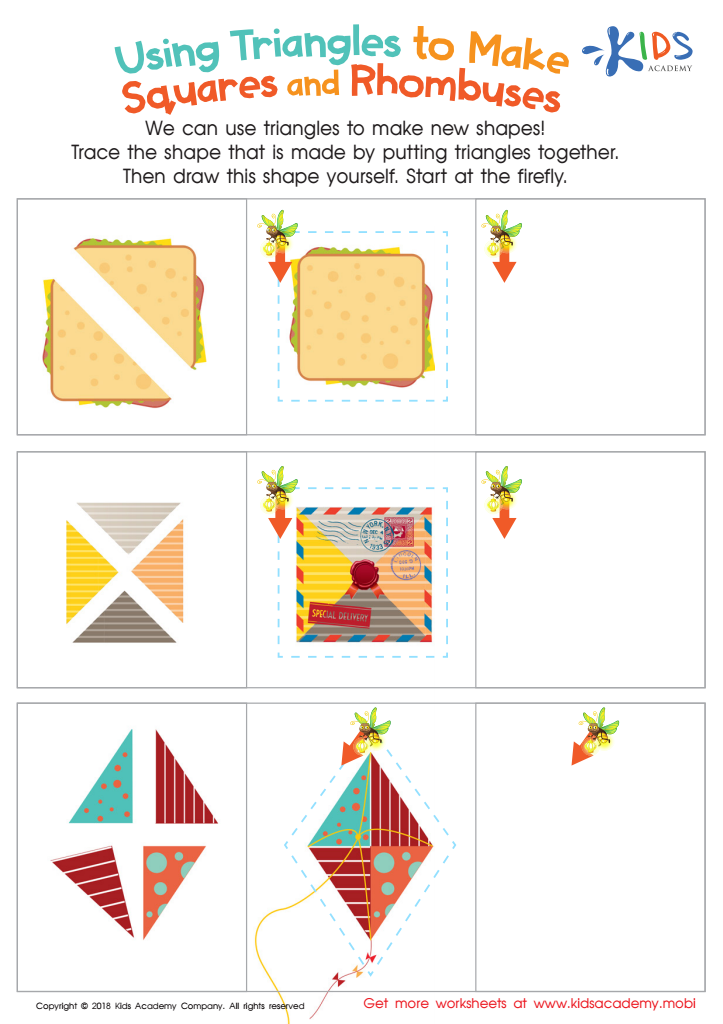
Using Triangles to Make Squares and Rhombuses Worksheet
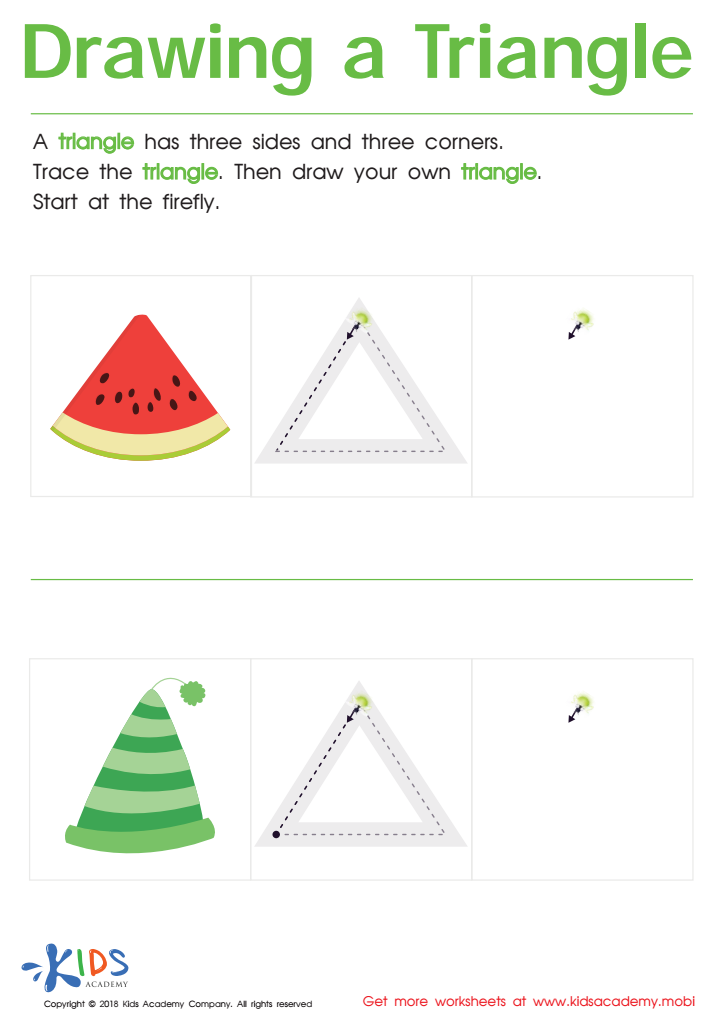
Drawing a Triangle Worksheet
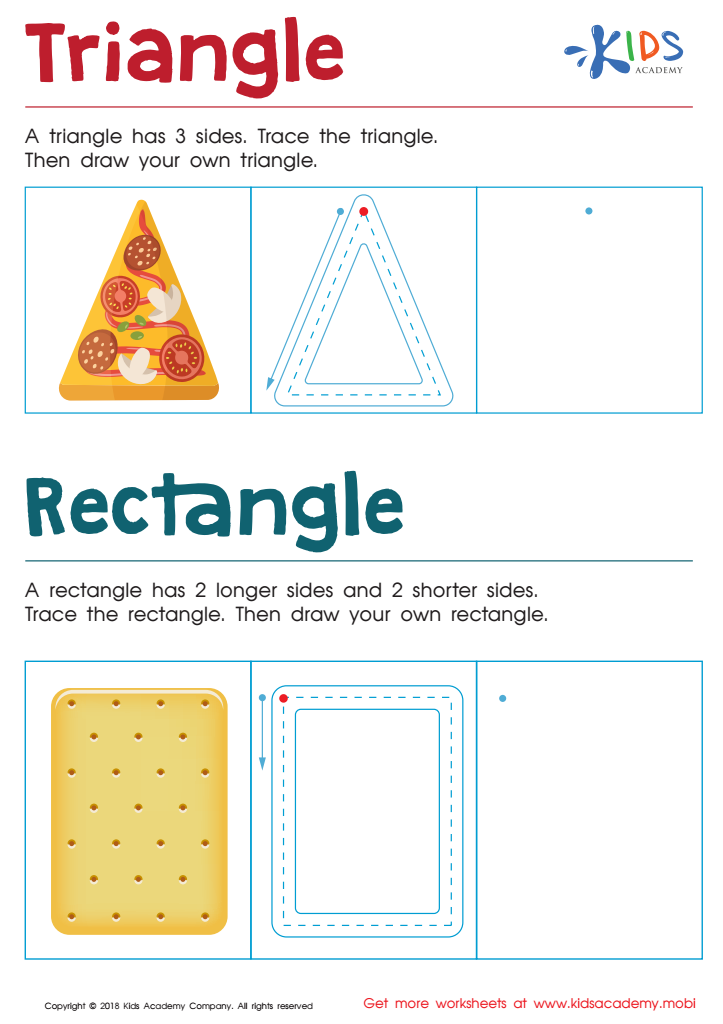
Triangle Rectangle Worksheet
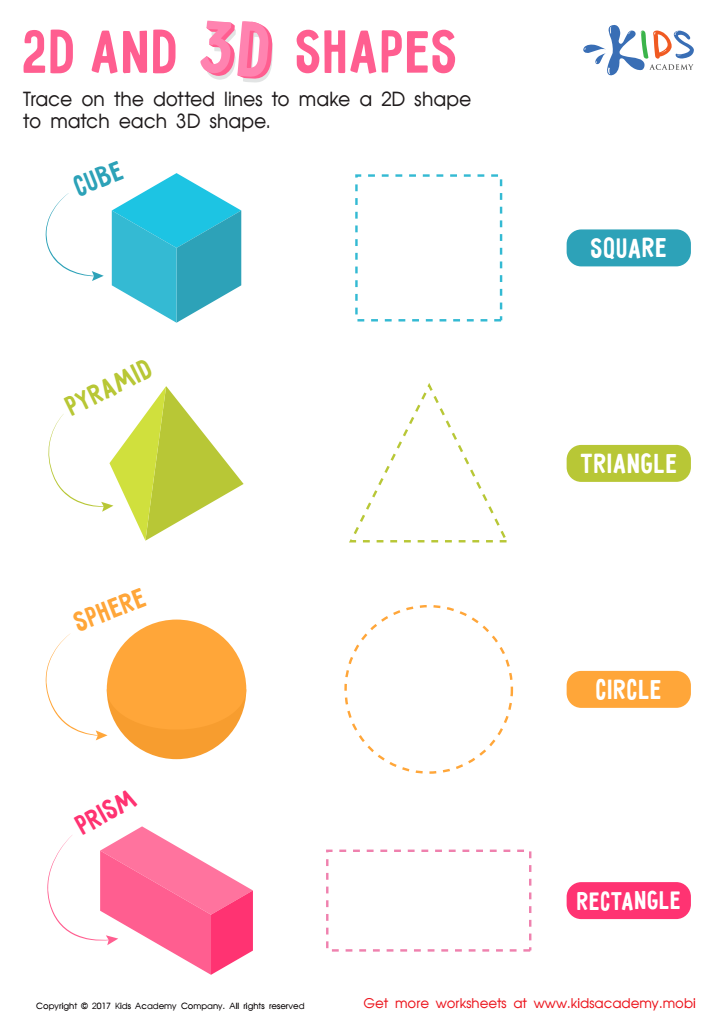
2D and 3D Shapes Worksheet
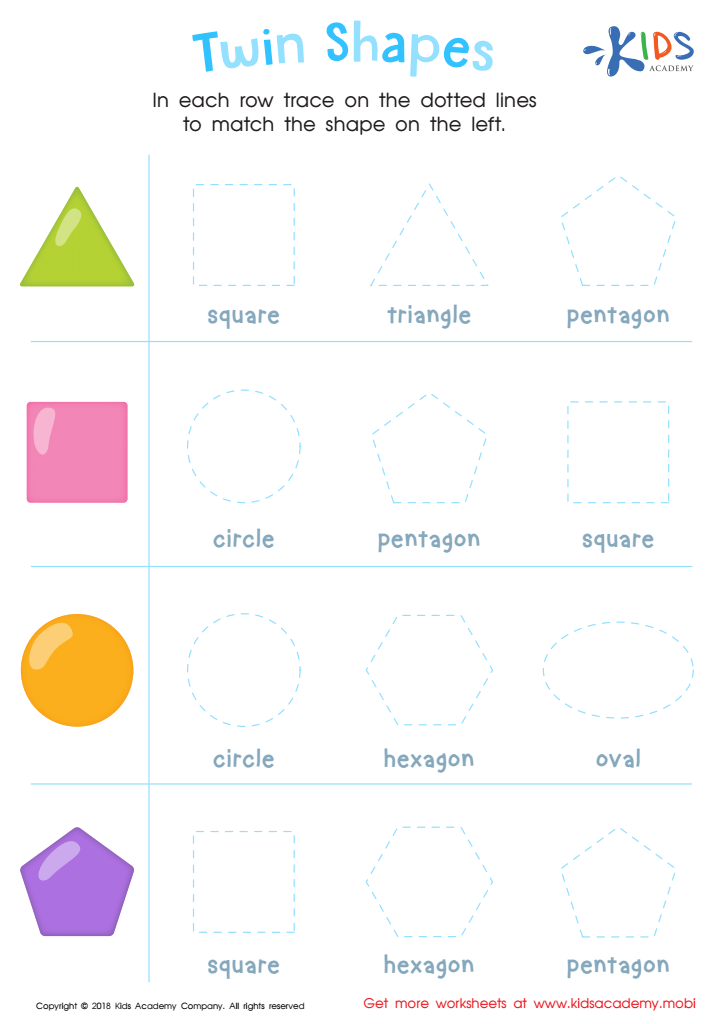
Twin Shapes Dot-to-Dot Worksheet
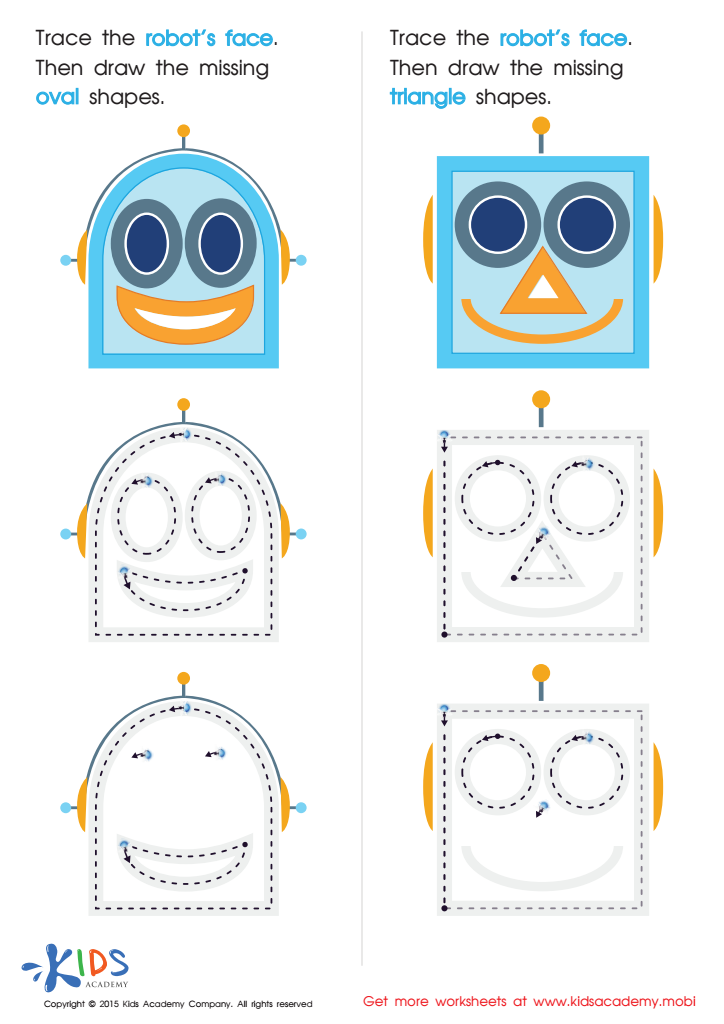
Drawing Ovals And Triangles with Fun Printable
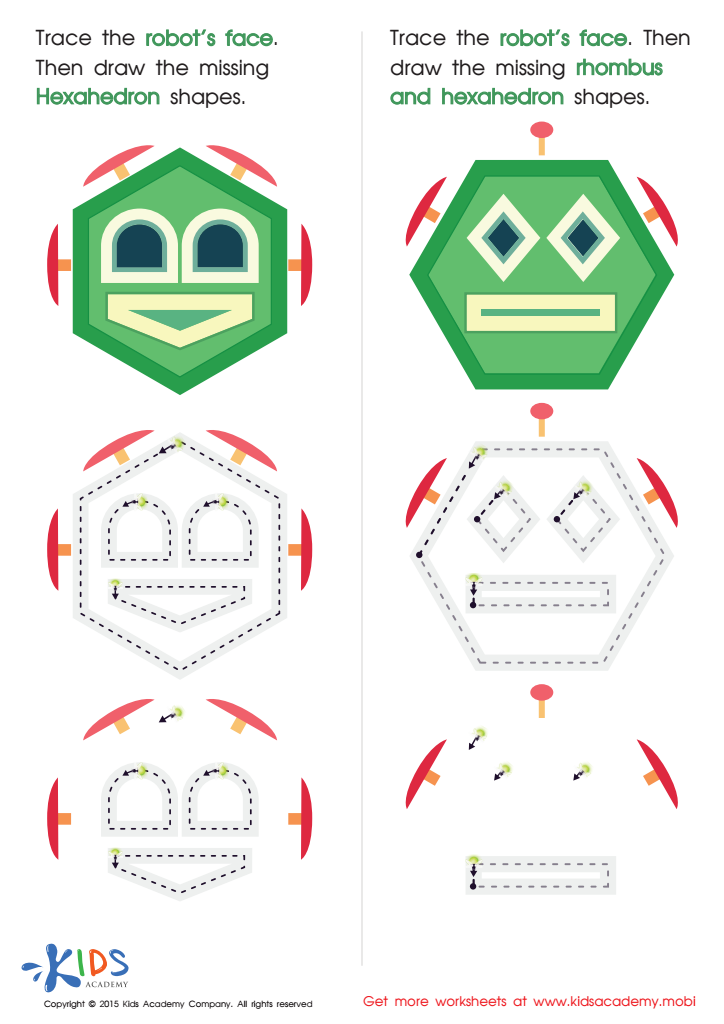
Practice Drawing Hexahedrons And a Rhombus Worksheet
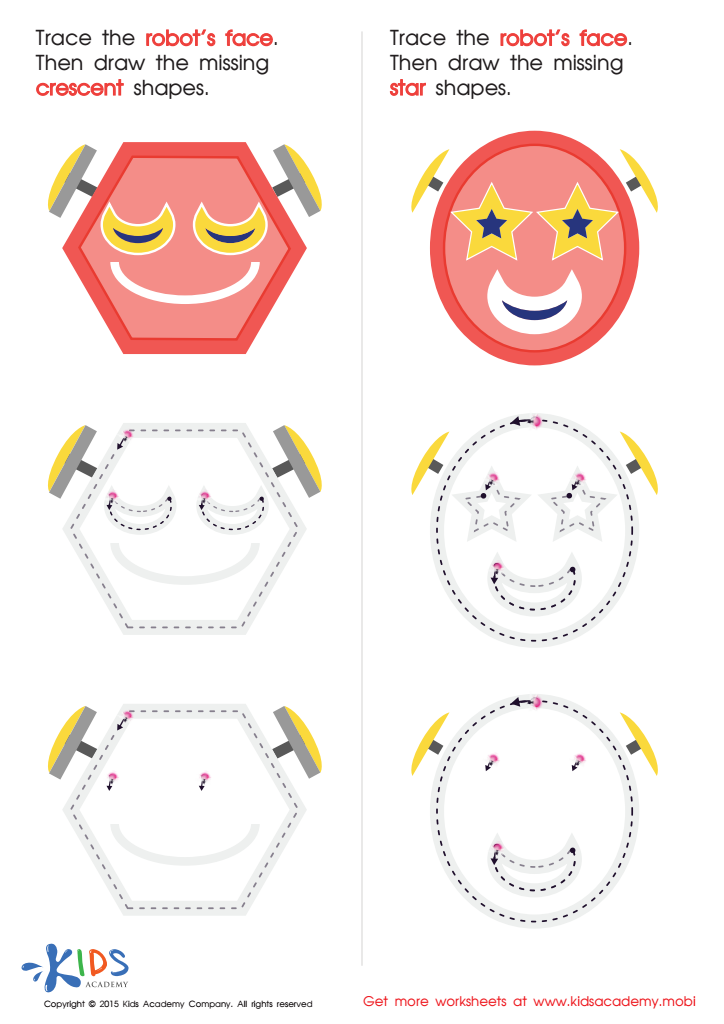
Composing a Robot's Face of Crescents And Stars Worksheet
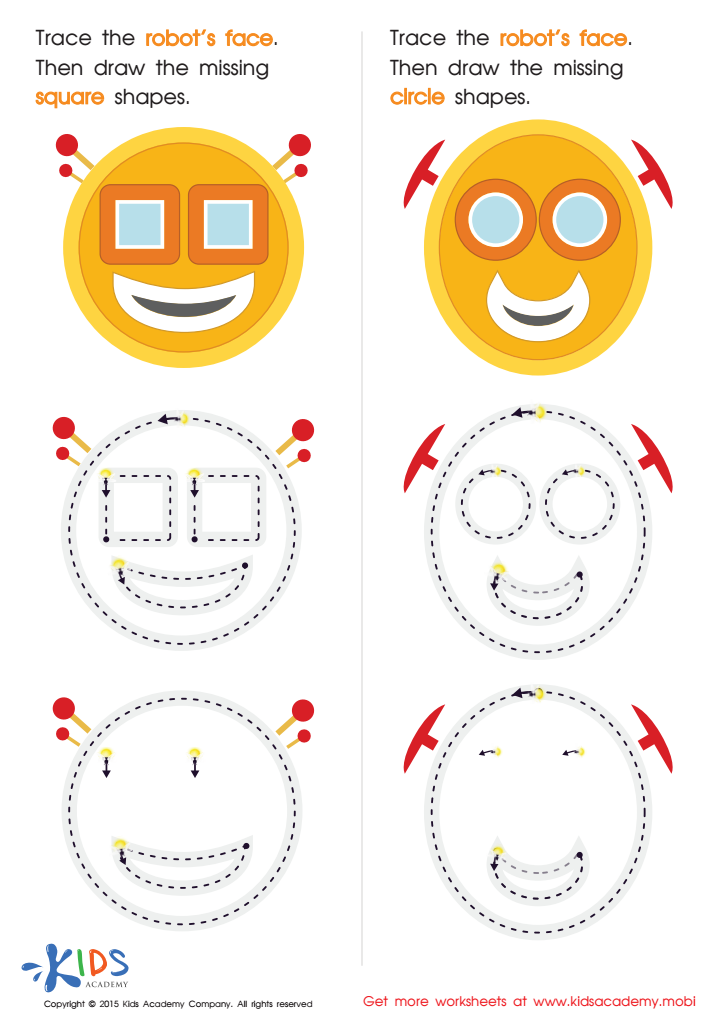
Practicing to Draw Circles And Squares Printable
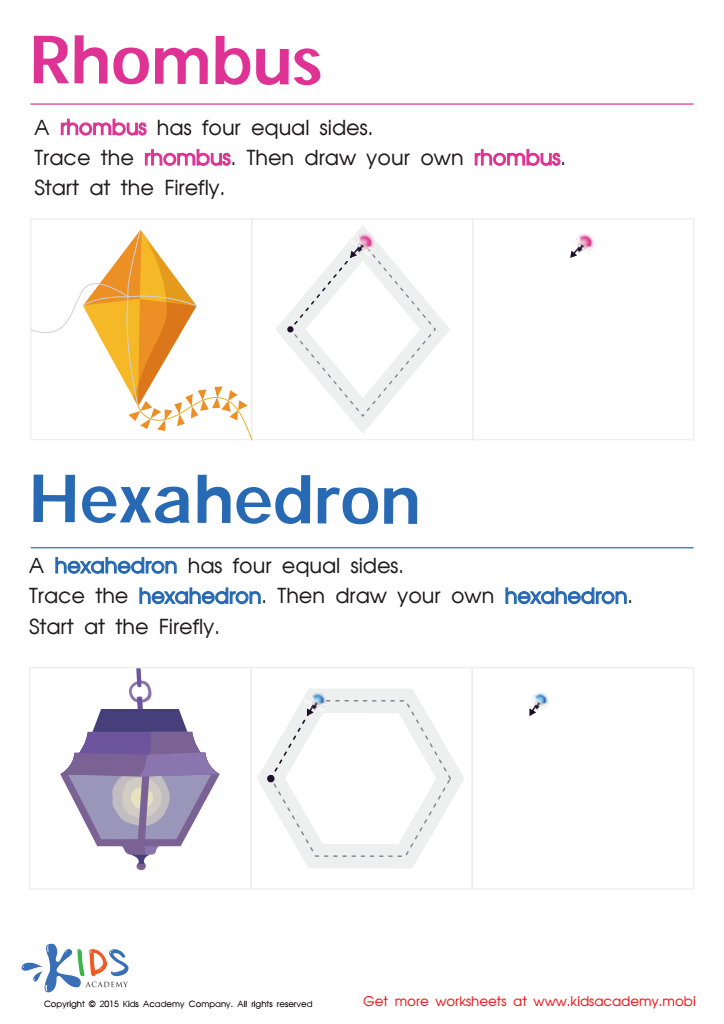
Draw a Rhombus And a Hexahedron Printable
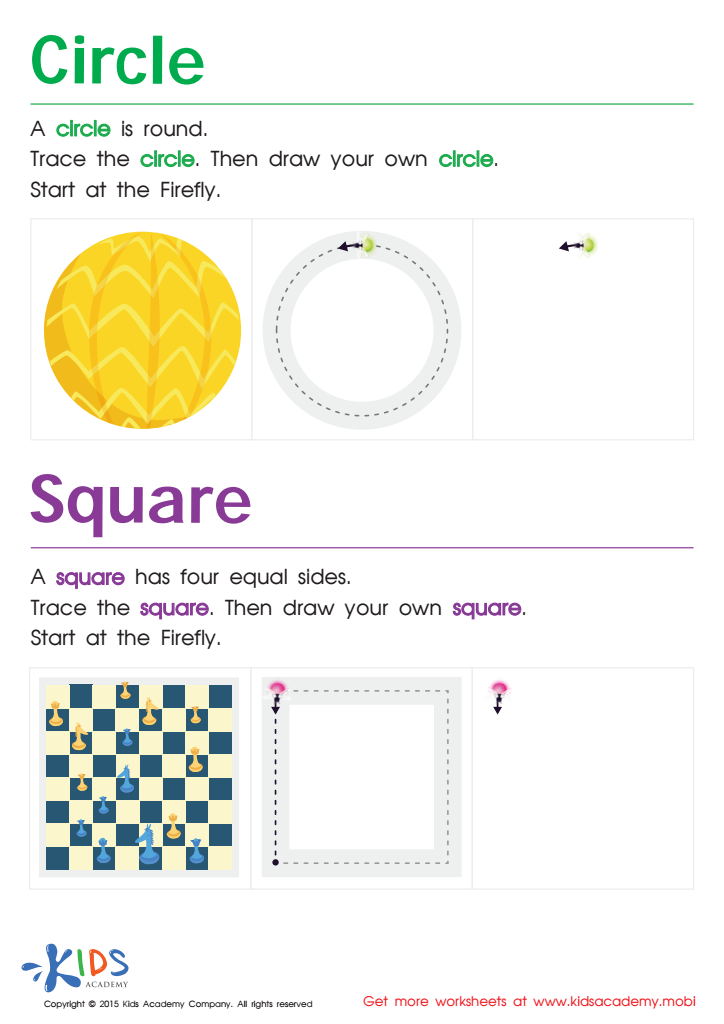
Trace And Draw a Circle And a Square Worksheet
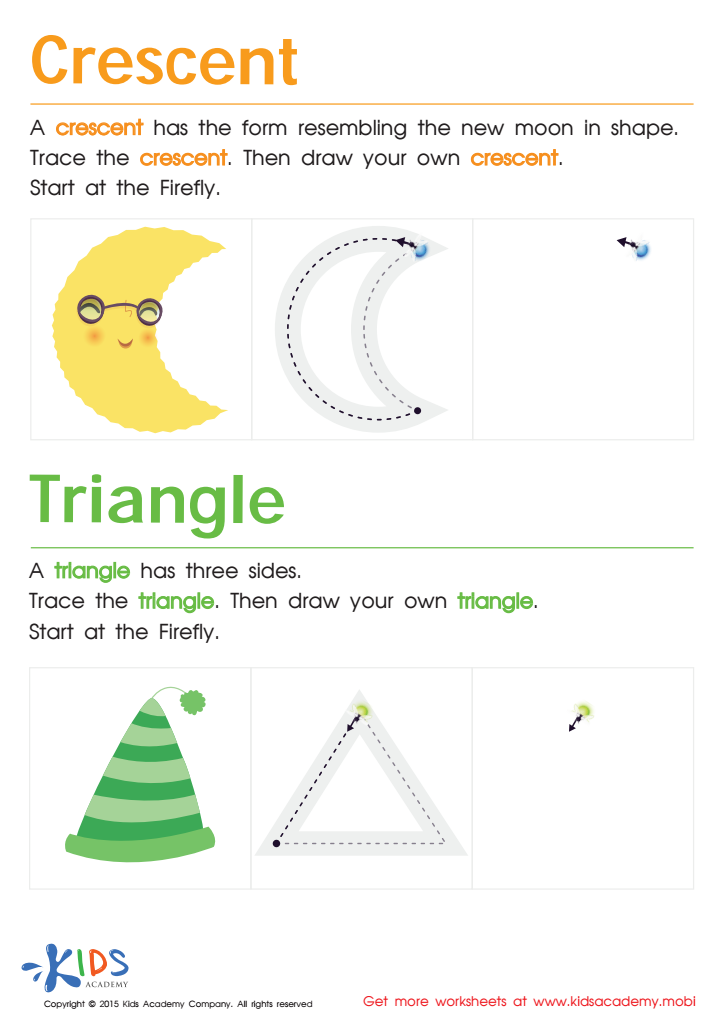
Learning to Draw Crescents And Triangles Worksheet








Tracing Shapes worksheets activities are an incredibly useful tool for the developmental stages of early childhood education. These exercises provide a solid foundation for the acquisition and refinement of fine motor skills, which are essential for tasks ranging from writing to buttoning a shirt. Through the simple act of tracing various shapes, children not only learn to recognize and name these geometric figures but also gain valuable practice in controlling a pencil or crayon, paving the way for successful handwriting experiences in the future.
Moreover, Tracing Shapes worksheets activities are instrumental in enhancing cognitive skills. As children focus on following the contours of each shape, they develop concentration and attention to detail. This meticulous attention is crucial across all learning areas, enabling children to observe and understand more intricate concepts as they progress in their educational journey. Additionally, engaging with these worksheets introduces basic math concepts such as geometry, encouraging an early appreciation and understanding of how shapes form the building blocks of the world around us.
Beyond the academic benefits, Tracing Shapes worksheets activities foster creativity and imagination. Once comfortable with tracing, children often explore drawing shapes independently, experimenting with creating their own designs and artwork. This creative exploration is a vital component of cognitive and emotional development, encouraging self-expression and building confidence in their abilities.
These activities also offer a practical advantage for educators and parents alike. Tracing Shapes worksheets are readily available, easy to implement, and can be adapted to suit the individual needs of each child, making them an invaluable resource in both classroom and home settings.
In conclusion, Tracing Shapes worksheets activities are more than just a simple exercise; they are a comprehensive educational tool. They build foundational skills crucial for academic success, support cognitive and creative development, and offer a versatile, accessible method for engaging young learners.








