
Normal Tracing worksheets activities for Ages 3-5
88 filtered results
Difficulty Level
Grade
Age
-
From - To
Subject
Activity
Standards
Introducing our meticulously crafted Normal Tracing Worksheets Activities, designed to enhance your child's fine motor skills and handwriting proficiency. These activities are tailor-made to provide an engaging and educational experience, ensuring your child masters the art of tracing with ease and confidence. Our Normal Tracing Worksheets are packed with a variety of fun and interactive exercises, ideal for children looking to improve their penmanship and precision. From letters and numbers to shapes and patterns, our activities cover it all, making learning an enjoyable journey. Dive into our Normal Tracing Worksheets Activities today and witness your child's handwriting transform beautifully.
Favorites
With answer key
Interactive
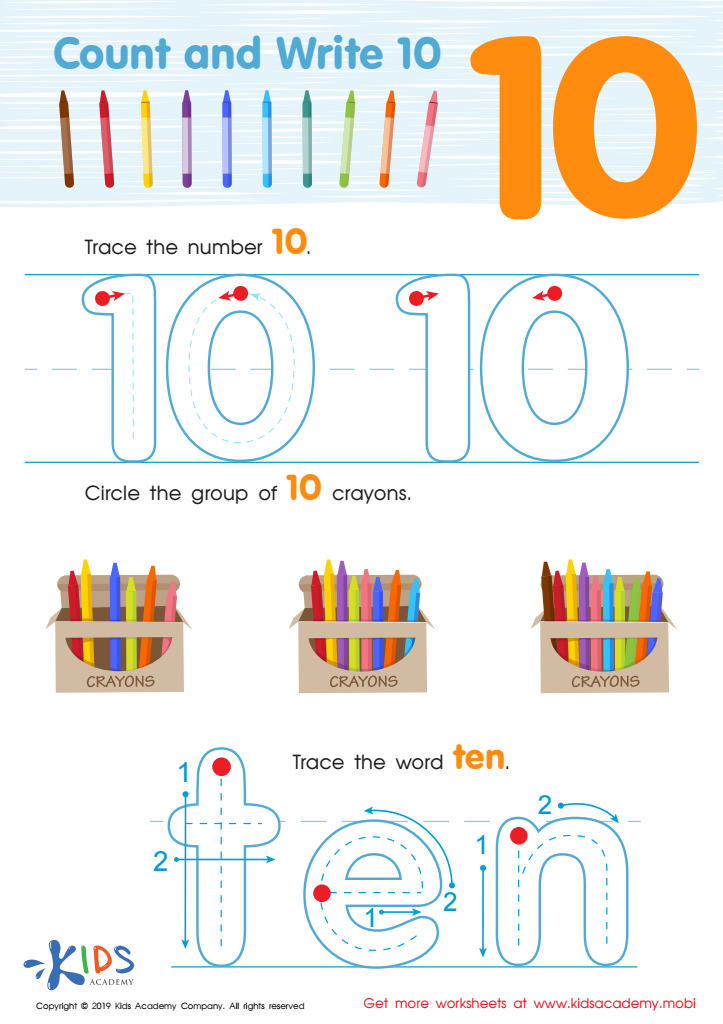
Count and Write 10 Worksheet
Help your child succeed by teaching them numbers! They should already know their 1,2,3s before their first day of school. This worksheet will give them the practice they need to write and count to 10. Get them to count and circle the 10 crayons, then trace the number 10. It's a great way to help them understand numbers and get a head start.
 Assign to My Students
Count and Write 10 Worksheet
Worksheet
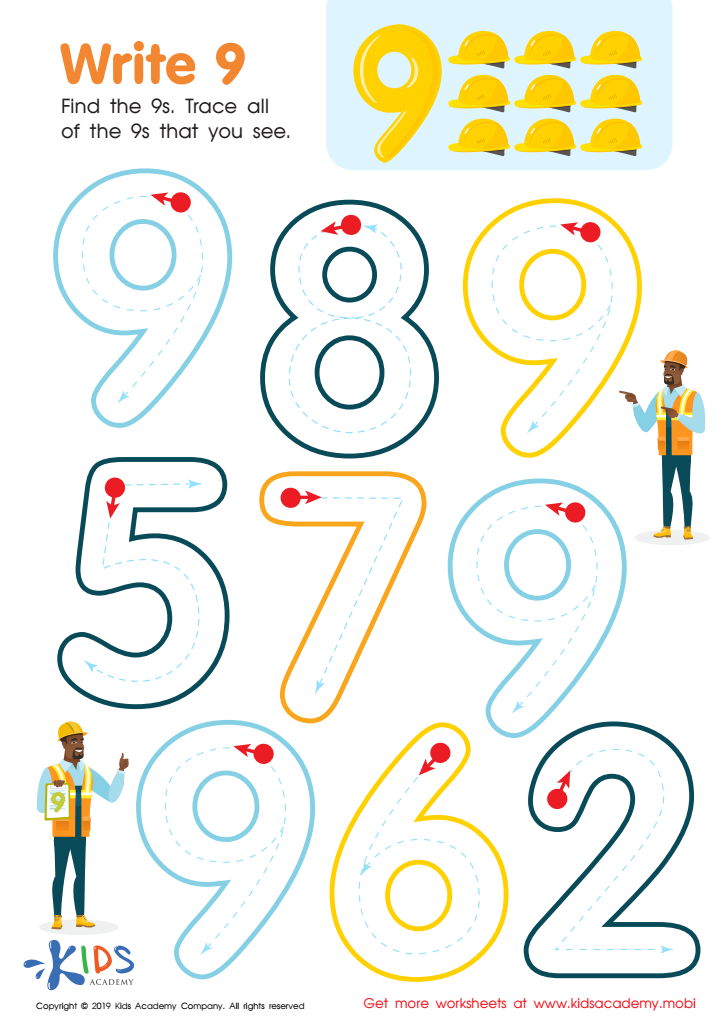
Write 9 Worksheet
Once your kids can count, help them learn to write numbers with your guidance and patience. This worksheet is designed to speed up the process. Help them spot the 9s in the picture, then help them trace them. With your help, your kids will soon be pros at counting and writing numbers.
Write 9 Worksheet
Worksheet
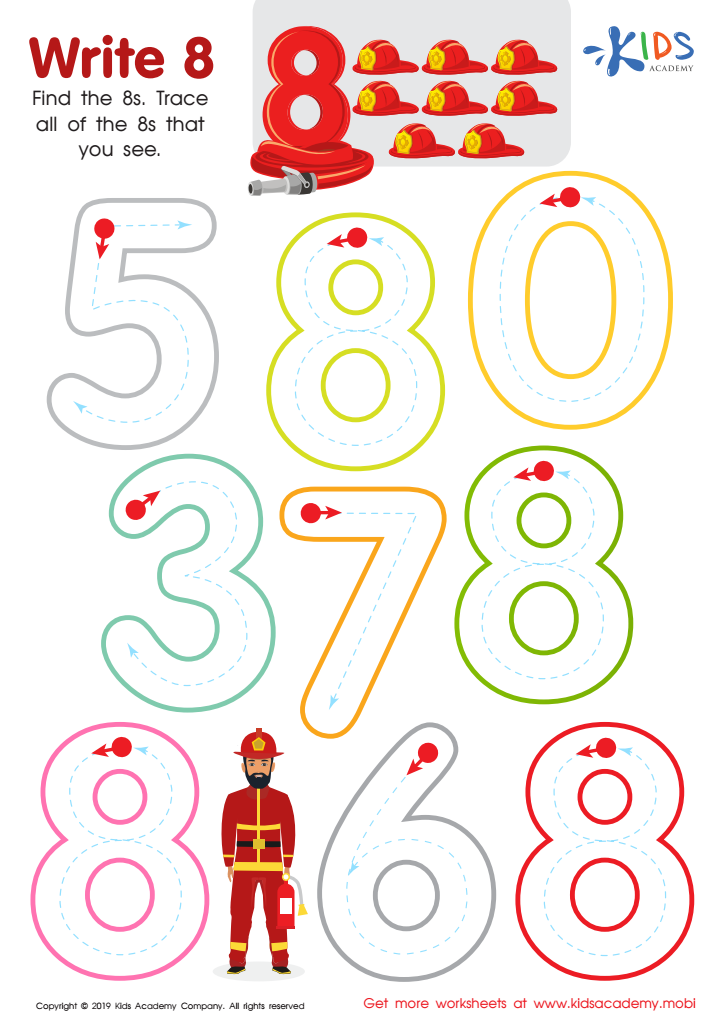
Write 8 Worksheet
Once your kids can count small numbers, it's time to learn how to write them. With your help and patience, they will soon be pros! This worksheet will make learning easier. Help them spot the 8s in the picture, then help them trace them.
Write 8 Worksheet
Worksheet
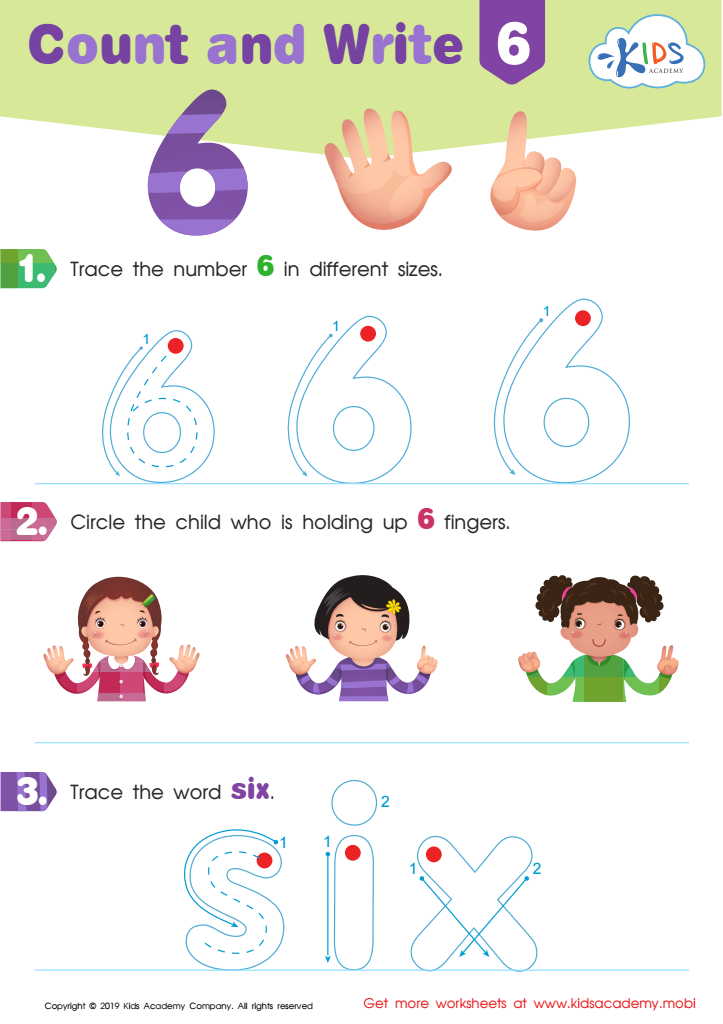
Count and Write 6 Worksheet
Kids begin math by mastering recognition skills. This worksheet helps with that by giving them practice writing "six" and the numeral 6, with guide dots and traceable lines. Giving kids multiple ways to learn the basics helps them build a strong math foundation.
Count and Write 6 Worksheet
Worksheet
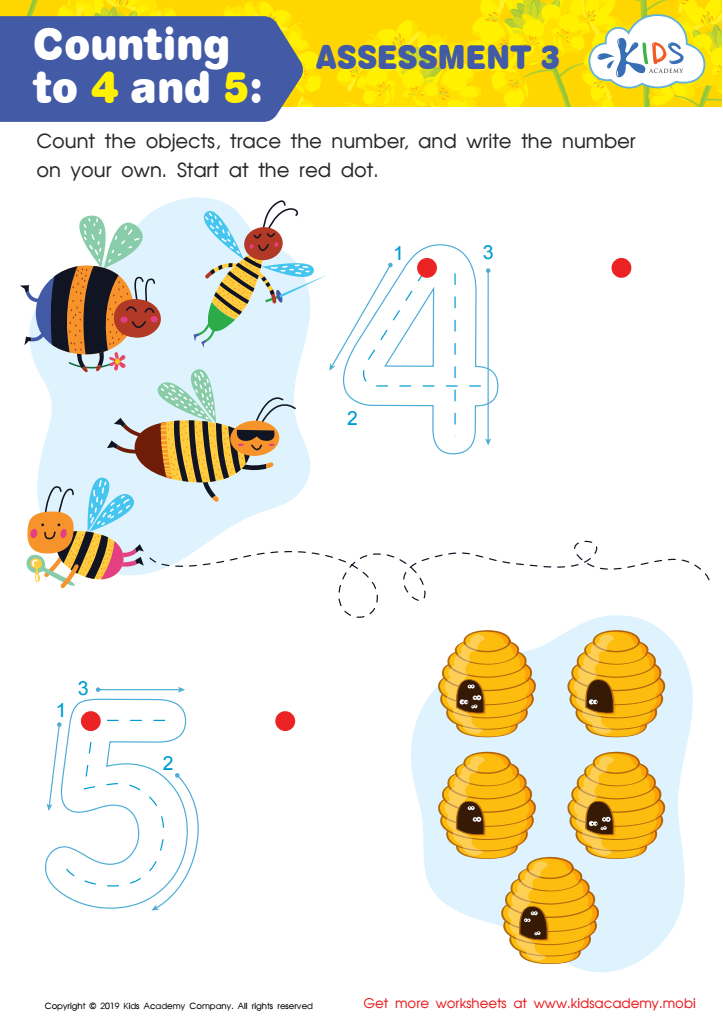
Counting to 4 and 5: Assessment 3 Worksheet
Help your kids learn to count with fun objects and items they like - like the bees in this worksheet. Ask them to count, trace the number, and write it down. Give guidance, starting at the red dot. This is an important first step in math and your kids will love it!
Counting to 4 and 5: Assessment 3 Worksheet
Worksheet
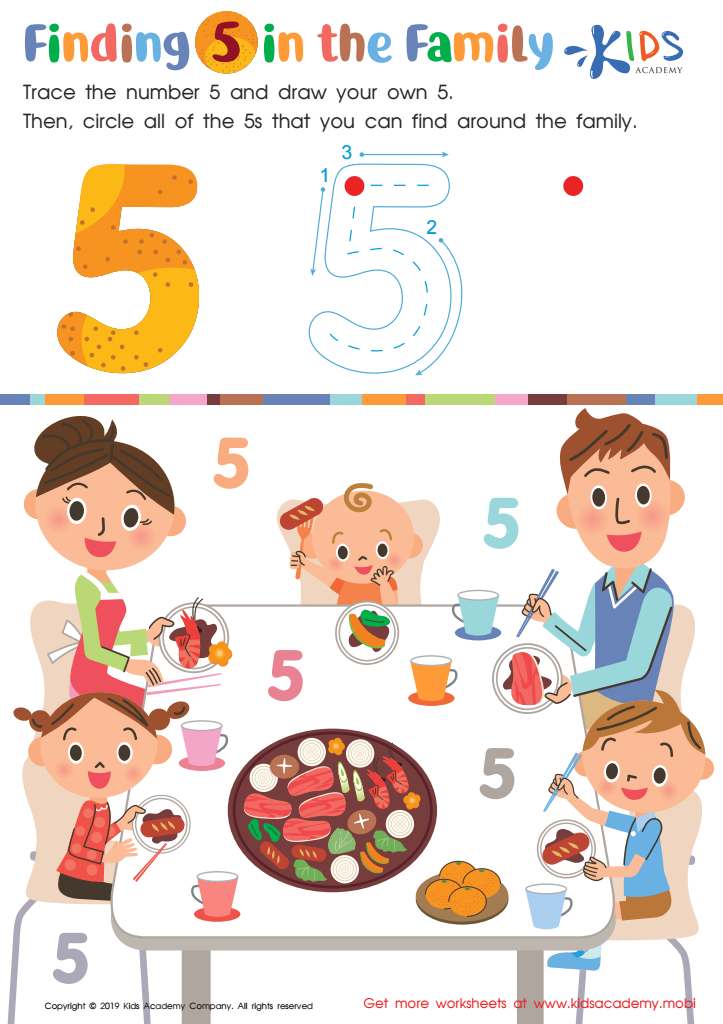
Finding 5 in the Family Worksheet
This worksheet helps kids identify and write the number 5. Ask what the family is doing and who the family members are. Help them trace and draw the 5, then have them circle all 5s in the picture.
Finding 5 in the Family Worksheet
Worksheet
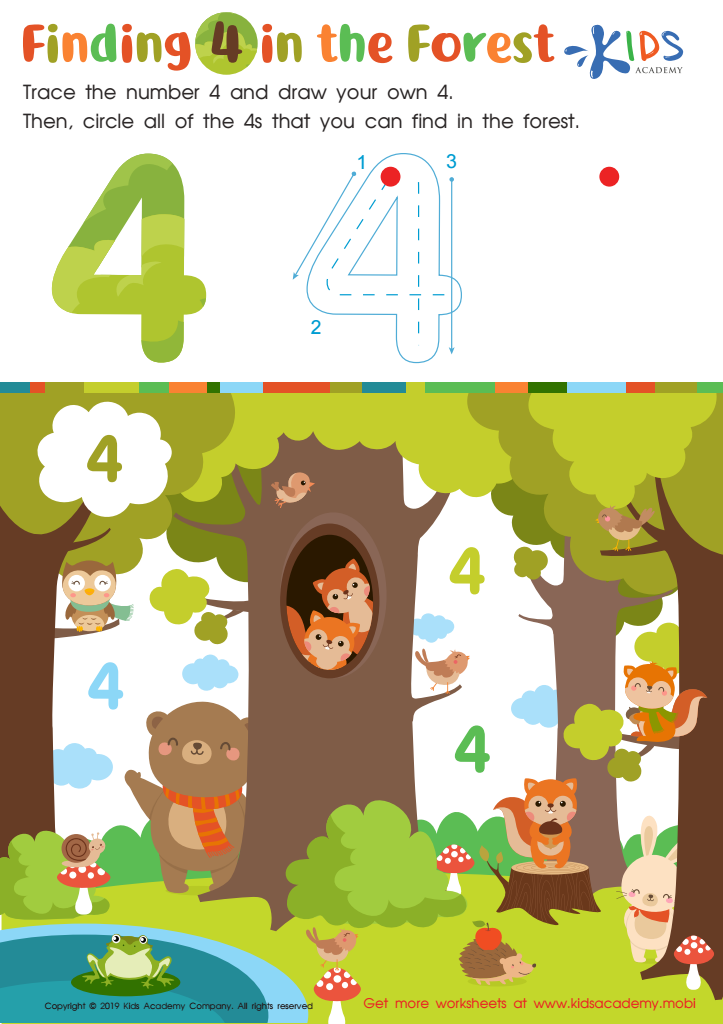
Finding 4 in the Forest Worksheet
Before starting, have your kids count as high as they can. Ask them to identify the setting and point out the 4s. Trace 4 and draw your own. Help your kids circle all the 4s they can find in the forest. How far can they count? How well did they find the hidden 4s?
Finding 4 in the Forest Worksheet
Worksheet
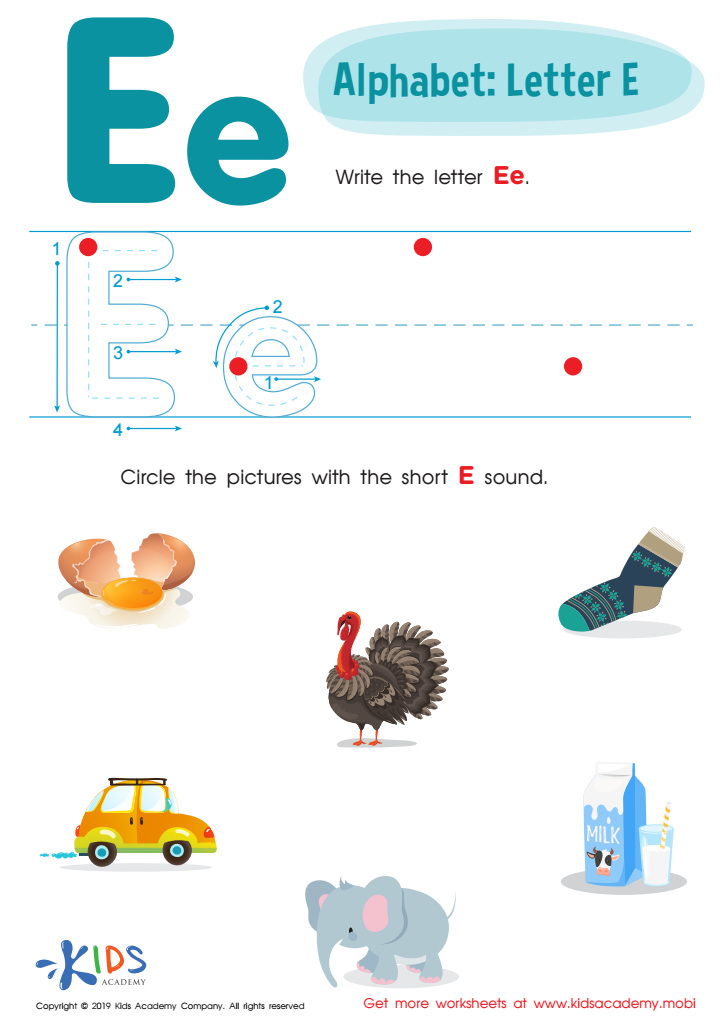
Letter E Tracing Worksheet
Students trace and write uppercase and lowercase letter E. They sound out "E" words, choosing those with short "E" sounds. Preschoolers identify the difference between the 'E' sounds in words like "egg" and "turkey." A tracing sheet helps them to understand.
Letter E Tracing Worksheet
Worksheet
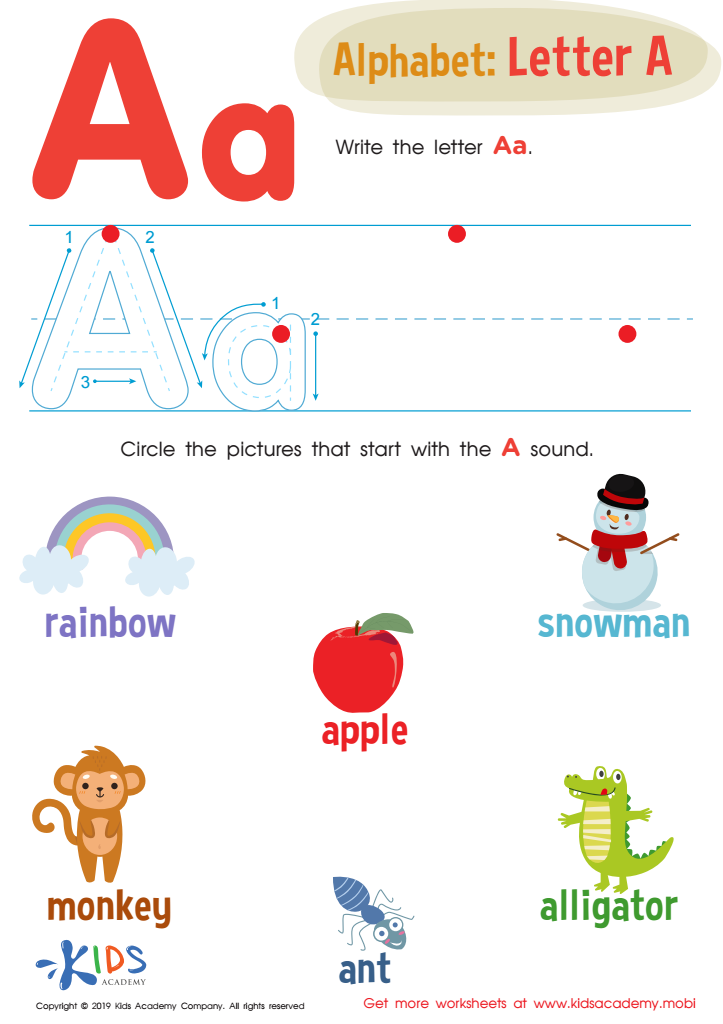
Letter A Tracing Worksheet
Learning the letter "A" is essential. This worksheet helps kids trace and write it, boosting their skill. They also circle pictures with the "A" sound, with both the word and picture provided. This helps them learn how to pronounce words like "apple" correctly.
Letter A Tracing Worksheet
Worksheet
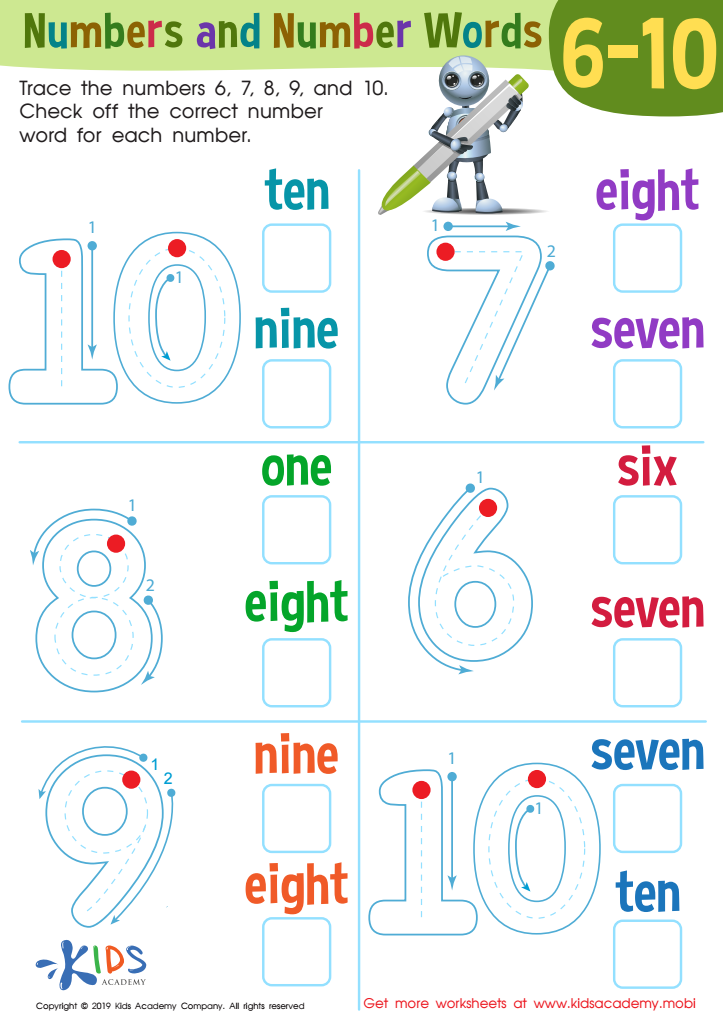
Numbers and Number Words 6–1 Worksheet
As children explore numbers and words, parents and teachers can help them learn to count and read with activities such as this worksheet. Here, the student traces numbers 6-10 and then selects the right number words to match. A fun and interactive way to learn!
Numbers and Number Words 6–1 Worksheet
Worksheet
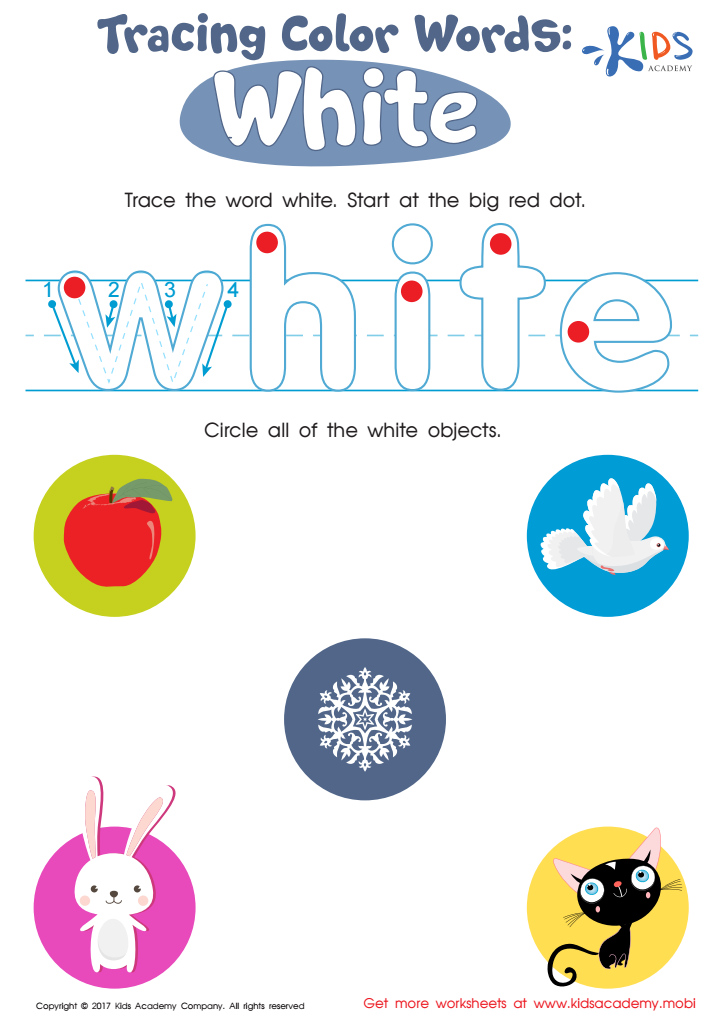
White Tracing Color Words Worksheet
This fun worksheet helps children learn color words quickly. They trace the letters and circle pictures of the color. This helps them practice reading and identifying objects, and they can do it without needing to read phonetically. Download it now and watch your child's skill grow!
White Tracing Color Words Worksheet
Worksheet
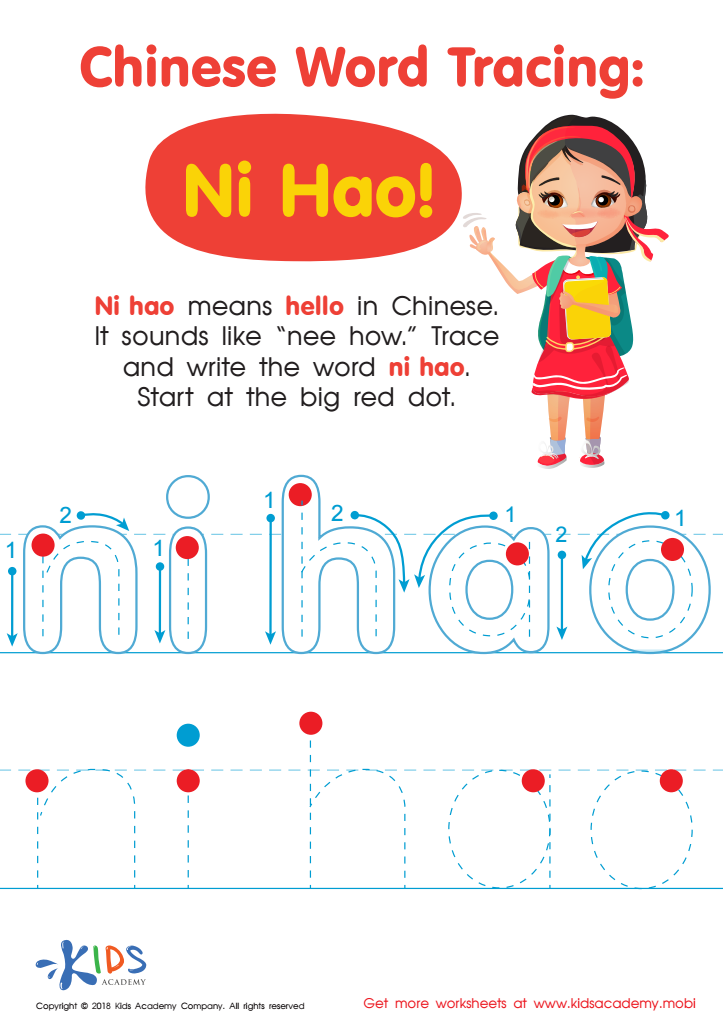
Chinese Word Tracing: Ni Hao Worksheet
Kids can learn to say "Ni hao" with this fun tracing worksheet. The free PDF helps kids write and say the Chinese greeting while also developing fine-motor, handwriting and reading skills. With red guide dots and traceable lines, kids will learn top-to-bottom and left-to-right patterning for fluent reading.
Chinese Word Tracing: Ni Hao Worksheet
Worksheet
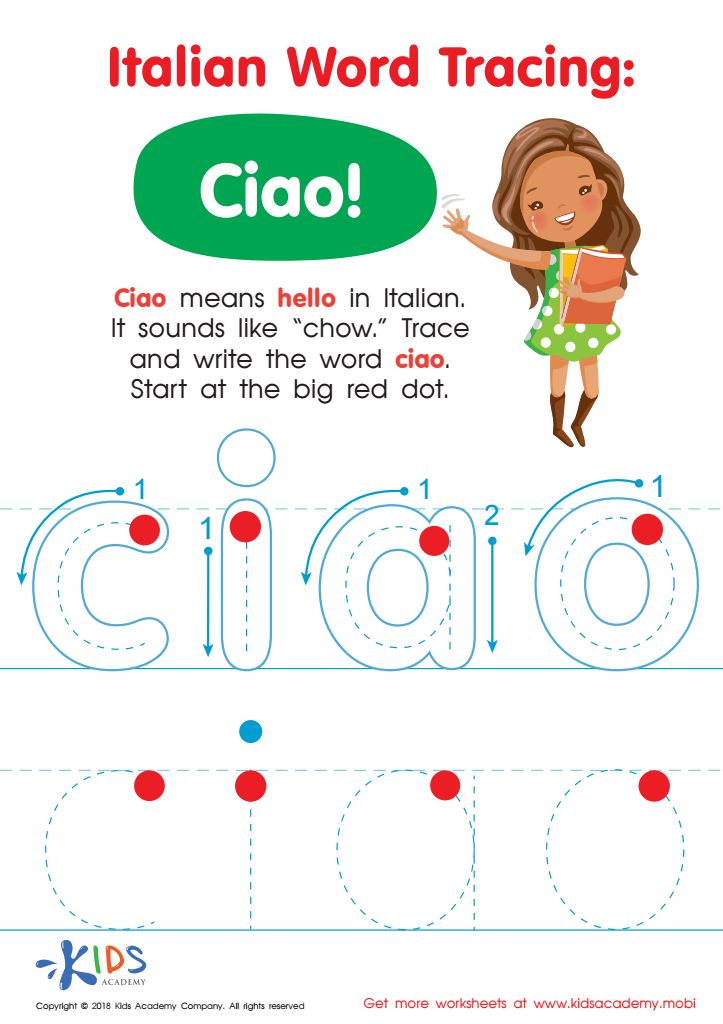
Italian Word Tracing: Ciao Worksheet
Help kids learn to greet people in different languages with this fun worksheet! Featuring the Italian word 'Ciao', it helps kids trace and learn the pronunciation. Plus, it teaches hand-eye coordination and fine-motor skills. Global connectivity can start with this activity!
Italian Word Tracing: Ciao Worksheet
Worksheet
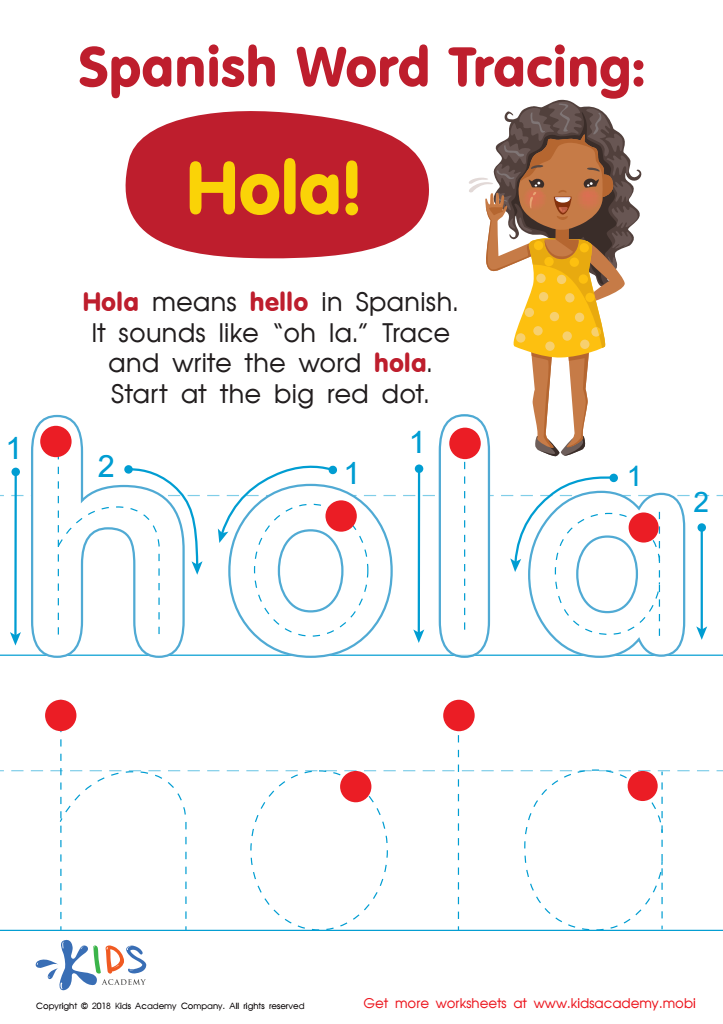
Spanish Word Tracing: Hola Worksheet
This PDF provides a fun way for students to learn "Hola" (Hello) in Spanish! Kids can practice fine motor and handwriting skills while they trace the letters. They'll get the hang of top-to-bottom, left-to-right patterning while they learn how to say and write in Spanish. With practice, they'll soon feel confident speaking and writing Spanish!
Spanish Word Tracing: Hola Worksheet
Worksheet
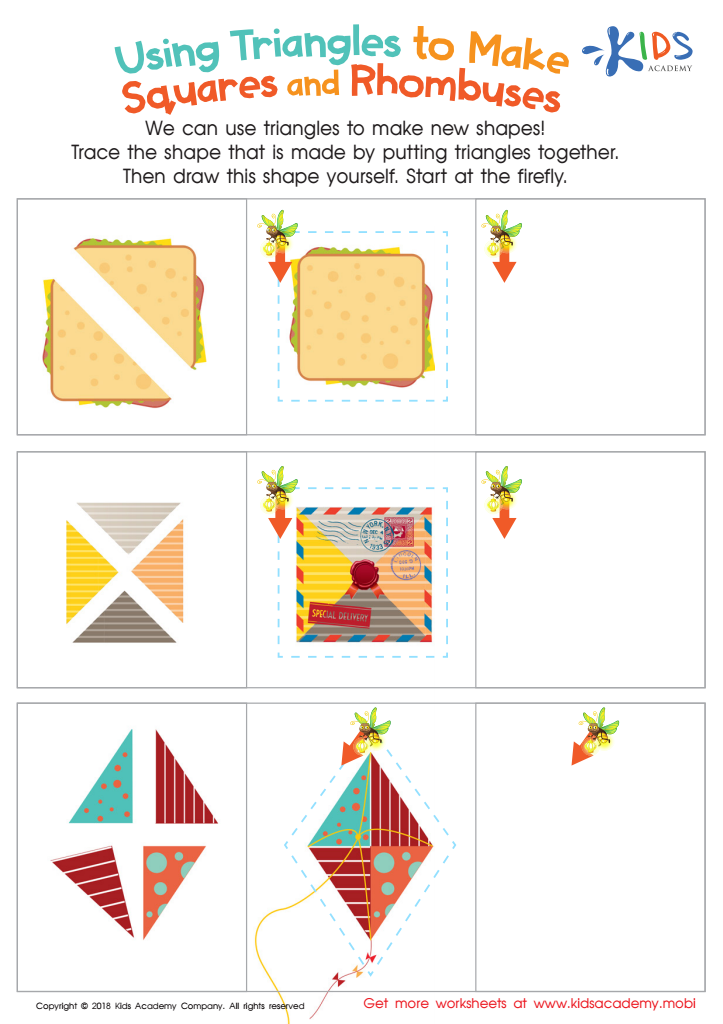
Using Triangles to Make Squares and Rhombuses Worksheet
Learning shapes is a fun way to boost spatial skills and critical thinking. This worksheet shows children how to use triangles to construct squares and rhombuses. Clear illustrations and a printout help children draw the new shape. A great activity for the math classroom! 80 words.
Using Triangles to Make Squares and Rhombuses Worksheet
Worksheet
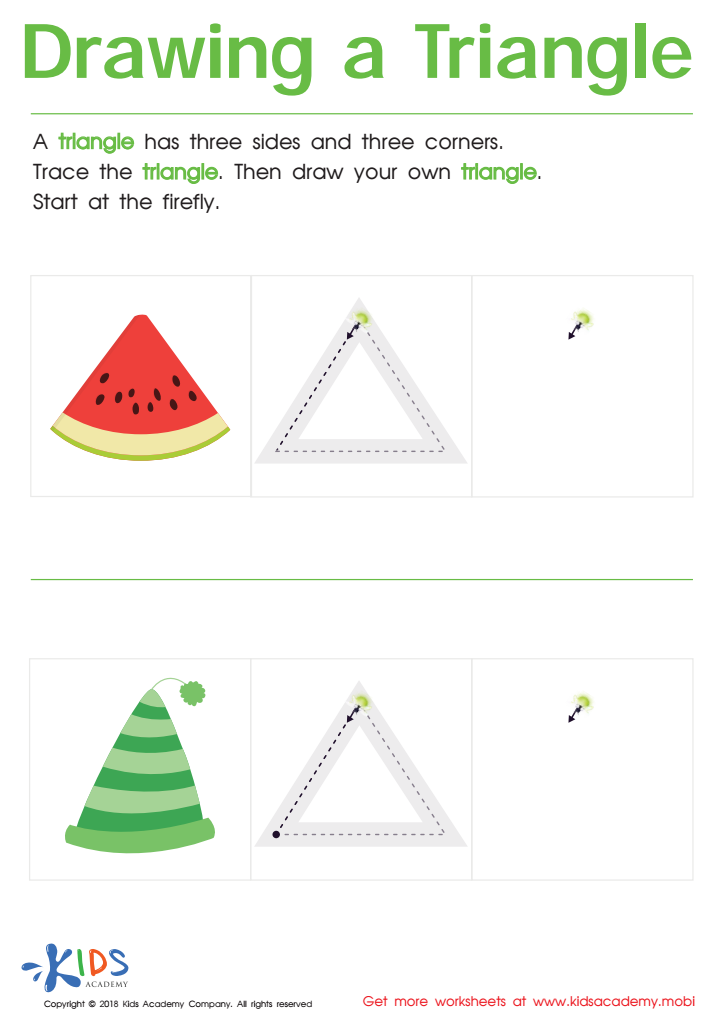
Drawing a Triangle Worksheet
Help your child develop fine motor skills with this fun, traceable printable! It teaches them how to draw a triangle, with easy steps and cute picture motivation. They'll work on pre-writing skills, pencil position, and grip control without even realizing it. With this basic shape, they'll gain a foundation for strong writing and drawing skills.
Drawing a Triangle Worksheet
Worksheet
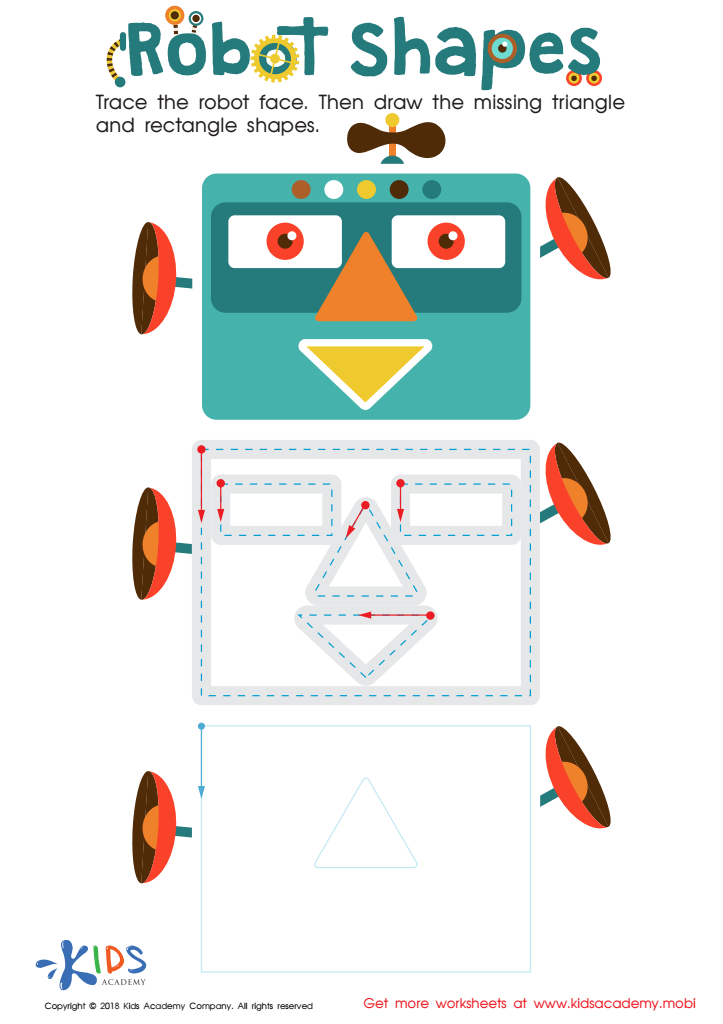
Robot Shapes Worksheet
Help your preschooler get started with math skills while having fun with this shape tracing worksheet featuring a cute robot! Ask them to study the first image, trace the dotted lines to draw the shapes in the second, and color the third. With this activity, they'll learn shapes while enjoying the funny robot pictures!
Robot Shapes Worksheet
Worksheet
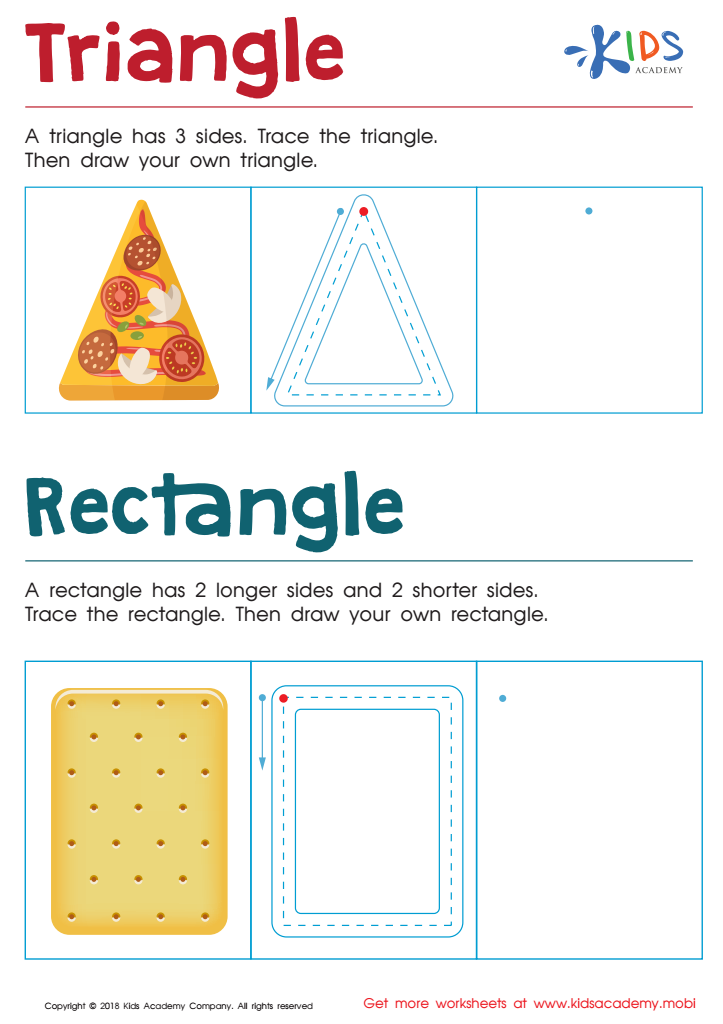
Triangle Rectangle Worksheet
This printable worksheet helps kids draw rectangles and triangles. Have your child trace the pizza and cracker shapes to become familiar, then try their own. Perfect for second graders! Coloring and creativity make this fun and educational.
Triangle Rectangle Worksheet
Worksheet
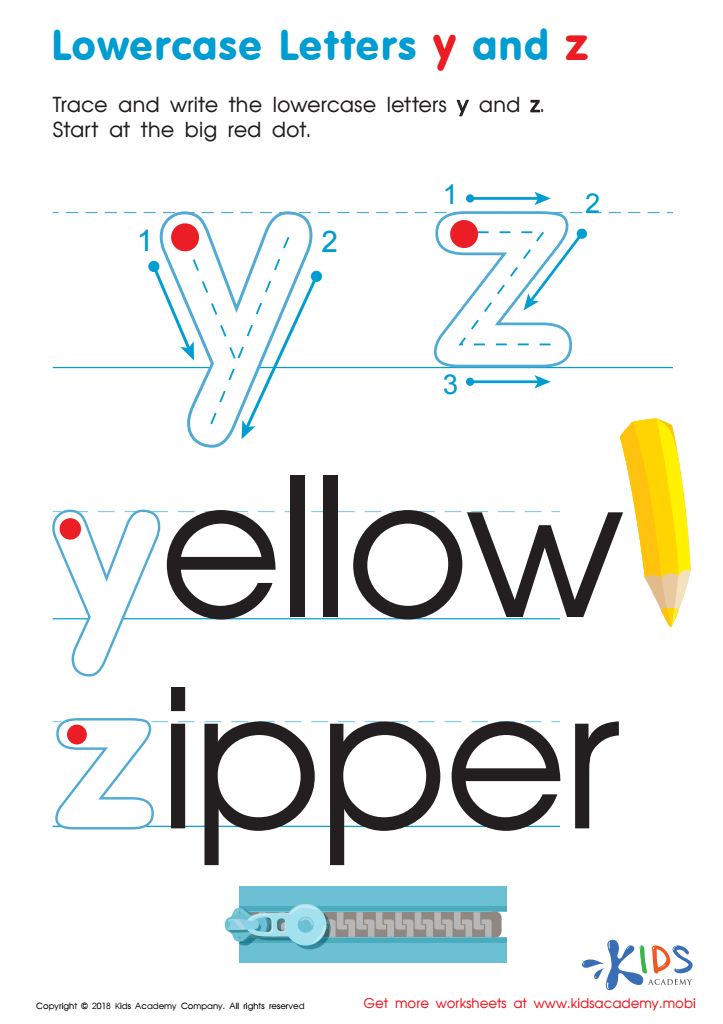
Lowercase Letters y z Worksheet
Help your child get a good start in writing and reading by tracing and writing the lowercase letters y and z. With this activity, they will learn the alphabet, which is essential for literacy success. Guide them through the worksheet and make sure they form the letters correctly. This will help them learn the basics needed to write and read fluently.
Lowercase Letters y z Worksheet
Worksheet
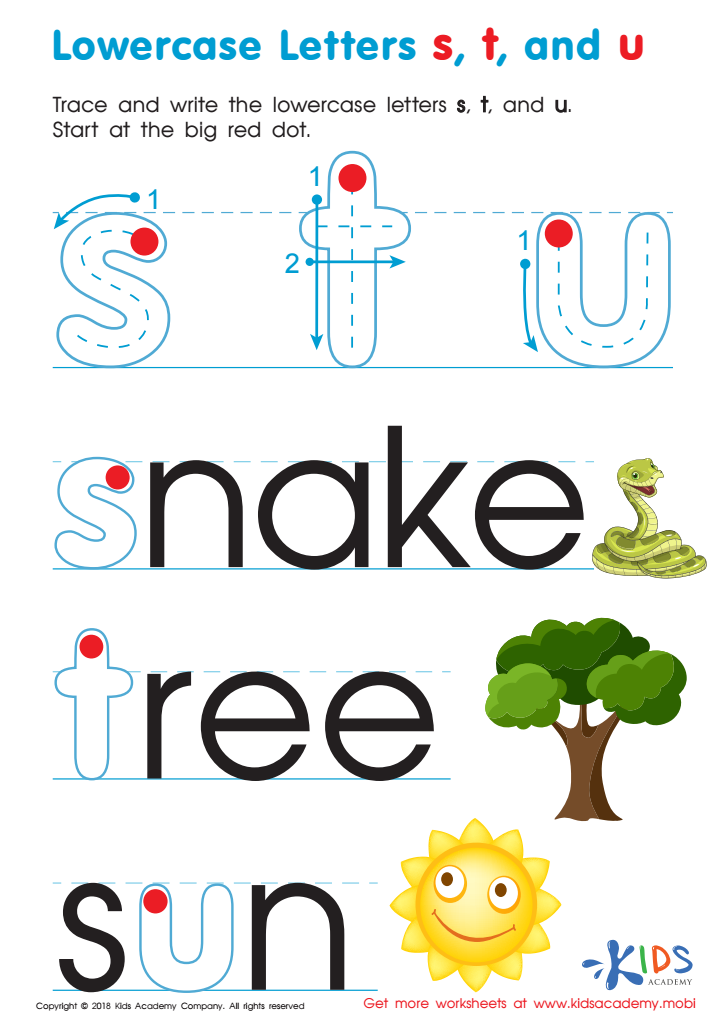
Lowercase Letters s t u Worksheet
Help your child trace lowercase letters s, t and u. Ask questions like: "What word starts with 's'? What about 't' and 'u'? Point out the snake, tree and sun pictures. Start tracing from the big red dot.
Lowercase Letters s t u Worksheet
Worksheet
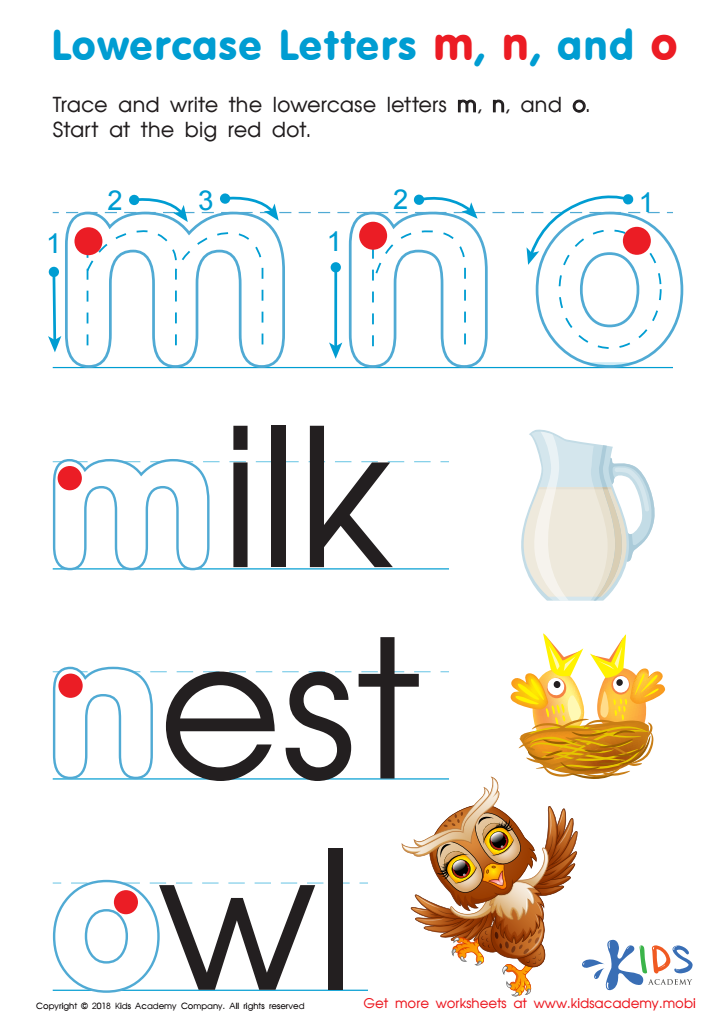
Lowercase Letters m n o Worksheet
Help your child learn the alphabet with letter tracing. Show them the difference between uppercase and lowercase letters by working through this free worksheet, tracing and writing lowercase m, n and o.
Lowercase Letters m n o Worksheet
Worksheet
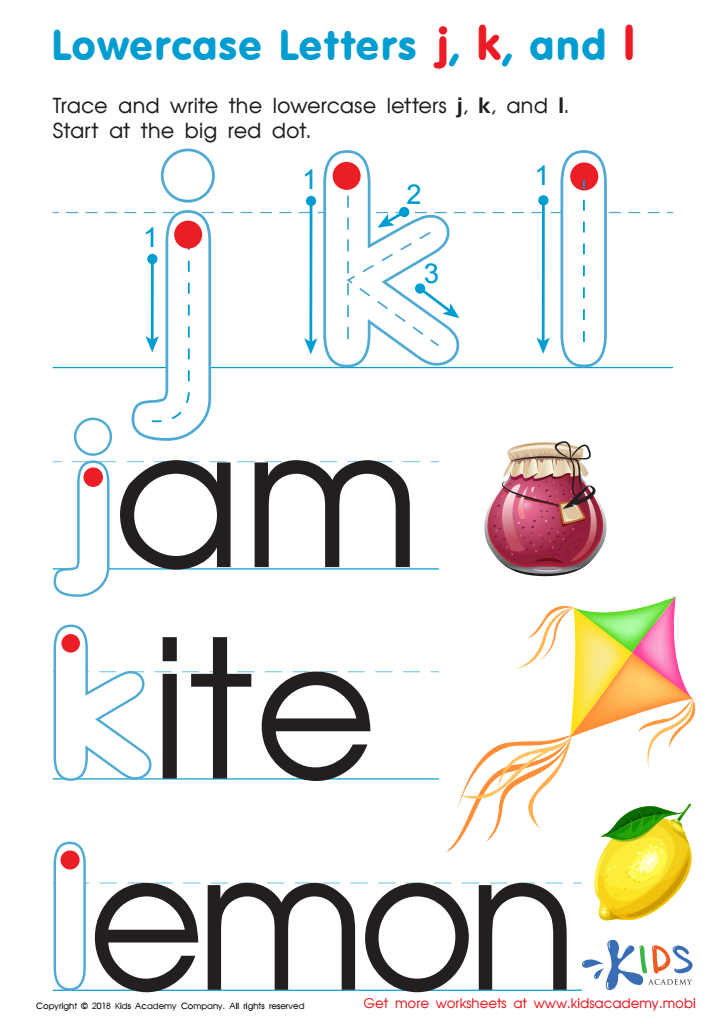
Lowercase Letters j k l Worksheet
Teach your child the difference between uppercase and lowercase letters. Have them trace and write the lowercase letters j, k, and l, starting at the red dot. Guide your child's hand to form the letters correctly.
Lowercase Letters j k l Worksheet
Worksheet
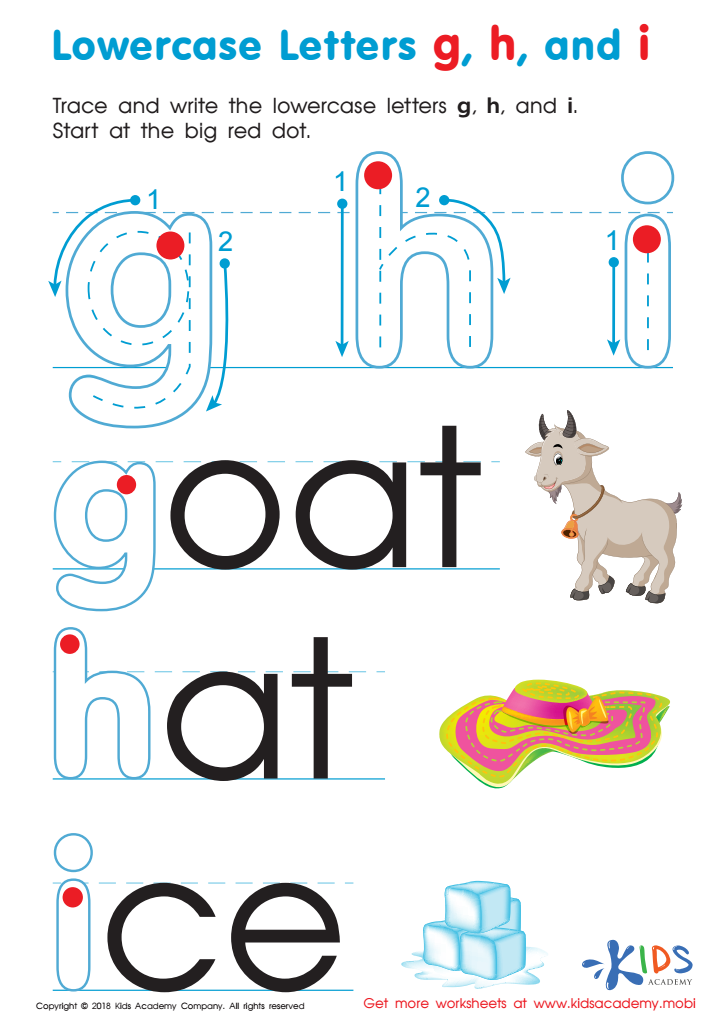
Lowercase Letters g h i Worksheet
Learning is fun for your youngster with color and an enjoyable exercise. Help them build their understanding of the alphabet by starting at the big red dot drawn on each letter and carefully following the dotted lines to draw g, h, and i.
Lowercase Letters g h i Worksheet
Worksheet
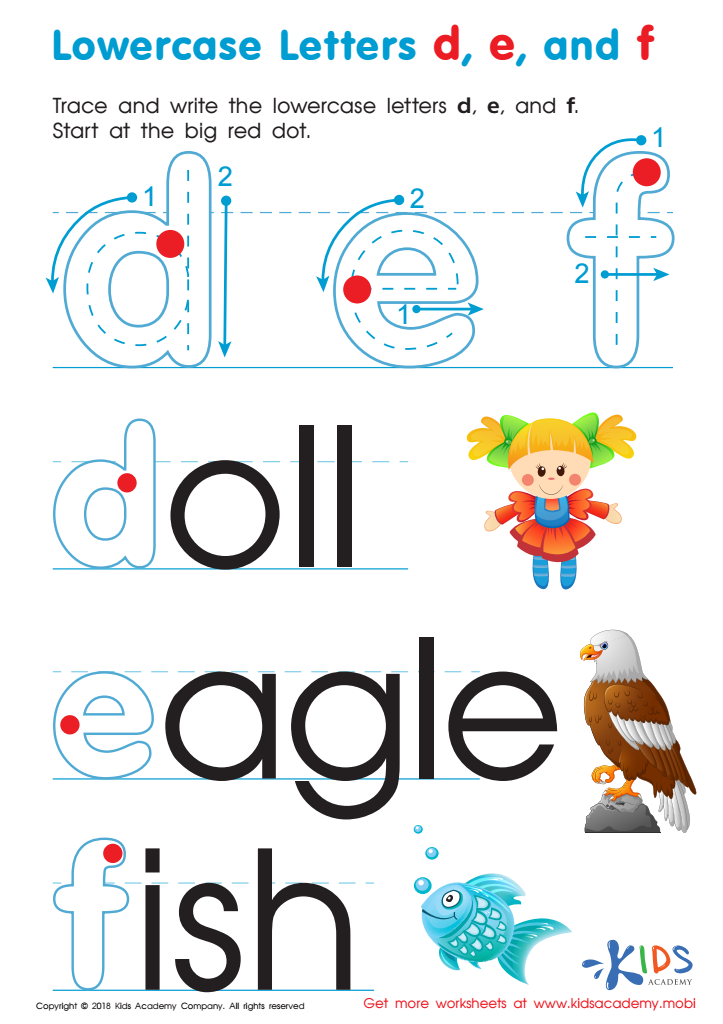
Lowercase Letters d e f Worksheet
Help your child learn the alphabet letters by tracing and writing the lowercase letters d, e, and f. Begin at the big red dot and follow the dots. This worksheet will help your little one gain a better understanding of the letters.
Lowercase Letters d e f Worksheet
Worksheet
Join Kids Academy for Free
Who is primarily going to use this learning content?


.jpg)





Normal tracing worksheets activities are an invaluable tool in early childhood education, providing numerous benefits that support the development of young learners. These activities, centered around tracing letters, numbers, shapes, and patterns, play a crucial role in enhancing a child's fine motor skills. As children follow the outlines on normal tracing worksheets, they learn to control their pencil movements with precision. This not only prepares them for writing but also aids in the development of hand-eye coordination, a fundamental skill for many daily tasks and academic activities.
Moreover, normal tracing worksheets activities serve as an excellent introduction to literacy and numeracy. By tracing letters and numbers, children become familiar with these symbols, their shapes, and their sounds. This familiarity is a stepping stone to reading and mathematical understanding, making tracing worksheets a foundational part of early learning curriculums. The repetition and practice provided by these activities reinforce memory retention, helping children to remember the forms and sequences of letters and numbers more effectively.
In addition to cognitive benefits, normal tracing worksheets activities offer a structured yet flexible learning environment. Children can progress at their own pace, experiencing a sense of achievement as they complete each worksheet. This boosts their confidence and encourages a positive attitude towards learning. The versatility of tracing worksheets means they can be tailored to meet the individual needs of each child, catering to different learning styles and abilities.
Furthermore, these activities promote concentration and focus. Children learn to pay attention to detail as they carefully trace each line and curve. This skill is invaluable in all areas of learning and sets a foundation for academic success in later years.
In conclusion, normal tracing worksheets activities are a cornerstone of early education, offering a multitude of benefits that extend beyond handwriting practice. They foster motor skills, introduce academic concepts, enhance memory, boost confidence, and build concentration, making them an essential component of any early learning program.








