Filters

9 filtered results

Clear all filters
Favorites
With answer key
Interactive

9 filtered results

Difficulty Level

Grade


Discover our engaging Normal Reading Comprehension worksheets tailored for children ages 4-7! These activities are designed to enhance your child's reading skills while making learning fun and interactive. Each worksheet focuses on critical comprehension skills, such as understanding the main ideas, making inferences, and drawing conclusions. Colorful illustrations and age-appropriate texts captivate young readers, making it easier for them to grasp concepts. Our resources are perfect for classroom settings or at-home practice, helping to build strong literacy foundations. Ideal for early learners, our worksheets ensure that your child gains confidence and enjoyment in reading, setting them up for future academic success!

Check out this FREE Reading Comprehension Trial Lesson for age 4-7!

Illustration and Text Relationship

Favorites
With answer key
Interactive
  • Reading Comprehension
  • 4-7
  • Interactive
  • Normal
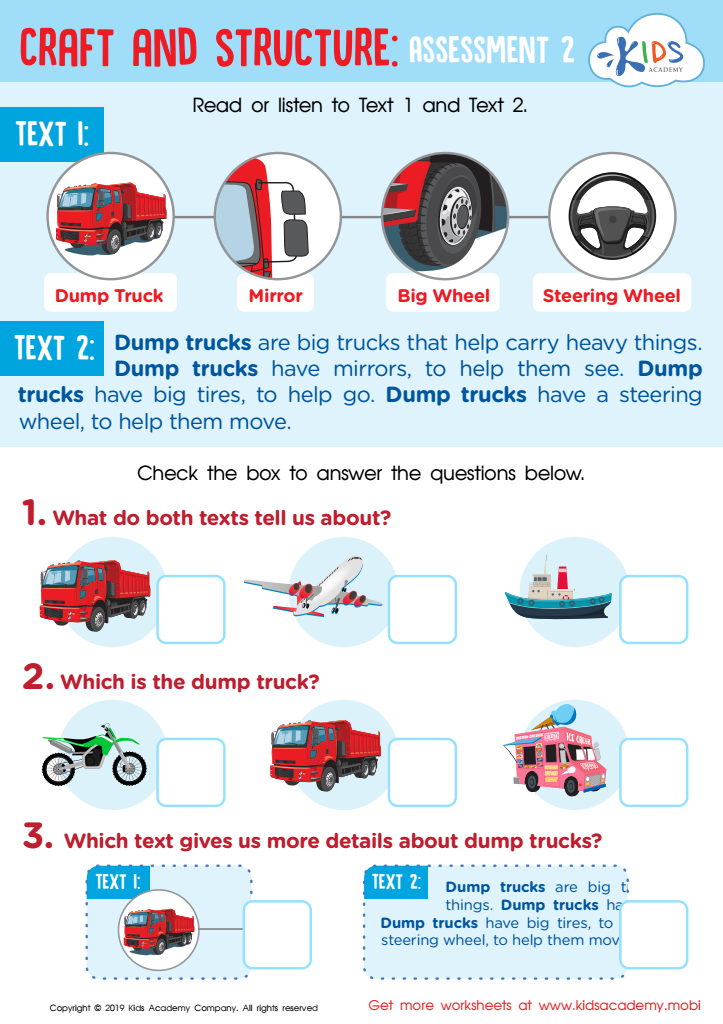
Craft and Structure: Assessment 2 Worksheet

Craft and Structure: Assessment 2 Worksheet

Good readers need to analyze text features and use picture clues to understand. This assessment worksheet gives your child info in different formats and they can show understanding using answer options to check the correct answers. (80 words)
Craft and Structure: Assessment 2 Worksheet
Worksheet
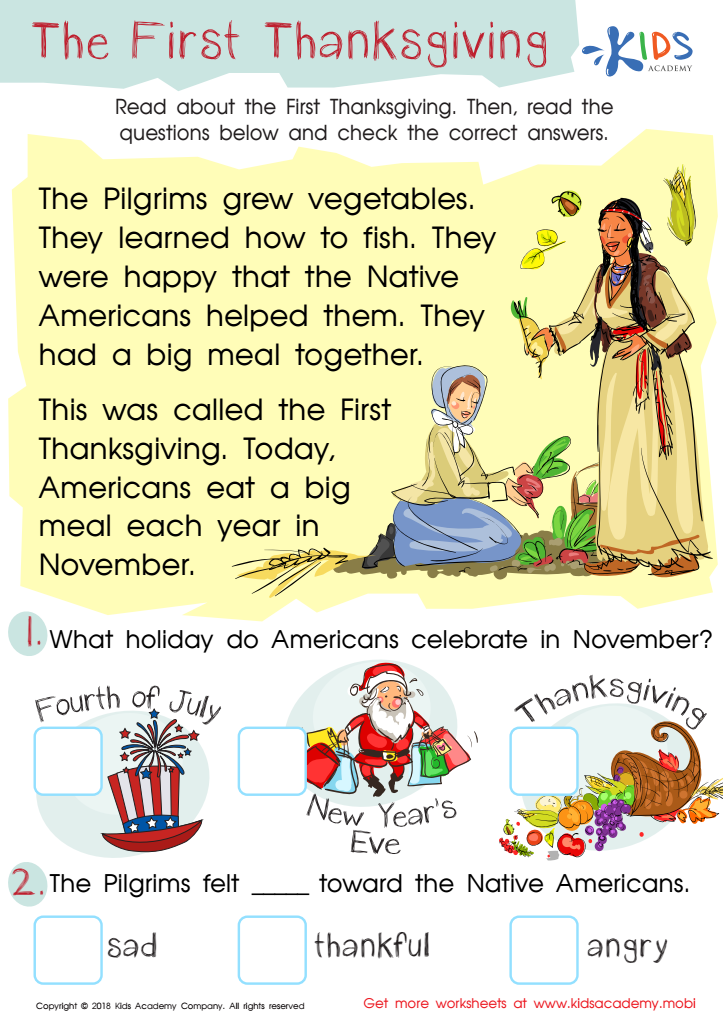
Assessment: First Thanksgiving Worksheet

Assessment: First Thanksgiving Worksheet

When the Pilgrims arrived in America in 1620, they met the Native Americans and formed a pact to live in harmony. The Native Americans taught the Pilgrims how to survive in the new land, which helped them celebrate the First Thanksgiving. Read this text to your children and help them answer the questions below.
Assessment: First Thanksgiving Worksheet
Worksheet
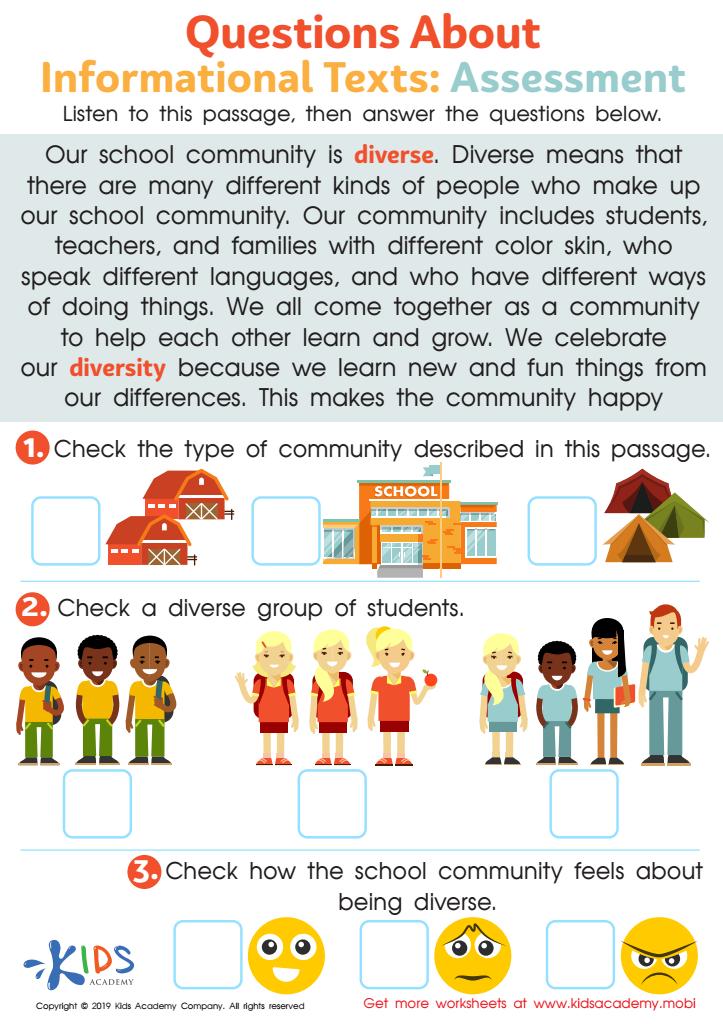
Questions About Informational Texts: Assessment 1 Worksheet

Questions About Informational Texts: Assessment 1 Worksheet

Ask your students: What comes to mind when we talk about a community? What different habits do people practice? What do fellow students do that seems strange? Read this passage aloud to your kindergartners and make sure they understand it. Then, answer the questions at the bottom of the page. (80 words)
Questions About Informational Texts: Assessment 1 Worksheet
Worksheet
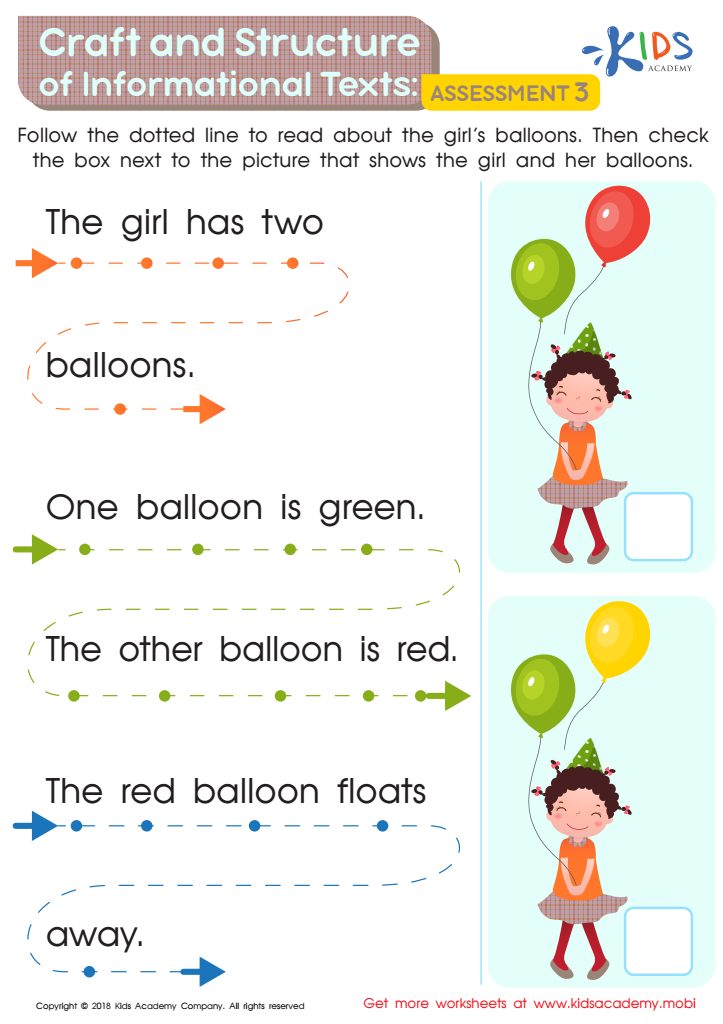
Craft and Structure of Informational Texts: Assessment 3 Worksheet

Craft and Structure of Informational Texts: Assessment 3 Worksheet

Test your beginning reader's understanding of left-to-right directionality and use of details from informational texts with this fun worksheet. Follow the traceable paths to find the right picture for each sentence. This will help your child gain confidence and be successful as a reader.
Craft and Structure of Informational Texts: Assessment 3 Worksheet
Worksheet
Craft and Structure of Informational Texts: Assessment 1 Worksheet

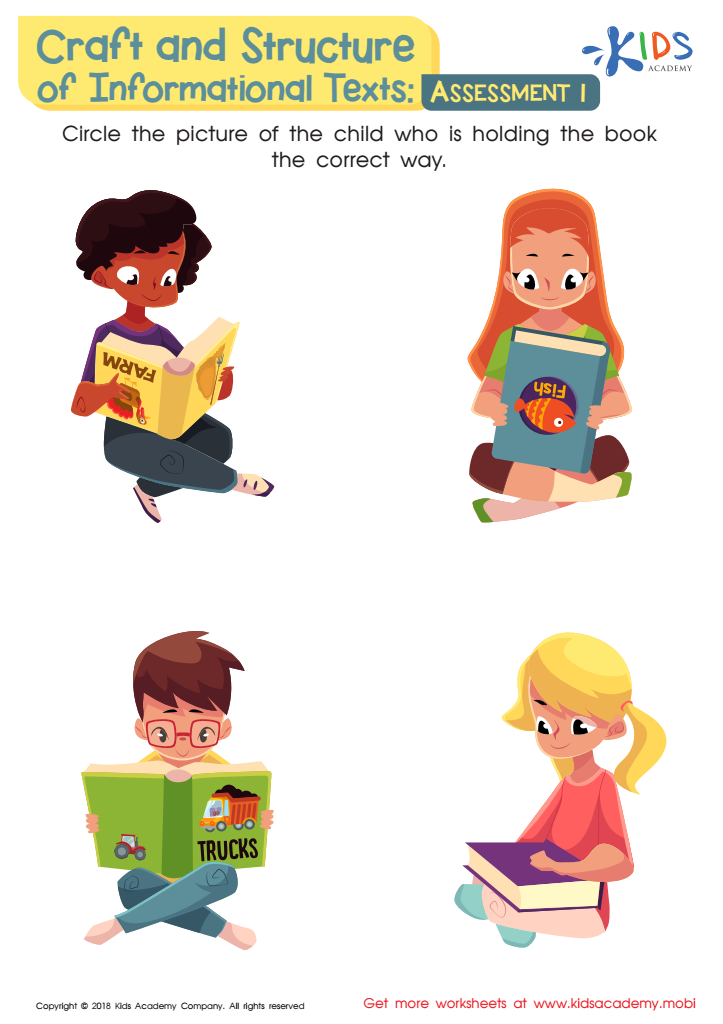
Craft and Structure of Informational Texts: Assessment 1 Worksheet

Young children need to know how to hold books correctly when they start reading. This assessment worksheet helps them show they know what to do. They'll look at the pictures and circle the child who is holding the book correctly. It's a great way to tell they are well on their way to becoming lifetime readers!
Craft and Structure of Informational Texts: Assessment 1 Worksheet
Worksheet
Craft and Structure of Stories: Assessment 2 Worksheet

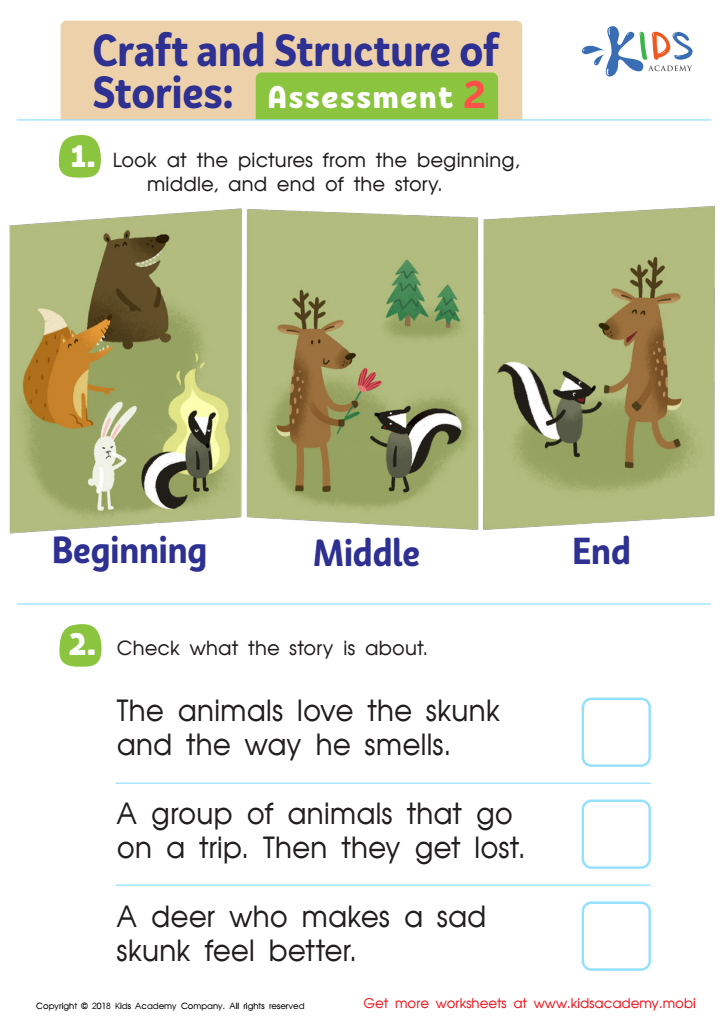
Craft and Structure of Stories: Assessment 2 Worksheet

Help your child assess their story sequencing and reading comprehension skills using this cute worksheet! It encourages them to look at the three pictures on the page, each representing a scene from the beginning, middle and end. Ask them what the story is about, then let them check the box next to the correct answer. This is a great way to ensure they understand the main events of a story.
Craft and Structure of Stories: Assessment 2 Worksheet
Worksheet
Questions About Stories: Assessment 2 Worksheet

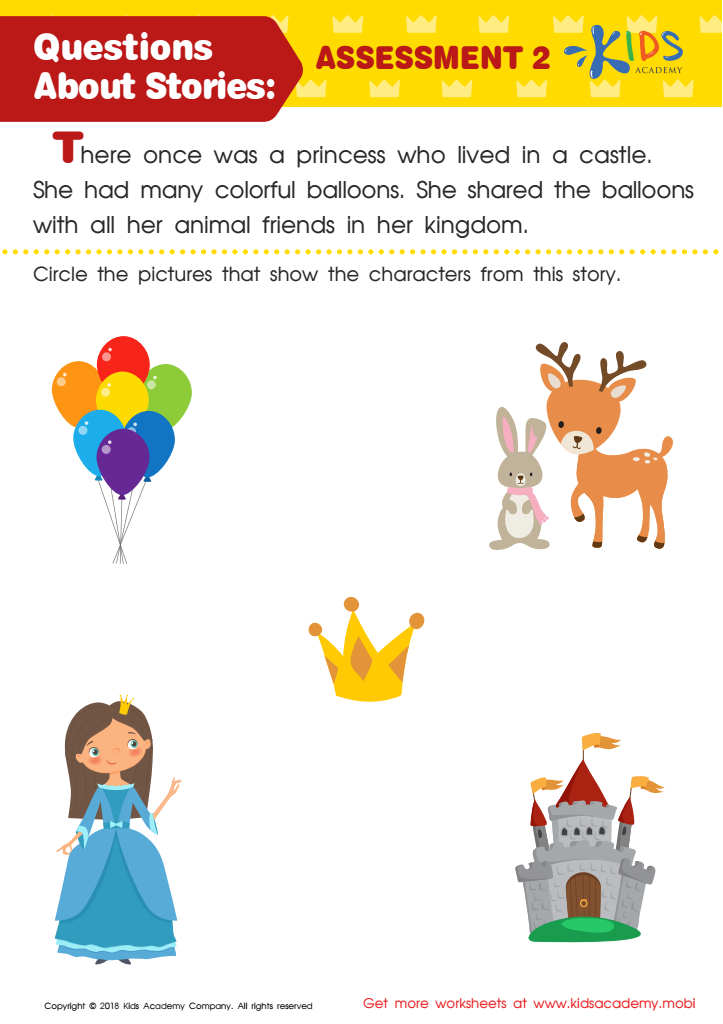
Questions About Stories: Assessment 2 Worksheet

Talk to your child about what a princess is and what activities they associate with that word. Then, read the story to them and help them identify characters in the pictures. Look out for details and ask them questions to ensure they understand.
Questions About Stories: Assessment 2 Worksheet
Worksheet
Finding the Details and Connections: Assessment 2 Worksheet

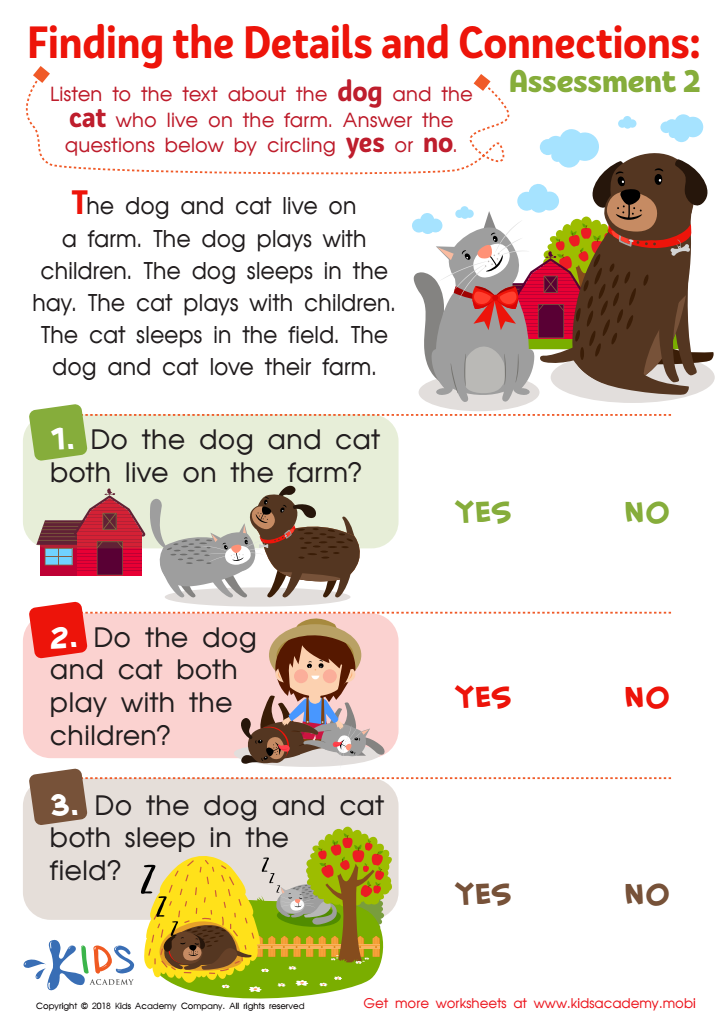
Finding the Details and Connections: Assessment 2 Worksheet

Does your child love animals? If you have pets, they'll relate to the text in this worksheet. Read it aloud to them and help them answer the simple questions by circling yes or no. The story is about a dog and cat living on a farm. Let your child read it aloud to you if they can.
Finding the Details and Connections: Assessment 2 Worksheet
Worksheet
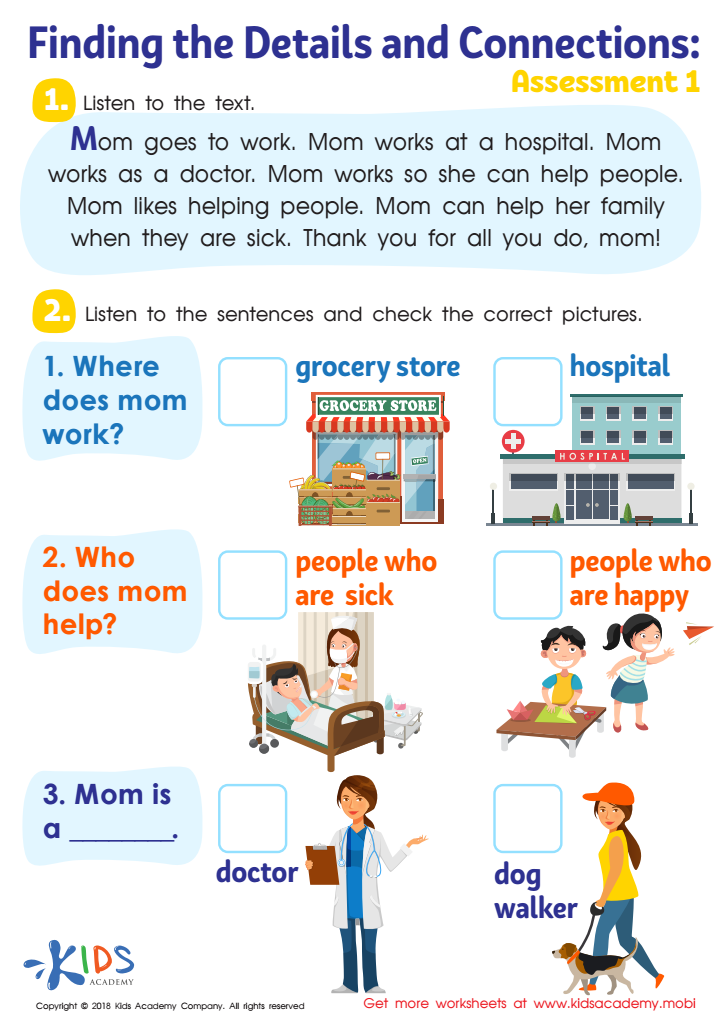
Finding the Details and Connections: Assessment 1 Worksheet


Finding the Details and Connections: Assessment 1 Worksheet

Ask your students what their parents do for a job. Do they know what profession their mom is in and where she works? Professionals have places they go to do their job. In this task, Mom goes to a hospital and is a doctor. Read the text and help them check the right pictures.
Finding the Details and Connections: Assessment 1 Worksheet

Worksheet


Normal reading comprehension activities for ages 4-7 are crucial for children's early development and have lasting impacts on their academic journeys. At this age, children are rapidly acquiring language skills, and engaging with reading comprehension activities helps to solidify their understanding of vocabulary, sentence structure, and narrative elements. These activities not only enhance literacy skills but also promote critical thinking and reflection.

By participating in reading comprehension exercises, children learn to identify main ideas, make predictions, and infer meaning from texts. These skills are foundational for future learning and are directly linked to their success in more complex subjects as they progress through school. Furthermore, reading comprehension activities encourage a love for reading, fostering creativity and imagination, which are vital for overall cognitive development.

Parents and teachers also play a key role in supporting this process. They can help provide resources, create a stimulating environment, and engage children in discussions about texts, further enriching the learning experience. Ultimately, investing time in focused reading comprehension activities equips young learners with the tools they need for lifelong learning and achievement, making it a priority for both educators and families. Ensuring children develop strong comprehension skills early on is an investment in their future success.