Time Worksheets for Ages 3-4
5 filtered results
-
From - To
Introducing our meticulously crafted Time Worksheets, designed specifically for Ages 3-4! These engaging and educational worksheets are perfect for introducing the fundamental concepts of time to young learners. Created with early childhood development in mind, each activity is tailored to captivate and stimulate the minds of 3 to 4-year-olds, making learning about hours, minutes, and daily routines both fun and accessible. With a variety of exercises ranging from matching clocks to understanding the sequence of daily events, our Time Worksheets for Ages 3-4 offer a solid foundation in time-telling skills, setting the stage for a lifetime of punctuality and time management. Dive into our collection and give your child the gift of mastering time early on!
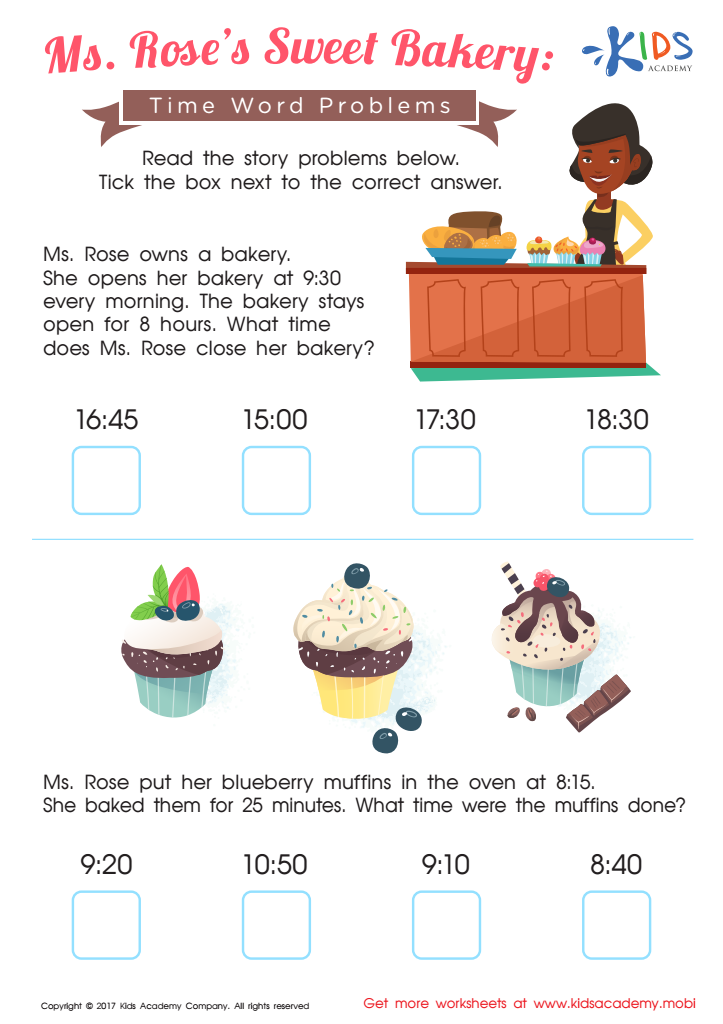
Ms. Roseв's Sweet Bakery Time Worksheet
 Assign to My Students
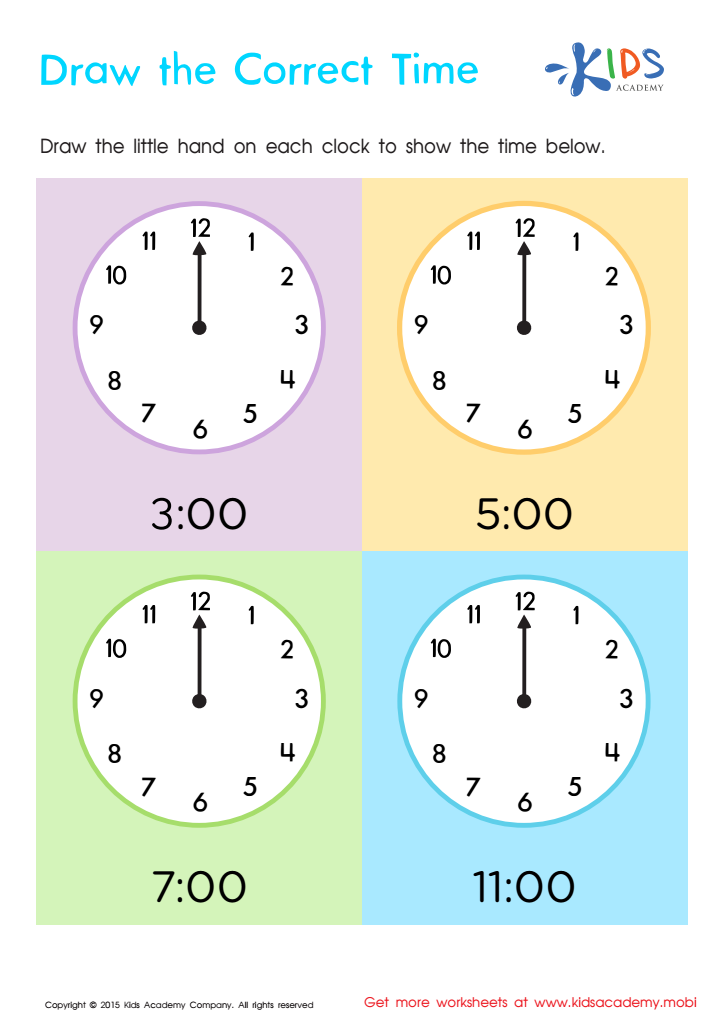
Telling The Time Worksheet: Part 1
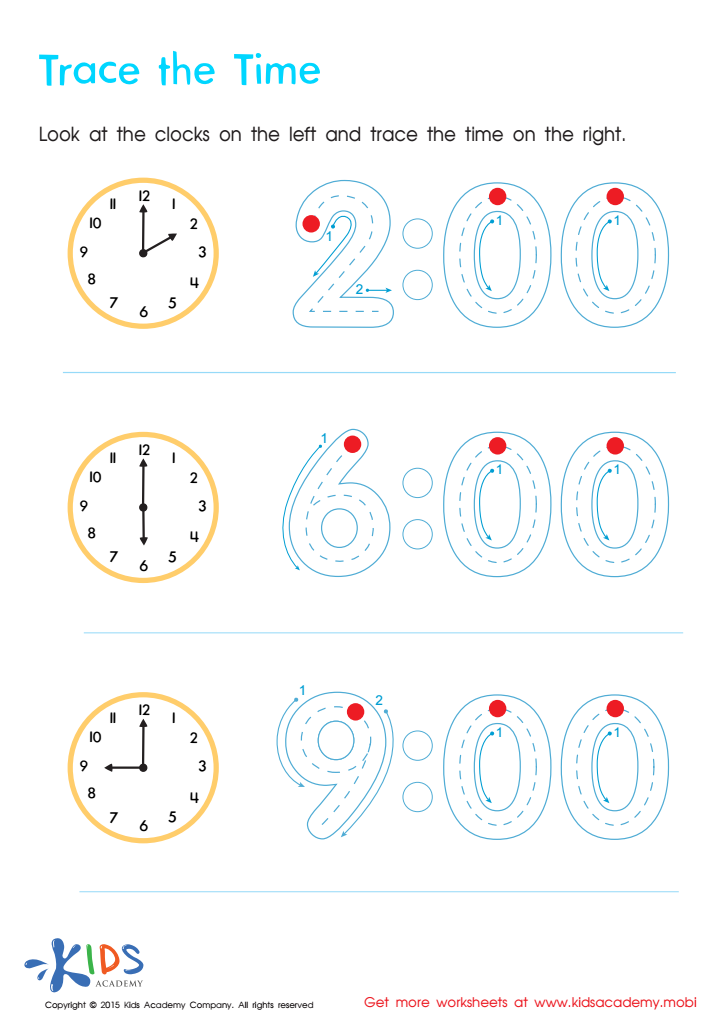
Telling The Time Worksheet: Part 2
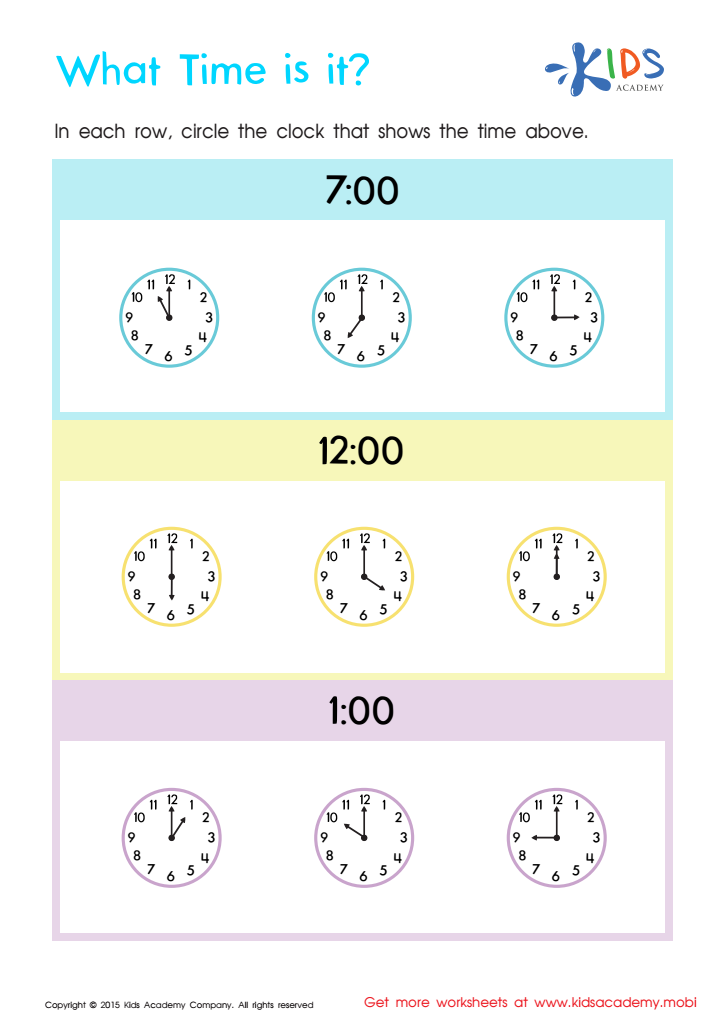
Telling The Time Worksheet: Part 3
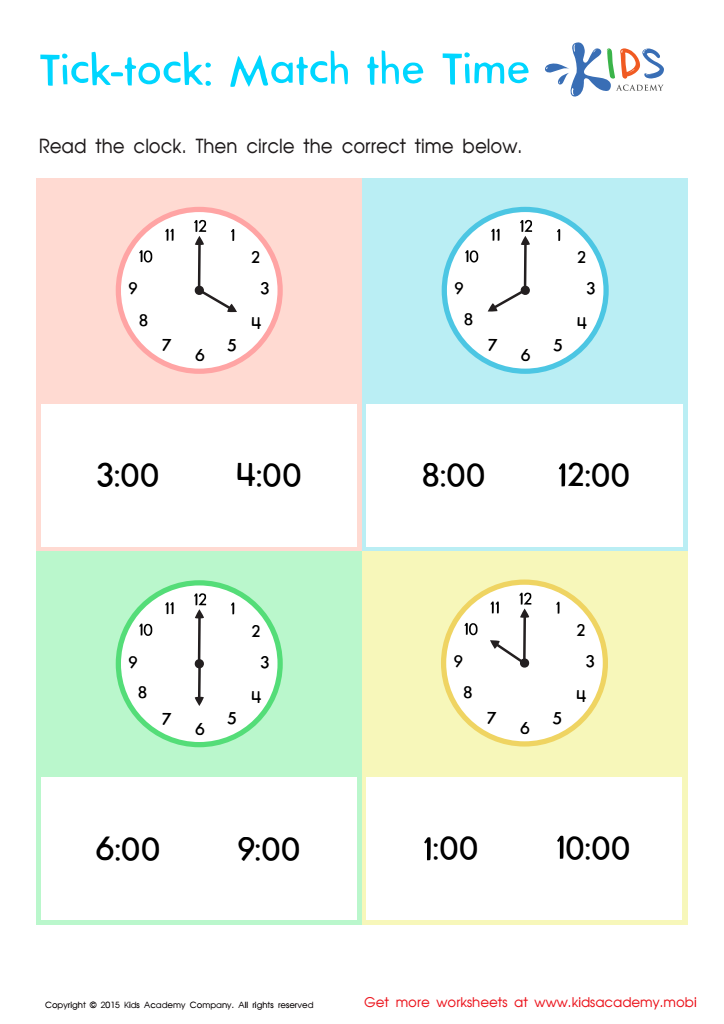
Telling The Time Worksheet: Part 4







.jpg)
Worksheets on Time for Ages 3-4 are an invaluable resource for young learners. At this critical developmental stage, children are just beginning to understand the concept of time and its importance in their daily routines. These worksheets are designed to introduce time in a fun and engaging way, helping children to make connections between their activities and the time at which they occur.
Time worksheets for Ages 3-4 lay the foundation for time management skills that are crucial for later academic success and daily life. Through a variety of activities, such as matching clocks with daily activities or sequencing events, children learn to recognize time patterns and understand the sequence of events. This early exposure helps in developing their cognitive skills, enhancing their ability to think logically and sequentially.
Moreover, these worksheets are crafted with young learners in mind, featuring colorful illustrations and simple, clear instructions that captivate their attention and stimulate their curiosity about time. As children navigate through these exercises, they not only learn about hours and minutes but also improve their fine motor skills by drawing hands on clocks or tracing numbers.
In essence, Time worksheets for Ages 3-4 are not just about learning to tell time; they are about building a foundation for lifelong learning and time management, fostering a sense of independence and responsibility in young children.








