Filters

77 filtered results

Clear all filters
Favorites
With answer key
Interactive

77 filtered results

Difficulty Level

Grade


Subject

    Check out this FREE Trial Lesson on Matching for age 3-6!

    Classifying Objects and Count the Number of Objects in Each Category CCSS.Math.Content

    Favorites
    With answer key
    Interactive
    • 3-6
    • Interactive
    • Matching
    Preschool Matching Worksheet
    Preschool Matching Worksheet

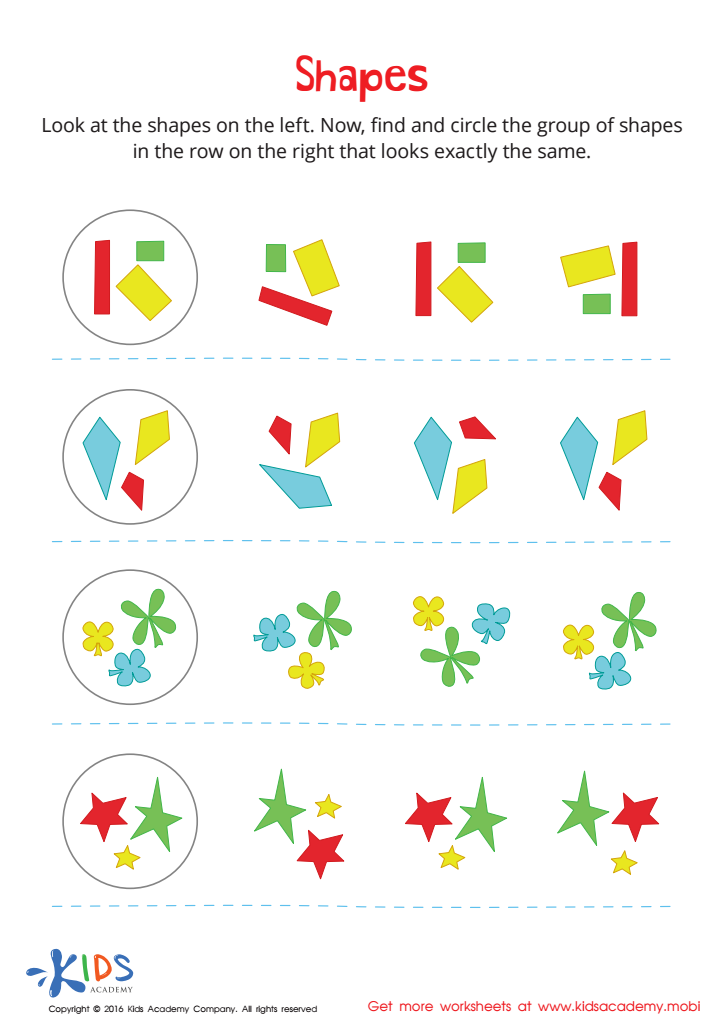
    Shapes Worksheet

    This fun worksheet will challenge your child to recognize tricky patterns, sort through similar ones, and create strategies to get the right answer. It'll also help them to strengthen problem-solving skills and build confidence. With more challenging tasks, your child will be ready to tackle higher level math and sequencing skills.
    Shapes Worksheet
    Worksheet
    Pattern Recognition Worksheet
    Pattern Recognition Worksheet

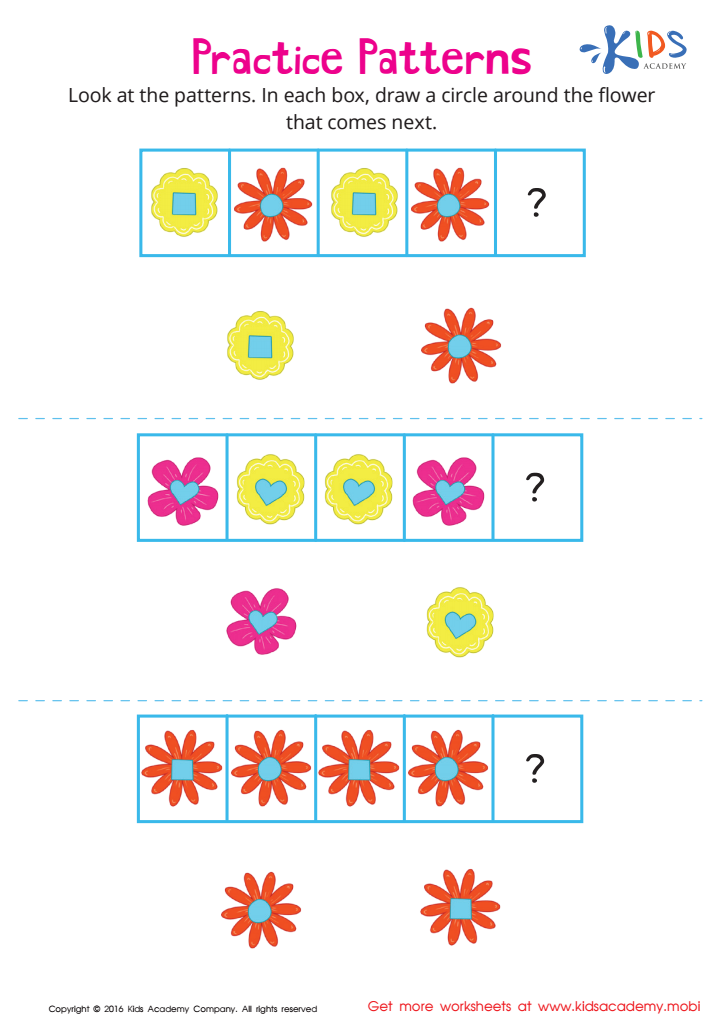
    Practice Patterns Worksheet

    Practice Patterns Worksheet
    Worksheet
    Baby Animals Matching Worksheet
    Baby Animals Matching Worksheet

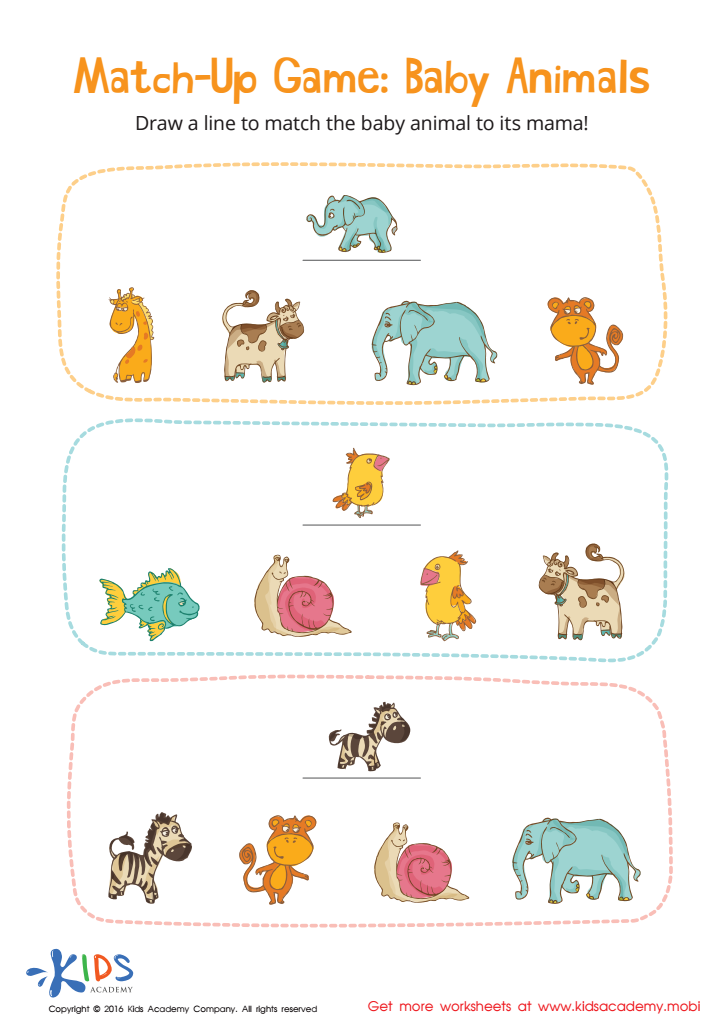
    Baby Animals Match-Up Worksheet

    Help baby animals find their mummies by using this fun matching worksheet. Kids can practice logical reasoning skills while recognizing similar pictures and learning about animals. Extend their knowledge by having them identify each cute animal!
    Baby Animals Match-Up Worksheet
    Worksheet
    Preschool Matching Numbers
    Preschool Matching Numbers

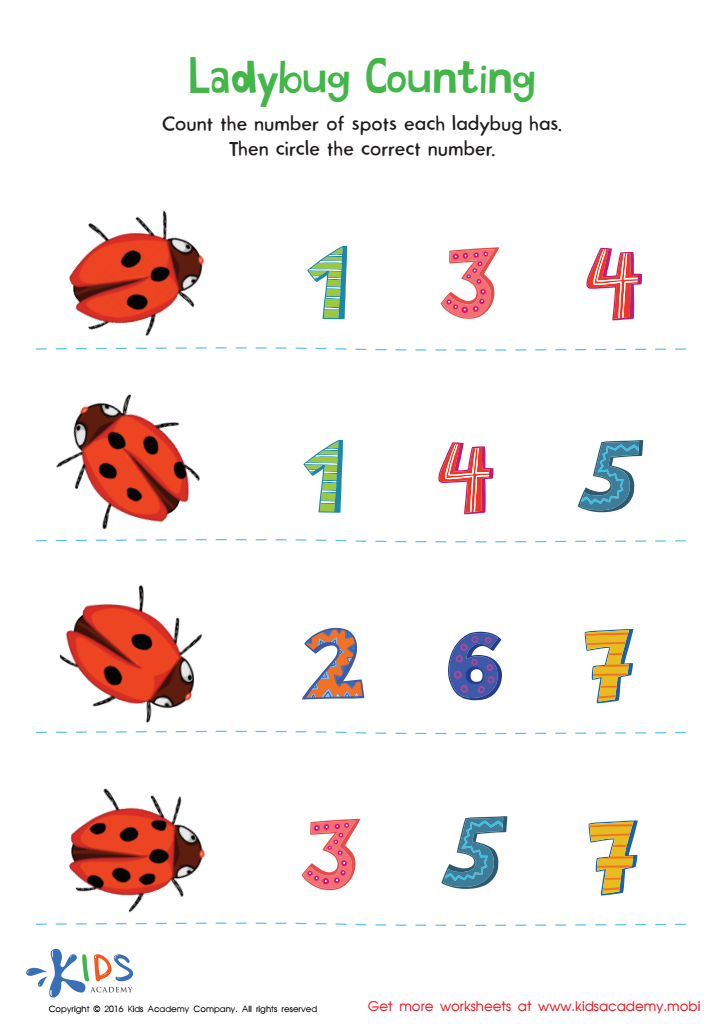
    Ladybug Counting Worksheet

    Ladybug Counting Worksheet
    Worksheet
    Free Math Worksheets for Kids
    Free Math Worksheets for Kids

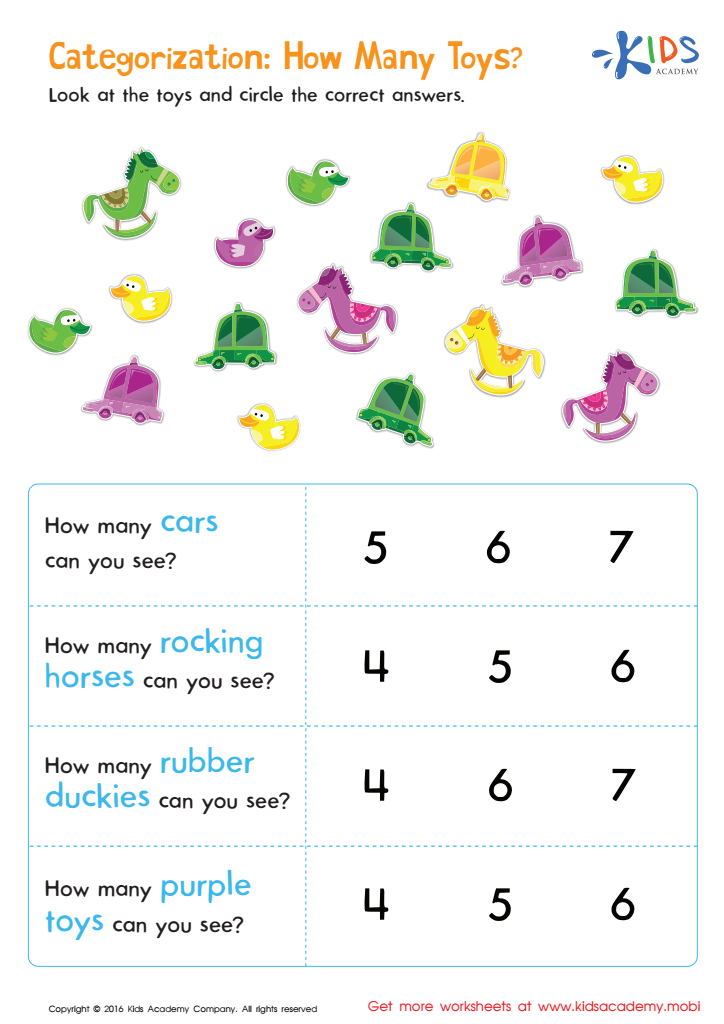
    Classifying Toys by Type and Color Sorting Worksheet

    Kids Academy offers free math worksheets to help practice counting, categorization & recognition skills. Kids will enjoy counting by color & type while strengthening problem-solving & literacy skills.
    Classifying Toys by Type and Color Sorting Worksheet

    Worksheet


    ... 3 4

    Matching activities for children aged 3-6 play a crucial role in early childhood development, making it imperative for parents and teachers to prioritize them. At this developmental stage, children are like sponges, absorbing information and developing foundational skills. Matching games enhance cognitive abilities, including memory, attention, and critical thinking, as children learn to recognize patterns and categorize objects.

    Engaging in matching exercises also fosters language development, as adults can introduce new vocabulary connected to the items being matched. This interaction enriches a child's communication skills and encourages them to express thoughts and ideas more clearly.

    Social skills also blossom during matching activities. When children work together to complete a matching task, they learn the value of collaboration, sharing, and patience, crucial components of social interactions. Furthermore, these activities promote fine motor skills, as children pick up, handle, and organize cards or objects.

    Lastly, matching games create a fun, interactive environment that keeps young learners engaged and motivated. By recognizing the benefits of matching activities, parents and teachers can support holistic development in children, laying a strong foundation for future educational endeavors. Engaging children in matching not only nurtures their growth but also fosters a love for learning.