Space Worksheets for Ages 3-6 - Page 2
26 filtered results
-
From - To
 Assign to My Students
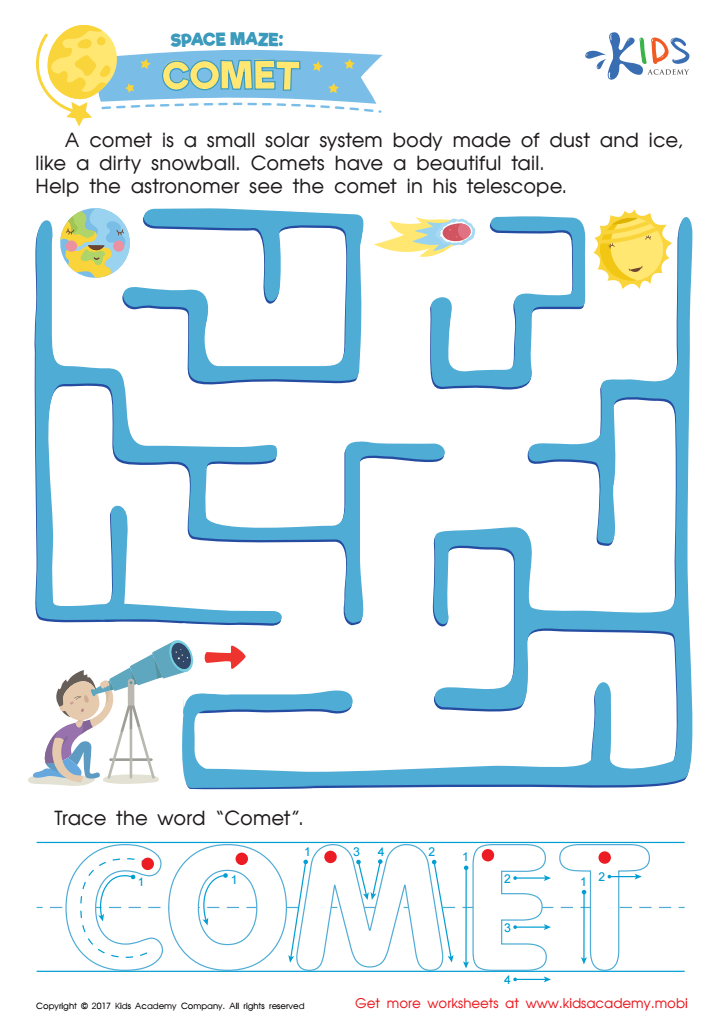








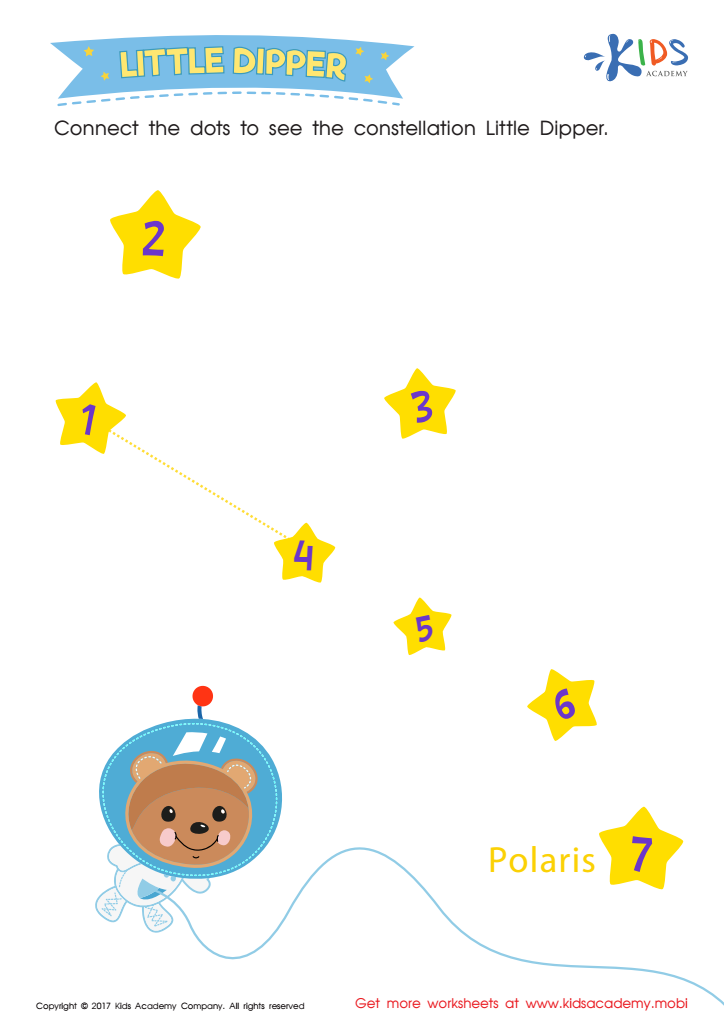
Parents and teachers should care about space education for children aged 3-6 because it fosters curiosity and creativity at a critical developmental stage. Introducing young learners to concepts about space piques their natural wonder about the universe, encouraging them to ask questions and explore beyond their immediate surroundings.
Moreover, space-themed activities enhance cognitive skills. Learning about planets, stars, and the solar system can boost vocabulary, improve storytelling abilities, and teach basic concepts of science and math, such as counting stars or understanding shapes and distances. Engaging in hands-on activities, like building a model of the solar system or crafting rockets, promotes fine motor skills and encourages imaginative play.
Additionally, space education can instill important values such as teamwork and perseverance, especially when children are involved in group projects related to space exploration. This early exposure to STEM (science, technology, engineering, mathematics) concepts can lay the groundwork for future interests in these fields.
Finally, embracing space as a theme in education can lead to enriching discussions about teamwork, innovation, and the importance of exploration, inspiring young minds to dream big and think about their place in the world and beyond.







