Filters

2423 filtered results

Clear all filters
Favorites
With answer key
Interactive

2423 filtered results

Difficulty Level

Grade


Check out this FREE Trial Lesson for age 3-7!

Attacking the King: Direct Check

Favorites
With answer key
Interactive
  • 3-7
  • Interactive
Direct Check: Puzzle 3 Worksheet

Direct Check: Puzzle 3 Worksheet

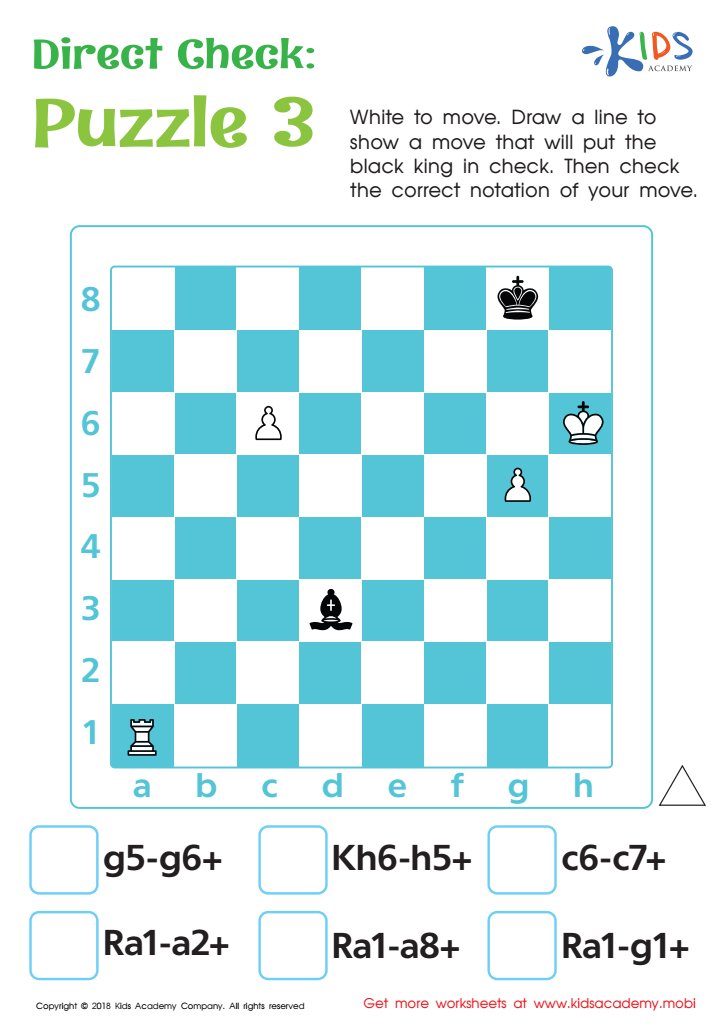
Chess is a great way to help your child develop their strategic, mathematical, and thinking skills. Test their understanding with this simple worksheet: they must get the black king in checkmate with white pieces, then select the notation that shows the correct move. See just how much progress they've made!
Direct Check: Puzzle 3 Worksheet
Worksheet
Direct Check: Puzzle 2 Worksheet

Direct Check: Puzzle 2 Worksheet

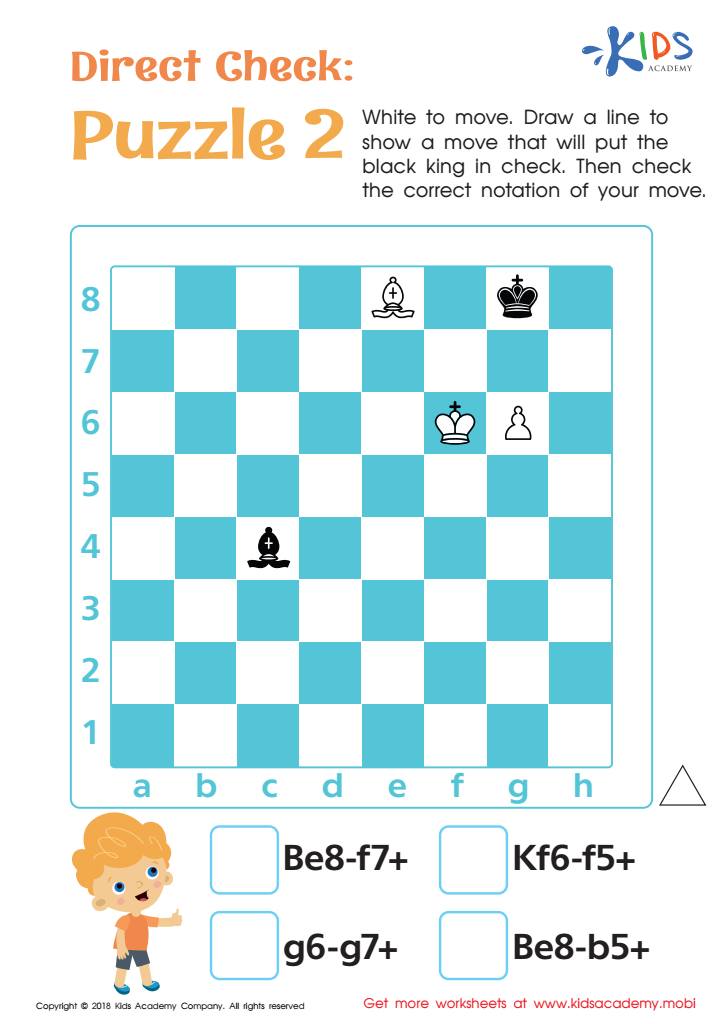
Test your kid's chess skills with this worksheet. Help them draw a line to put the black king in checkmate, then check the correct notation from the provided options. This will help them understand the correct notation of each move they make.
Direct Check: Puzzle 2 Worksheet
Worksheet
Direct Check: Puzzle 1 Worksheet

Direct Check: Puzzle 1 Worksheet

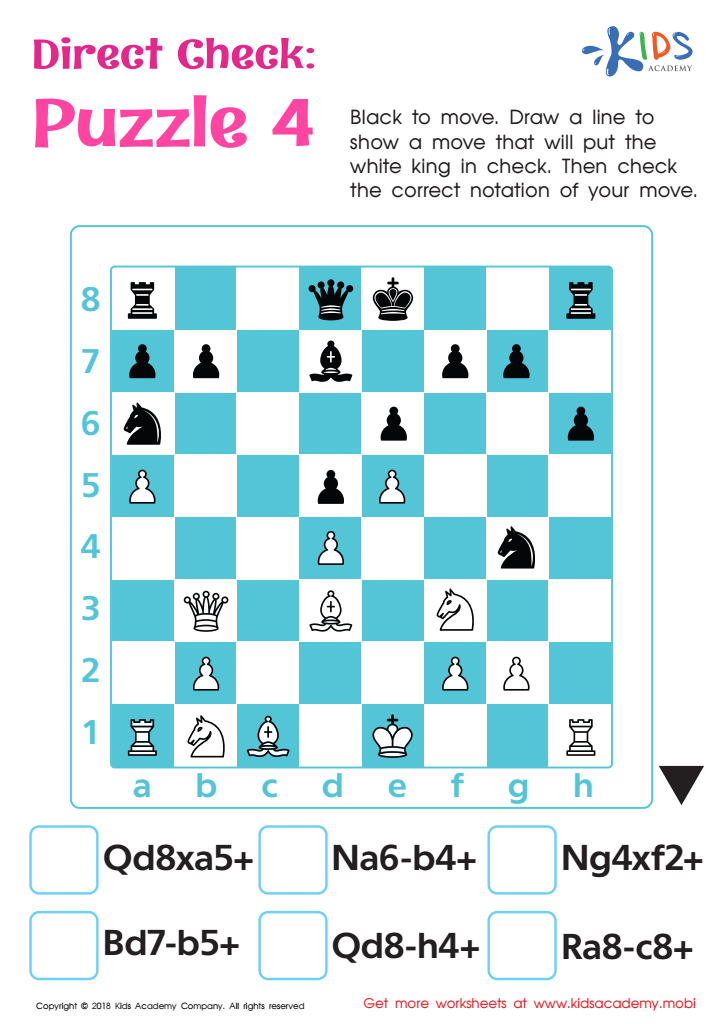
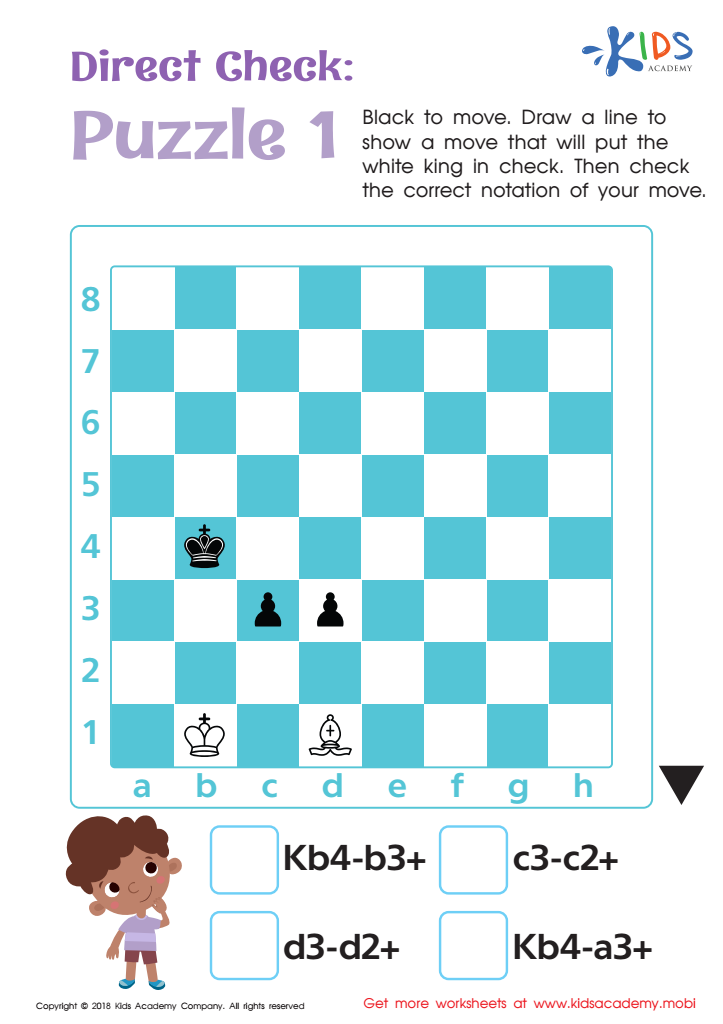
Your child can test their chess knowledge with this worksheet. If they've been taking lessons or playing regularly, they'll enjoy connecting the dots to put the white king in checkmate, then checking the correct notation. Challenge their chess skills!
Direct Check: Puzzle 1 Worksheet
Worksheet
Similar Words Worksheet

Similar Words Worksheet

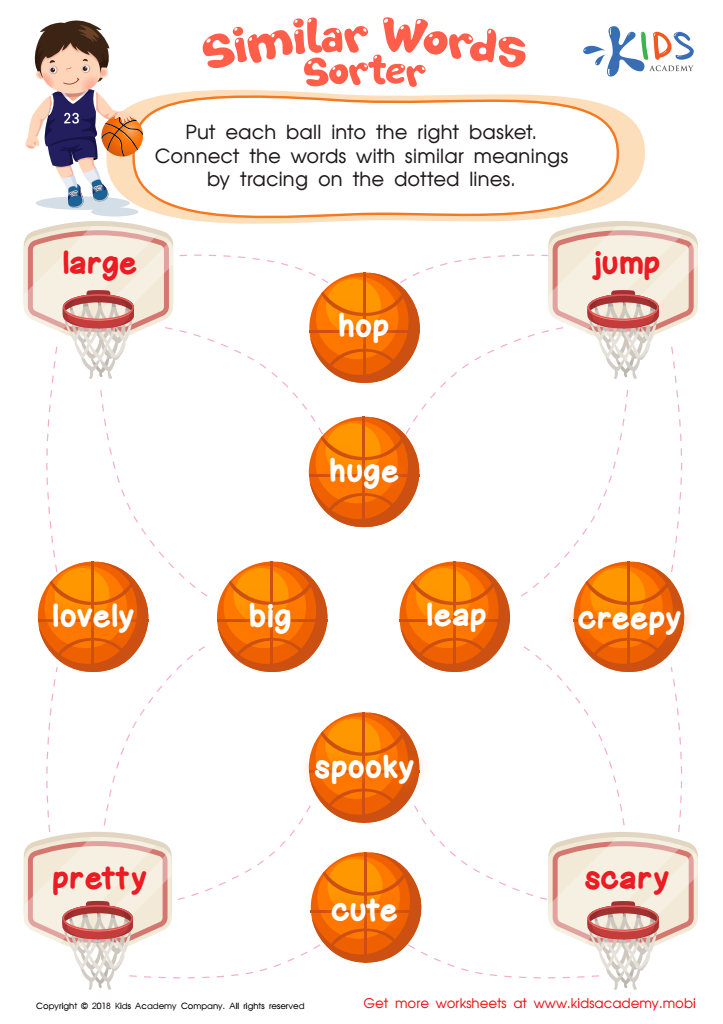
Test your child's knowledge of synonyms by having them name five words for "up"! This tracing sheet is a fun way to do it: your child must trace the dotted lines to put each ball in its right basket. To do so, they must know the synonyms and trace them to the correct baskets.
Similar Words Worksheet
Worksheet
Odd Word Out Worksheet

Odd Word Out Worksheet

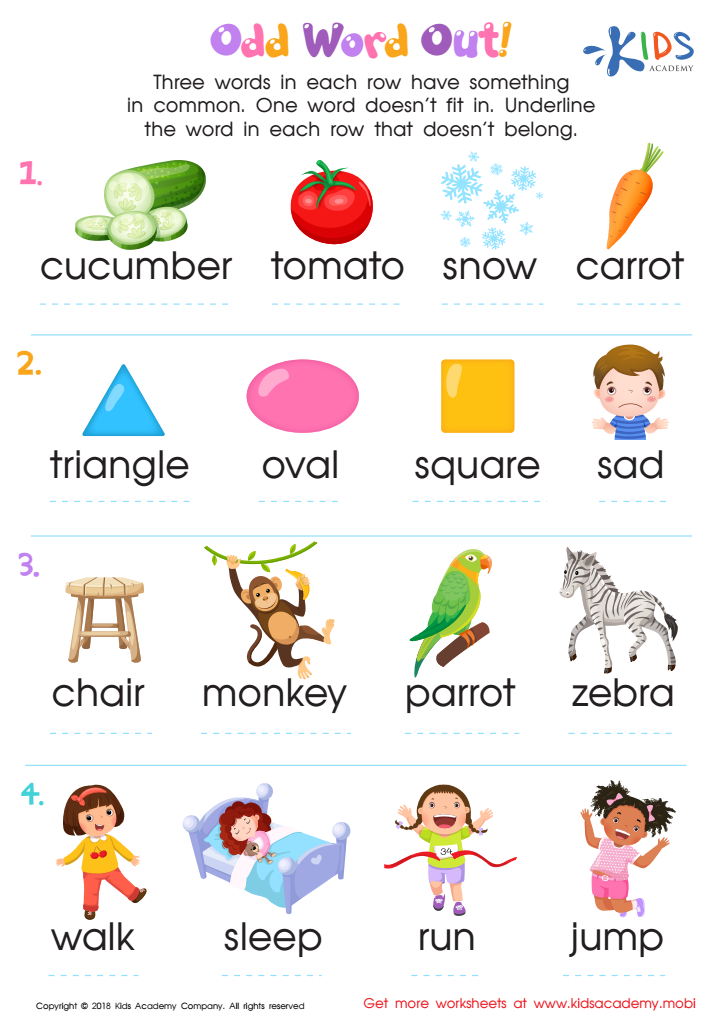
Ask your child to name all pictures in each row and see if there's something they share. Then, have them identify the odd one out and underline it. Repeat for all words in the rows to help them understand how to identify words.
Odd Word Out Worksheet
Worksheet
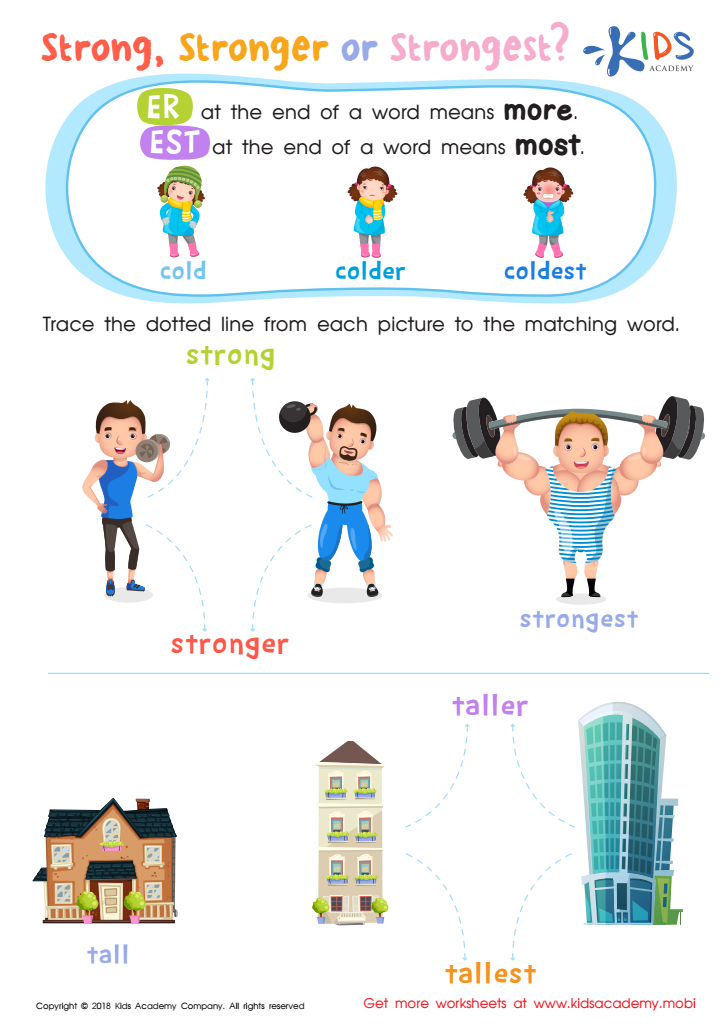
Strong or Stronger? Worksheet

Strong or Stronger? Worksheet

Help your child understand the concept of size gradients with a fun worksheet. Explain to them that adding "-er" to words means "more" and "-est" means "most". Point to the pictures and have your little one trace the dotted line to the corresponding words to learn the concept of highest and lowest.
Strong or Stronger? Worksheet
Worksheet
What's the Meaning? Worksheet

What's the Meaning? Worksheet

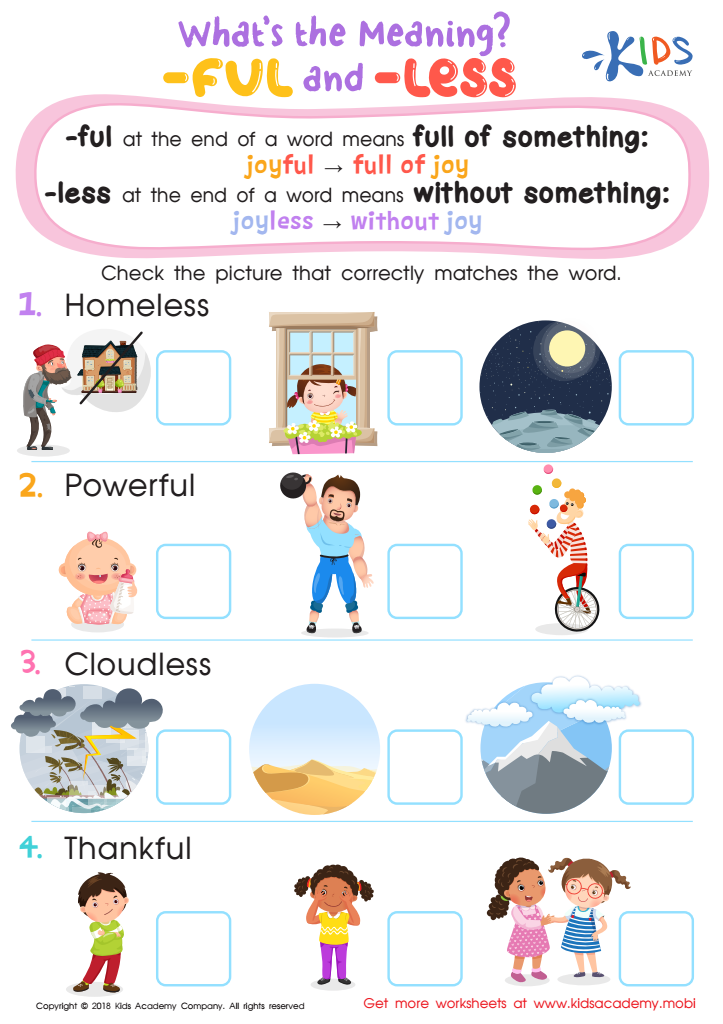
Look with your youngster through this colorful worksheet and match the pictures to the words at the top. These words have different meanings due to either a prefix or suffix being added, such as "ful" or "less".
What's the Meaning? Worksheet
Worksheet
Words with Un– Worksheet

Words with Un– Worksheet

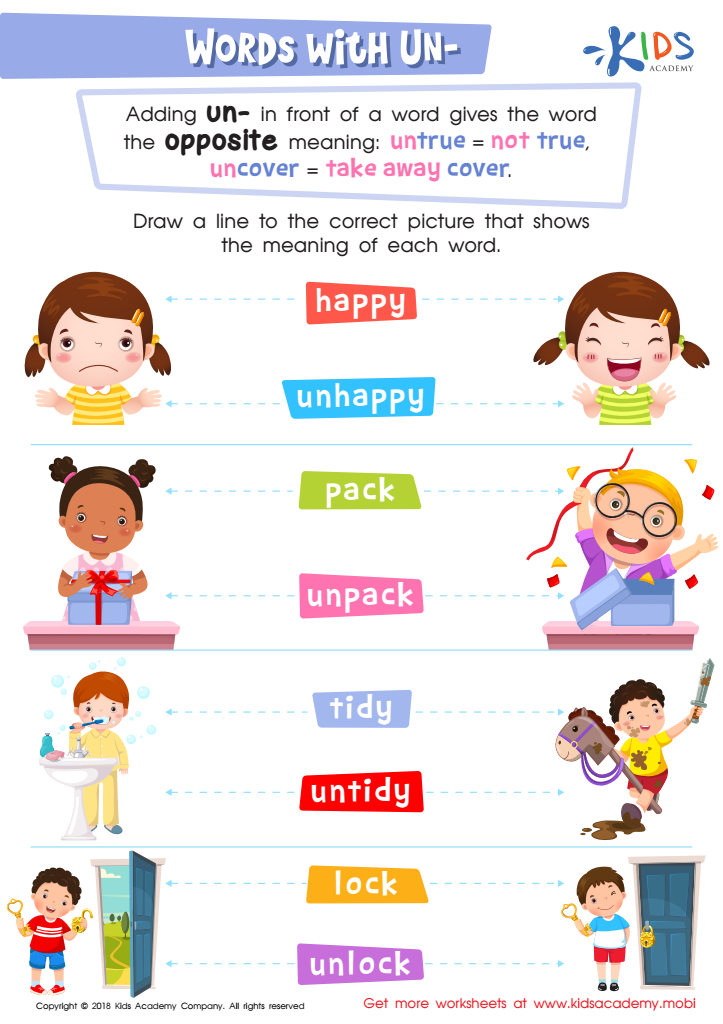
Prefixes can change the meaning of words. Adding "Un-" can give the opposite meaning, like Un-true, Un-happy, and Un-finish. Help your child learn with this worksheet. Draw a line to the picture that shows each word's meaning.
Words with Un– Worksheet
Worksheet
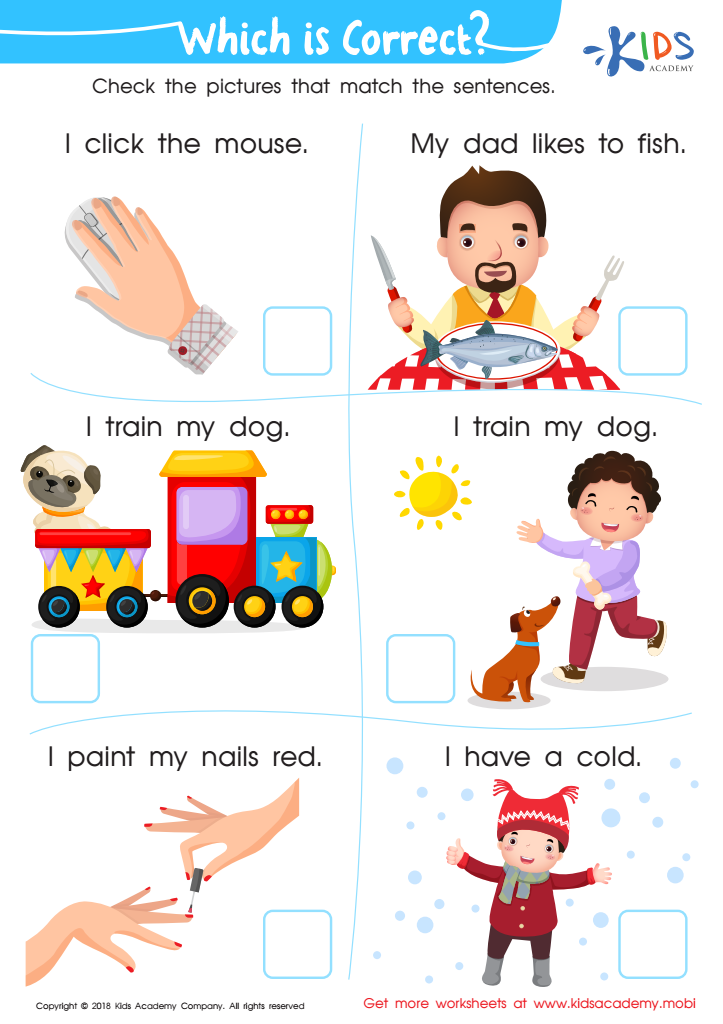
Which Is Correct? Worksheet

Which Is Correct? Worksheet

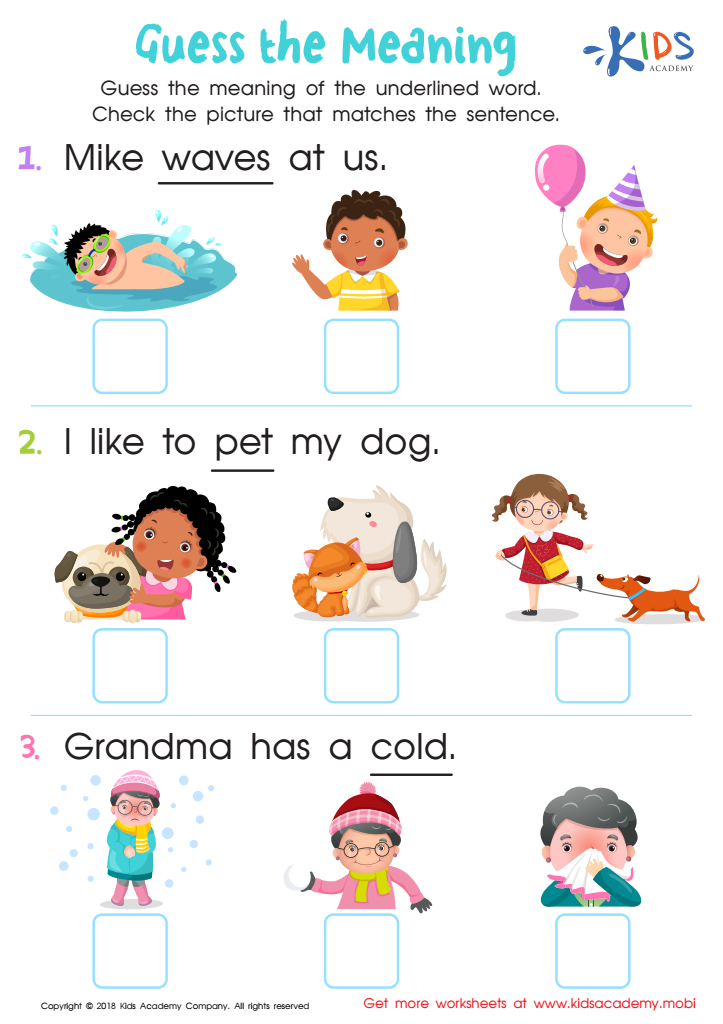
Go over the exercise with your students. Ask them to read the sentences and explain what they mean. Check the pictures that correspond to the sentences. For example, what does "My dad likes to fish" mean? Test their understanding with the worksheet.
Which Is Correct? Worksheet
Worksheet
Guess the Meaning Worksheet

Guess the Meaning Worksheet

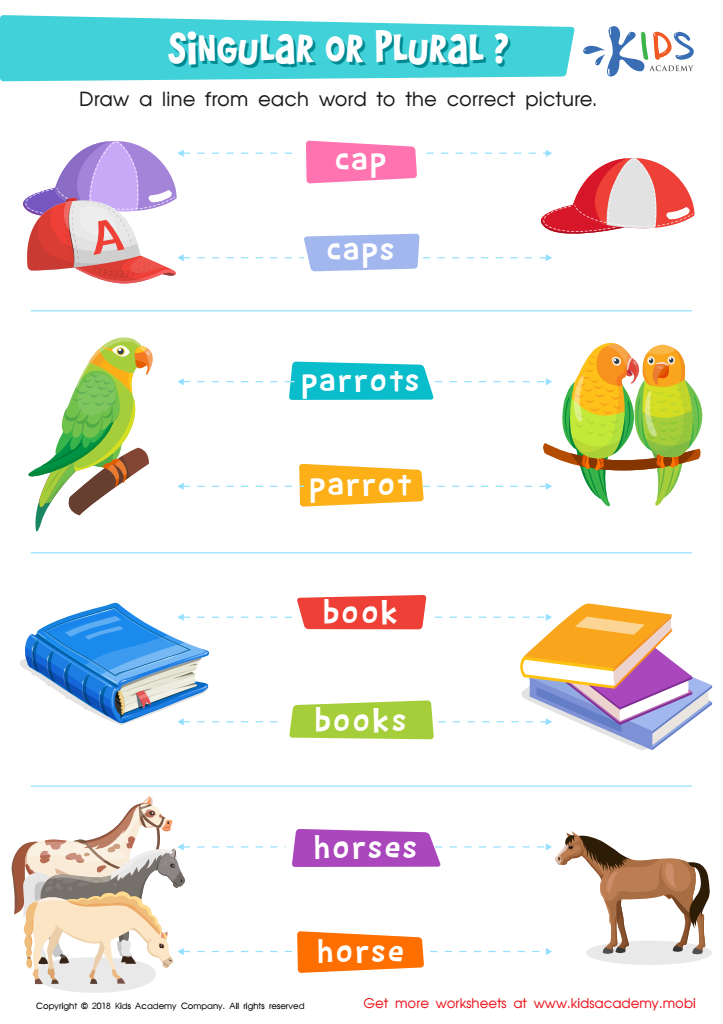
Help your child learn the meanings of words in different contexts by using this colourful, free worksheet. What is the meaning of the underlined words in each sentence? Look at the images and pick the one that accurately describes the word's context.
Guess the Meaning Worksheet
Worksheet
Singular or Plural? Worksheet

Singular or Plural? Worksheet

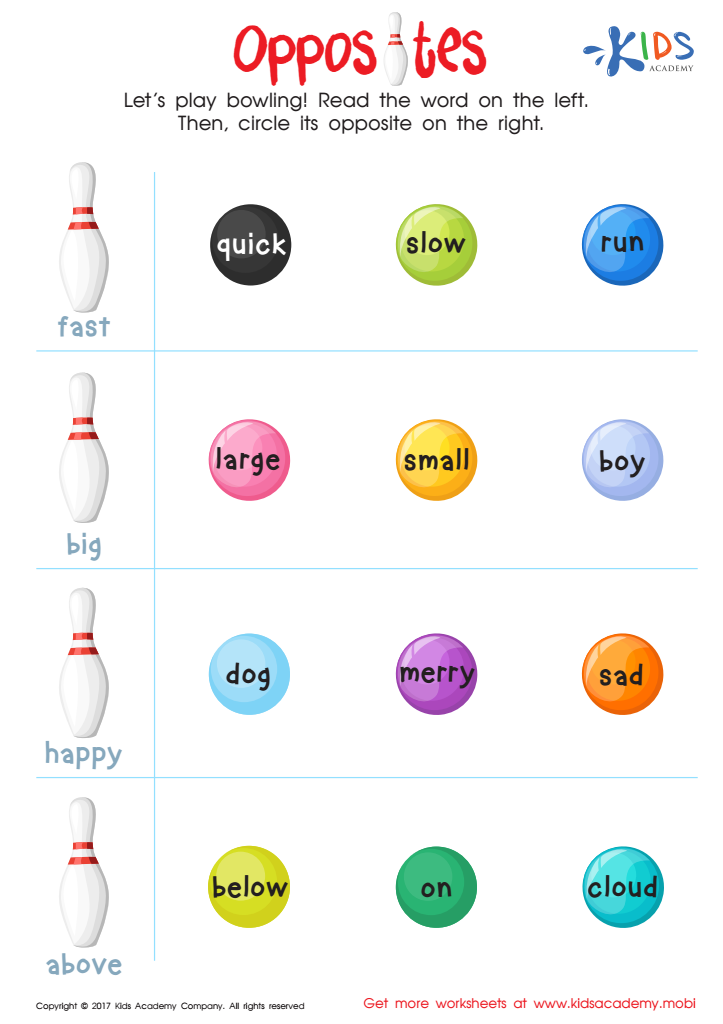
Help your child practice recognizing the plural forms of words with this fun tracing worksheet! They'll need to connect each word and its plural form to the correct picture. For example, they'll write "cap" for one cap and "caps" for two. Enjoy this learning activity together! 80 words.
Singular or Plural? Worksheet
Worksheet
Opposites Worksheet
Opposites Worksheet

Opposites Worksheet

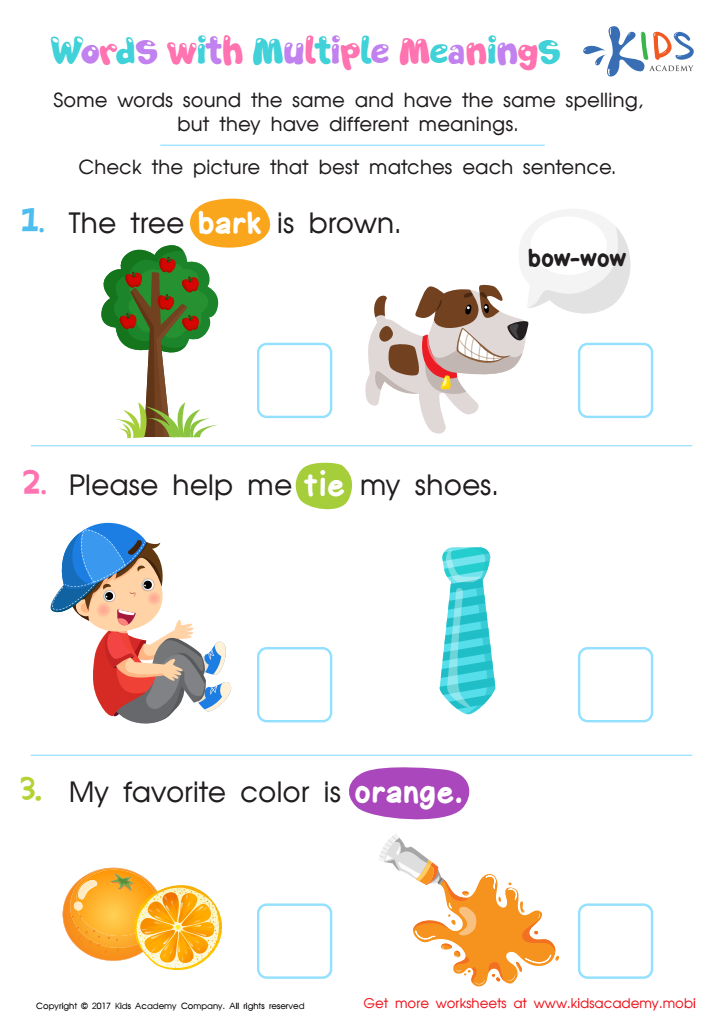
Have your students identify and circle the opposites of the words on the left. As a fun bowling-themed exercise, read the words and ask your kids if they know the opposites. Look through the options on the right and see if the answer is there; then, circle the correct answers.
Opposites Worksheet
Worksheet
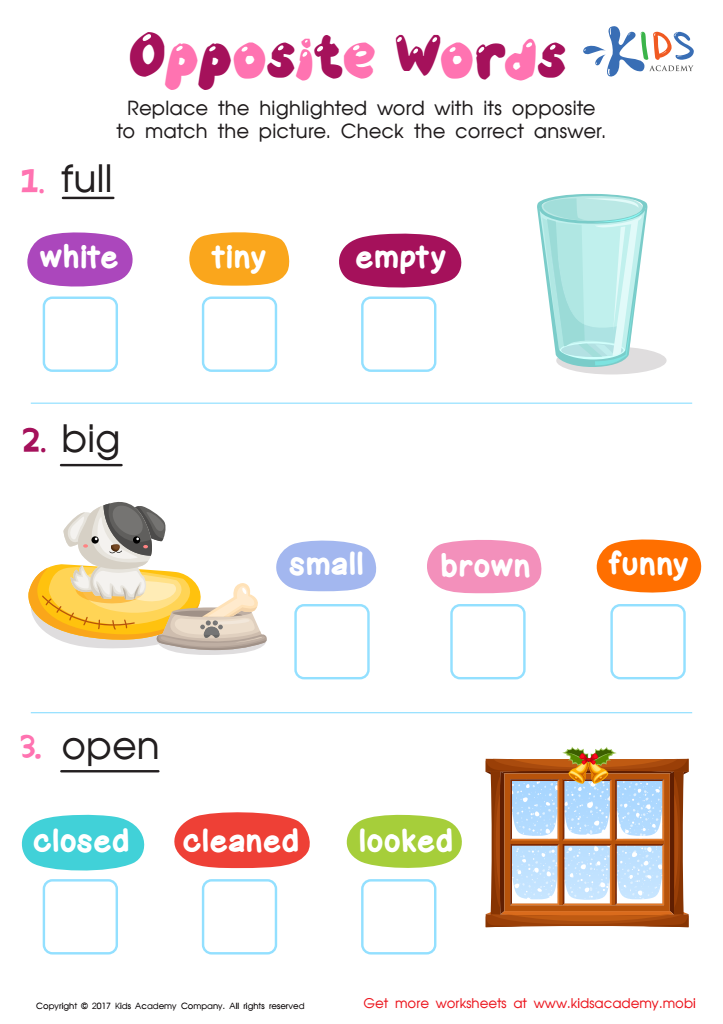
Opposite Words Worksheet

Opposite Words Worksheet

Help your child learn words and opposites. Look through a worksheet with them. Ask if they can read the underlined words. Then, ask which highlighted word is the opposite of the underlined word. The answer should match the picture.
Opposite Words Worksheet
Worksheet
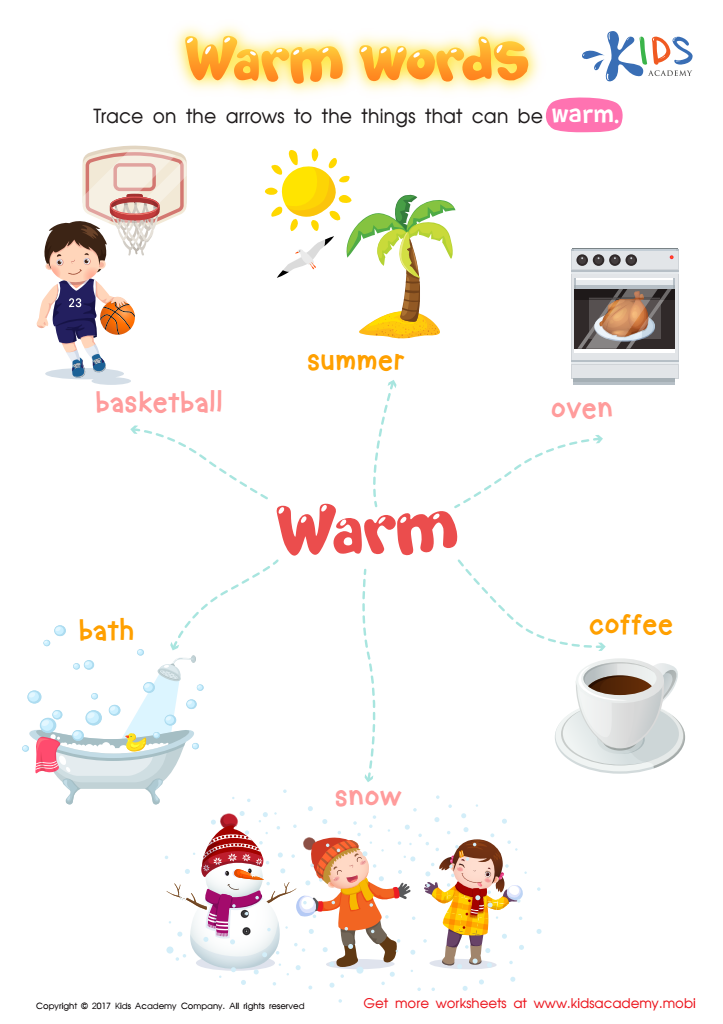
Warm Words Worksheet

Warm Words Worksheet

Learning with tracing sheets is fun! Ask your child to list some things associated with warm temperatures. Then, trace the arrows on the worksheet with them and explore the items that can be warm. Have fun!
Warm Words Worksheet
Worksheet
Shades of Meaning Worksheet

Shades of Meaning Worksheet

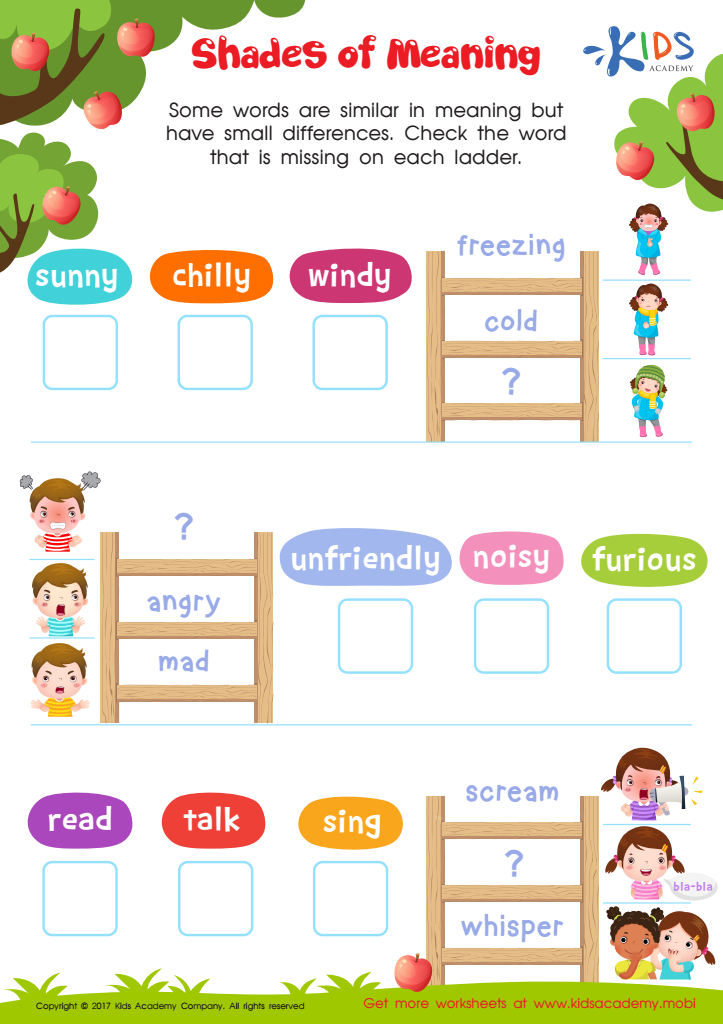
Your child can practice understanding similar words with this worksheet. They'll need to pick the word from the options that best fits the gap on each ladder, and learn to differentiate between words with similar meanings. For example, there are various terms for 'cold' that your child can learn. Try it out!
Shades of Meaning Worksheet
Worksheet
Words with Multiple Meanings Worksheet
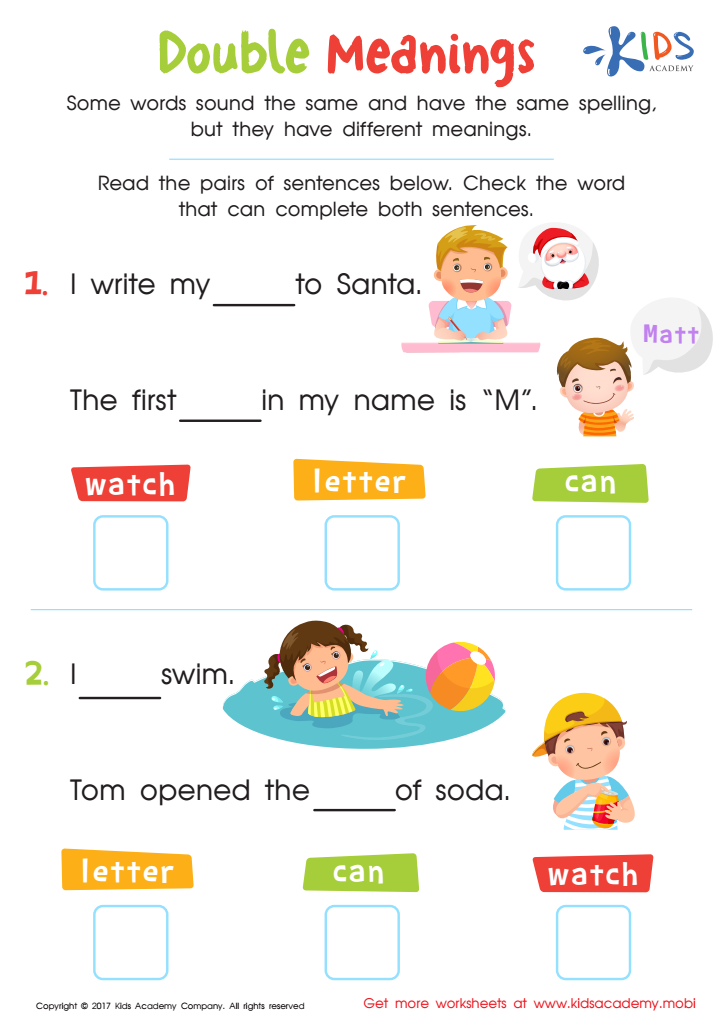

Words with Multiple Meanings Worksheet

Young authors can struggle with homographs – words that sound the same and have different meanings. This PDF worksheet uses pictures to help them easily differentiate homographs and contextualize their use. It's an engaging way to introduce them to homographs, helping them to navigate tricky words when writing.
Words with Multiple Meanings Worksheet
Worksheet
Double Meanings Worksheet
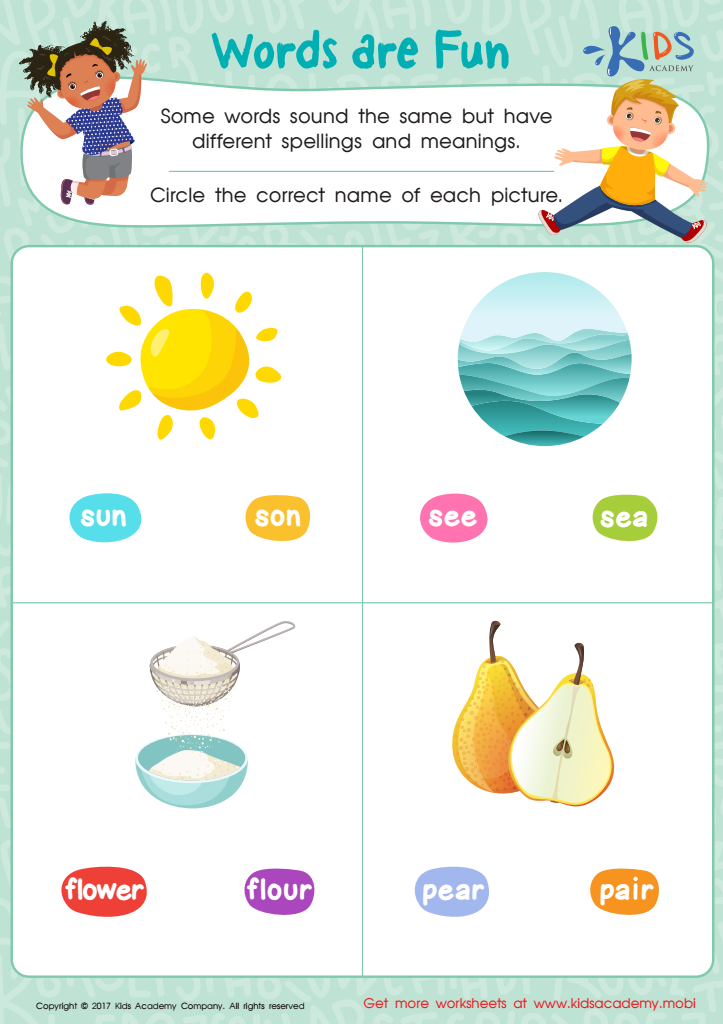
Double Meanings Worksheet

Homographs are words that look and sound the same, but have different meanings. This worksheet uses pictures to help young authors learn to use them correctly. Context and exposure to the words' meanings help them understand the difference. Total: 80 words
Double Meanings Worksheet
Worksheet
Words Are Fun Worksheet

Words Are Fun Worksheet

Homonyms are words that sound the same but have different meaning and spelling. Young authors may get confused. This PDF worksheet helps them practice by matching the homonyms to pictures. They'll also build fine motor skills, important for legible writing.
Words Are Fun Worksheet
Worksheet
Tricky Words Worksheet

Tricky Words Worksheet

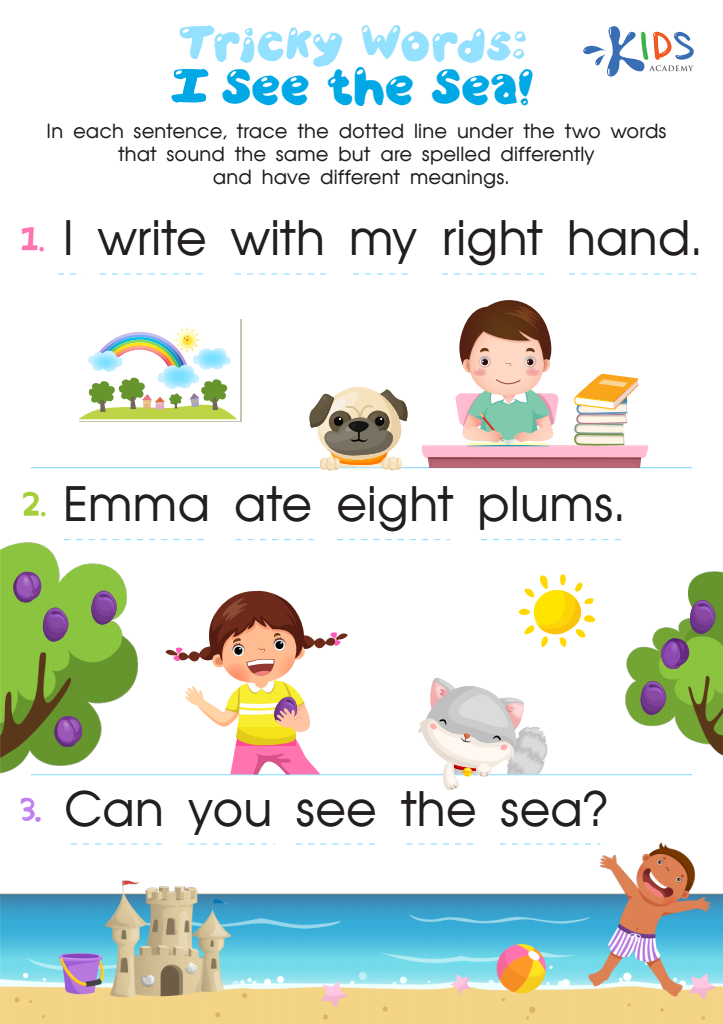
Young authors can find homonyms tricky - this brightly coloured worksheet will help them gain practice. Tracing lines to identify homonyms in easy-to-read sentences will also help improve their fine motor skills, essential for effective writing.
Tricky Words Worksheet
Worksheet
Tricky Problems Worksheet: Part 2
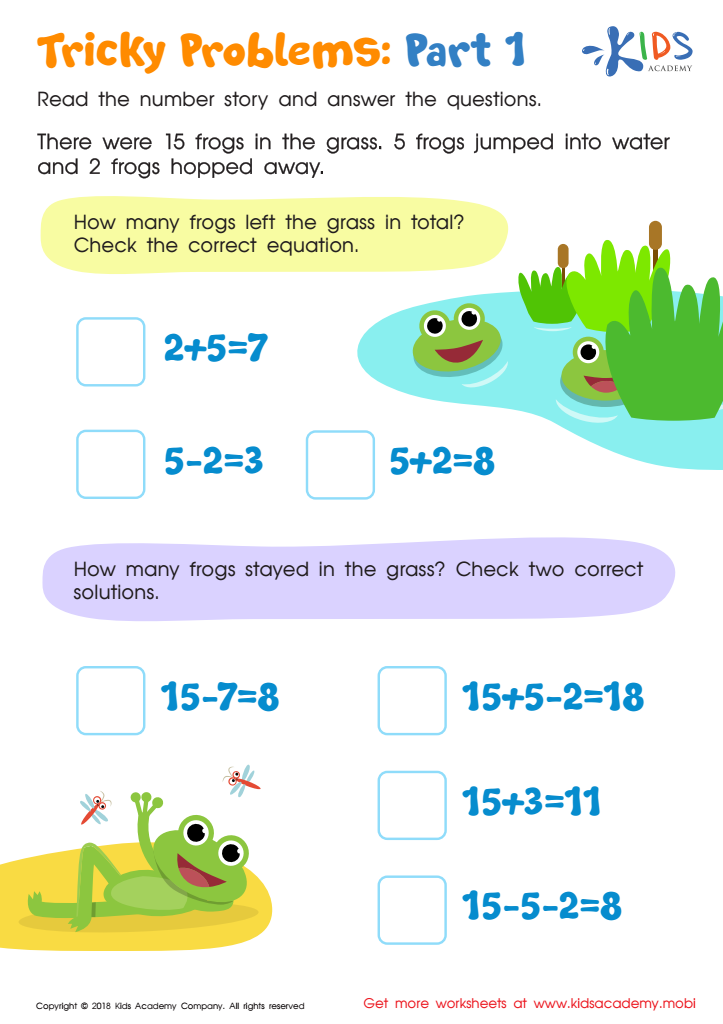

Tricky Problems Worksheet: Part 2

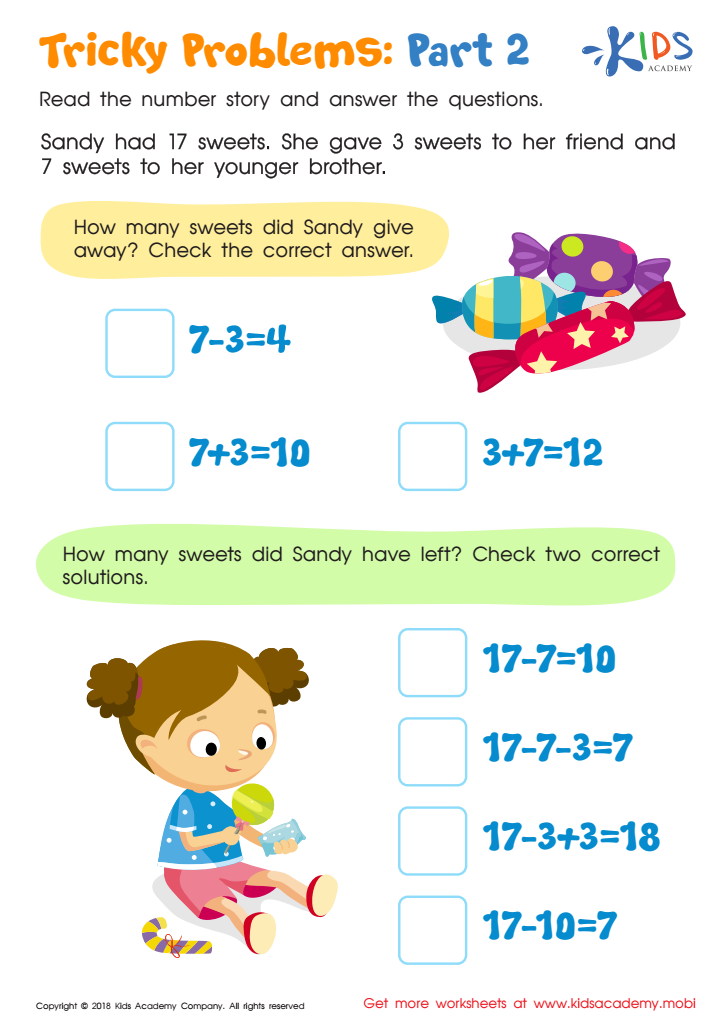
Help your little math learner visualize number stories with this engaging worksheet. They'll connect pictures to the story and use math facts to find the sums. After that, they'll be able to identify the correct number sentences to match. Let them practice and get better at problem solving!
Tricky Problems Worksheet: Part 2
Worksheet
Tricky Problems Worksheet: Part 1

Tricky Problems Worksheet: Part 1

Visualizing word problems can help students solve them. This fun PDF worksheet encourages students to create mental images using math facts, then check boxes to match the equations for basic addition problems. It's a great way to build confidence in solving math.
Tricky Problems Worksheet: Part 1
Worksheet
Using Number Sentences to Solve Problems Worksheet
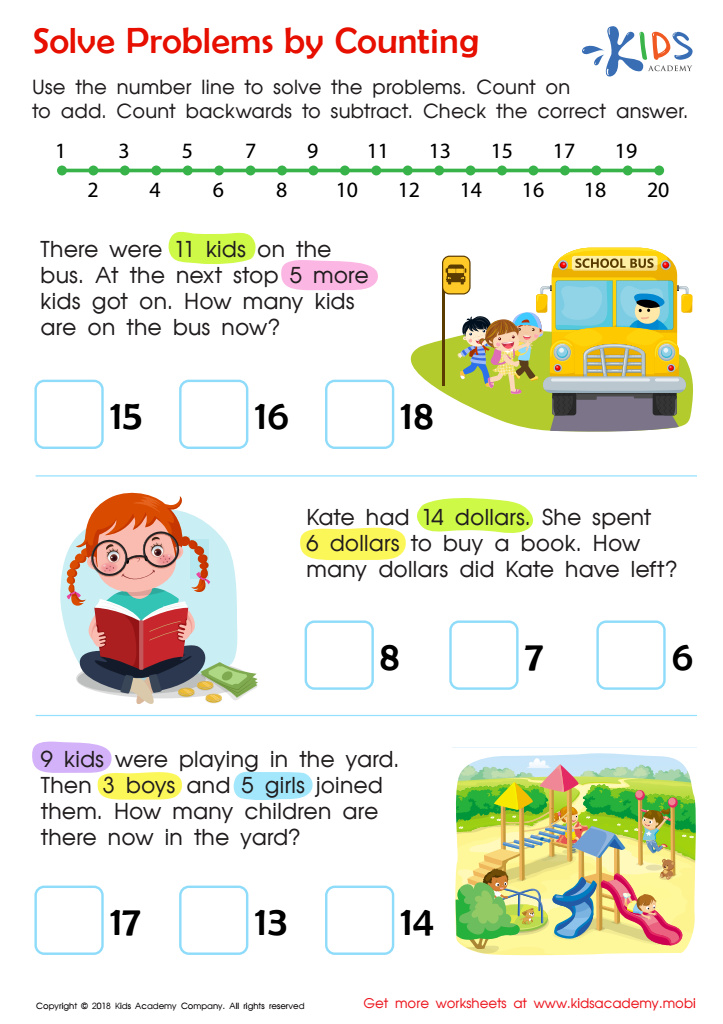

Using Number Sentences to Solve Problems Worksheet

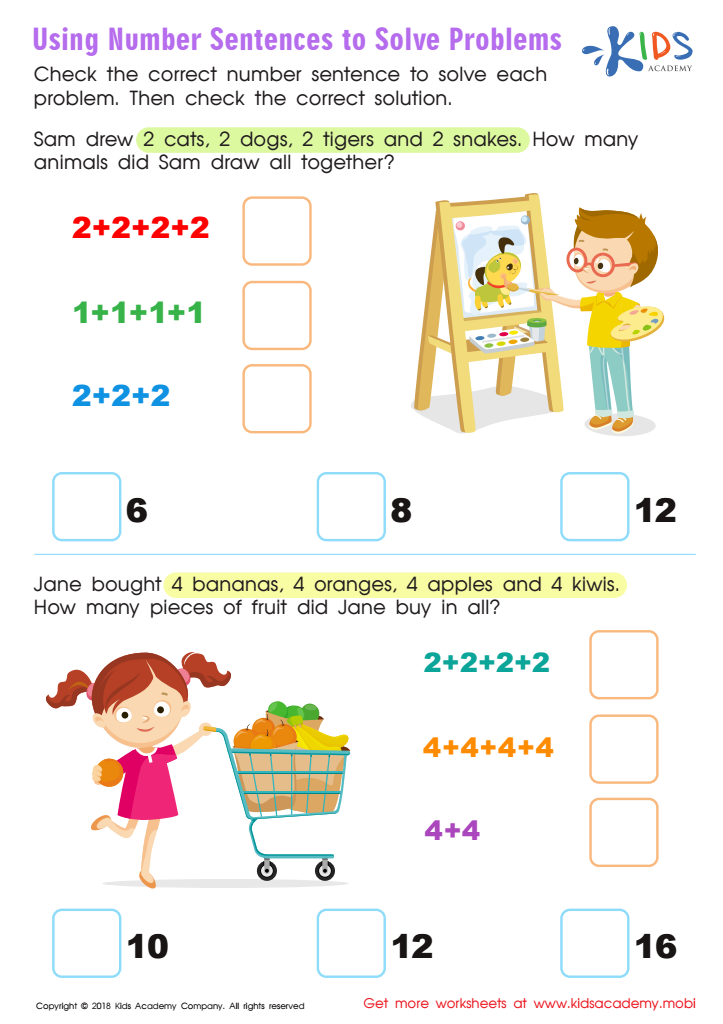
Solving math problems requires an efficient strategy. Picture representation can help young mathematicians with basic addition problems, especially when it involves repeated addends. As they gain confidence, they'll be able to apply their number sentence solving abilities to more complex equations.
Using Number Sentences to Solve Problems Worksheet
Worksheet
Solve Problems by Counting Worksheet


Solve Problems by Counting Worksheet

Download this free colorful worksheet and give your young math student practice with a number line. Counting on or back, they will learn to solve basic addition and subtraction word problems with ease. Ultimately, it will help them develop automaticity for later efficiency with addition and subtraction.
Solve Problems by Counting Worksheet

Worksheet
Jungle Addition Worksheet

Jungle Addition Worksheet

With this worksheet, kids can use the strategies of making tens and adding doubles to add numbers with more than three addends. They'll practice choosing the right method and become more confident in their calculations, enabling quicker, more efficient computation.
Jungle Addition Worksheet
Worksheet


Parents and teachers should care deeply about the development of children ages 3-7 because this period is crucial for cognitive, social, and emotional growth. During these formative years, children undergo significant brain development, laying the foundation for future learning and behavior. Engaging children through play, exploration, and education fosters their curiosity and creativity, which are essential for problem-solving and critical thinking skills later in life.

Moreover, early interactions with caregivers and educators shape children’s social skills, like sharing, cooperation, and empathy. These interactions help them develop self-regulation and resilience, which are vital for navigating challenges as they grow. A nurturing environment positively impacts their emotional well-being, leading to a more positive attitude towards learning.

Furthermore, early literacy and numeracy skills are often cultivated during this age. By focusing on these skills, adults can help prevent future learning gaps, ensuring that children are better prepared for formal education. Overall, caring for the developmental needs of young children not only enriches their lives but also promotes a healthier, more educated society. Supporting children in these early years can lead to lifelong achievements, making it a priority for parents and educators alike.