Filters

2423 filtered results

Clear all filters
Favorites
With answer key
Interactive

2423 filtered results

Difficulty Level

Grade


Check out this FREE Trial Lesson for age 3-7!

Lesson 2- Build and Draw shapes

Favorites
With answer key
Interactive
  • 3-7
  • Interactive
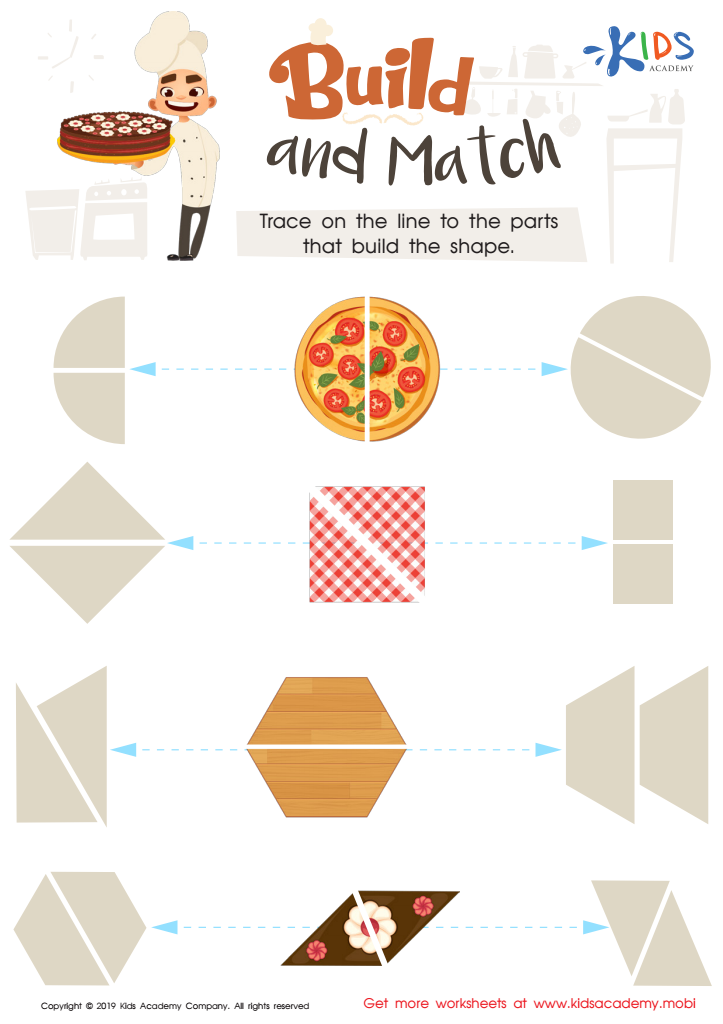
Build and Match Worksheet

Build and Match Worksheet

This bright worksheet will get your kids excited to learn more! Use the colorful images and shapes to engage them and have them trace the parts to build the shape. This fun exercise will help them retain the lessons and make it an enjoyable experience.
Build and Match Worksheet
Worksheet
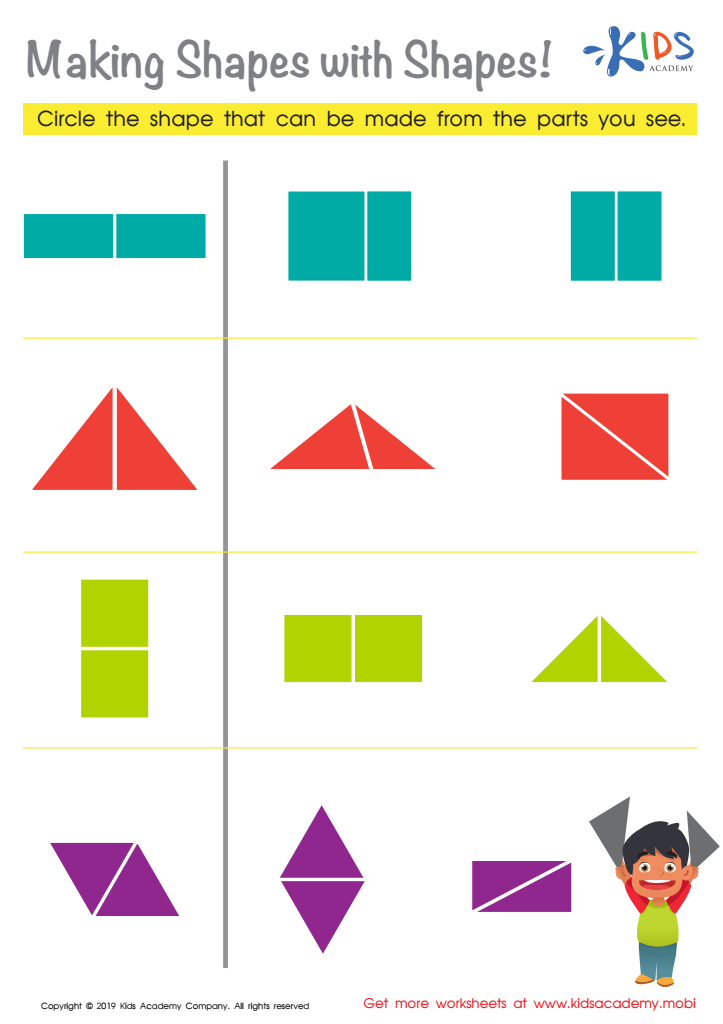
Making Shapes with Shapes Worksheet

Making Shapes with Shapes Worksheet

Help your kindergartners identify shapes with this simple worksheet. Examine the shapes on the left and have them circle the one they can make from the parts in the picture. Shapes can be tricky, but this exercise will help clear up any confusion.
Making Shapes with Shapes Worksheet
Worksheet
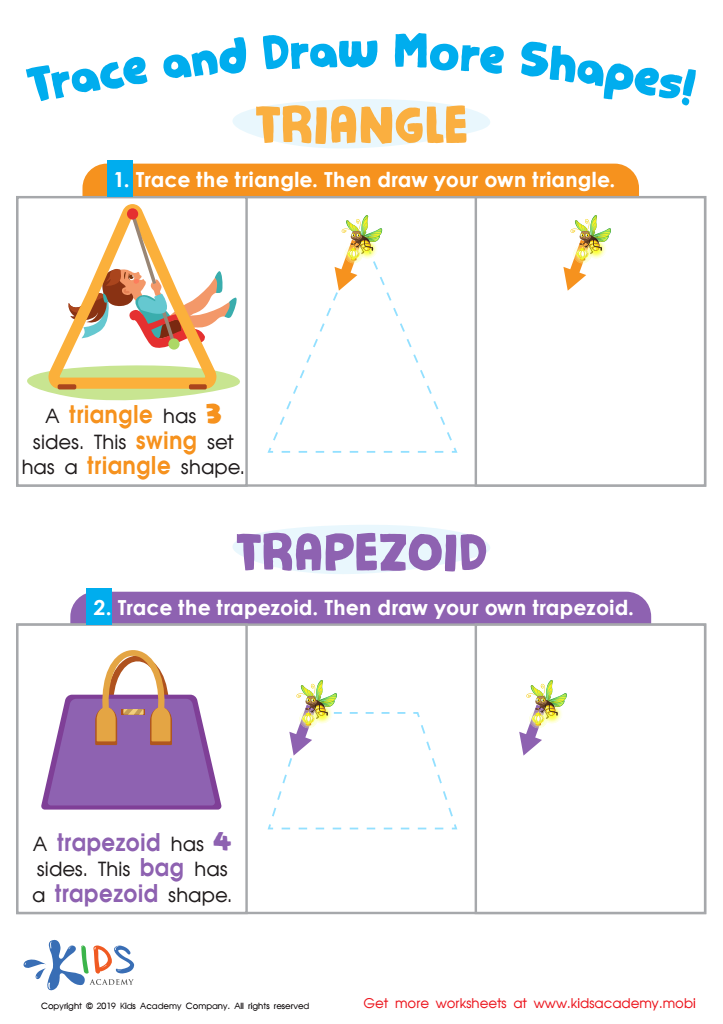
Trace and Draw More Shapes Worksheet

Trace and Draw More Shapes Worksheet

Help your kids with more learning! Look at images in the worksheet, read facts about the shapes, then help your kids trace and draw. This reinforces that learning is never done; use this simple worksheet to help your kids with school homework and more!
Trace and Draw More Shapes Worksheet
Worksheet
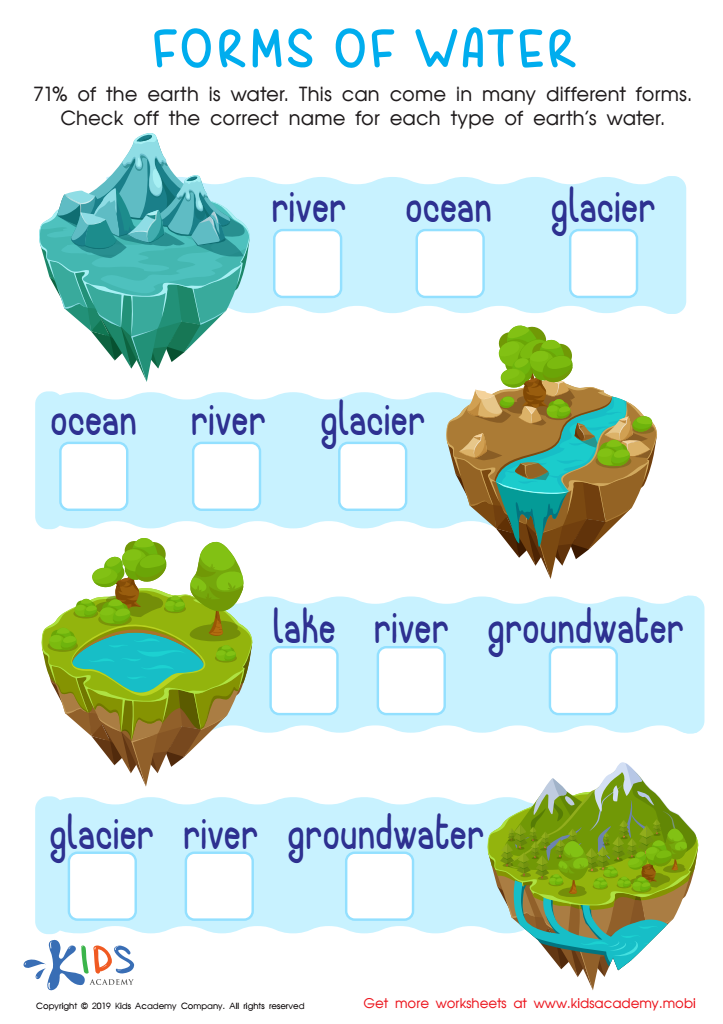
Forms of Water Worksheet

Forms of Water Worksheet

Life on Earth needs water to survive. Luckily, water makes up 75% of the Earth's surface and comes in various forms such as rivers, oceans and lakes. Ask your kids to name other forms and use this worksheet to help them identify each type.
Forms of Water Worksheet
Worksheet
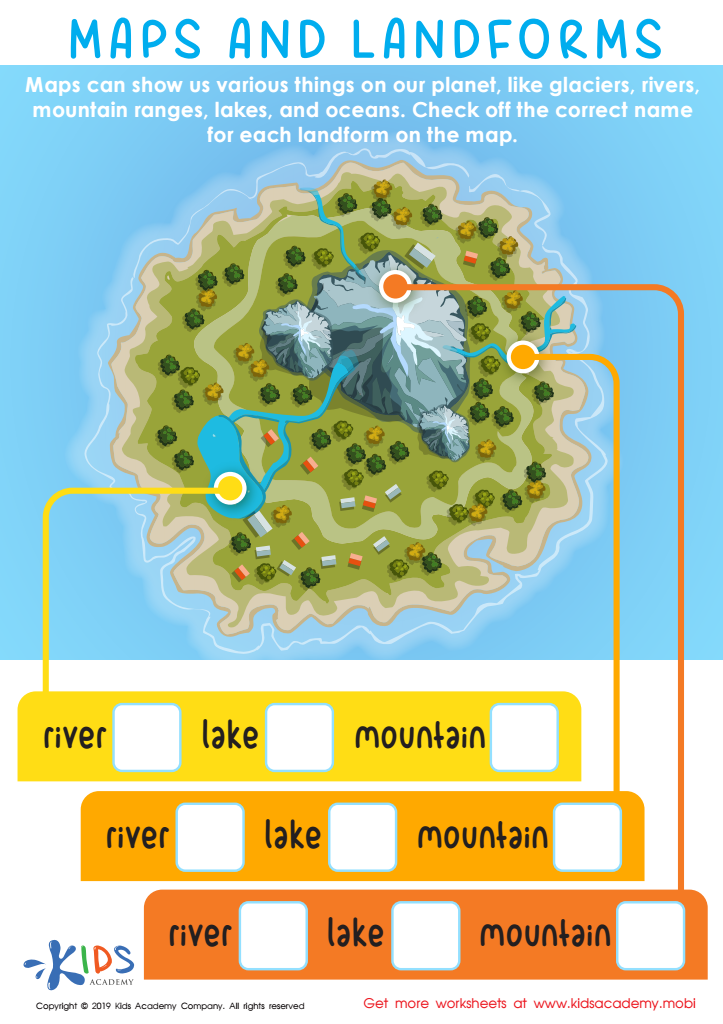
Maps and Landforms Worksheet

Maps and Landforms Worksheet

We can educate our kids on the world and its landforms by showing them a map. Point out mountains, rivers, and oceans, and help them identify each correctly. With this knowledge, they will better understand our planet.
Maps and Landforms Worksheet
Worksheet
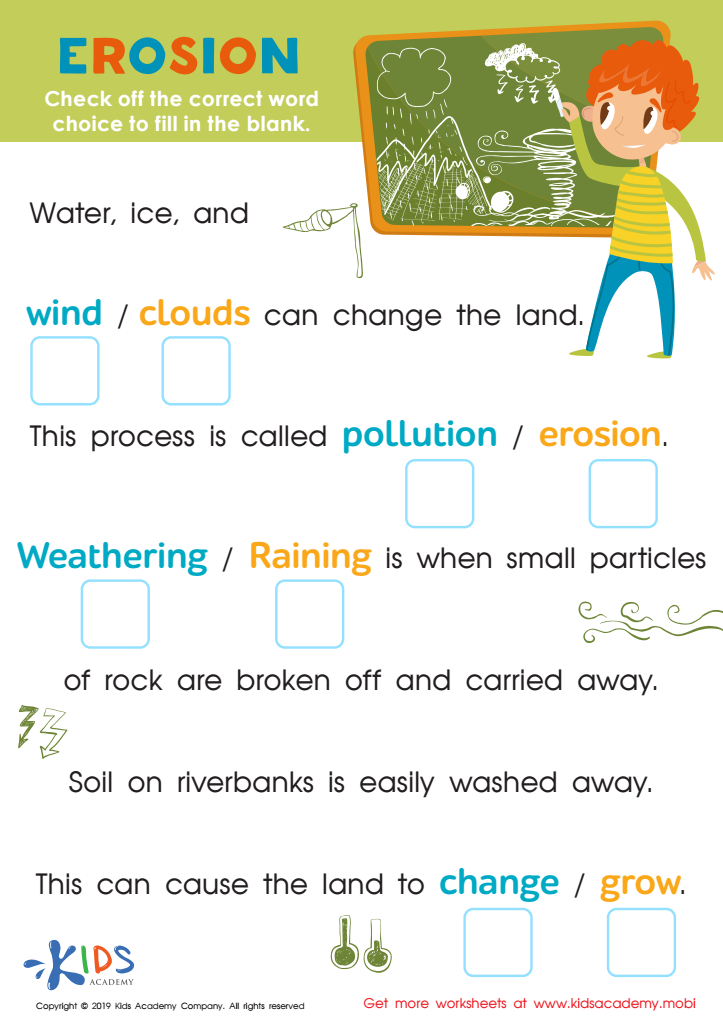
Erosion Worksheet
Erosion Worksheet

Erosion Worksheet

Erosion is when land is washed or crumbled away; it is caused by water, wind, or man. Teach kids its damaging impact, and how to prevent it. Check out this science worksheet to help them learn more. Read each sentence, then help them fill in the blanks with the correct words.
Erosion Worksheet
Worksheet
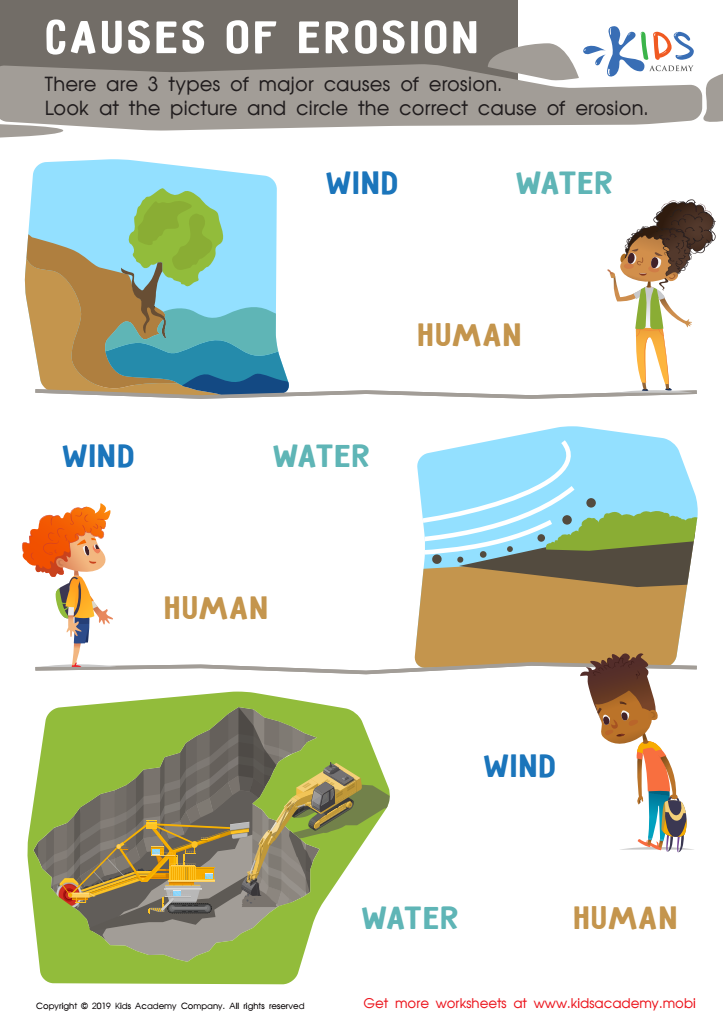
Causes of Erosion Worksheet

Causes of Erosion Worksheet

Earth is a habitable planet for humans and all life forms, providing us with what we need to survive. However, erosion caused by air, water or man can destroy or crumble parts of its surface. Teach kids the three causes of erosion and help them circle the correct one on a worksheet.
Causes of Erosion Worksheet
Worksheet
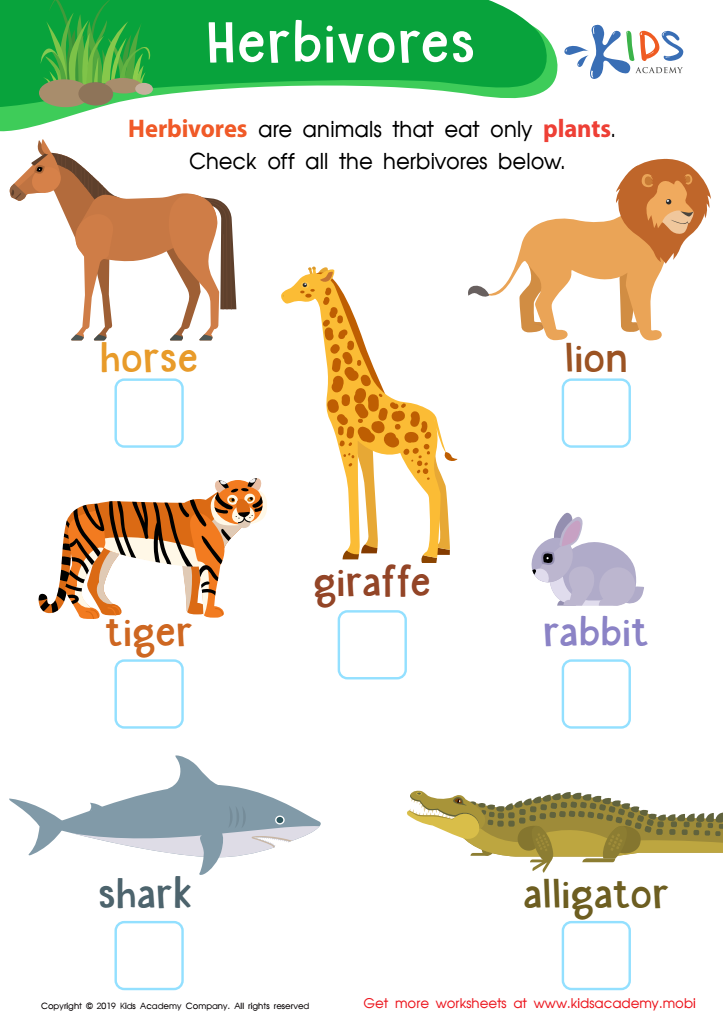
Herbivores Worksheet

Herbivores Worksheet

Explain to your kids what herbivores are: animals that survive on plants and grass. Examples include cows, rabbits, and deer. Ask them to identify the herbivores in the pictures and check them off.
Herbivores Worksheet
Worksheet
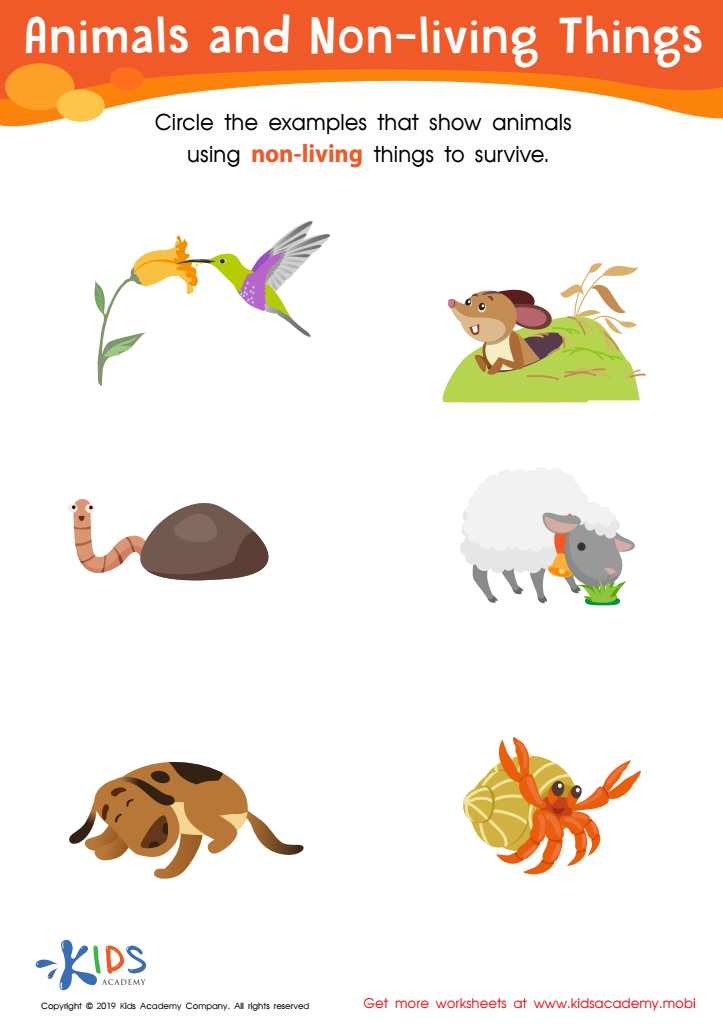
Animals and Non-Living Things Worksheet

Animals and Non-Living Things Worksheet

People and animals both require more than food to survive. We need shelter, clothing and water, while animals use non-living things like rocks and trees. Ask your kids what else is necessary to survive - then have them identify the objects in the worksheet and circle the examples of animals using non-living things.
Animals and Non-Living Things Worksheet
Worksheet
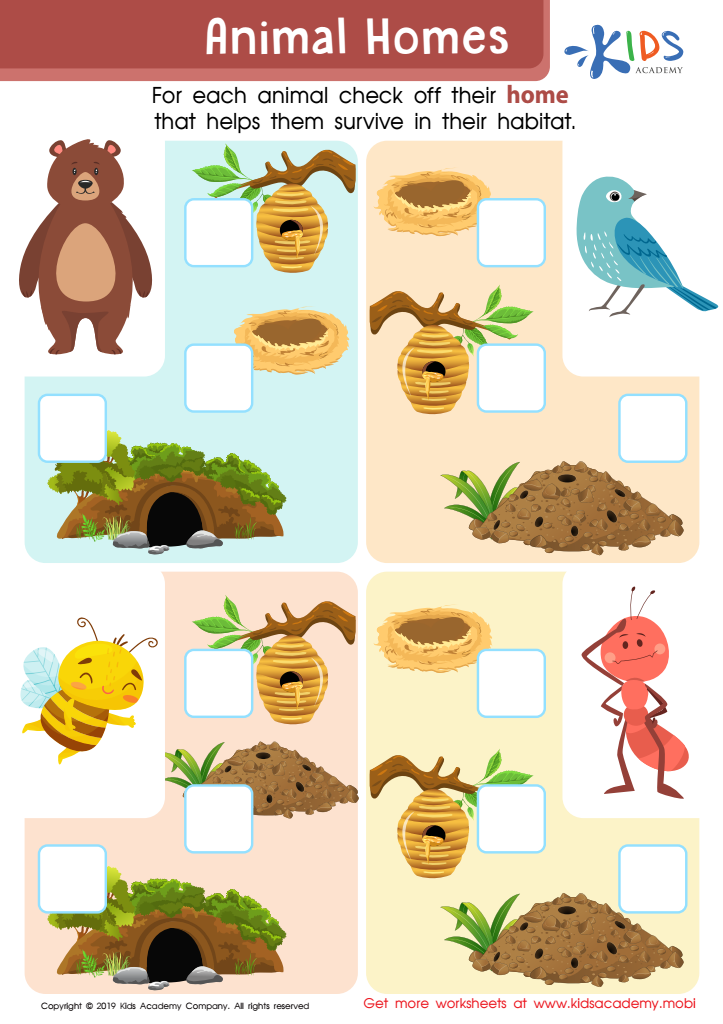
Animal Homes Worksheet

Animal Homes Worksheet

It's your duty as a teacher to protect, direct and guide your students while they're at school. Ask your kindergartners what a home means and why it's special. Use this worksheet to teach them that both people and animals have homes. Show them the pictures, and have them check off which is the home of each animal.
Animal Homes Worksheet
Worksheet
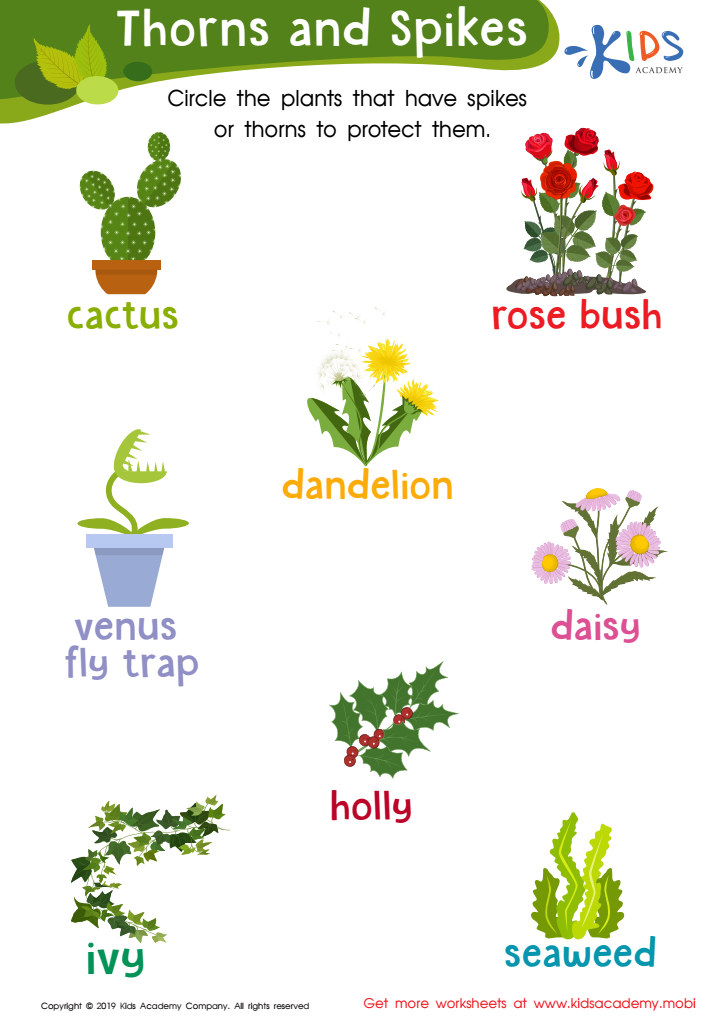
Thorns and Spikes Worksheet

Thorns and Spikes Worksheet

Can your students name and identify the plants and flowers in this worksheet? Ask them to read out the names and circle the ones with spikes or thorns. Help them appreciate nature's beauty and understand how plants protect themselves.
Thorns and Spikes Worksheet
Worksheet
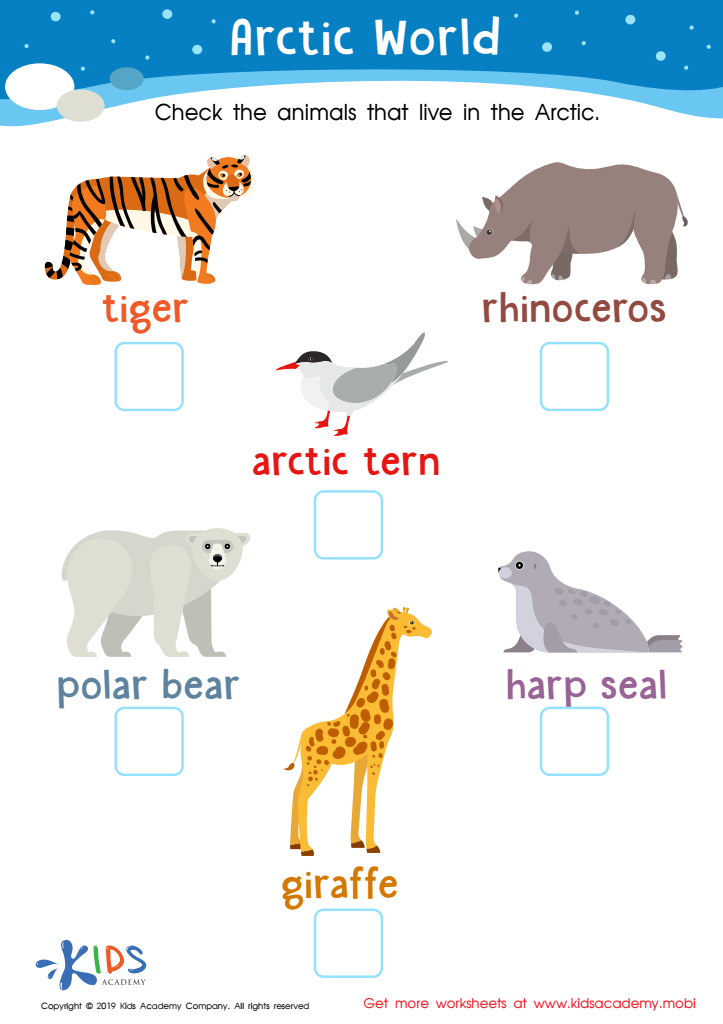
Arctic World Worksheet

Arctic World Worksheet

Ask your students if they know where the Arctic is located and what lives there. If not, use a world atlas to show them. The Arctic is very cold and snow-covered; native animals have adapted to survive the harsh conditions. Look at the animals in the worksheet and help your students decide which ones live in the Arctic.
Arctic World Worksheet
Worksheet
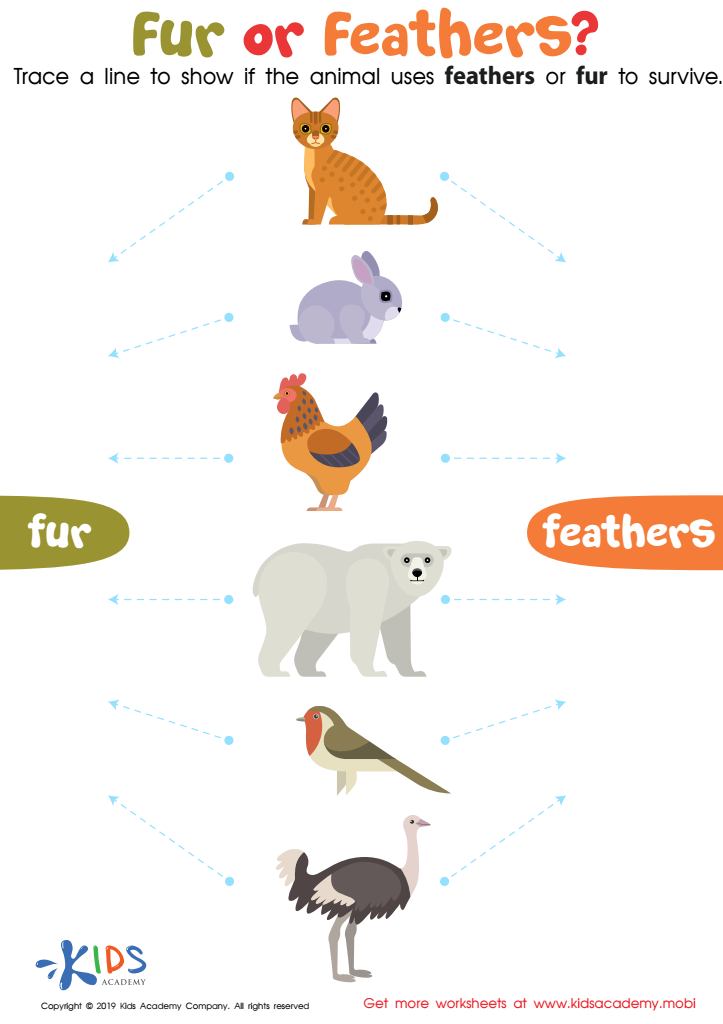
Fur or Feathers? Worksheet

Fur or Feathers? Worksheet

Examine animals you see daily. How do they differ from humans? With a pet in your home, ask your child to touch it and identify what covers the animal's body - fur or feathers? Birds have feathers, while mammals have fur. Guide your kids to identify animals in this worksheet and determine if fur or feathers keep them alive.
Fur or Feathers? Worksheet
Worksheet
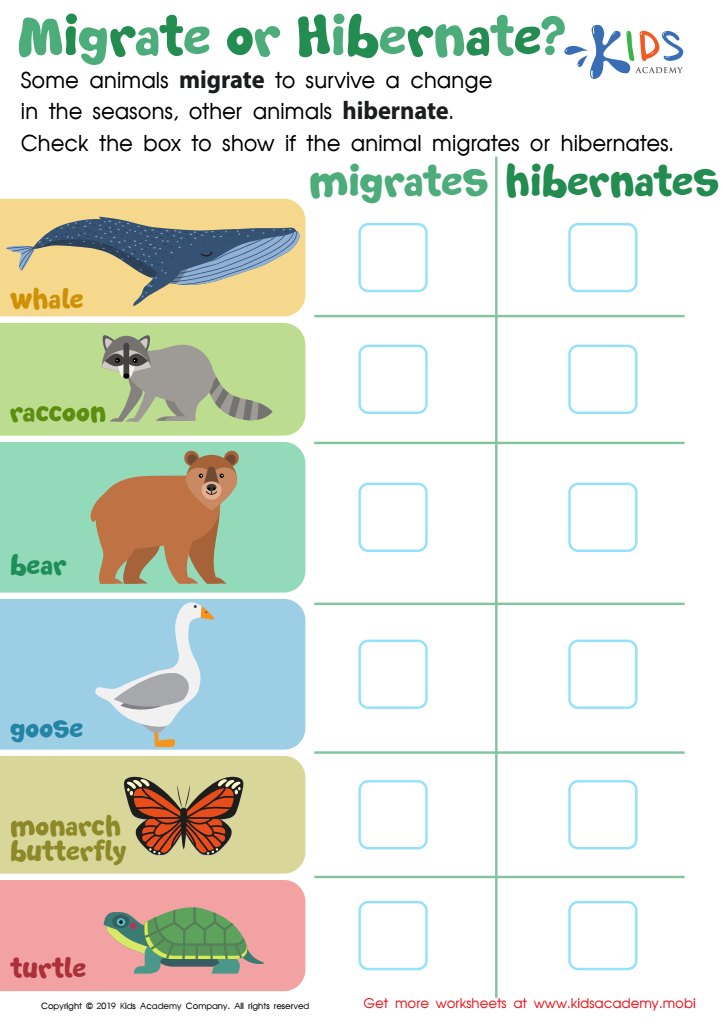
Migrate or Hibernate? Worksheet

Migrate or Hibernate? Worksheet

Many animals survive by either migrating or hibernating when the weather changes. Migration involves traveling in flocks or herds to a more temperate climate, while hibernation is when animals stay in their homes and eat and sleep for a long period of time. Show your kids this worksheet and help them decide which strategy animals use to cope with the changing weather.
Migrate or Hibernate? Worksheet
Worksheet
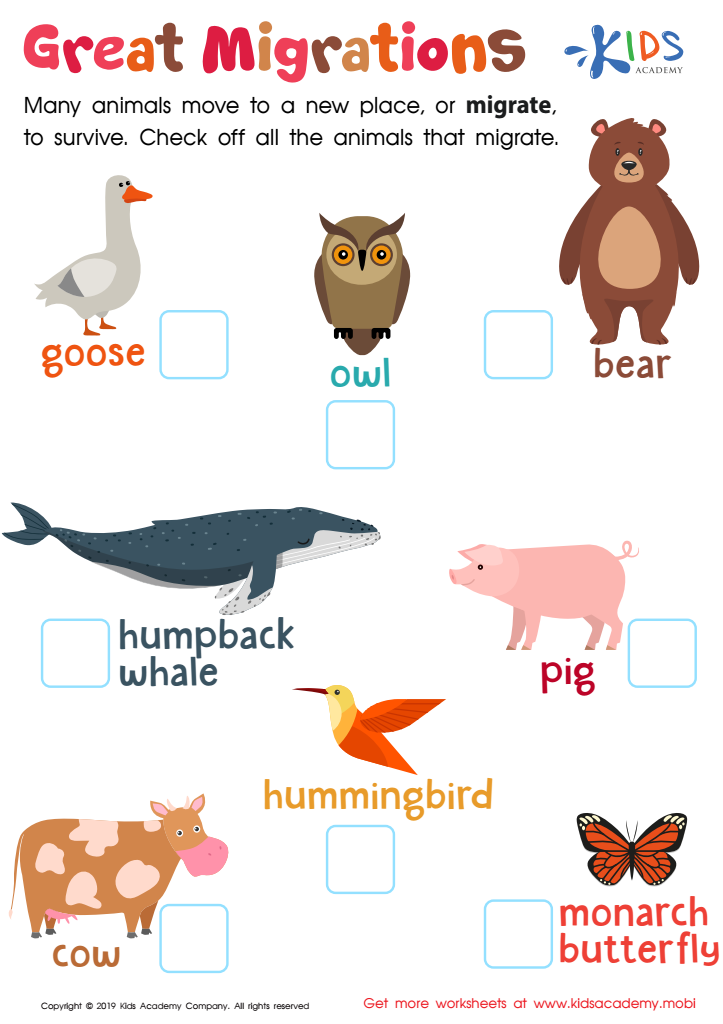
Great Migrations Worksheet

Great Migrations Worksheet

Identify animals in the worksheet with your kids. See which ones migrate: check the boxes! Migration is when birds and other animals only appear for certain seasons or long periods, then come back when the weather changes.
Great Migrations Worksheet
Worksheet
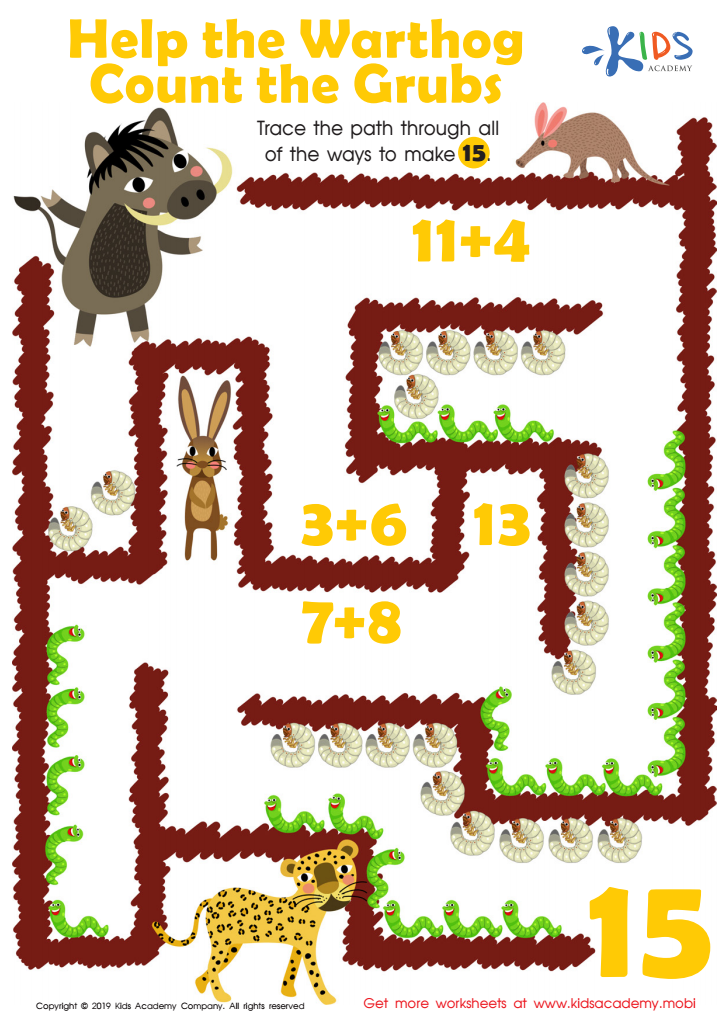
Help the Warthog Count the Grubs Worksheet

Help the Warthog Count the Grubs Worksheet

Test your kids' knowledge of wild animals. Ask them to name some they know, then have them identify the animals on this worksheet. If they can't, take the time to tell them the names. Finally, trace the warthog's path through the maze by solving the equations and going through paths that make 15.
Help the Warthog Count the Grubs Worksheet
Worksheet
What Makes 19? Worksheet

What Makes 19? Worksheet

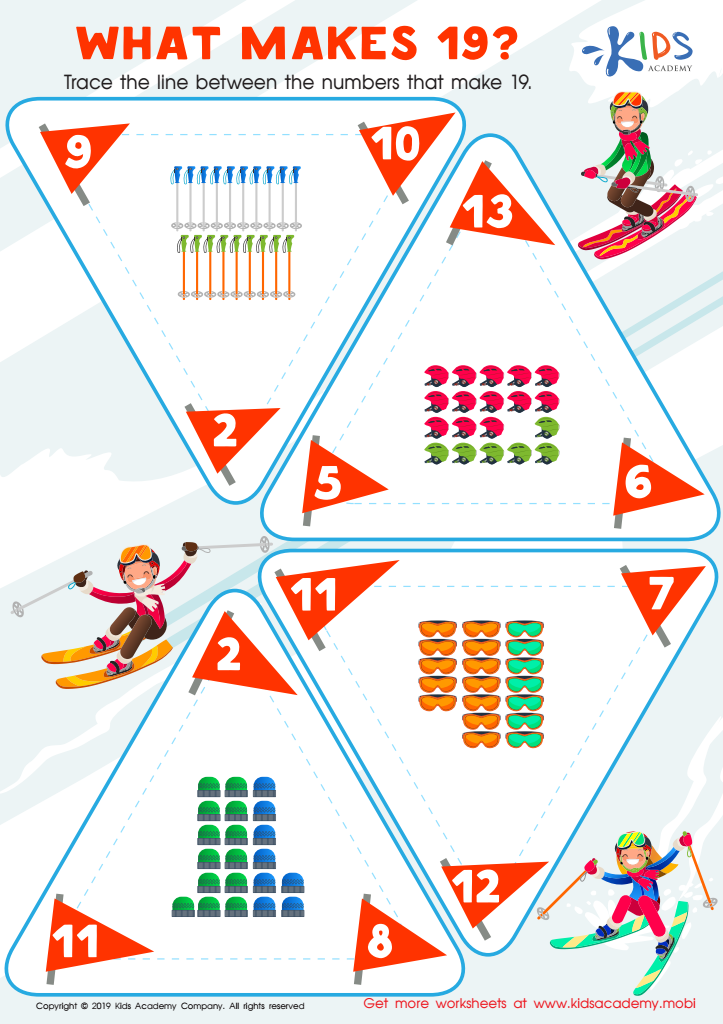
As a parent, it's your responsibility to help your kids learn. Put on the teacher hat and use this worksheet to teach them addition tricks. Help them count and add the objects, trace a line between the numbers that make 19, and take their learning a step further.
What Makes 19? Worksheet
Worksheet
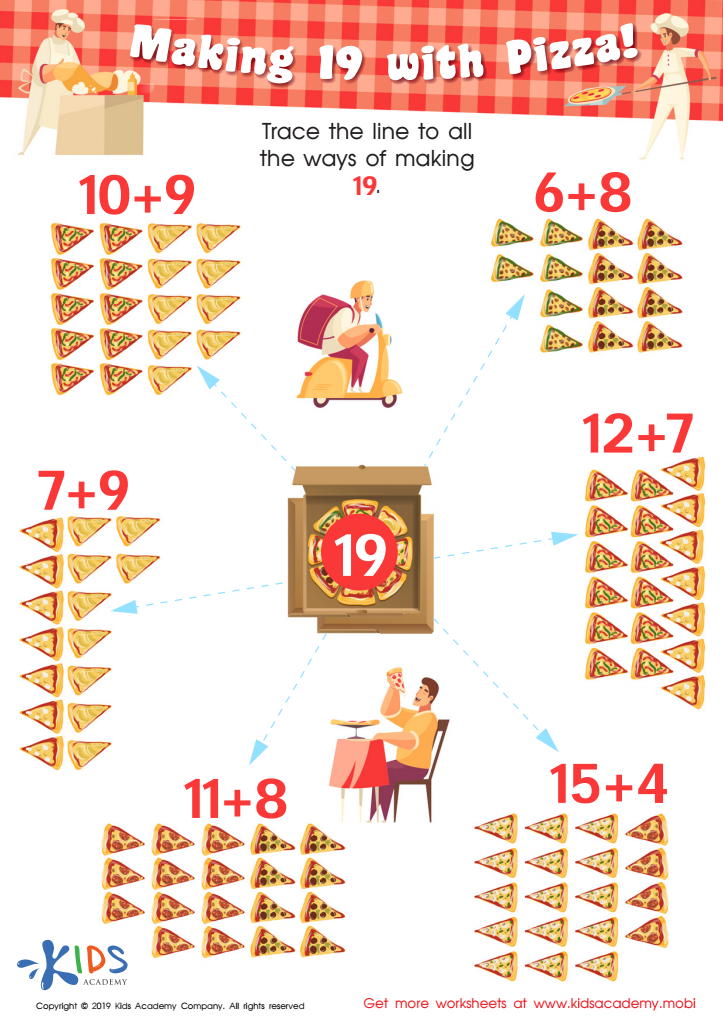
Making 19 with Pizza! Worksheet

Making 19 with Pizza! Worksheet

Who loves pizza? Your kids do! Next time you need to teach them math, make it fun by combining it with something they enjoy. This worksheet uses a pizza-themed problem to help them practice solving equations. Have them trace the line to figure out how to make 19. It's a great way to make learning math fun!
Making 19 with Pizza! Worksheet
Worksheet
Making 19 with Sports Worksheet

Making 19 with Sports Worksheet

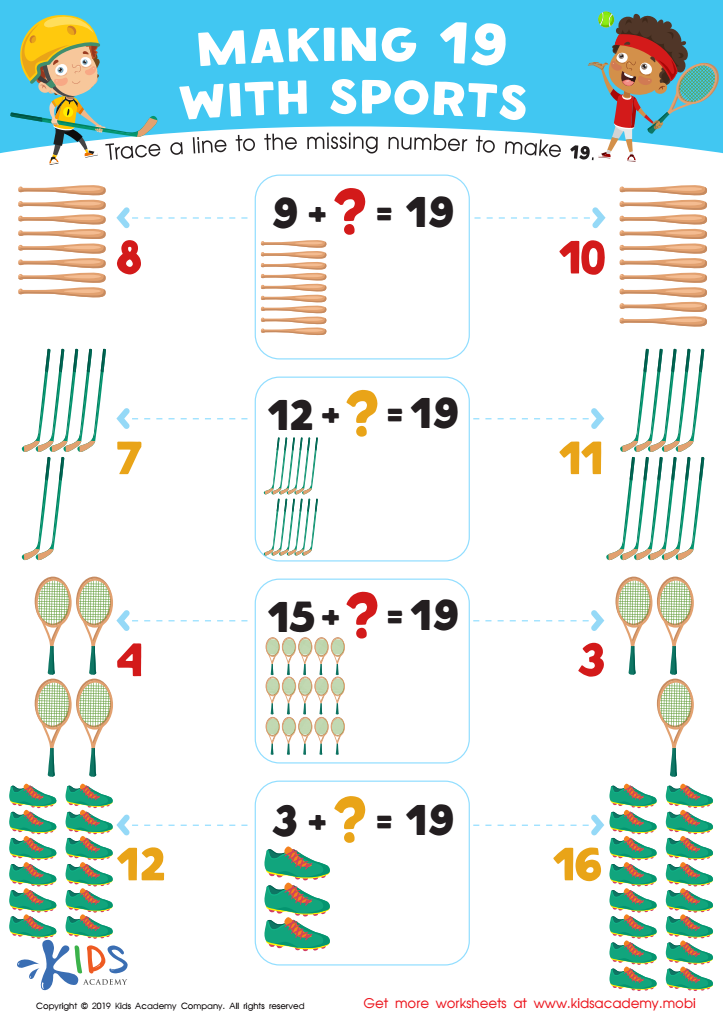
As kids grow, so does their learning. Help them master simple addition with four equations in the worksheet. By finding the missing numbers to make 19, and tracing a line to the answer, your kids will improve their math skills.
Making 19 with Sports Worksheet
Worksheet
18 Candles Worksheet

18 Candles Worksheet

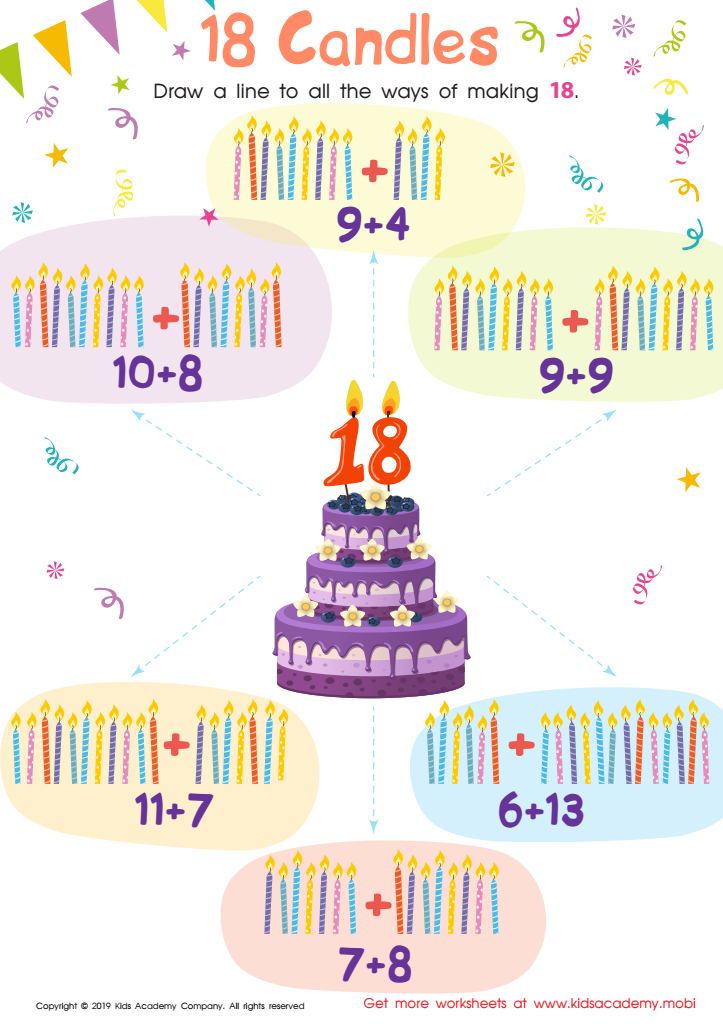
This worksheet is great for introducing your students to addition and subtraction. Help your kids solve the simple equations on it and draw a line from the birthday cake with 18 on it to all the solutions. Practice like this will prepare them to tackle more complex math problems.
18 Candles Worksheet
Worksheet
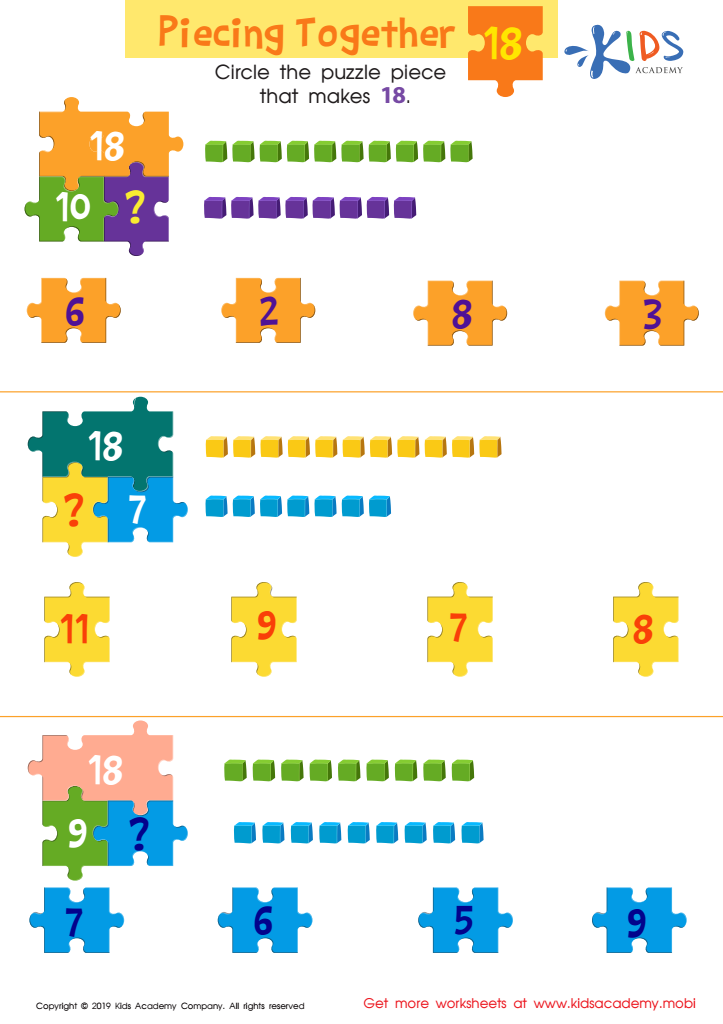
Piecing Together 18 Worksheet

Piecing Together 18 Worksheet

Let your preschoolers learn and have fun with this colorful worksheet. Look at the picture with them and ask what they see. Help them solve the equations missing on each puzzle piece and then circle the one that will make the bottom puzzle piece numbers equal 16. Puzzles and bright colors make learning easy and enjoyable!
Piecing Together 18 Worksheet
Worksheet
What Makes 17 Worksheet

What Makes 17 Worksheet

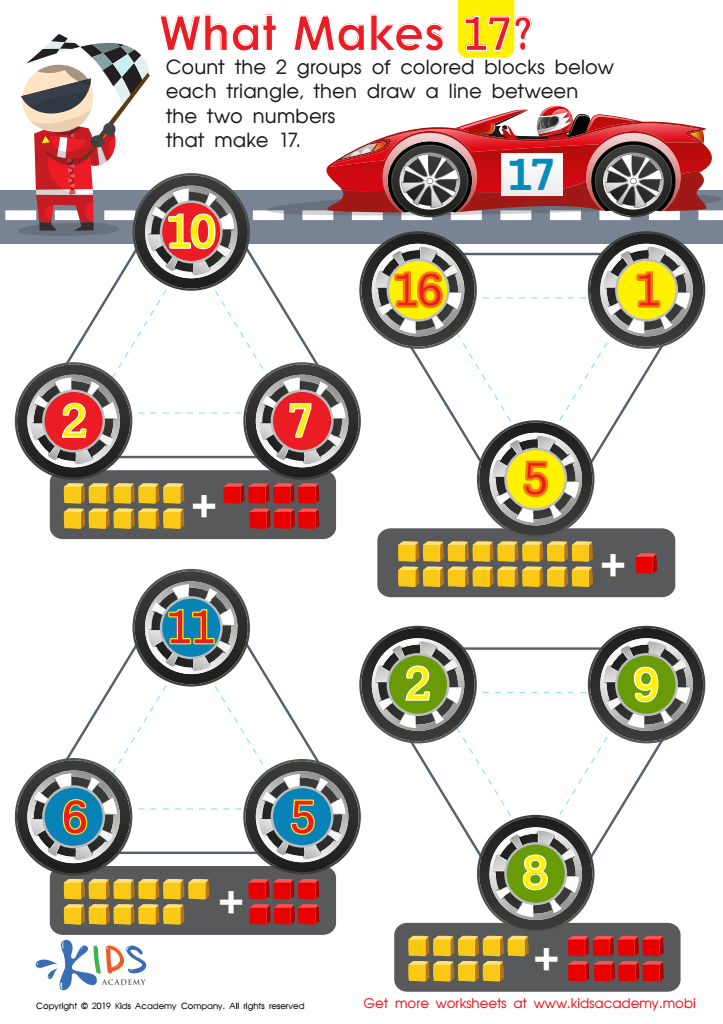
Practice makes perfect! Let your kindergartners explore addition using this worksheet. Count the blocks in each triangle to reach the same total of 17, and draw a line between the two numbers. Once they get the hang of it, nothing will be too difficult!
What Makes 17 Worksheet
Worksheet
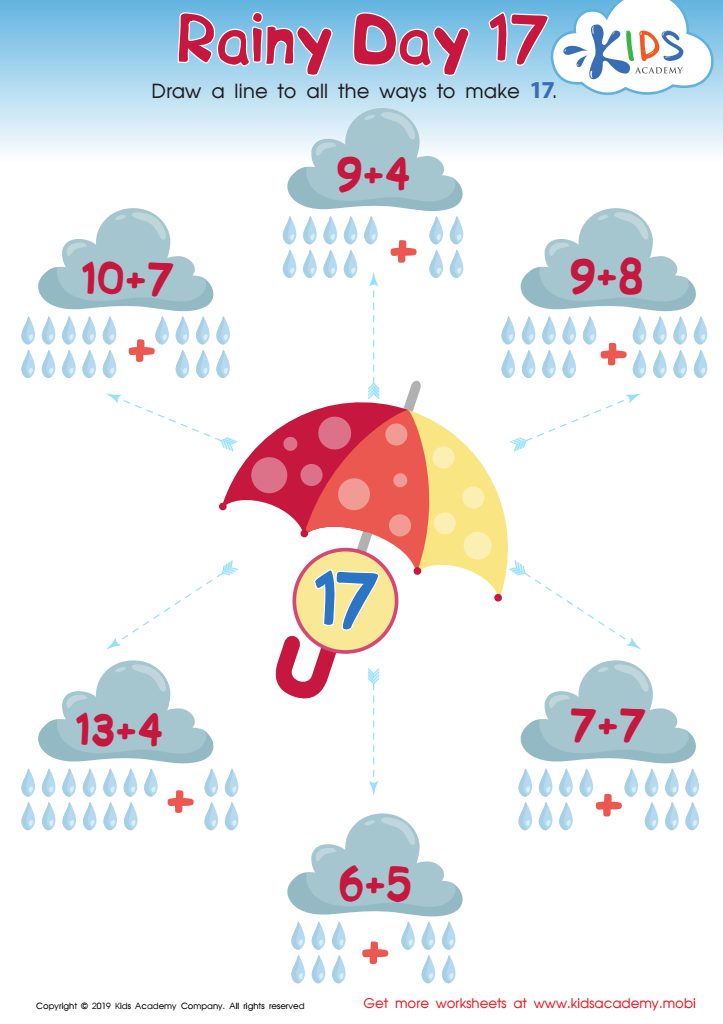
Rainy Day 17 Worksheet

Rainy Day 17 Worksheet

Assist your kids with the 6 equations given. Each cloud displays the sum of two numbers, some of which make 17. Guide them to figure out the total of both numbers when added and draw a line to the umbrella in the center to illustrate the different ways to make 17. This activity will sharpen their addition skills.
Rainy Day 17 Worksheet
Worksheet
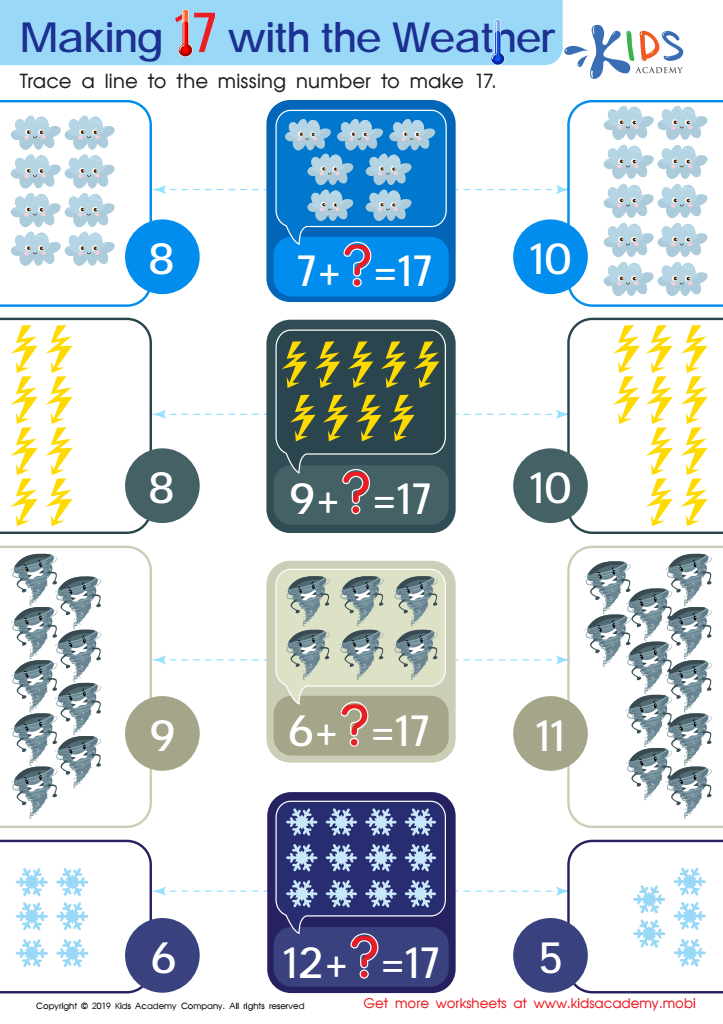
Making 17 with the Weather Worksheet


Making 17 with the Weather Worksheet

Show your kids the pictures in the worksheet and identify the weather. This exercise is to help them add simple numbers. There are 4 equations in the printout. Help them figure out the numbers to make 17, then trace a line to the missing number to complete the equation.
Making 17 with the Weather Worksheet

Worksheet


Parents and teachers should care deeply about the development of children ages 3-7 because this period is crucial for cognitive, social, and emotional growth. During these formative years, children undergo significant brain development, laying the foundation for future learning and behavior. Engaging children through play, exploration, and education fosters their curiosity and creativity, which are essential for problem-solving and critical thinking skills later in life.

Moreover, early interactions with caregivers and educators shape children’s social skills, like sharing, cooperation, and empathy. These interactions help them develop self-regulation and resilience, which are vital for navigating challenges as they grow. A nurturing environment positively impacts their emotional well-being, leading to a more positive attitude towards learning.

Furthermore, early literacy and numeracy skills are often cultivated during this age. By focusing on these skills, adults can help prevent future learning gaps, ensuring that children are better prepared for formal education. Overall, caring for the developmental needs of young children not only enriches their lives but also promotes a healthier, more educated society. Supporting children in these early years can lead to lifelong achievements, making it a priority for parents and educators alike.