Chess Worksheets for Ages 3-7 - Page 4
86 filtered results
-
From - To
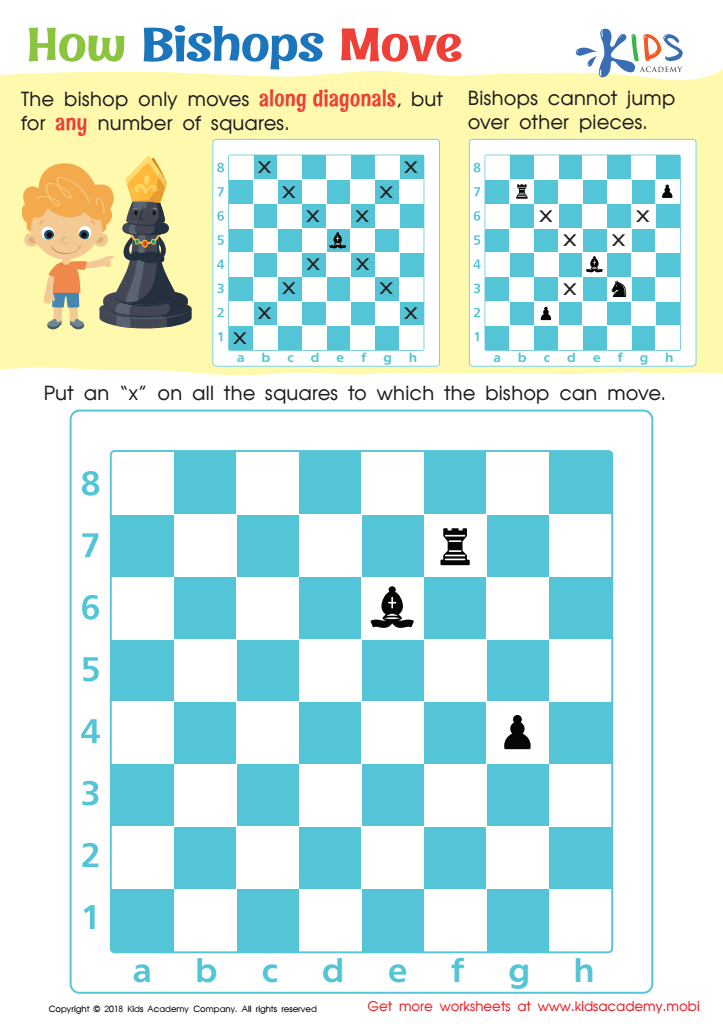
How Bishops Move Worksheet
 Assign to My Students
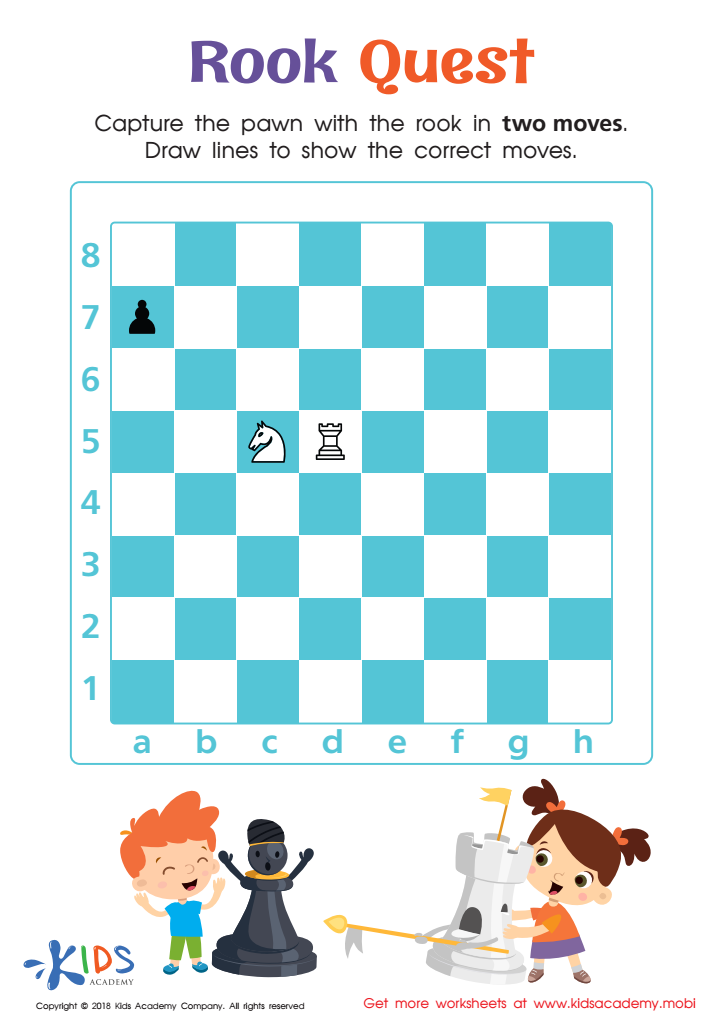
Rook Quest Worksheet
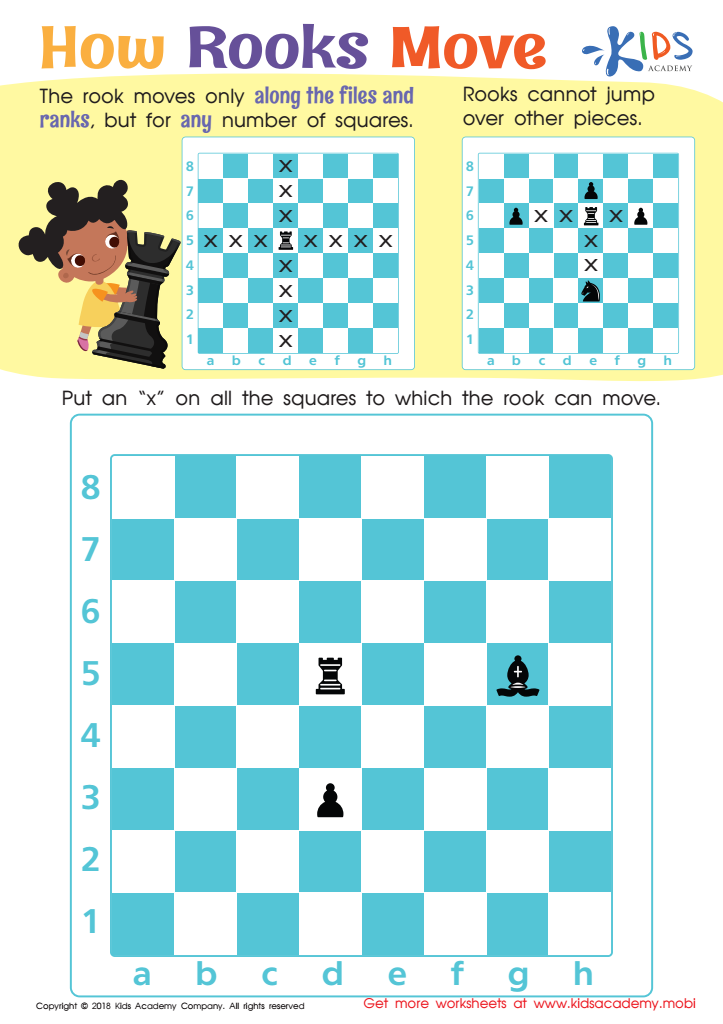
How Rooks Move Worksheet
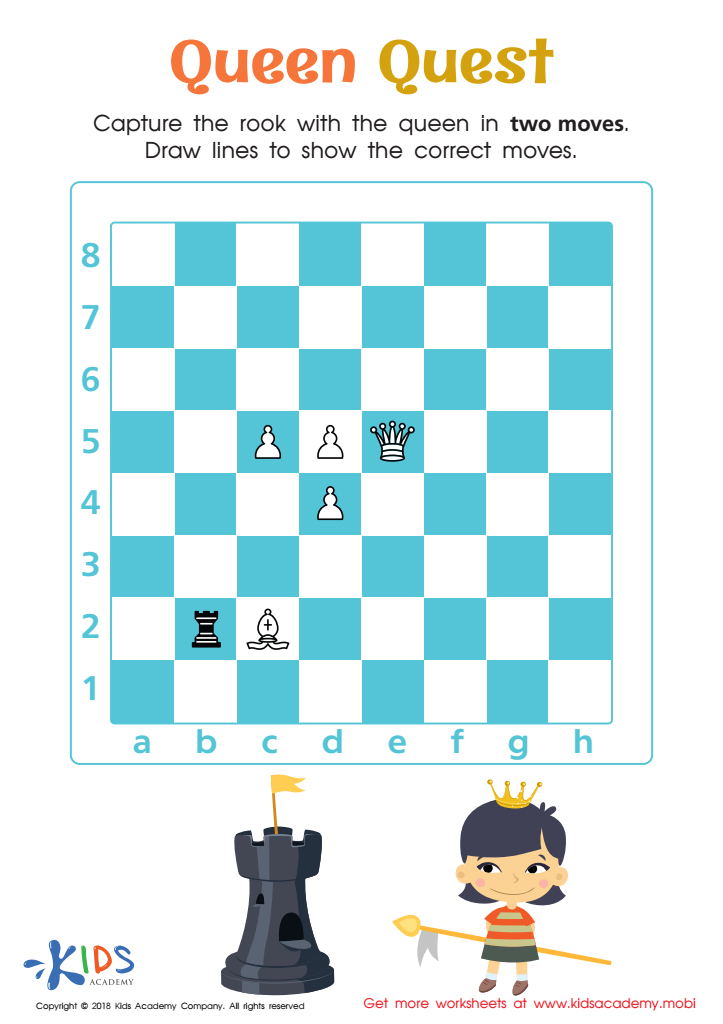
Queen Quest Worksheet
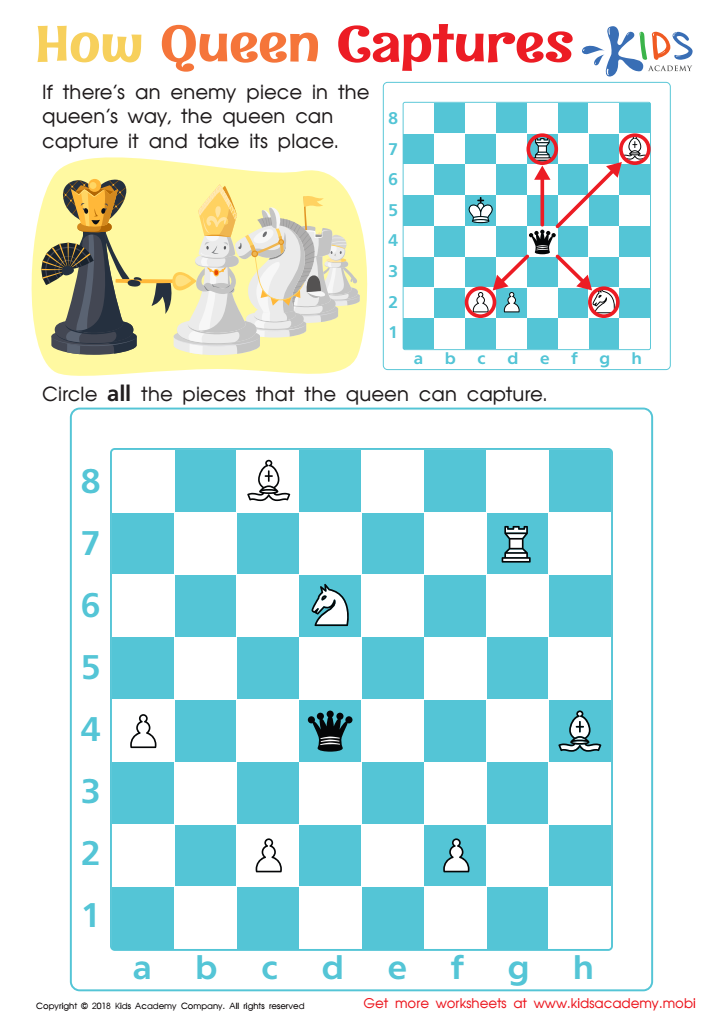
How Queen Captures Worksheet
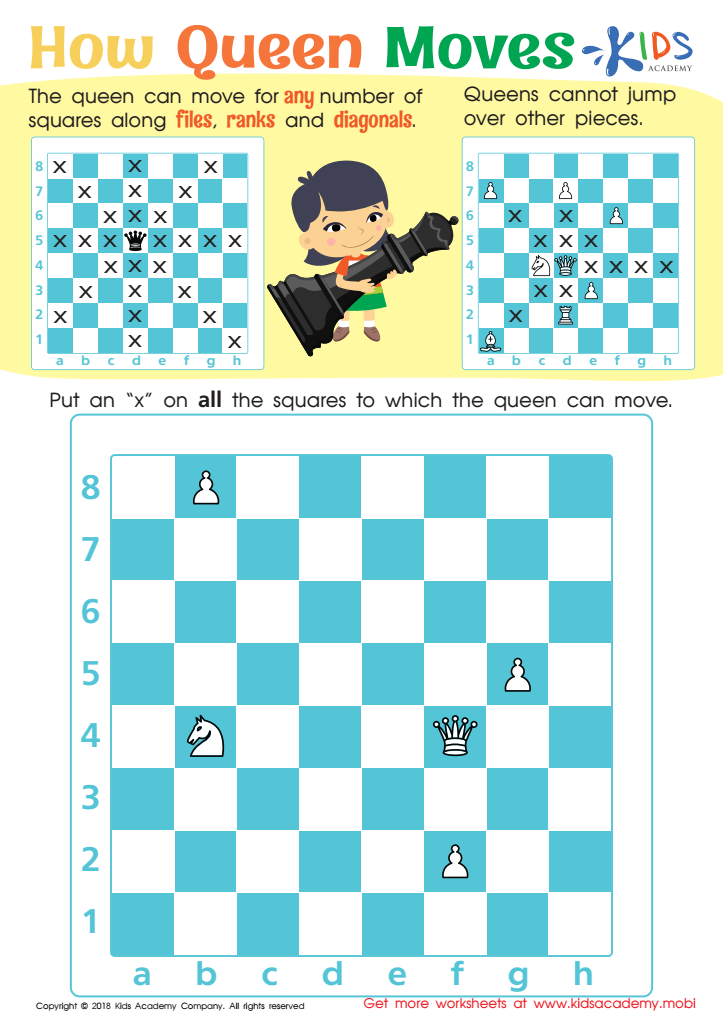
How Queen Moves Worksheet
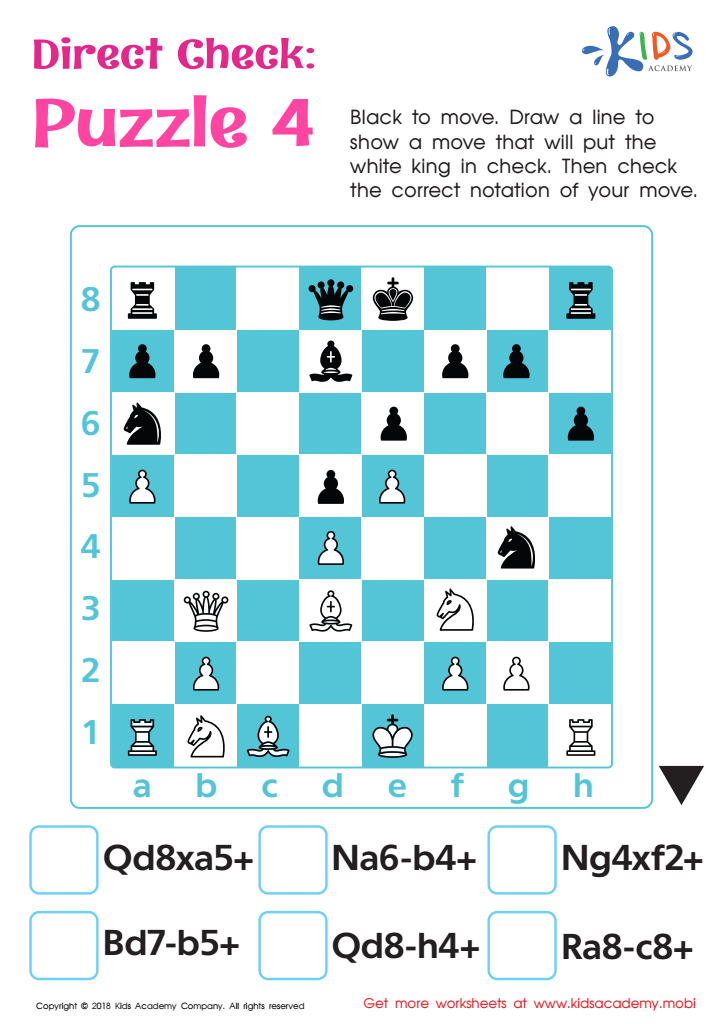
Direct Check: Puzzle 4 Worksheet
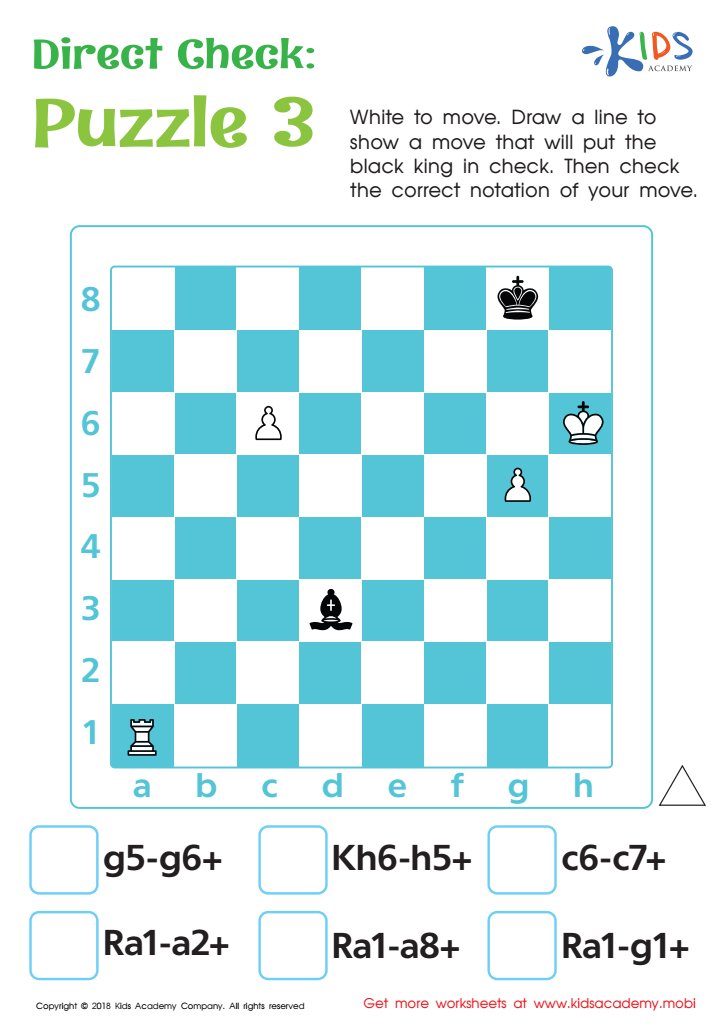
Direct Check: Puzzle 3 Worksheet
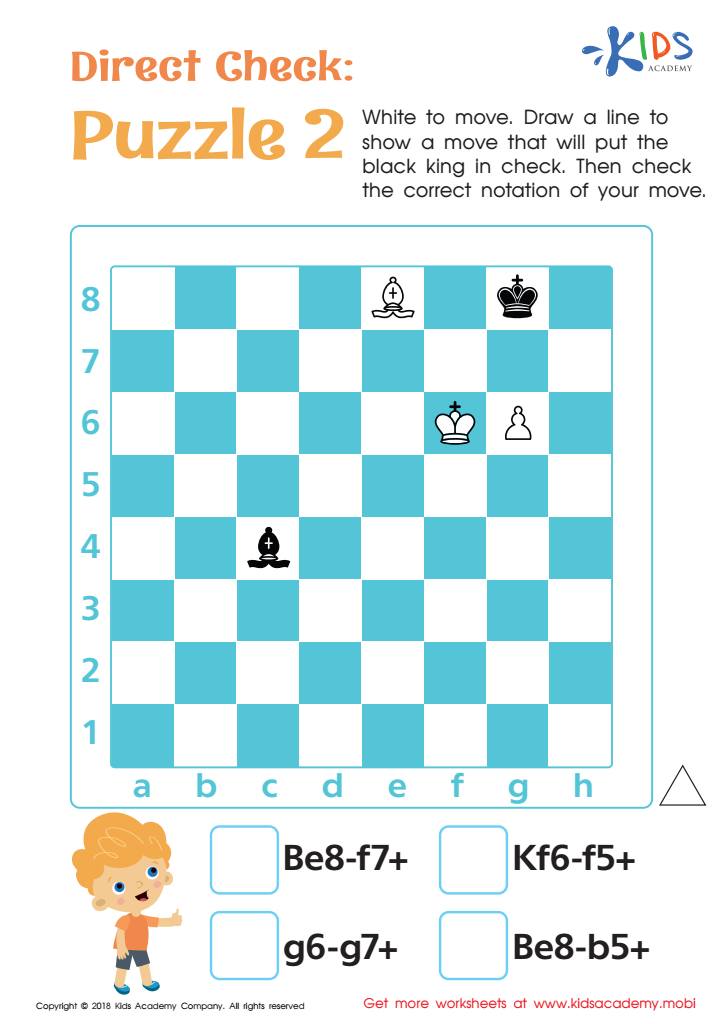
Direct Check: Puzzle 2 Worksheet
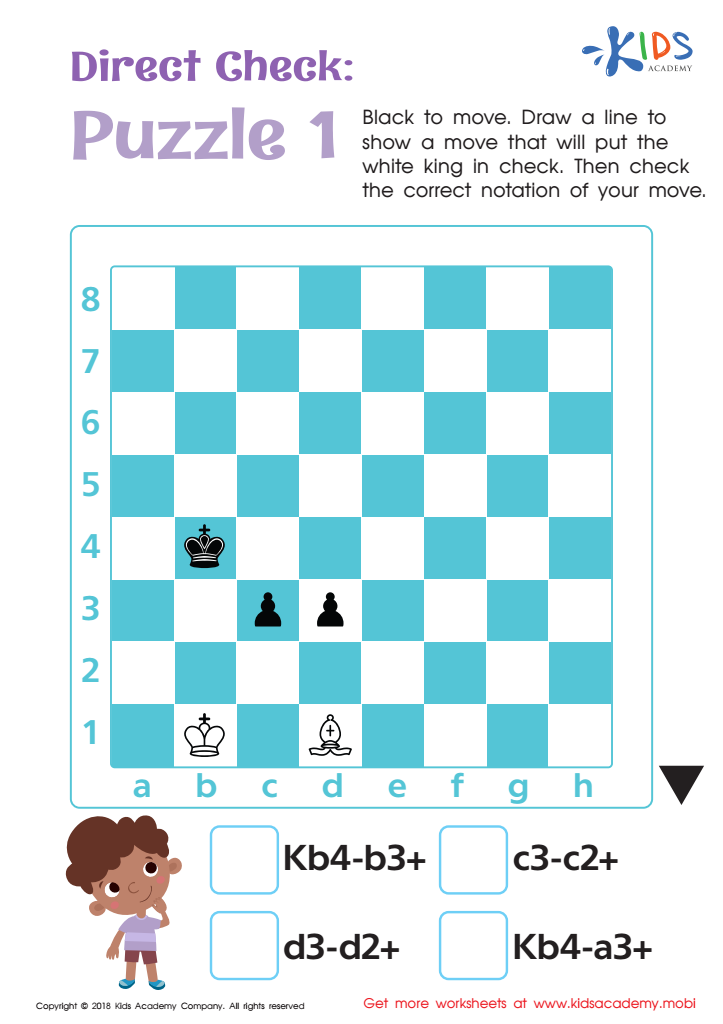
Direct Check: Puzzle 1 Worksheet
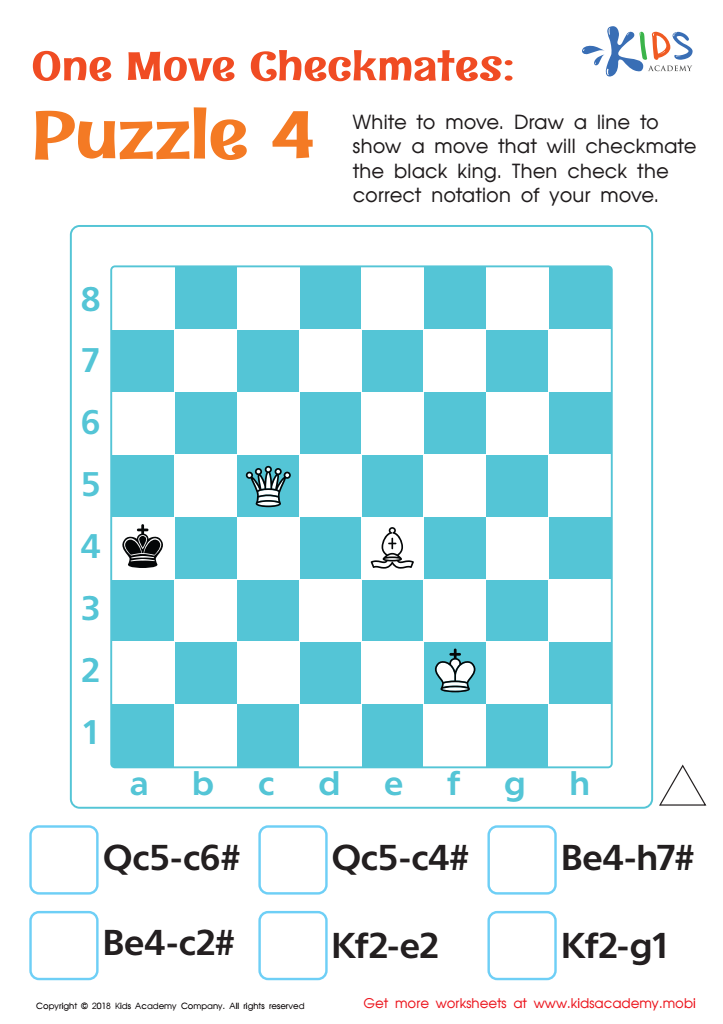
One Move Checkmates: Puzzle 4 Worksheet
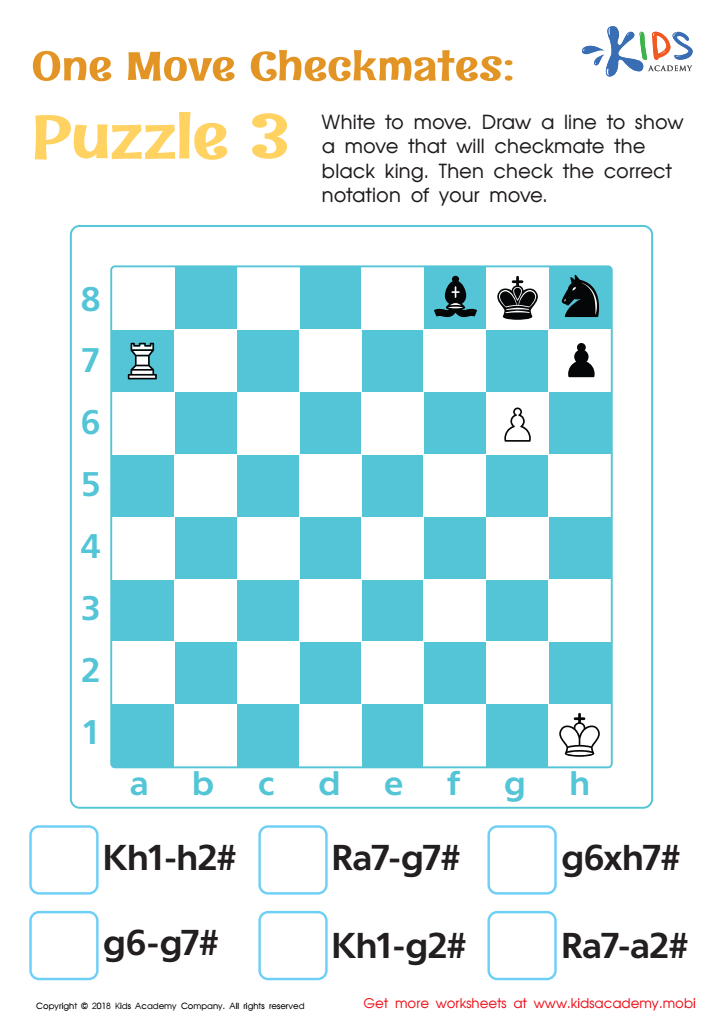
One Move Checkmates: Puzzle 3 Worksheet
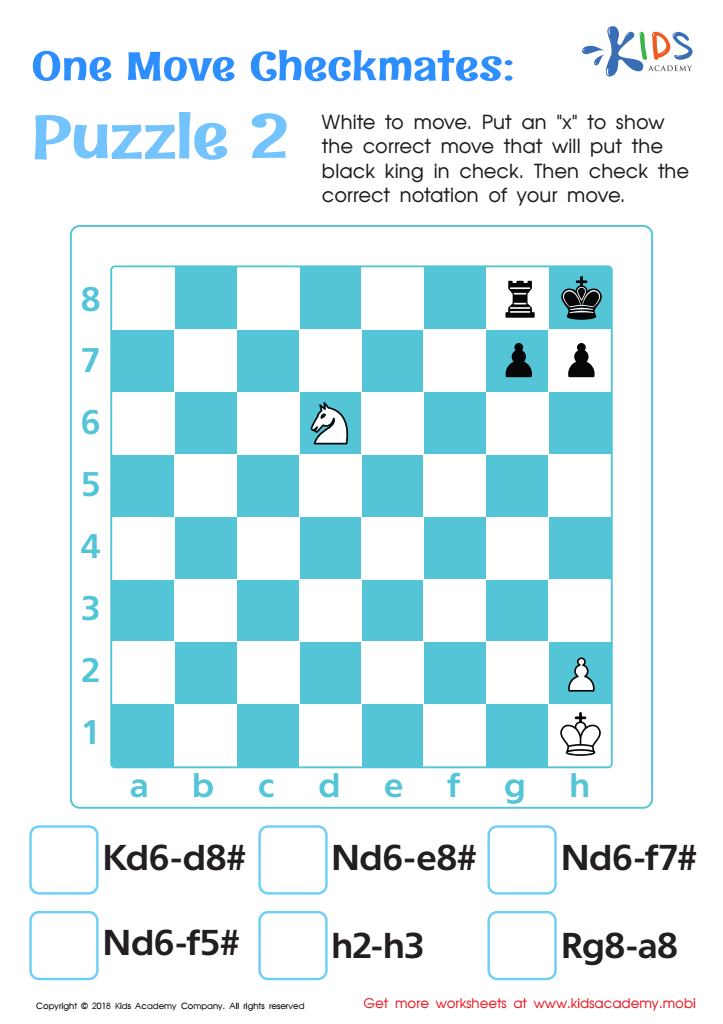
One Move Checkmates: Puzzle 2 Worksheet
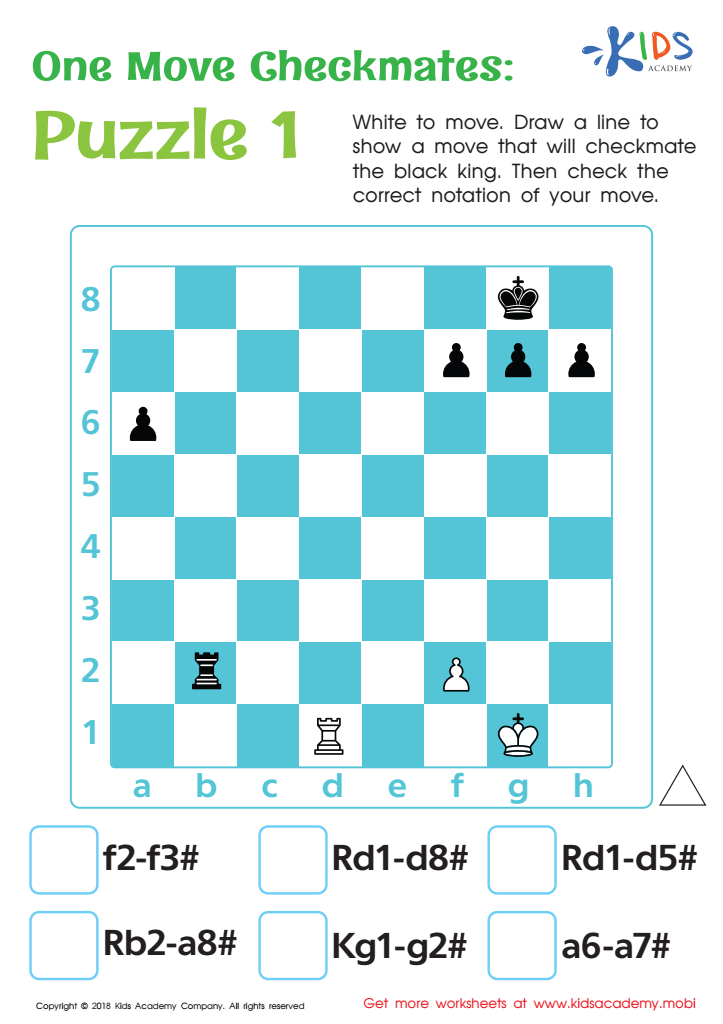
One Move Checkmates: Puzzle 1 Worksheet





Chess is a highly beneficial activity for children aged 3 to 7, offering a multitude of cognitive, social, and emotional advantages. First and foremost, chess enhances critical thinking and problem-solving skills. As kids learn to strategize and anticipate their opponent's moves, they develop analytical thinking, improving their ability to approach various challenges in life and learning.
Moreover, chess promotes emotional intelligence by teaching patience, resilience, and discipline. Children learn to deal with winning and losing gracefully, fostering sportsmanship and self-regulation. These lifelong lessons contribute to building strong character.
Socially, playing chess encourages cooperative play and communication. It provides opportunities for interaction, allowing children to form friendships based on shared interests. In a classroom setting, chess can be integrated into curriculum activities, reinforcing teamwork and collaborative skills.
For parents, encouraging their children to engage with chess can sharpen focus and concentration, essential traits for academic success. Also, it's an engaging way for families to bond and spend quality time together. Overall, incorporating chess into the lives of young children invests in their cognitive, social, and emotional development, laying a foundation for a lifetime of learning and growth.