Addition Facts Worksheets for Ages 3-7 - Page 2
42 filtered results
-
From - To
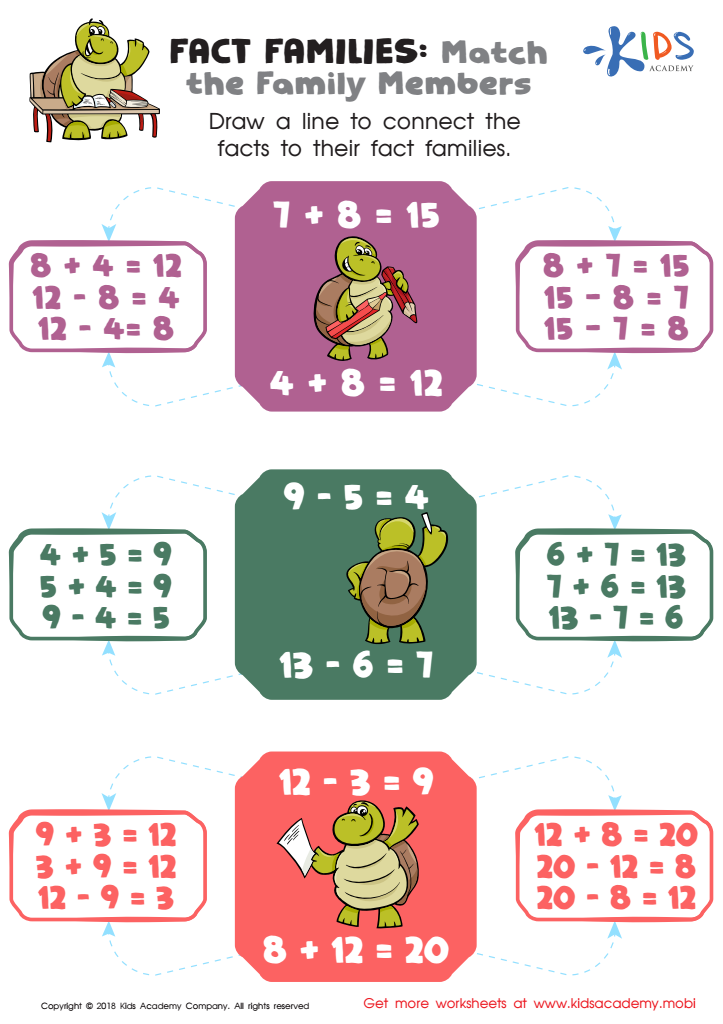
Fact Families: Match Family Members Worksheet
 Assign to My Students
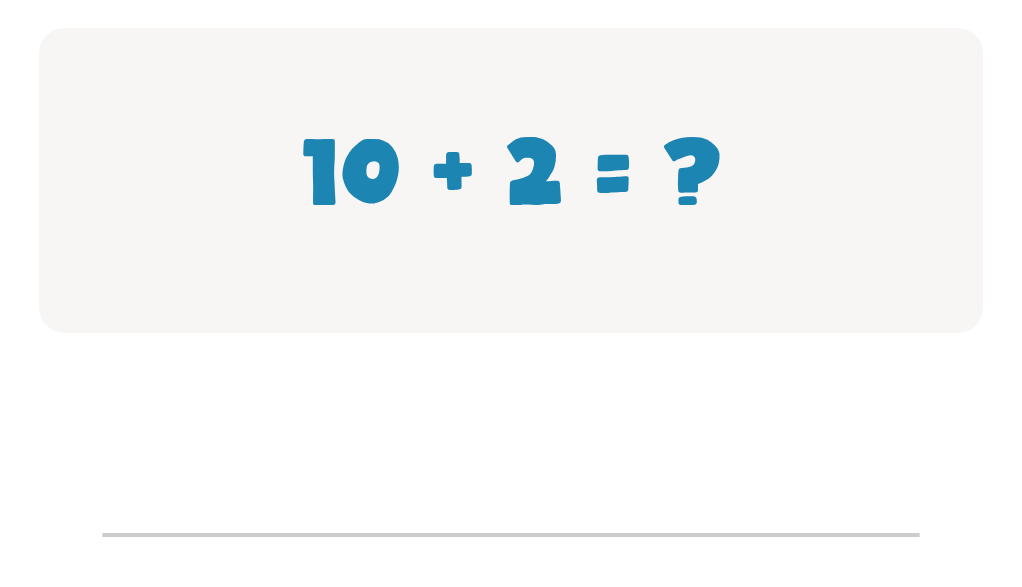

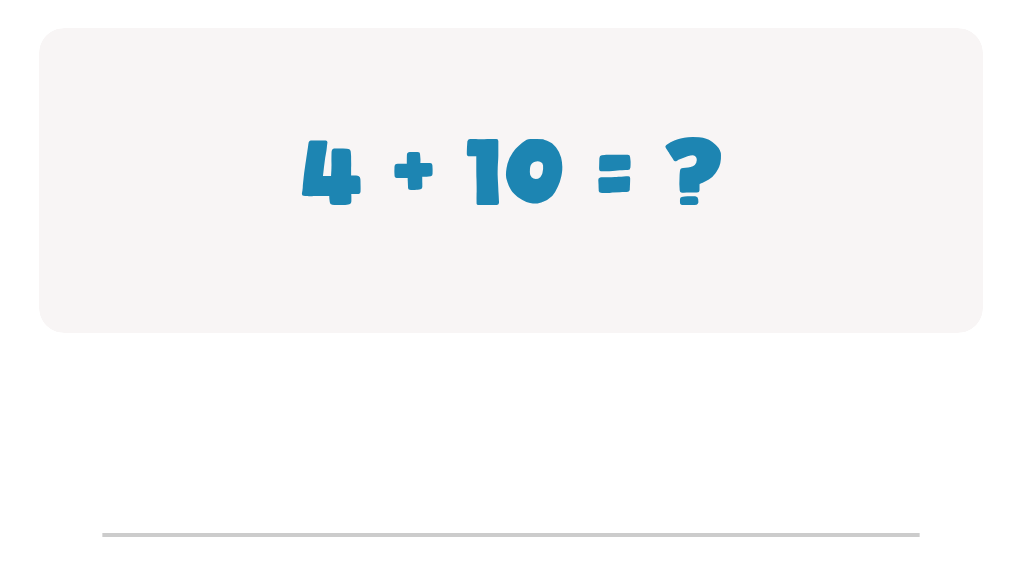
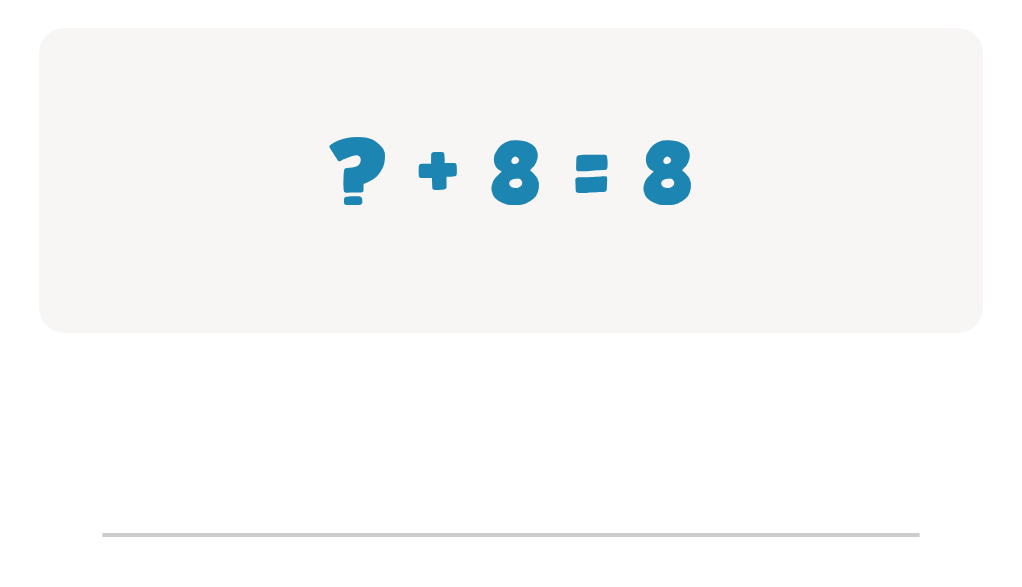

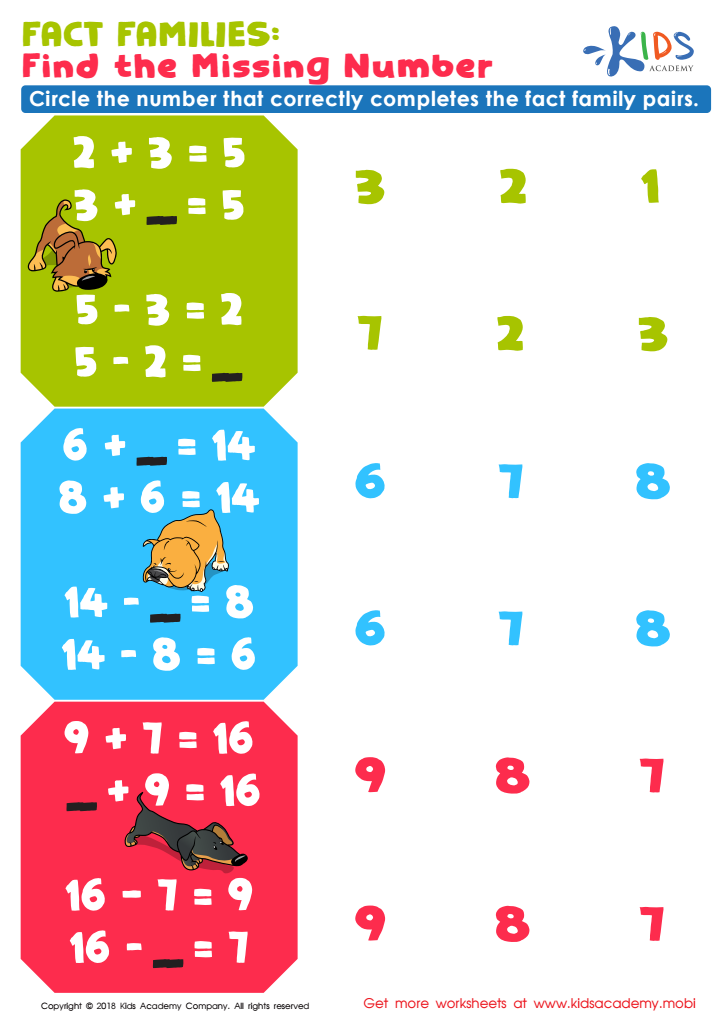
Fact Families: Find Missing Number Worksheet
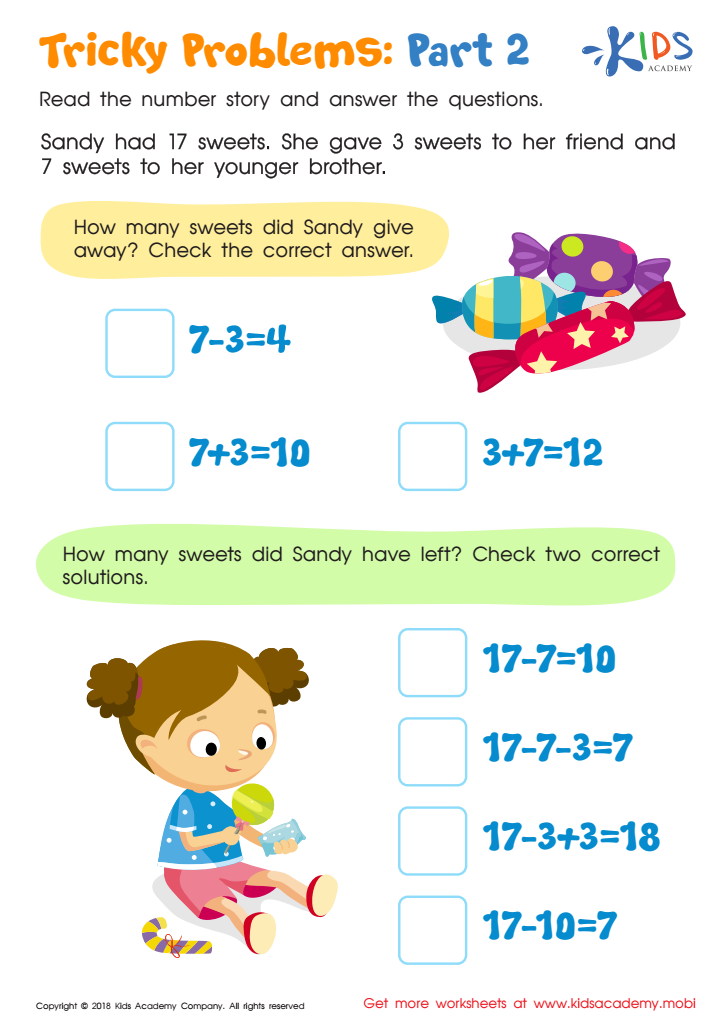
Tricky Problems Worksheet: Part 2
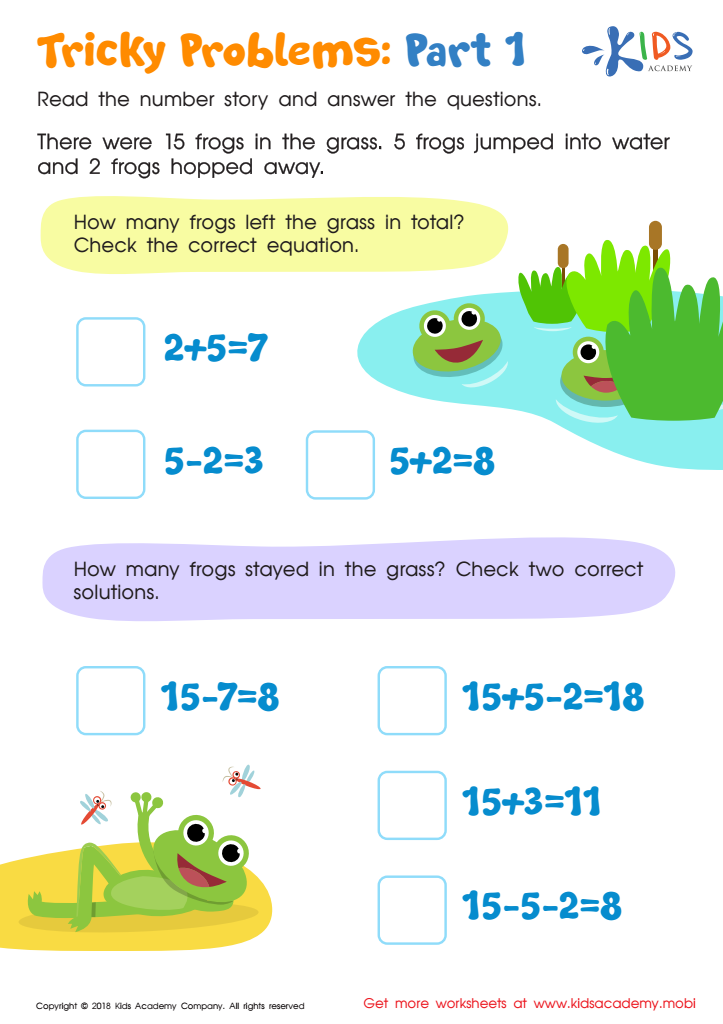
Tricky Problems Worksheet: Part 1
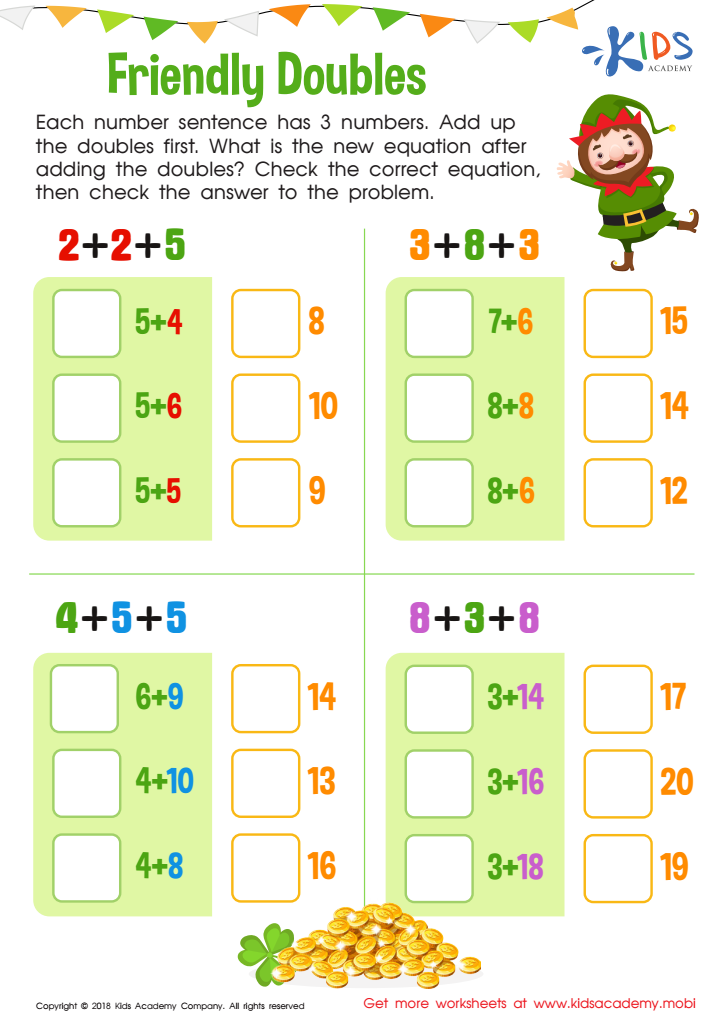
Friendly Doubles Worksheet
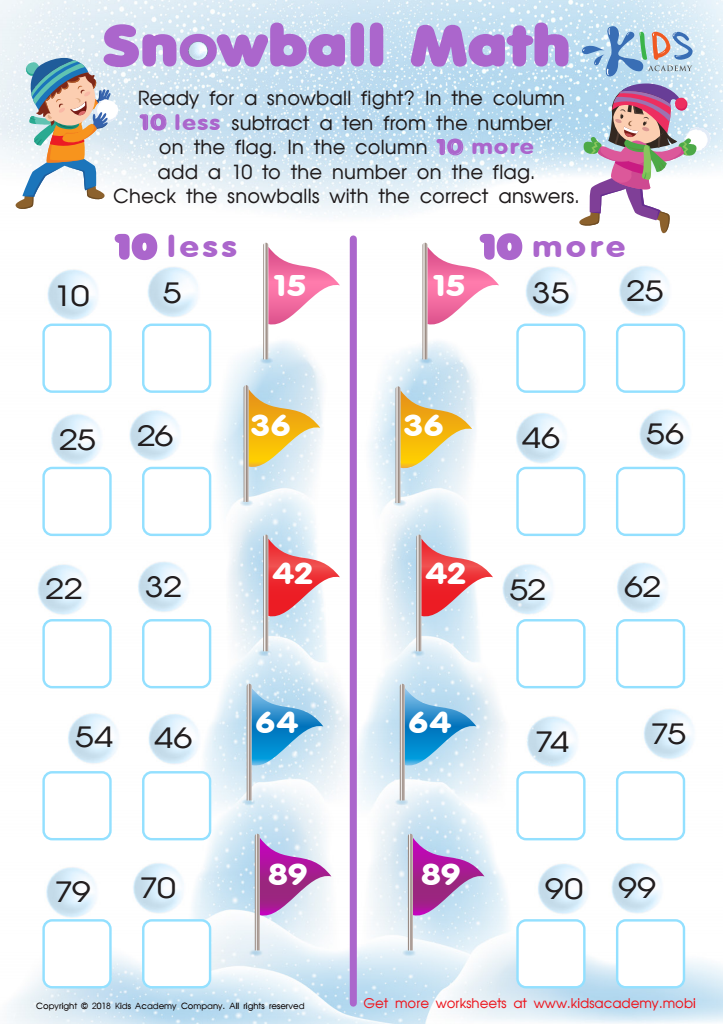
Snowball Math Worksheet
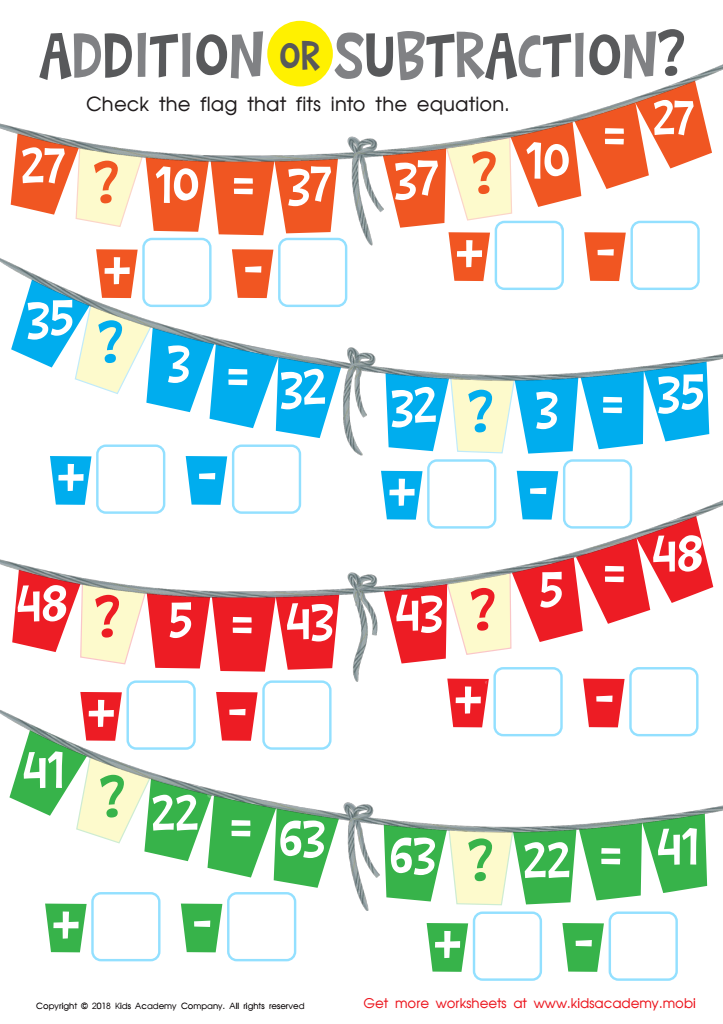
Addition or Subtraction? Worksheet
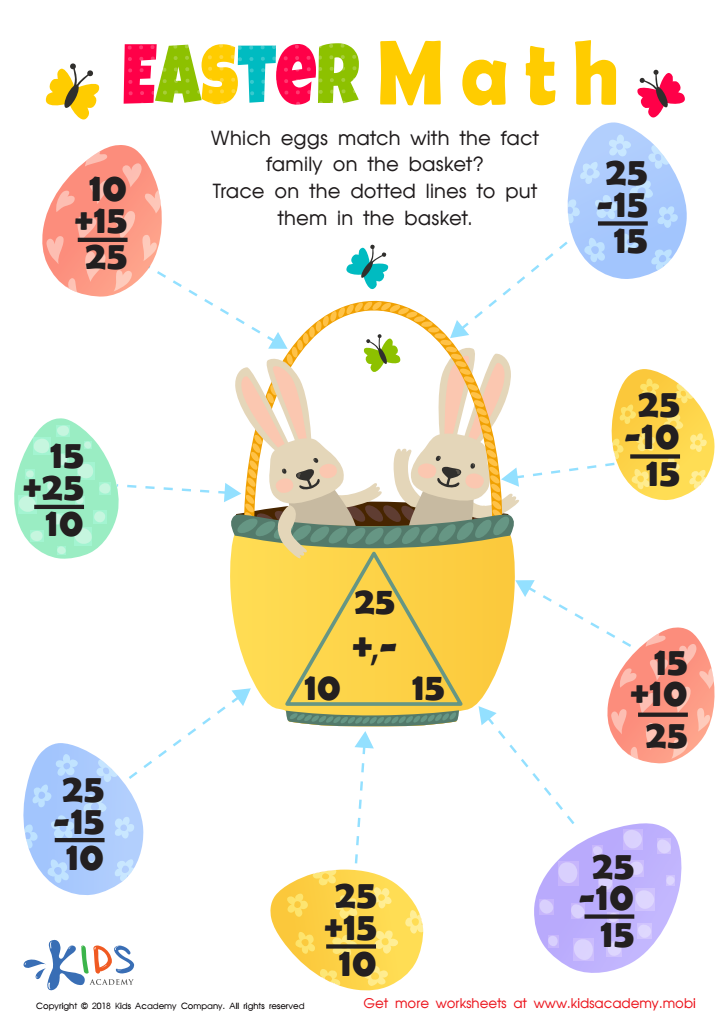
Fact Families: Easter Math Worksheet
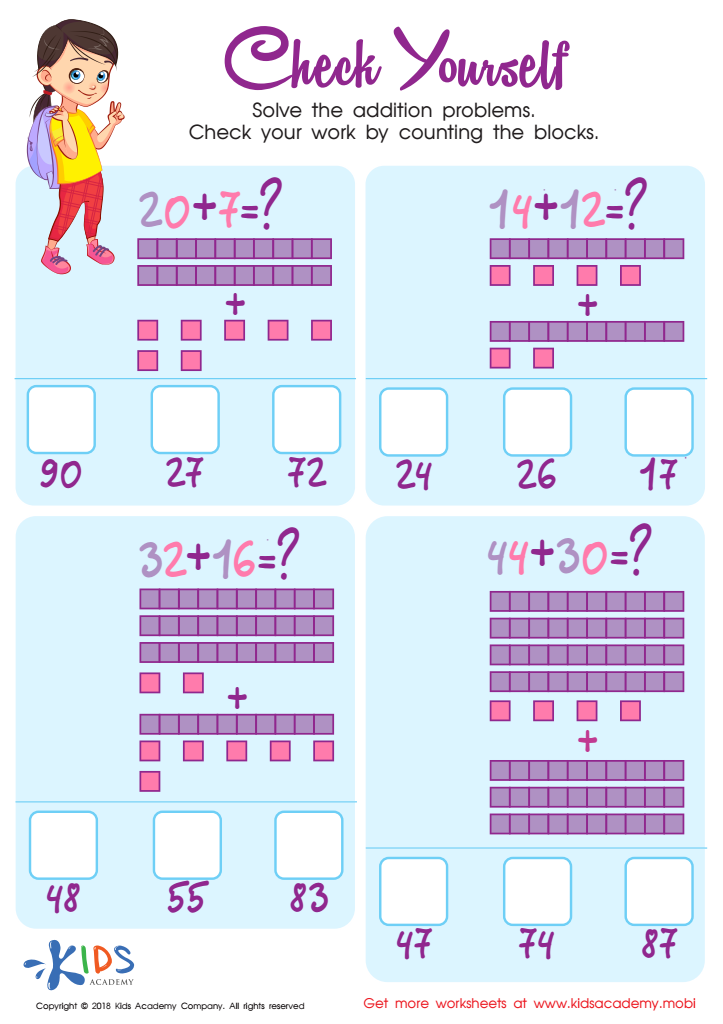
Adding with Base 1 Blocks Worksheet: Check Yourself
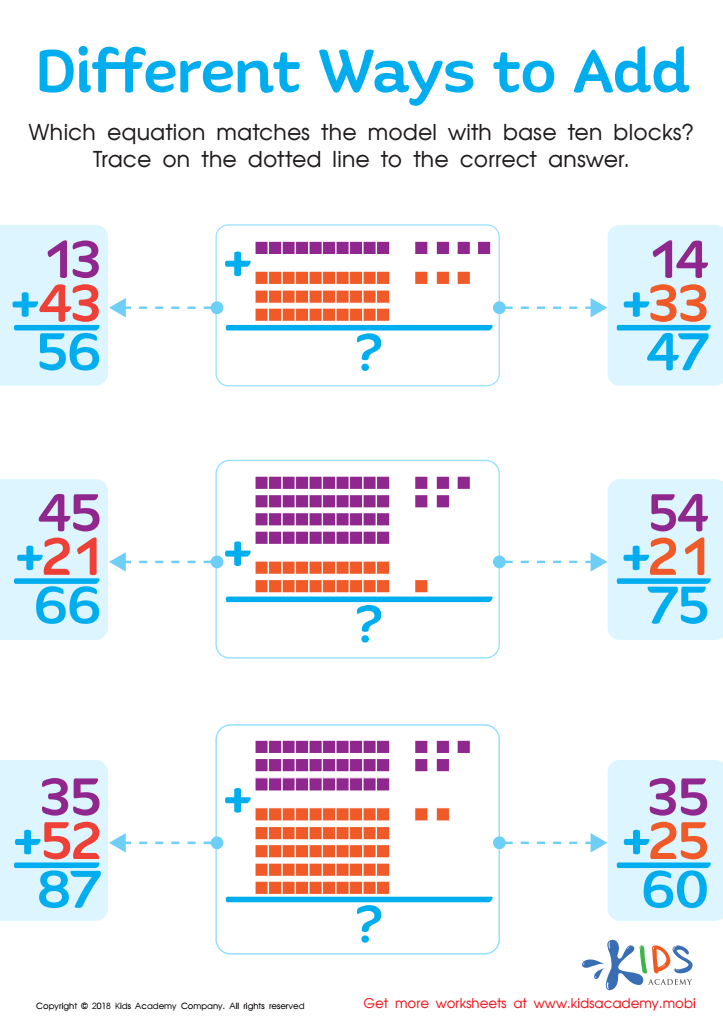
Different Ways to Add Worksheet
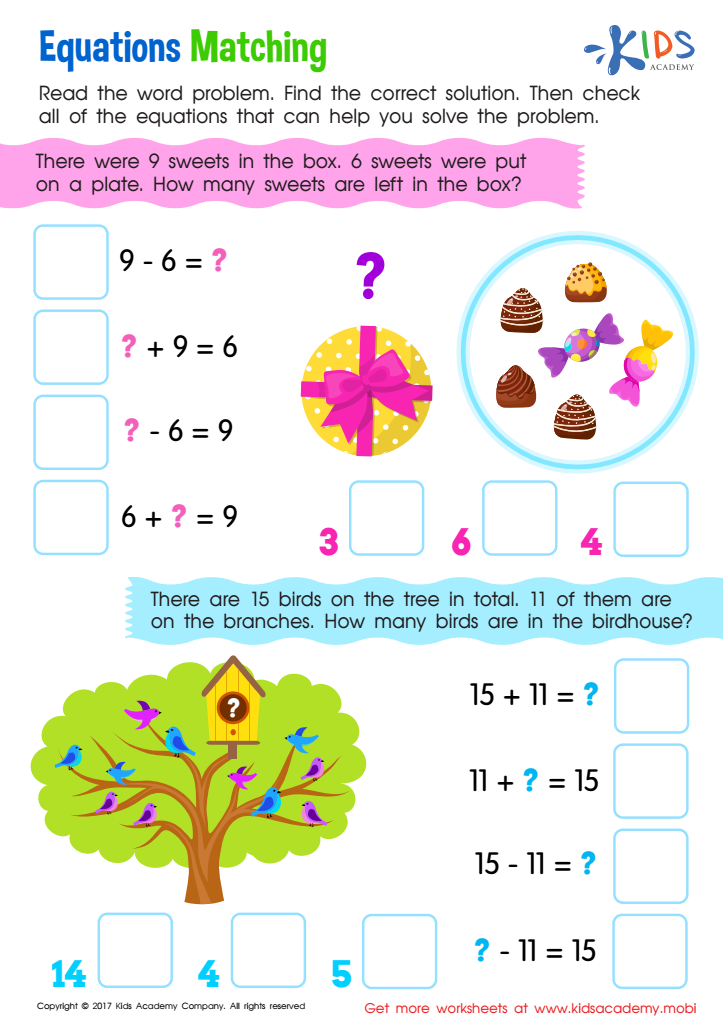
Equations Matching Word Problems Worksheet
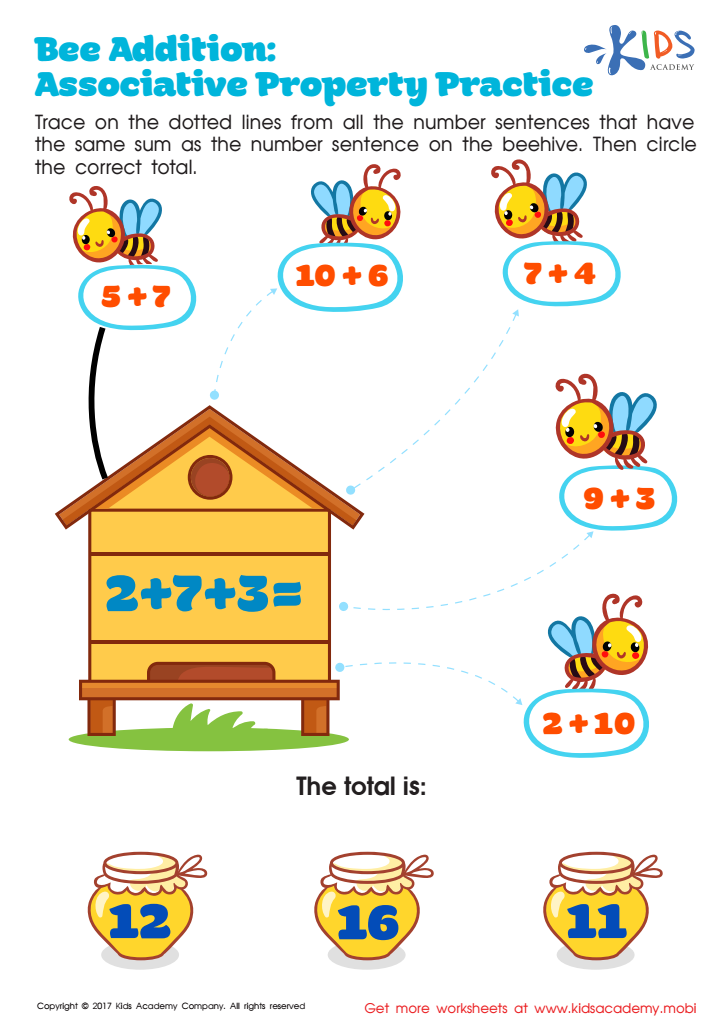
Bee Addition: Associative Property Practice Worksheet
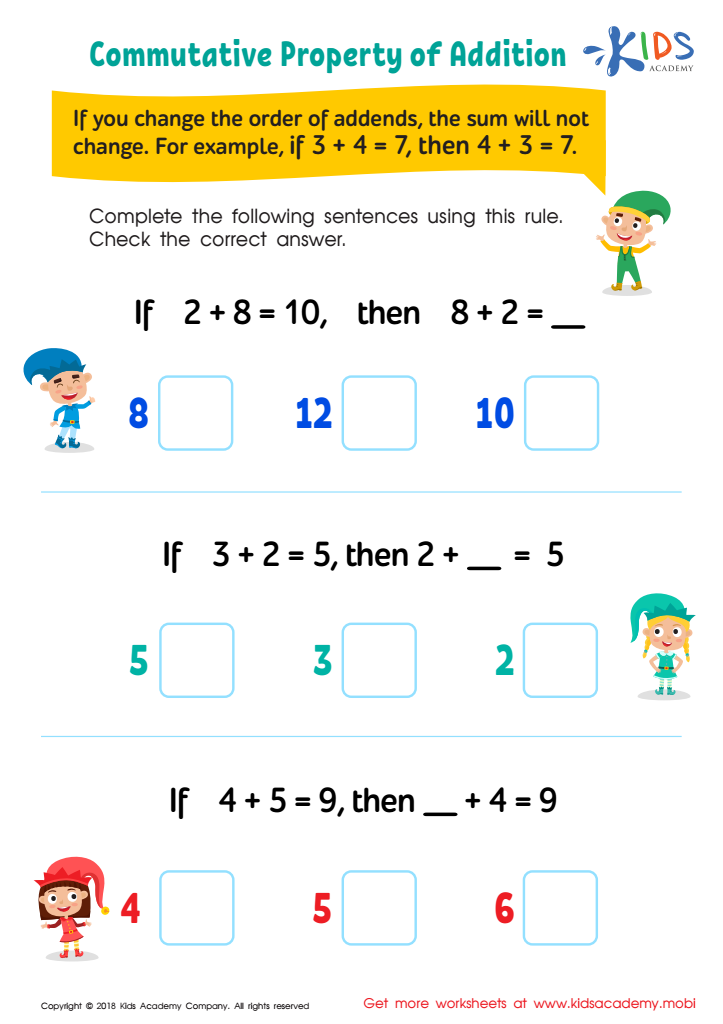
Commutative Property of Addition Worksheet
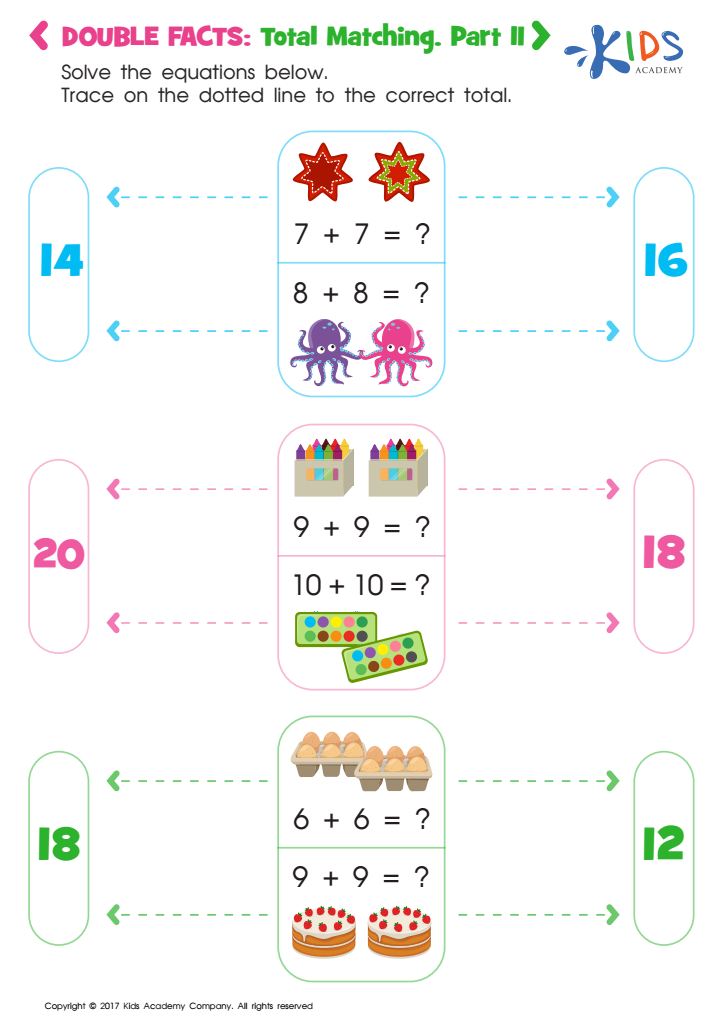
Double Facts: Total Matching 2 Worksheet
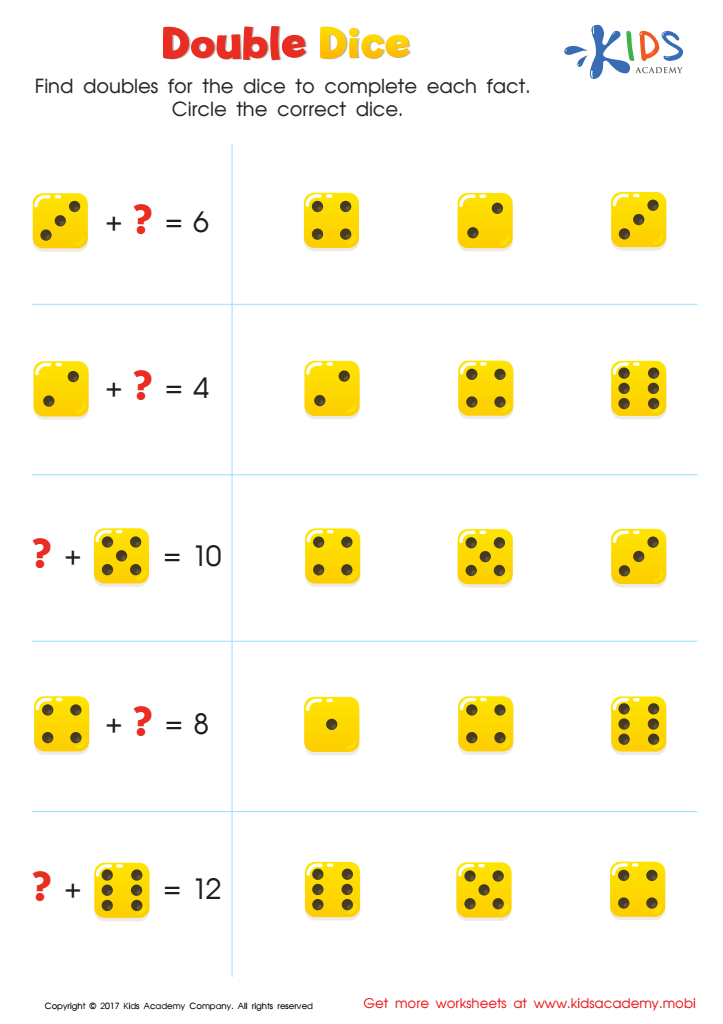
Addition Facts: Double Dice Worksheet
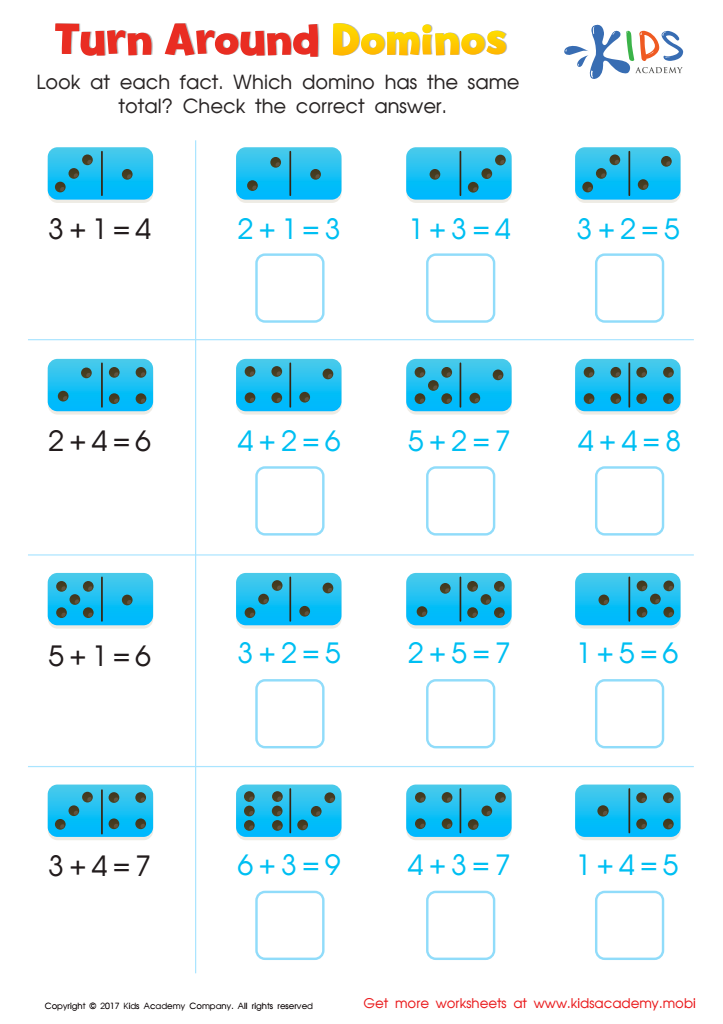
Turn Around Dominos Worksheet
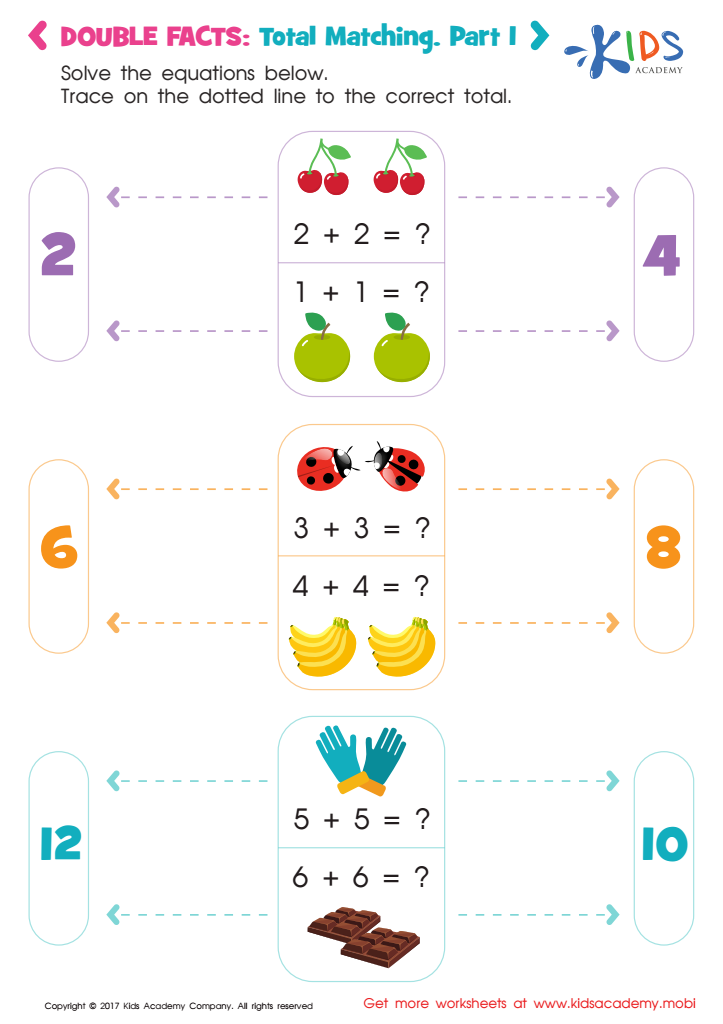
Double Facts: Total Matching Worksheet: Part 1
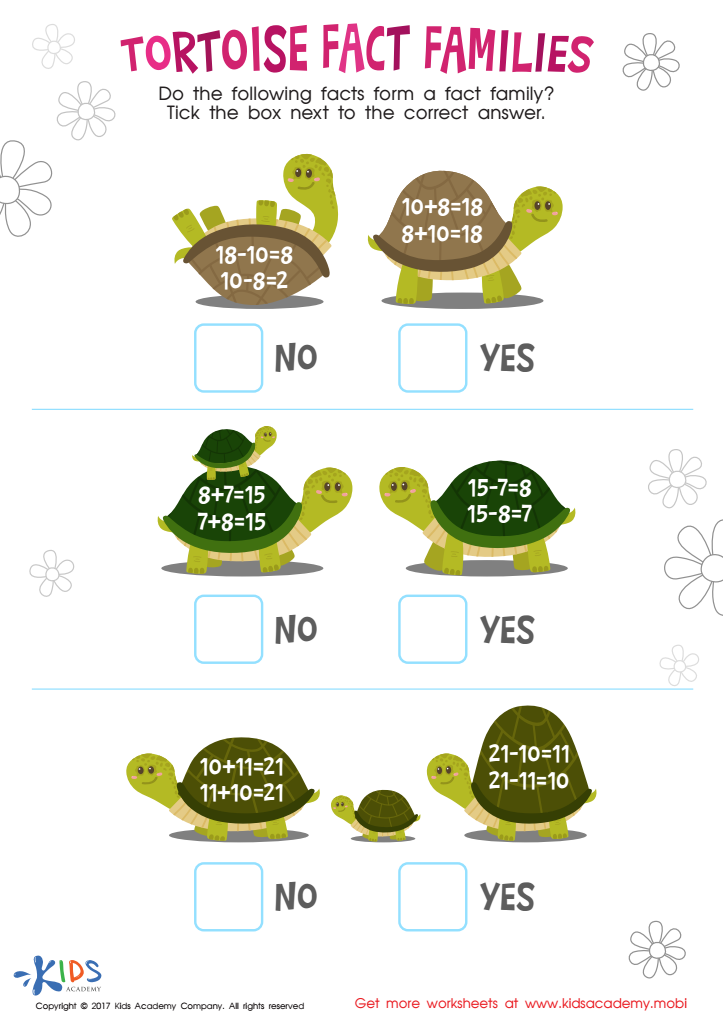
Tortoise Fact Families Printable








Understanding addition facts is crucial for children aged 3-7 as this foundational skill fosters their overall mathematical development. Mastering these basic calculations not only boosts confidence but also enhances problem-solving abilities that are essential in everyday life.
At this stage, children are naturally curious and are building cognitive skills. By introducing addition facts, parents and teachers can capitalize on this interest, making learning engaging and fun. Children who grasp addition facts early tend to perform better in future math-related concepts, including subtraction, multiplication, and basic arithmetic, setting the groundwork for more complex problem-solving skills.
Moreover, early familiarity with addition provides a sense of accomplishment, encouraging a positive attitude towards math. This foundational knowledge also aids in building collaboration and communication skills, as children often work together in solving problems.
Incorporating addition facts through playful activities—like counting objects, using visuals, or interactive games—makes learning desirable and applicable to their everyday lives. Ultimately, fostering early math readiness equips children with essential skills they will need throughout their academic journey, nurturing a lifelong appreciation for mathematics. Thus, it’s imperative for educators and parents to prioritize and support the learning of addition facts in these formative years.








