Word Problems Worksheets for Ages 3-7 - Page 4
115 filtered results
-
From - To
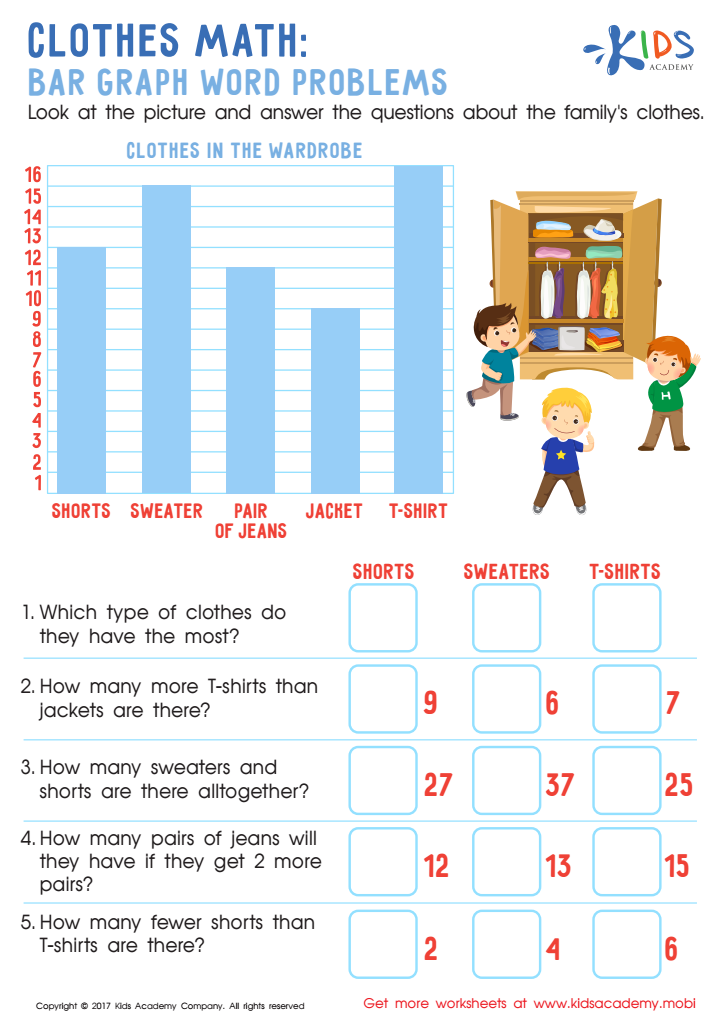
Clothes Math: Bar Graph Word Problems Worksheet
 Assign to My Students
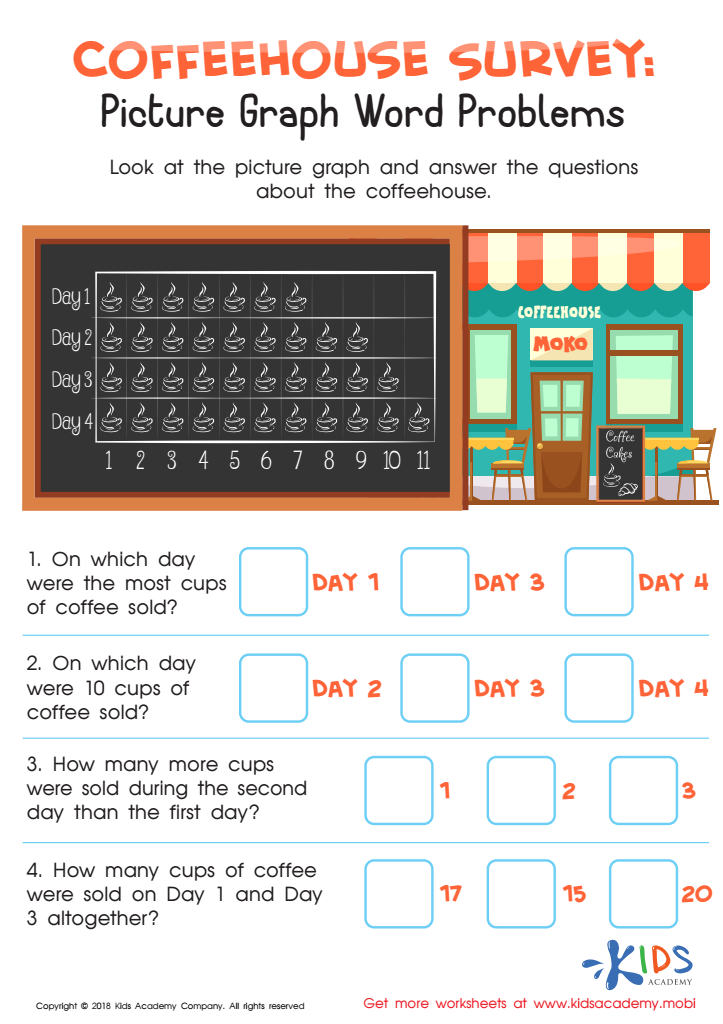
Coffeehouse Survey: Picture Graph Word Problems Worksheet
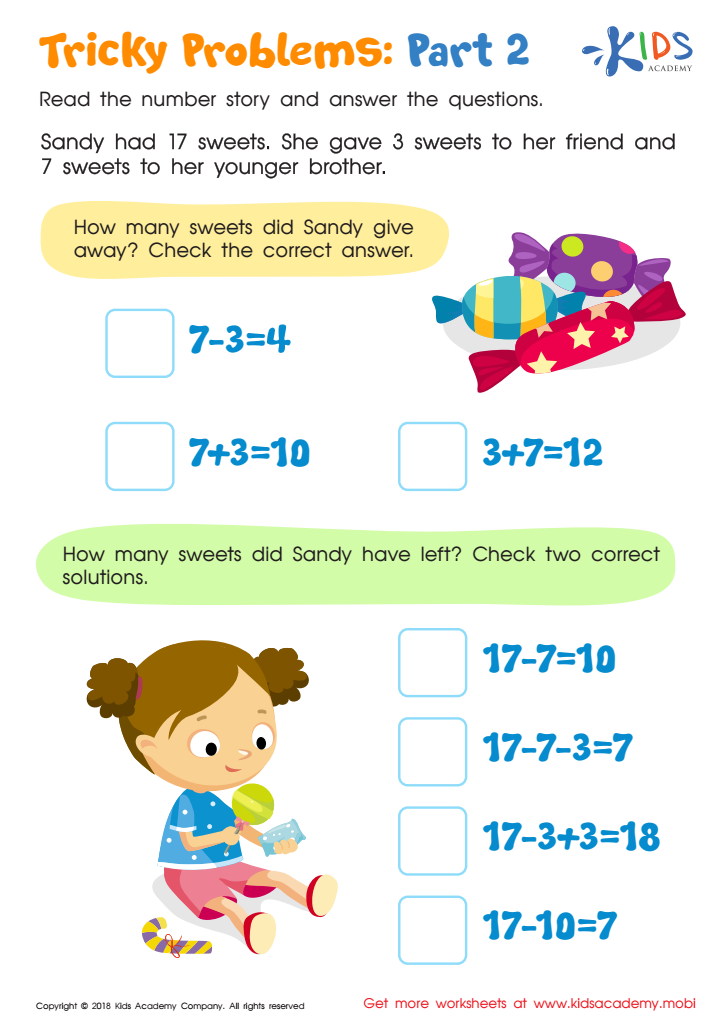
Tricky Problems Worksheet: Part 2
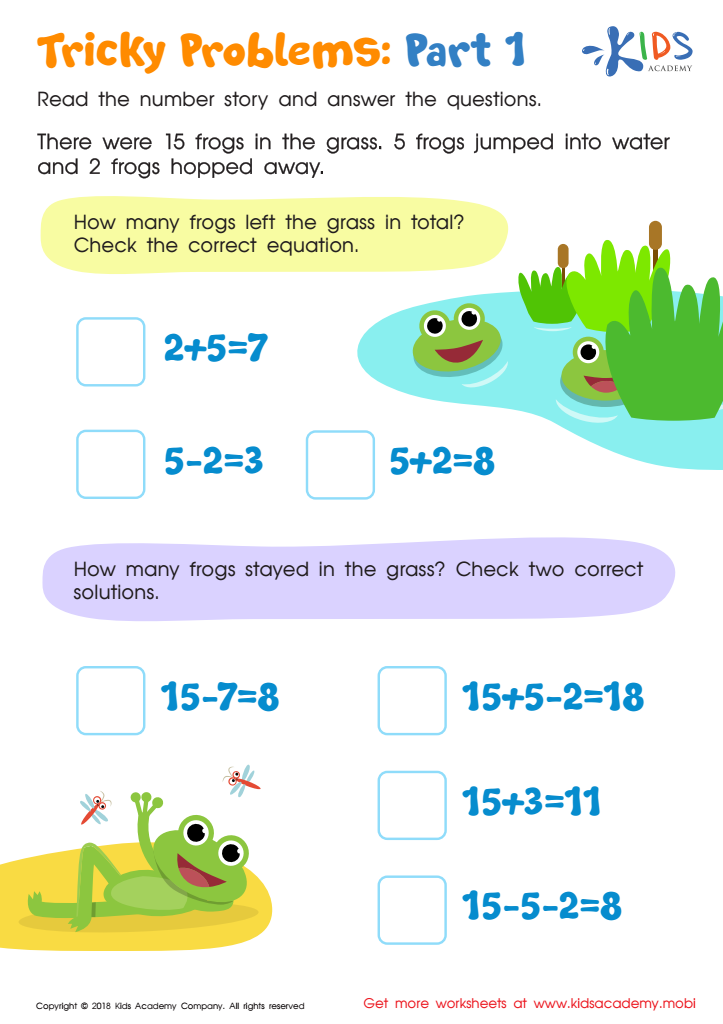
Tricky Problems Worksheet: Part 1
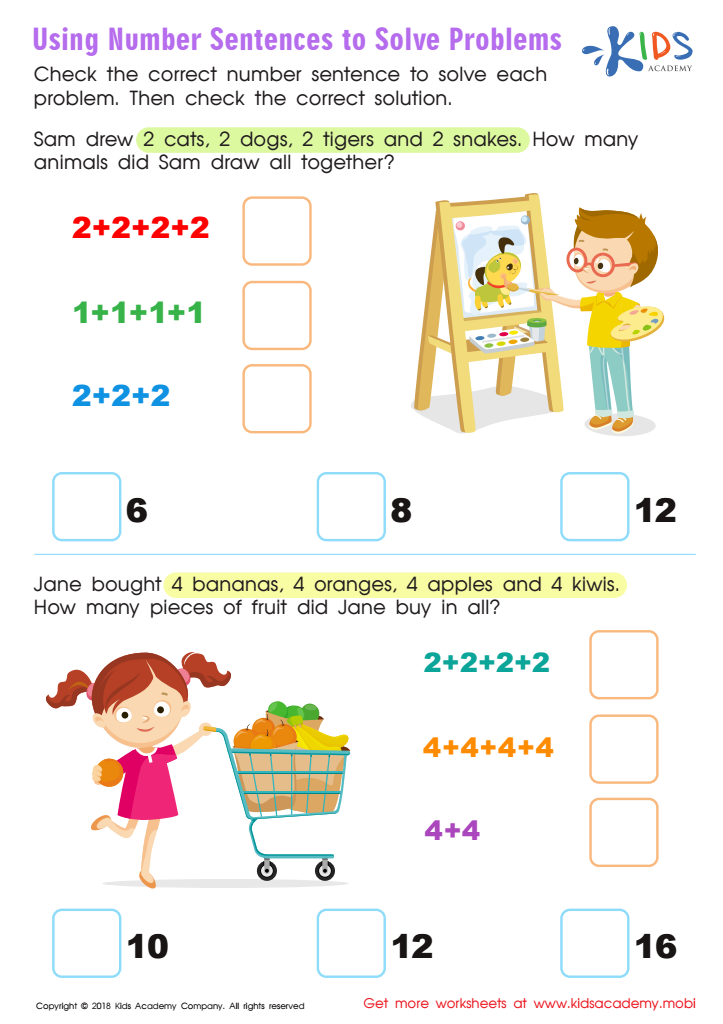
Using Number Sentences to Solve Problems Worksheet
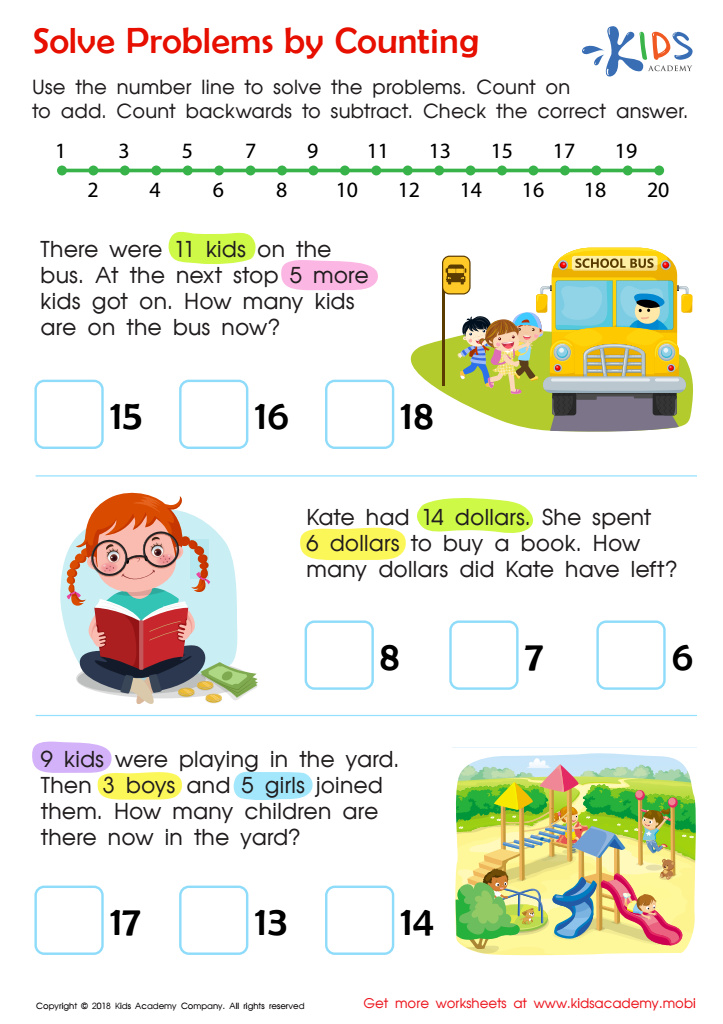
Solve Problems by Counting Worksheet
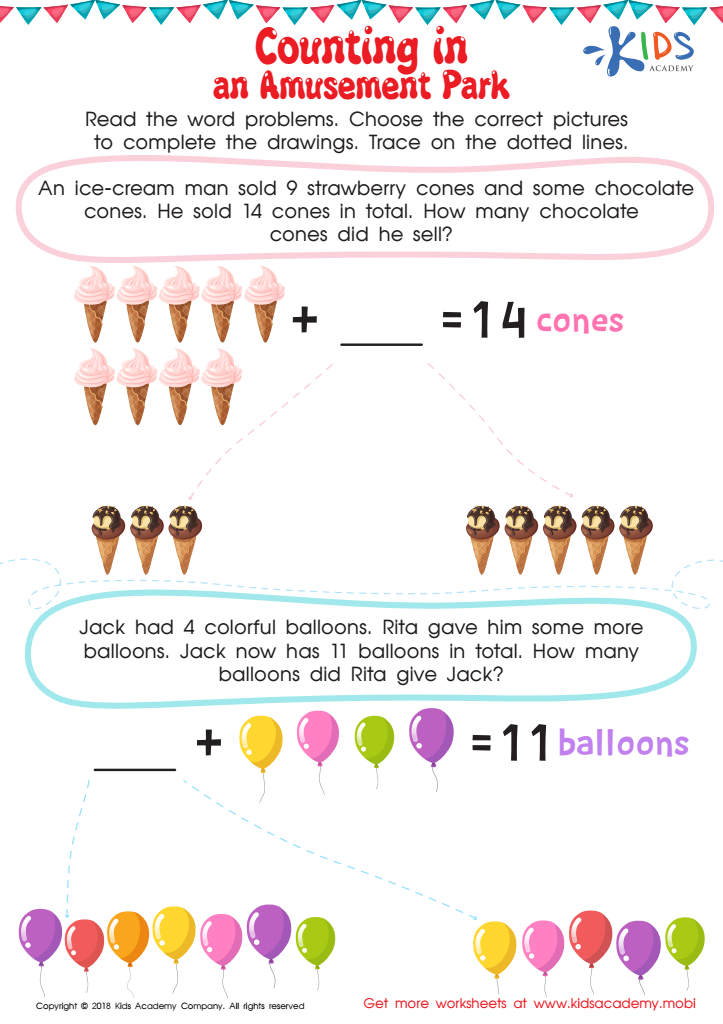
Counting in an Amusement Park Worksheet
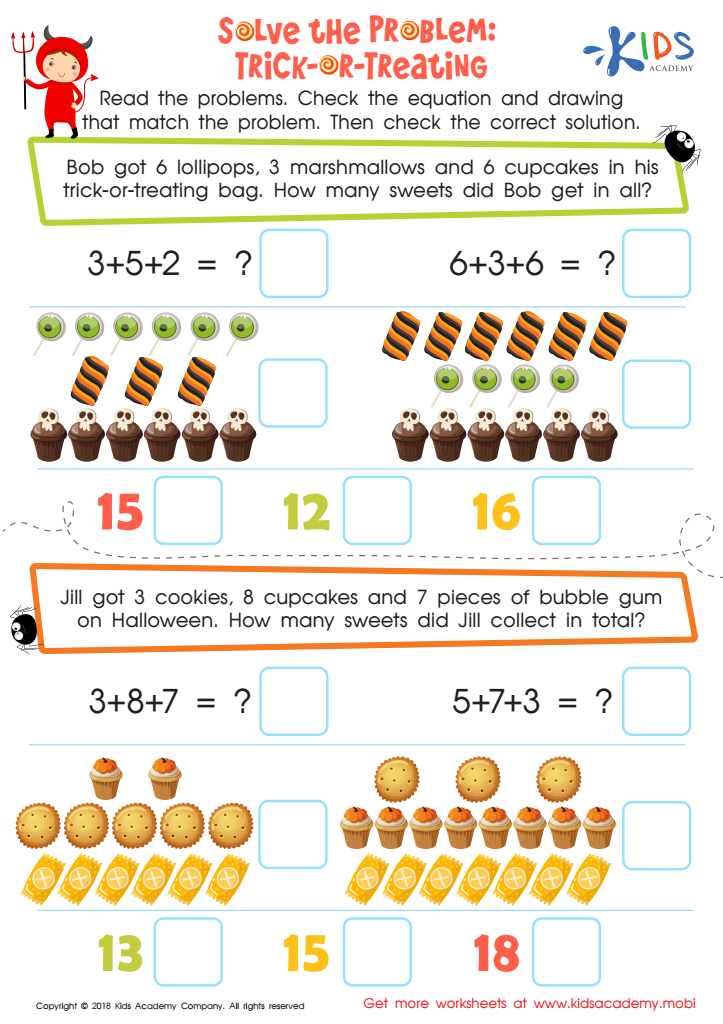
Solve the Problem: Trick–or–treating Worksheet
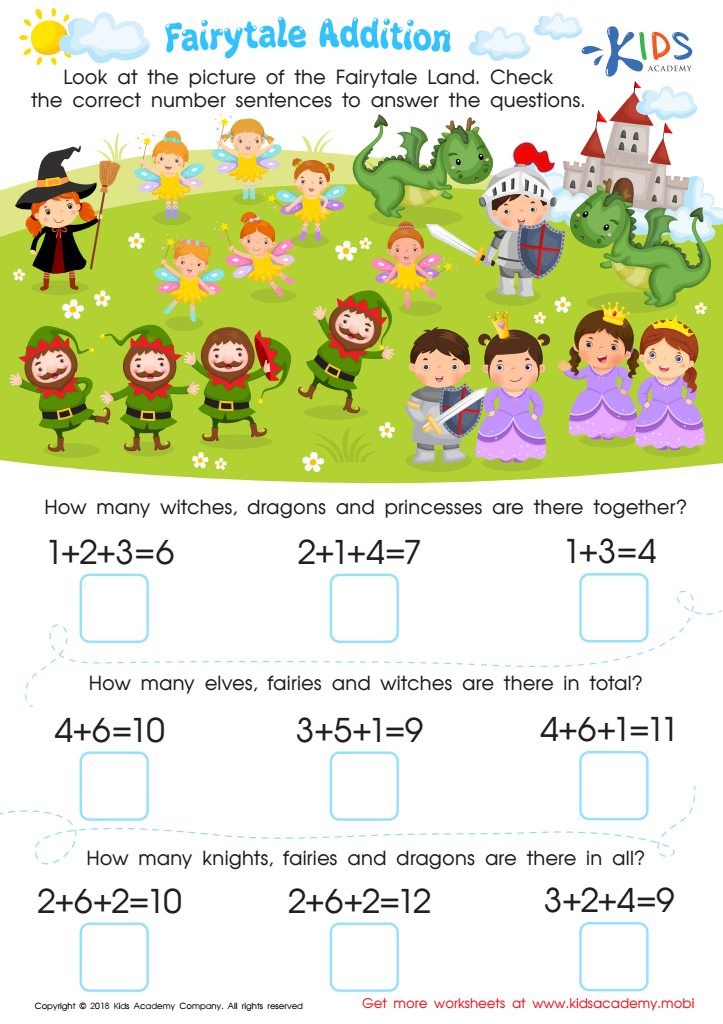
Fairytale Addition Worksheet
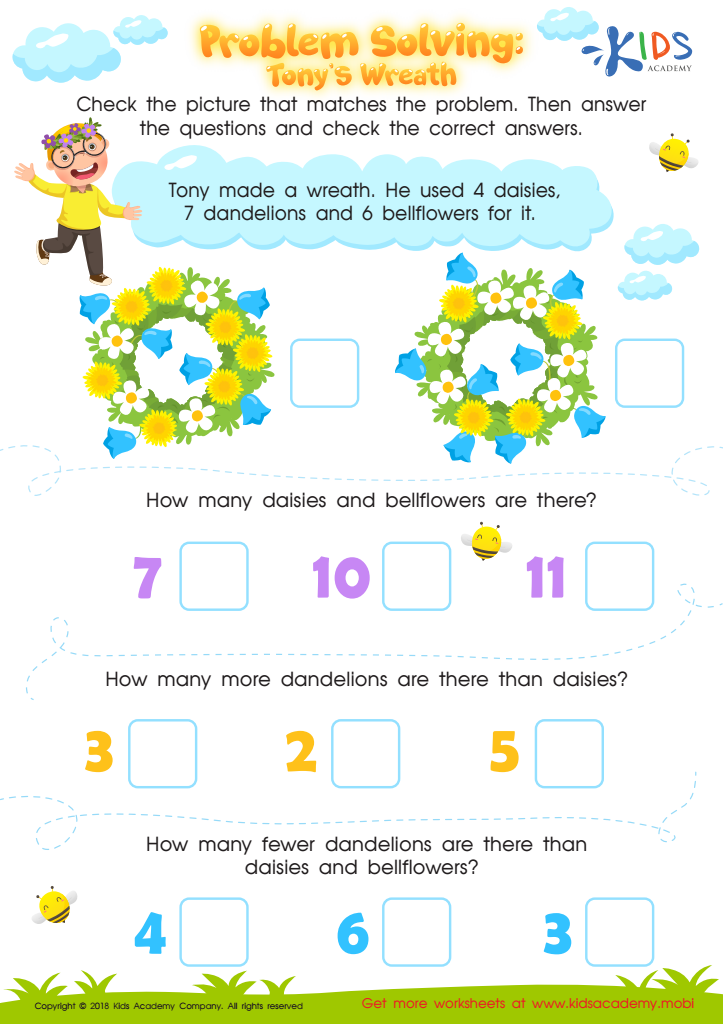
Problem Solving: Tony's Wreath Worksheet
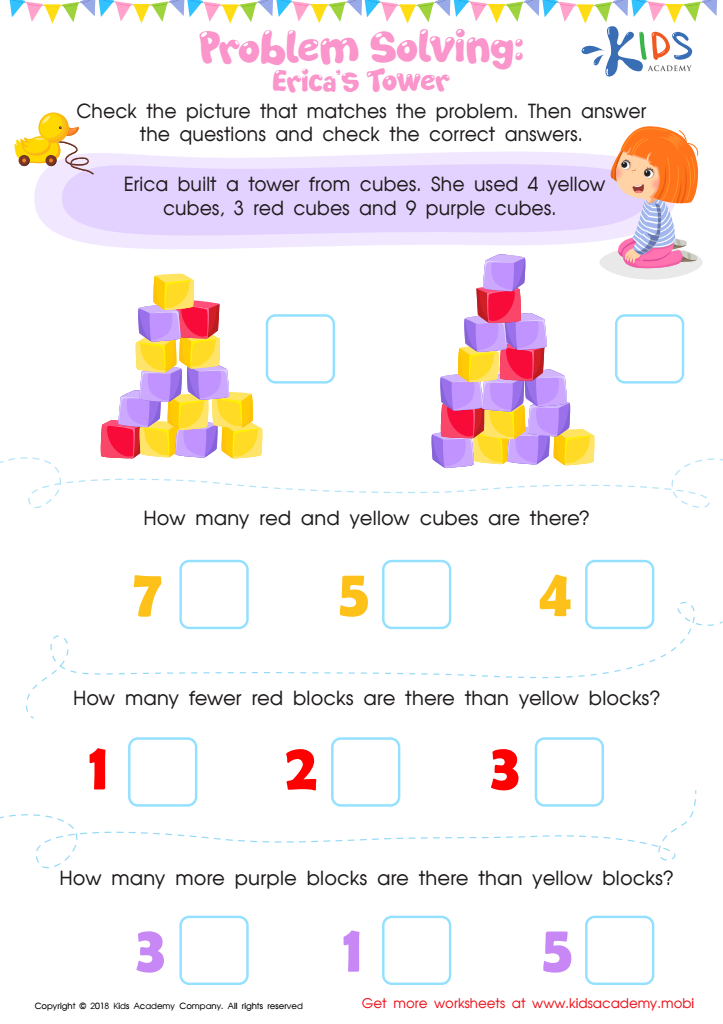
Problem Solving: Erica's Tower Worksheet
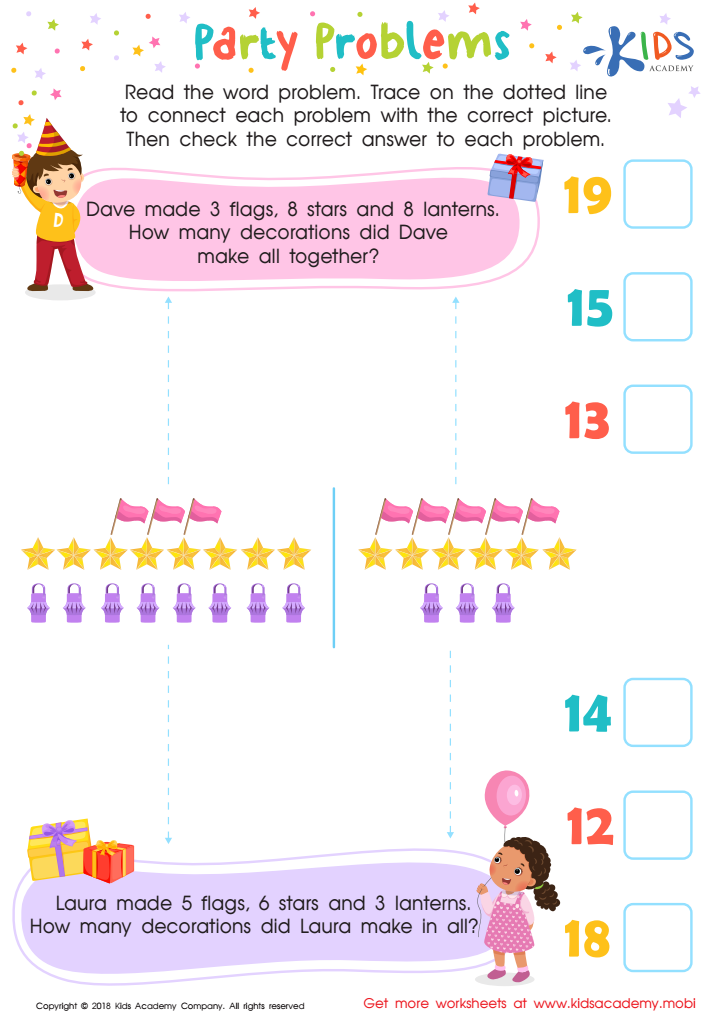
Party Problems Worksheet
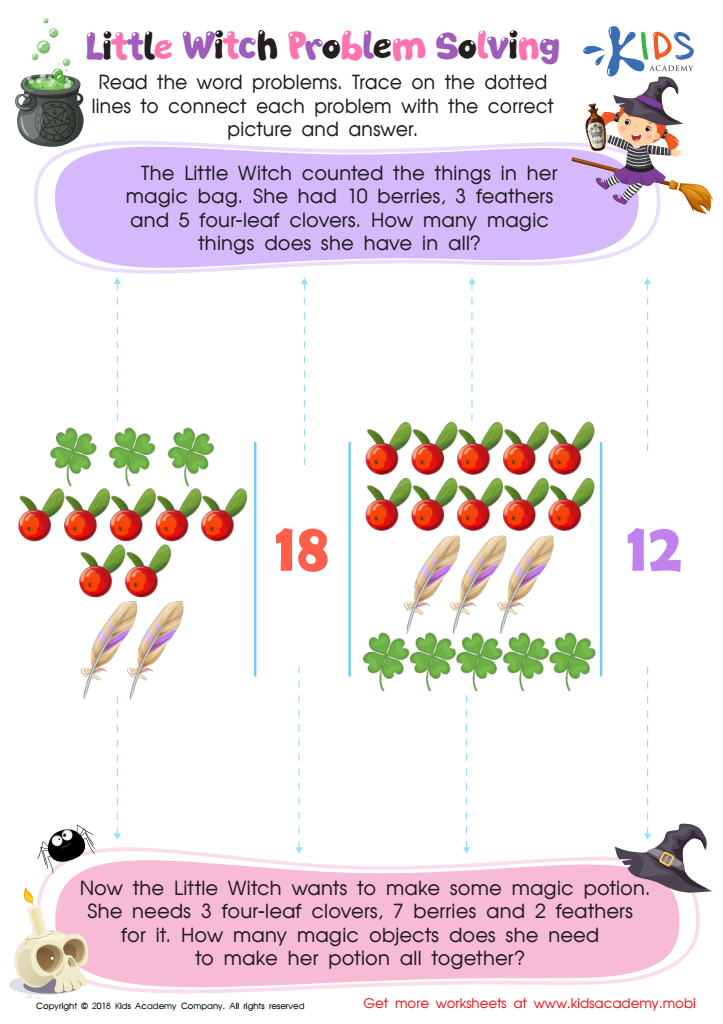
Little Witch Problem Solving Worksheet
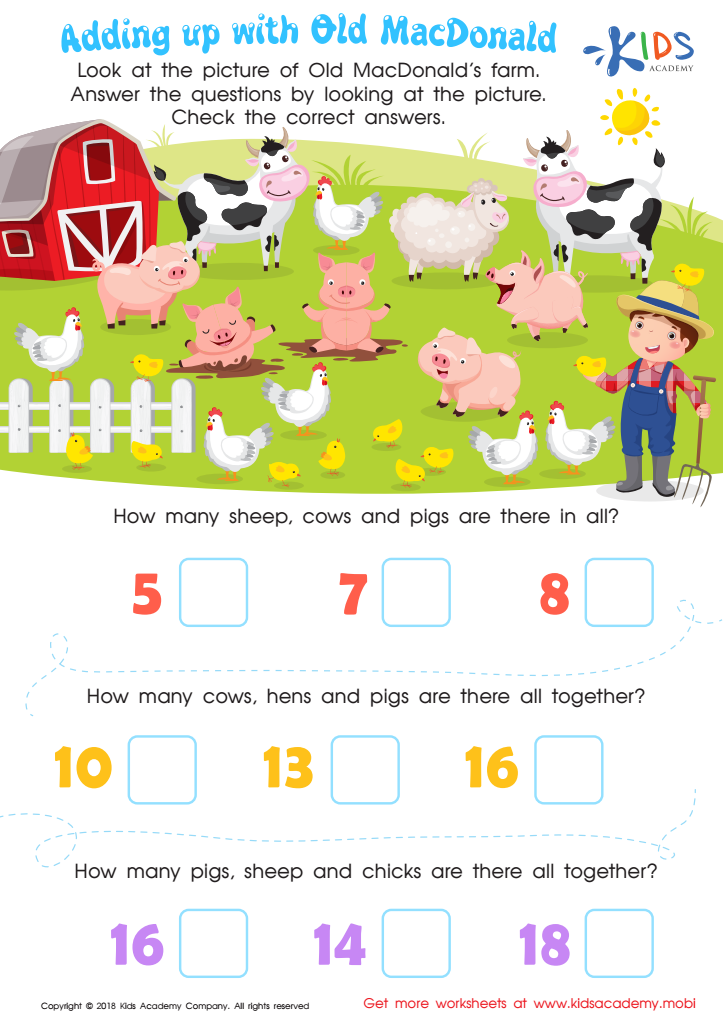
Adding Up with Old MacDonald Worksheet
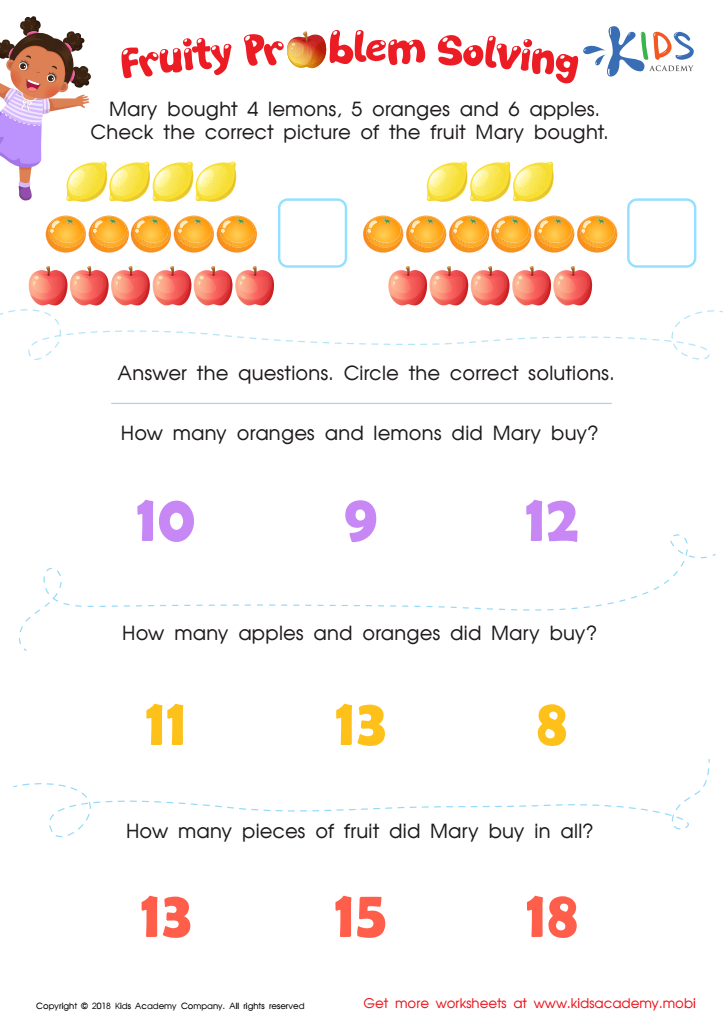
Fruity Problem Solving Worksheet
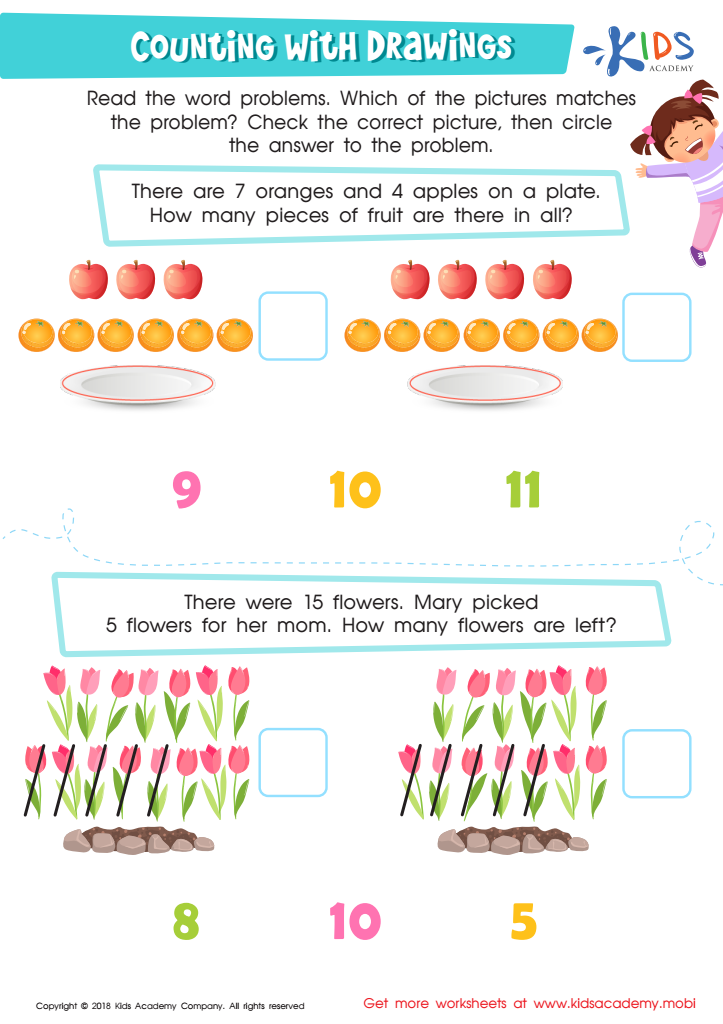
Counting with Drawings: Fruits & Chocolates Worksheet
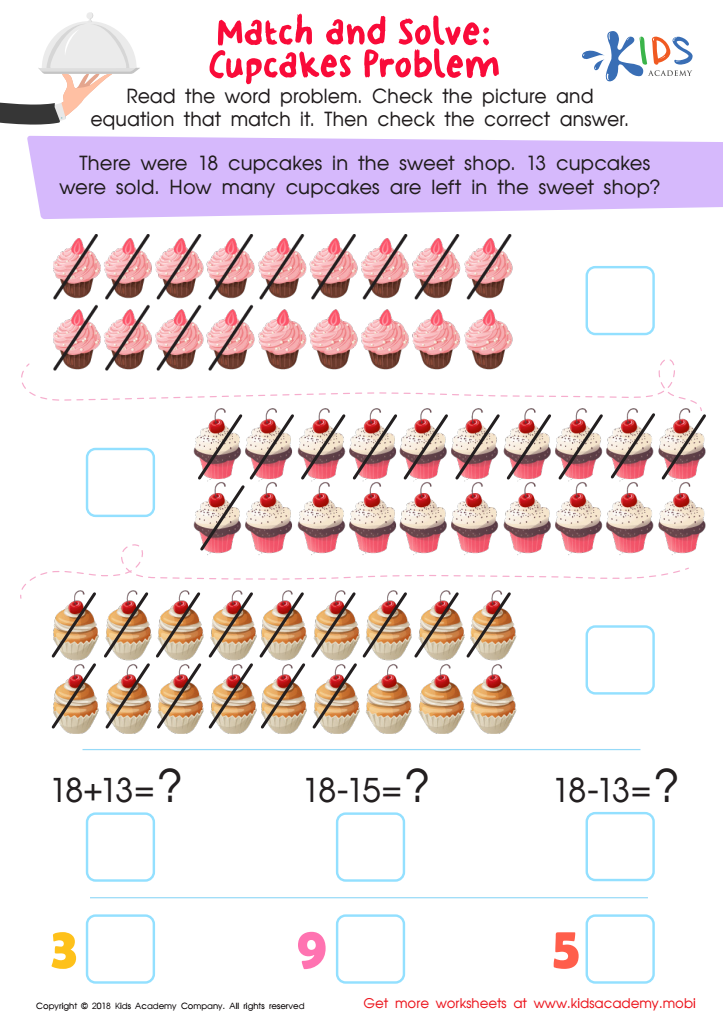
Match and Solve: Cupcakes Problem Worksheet
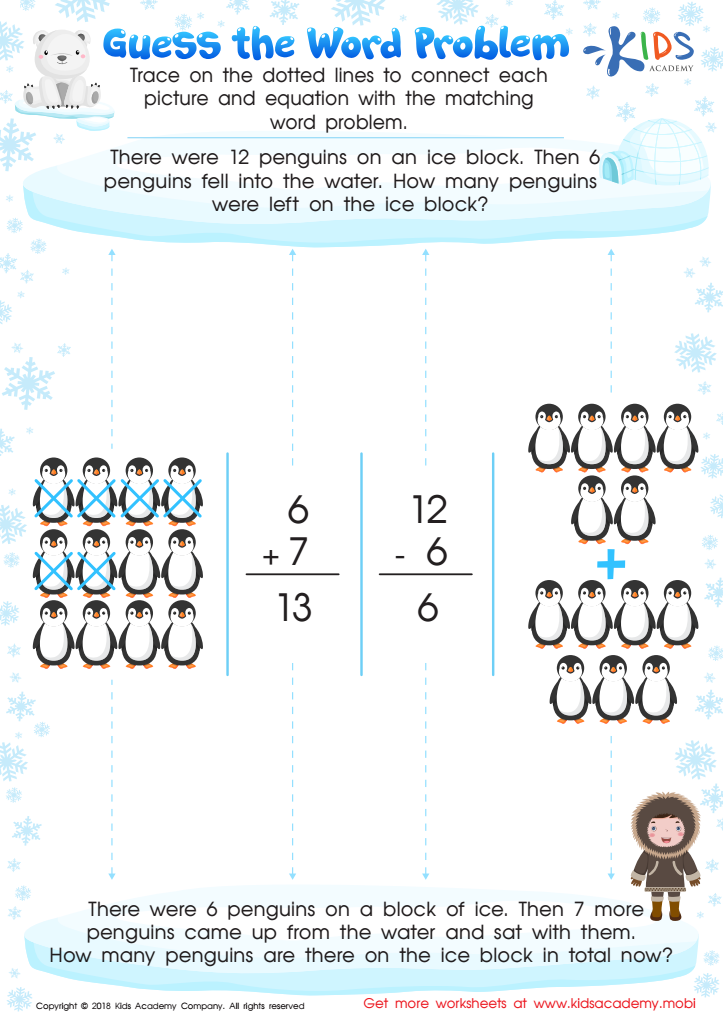
Guess the Word Problem Worksheet
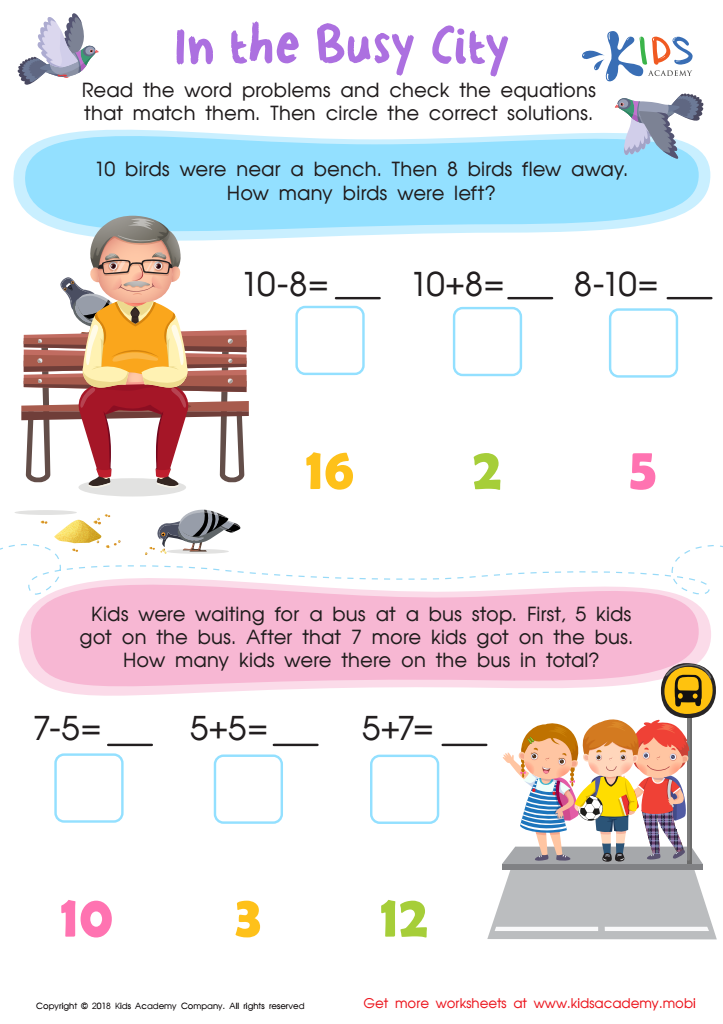
In the Busy City Word Problems Worksheet
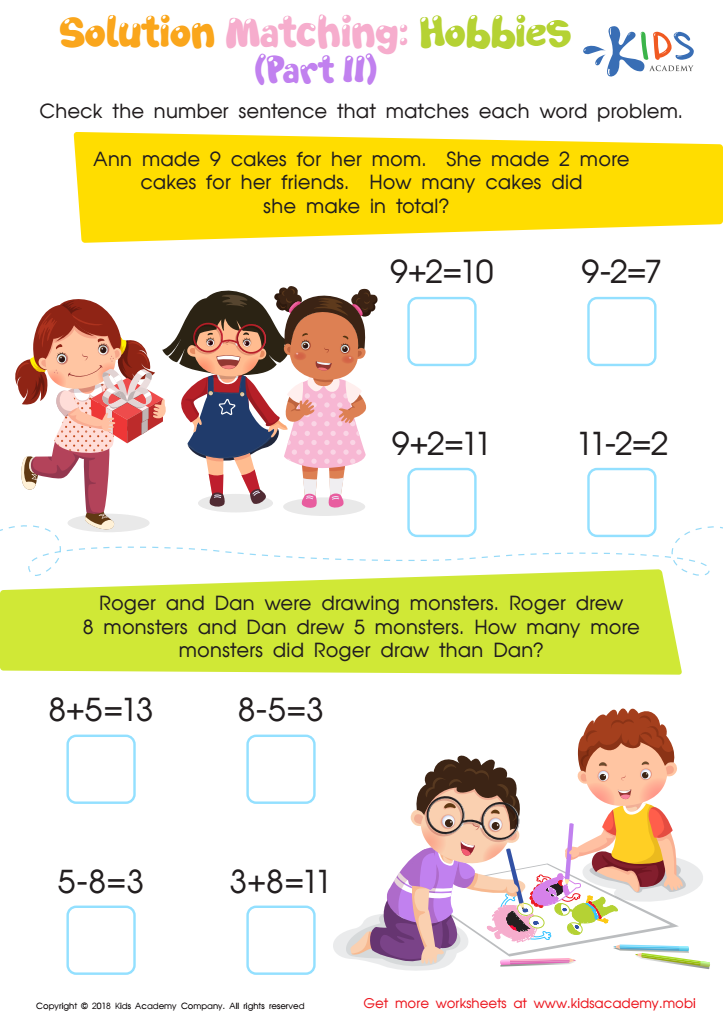
Solution Matching: Hobbies. Part 2 Worksheet
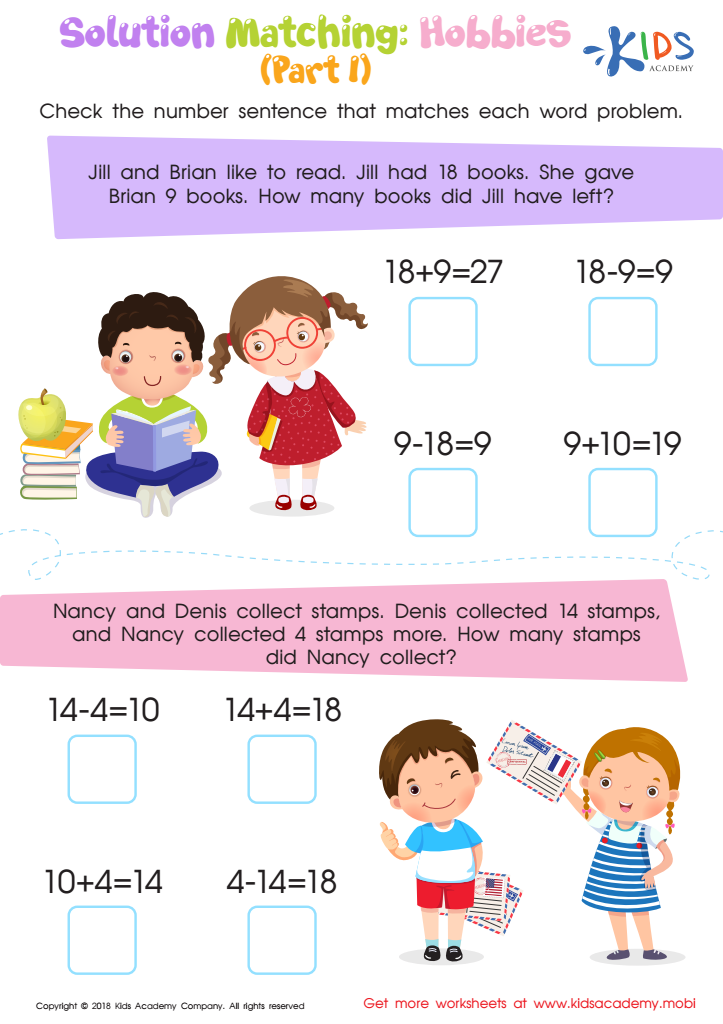
Solution Matching: Hobbies. Part 1 Worksheet
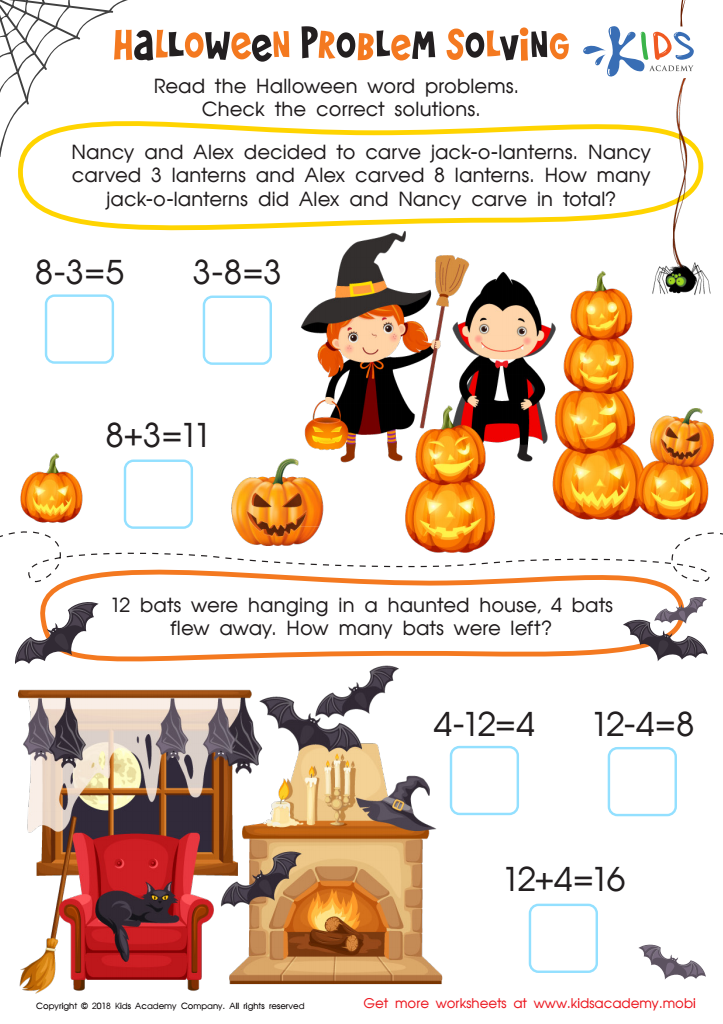
Halloween Problem Solving Worksheet
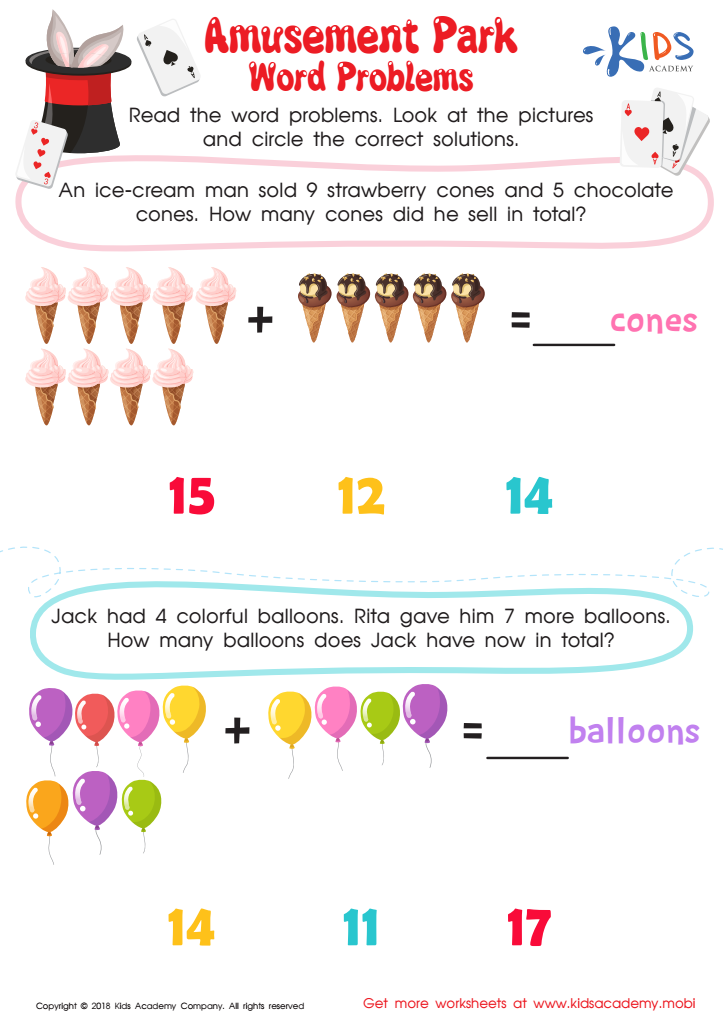
Amusement Park Word Problems Worksheet
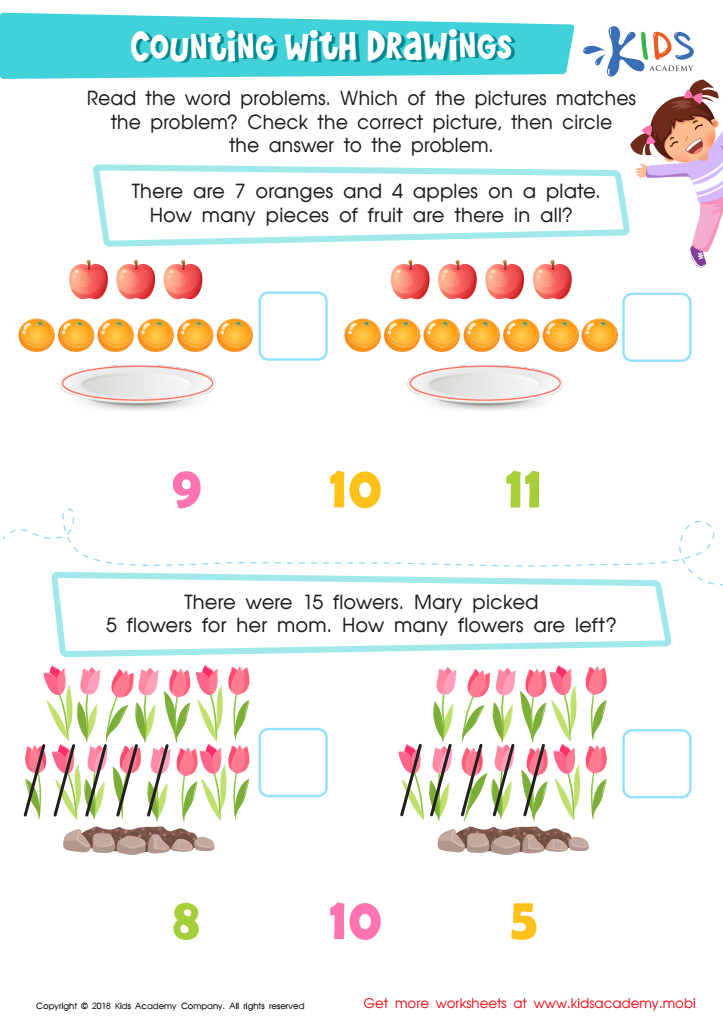
Counting with Drawings:Fruits & Flowers Worksheet


.jpg)





Word problems play a crucial role in the mathematical development of children aged 3 to 7. First, they foster critical thinking and problem-solving skills, essential not only for math but for everyday life. When children engage with word problems, they learn to decode language, identify key information, and apply it to find solutions. This process enhances their comprehension and reasoning abilities, laying a strong foundation for future learning.
Moreover, word problems allow children to relate math to real-life situations, making abstract concepts more tangible and relevant. For young learners, this connection can ignite curiosity and motivate them to explore math further. Engaging with word problems also promotes language development, as children learn to articulate their thought processes and communicate their reasoning.
Additionally, word problems encourage collaborative learning. Working in pairs or groups helps children share strategies, discuss different approaches, and learn from one another, fostering a classroom community.
Finally, cultivating a positive attitude towards math during these formative years is vital. By integrating word problems into their learning, parents and teachers can help demystify math and embed a sense of confidence and competence, setting children on a path to success in both academics and everyday problem-solving.








