Tracing Words Worksheets for Ages 3-7 - Page 2
42 filtered results
-
From - To
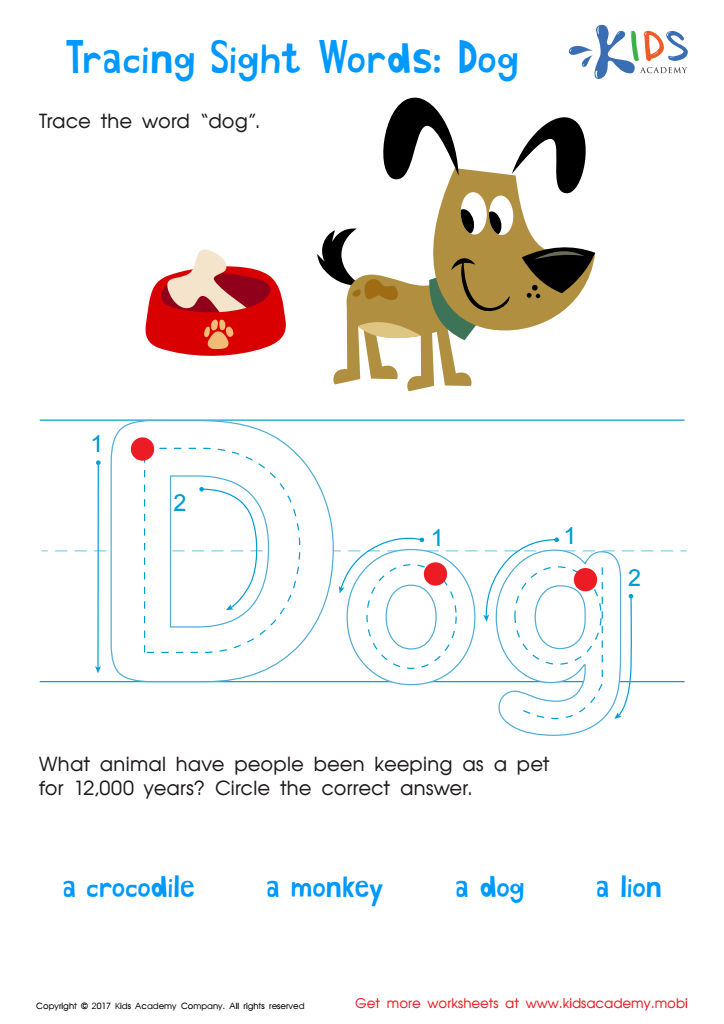
Dog Worksheet Sight Words Worksheet
 Assign to My Students
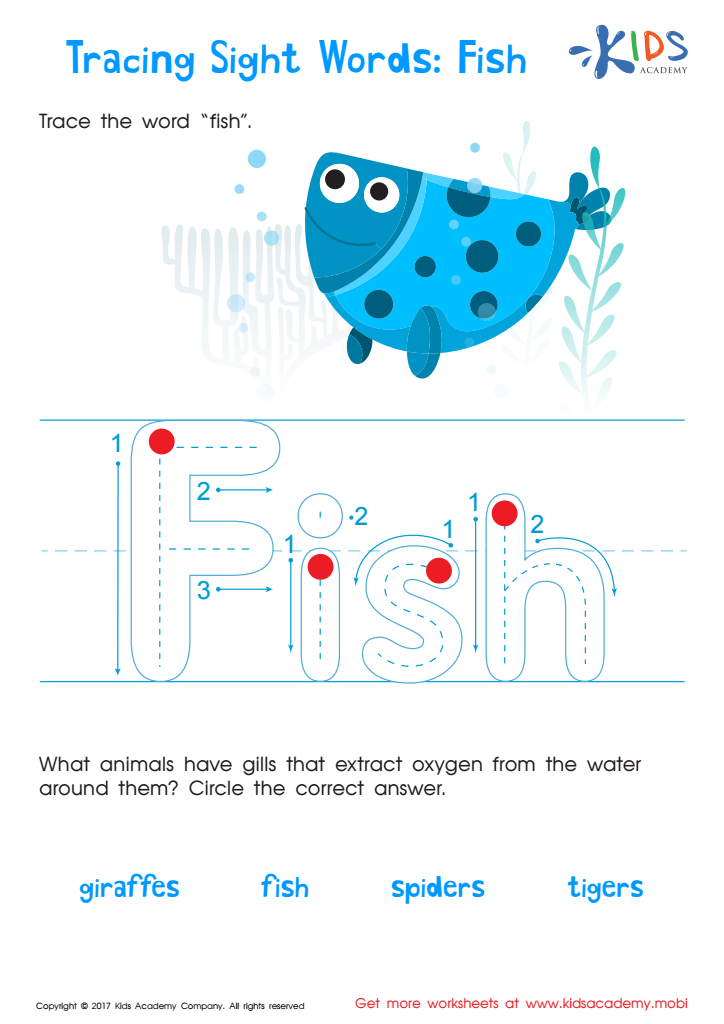
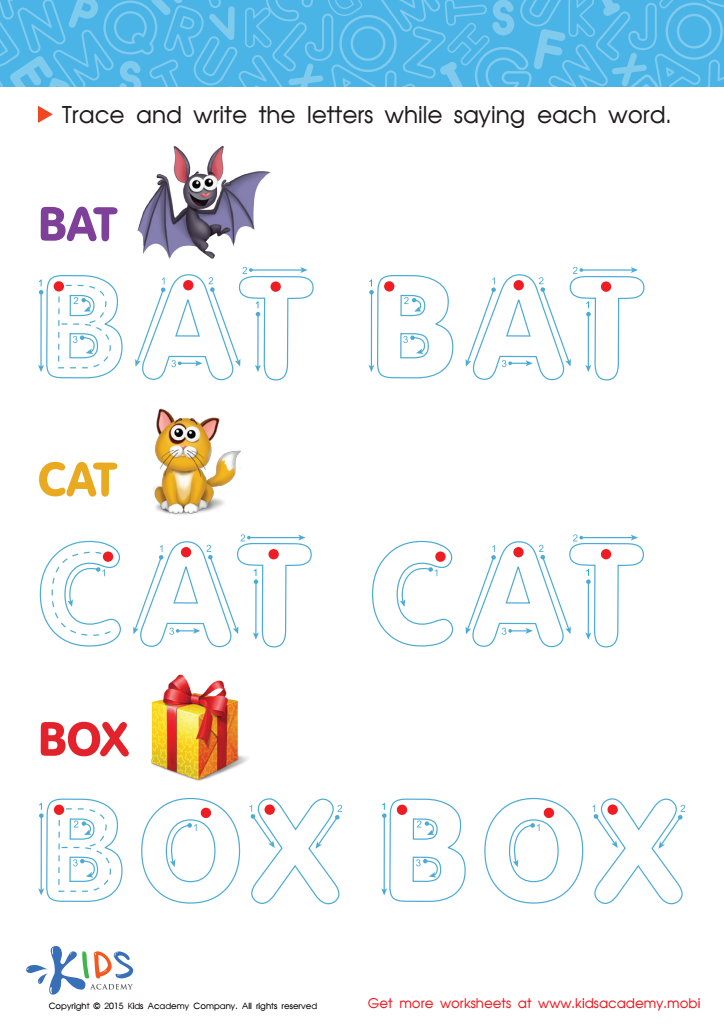
A Bat, a Cat and a Box Spelling Worksheet
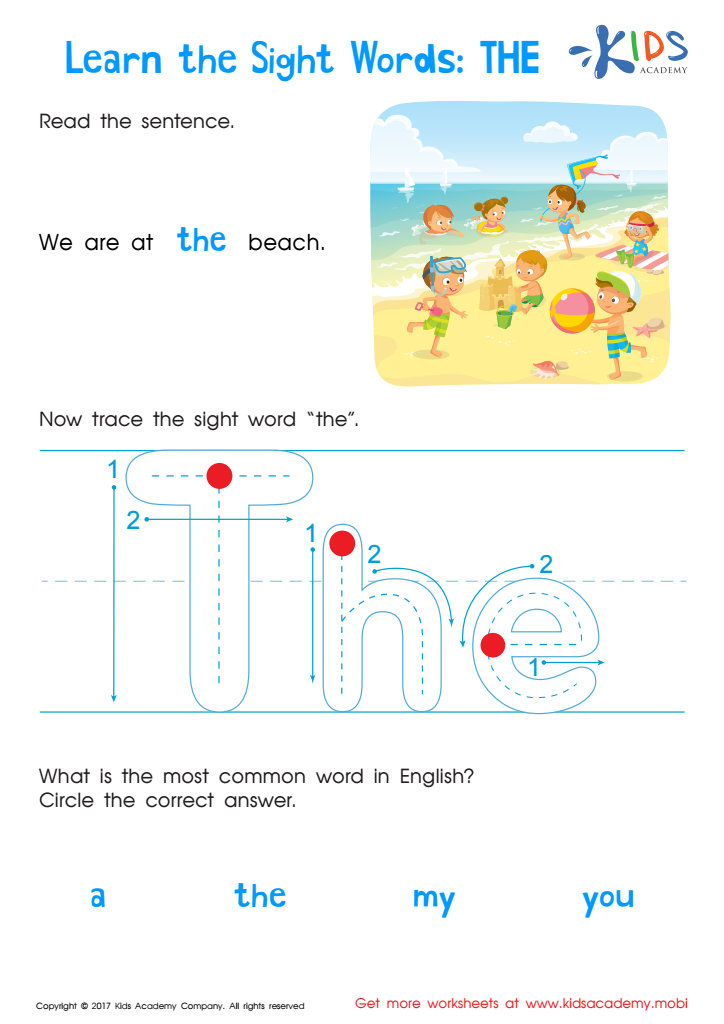
Sight Words: The Worksheet
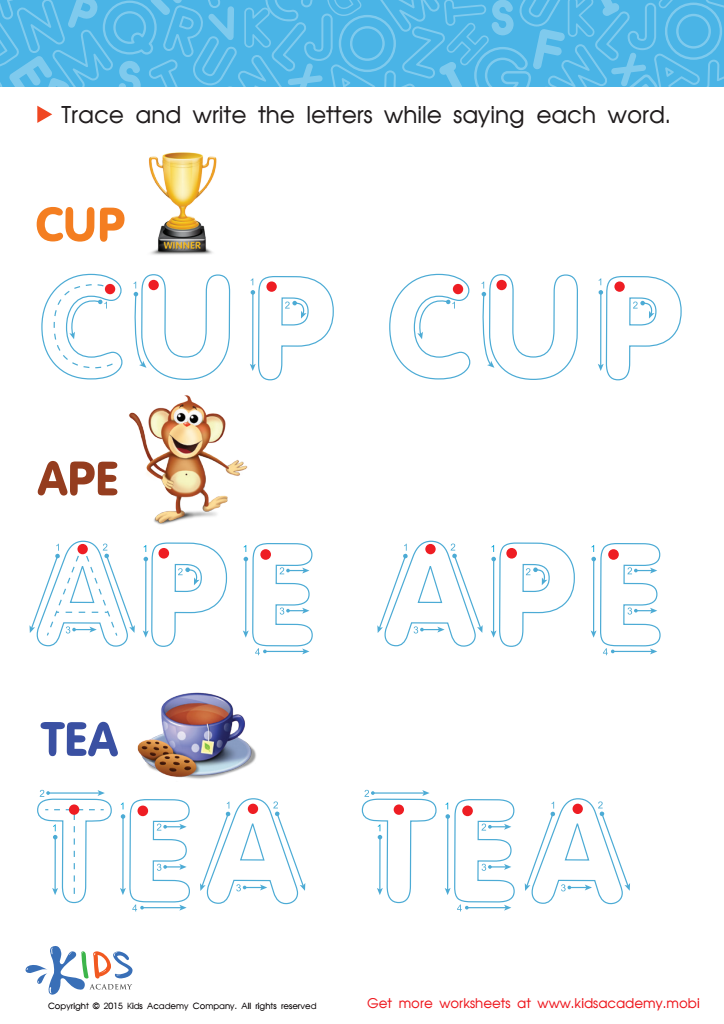
A Cup, an Ape and Tea Spelling Worksheet
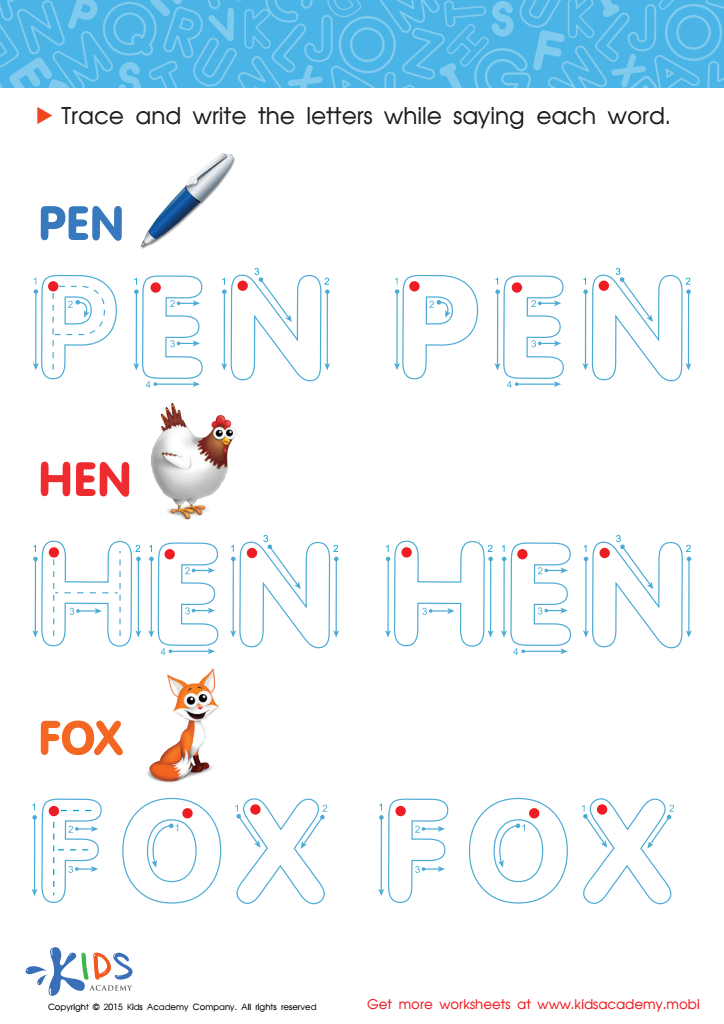
A Pen, a Hen and a Fox Spelling Worksheet
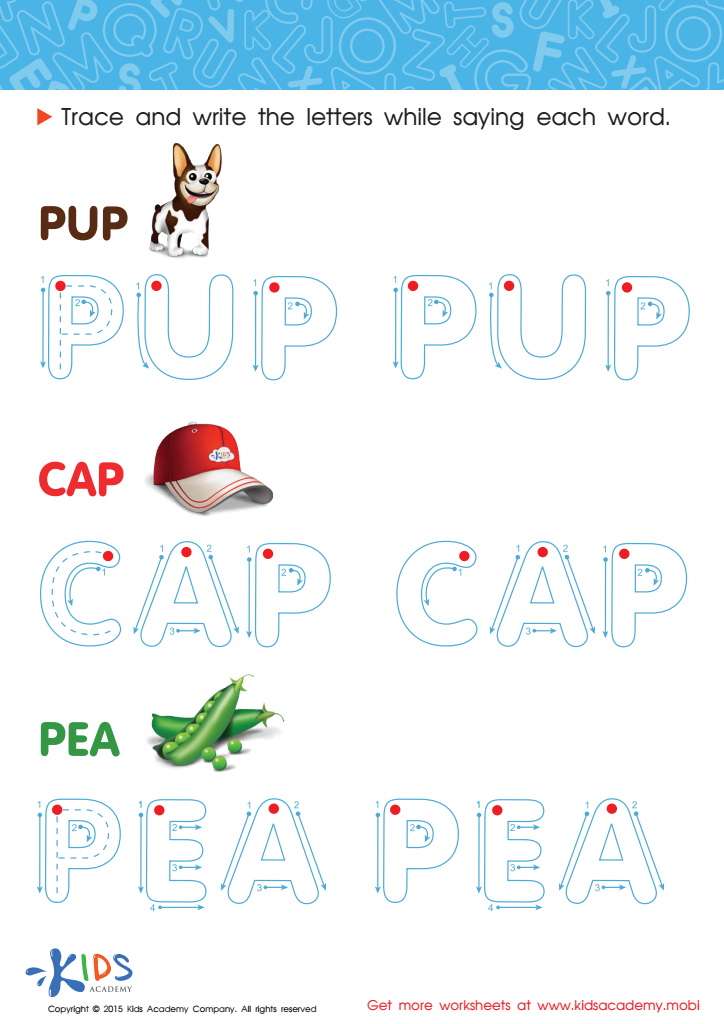
A Pup, a Cap and a Pea Spelling Worksheet
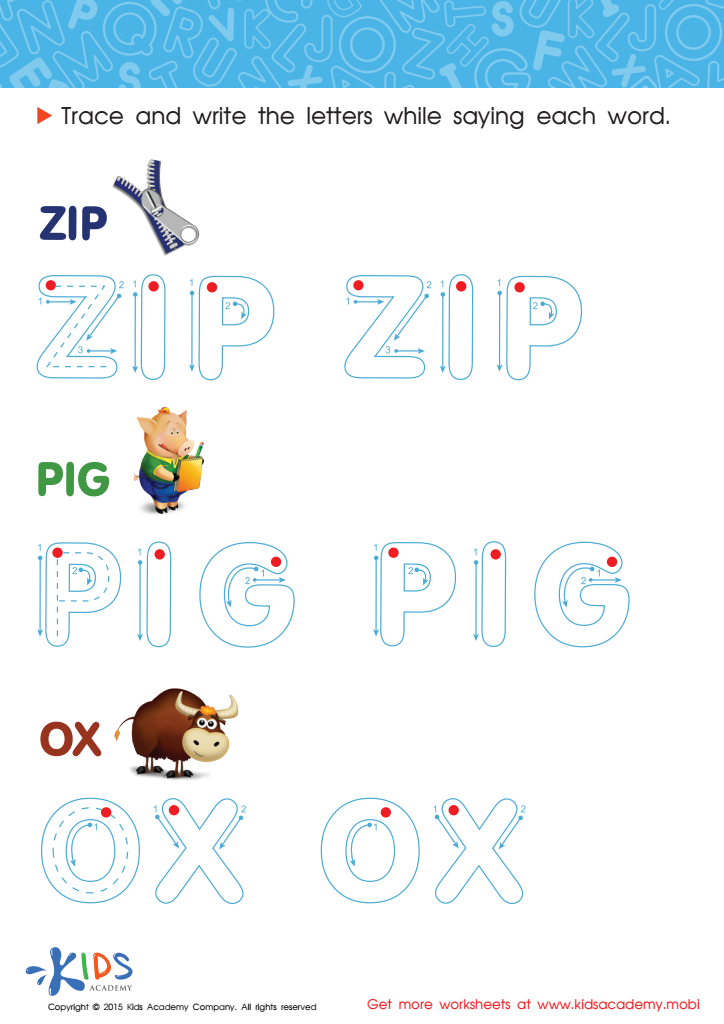
A Zip, a Pig and an Ox Spelling Worksheet
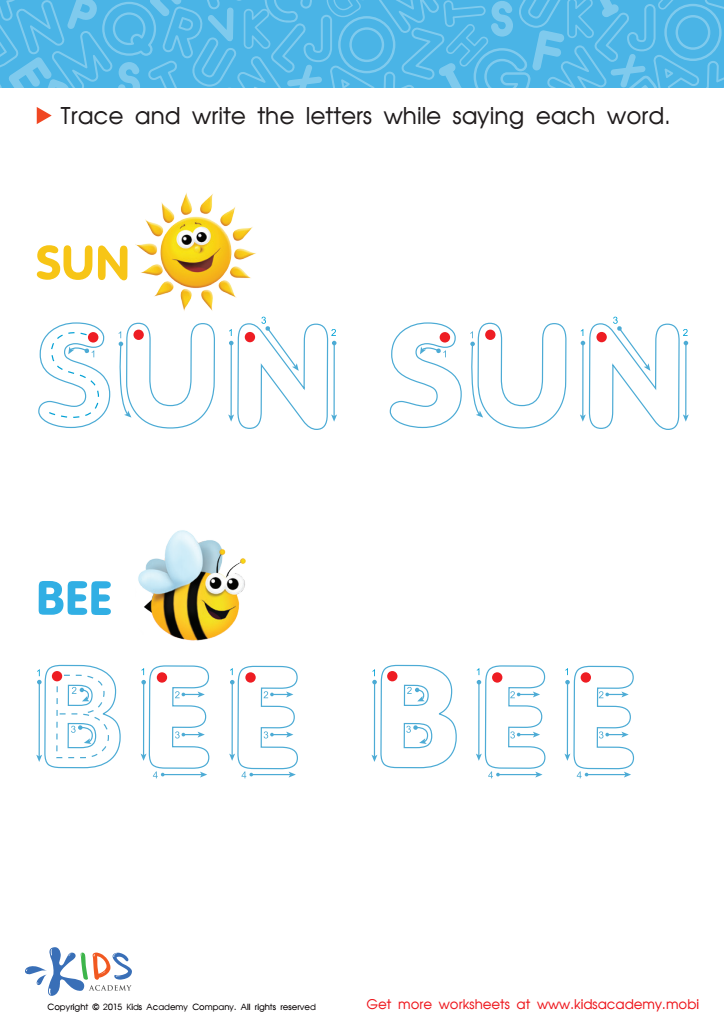
The Sun and a Bee Spelling Worksheet
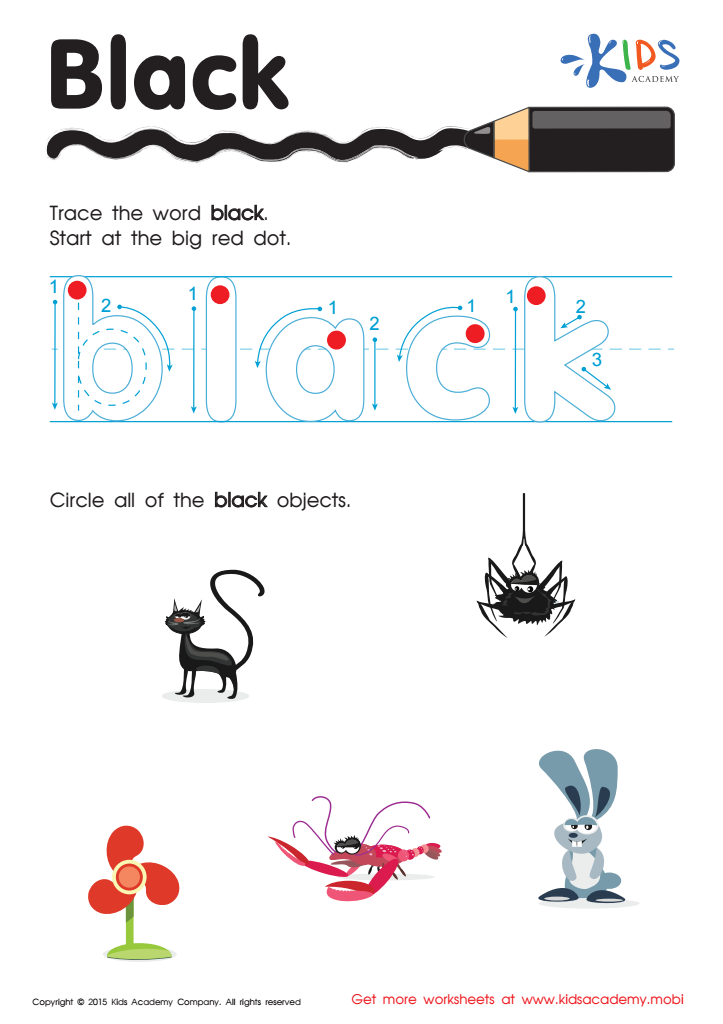
Black Tracing Color Words Printable
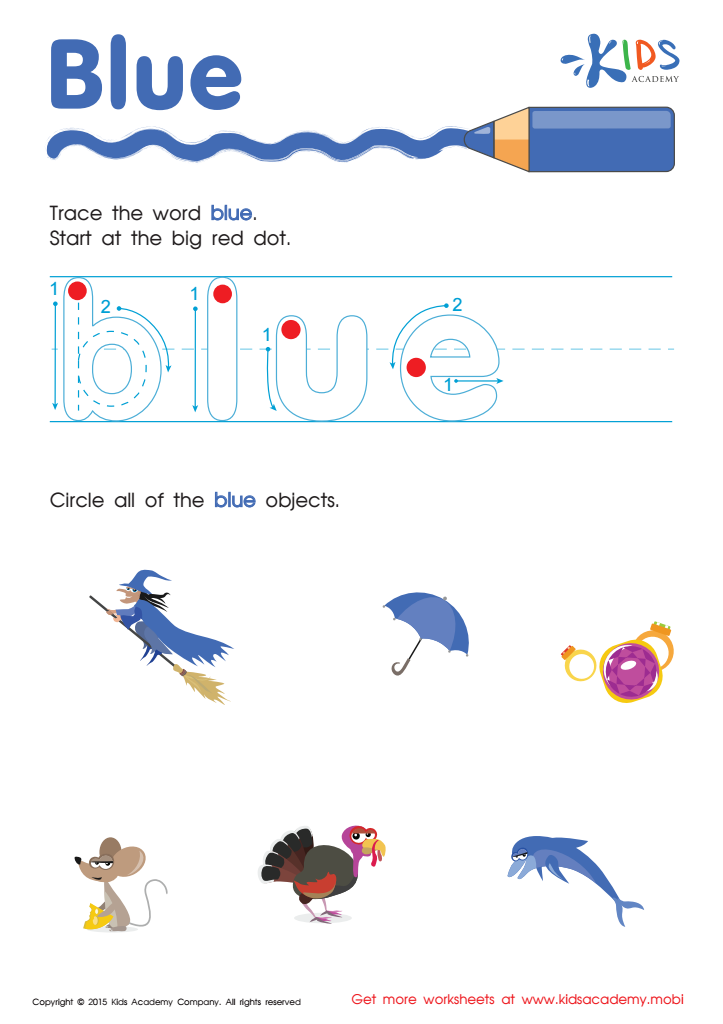
Blue Tracing Color Words Printable
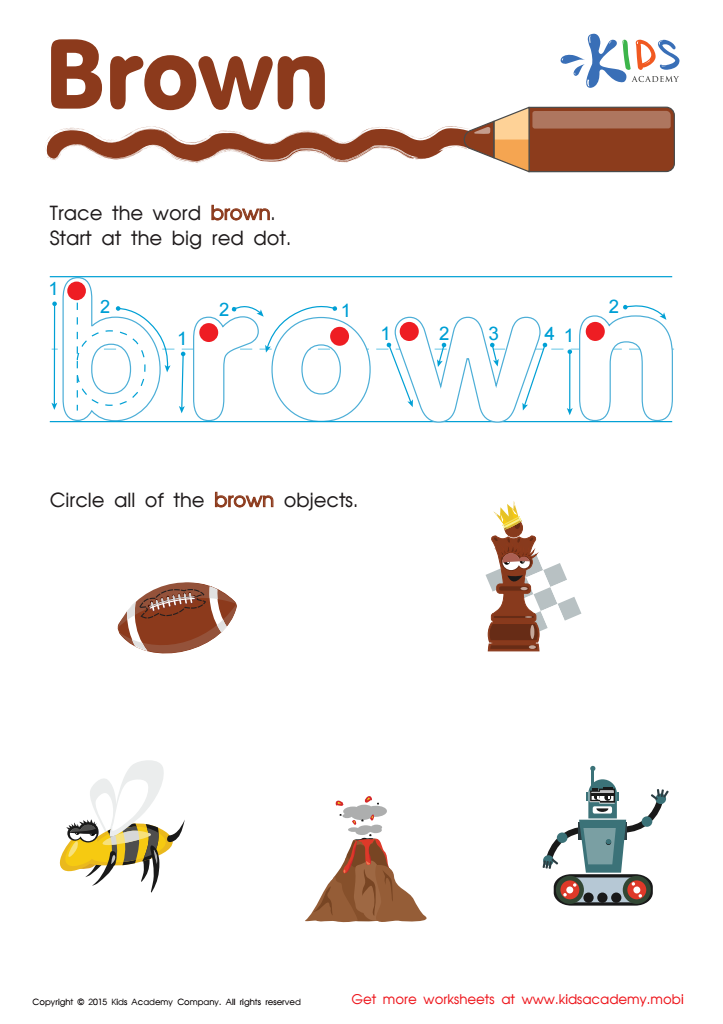
Brown Tracing Color Words Worksheet
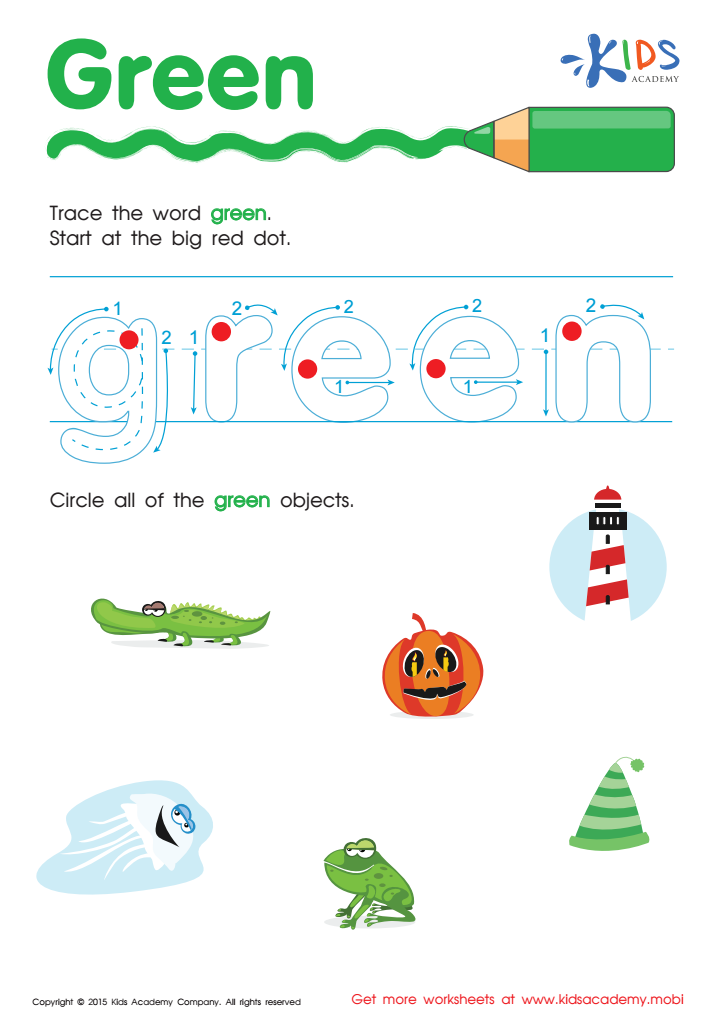
Green Tracing Color Words Worksheet
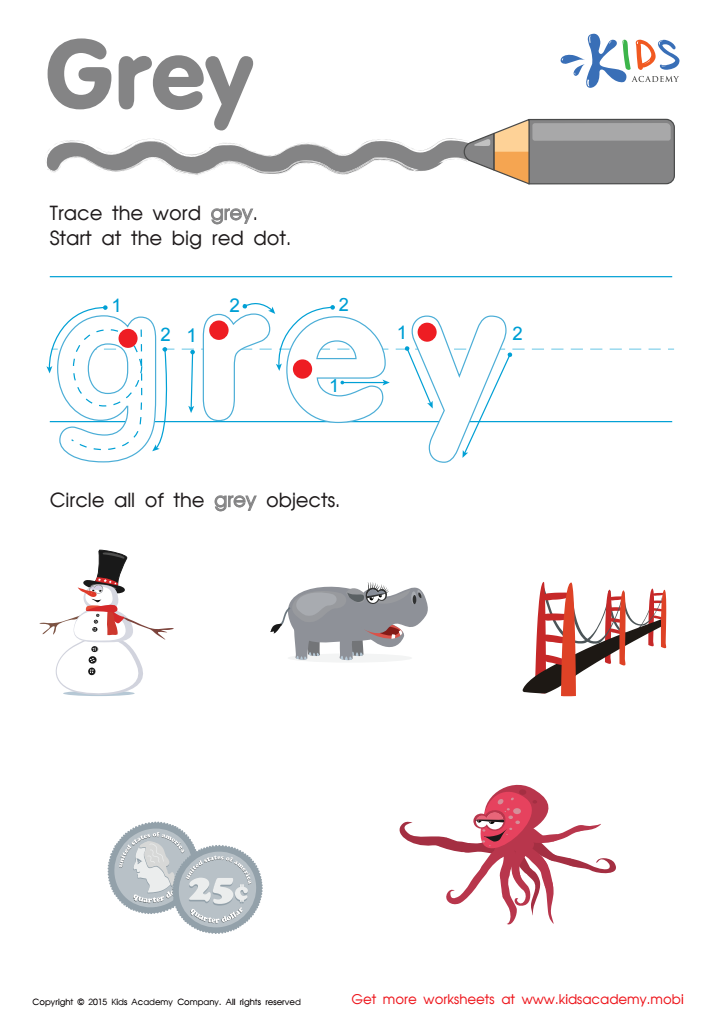
Grey Tracing Color Words Worksheet
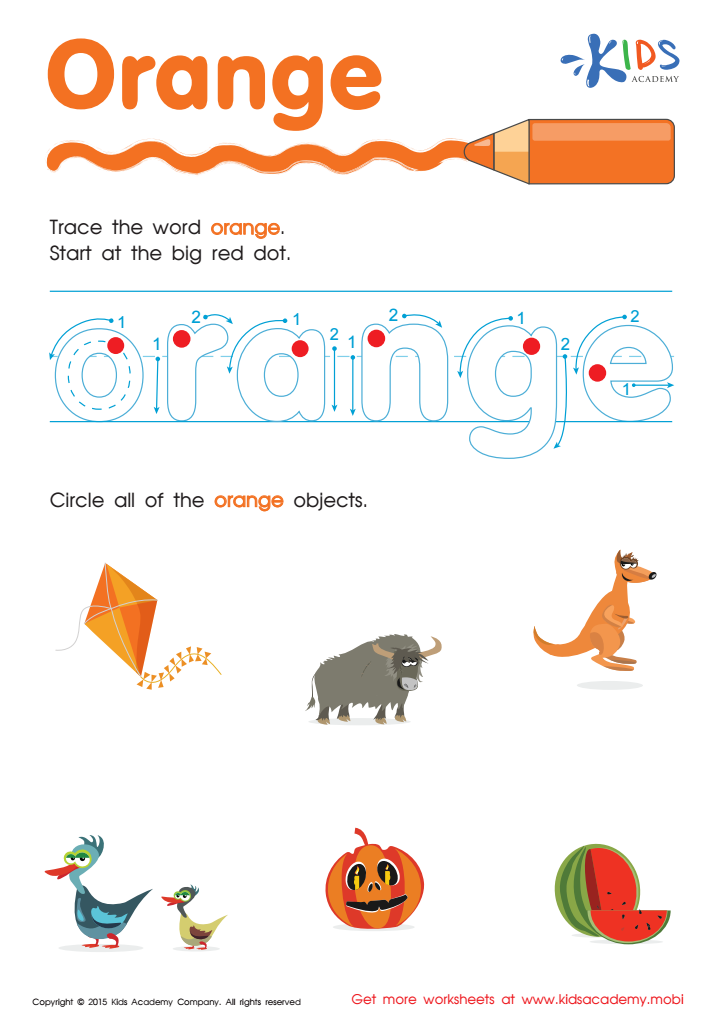
Orange Tracing Color Words Worksheet
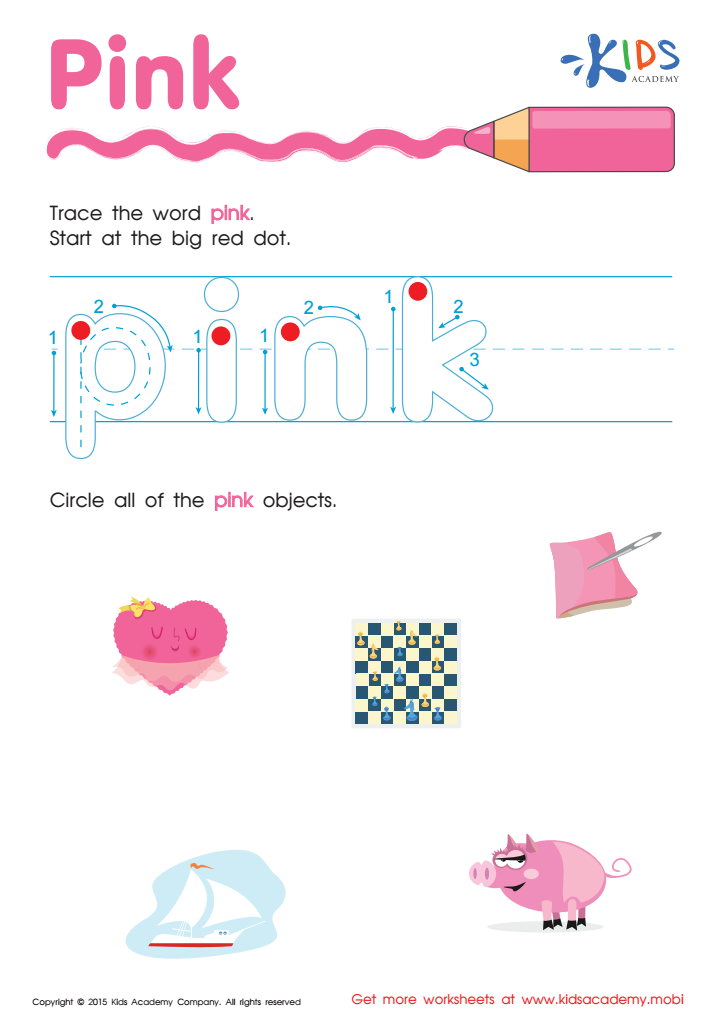
Pink Tracing Color Words Worksheet
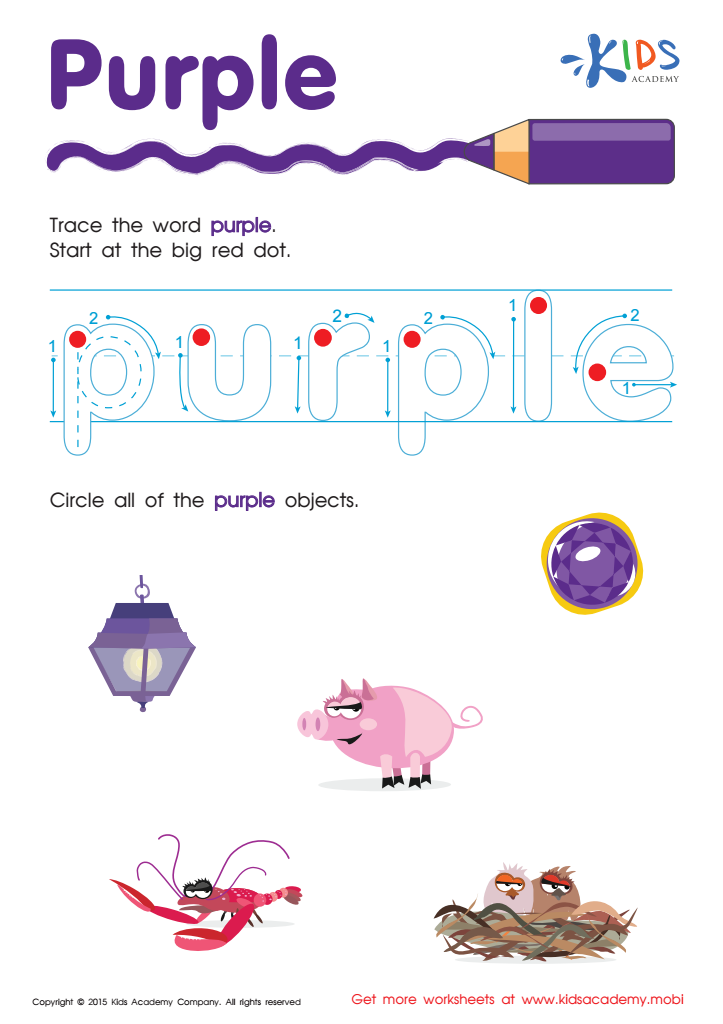
Purple Tracing Color Words Worksheet
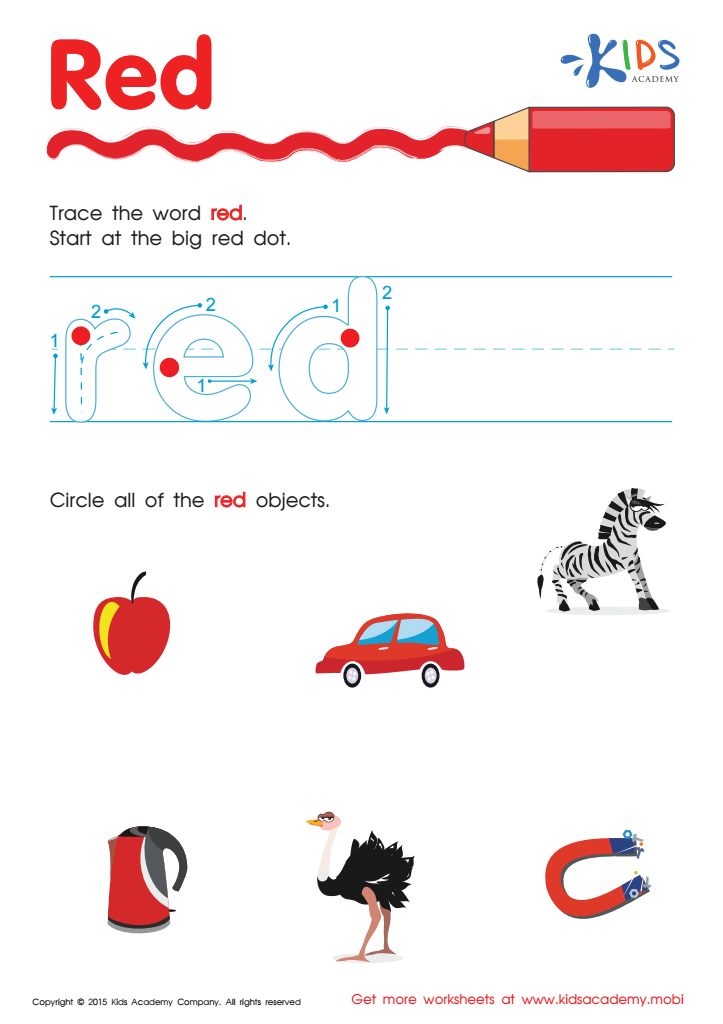
Red Tracing Color Words Printable






Parents and teachers should care about tracing words for children aged 3 to 7, as this pivotal activity fosters foundational skills essential for future academic success. Tracing words helps young learners develop fine motor skills, enhancing their hand-eye coordination and the ability to control writing instruments. This physical development is crucial for dexterous activities they'll engage in throughout their lives.
Furthermore, tracing fosters literacy development. By tracing letters and words, children become more familiar with the shape and structure of letters, which lays the groundwork for reading and writing proficiency. It strengthens their understanding of the alphabet and improves their vocabulary and language skills, making learning other subjects more accessible.
Tracing words also boosts cognitive skills like memory, attention to detail, and understanding of language patterns. It promotes concentration and patience, essential traits for any learning process. Teachers and parents who emphasize tracing in early education help children build strong muscle memory for letter shapes and handwriting structure, fostering a sense of achievement and confidence.
In summary, tracing words isn’t merely about improving handwriting; it’s a comprehensive tool that aids fine motor development, literacy, cognitive abilities, and creating positive learning experiences. Prioritizing this activity ensures well-rounded early childhood development and a smoother transition to higher-level learning tasks.








