Filters

27 filtered results

Clear all filters
Favorites
With answer key
Interactive

27 filtered results

Difficulty Level

Grade


Subject

    Check out this FREE Trial Lesson on Graphs for age 3-8!

    Picture Graphs

    Favorites
    With answer key
    Interactive
    • 3-8
    • Interactive
    • Graphs
    Interpret the line plot worksheet
    Interpret the line plot worksheet

    Interpret Line Plot Worksheet

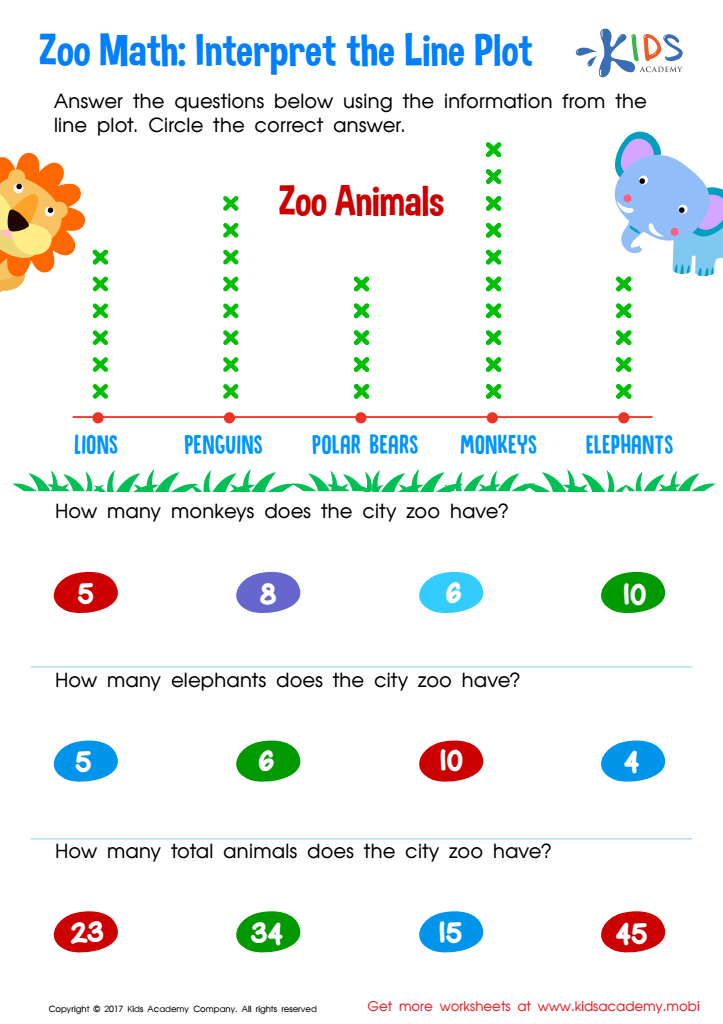
    Kids can learn to read graphs and analyze data easily with line plots. A fun zoo animal worksheet motivates kids to answer questions by reading the line plot and finding out how many animals a local zoo has.
    Interpret Line Plot Worksheet
    Worksheet
    Picture graph worksheet for 3rd
    Picture graph worksheet for 3rd

    Taxi Math Worksheet

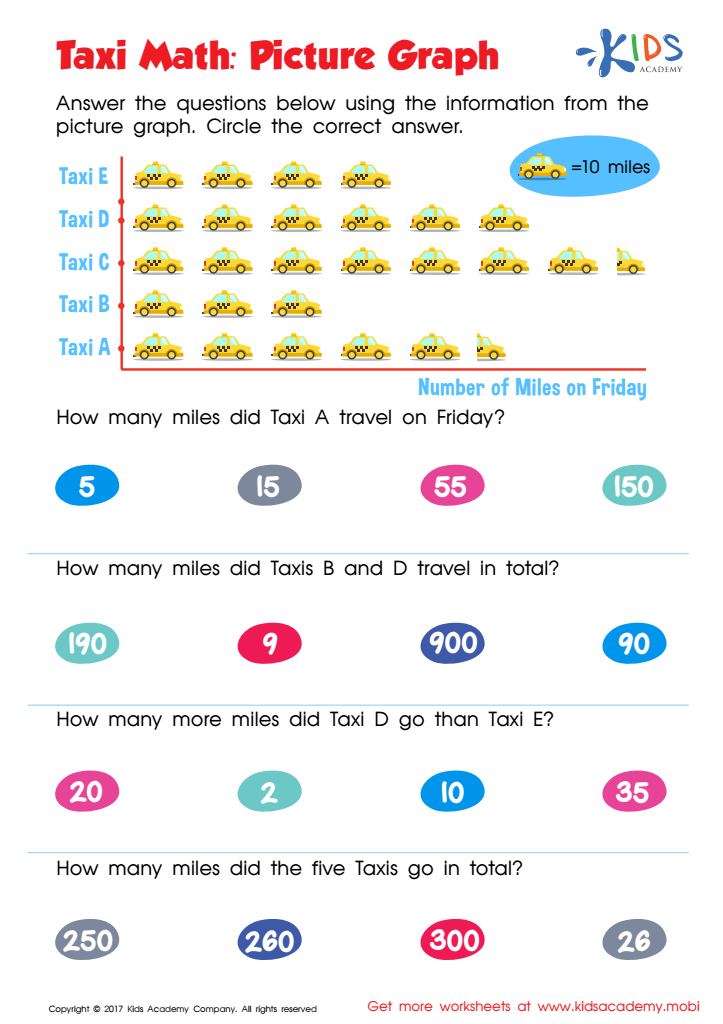
    This 3rd grade worksheet helps kids learn data viz with fun taxis and colors to make the graph come alive. Picture graphs are an engaging way to teach data analysis, and this worksheet is the perfect tool! Kids love picture graphs! This 3rd grade worksheet uses colorful taxis to help them learn to read graphs better. Each image represents a number, teaching data analysis with visuals and fun. An engaging way to learn data viz, this worksheet is perfect for young learners.
    Taxi Math Worksheet
    Worksheet
    Picture graph worksheet PDF
    Picture graph worksheet PDF

    Football Math Worksheet

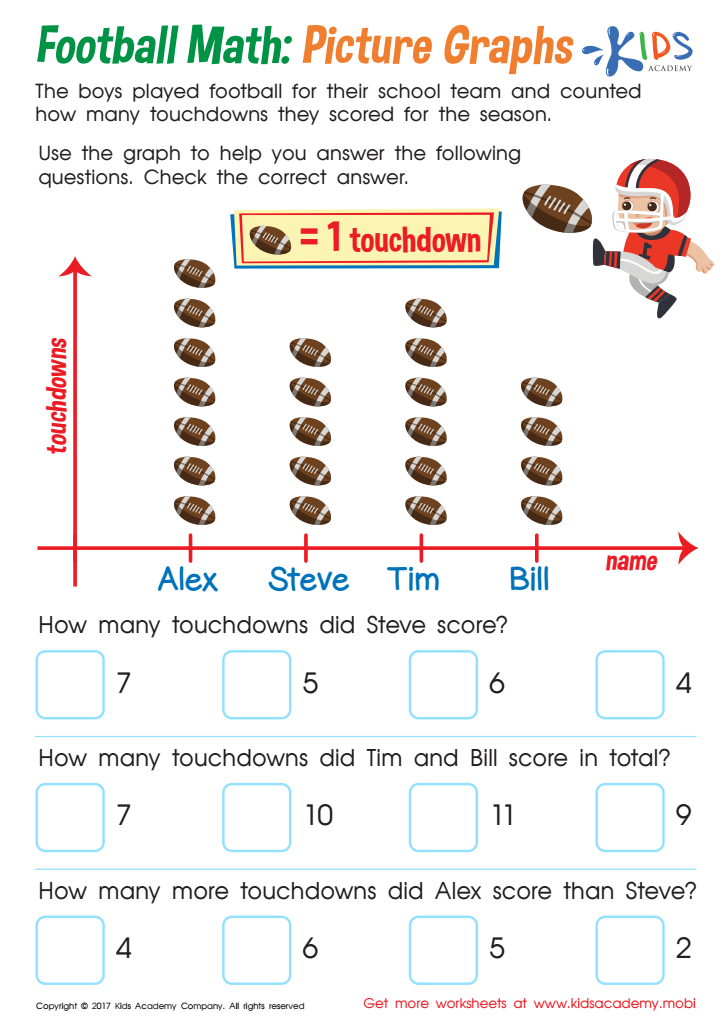
    It uses football-themed data to compare teammates' touchdowns. Perfect for motivating your child and helping them learn to read graphs in a fun way! Motivate your child to learn to read graphs with this fun and sporty picture graph worksheet! Football-themed data is used to compare teammates and their touchdowns, sure to delight your little sports fan. Perfect for teaching data analysis in an engaging way!
    Football Math Worksheet
    Worksheet


    Graphs are a vital educational tool for children aged 3-8, and parents and teachers should prioritize their incorporation into learning activities for several reasons. First, graphs simplify complex information, making data more accessible and engaging for young learners. By visualizing data, children can better understand relationships, patterns, and trends in a way that sharpens their analytical thinking skills.

    Moreover, exposure to graphs helps to develop critical math skills as children learn to interpret basic concepts such as totals, categories, and comparisons. For instance, activities involving bar graphs or pictographs can enhance counting skills and word recognition as they identify labeled quantities.

    Furthermore, graphs encourage discussion and communication among peers, fostering collaboration and social skills. Through cooperative learning activities, children can share their interpretations and build reasoning abilities, which are essential for academic success.

    Lastly, introducing graphs at an early age lays a foundation for STEM literacy. As technology and data-driven decision-making grow in importance, instilling a comfort with visual data representations helps prepare children for future learning and real-world applications. Ultimately, graphs provide valuable frameworks for nurturing critical thinking, mathematical understanding, and communication skills indispensable for lifelong learning.