Middle Sounds Worksheets for Ages 3-9
4 filtered results
-
From - To
Discover our engaging Middle Sounds Worksheets tailored for children ages 3-9! Designed to boost phonetic awareness and strengthen reading skills, these worksheets help young learners identify and practice middle vowel sounds in words. With fun activities and colorful illustrations, kids can enjoy phonics practice in an enjoyable and educational format. Ideal for both classroom and home use, our resources support the development of essential literacy skills. Visit now to explore a variety of printables that make learning to read an exciting adventure. Perfect for parents and teachers aiming to build a strong literacy foundation!
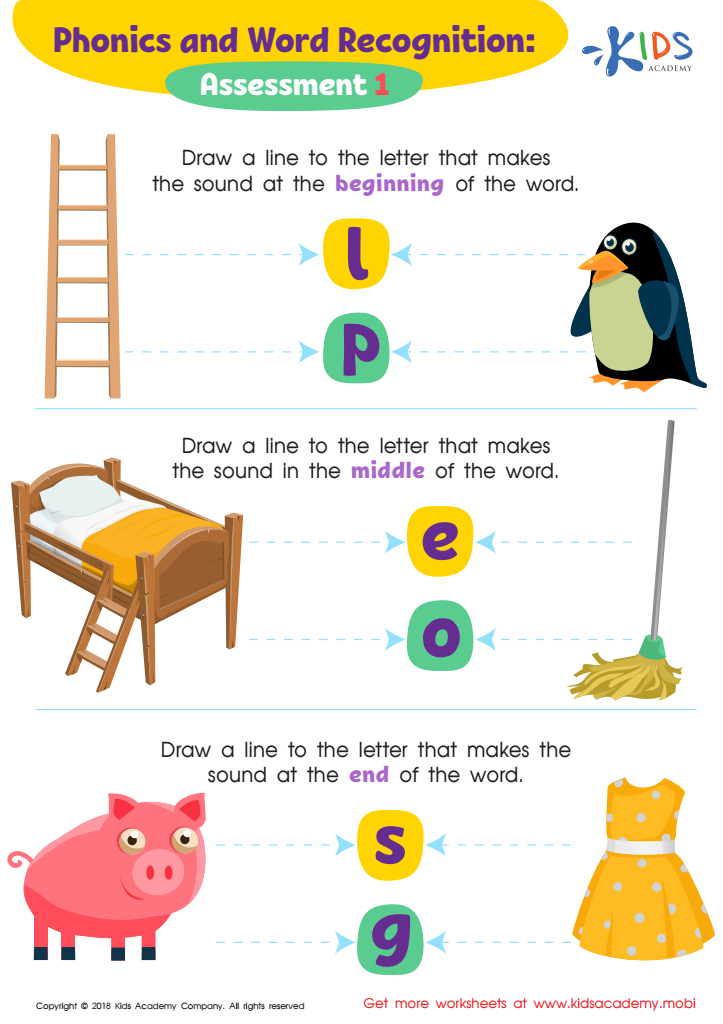
Phonics and Word Recognition: Assessment 1 ELA Worksheet
 Assign to My Students
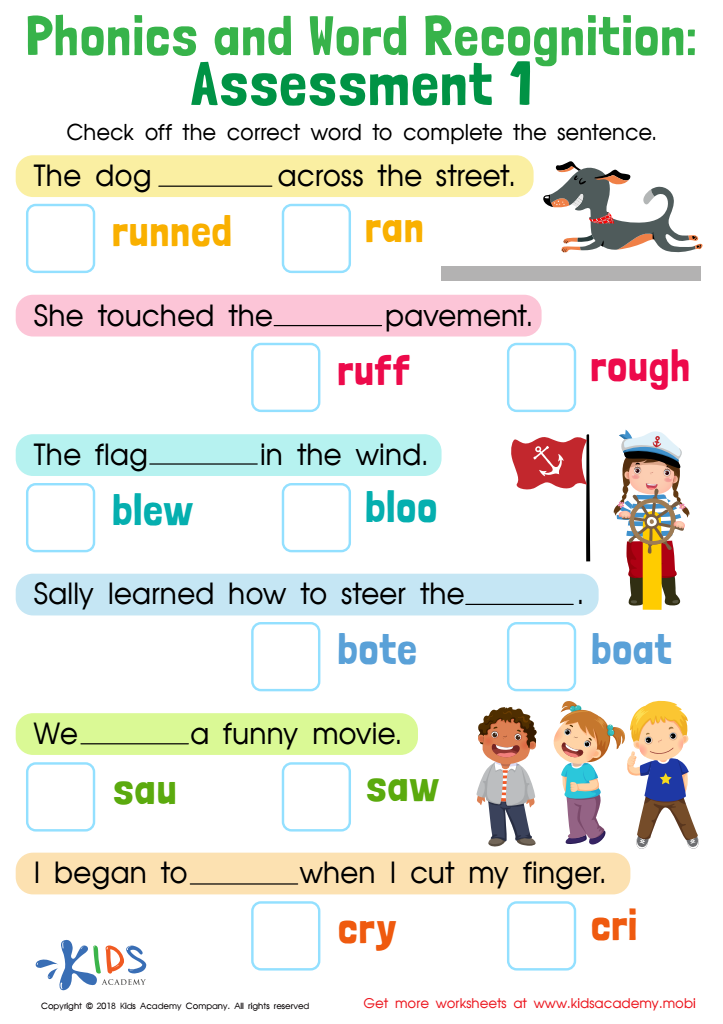
Phonics and Word Recognition: Assessment 1 Worksheet
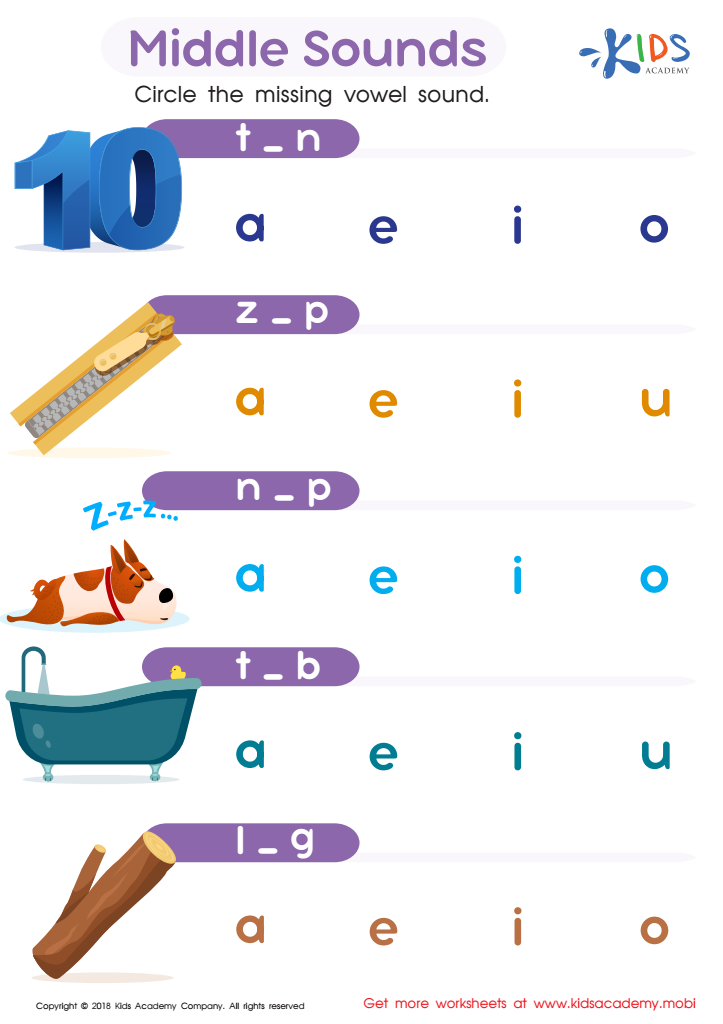
Middle Sounds Worksheet
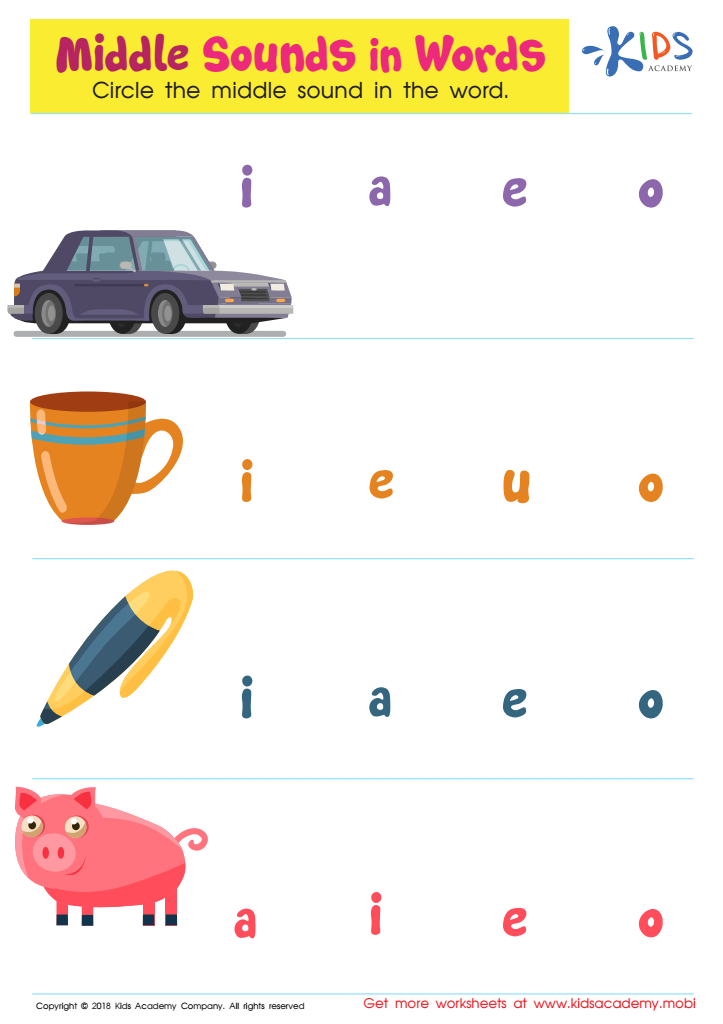
Middle Sounds in Words Worksheet





Understanding middle sounds, or medial phonemes, is crucial for children aged 3-9 as it forms a pivotal part of their phonemic awareness—a key predictor of reading success. Phonemic awareness is the ability to hear, identify, and manipulate individual sounds in spoken words, and middle sounds play a central role in this process.
For parents and teachers, focusing on middle sounds aids in developing a child's decoding skills, which are essential for blending and segmenting words when learning to read and spell. For instance, identifying the middle sound 'a' in "cat" as different from 'i' in "kit" enables children to differentiate words on a more analytical level.
Moreover, proficiency in recognizing middle sounds contributes to broader language and cognitive development, enhancing vocabulary acquisition and comprehension skills. Engaging in activities like reading aloud, phoneme isolation games, and interactive phonics exercises can help children internalize these sounds effortlessly.
Addressing middle sounds early complements overall literacy instruction and fosters a solid foundation for advanced linguistic competencies. Therefore, emphasizing middle sounds is not just about academic performance but equally about equipping children with vital communication skills that will support their lifelong learning journey. Hence, parents and teachers should care deeply about this aspect of early literacy development.








