Graphs Worksheets for Ages 3-9 - Page 2
27 filtered results
-
From - To
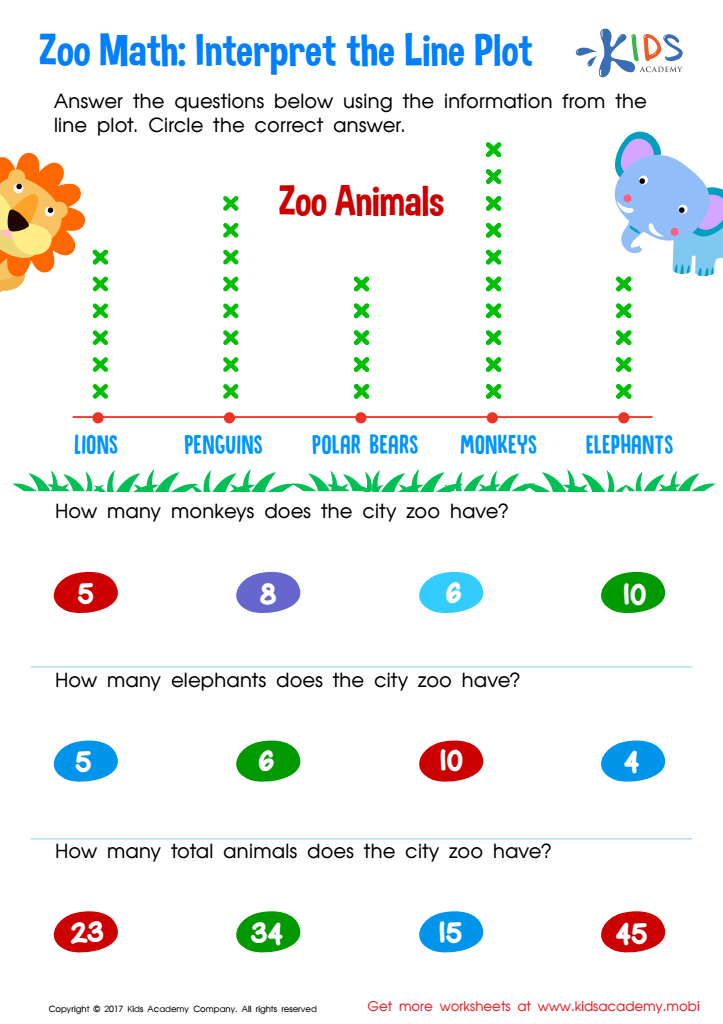
Interpret Line Plot Worksheet
 Assign to My Students
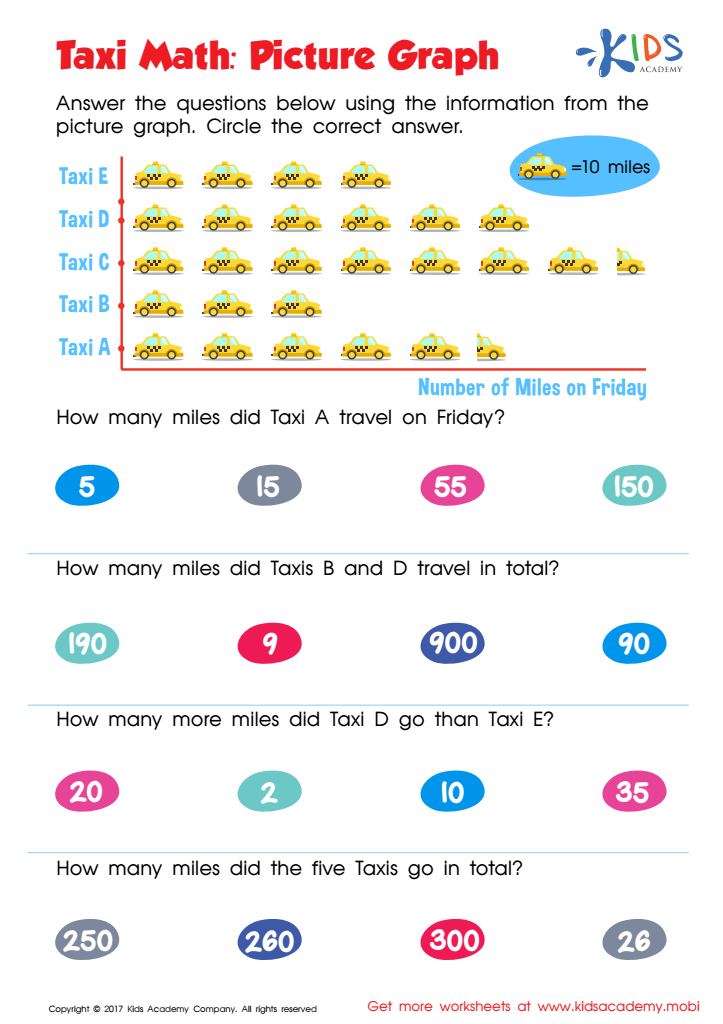
Taxi Math Worksheet
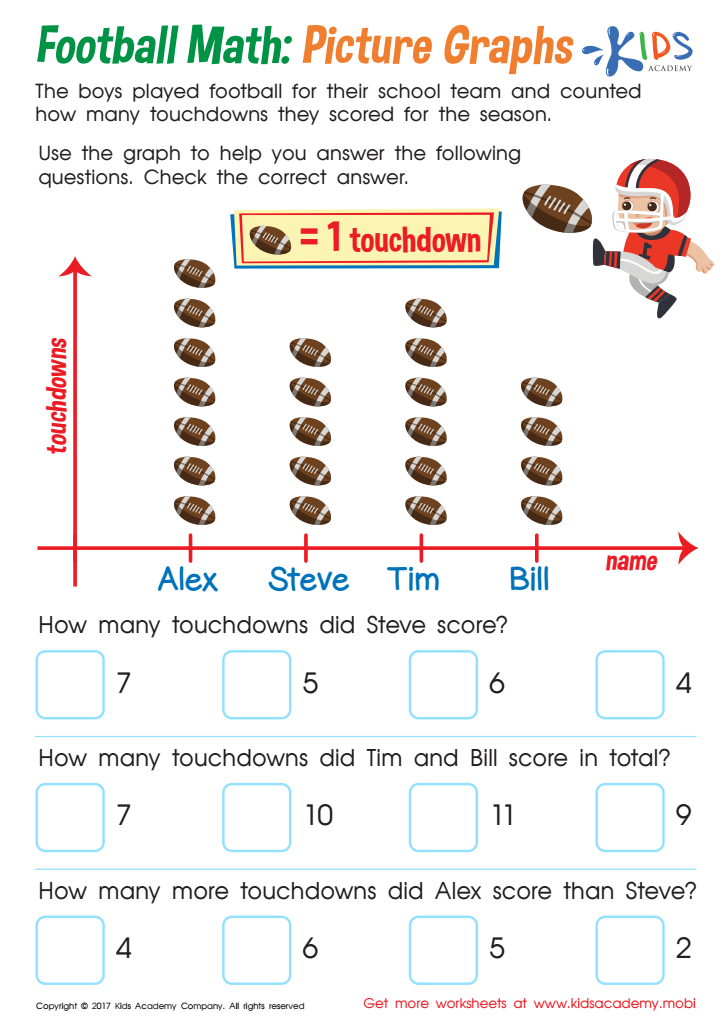
Football Math Worksheet








Graphs are vital tools for teaching young children vital skills that set the foundation for future learning. For ages 3-9, introducing graphs can make learning engaging and interactive. Understanding graphs helps children make sense of information visually, which aids in developing logical thinking and analytical abilities.
Parents and teachers should care about integrating graphs into their educational practices because they assist in presenting data in a clear, understandable format. Simple bar graphs or pictographs can represent everyday concepts, enabling children to identify patterns, compare values, and recognize quantities. This hands-on exploration supports key math skills such as counting, addition, and subtraction in an enjoyable manner.
In addition, discussions around graphs encourage language development as students articulate observations and describe trends. It fosters teamwork and collaboration when they work on projects together, helping build social skills. Finally, graphing activities develop critical literacy connections; understanding graphs early on introduces the concept of information interpreting—an essential skill for later academic success.
In summary, incorporating graphing activities is crucial for nurturing children’s critical thinking, reasoning, and communication skills, ensuring they are well-equipped for their educational journey ahead.








