Time Worksheets for Ages 3-9 - Page 2
25 filtered results
-
From - To
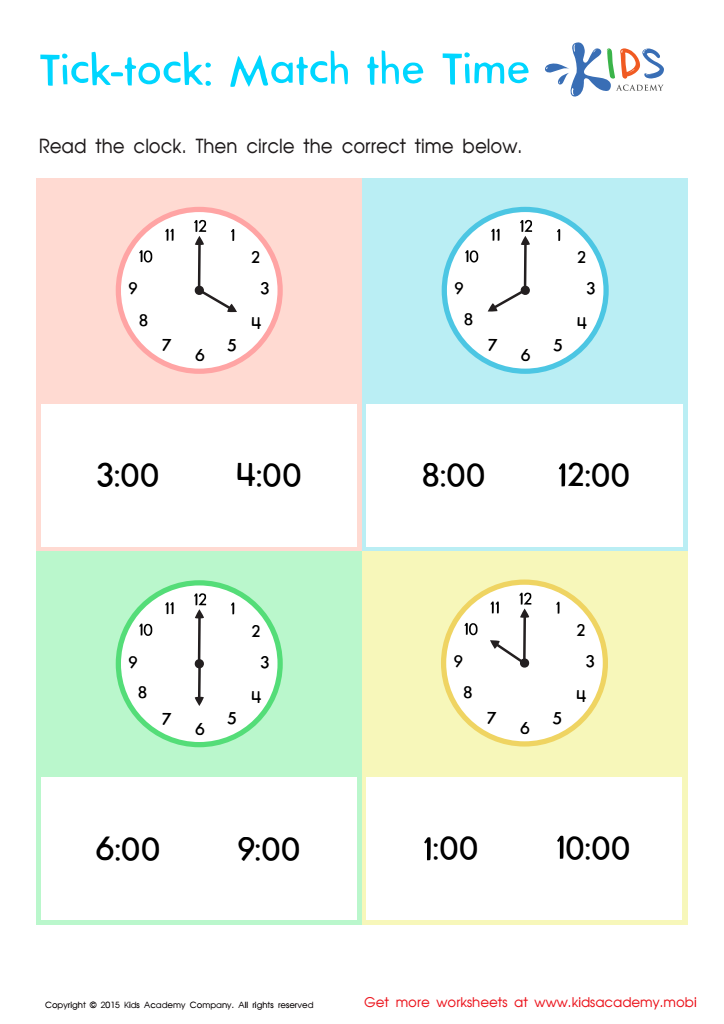
Telling The Time Worksheet: Part 4
 Assign to My Students








Understanding the concept of time is crucial for children aged 3-9, as it plays a foundational role in their cognitive and social development. During these formative years, children begin to establish routines, which help in creating a sense of security and predictability in their daily lives. When parents and teachers emphasize the significance of time, they aid children in developing essential skills such as planning, organization, and time management, critical for their academic success and later life.
Moreover, grasping how to read clocks and understand schedules enhances a child's ability to navigate their environment effectively. It encourages independence, as children learn to manage their time for tasks such as homework, play, and rest. Additionally, discussions about time foster conversations around concepts such as past, present, and future, promoting cognitive skills like memory and sequencing.
Furthermore, learning about time helps in context-building for events, holidays, and life milestones, enhancing children's understanding of the world. By caring about their child’s comprehension of time, parents and teachers equip them with necessary life skills, essential for their growth and adaptability in an ever-changing environment.








