Filters

65 filtered results

Clear all filters
Favorites
With answer key
Interactive

65 filtered results

Difficulty Level

Grade


Check out this FREE Trial Lesson on Physical Science for age 4-7!

People Use Light to Communicate

Favorites
With answer key
Interactive
  • 4-7
  • Interactive
  • Physical Science
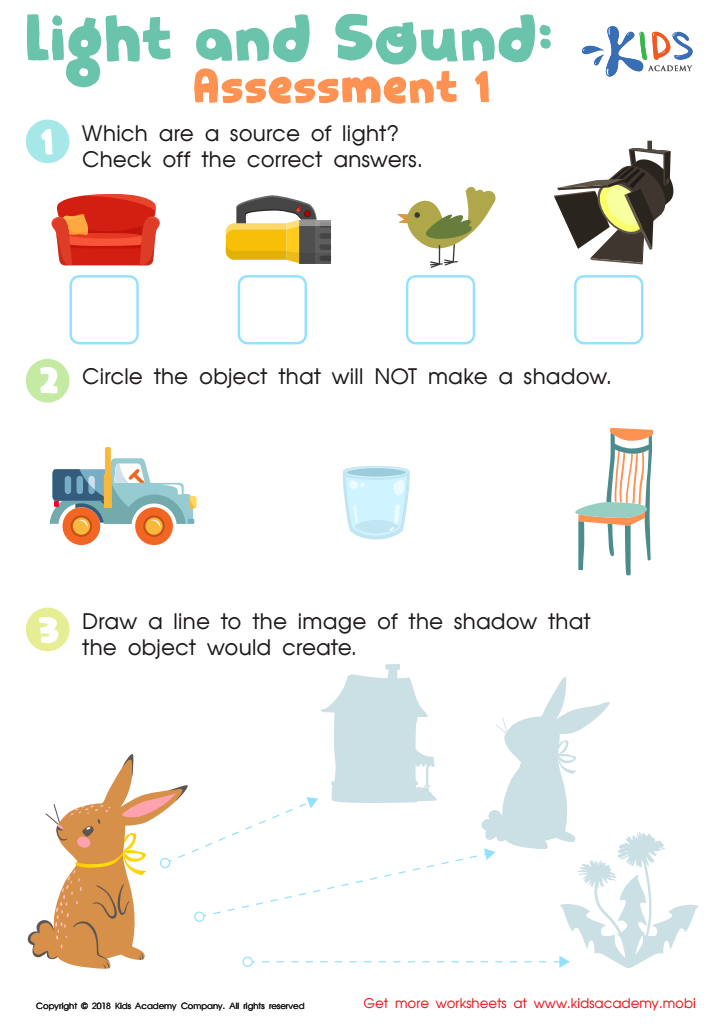
Light and Sound: Assessment 1 Worksheet

Light and Sound: Assessment 1 Worksheet

Can your kids name a light source? Challenge them to name the sun and moon, then point out objects they use when the sun sets. Look through the worksheet with them and ask them to identify the light sources. Help them check off the correct answers.
Light and Sound: Assessment 1 Worksheet
Worksheet
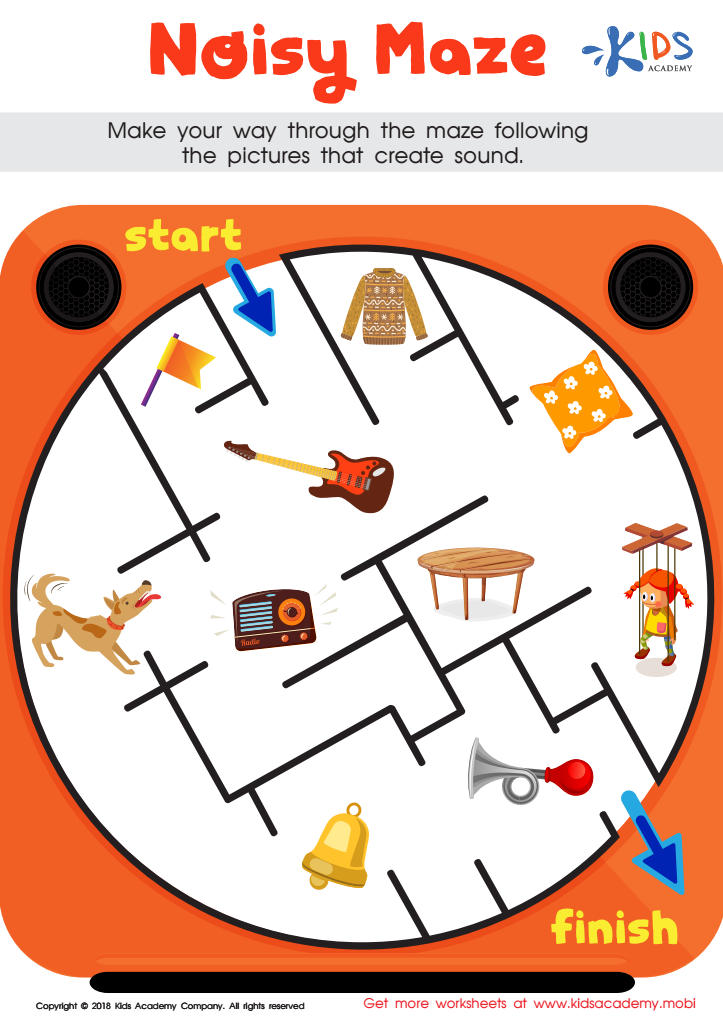
Noisy Maze Worksheet

Noisy Maze Worksheet

Have your kids name some objects that make noise? Then, look at the worksheet with them and help them identify each object. Guide them through the maze, following the sound-producing pictures.
Noisy Maze Worksheet
Worksheet
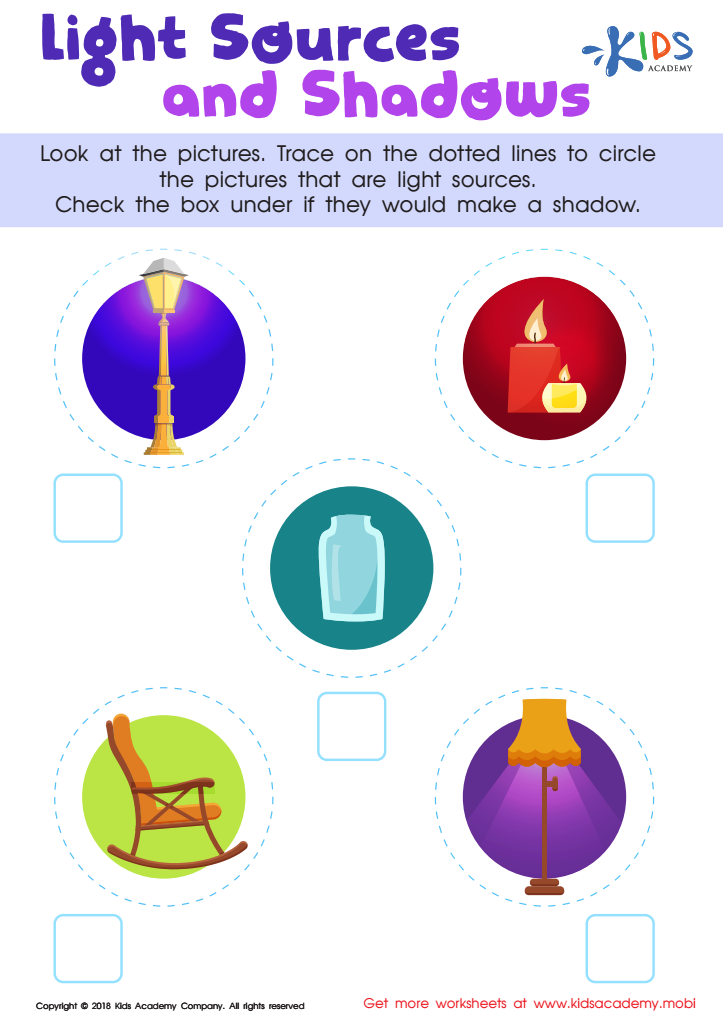
Light Sources and Shadows Worksheet

Light Sources and Shadows Worksheet

During the day, the sun radiates bright light. At night, when it's time for bed, the sun sets and darkness takes over. To light our way, we use other sources of light. With your students, trace the dotted lines around the pictures of light sources and check the boxes under the objects that will cast shadows.
Light Sources and Shadows Worksheet
Worksheet
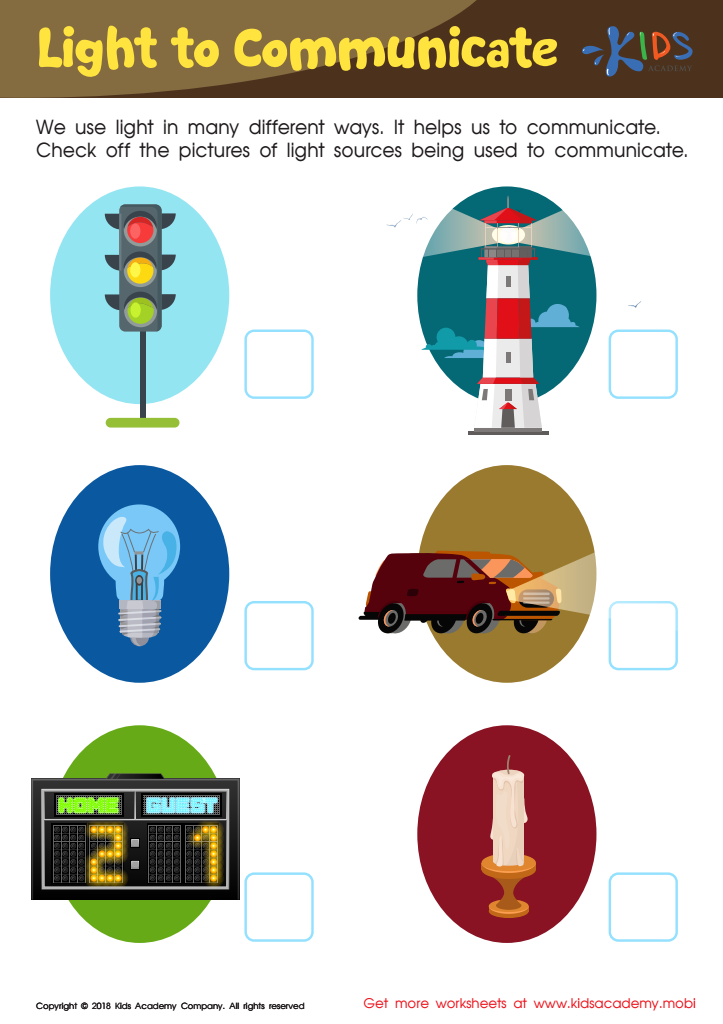
Light to Communicate Worksheet

Light to Communicate Worksheet

We can use lights to communicate effectively, like we use sounds. Ask your kids for examples and then help them tick off the pictures of light sources in the worksheet. This exercise will help them understand how light can be used to communicate.
Light to Communicate Worksheet
Worksheet
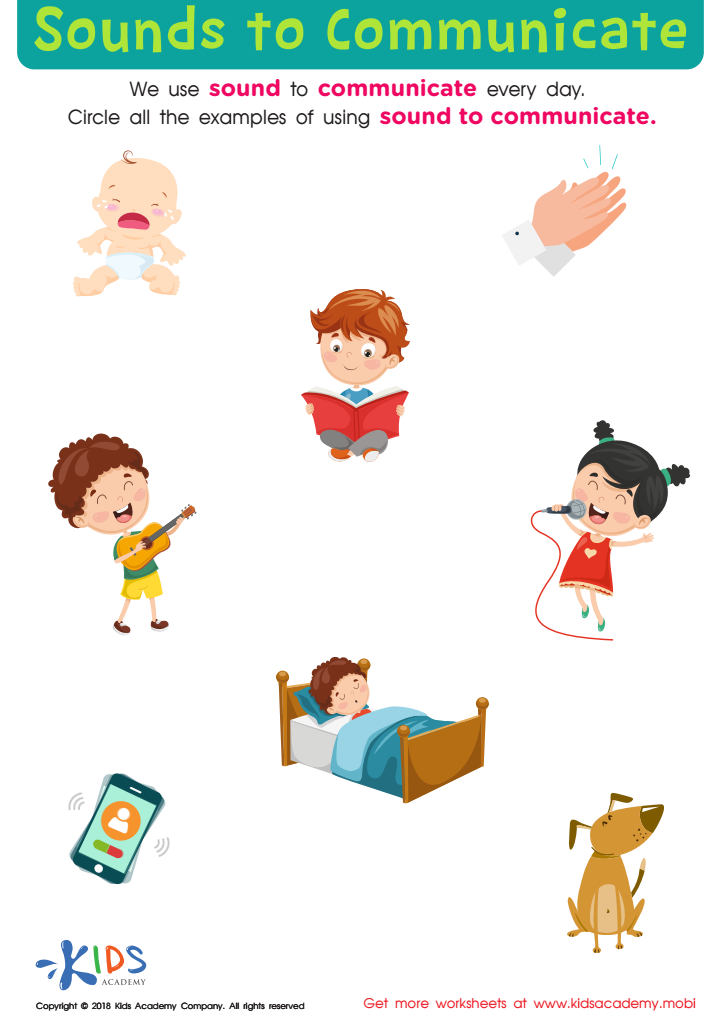
Sounds to Communicate Worksheet

Sounds to Communicate Worksheet

Sounds are important for communication. Ask your students to name sounds people, animals and things make. Then, review this worksheet with them and see if they can identify the activities. Ask them to circle examples of sounds used to communicate.
Sounds to Communicate Worksheet
Worksheet
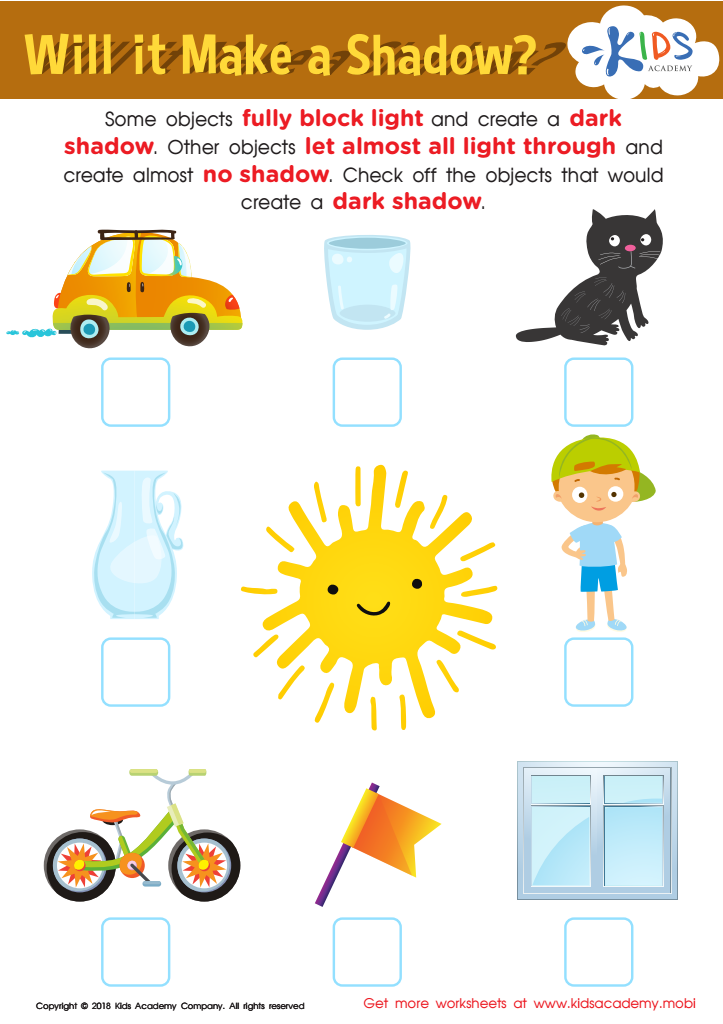
Will It Make a Shadow? Worksheet

Will It Make a Shadow? Worksheet

Teach your students about shadows with this printout. Ask them to check off the boxes next to the pictures that create a shadow. Explain that some objects block light, forming a shadow, while others don't and thus don't create a shadow. Your students are likely already familiar with their own shadow.
Will It Make a Shadow? Worksheet
Worksheet
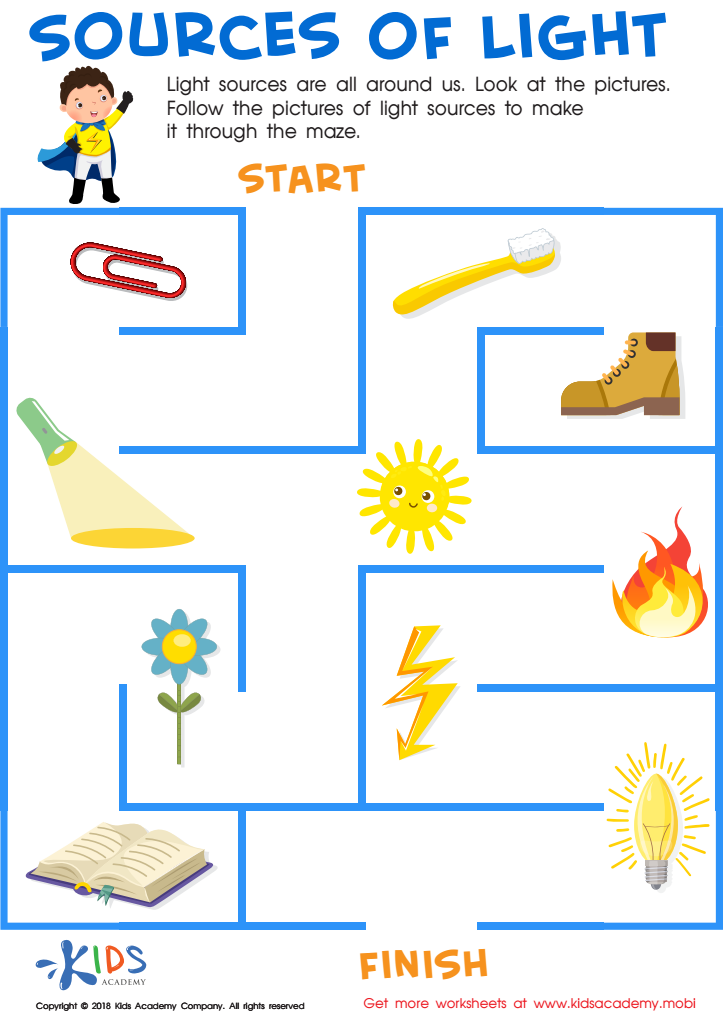
Sources of Light Worksheet

Sources of Light Worksheet

Help your child explore sources of light with this printout exercise. Ask them if they know the sun is the reason for day and night. Then point out other common light sources, then work together to guide them through the maze from start to finish.
Sources of Light Worksheet
Worksheet
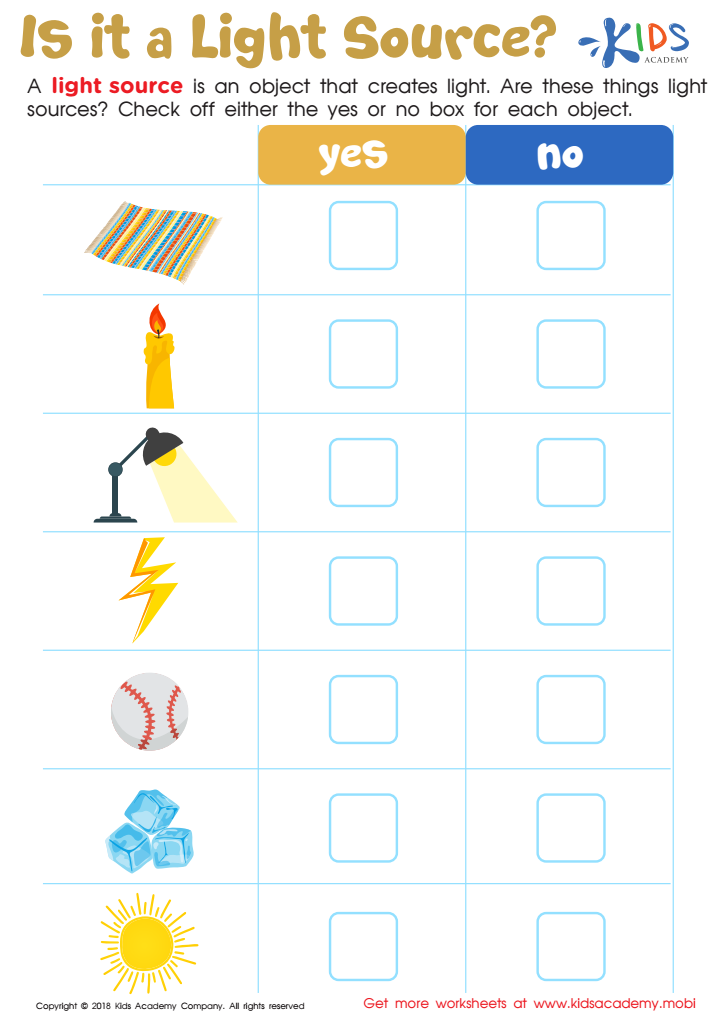
Is It a Light Source? Worksheet

Is It a Light Source? Worksheet

This worksheet is a fun way to teach kids about light sources. Children must identify natural sources like the sun and lightning, and man-made sources such as candles and lamps. Ask them to look at each object and check the box to indicate if it's a light source or not.
Is It a Light Source? Worksheet
Worksheet
Vibrations and Sounds Worksheet

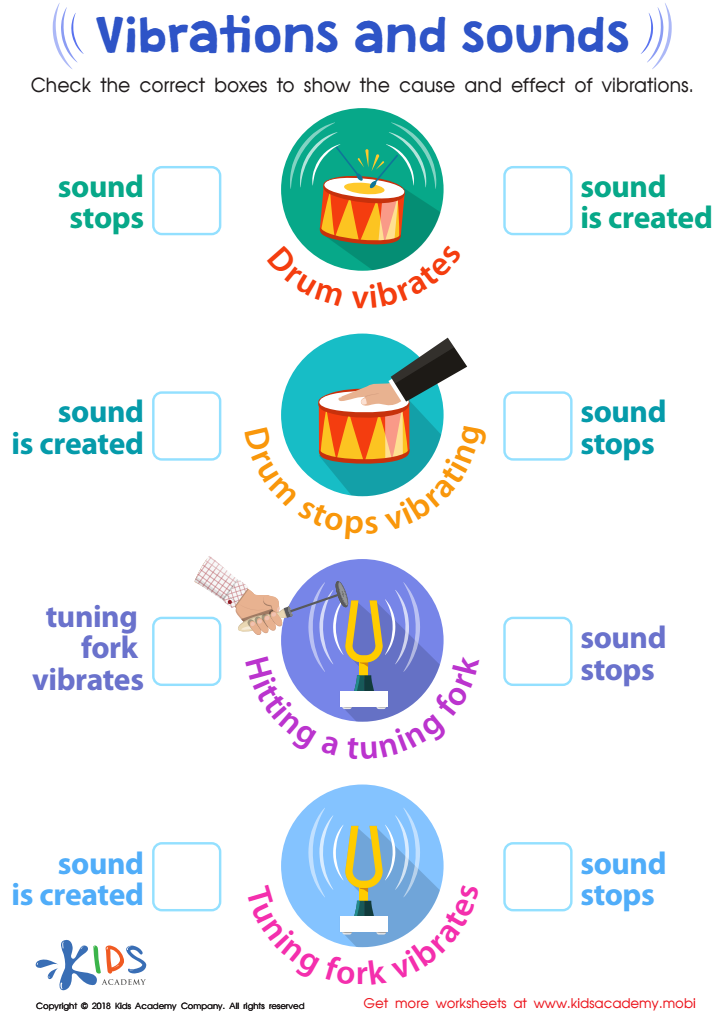
Vibrations and Sounds Worksheet

Many objects, creatures, and things make sounds. People talk, animals bark, hiss or meow, and things make sounds too. Ask your students to name others that produce sounds and why they do, such as when a drum is hit with a stick. Get them to learn about vibrations and cause/effect in this fun worksheet and check the answers.
Vibrations and Sounds Worksheet
Worksheet
Sounds Are Everywhere! Worksheet

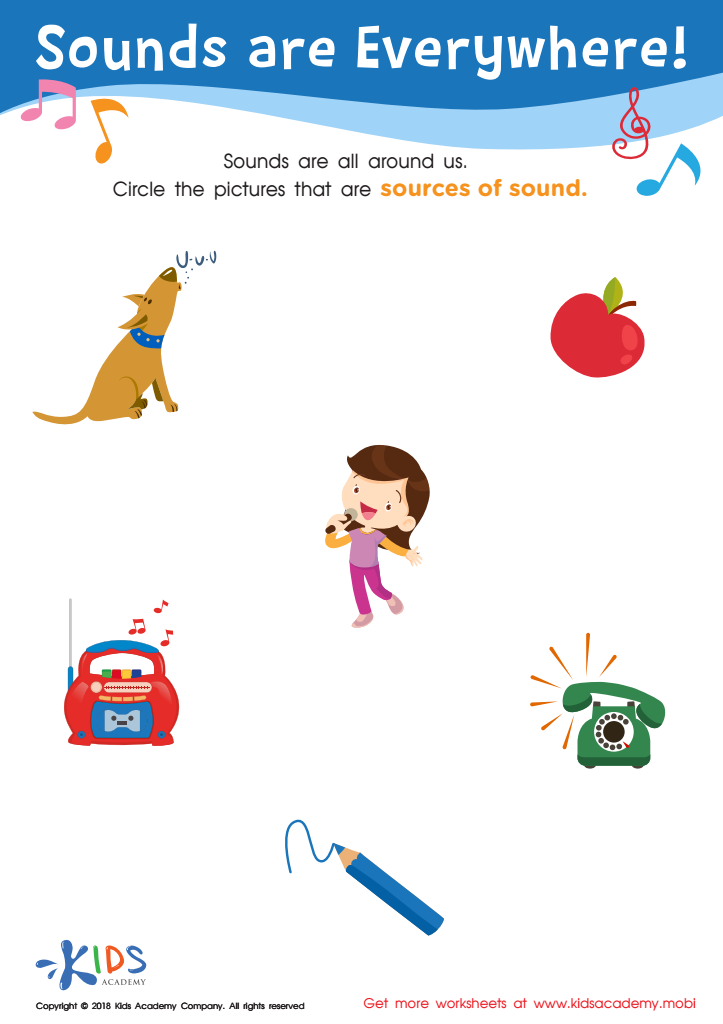
Sounds Are Everywhere! Worksheet

Ask your students to recall objects that make sound. Then, help them identify the sources of sound in the pictures of this worksheet.
Sounds Are Everywhere! Worksheet
Worksheet
Matter: Assessment 2 Worksheet

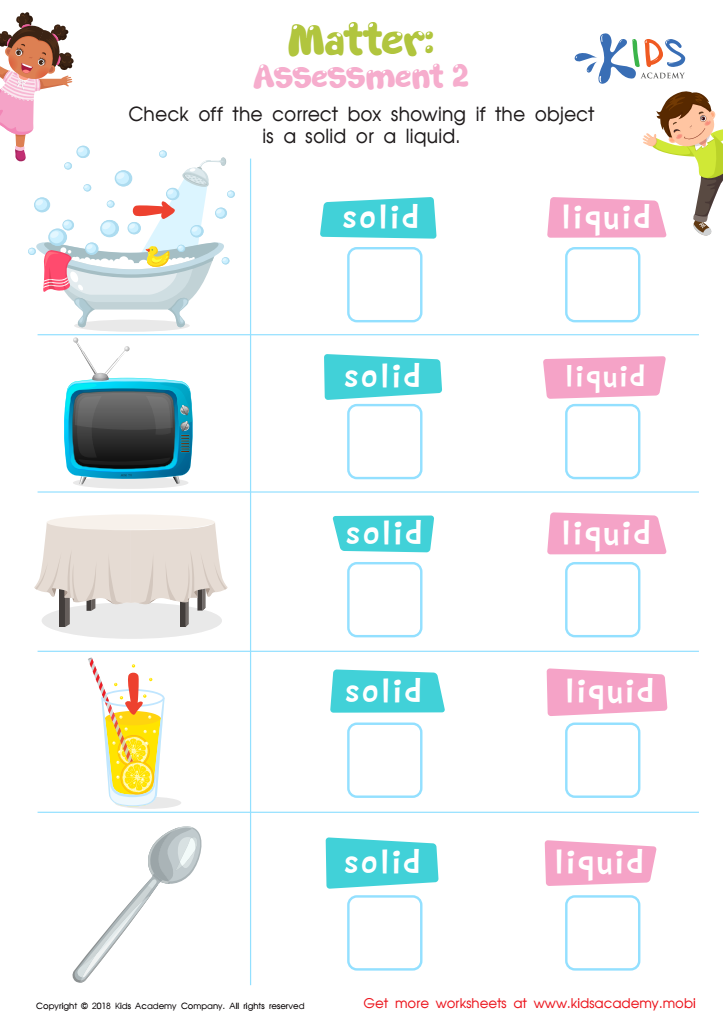
Matter: Assessment 2 Worksheet

Identify the five objects in this worksheet as either solid or liquid. Ask your kids to check the correct box. Melting changes solids to liquids while freezing transforms liquids to solids.
Matter: Assessment 2 Worksheet
Worksheet
Matter: Assessment 1 Worksheet

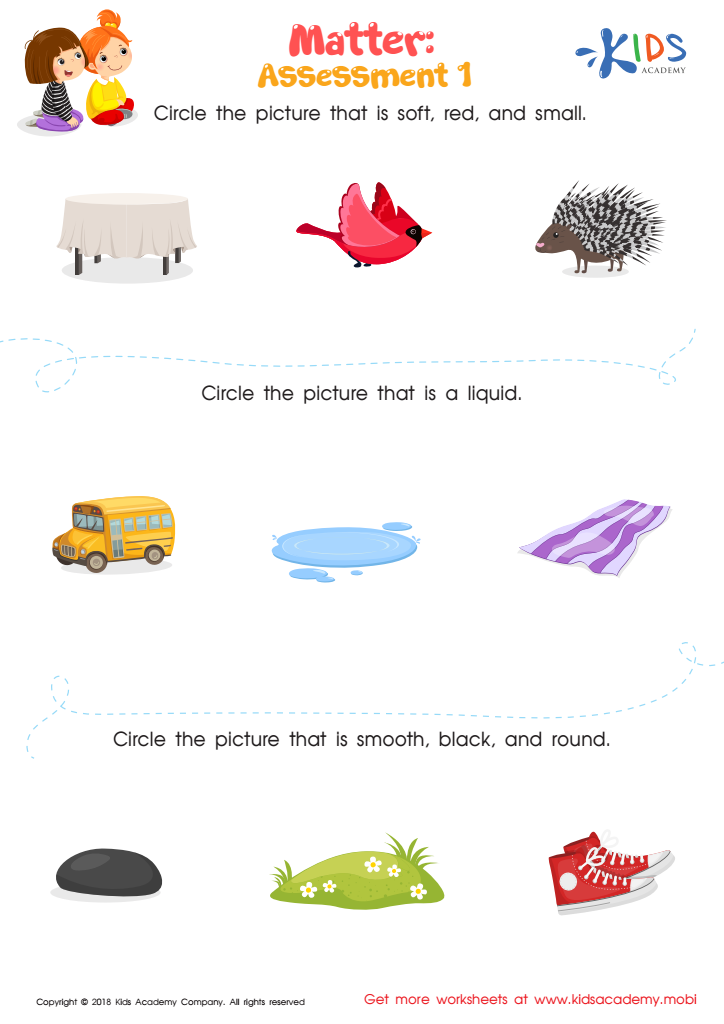
Matter: Assessment 1 Worksheet

Have your children learn that anything that has weight and takes up space is matter. Examples include buses, tables, people, animals, and more. Use this worksheet to help them identify the objects and circle the soft, red, and small one; the liquid; and the smooth, black, and round one.
Matter: Assessment 1 Worksheet
Worksheet
States of Matter: Freezing and Melting Worksheet

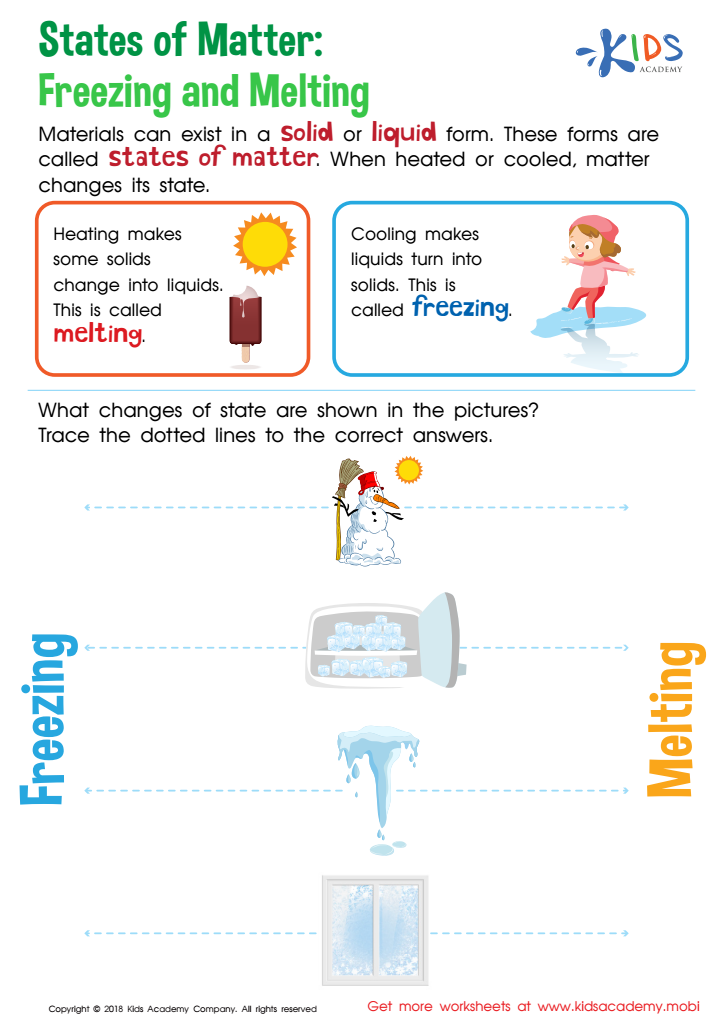
States of Matter: Freezing and Melting Worksheet

Have students look through the pics in the worksheet. Ask them what changes of state are shown, then trace the lines to the right answers. Matter can come in liquid or solid form, and changes between the two when heated or cooled (melting/freezing).
States of Matter: Freezing and Melting Worksheet
Worksheet
Matter all Around Worksheet

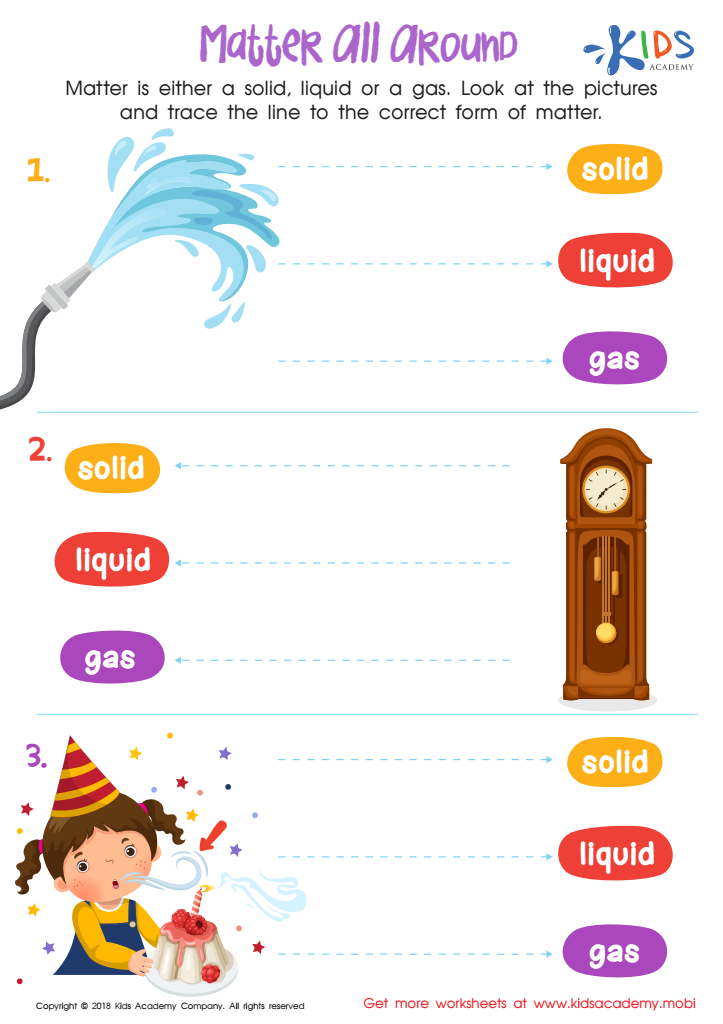
Matter all Around Worksheet

Have you taught your students about matter? Use this worksheet to help them understand that matter is anything that has weight and takes up space, either as a solid, liquid, or gas. Guide them to trace the line to the correct form of matter as they look at the pictures. This will be easy if they already know the topic, but it's also a great opportunity to teach them.
Matter all Around Worksheet
Worksheet
Observing Properties Worksheet

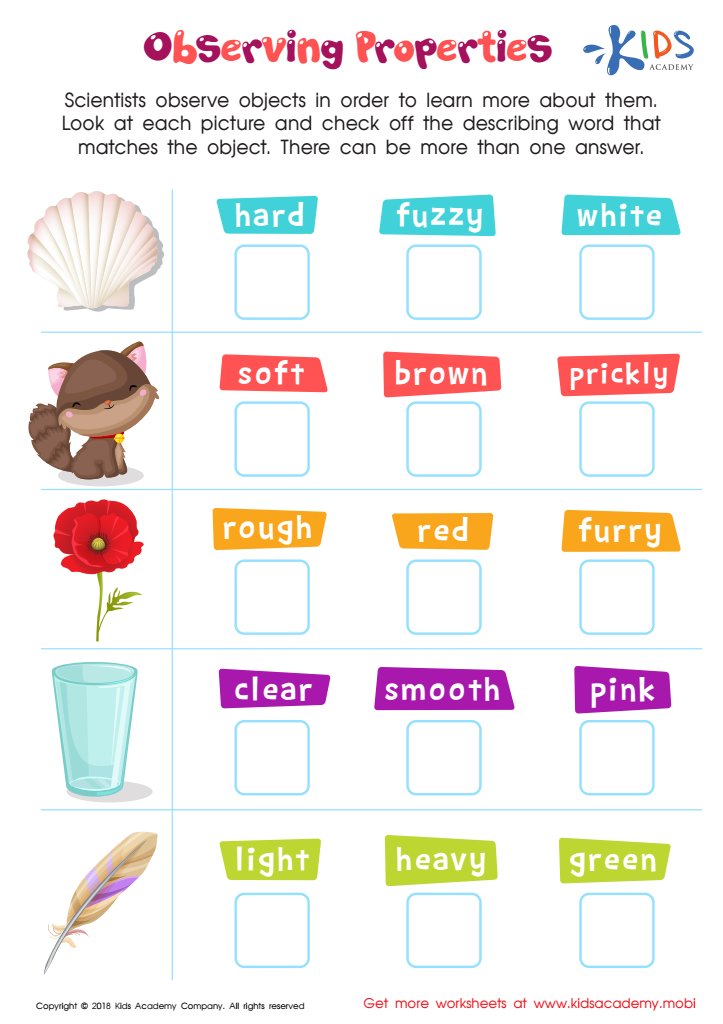
Observing Properties Worksheet

Encourage your kid's interest in science with this fun worksheet! Let them identify the five objects on the left, then choose the most accurate word from the options on the right. There might be more than one answer, so remind them to take their time observing the objects.
Observing Properties Worksheet
Worksheet
Force and Interactions: Assessment 2 Worksheet

Force and Interactions: Assessment 2 Worksheet

Help your child see the difference between push and pull with this fun worksheet. Ask them to match each picture to the right group. The "push" is on the left and the "pull" is on the right. Assist them in tracing the activities and explain what it is the people are doing.
Force and Interactions: Assessment 2 Worksheet
Worksheet
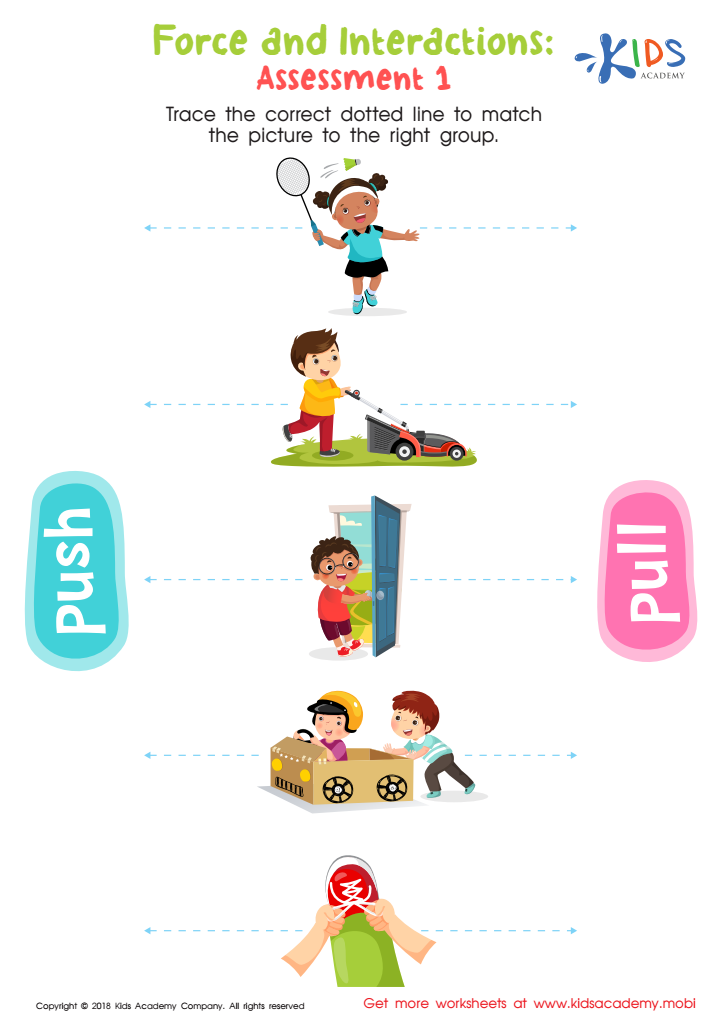
Force and Interactions: Assessment 1 Worksheet
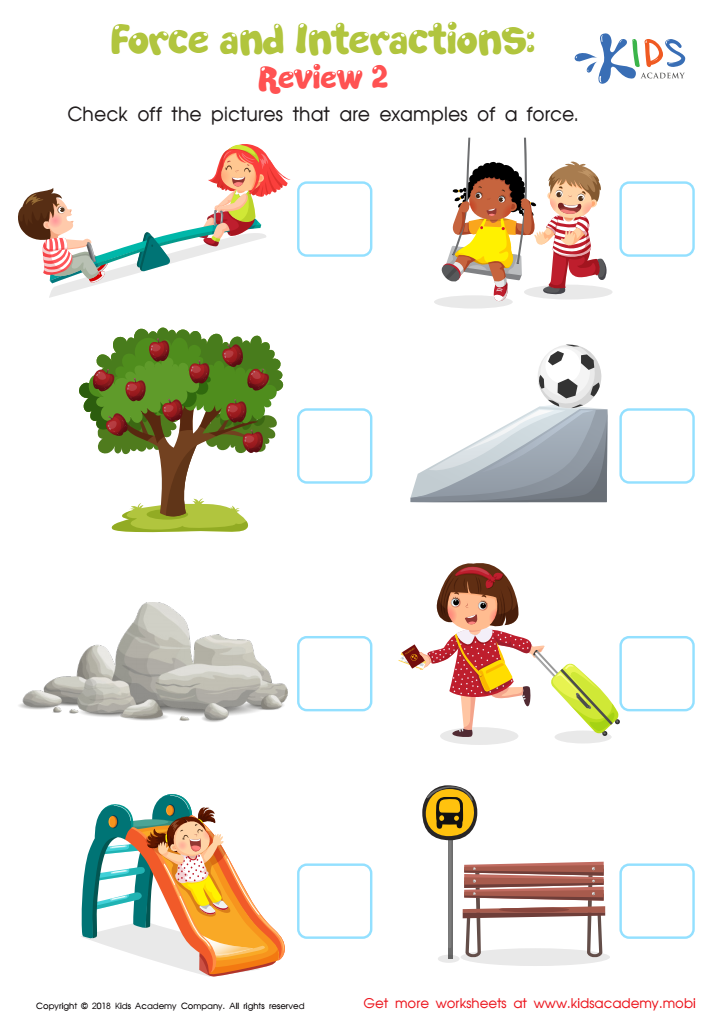

Force and Interactions: Assessment 1 Worksheet

Test your students' knowledge of pushing, pulling, ramps and wind with this worksheet. The first task requires them to identify push or pull pictures. The second asks them to identify a ramp and the third to explain which direction a ball will move when exposed to wind.
Force and Interactions: Assessment 1 Worksheet
Worksheet
Force and Interactions: Review 2 Worksheet
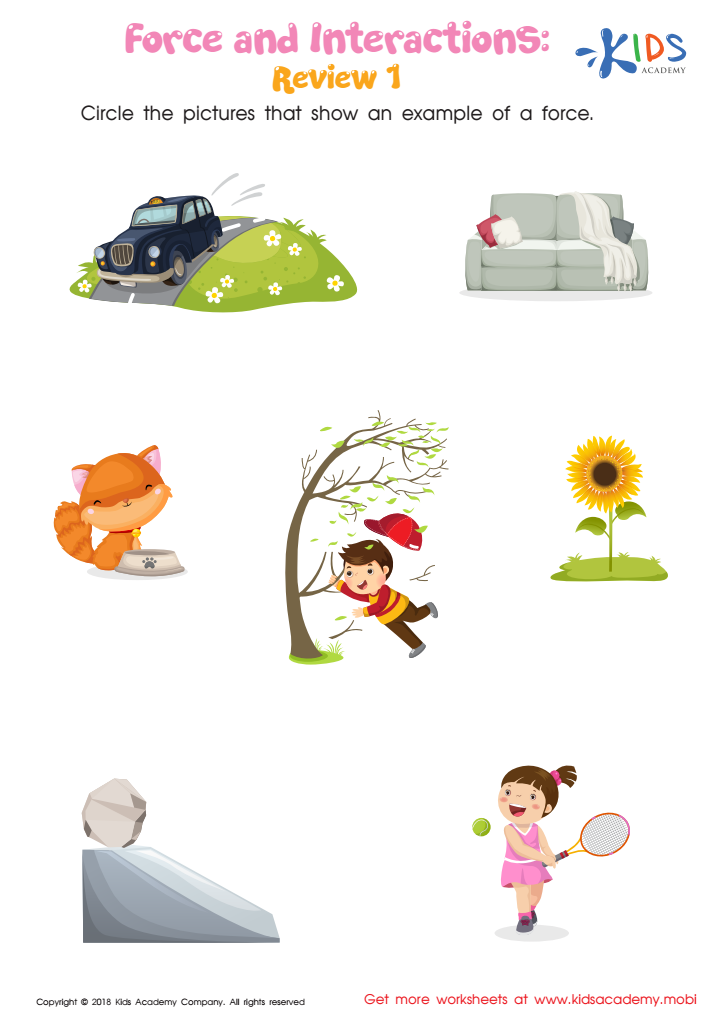

Force and Interactions: Review 2 Worksheet

Your child can identify force examples by checking the pictures. There are 8 images of kids engaging in activities and objects in motion. Get them to name the activities and objects, or if they know, explain force and interaction.
Force and Interactions: Review 2 Worksheet
Worksheet
Force and Interactions: Review 1 Worksheet
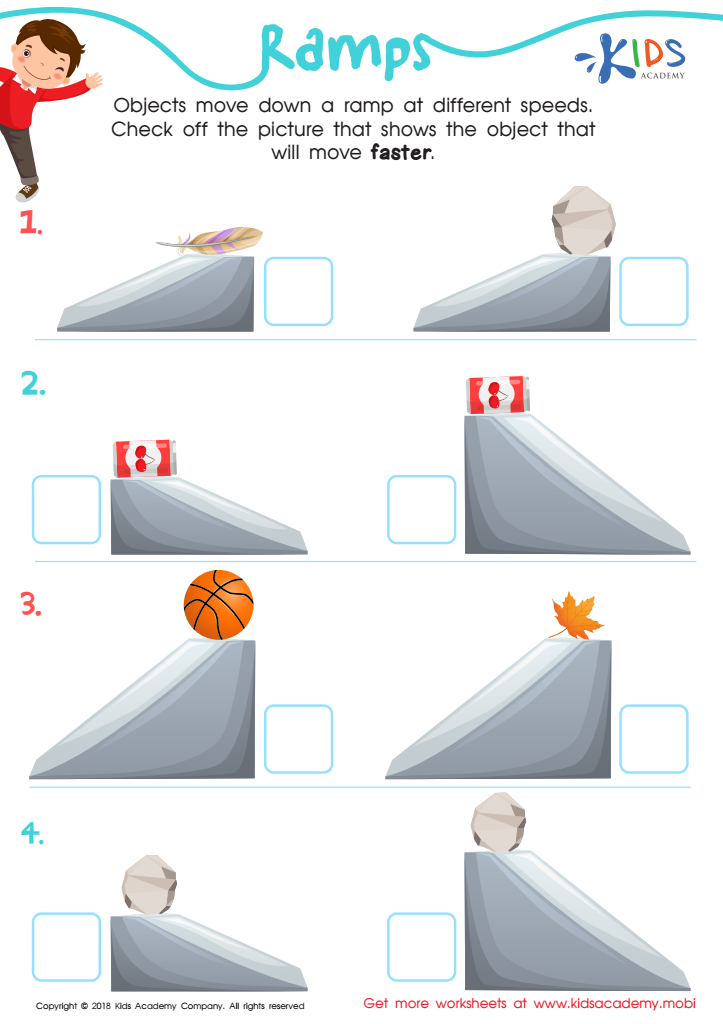

Force and Interactions: Review 1 Worksheet

See how well your child can identify the different forces. Explain to your child that force is what causes objects to move, such as wind blowing a branch or an object going down a ramp. Ask them to circle images that show a force and assess how well they can identify them.
Force and Interactions: Review 1 Worksheet
Worksheet
Ramps Worksheet
Ramps Worksheet

Ramps Worksheet

If your child has seen a ramp, they'll find this worksheet easy. A ramp is sloped for objects to move quickly downwards. The printout has images of objects on different ramps. Ask your child to identify which object will move faster.
Ramps Worksheet
Worksheet
Ramps All Around us Worksheet

Ramps All Around us Worksheet

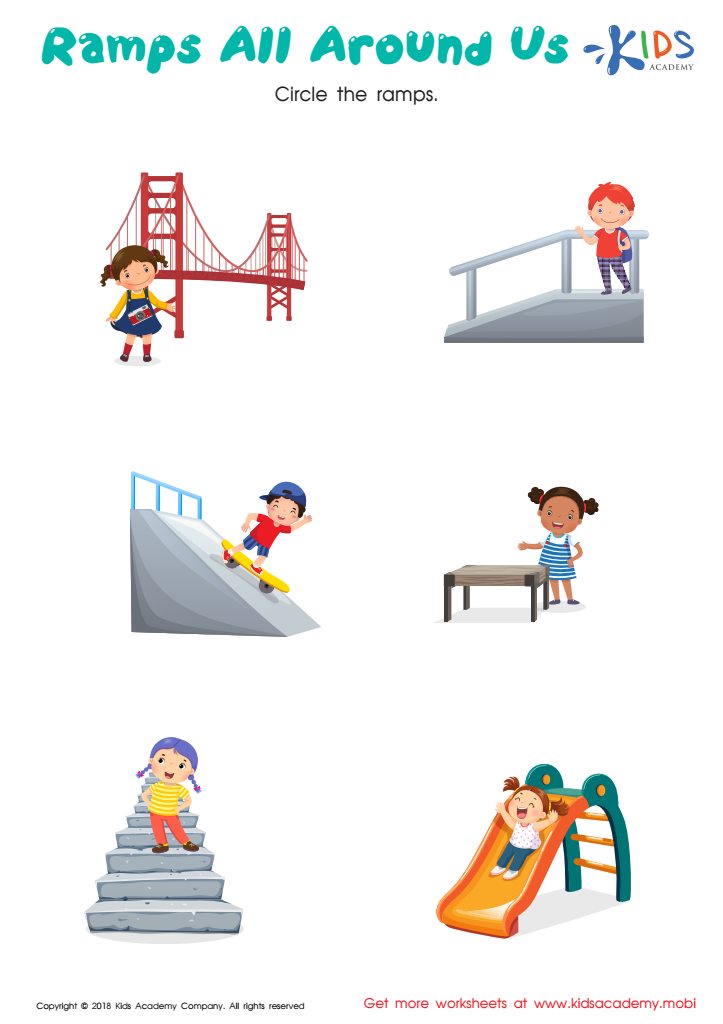
Ask your kids if they know what ramps are, then have them give you examples of places they've seen them. This worksheet has pictures of ramps - have your child identify and circle them.
Ramps All Around us Worksheet
Worksheet
Push or Pull Sorting Worksheet

Push or Pull Sorting Worksheet

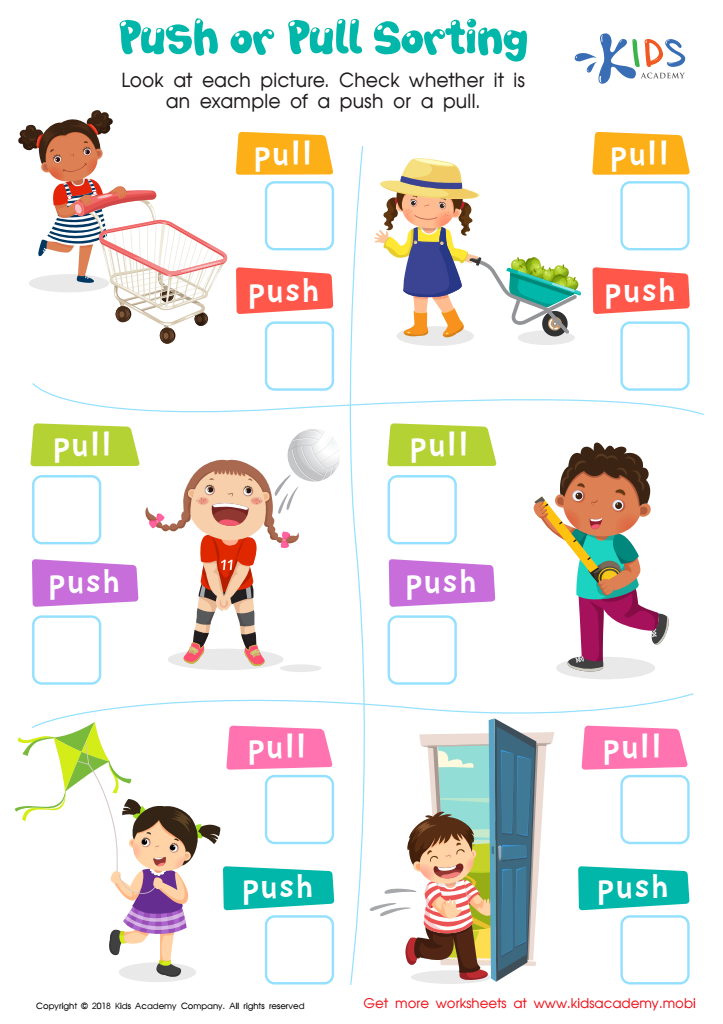
Show your child the pictures in this worksheet. Ask them to tell you what each child is doing. Then, ask them to identify whether it's an example of pushing or pulling. Ask if they know what these terms mean and if they can provide examples.
Push or Pull Sorting Worksheet
Worksheet
Will it Move? Worksheet

Will it Move? Worksheet

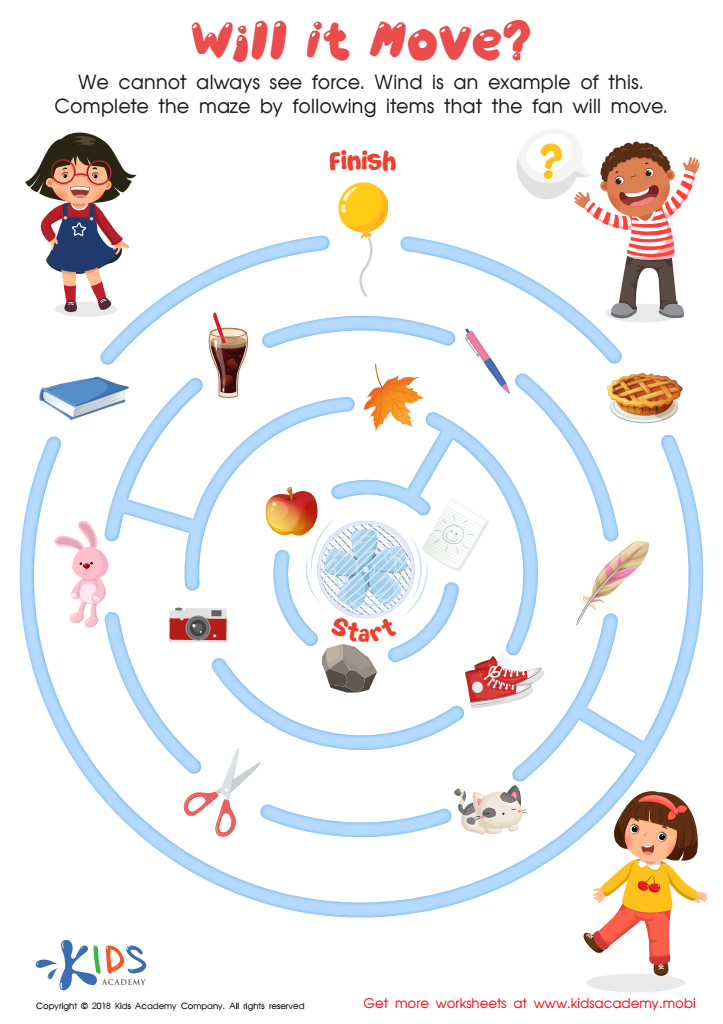
Does your child know about force? If yes/no, this worksheet can help. Force is invisible - like wind - but it moves objects. Ask your child to complete the maze, following the path of items moved by the wind. 80 words.
Will it Move? Worksheet
Worksheet
Which Direction Will it Go? Worksheet


Which Direction Will it Go? Worksheet

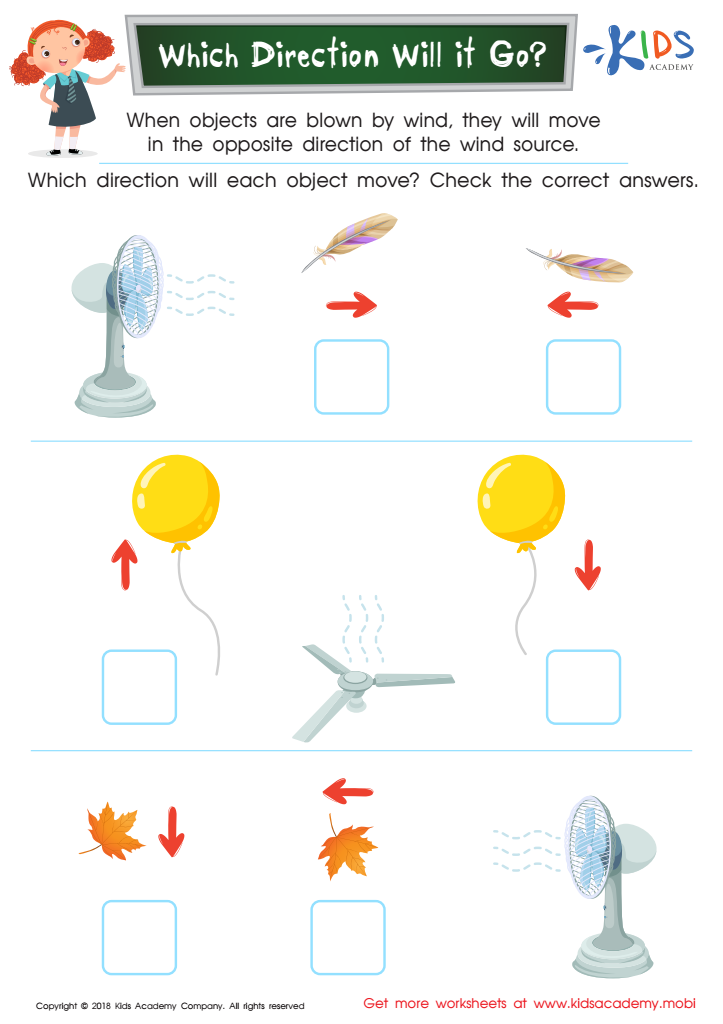
Explain to your students: when objects are blown by wind, they will move in the opposite direction. In the worksheet, there are pictures of wind sources and objects being blown by the wind. Ask your child to identify and check the direction each object will move.
Which Direction Will it Go? Worksheet

Worksheet


Physical science is a fundamental component of early education that lays the groundwork for a child's understanding of the world around them. For children aged 4-7, engaging with physical science concepts—such as matter, energy, and simple physical principles—helps ignite their curiosity and fosters a natural love for exploration.

Parents and teachers should care about introducing physical science at this age because it promotes critical thinking and problem-solving skills. Young children are naturally inquisitive, and through hands-on activities and experiments, they learn to ask questions, make observations, and draw conclusions based on evidence. This investigative approach not only nurtures cognitive development but also enhances social skills as they collaborate with peers during group activities.

Furthermore, physical science encourages creativity and innovation. By exploring concepts like forces and motion or changes in states of matter, children learn to think outside the box, laying the foundation for future scientific endeavors.

In an era where STEM (Science, Technology, Engineering, and Mathematics) education is increasingly emphasized, early exposure to physical science equips children with fundamental skills they'll rely on in their academic journey and helps cultivate informed citizens who can understand and engage with the complexities of the world.