2D Shapes Worksheets for Ages 4-8 - Page 4
75 filtered results
-
From - To
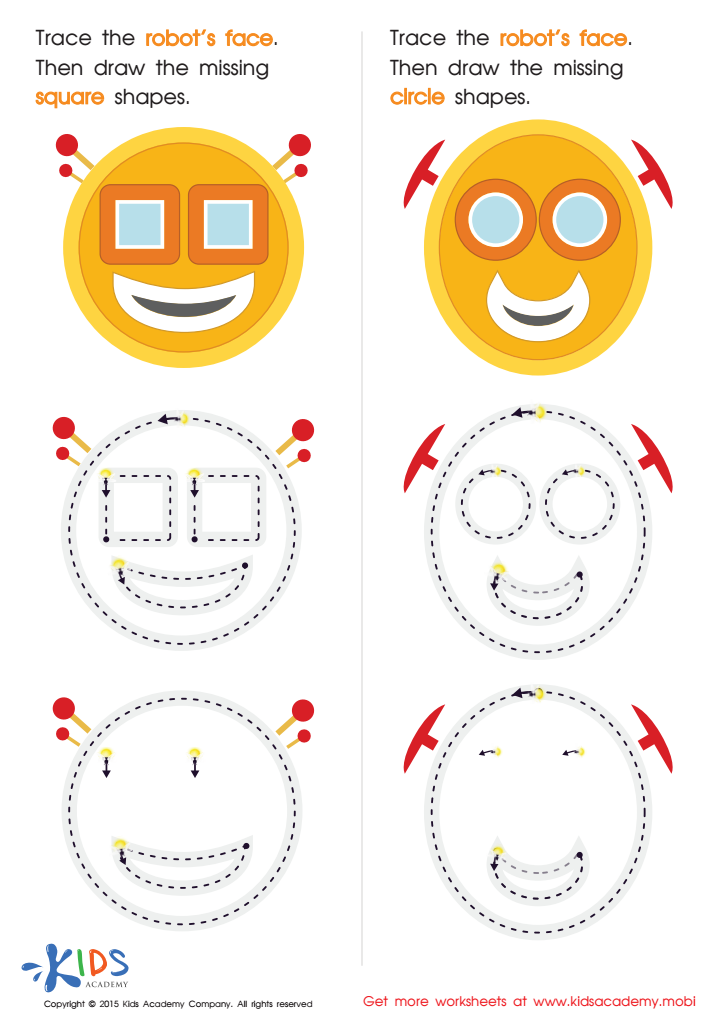
Practicing to Draw Circles And Squares Printable
 Assign to My Students


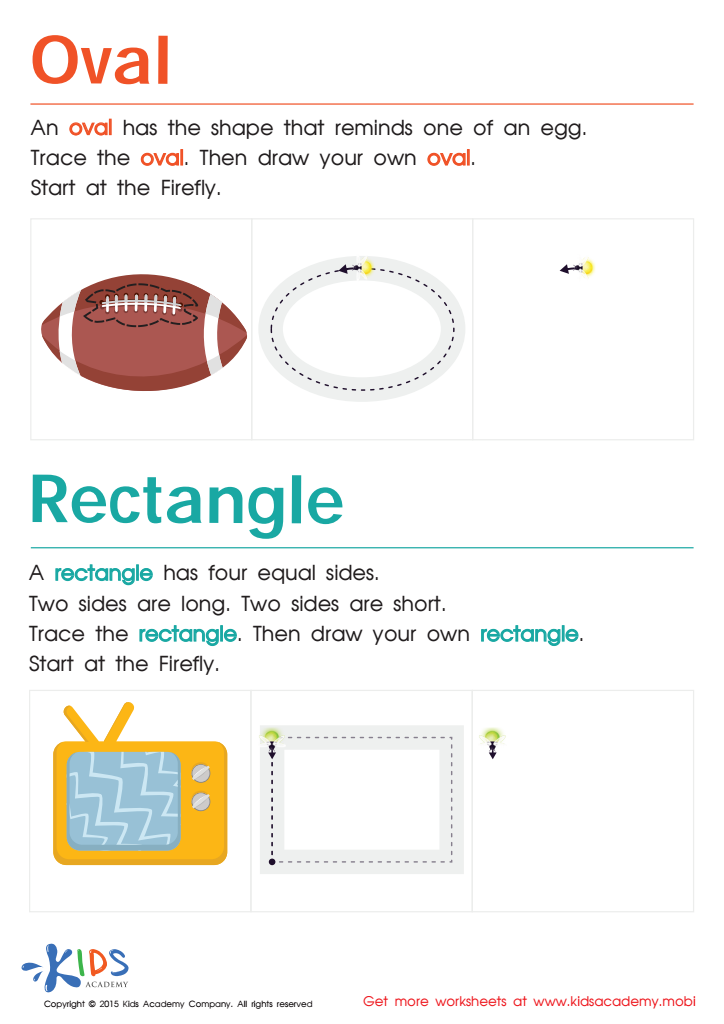
Easy Drawing of Ovals And Rectangles Worksheet
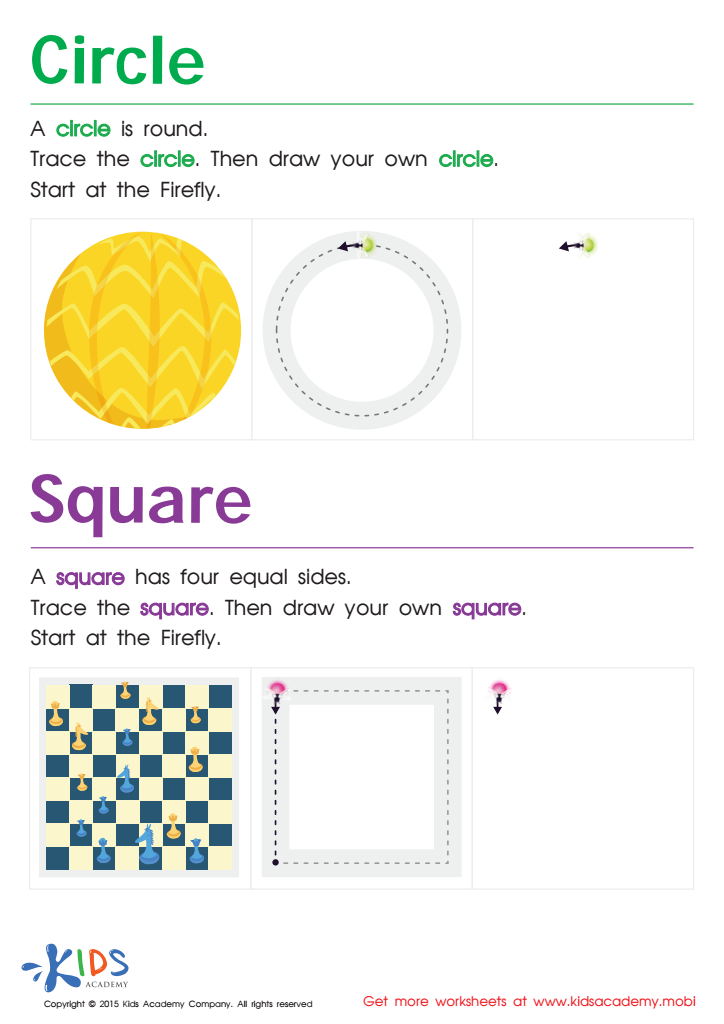
Trace And Draw a Circle And a Square Worksheet








Parents and teachers should care about 2D shapes for children ages 4-8 because foundational geometric skills are crucial for cognitive development. At this stage, children are highly receptive to new concepts, and learning about shapes builds their spatial awareness, which aids in understanding the physical world around them.
Shapes are the building blocks of early math skills. Identifying and describing shapes helps children learn important vocabulary and enhances their language development. Additionally, recognizing shapes and sorting them into groups supports logical thinking and reasoning skills.
Learning about 2D shapes also plays a significant role in problem-solving and critical thinking. For example, in playing with puzzles or block-building, children use shapes to understand how different parts fit together to form a whole. This hands-on manipulation supports their fine motor skills and hand-eye coordination.
Moreover, exposure to 2D shapes prepares children for more complex mathematical concepts they will encounter later in their education. Recognizing patterns, symmetry, and geometry becomes easier when they have a strong grasp of shapes.
Incorporating shapes into playtime, stories, and art engages children’s creativity and makes learning enjoyable. By emphasizing the importance of 2D shapes early on, parents and teachers set the foundation for lifelong, practical mathematics skills and academic success.