Filters

509 filtered results

Clear all filters
Favorites
With answer key
Interactive

509 filtered results

Difficulty Level

Grade


Check out this FREE Trial Lesson on Reading for age 4-9!

Picture Book Text Features

Favorites
With answer key
Interactive
  • 4-9
  • Interactive
  • Reading
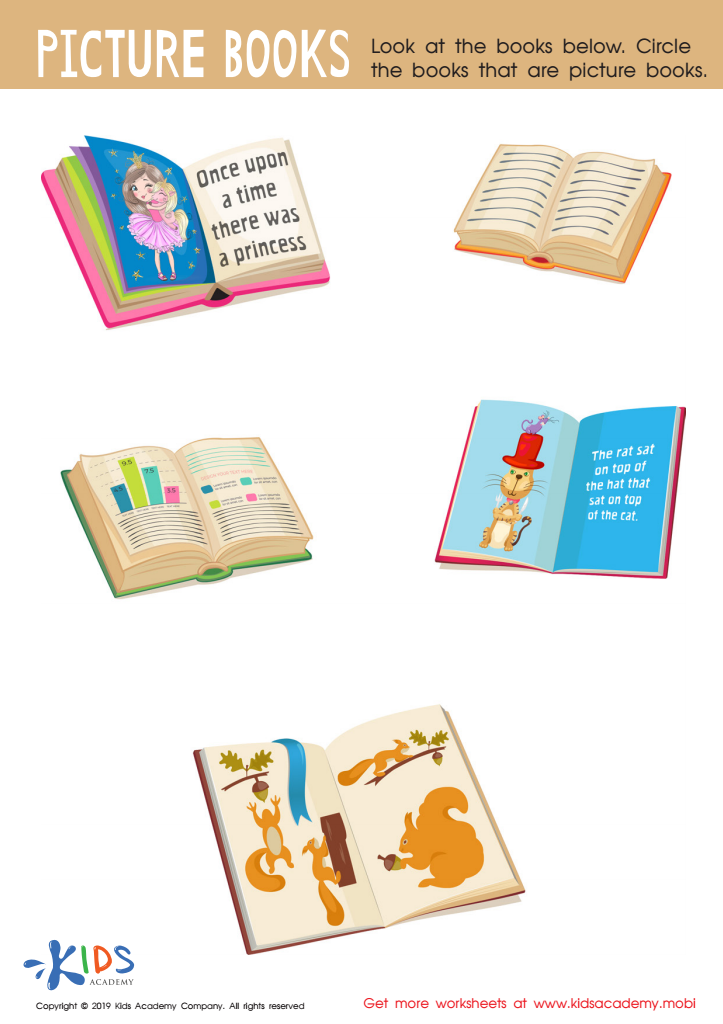
Picture Books Worksheet

Picture Books Worksheet

Kids will love this exercise! Get their imaginations going with five colorful picture books. Ask them to circle the books that are picture books and have them enjoy the exciting stories, along with the colorful images. Reading can become that much more enjoyable!
Picture Books Worksheet
Worksheet
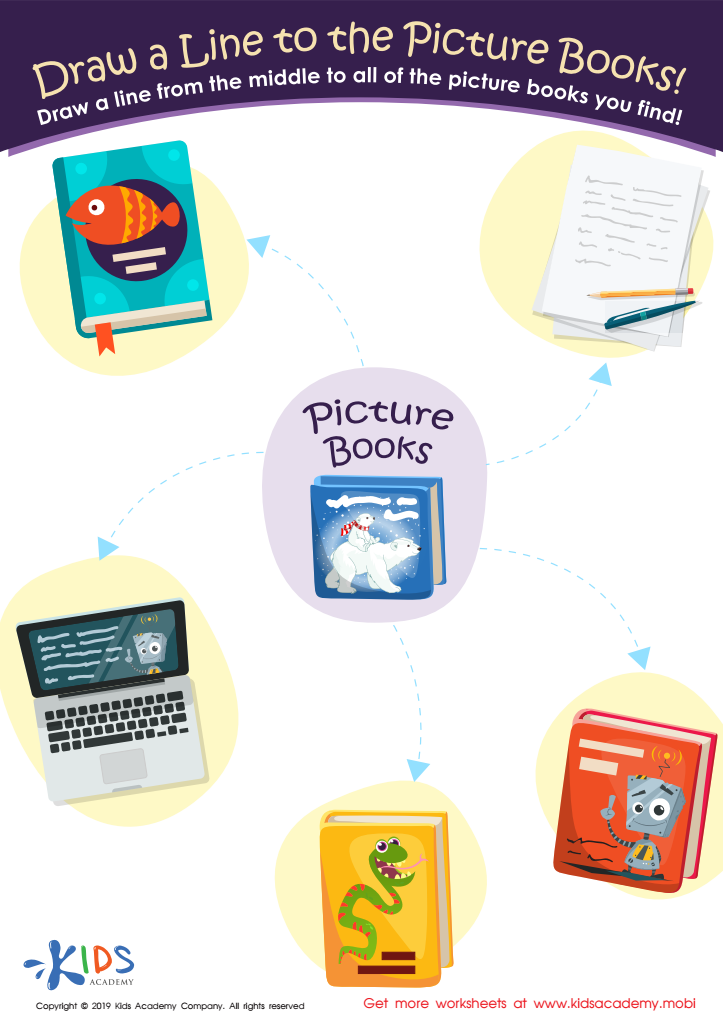
Draw a Line to the Picture Books Worksheet

Draw a Line to the Picture Books Worksheet

Encourage your students to read and explore with this fun exercise! They'll draw a line from the word 'picture books' to the five objects. Picture books are exciting, with stories and colorful images. Make story time even more enjoyable with this worksheet!
Draw a Line to the Picture Books Worksheet
Worksheet
Point of View Worksheet

Point of View Worksheet

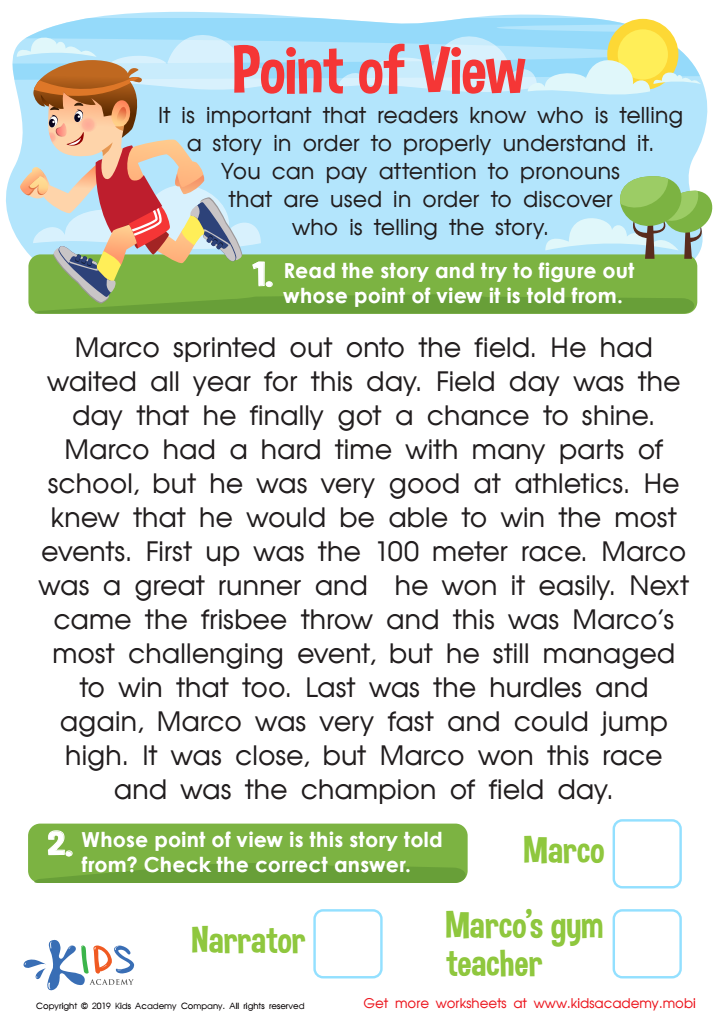
Readers need to identify the storyteller to properly understand and relate to the story. Help your kids identify the point of view by noticing the pronouns used. Read the story in this worksheet with them and guide them to determine the story's point of view.
Point of View Worksheet
Worksheet
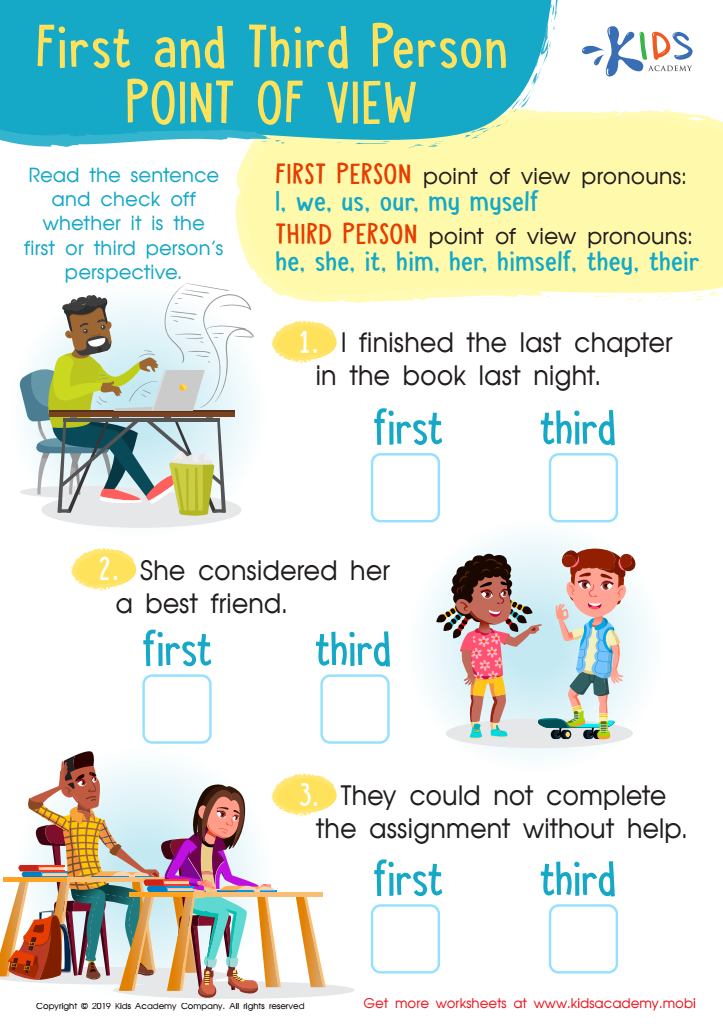
First and Third Person Point of View Worksheet

First and Third Person Point of View Worksheet

Remind kids what a point of view is in a story. First person is from the character's perspective; third person is from the narrator's. Ask students to check if sentences in the exercise are in first or third person point of view.
First and Third Person Point of View Worksheet
Worksheet
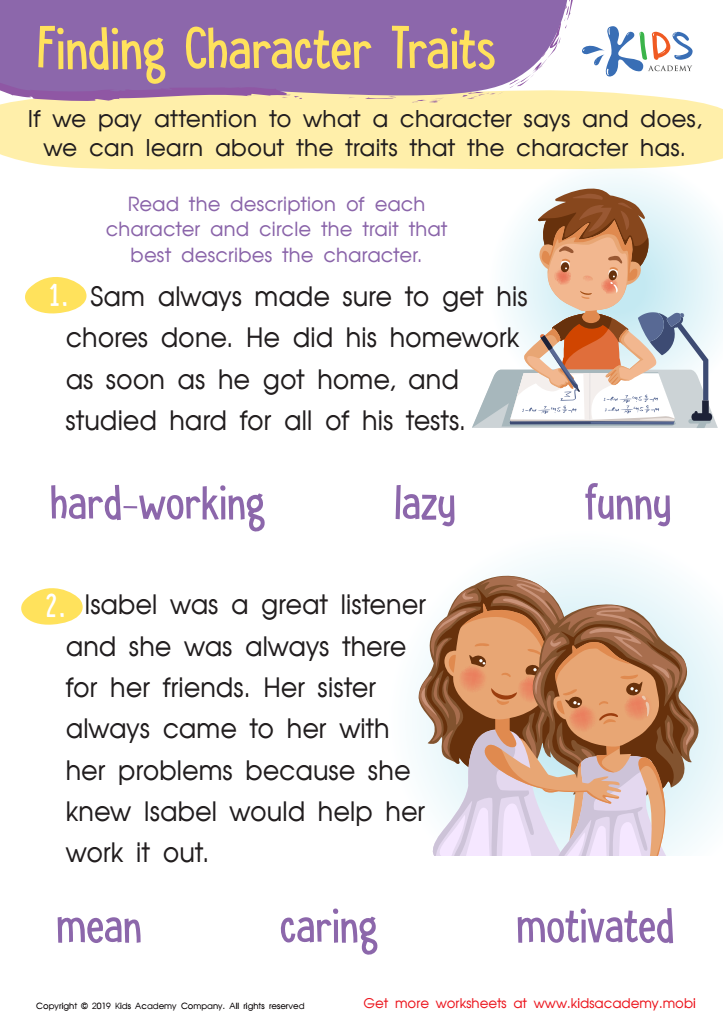
Finding Character Traits Worksheet

Finding Character Traits Worksheet

Before you start, make sure your kids know the difference between a character trait and a feeling. Traits are part of a character's entire personality and can be inferred from what they say and do in a story. Read the character descriptions on the worksheet and help your kids circle the best trait for each.
Finding Character Traits Worksheet
Worksheet
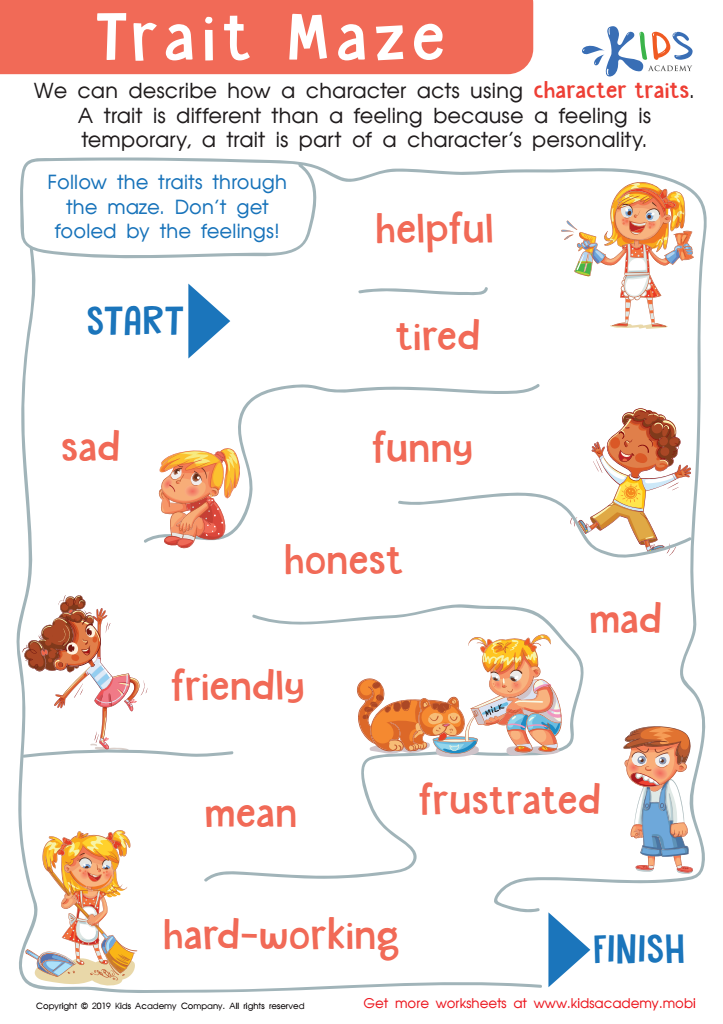
Trait Maze Worksheet

Trait Maze Worksheet

A trait is a character's personality and should not be confused with a feeling, which is temporary. In this worksheet, kids learn about traits by following them through a maze and ignoring the feelings on the path.
Trait Maze Worksheet
Worksheet
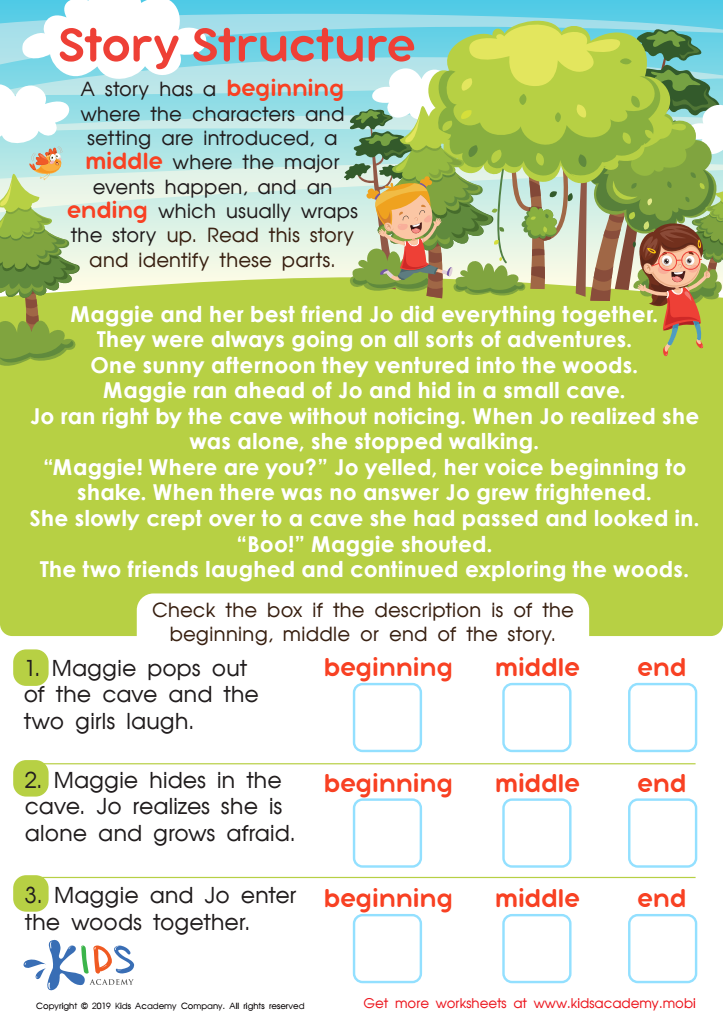
Story Structure Worksheet

Story Structure Worksheet

Help your students read and identify the parts of the story in this worksheet: the beginning (characters and setting), middle (major events), and ending (events are resolved). Show them how to structure a story for clarity.
Story Structure Worksheet
Worksheet
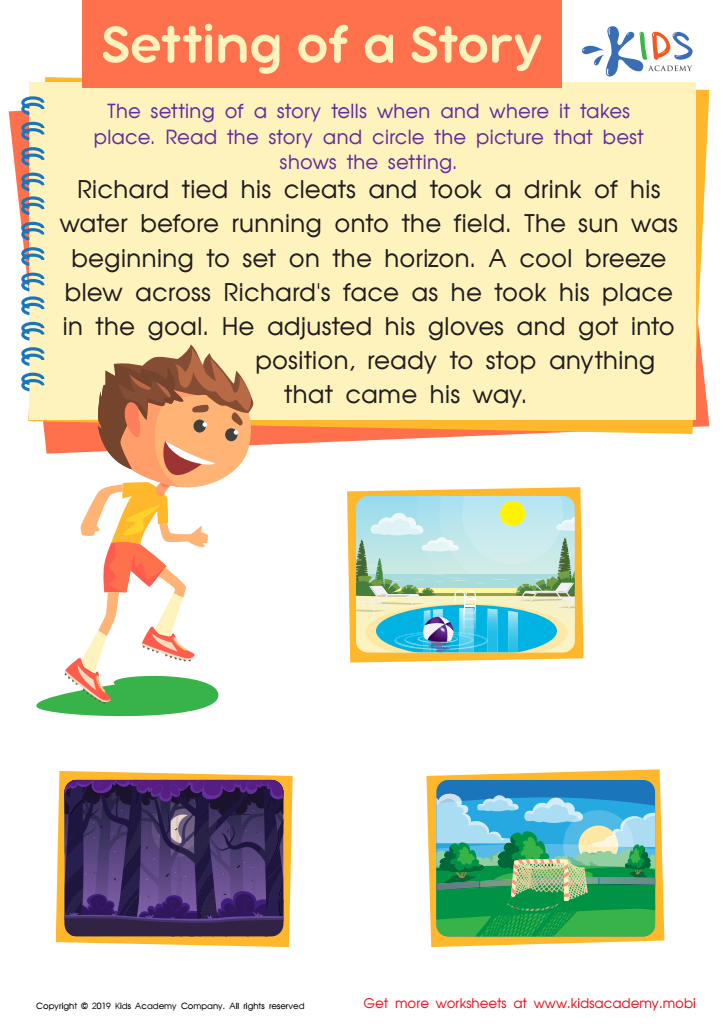
Setting of a Story Worksheet

Setting of a Story Worksheet

You need characters, theme, POV, plot and setting to tell a good story. Ask your kids to explain them and use this worksheet with a story to teach them about setting. Read the story with your kids, then have them circle the picture that best shows the setting.
Setting of a Story Worksheet
Worksheet
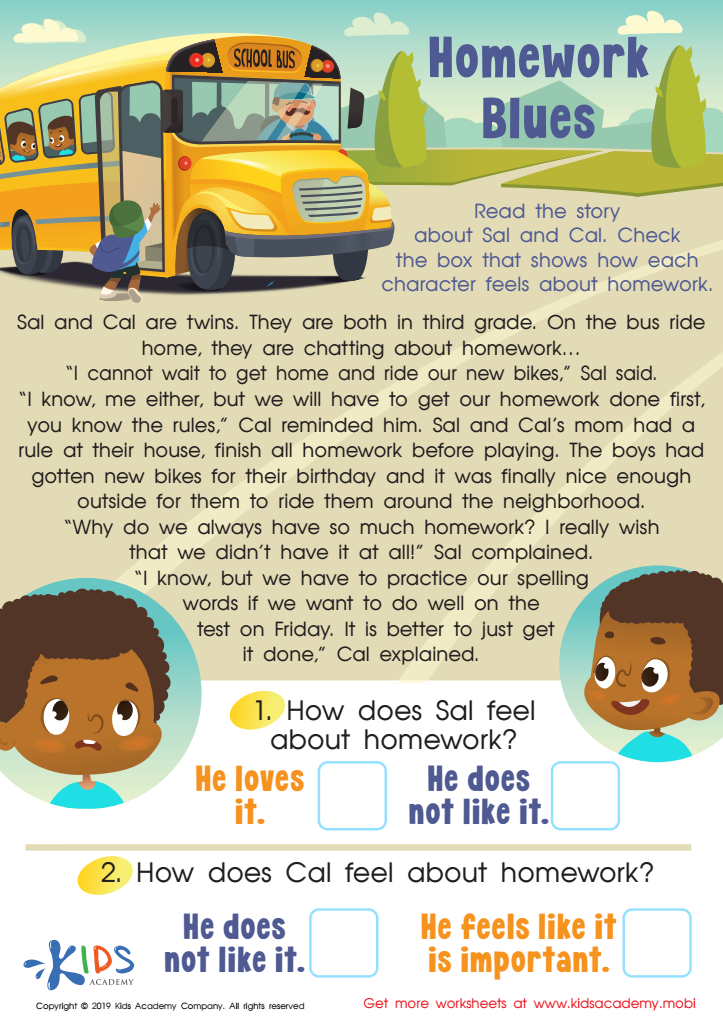
Homework Blues Worksheet

Homework Blues Worksheet

Cal and Sal don't love doing homework, just like your kids. Use this worksheet to help your children understand why homework is important. Read the passage together and then answer the questions at the bottom of the page. It's a fun way to learn together!
Homework Blues Worksheet
Worksheet
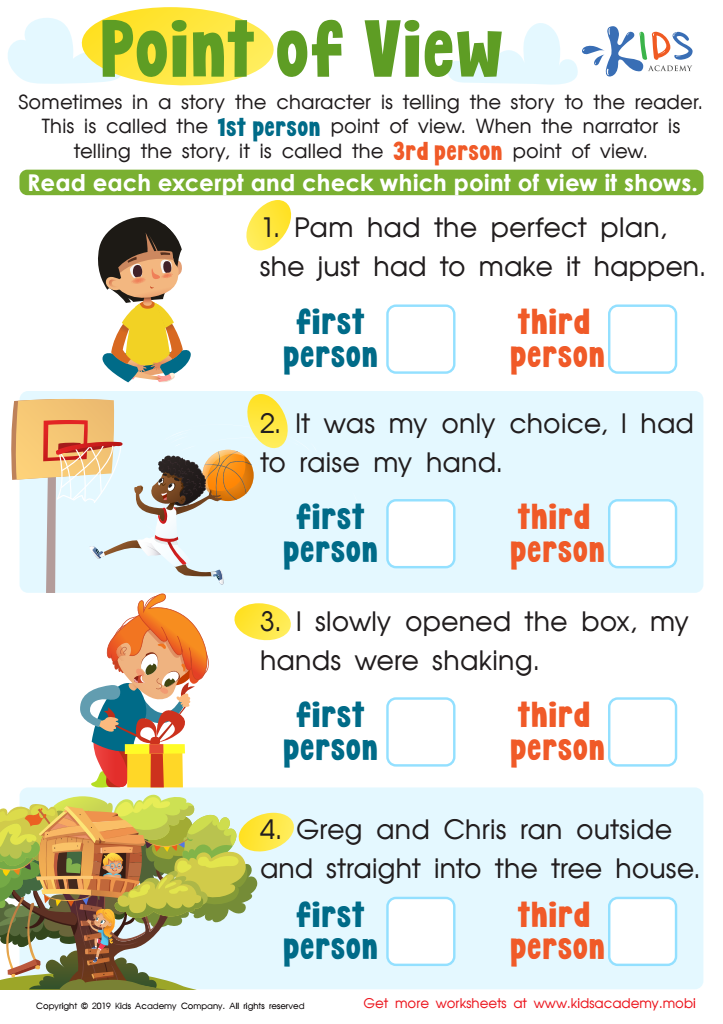
Point of View Printable

Point of View Printable

Teach your kids about points of view with this worksheet! In a story, characters can tell the story in first person or it can come from a narrator in third person. Read the excerpt in the worksheet and ask your kids to identify which point of view it is.
Point of View Printable
Worksheet
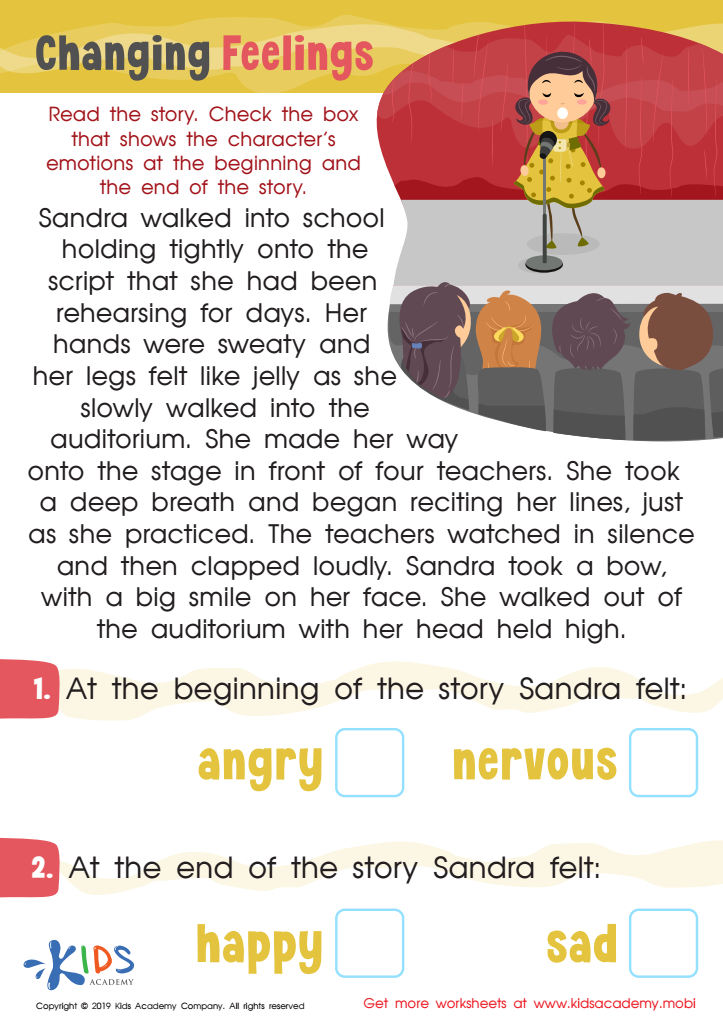
Changing Feelings Worksheet

Changing Feelings Worksheet

Help your kids practice reading skills with this exercise. Ask them to read the short passage, then check the boxes showing the character's emotions at the start and end. This will help them improve their reading and understanding.
Changing Feelings Worksheet
Worksheet
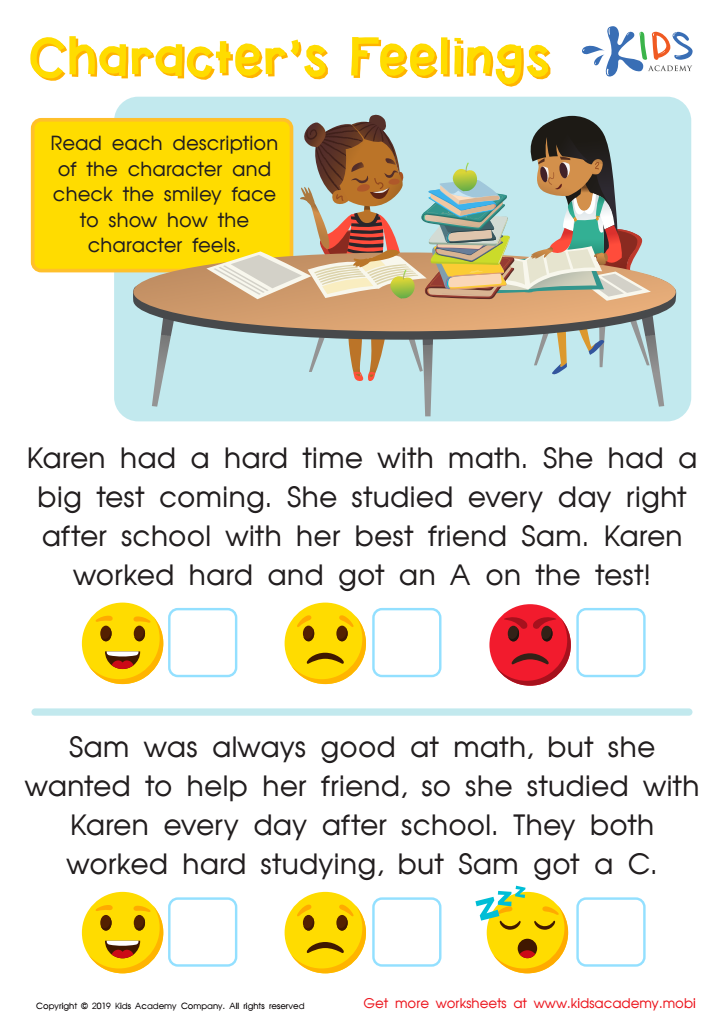
Character’s Feelings Worksheet

Character’s Feelings Worksheet

To help your child with reading and writing, encourage them to read simple texts and comprehension passages. This will help them learn new words, build their grammar and practice their reading skills. Go through a worksheet together, read the character descriptions then ask your child to pick the smiley face which shows how the character feels.
Character’s Feelings Worksheet
Worksheet
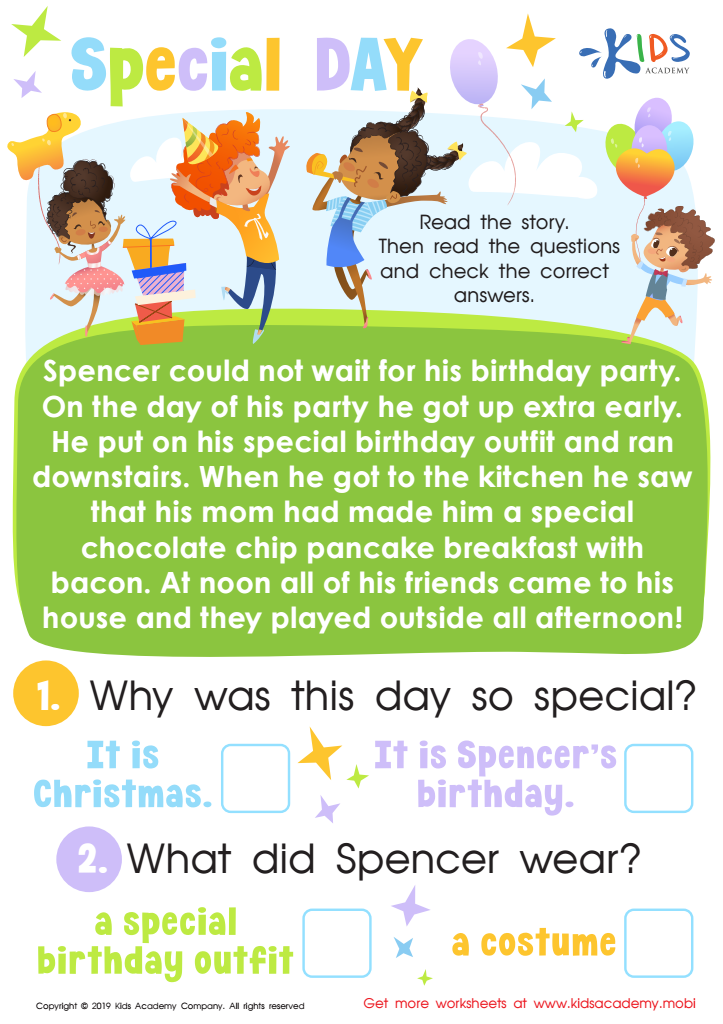
Special Day Worksheet

Special Day Worksheet

What's your child's favorite day? Let them tell you what makes it special and what they enjoy most. With the worksheet, show them the picture and ask them to identify the day. Read the story aloud, and help them answer the questions and check the right responses.
Special Day Worksheet
Worksheet
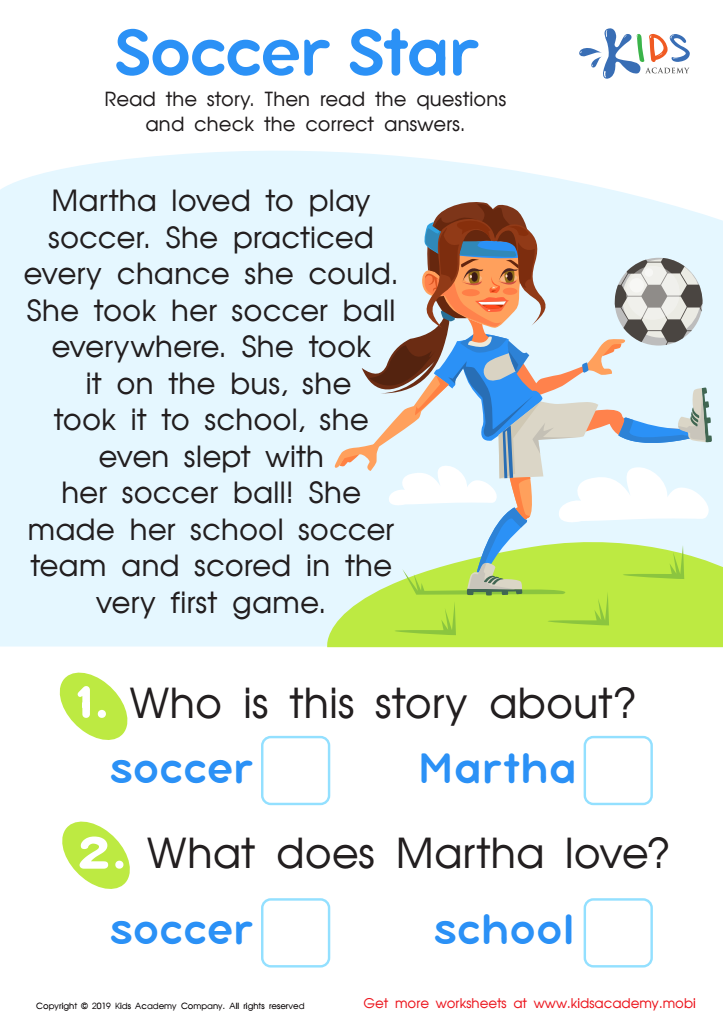
Soccer Star Worksheet

Soccer Star Worksheet

Do your kids play sports? Ask them what their favourite activities are and what they like most about them. Look at the picture in the worksheet with your kids. Can they tell you what sport the girl is playing? Read the story and help them answer the two questions at the bottom.
Soccer Star Worksheet
Worksheet
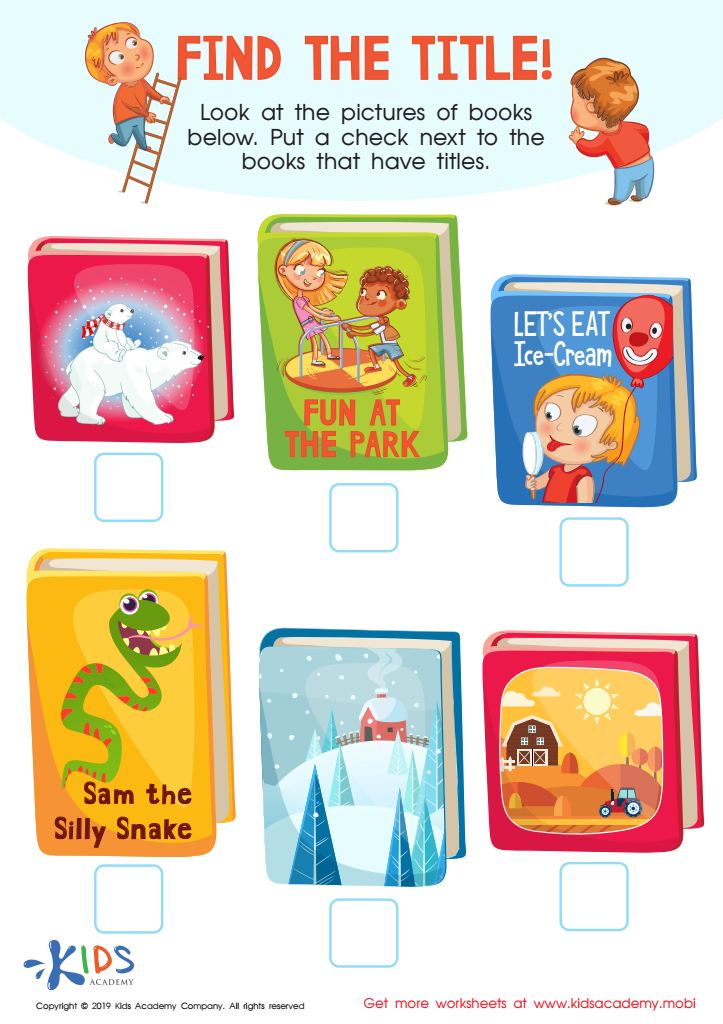
Find the Title Worksheet

Find the Title Worksheet

Help your kids to identify the colors of the books on this worksheet. Ask them to spot the differences between the six books, such as which ones have titles printed on their covers. Ask them to put a check next to the books with titles. This activity will promote your kids' thinking skills.
Find the Title Worksheet
Worksheet
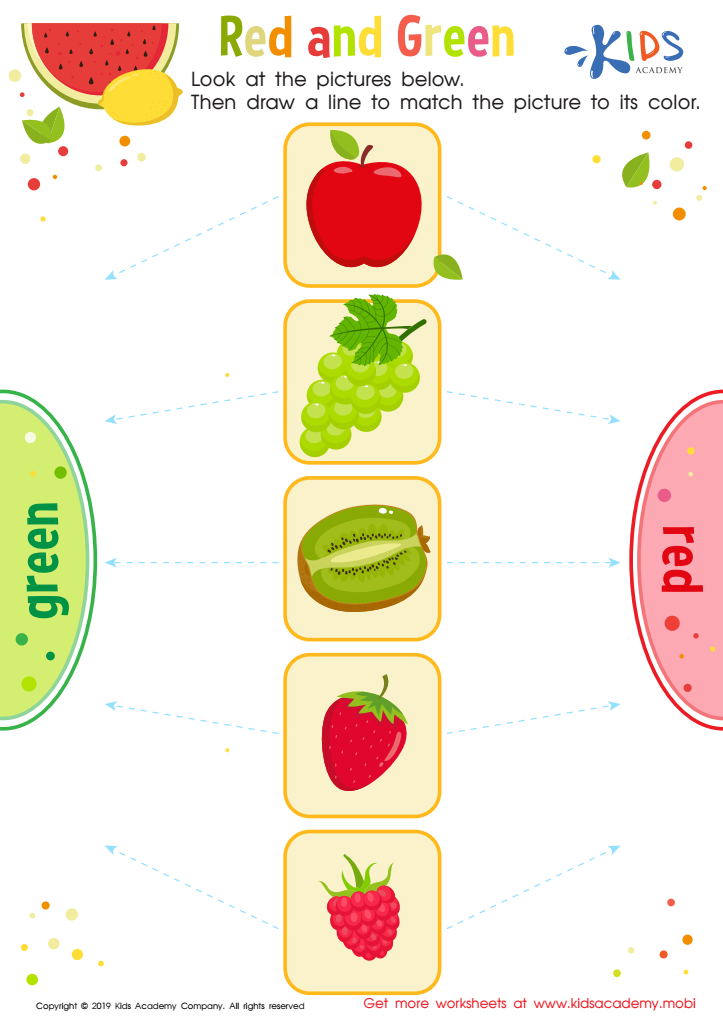
Red and Green Worksheet

Red and Green Worksheet

Engage your kids in fun exercises and colorful pictures to help build their vocabulary. Start with a colorful worksheet - can they identify the colors? Guide them to draw a line from each picture in the middle to the correct color. It's a great way to boost their vocabulary and have fun at the same time!
Red and Green Worksheet
Worksheet
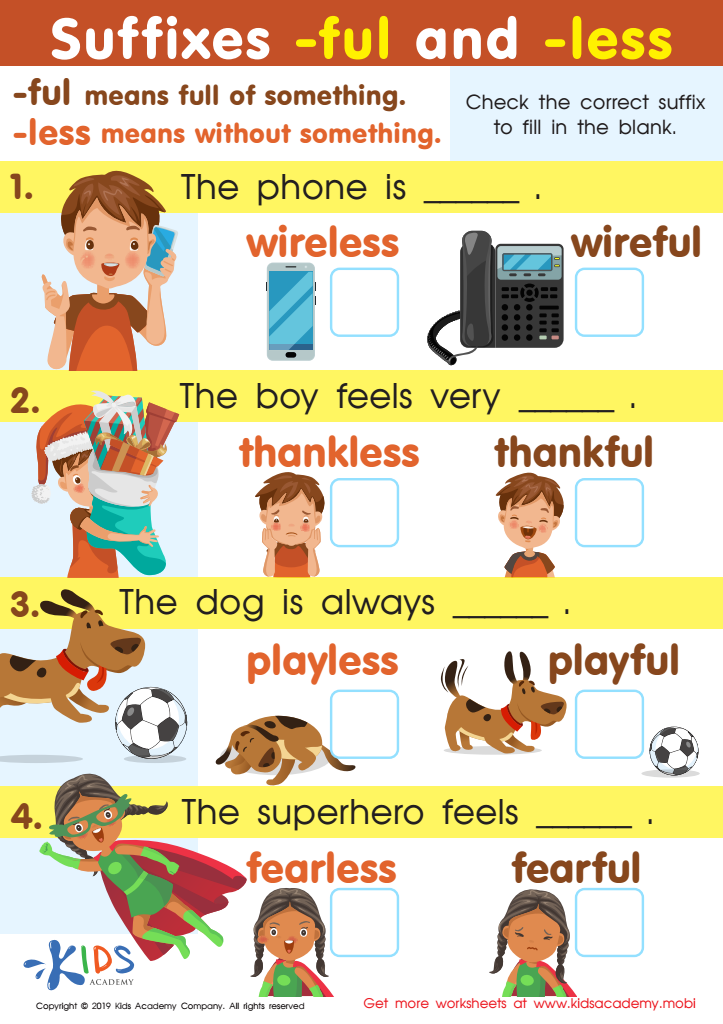
Suffixes –ful and –less Worksheet

Suffixes –ful and –less Worksheet

Before you start this worksheet, make sure your kids know about suffixes. Explain that they're added to the end of words to change their meaning. In the worksheet, kids will learn about the suffixes –ful and –less. Look at the sentences in the picture with them, and help them to choose the right one for each blank.
Suffixes –ful and –less Worksheet
Worksheet
Suffix-ed Worksheet
Suffix-ed Worksheet

Suffix-ed Worksheet

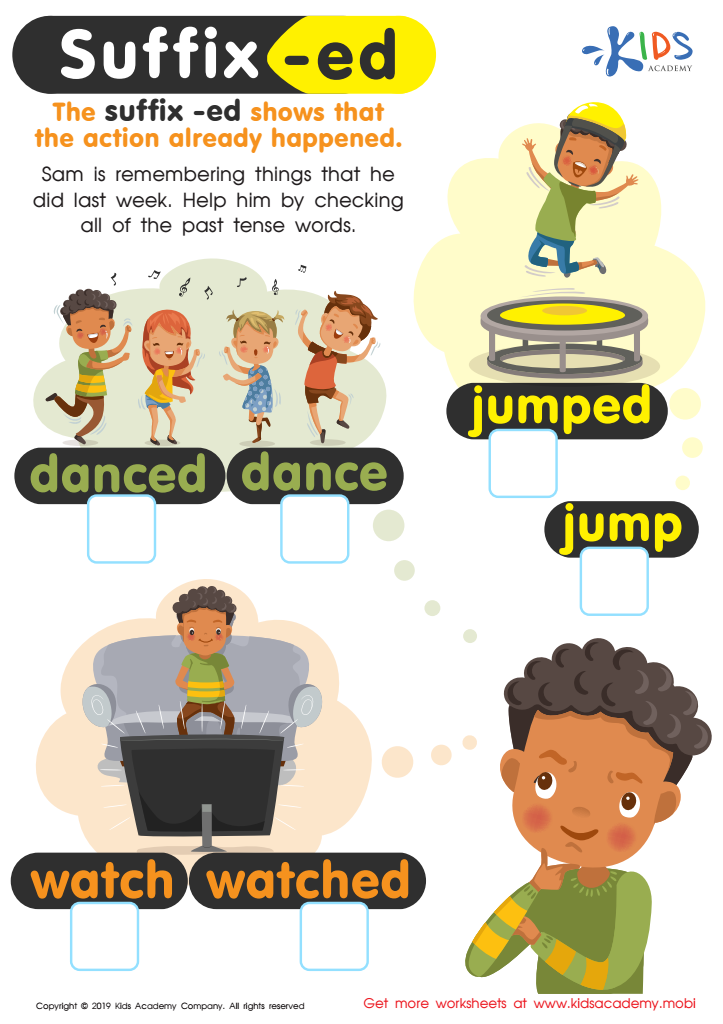
Ask your kids if they know what suffixes are, and explain they are words added to the end of another word which changes the meaning. This worksheet focuses on the suffix -ed which shows something already happened. Help the kid in the picture find the past tense words.
Suffix-ed Worksheet
Worksheet
Trace Read You Like Worksheet

Trace Read You Like Worksheet

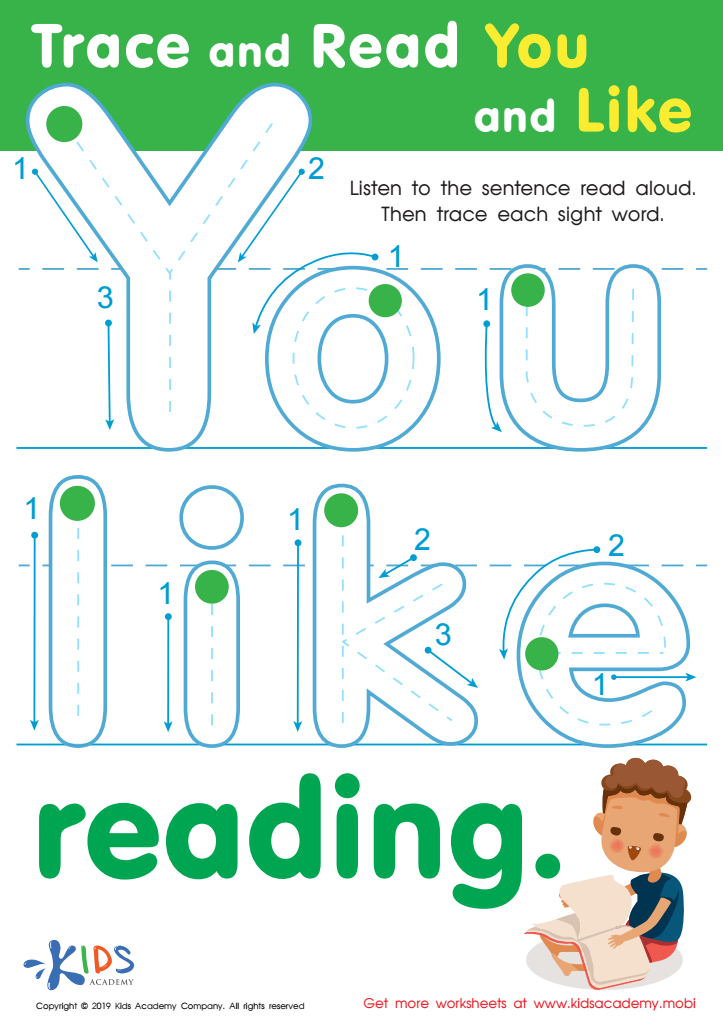
Sight words help children become confident and fluent readers. This free worksheet encourages success with basic 'you' and 'like' words. Writing them with traceable lines and green dots shows motion and builds sight word vocabulary. Help your child master the basics and boost their reading progress!
Trace Read You Like Worksheet
Worksheet
Sight Word You Worksheet

Sight Word You Worksheet

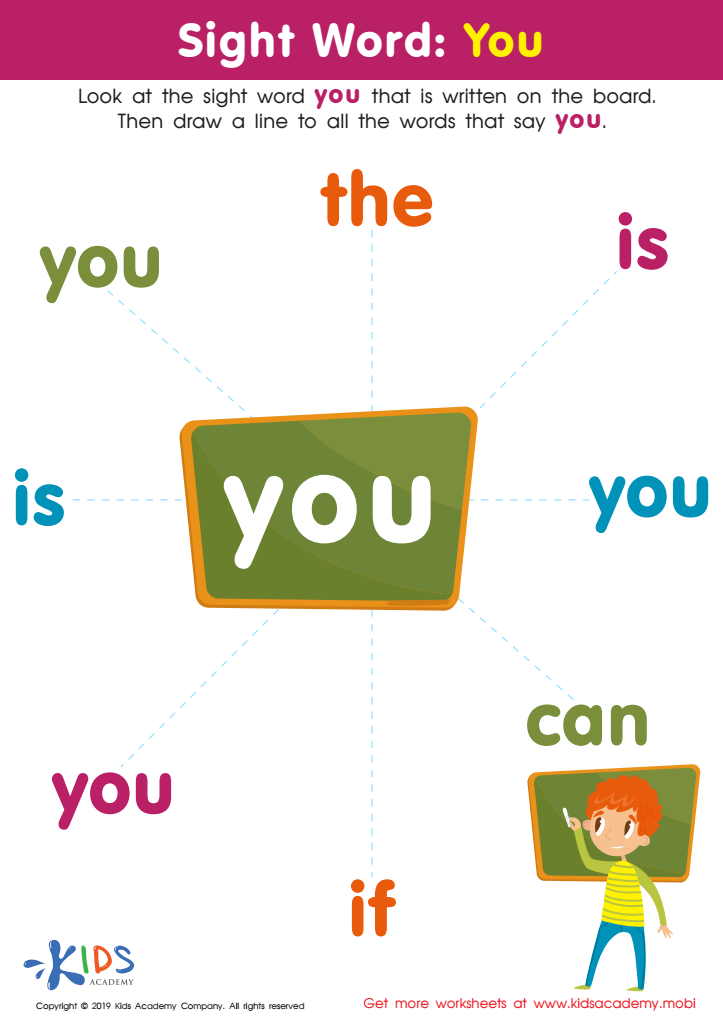
This free worksheet features the word 'you' and helps beginning readers practice visual-discriminatory skills. Using traceable lines and different colored words, it's an easy way to reinforce their identification of the word and build fluency.
Sight Word You Worksheet
Worksheet
Find and Read: Like Worksheet

Find and Read: Like Worksheet

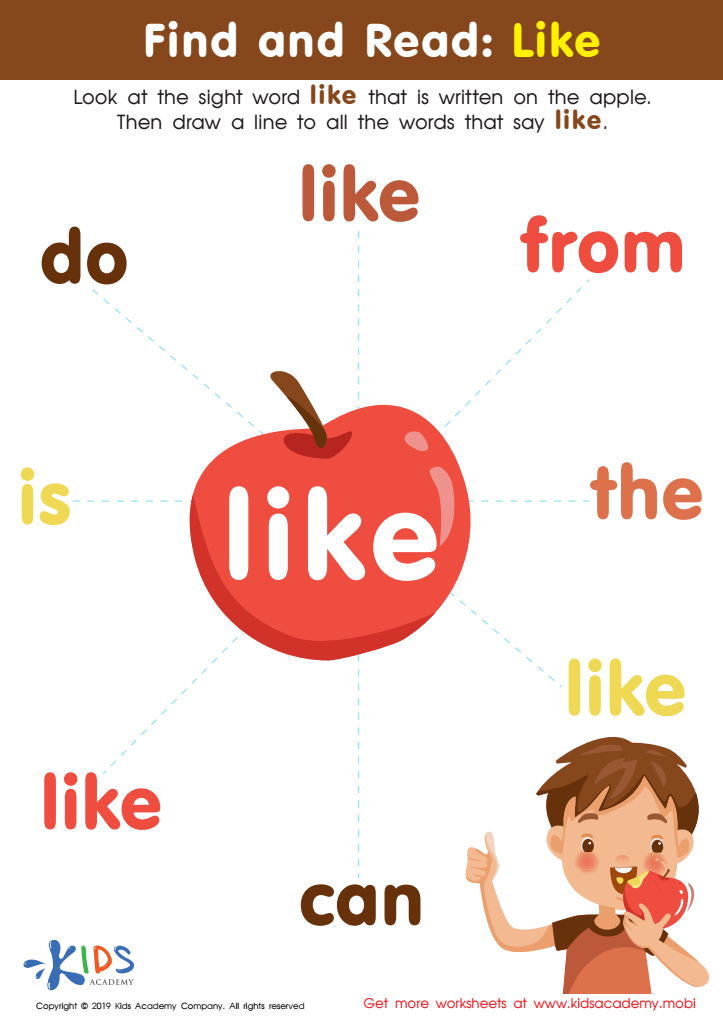
Reading starts with learning sight words. This free PDF worksheet helps kids learn the word "like" in various ways. It encourages their visual discrimination skills with its colorful design and traceable lines. It's a great way to help them recognize and differentiate this common sight word from other words that look similar.
Find and Read: Like Worksheet
Worksheet
Sight Words I Can Worksheet

Sight Words I Can Worksheet

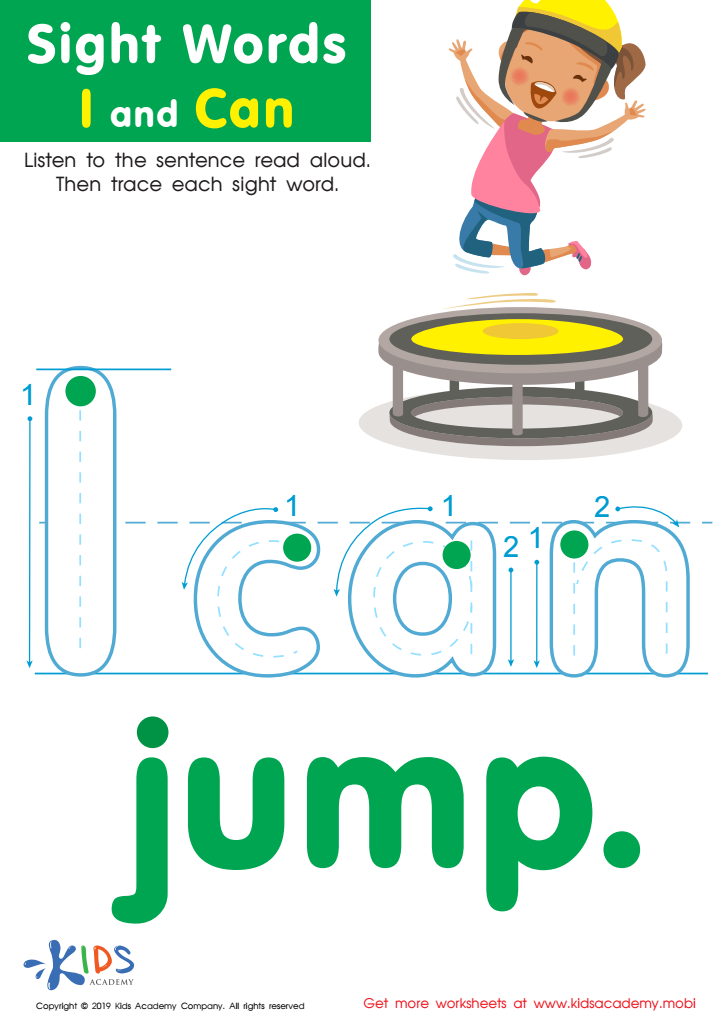
Emerging readers can build confidence and improve reading skills with this free worksheet! They'll trace the lines to complete the "I Can" phrase then use the picture clue to decode the last word. This activity encourages reading and writing, and is empowering for kids as they explore all the things they can do!
Sight Words I Can Worksheet
Worksheet
Sight Word I Worksheet

Sight Word I Worksheet

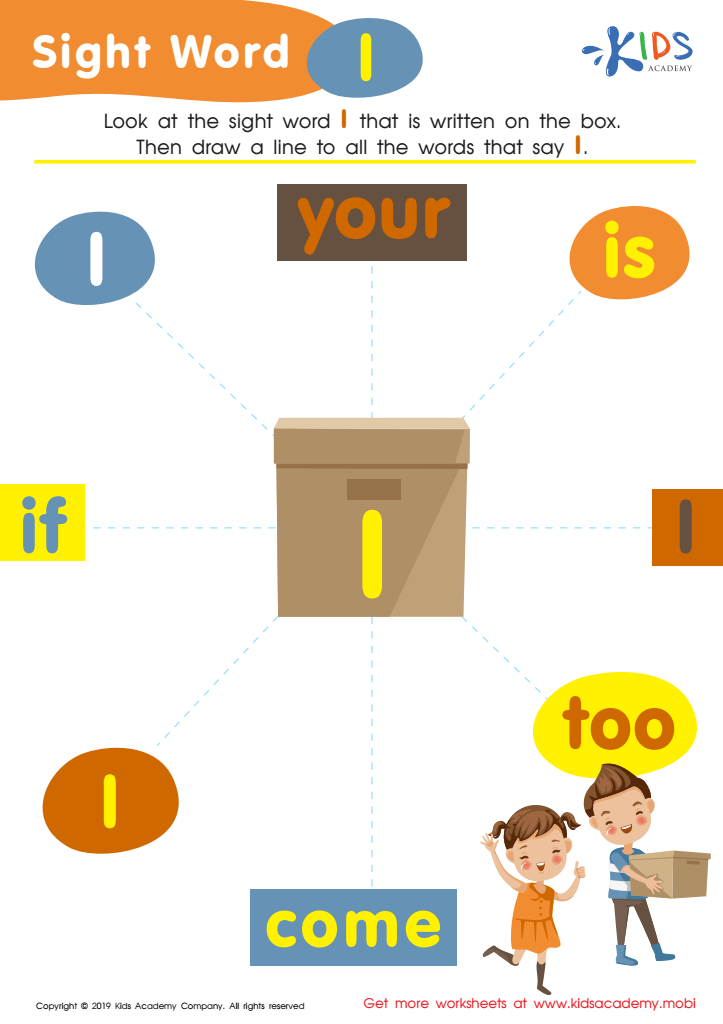
Recognizing the sight word 'I' is harder than it looks! When kids are learning to read, they understand 'I' by its sound, not as a word. This free worksheet gives them practice with 'I', letting them work on their fine motor skills too. They'll join 'I' to shapes containing the same letter. It's a great way to give kids confidence in their reading skills!
Sight Word I Worksheet
Worksheet
Sight Word Can Worksheet

Sight Word Can Worksheet

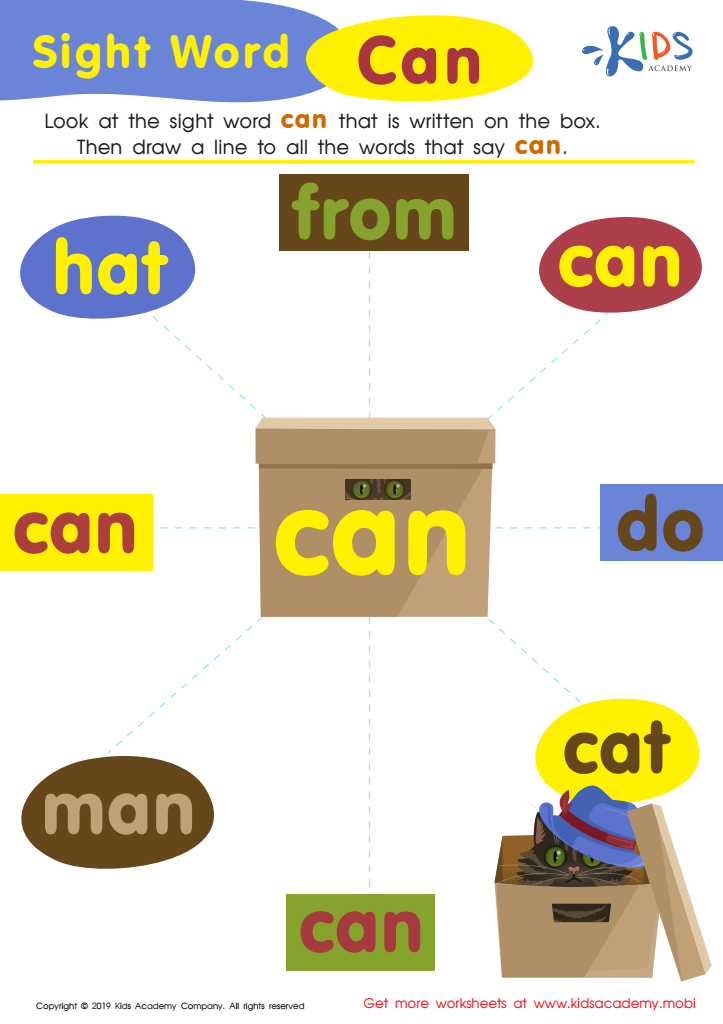
Learning sight words is key for strong readers. Kids with large word bases find reading simpler, since they don't have to decode words they already know. This free worksheet uses the word 'can' to help kids improve their visual discrimination and refine motor skills, while providing pictures to help them along.
Sight Word Can Worksheet
Worksheet


Reading for ages 4-9 is crucial for early childhood development and shapes a child’s future learning experiences. At this age, children are in their formative years, and engaging with books helps cultivate their imagination, vocabulary, and cognitive skills. This foundational period is when children develop their literacy skills, which are essential not only for academic success but also for effective communication in everyday life.

For parents and teachers, fostering a love for reading can create a lifelong habit, enhancing critical thinking and comprehension skills. Regular reading routines promote bonding opportunities between parents and children, creating a safe space for exploration and shared enjoyment.

Moreover, reading at this stage supports social-emotional growth, as children encounter diverse characters and scenarios, allowing them to develop empathy and understand different perspectives. Those who read proficiently by third grade are more likely to excel throughout their education, highlighting the long-term benefits of early reading engagement.

Encouraging reading in young children is an investment in their future that can lead to improved academic performance, increased confidence, and a richer understanding of the world. Therefore, parents and teachers should prioritize and celebrate this vital area of learning, ensuring that children recognize reading as an enjoyable and valuable skill.