Problem-Solving Skills Worksheets for Ages 5-7 - Page 6
221 filtered results
Difficulty Level
Grade
Age
-
From - To
Subject
Activity
Standards
Favorites
With answer key
Interactive
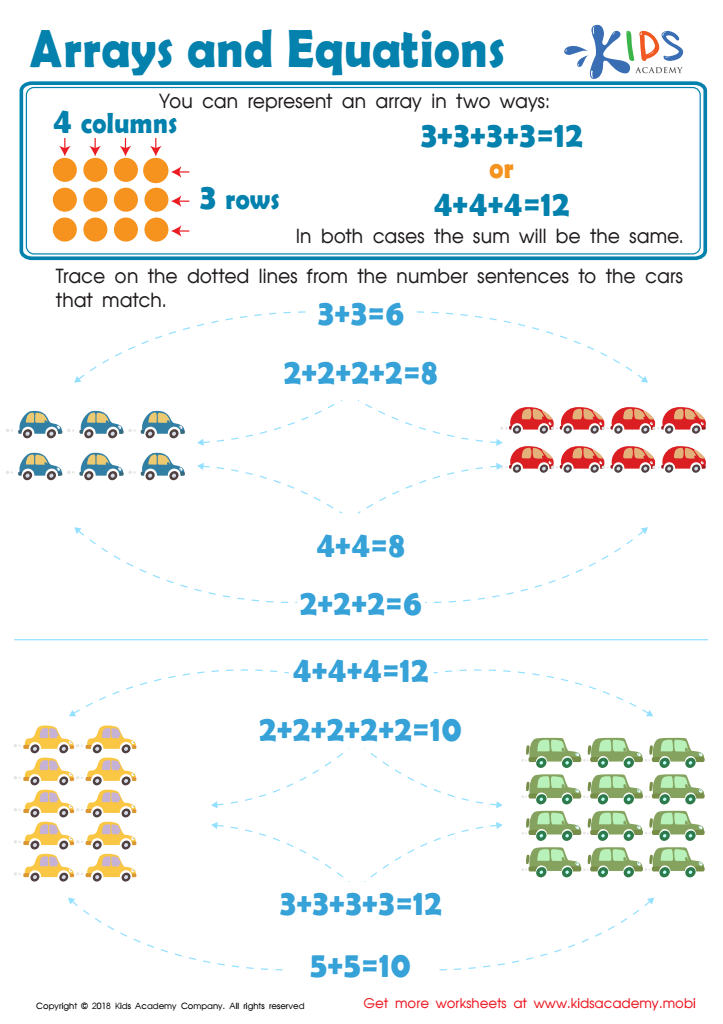
Arrays and Equations Worksheet
An array is objects, pix, or numbers organized in rows and columns. Show kids two ways to interpret this: 3 rows in 4 places = 12 and 4 columns in 3 places = 12. Help your child trace the number sentences to the matching cars. All equations always add up to the same amount.
 Assign to My Students
Arrays and Equations Worksheet
Worksheet
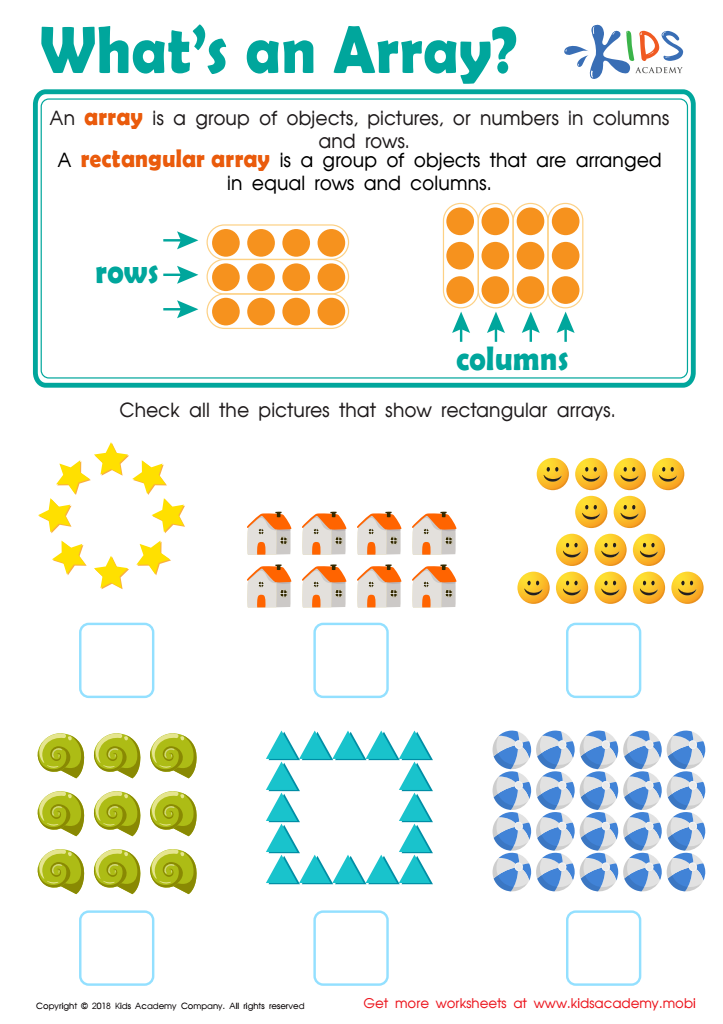
What's an Array? Worksheet
Explain to your child that an array is a group of objects, pictures, or numbers in columns and rows. Show them a rectangular array is a group of objects in equal rows and columns. Guide them to check the pictures in the worksheet to spot any rectangular arrays. Help them remember this concept.
What's an Array? Worksheet
Worksheet
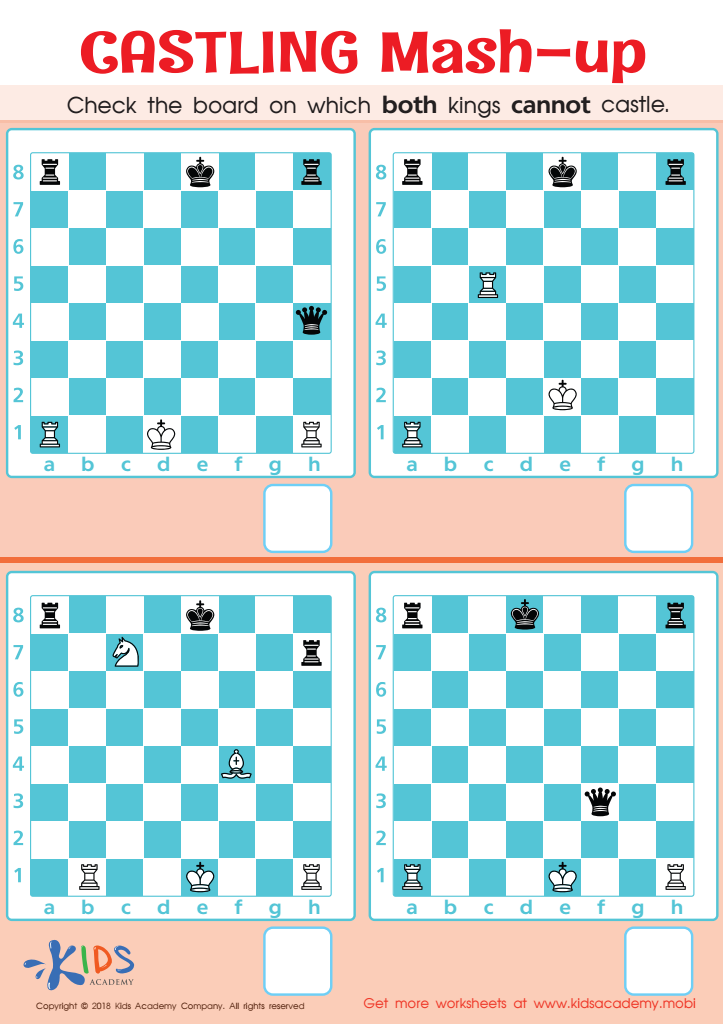
Castling Mash–up Worksheet
Before starting the worksheet, ensure your child understands castling in chess. If not, take time to explain it. Once they have a clear grasp of the rules, help them complete the exercise. Check the board to ensure that neither king can castle.
Castling Mash–up Worksheet
Worksheet
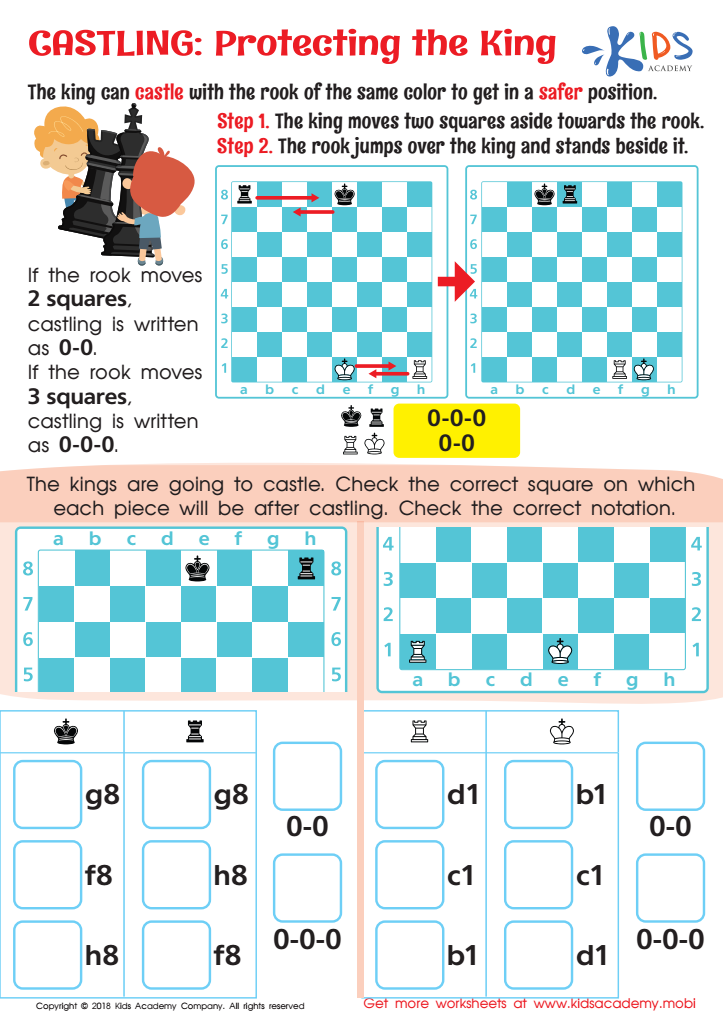
Castling: Protecting the King Worksheet
Castle your king with the rook to get into a safer position! Write 0-0 for a two-square move, or 0-0-0 for a three-square move. Look at the worksheet with your child; on the first chessboard, the king has moved two squares and the rook is beside it. On the second, the rook has jumped over the king. Let your child use their castling knowledge to answer the questions in the easy pdf.
Castling: Protecting the King Worksheet
Worksheet
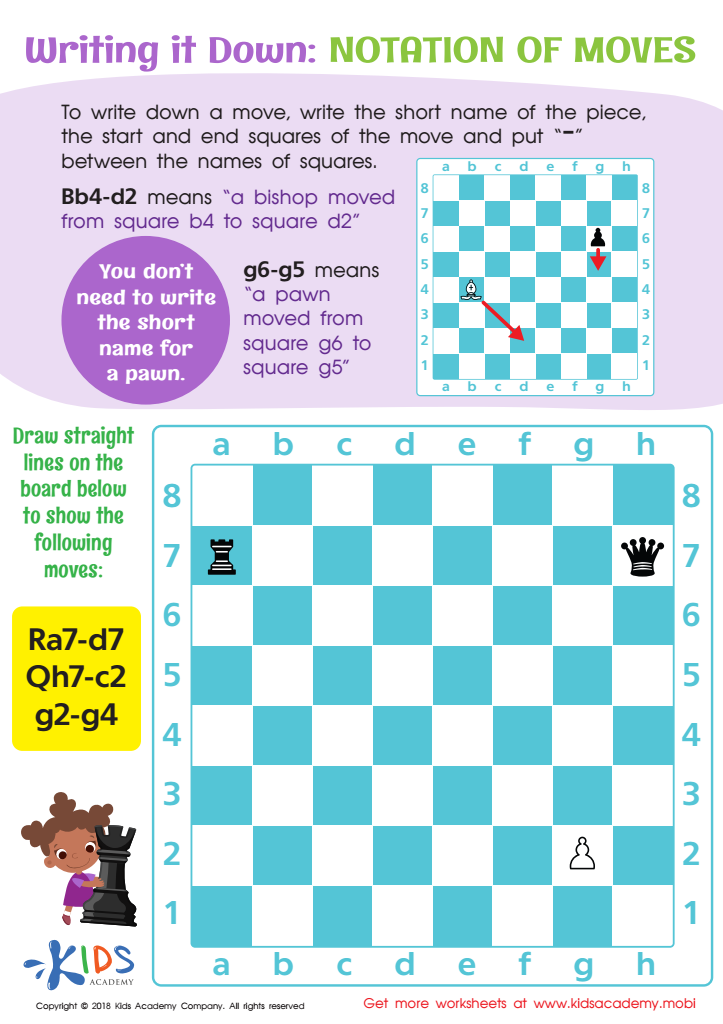
Notation of Moves Writing it Down Worksheet
Notating chess moves can be tricky for kids to learn. This worksheet will help them better understand it. To notate a move, write the piece's short name, start and end squares, and separate them with a "-". For instance, Bd4-d2 means a bishop moved from b4 to d2. No need to write pawns' short names.
Notation of Moves Writing it Down Worksheet
Worksheet
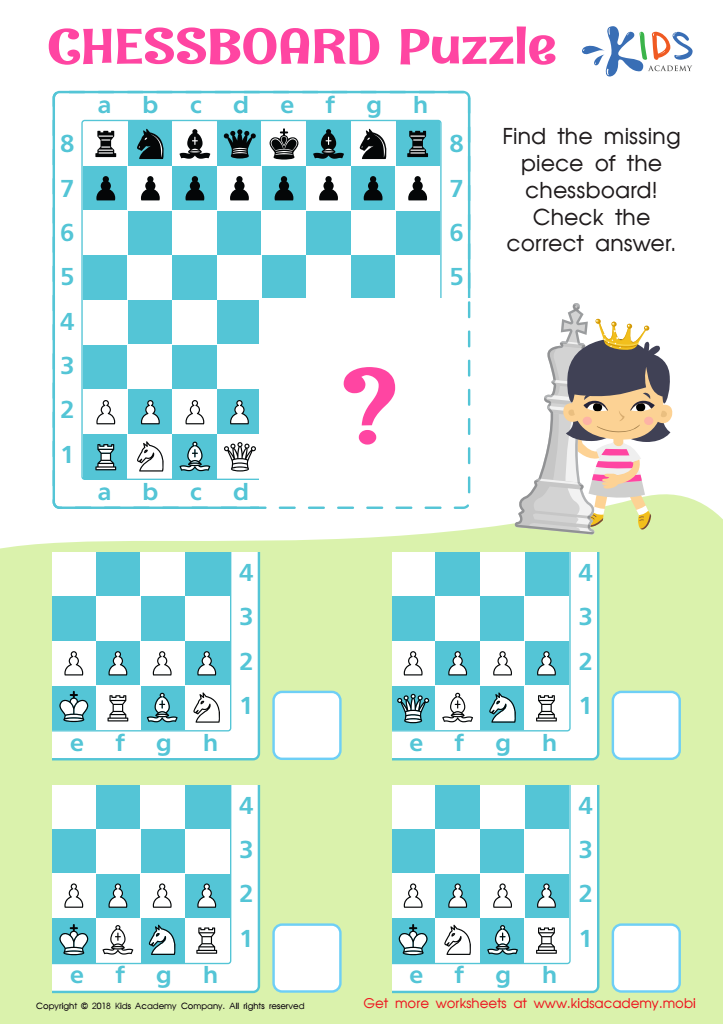
Chessboard Puzzle Worksheet
Test your child's chess prowess with this simple worksheet. They must find the missing pieces to complete the white side of an empty chessboard. The black pieces are already arranged properly on the board. Correct answers are provided so you can see how they did!
Chessboard Puzzle Worksheet
Worksheet
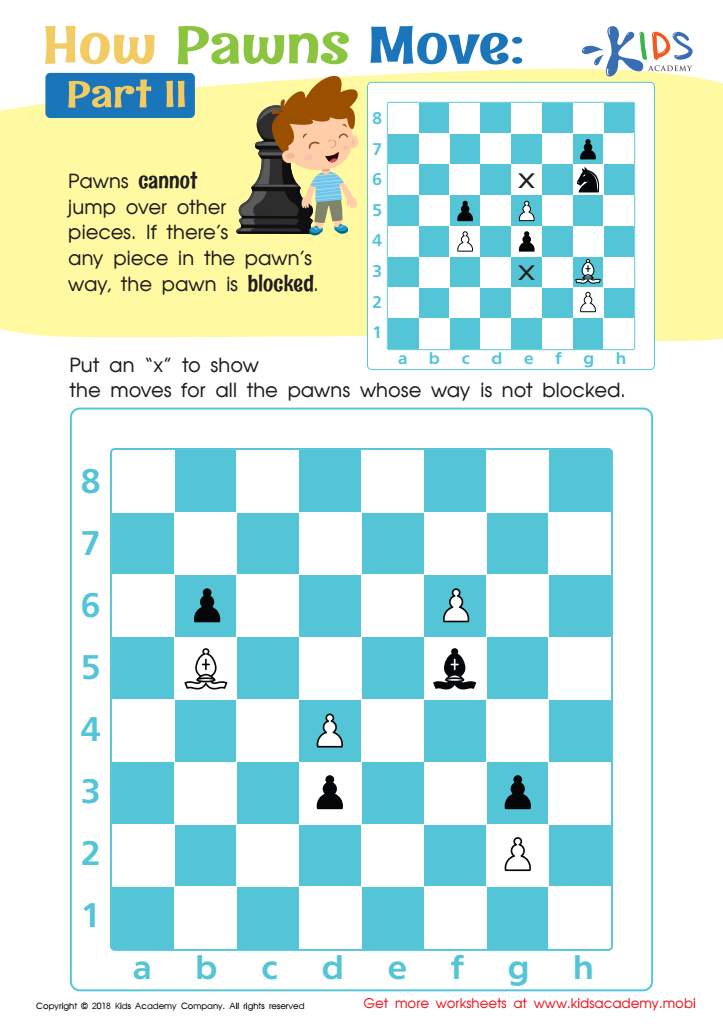
How Pawns Move: Part II Worksheet
Pawns are the first to attack in chess and each player has the most pieces. They can't jump over other pieces, so if there's an obstacle, the pawn can't move. Ask your child to put an X to show all possible moves for the pawns not blocked by other pieces. (80)
How Pawns Move: Part II Worksheet
Worksheet
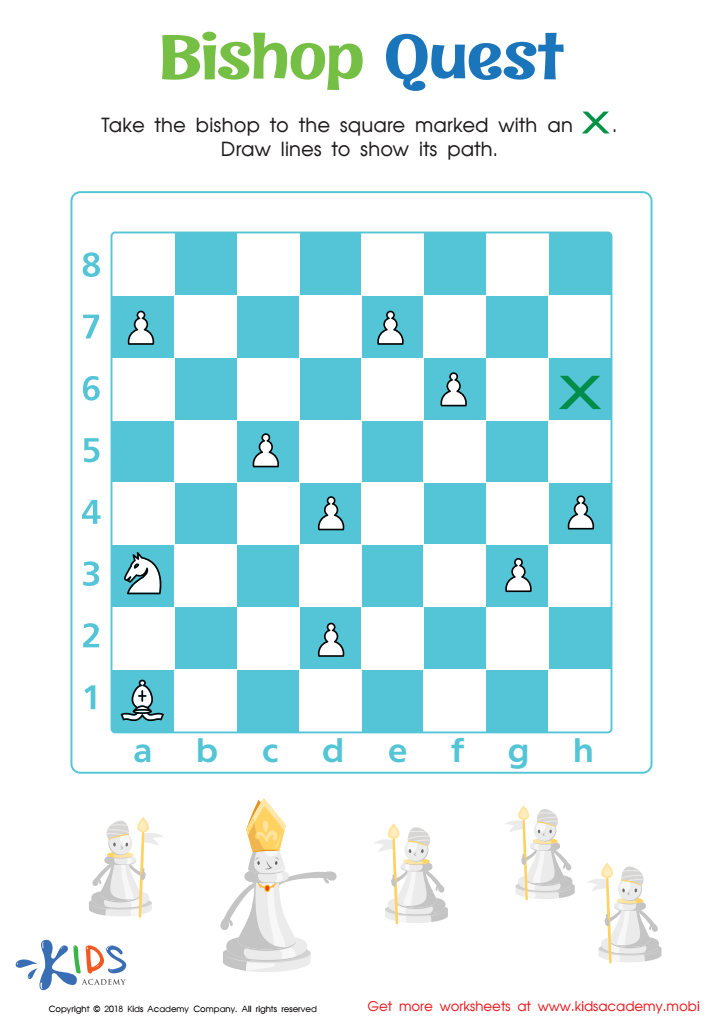
Bishop Quest Worksheet
Show kids the board and ask them to identify the bishop. Then ask them to move it to the square marked 'x', drawing lines to show its path. This worksheet helps teach kids how to move the bishop on a chessboard.
Bishop Quest Worksheet
Worksheet
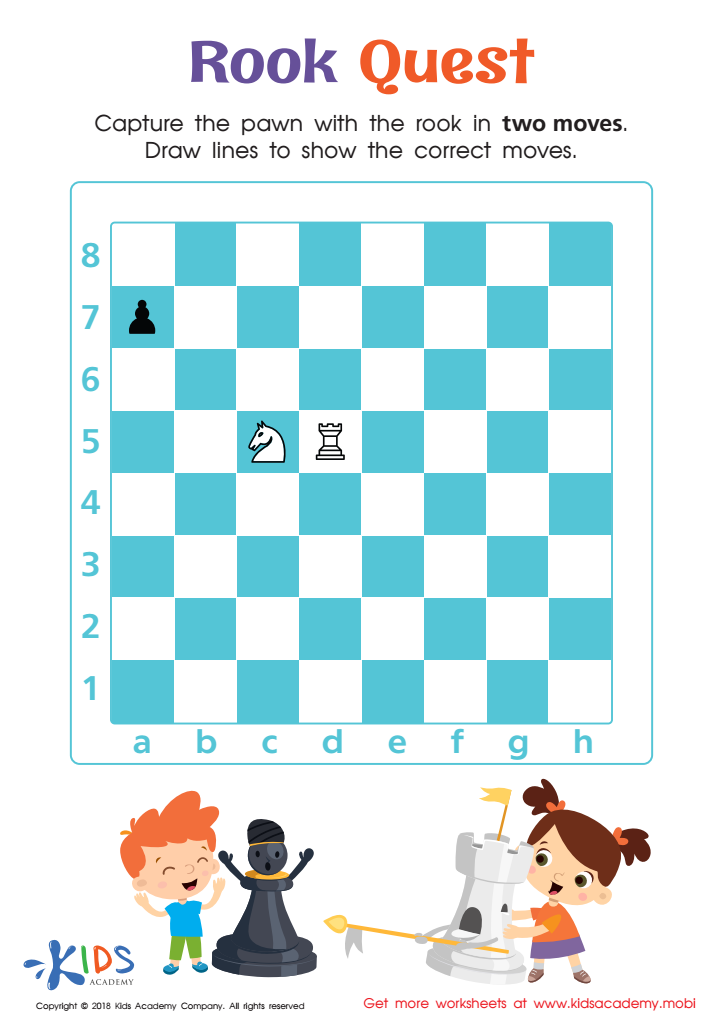
Rook Quest Worksheet
Is your child a chess whiz? Check their progress with this rook quest: get the enemy's pawn piece in just two moves. Have them draw the lines for the moves they'll make. See how quickly they master it!
Rook Quest Worksheet
Worksheet
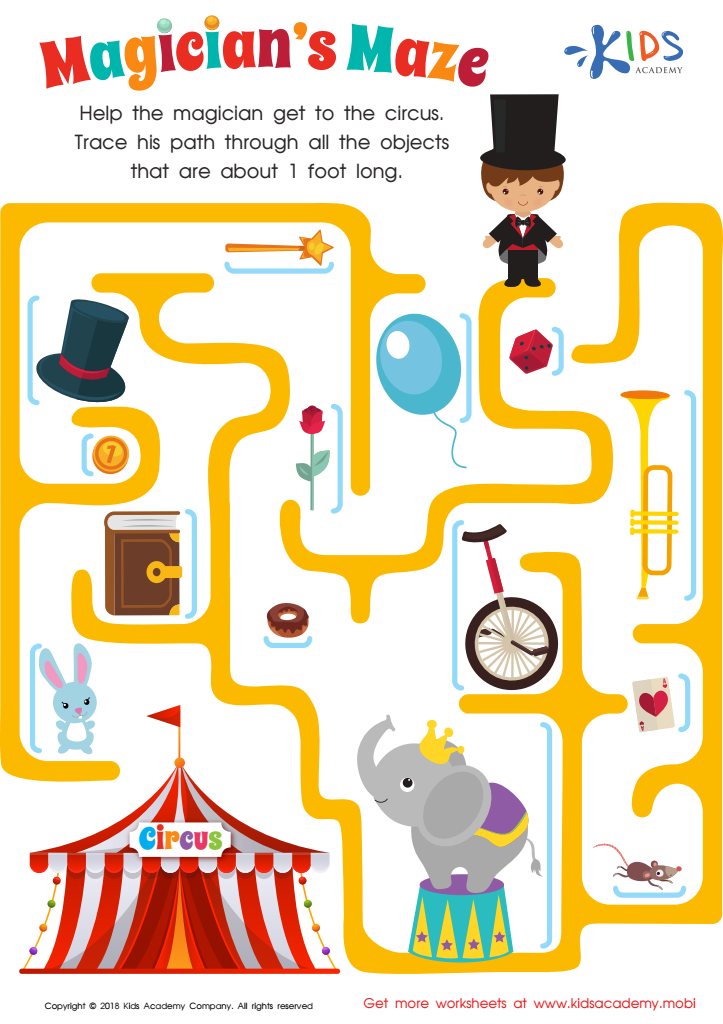
Estimating Length: Magician's Maze Worksheet
Does your kid want to practice magic and have a blast? This exercise will be a great way to help them do so! In the worksheet, they'll need to guide the magician to the circus. How? By tracing his path through the 1-foot long obstacles in the maze. Once they help him get through the objects, the circus will be just a few steps away!
Estimating Length: Magician's Maze Worksheet
Worksheet
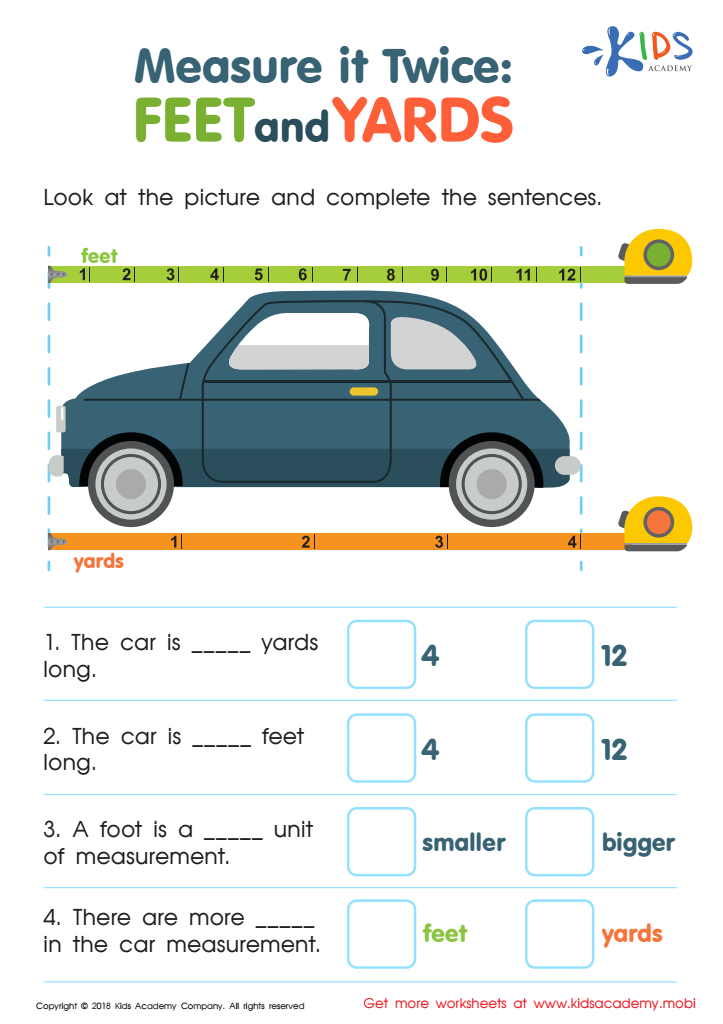
Measure It Twice: Feet and Yards Worksheet
A car is pictured with a metric ruler in feet at the top and a yard ruler at the bottom. Get your child to look at the picture and complete sentences about it; for example, how many yards long is the car? Is a foot a bigger or smaller unit of measurement? It'll teach them that 1 yard is equal to 3 feet.
Measure It Twice: Feet and Yards Worksheet
Worksheet
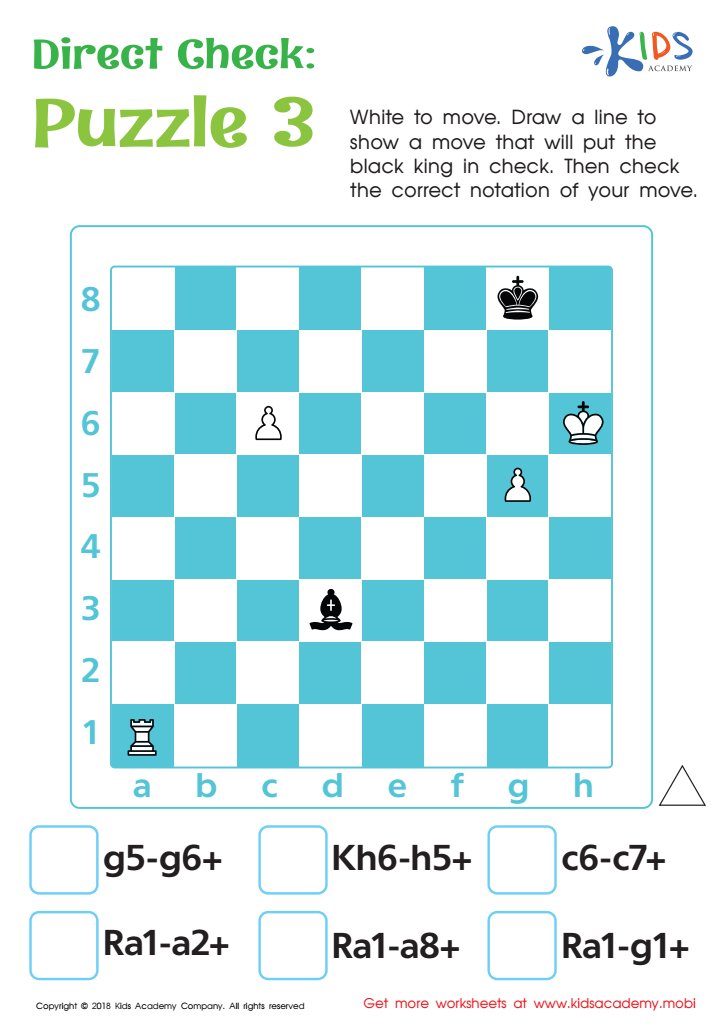
Direct Check: Puzzle 3 Worksheet
Chess is a great way to help your child develop their strategic, mathematical, and thinking skills. Test their understanding with this simple worksheet: they must get the black king in checkmate with white pieces, then select the notation that shows the correct move. See just how much progress they've made!
Direct Check: Puzzle 3 Worksheet
Worksheet
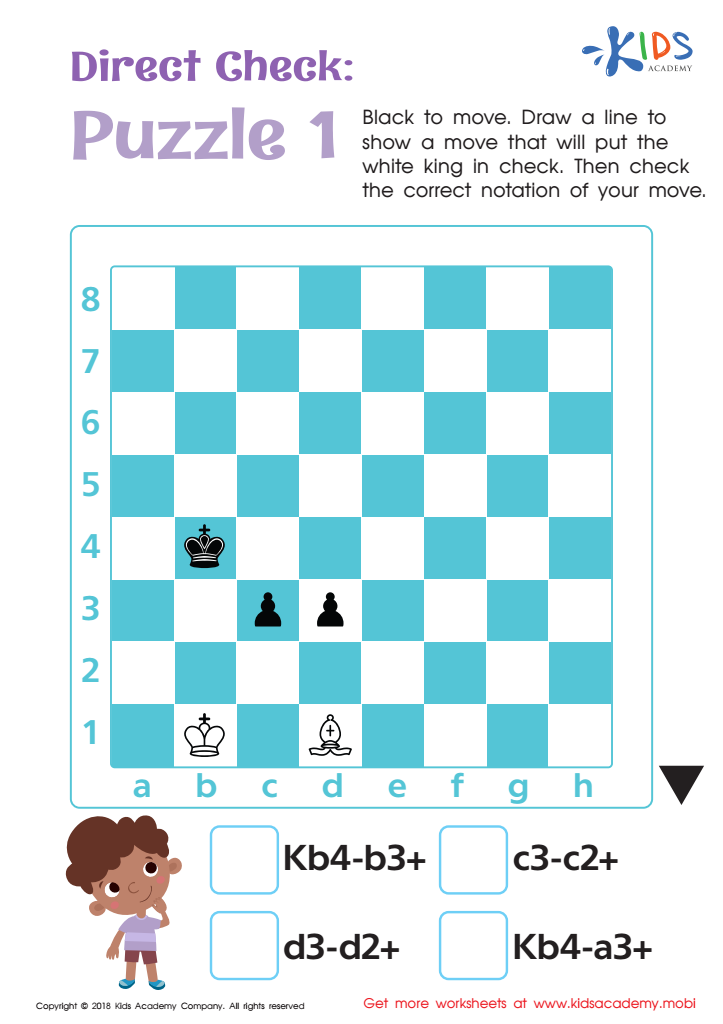
Direct Check: Puzzle 1 Worksheet
Your child can test their chess knowledge with this worksheet. If they've been taking lessons or playing regularly, they'll enjoy connecting the dots to put the white king in checkmate, then checking the correct notation. Challenge their chess skills!
Direct Check: Puzzle 1 Worksheet
Worksheet
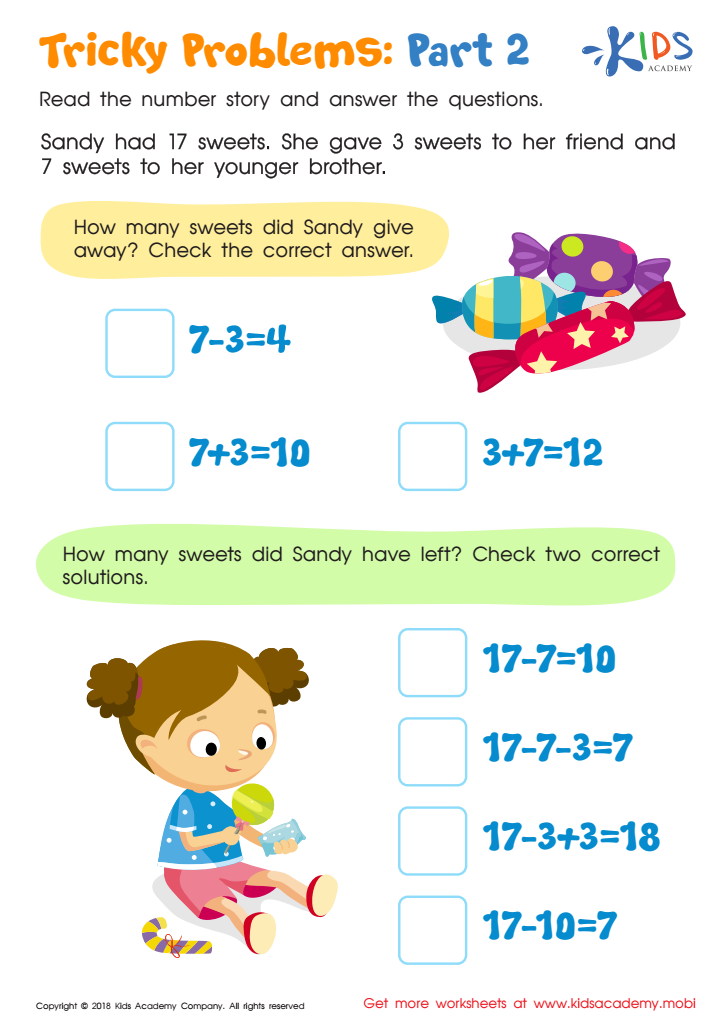
Tricky Problems Worksheet: Part 2
Help your little math learner visualize number stories with this engaging worksheet. They'll connect pictures to the story and use math facts to find the sums. After that, they'll be able to identify the correct number sentences to match. Let them practice and get better at problem solving!
Tricky Problems Worksheet: Part 2
Worksheet
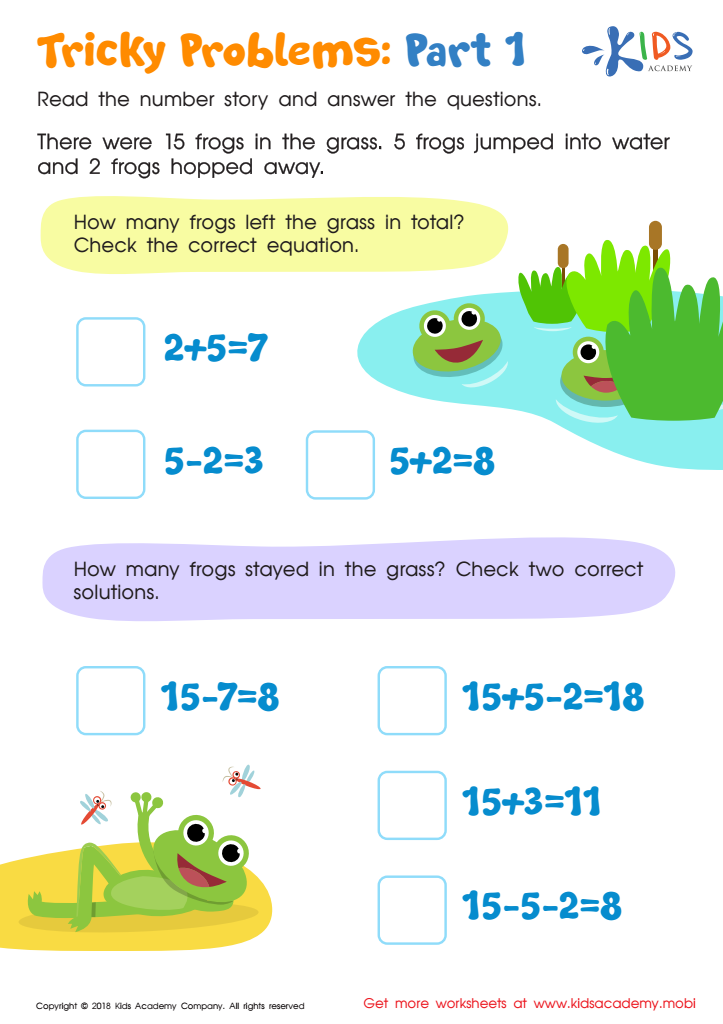
Tricky Problems Worksheet: Part 1
Visualizing word problems can help students solve them. This fun PDF worksheet encourages students to create mental images using math facts, then check boxes to match the equations for basic addition problems. It's a great way to build confidence in solving math.
Tricky Problems Worksheet: Part 1
Worksheet
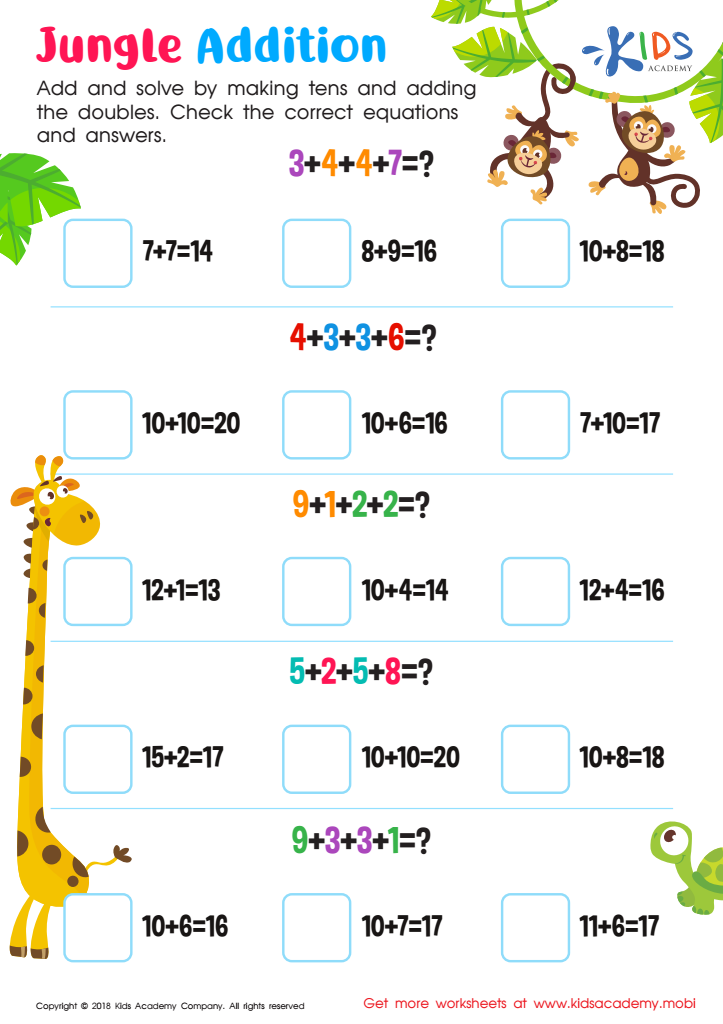
Jungle Addition Worksheet
With this worksheet, kids can use the strategies of making tens and adding doubles to add numbers with more than three addends. They'll practice choosing the right method and become more confident in their calculations, enabling quicker, more efficient computation.
Jungle Addition Worksheet
Worksheet
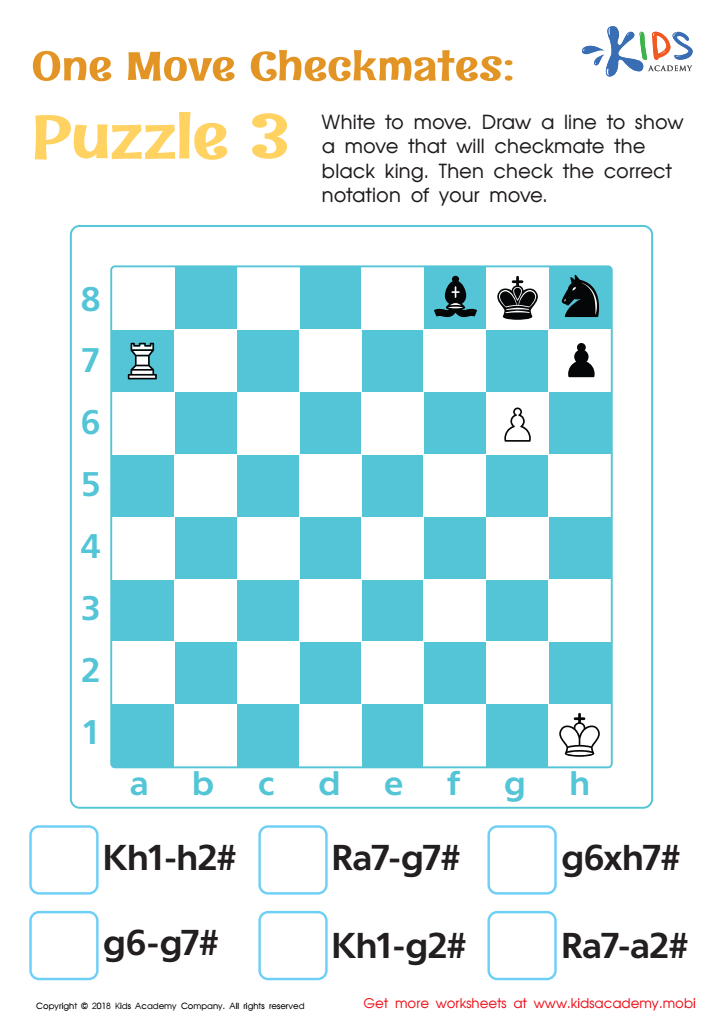
One Move Checkmates: Puzzle 3 Worksheet
Boost your child's critical thinking and strategy skills with this fun puzzle activity. They'll use their logical thinking to plot ways to checkmate the black king, and then check their answer with the given choices. A great way to improve their skills and have a blast doing it!
One Move Checkmates: Puzzle 3 Worksheet
Worksheet
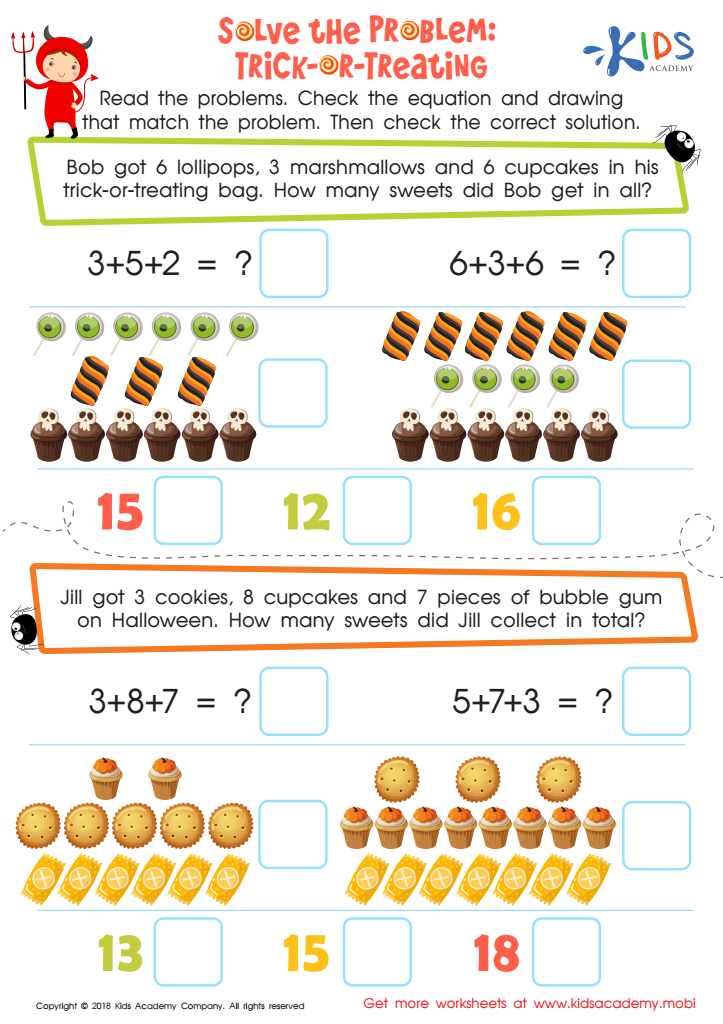
Solve the Problem: Trick–or–treating Worksheet
Kids will love this fun PDF worksheet for trick-or-treating! It's packed with yummy images and math practice. They can read the word problems, count and add numbers, check their answers, and match the addition equations with the pictures. Math made delicious!
Solve the Problem: Trick–or–treating Worksheet
Worksheet
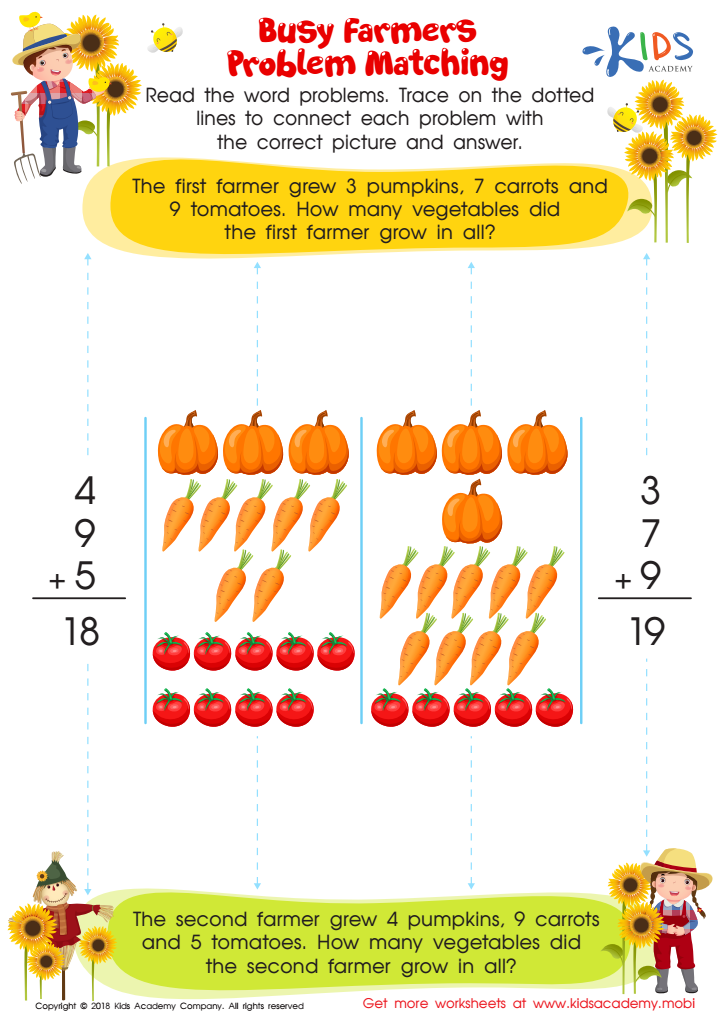
Busy Farmers: Problem Matching Worksheet
Farming is tough, so help your mathematician out with this fun and stimulating worksheet! They'll read word problems and connect each to its correct picture, using traceable lines. They'll practice addition with three addends, and use the harvest veg pictures to ensure accuracy.
Busy Farmers: Problem Matching Worksheet
Worksheet
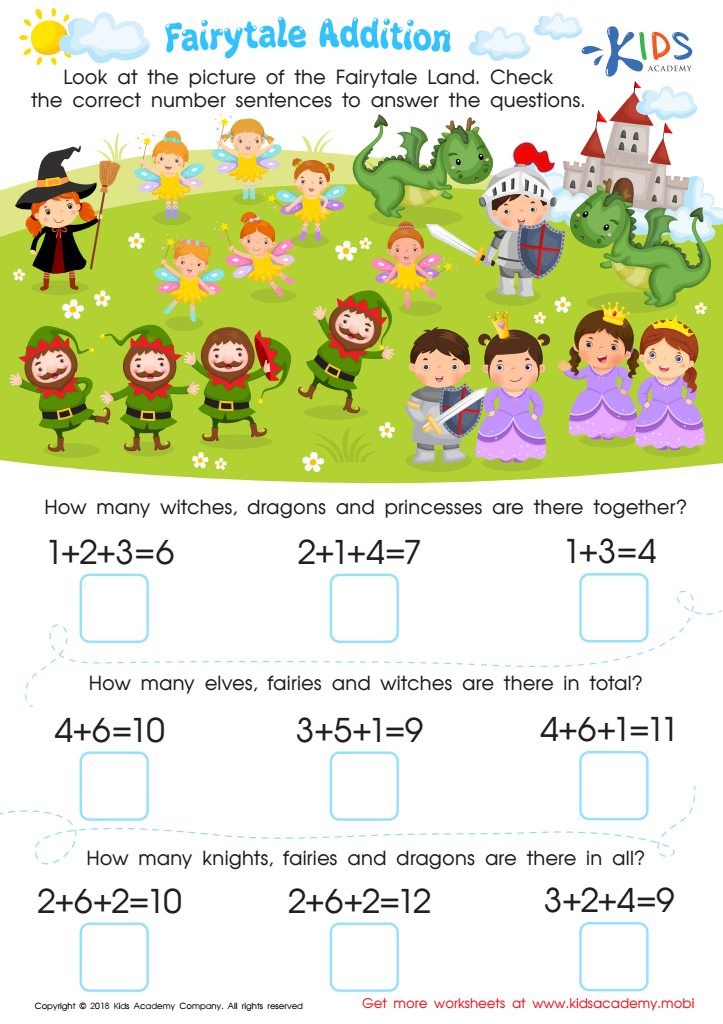
Fairytale Addition Worksheet
Take your kids to Fairytale Land! They'll meet witches, dragons, fairies, elves, knights, and princesses. This free worksheet adds up the fun, letting kids use three addends to solve addition equations and find the right answers. With friends like these, math won't even seem like math!
Fairytale Addition Worksheet
Worksheet
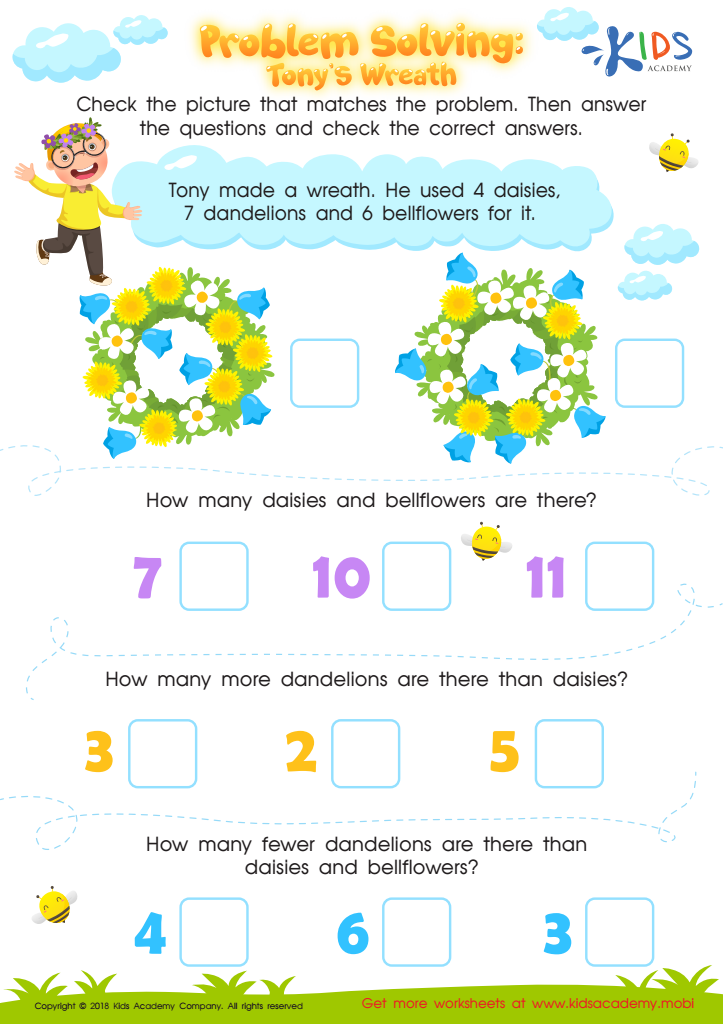
Problem Solving: Tony's Wreath Worksheet
Tony needs help! He's made a beautiful, colorful wreath and needs help counting the flowers. Your math student can read the word problems, match answers to the problems and solve basic addition and subtraction. They'll practice with two and three addends, minuends and subtrahends to find sums and differences and help Tony and his bee friends.
Problem Solving: Tony's Wreath Worksheet
Worksheet
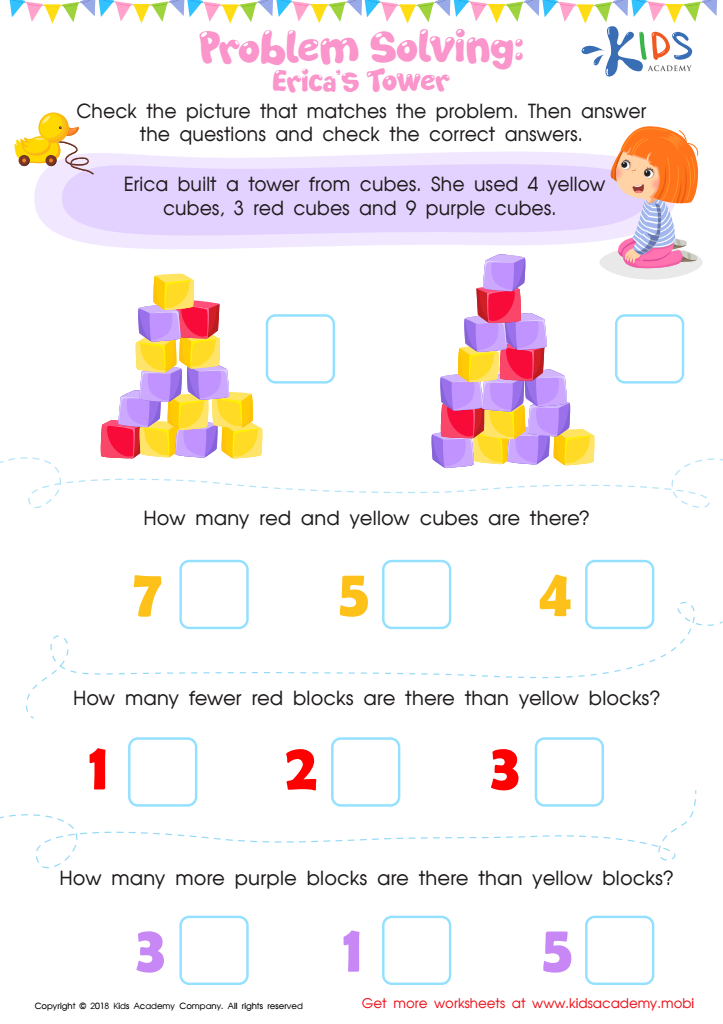
Problem Solving: Erica's Tower Worksheet
Sweet Erica needs your math student's help! Download the PDF worksheet and have your little math whiz read the word problems, match the pictures and solve basic addition/subtraction problems with two/three addends, minuends and subtrahends. They'll be having fun while strengthening their math fact skills!
Problem Solving: Erica's Tower Worksheet
Worksheet
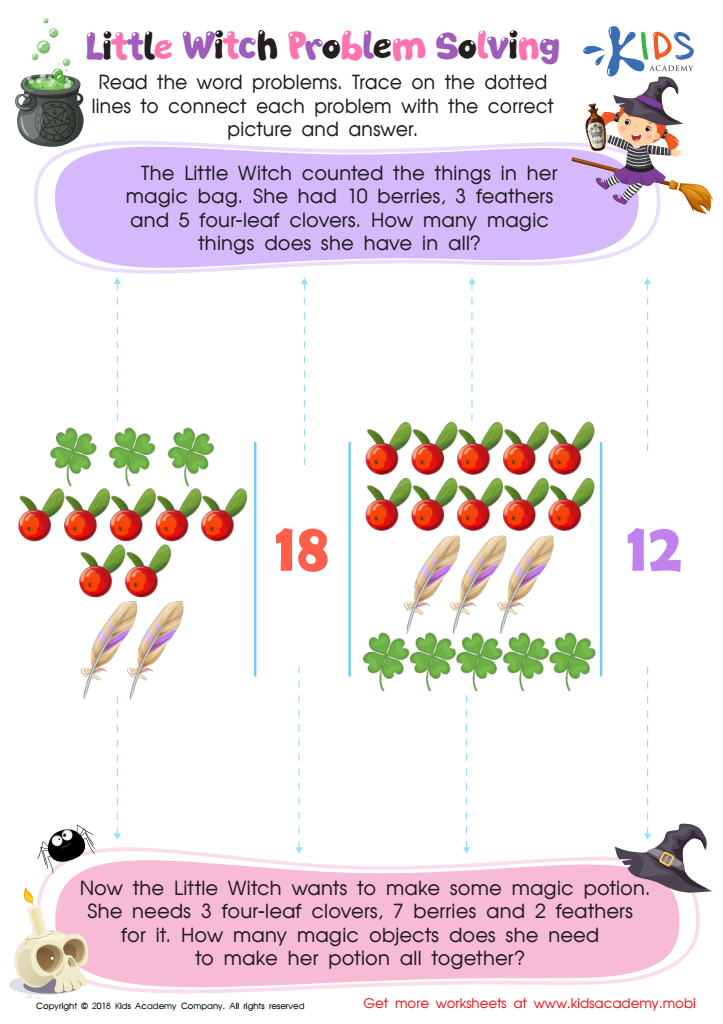
Little Witch Problem Solving Worksheet
Help this sweet little witch! Download this worksheet and use traceable lines to connect the problems with the correct answers. Practise basic addition involving three addends and have fun doing it!
Little Witch Problem Solving Worksheet
Worksheet
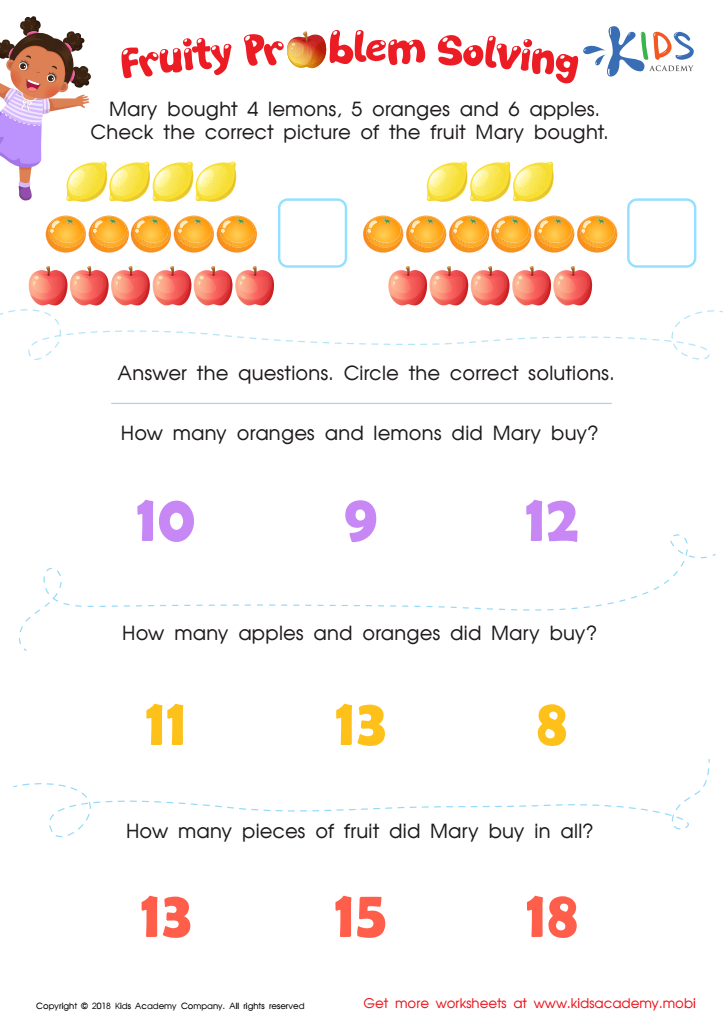
Fruity Problem Solving Worksheet
Practice addition word problems with young mathematicians using this PDF worksheet featuring fruit. As they read each problem carefully and circle the correct sums, they'll reinforce attention to detail and fine motor skills. Tangible representations are key to helping them with basic addition.
Fruity Problem Solving Worksheet
Worksheet
Join Kids Academy for Free
Who is primarily going to use this learning content?