2D Shapes Worksheets for Ages 5-9 - Page 4
75 filtered results
-
From - To
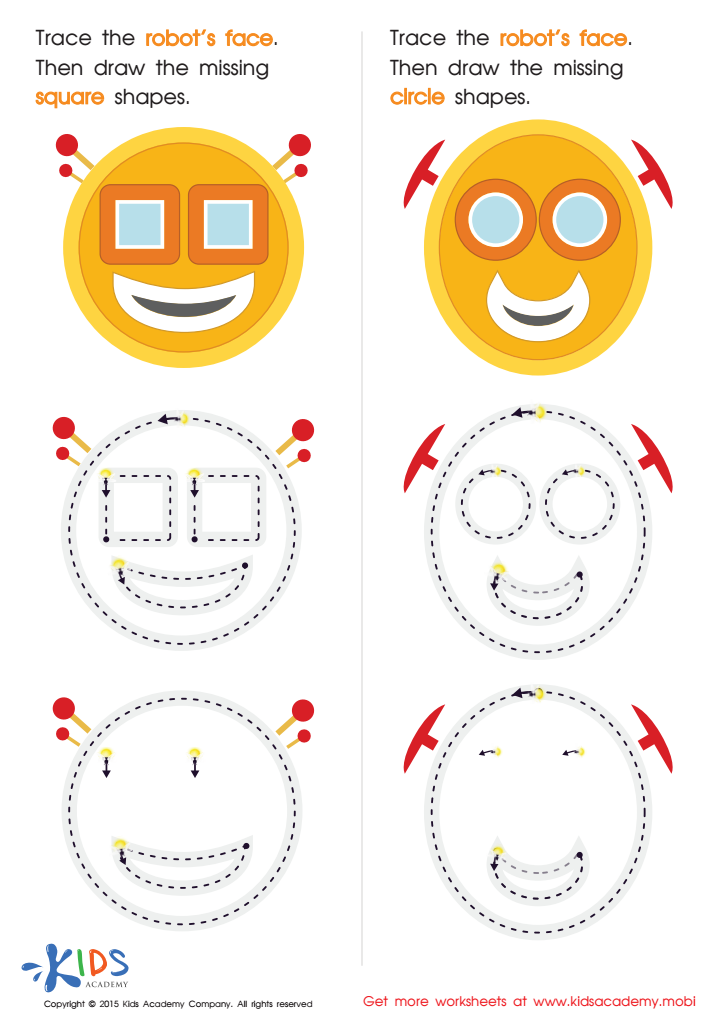
Practicing to Draw Circles And Squares Printable
 Assign to My Students

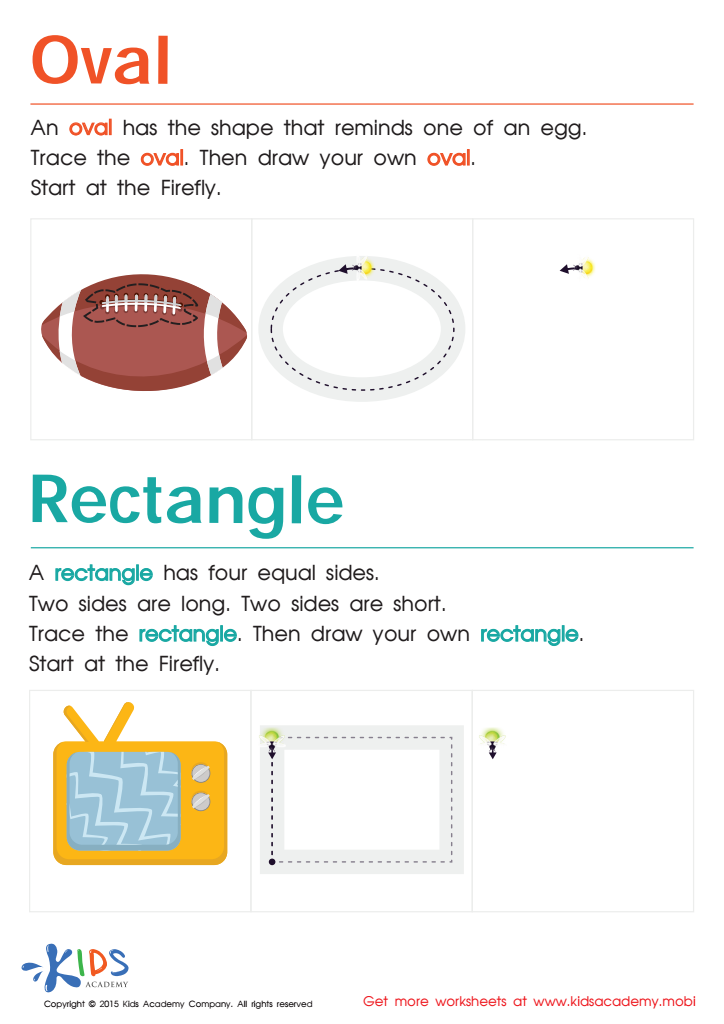
Easy Drawing of Ovals And Rectangles Worksheet
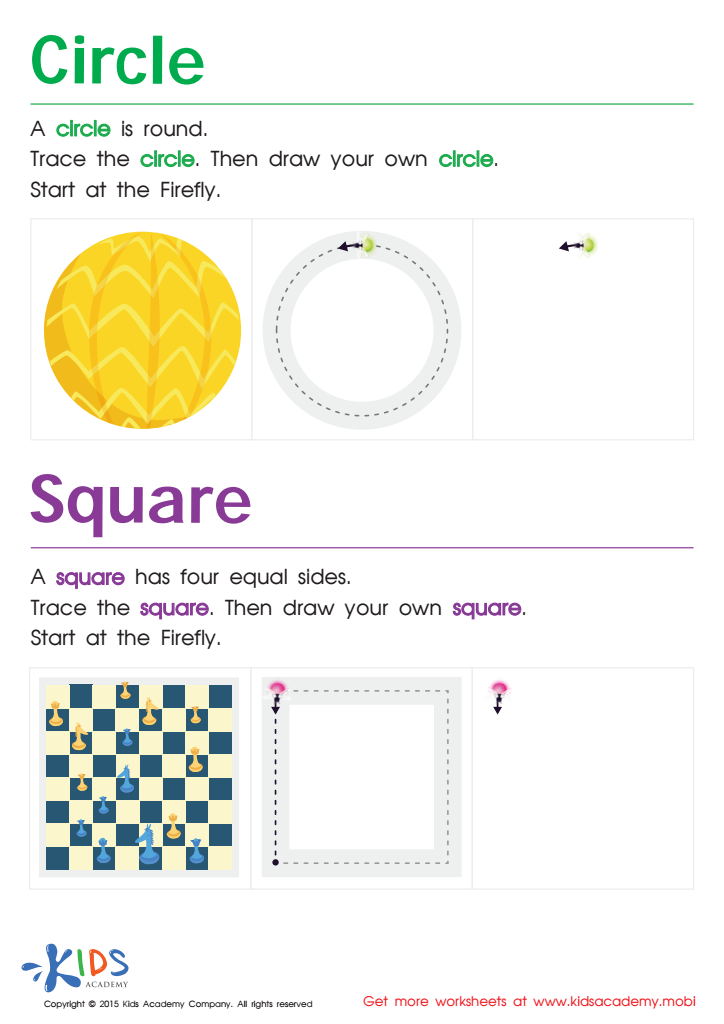
Trace And Draw a Circle And a Square Worksheet








Parents and teachers should care about 2D shapes for children ages 5-9 because understanding these forms is foundational to math literacy and cognitive development. At this crucial stage, recognizing and manipulating shapes aids in developing spatial awareness, which is vital for problem-solving and reasoning skills. For example, when children learn to identify squares, triangles, and circles, they start to recognize patterns, categorize objects, and understand geometric properties. This foundational knowledge supports future learning in more advanced mathematics, such as geometry, measurement, and even algebra.
Moreover, familiarity with 2D shapes contributes to early literacy and language development. By talking about the attributes of shapes (such as the number of sides and corners), children enhance their vocabulary and descriptive language skills. Artistic and creative activities involving shapes also foster fine motor skills and hand-eye coordination, critical for writing.
Furthermore, shapes are part of our everyday environment. Understanding them helps children relate to the world around them, whether it’s by recognizing a road sign, organizing their physical space, or engaging in visual arts. Thus, teaching 2D shapes is not just an isolated math skill but a comprehensive cognitive and developmental tool critical to a child’s educational journey.