Fractions of Shapes Worksheets for Ages 6-9 - Page 2
38 filtered results
-
From - To
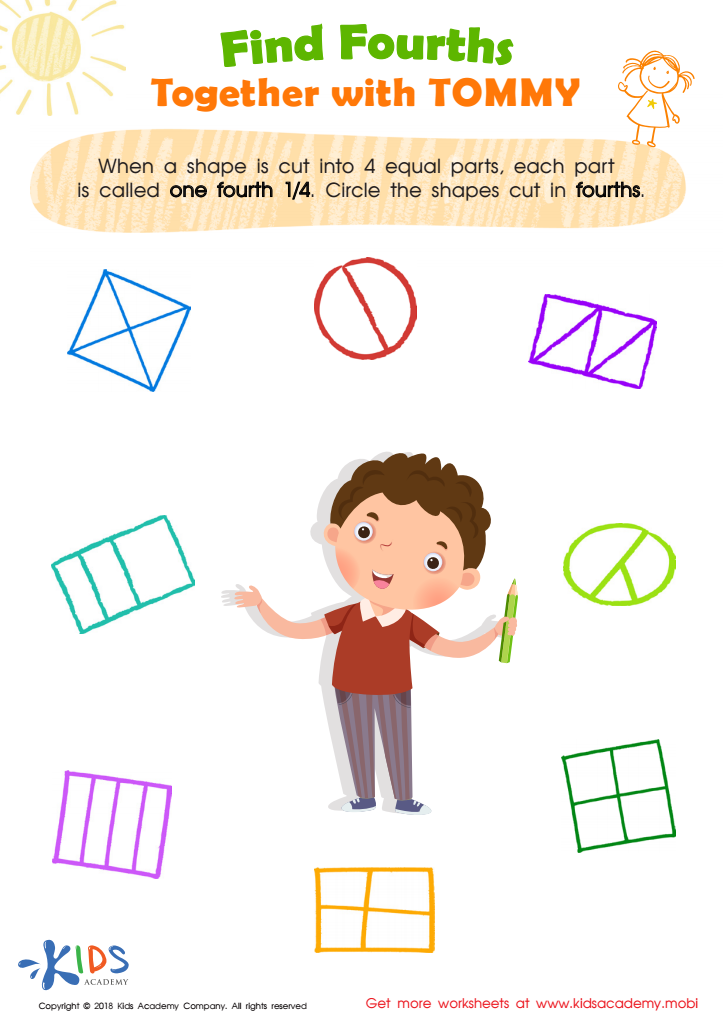
Find Fourths Together with Tommy Worksheet
 Assign to My Students
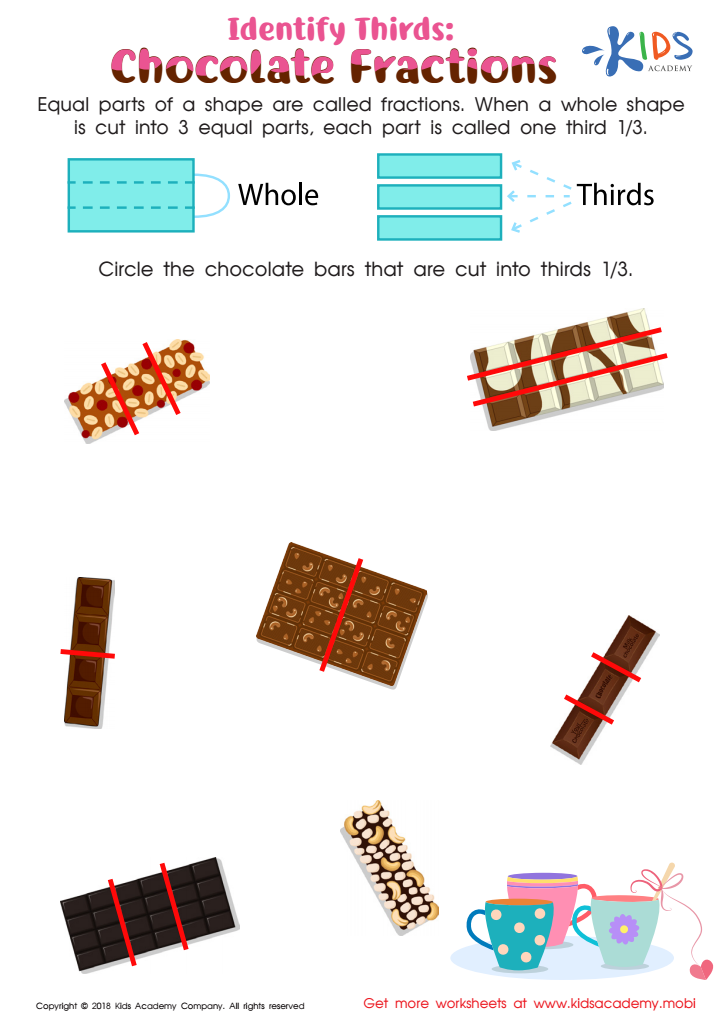
Identify Thirds: Chocolate Fractions Worksheet
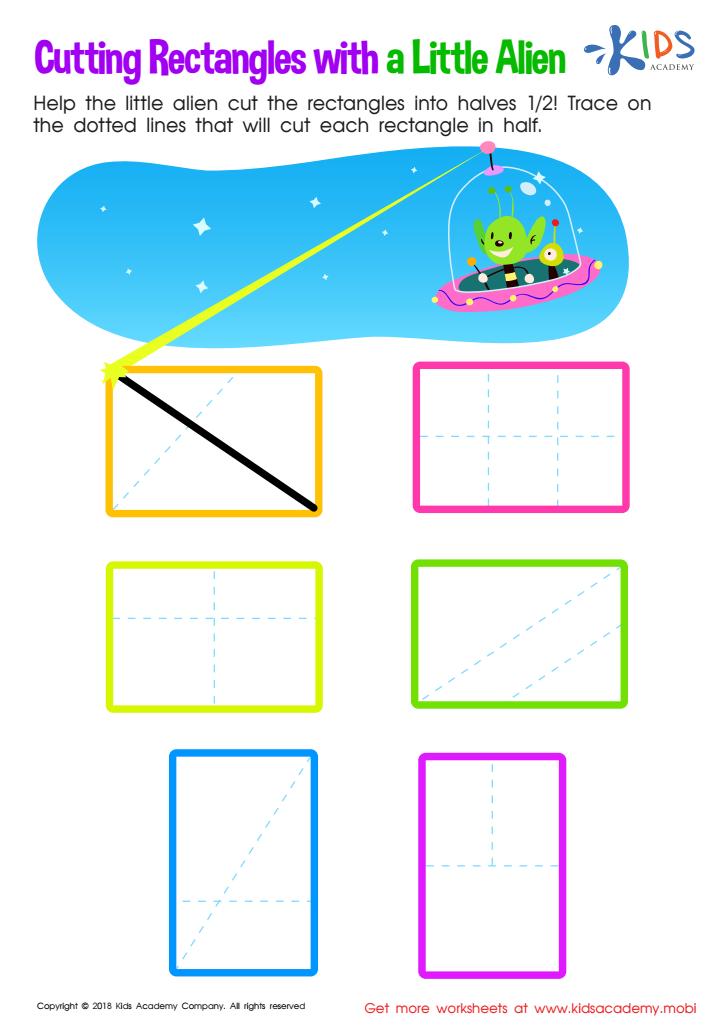
Cutting Rectangles with Alien Worksheet
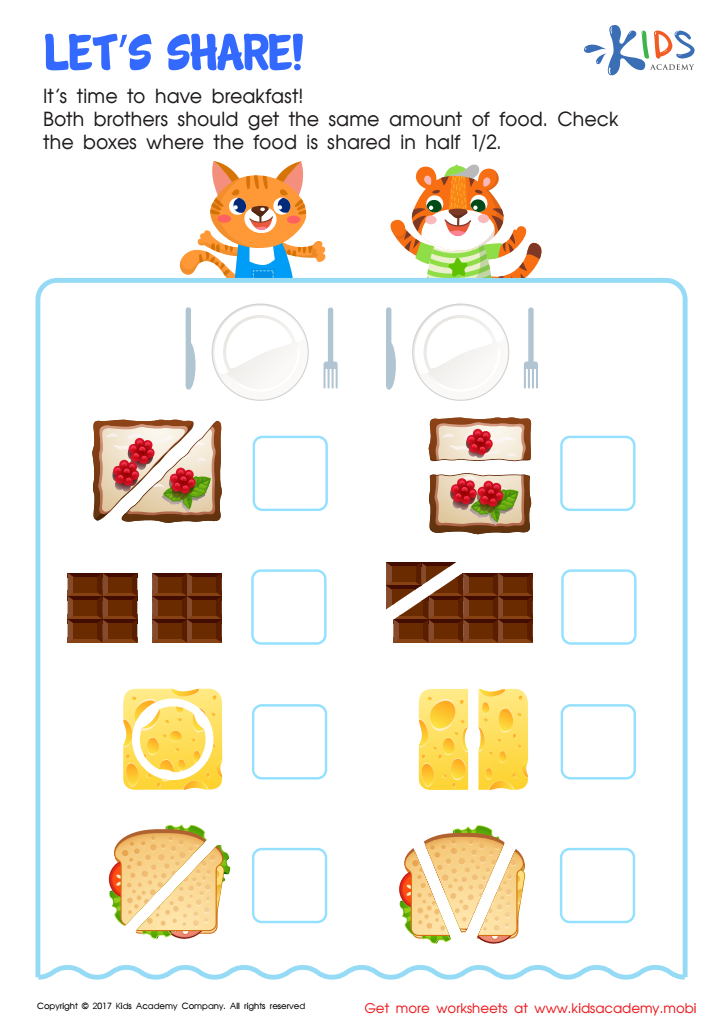
Let's Share Worksheet
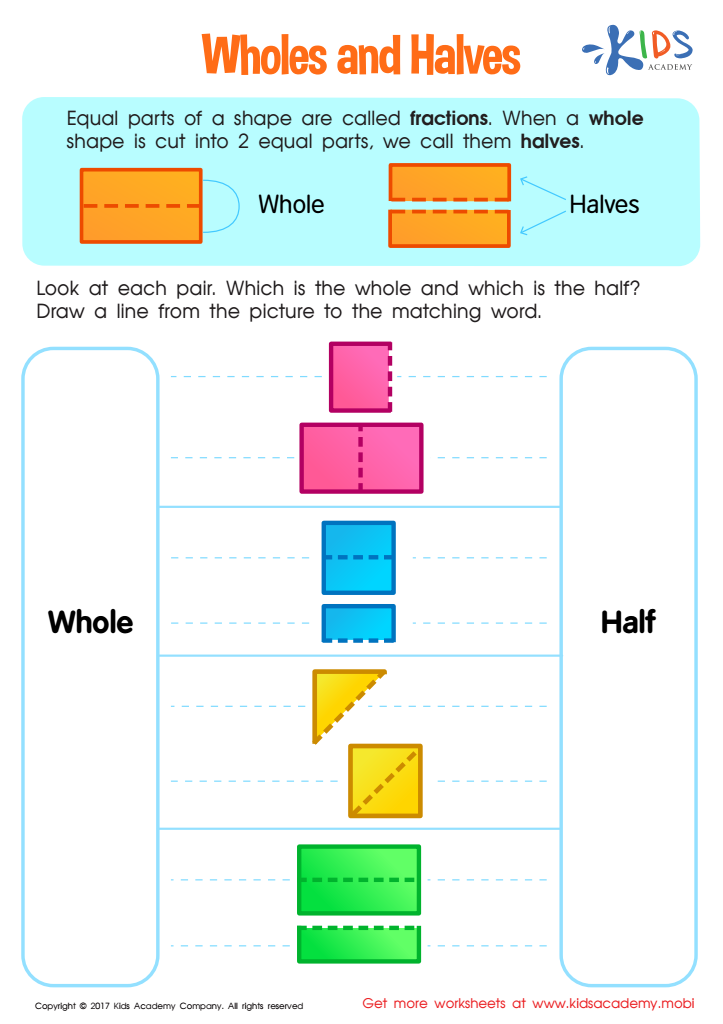
Wholes and Halves Worksheet
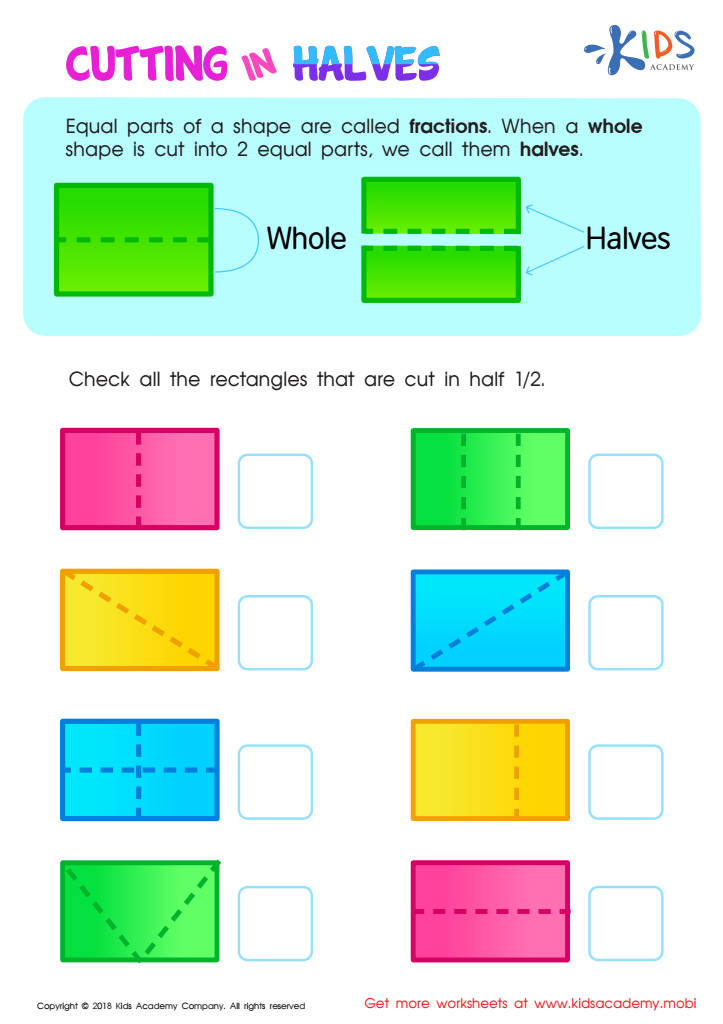
Cutting in Halves Worksheet
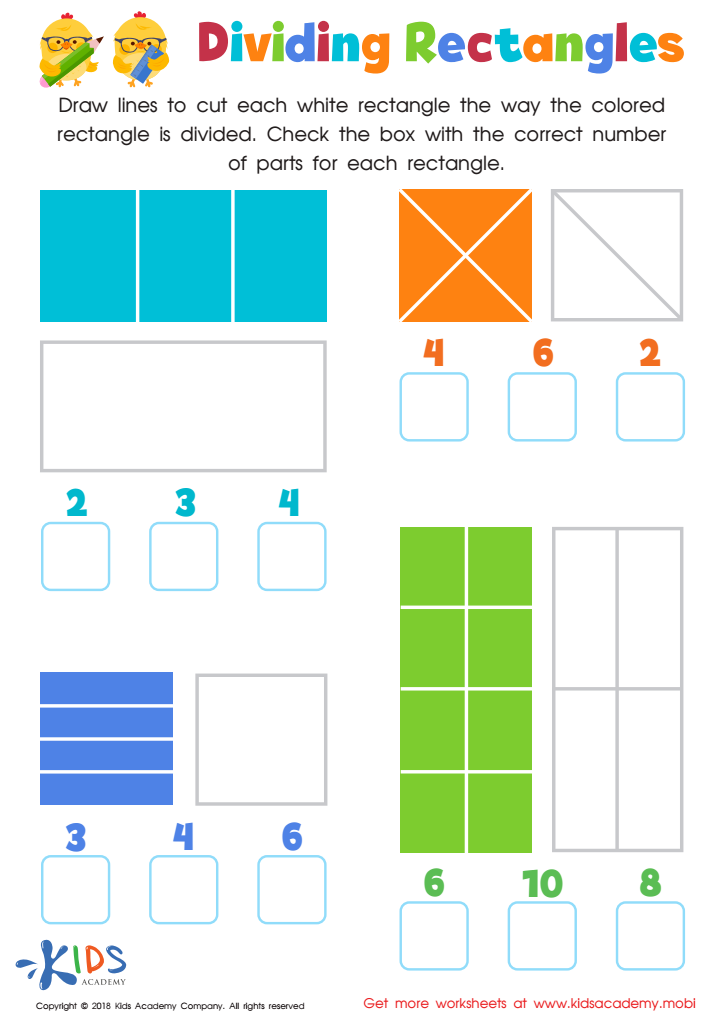
Dividing Rectangles Worksheet
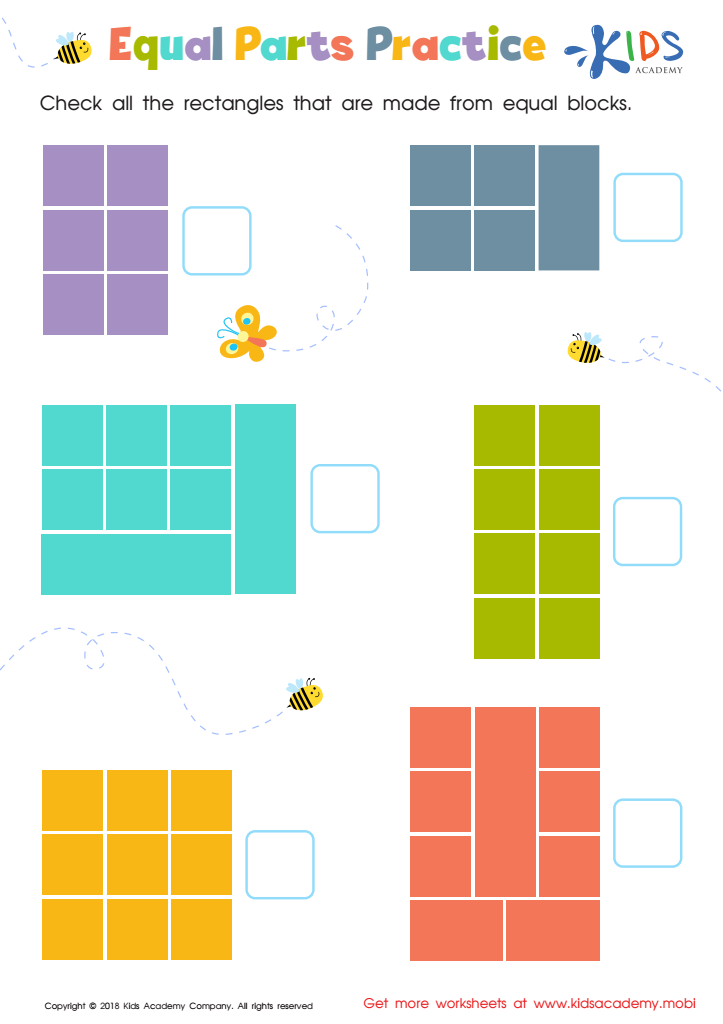
Equal Parts Practice Worksheet
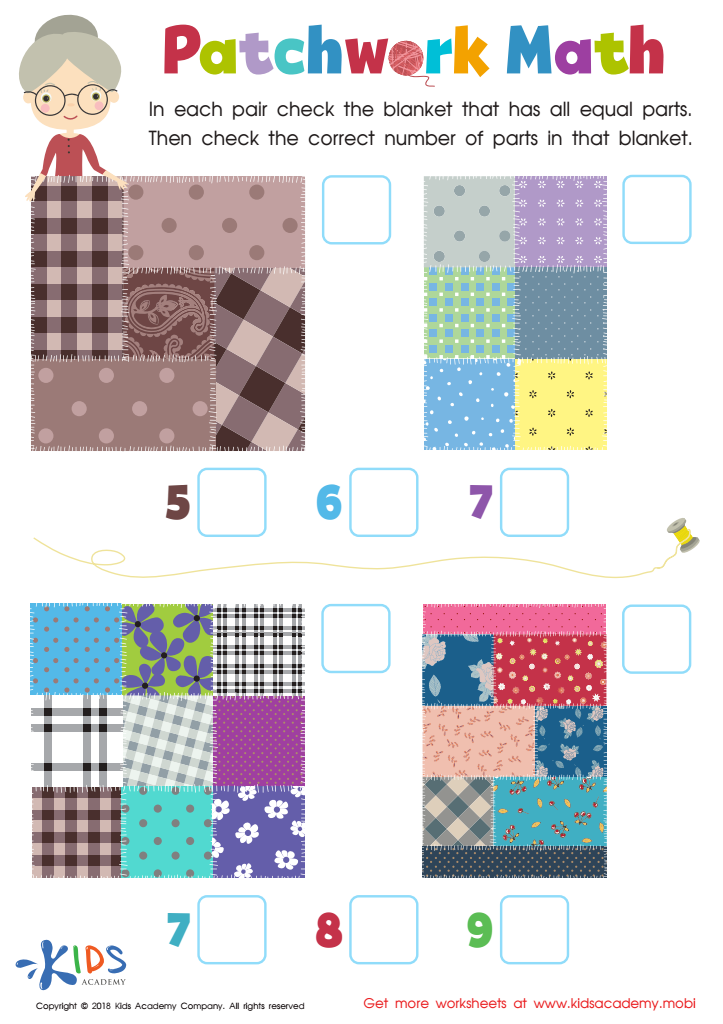
Patchwork Math Worksheet
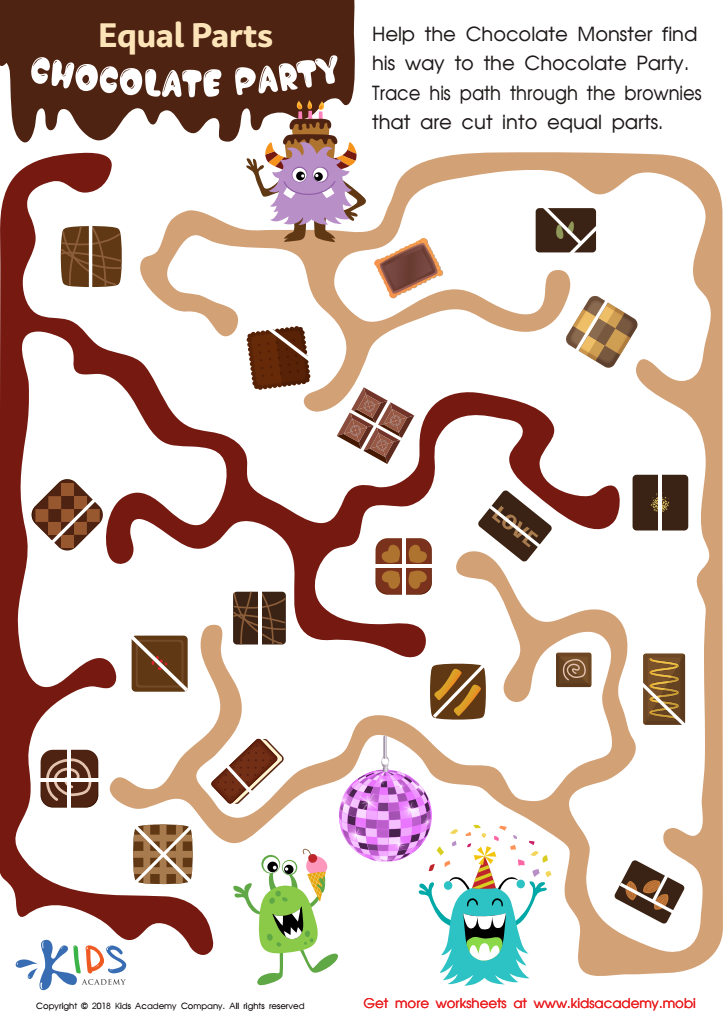
Equal Parts: Chocolate Party Worksheet
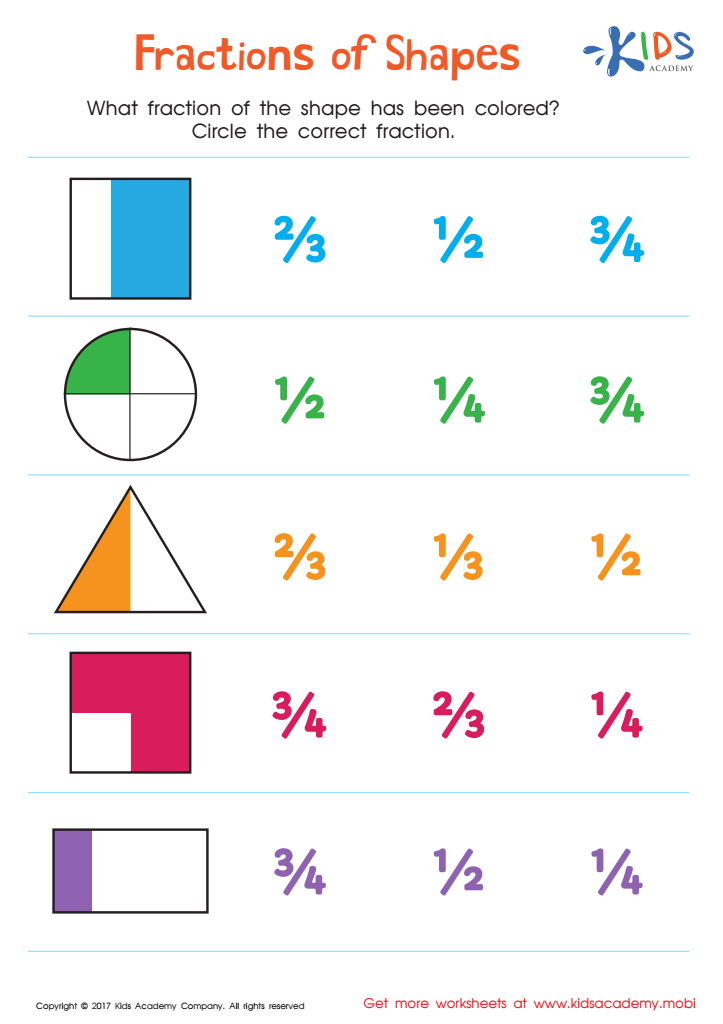
Fractions of Shapes: Math Concept Worksheet
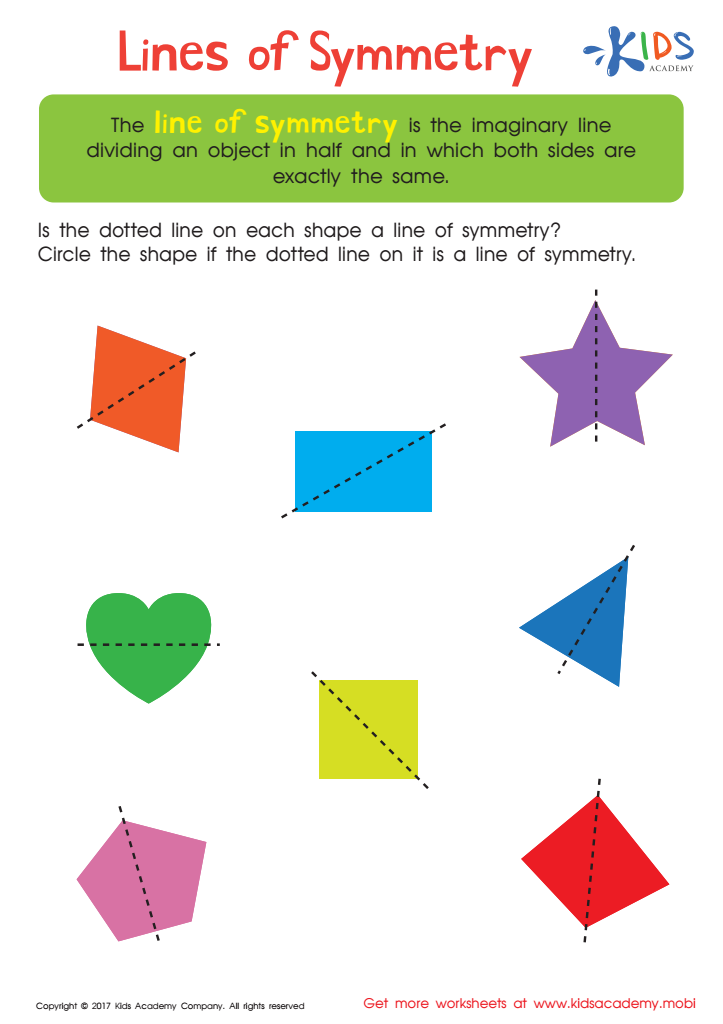
Lines of Symmetry Printable
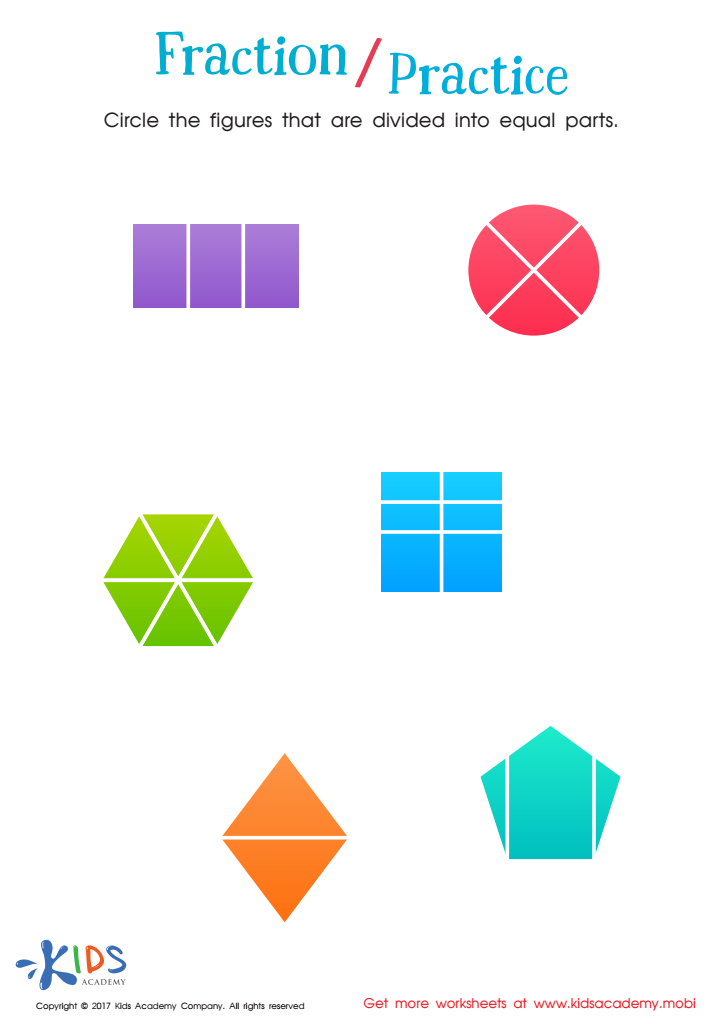
Fractions: Shapes Worksheet
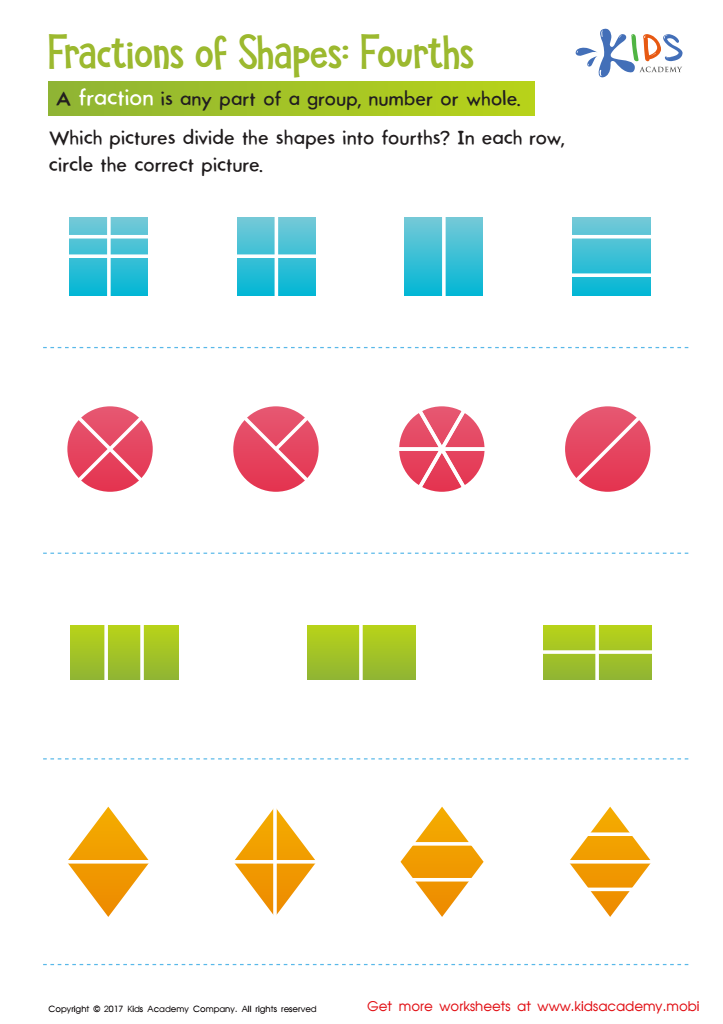
Fractions of Shapes Worksheet








Understanding fractions of shapes is foundational for children aged 6-9, as it not only enhances their mathematical skills but also nurtures problem-solving abilities and logical thinking. At this developmental stage, children are transitioning from concrete to more abstract mathematical concepts. Learning fractions through shapes allows them to visually and tangibly grasp the idea of parts of a whole, making it more relatable and less intimidating than purely numerical fractions.
Introducing fractions through shapes—like dividing a circle into halves, quarters, or thirds—offers a clear visual representation, aiding comprehension. When children see that a shape can be divided into equal parts, they better understand that fractions represent proportionate sections. This visual context builds a strong foundation for future mathematical concepts, such as number lines, measurements, and real-world applications like sharing equally.
Moreover, an early understanding of fractions contributes to a child’s overall cognitive development. It encourages reasoning by challenging children to think about how a whole can be divided into parts and how those parts relate to each other and the whole. Through engaging with fractions of shapes, children also develop spatial reasoning skills, which are critical for success in subjects like geometry, science, and engineering.
Therefore, prioritizing the learning of fractions through shapes not only primes children for future mathematical success but also fosters essential thinking skills that are invaluable across various disciplines.