Math Worksheets for Ages 7-9 - Page 37
866 filtered results
-
From - To
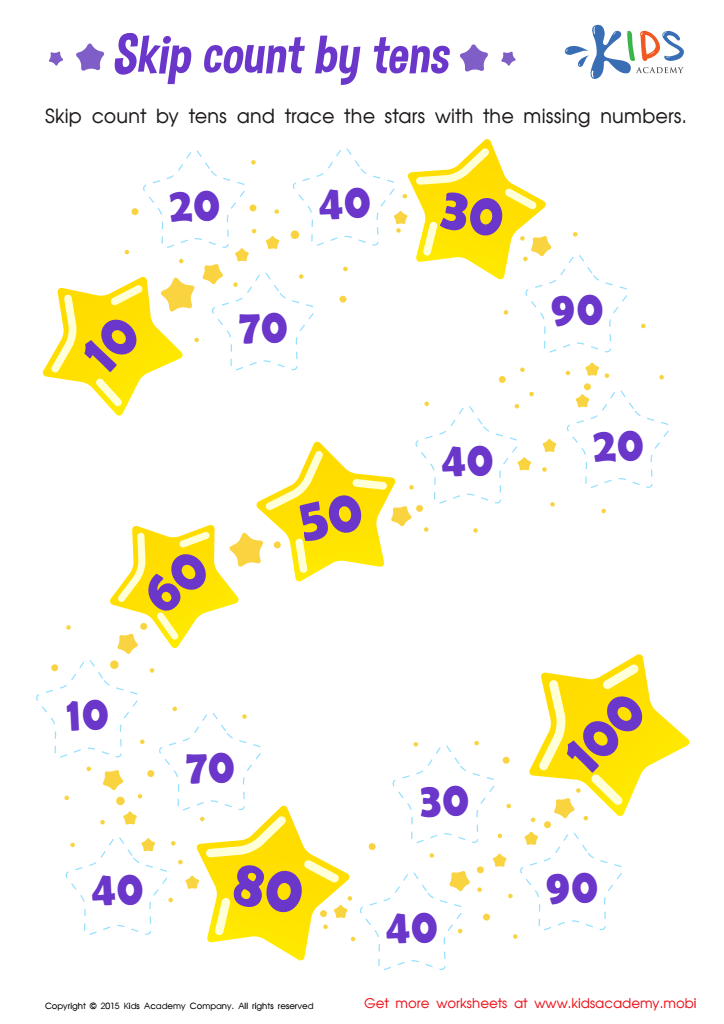
Learn dozens: Skip Count by Tens Printable
 Assign to My Students
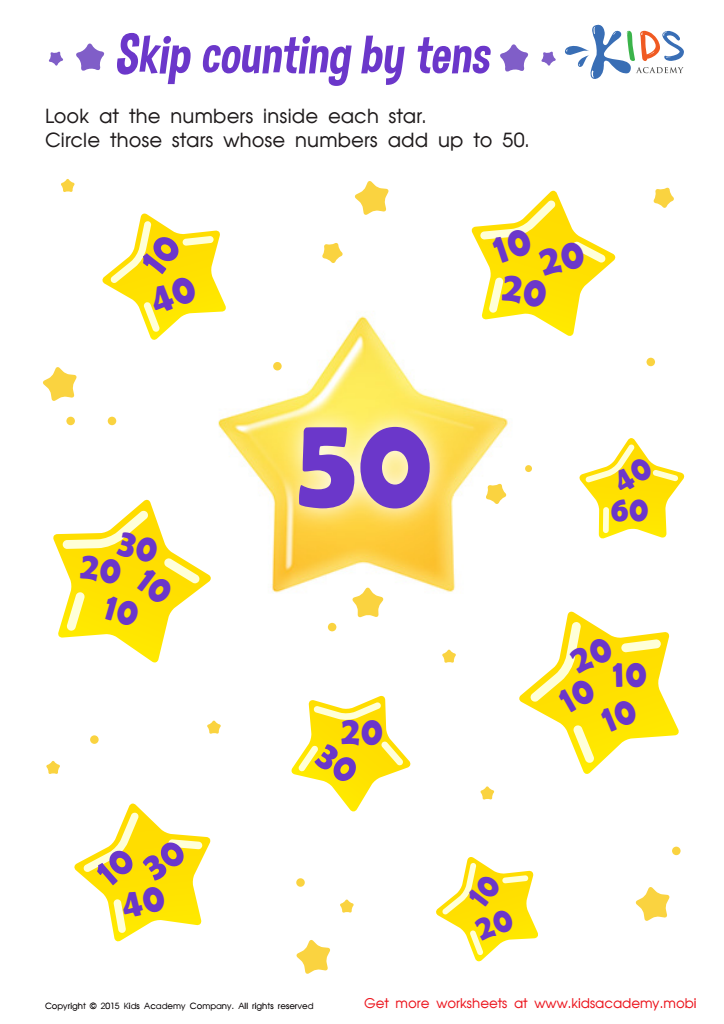
Learn Dozens: Skip Counting by Tens Printable








Parents and teachers should prioritize math education for children aged 7-9 because this formative period is crucial for developing foundational skills that support future academic success and everyday problem-solving. Math promotes critical thinking, logical reasoning, and perseverance, skills that benefit children across all subjects and situations. During these early grades, children learn essential concepts such as addition, subtraction, multiplication, division, and basic geometry, which form the building blocks for more complex mathematical understanding and advanced STEM subjects later on.
A strong grasp of math at this age boosts confidence and fosters a positive attitude towards learning. It equips children with the competency to tackle real-life challenges, from managing money to understanding time and measurement. Additionally, early math proficiency has been linked to higher academic achievement and better career opportunities in the long run.
Moreover, engaging young learners in math early on encourages curiosity and a love for learning. Activities and games incorporating math concepts can make learning enjoyable, making children more motivated and enthusiastic. In sum, by investing in math education for 7- to 9-year-olds, parents and teachers enable children to build a strong, versatile skill set that opens doors to endless possibilities and lifelong learning.








