Shape Recognition Geometry Worksheets for Ages 8-9
23 filtered results
-
From - To
Our "Shape Recognition Geometry Worksheets for Ages 8-9" are designed to make learning geometry fun and interactive. Packed with engaging activities, these worksheets help children identify and understand various shapes and their properties. Each worksheet is tailored to enhance visual-spatial skills, critical thinking, and problem-solving abilities. Perfect for classroom use or at-home practice, these worksheets support a solid foundation in geometry and boost confidence in young learners. Through a blend of vibrant illustrations and challenging tasks, kids explore the world of shapes in a captivating and educational way. Ideal for students aged 8-9, ensuring a smooth transition with foundational geometry concepts.
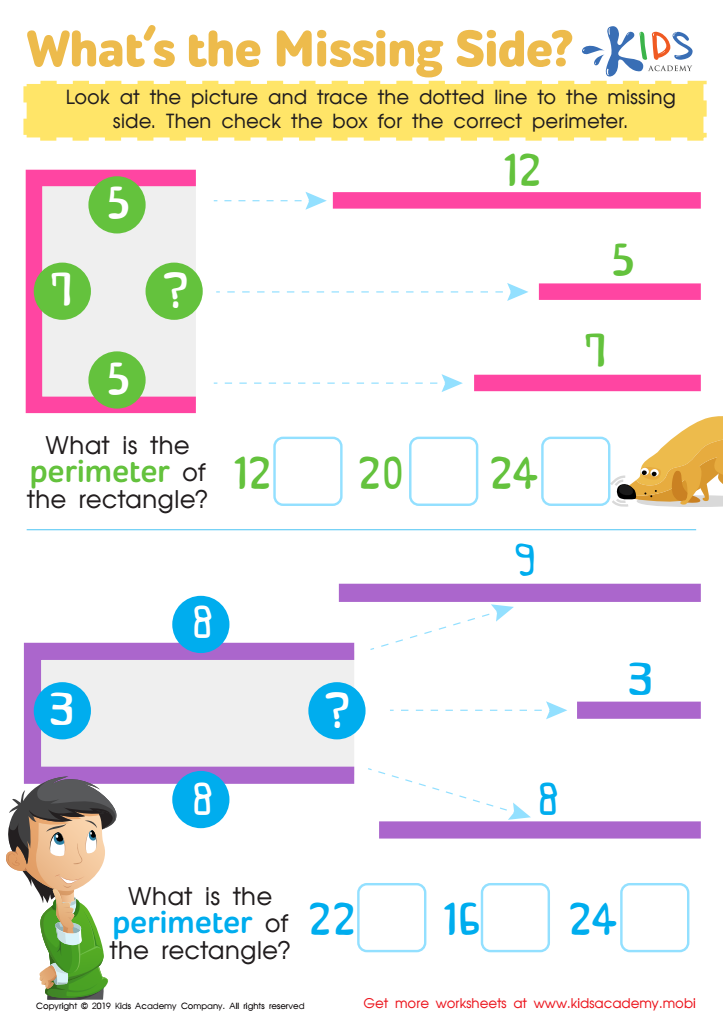
What's the Missing Side Worksheet
 Assign to My Students











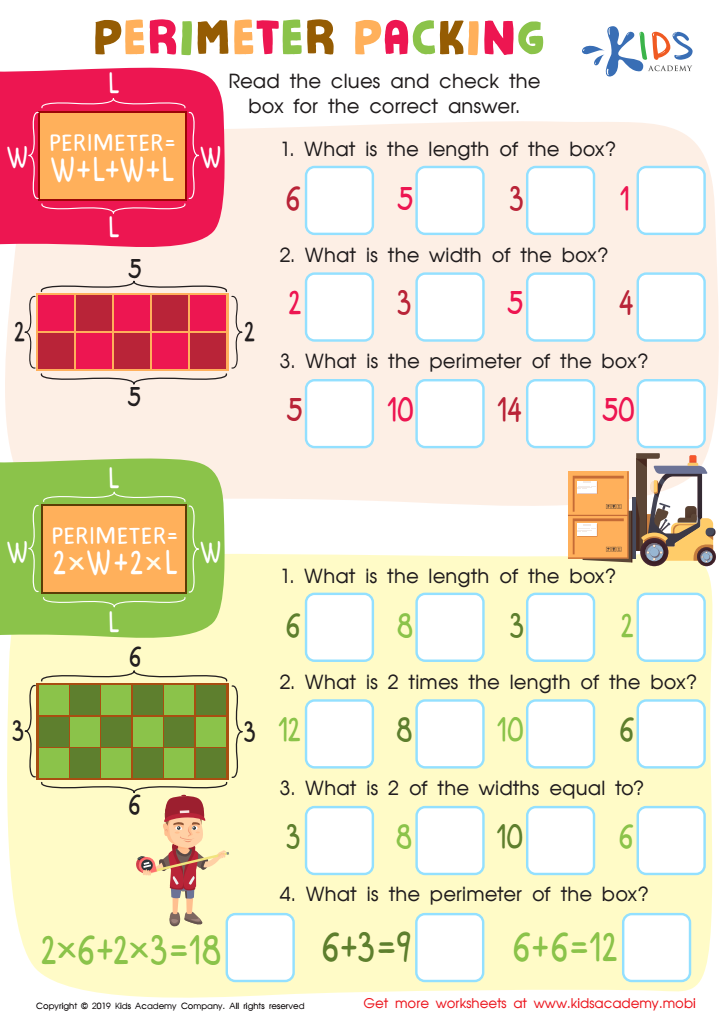
Perimeter Parking Worksheet
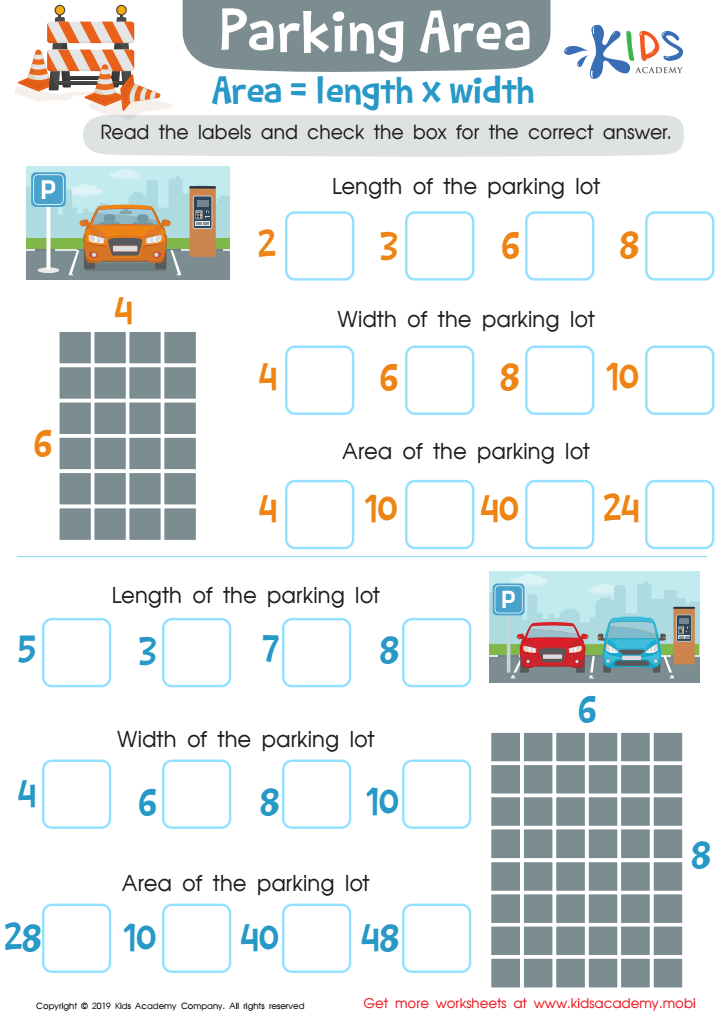
Parking Area Worksheet
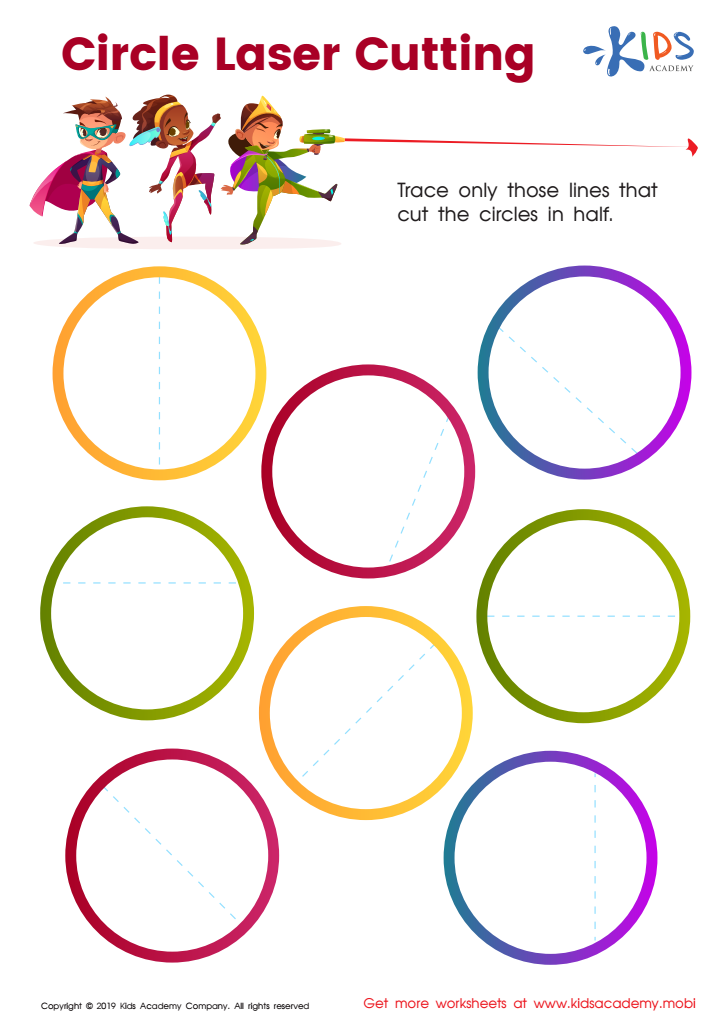
Circle Laser Cutting Worksheet
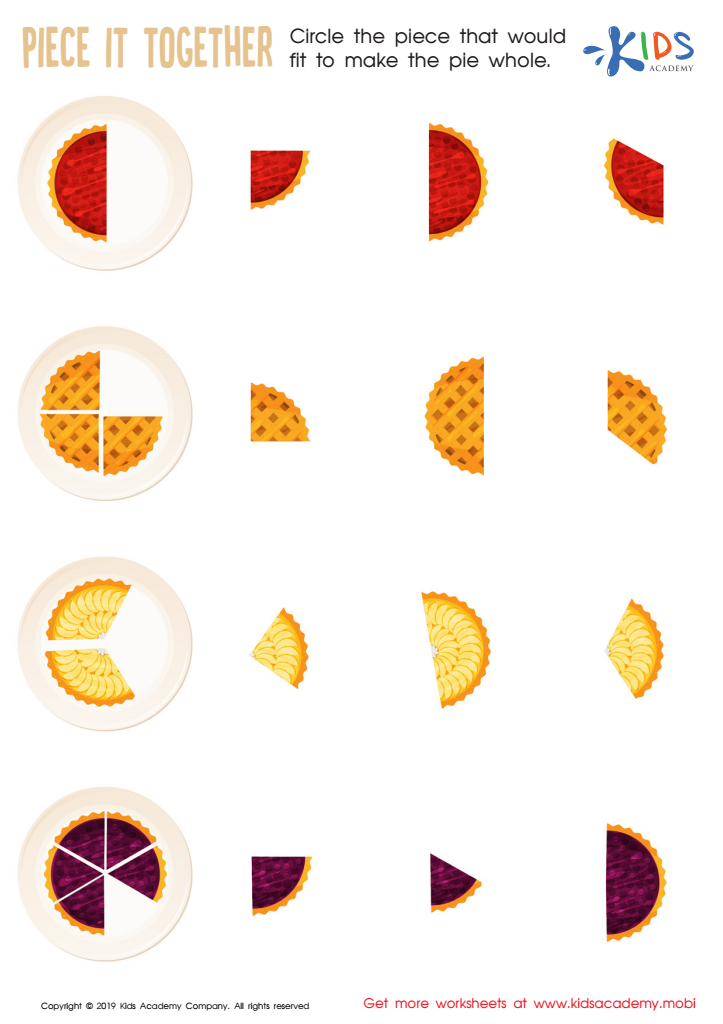
Piece it together Worksheet
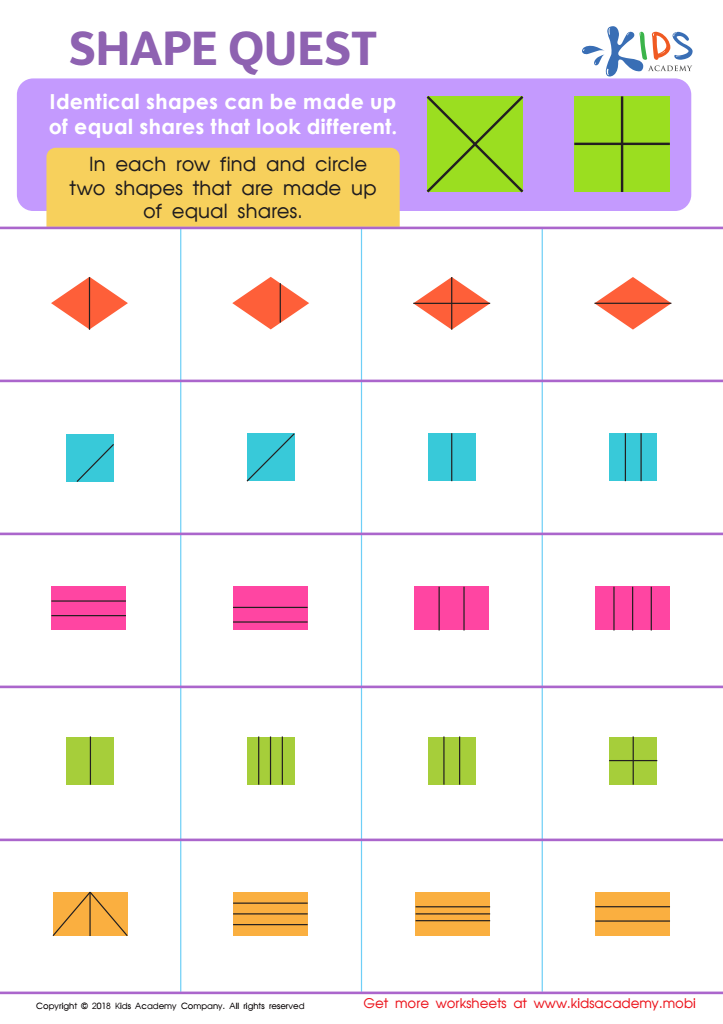
Shape Quest Worksheet
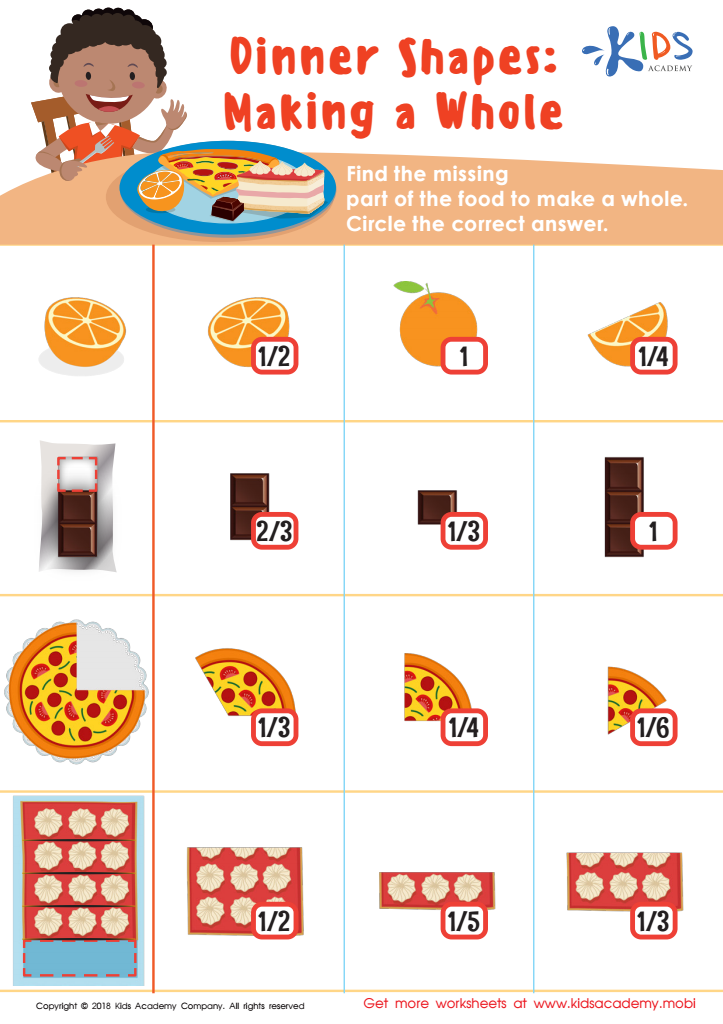
Dinner Shapes: Making a Whole Worksheet
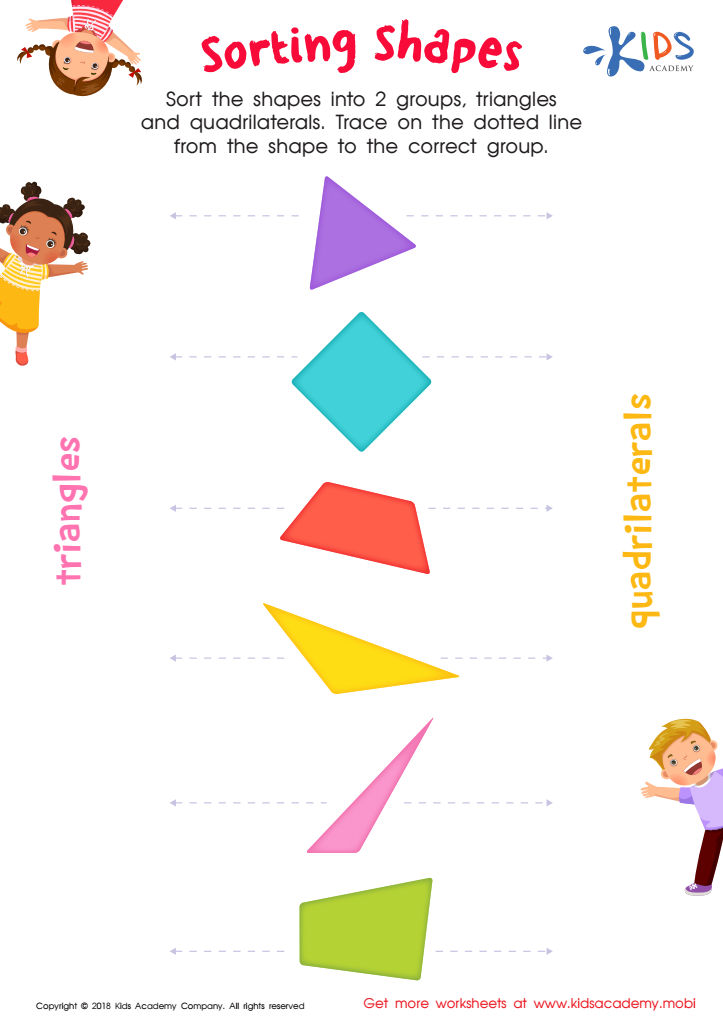
Sorting Shapes Worksheet
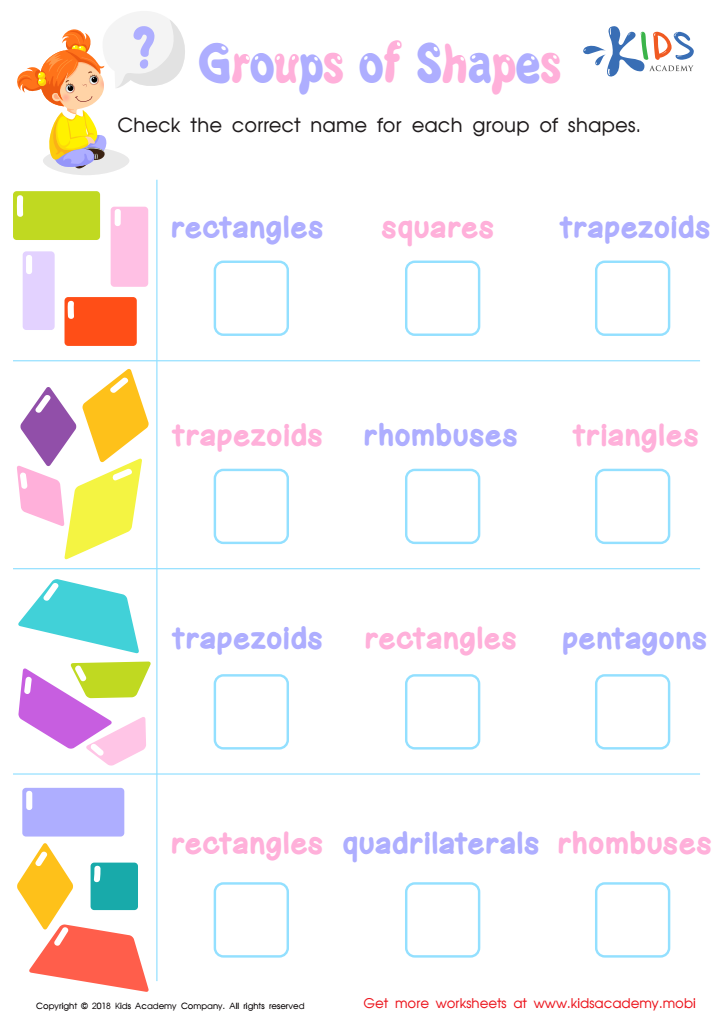
Groups of Shapes Worksheet
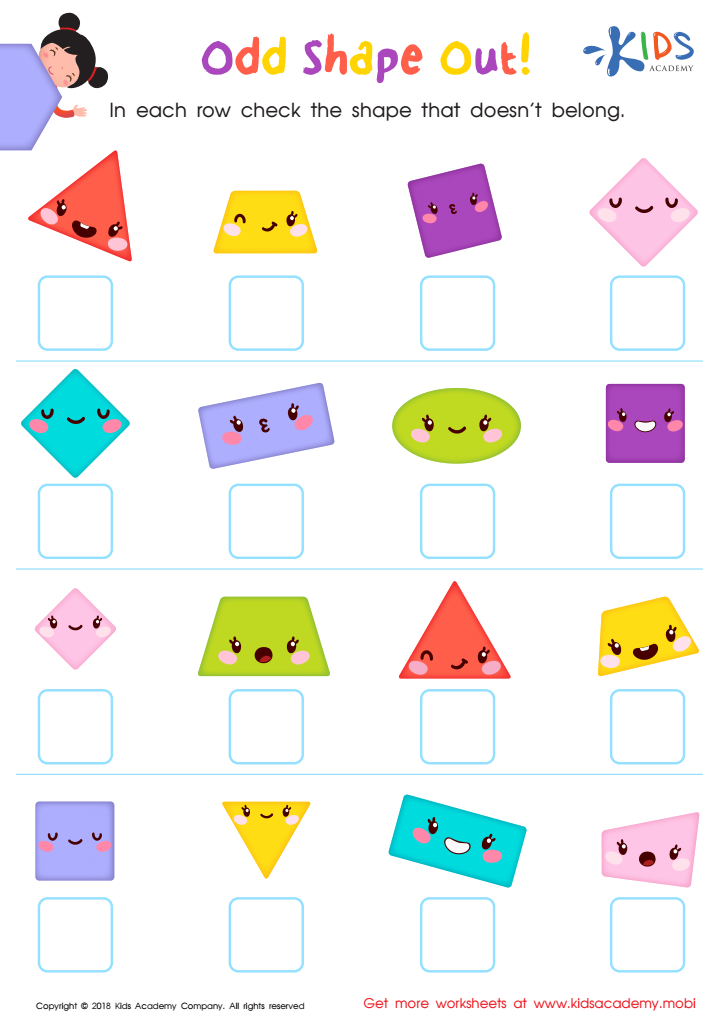
Odd Shape Out Worksheet for Grade 3
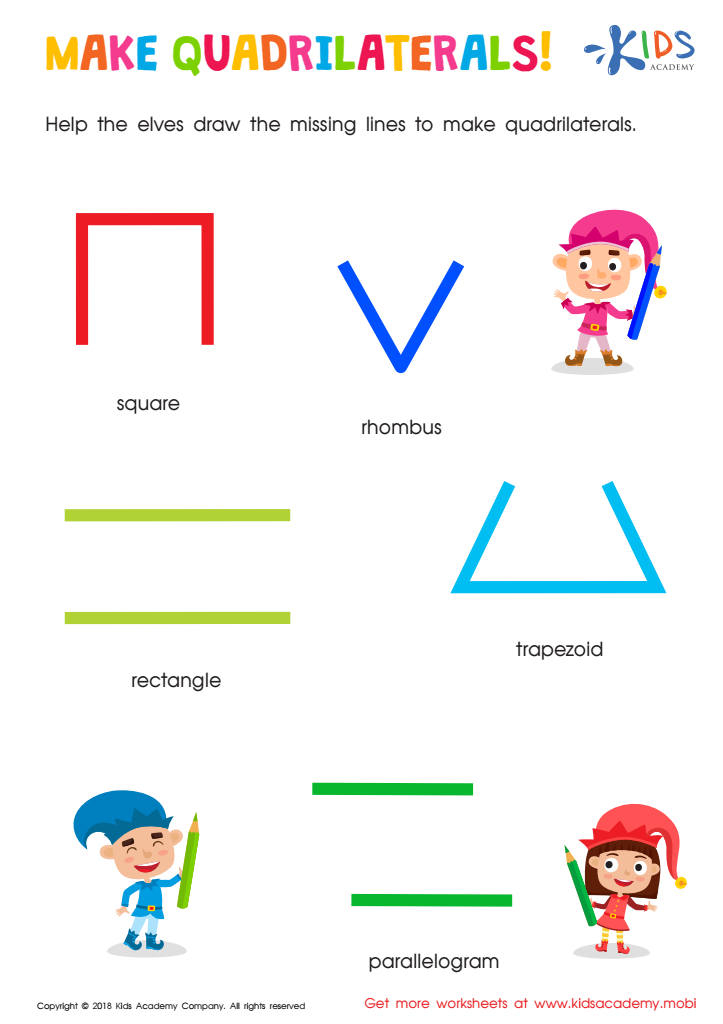
Make Quadrilaterals Worksheet
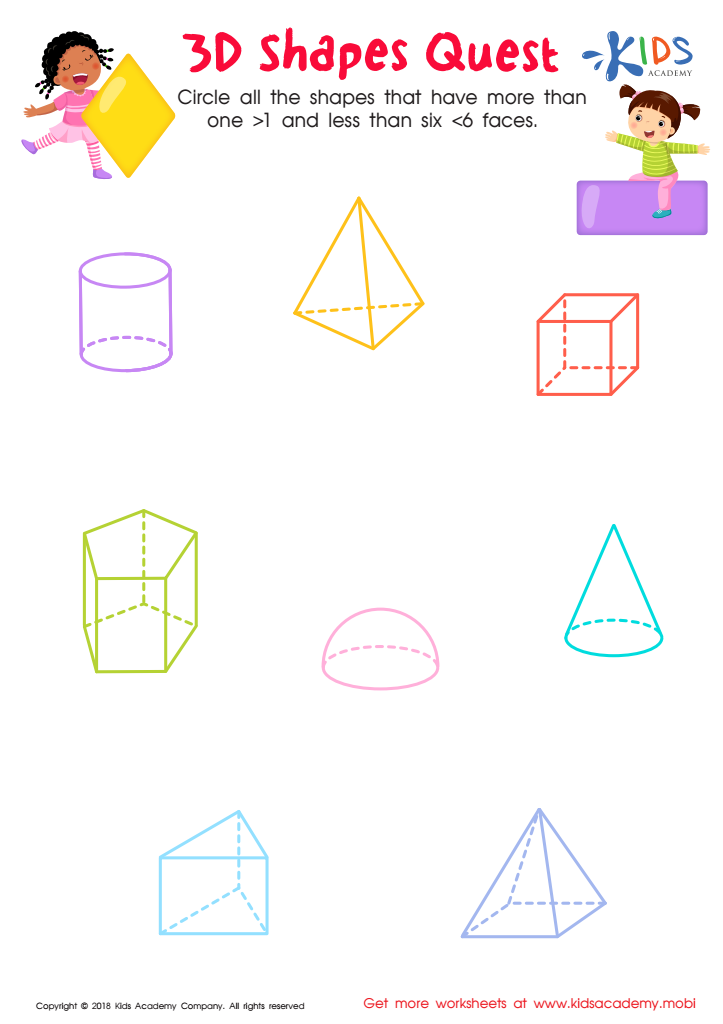
3D Shapes Quest Worksheet
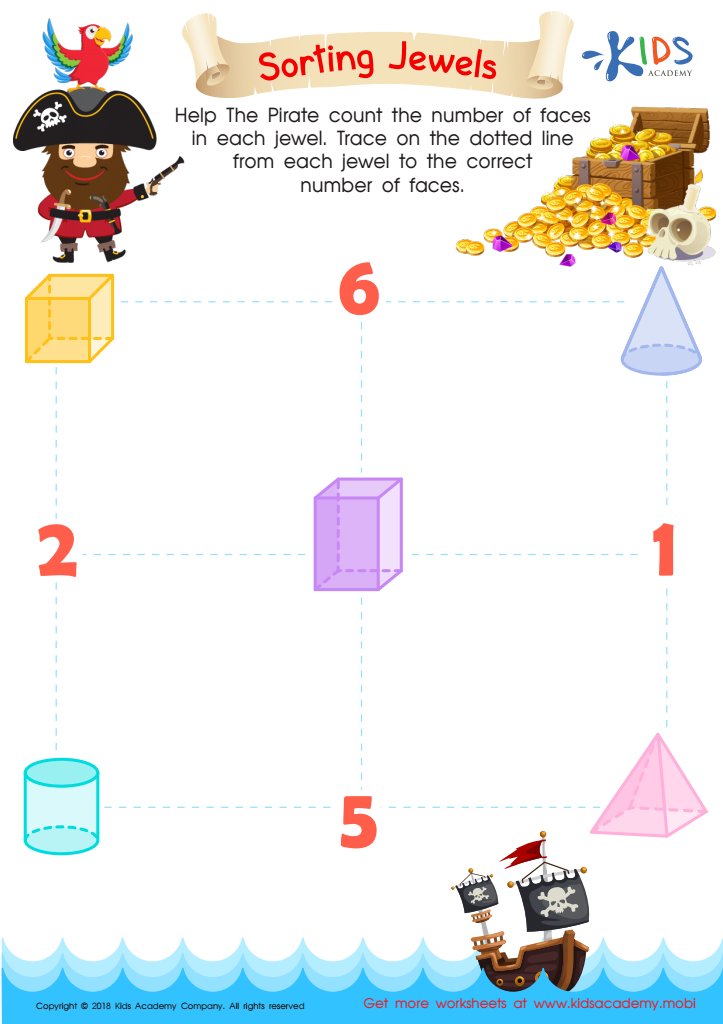
Sorting Jewels Worksheet
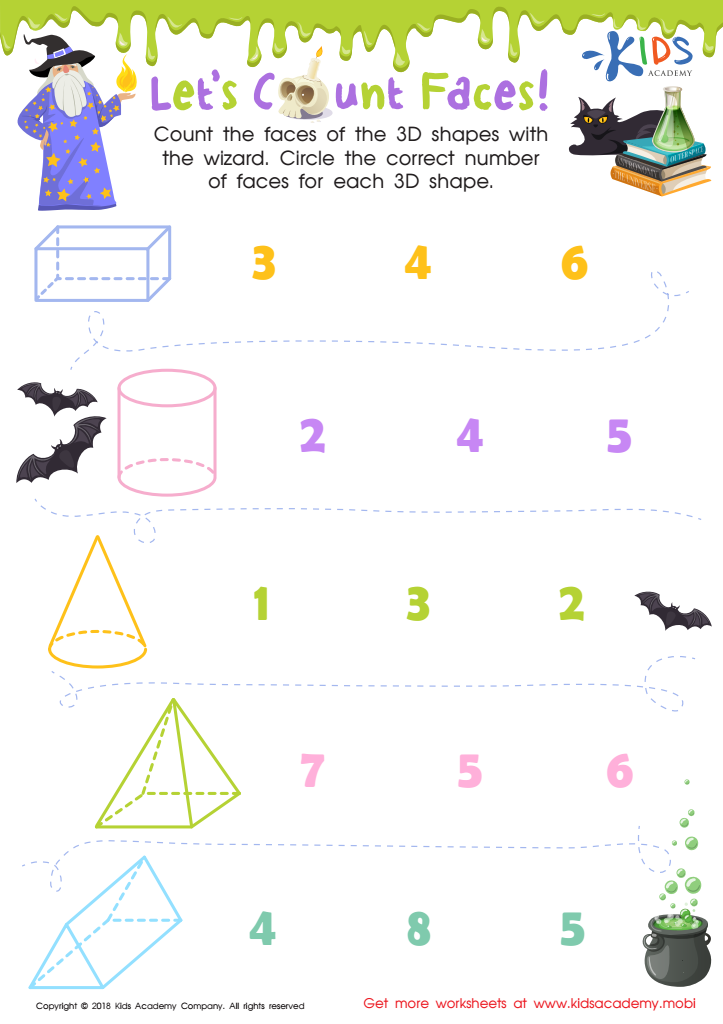
Let's Count Faces! Worksheet
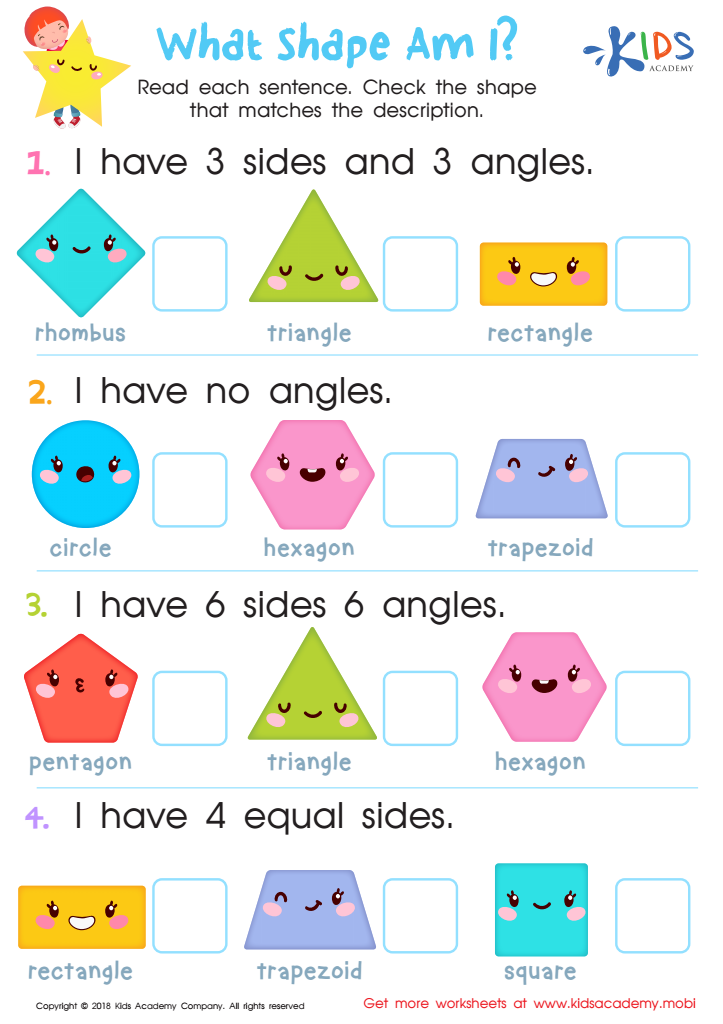
What Shape Am I? Worksheet
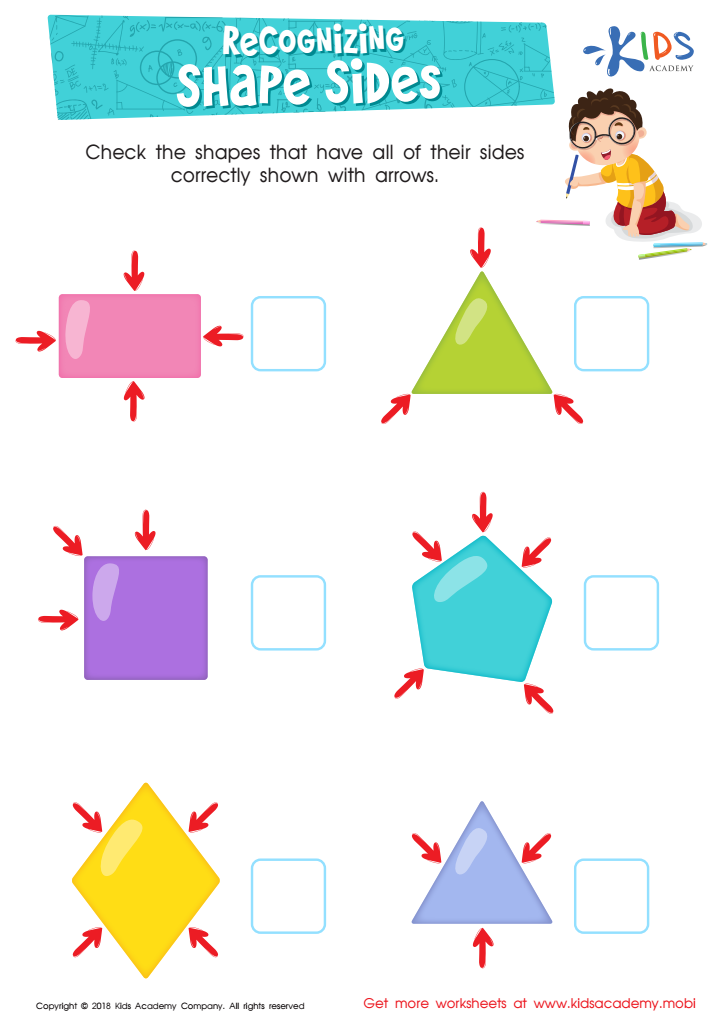
Recognizing Shape Sides Worksheet
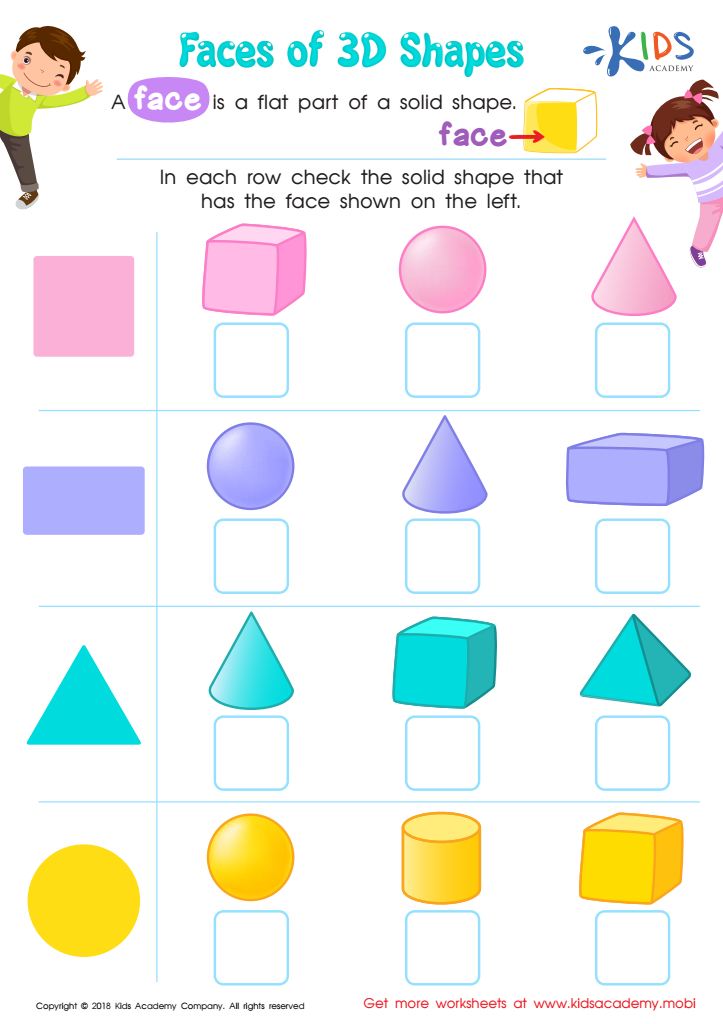
Faces of 3D Shapes Worksheet
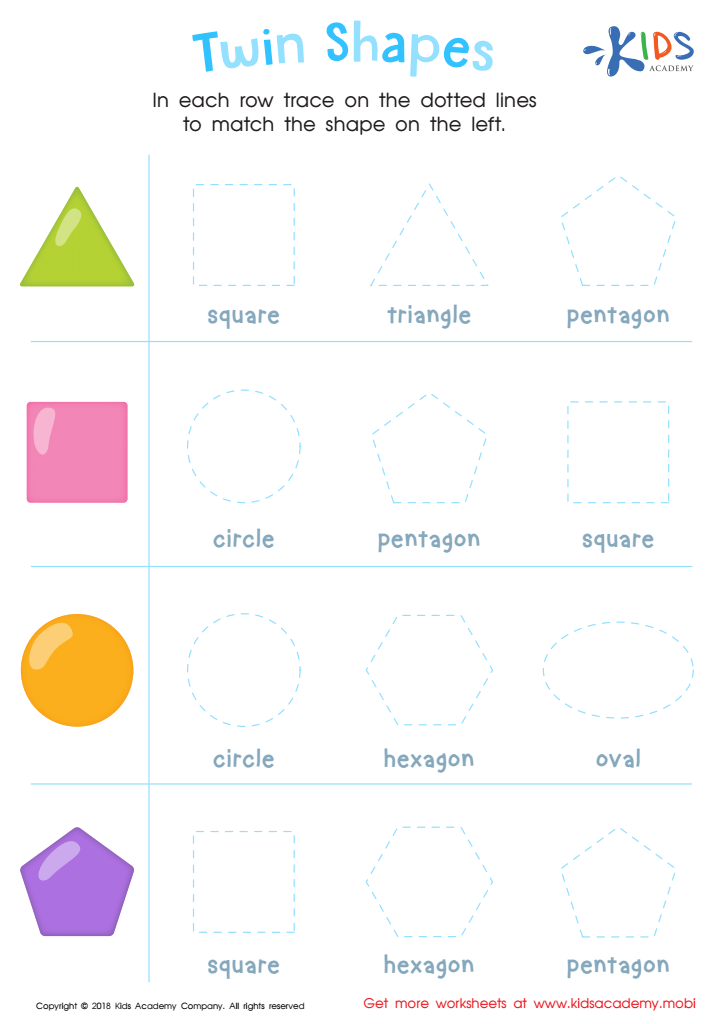
Twin Shapes Dot-to-Dot Worksheet
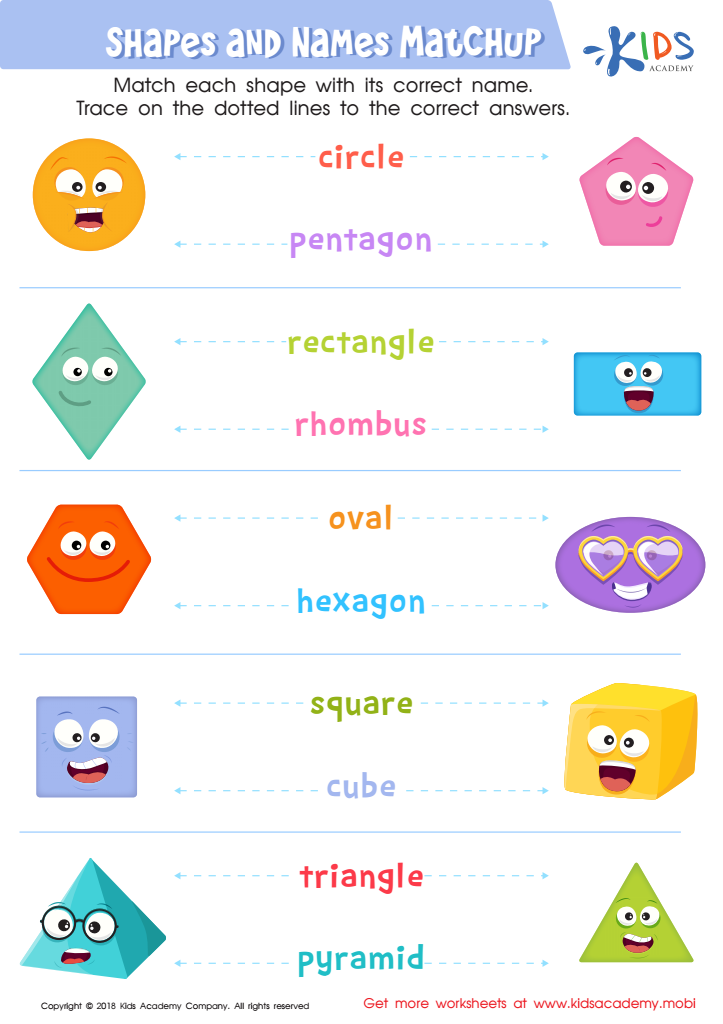
Shapes and Names Matchup Worksheet
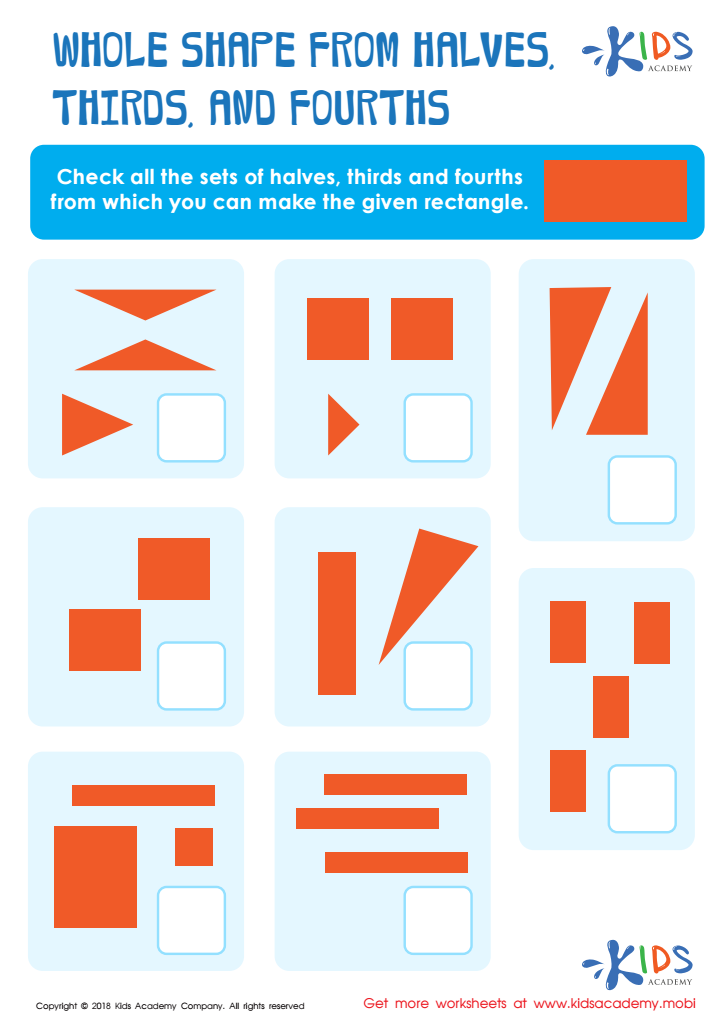
Whole Shape from Halves, Thirds and Fourths Worksheet
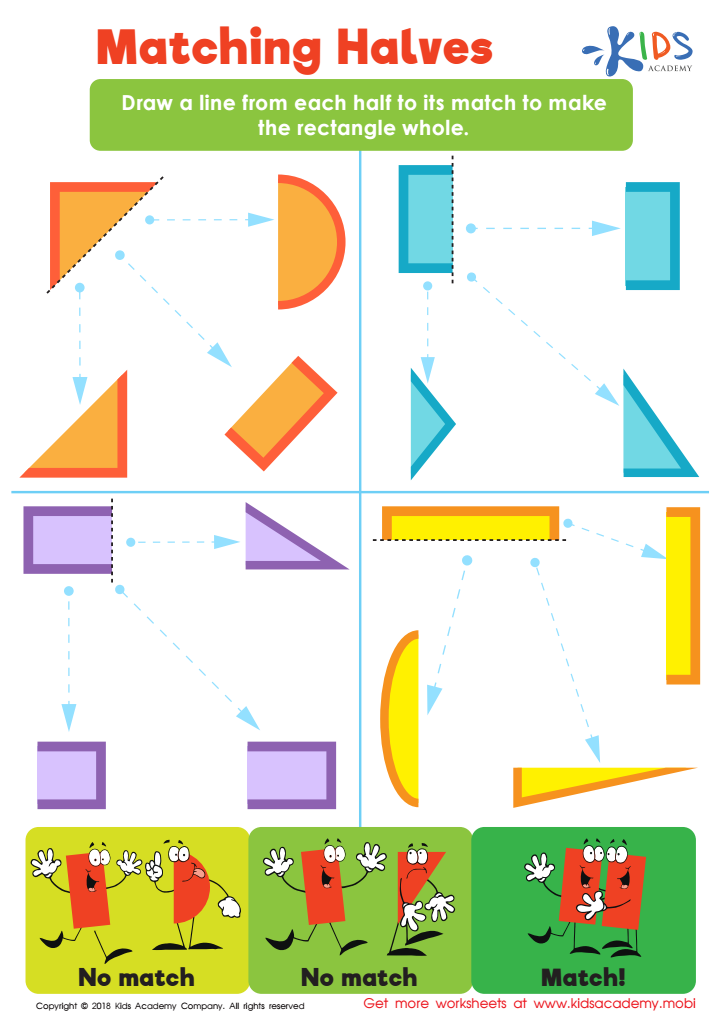
Matching Halves Worksheet
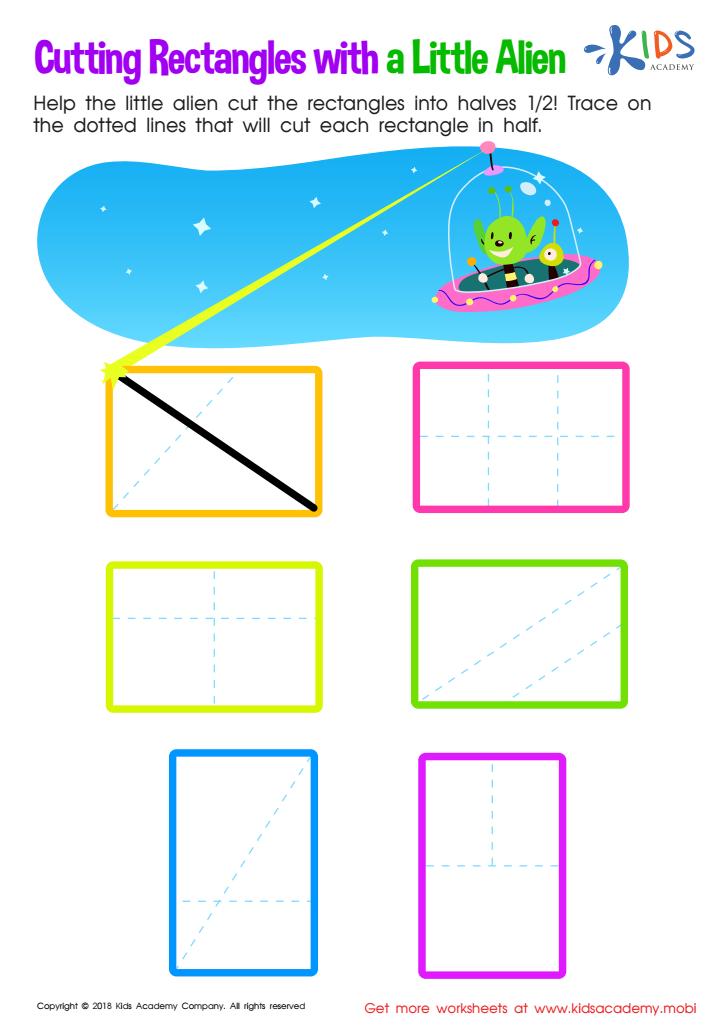
Cutting Rectangles with Alien Worksheet
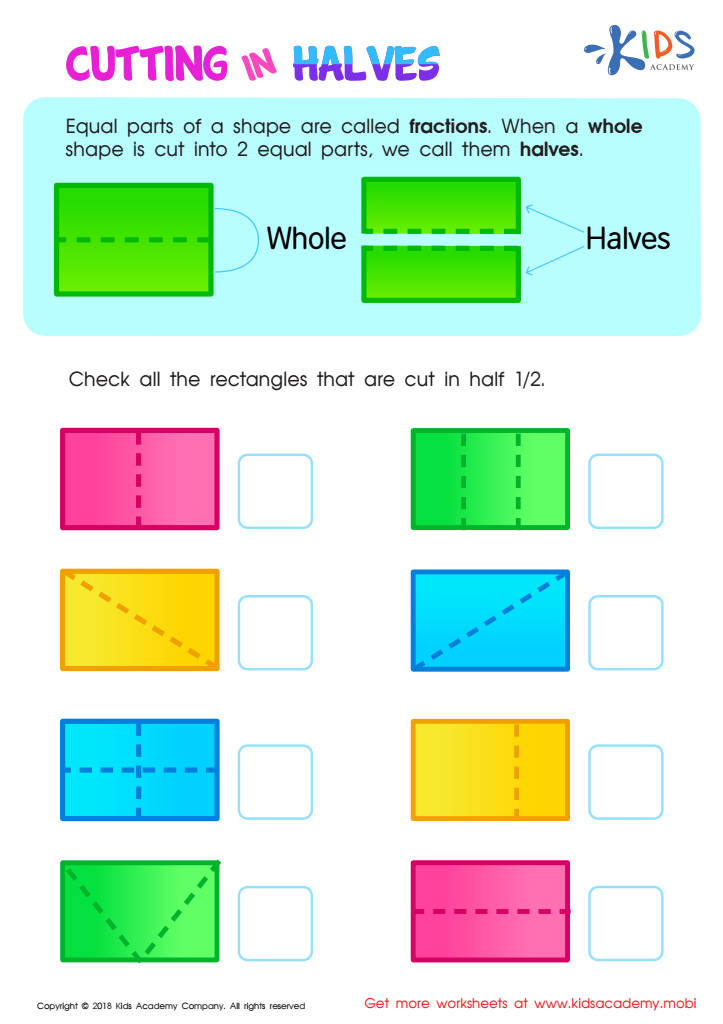
Cutting in Halves Worksheet








Shape recognition and geometry are fundamental building blocks in a child’s cognitive development, crucial especially between ages 8 and 9. During these formative years, children are transitioning from concrete to more abstract thinking processes. Mastering shape recognition and basic geometric principles enriches their spatial awareness, critical for problem-solving skills later in life.
Geometry lays a groundwork for future math learning, including algebra and calculus. Shapes help with the understanding of fractions, decimals, and the concept of space, fostering logical reasoning. As children identify and differentiate between shapes, they learn to recognize patterns and categorize objects, skills that are critical in subjects beyond mathematics, such as science and technology.
Furthermore, proficiency in geometry can significantly enhance children's ability to succeed in various activities, from playing video games and sports, where spatial tactics are involved, to engaging in arts and crafts, which promotes creativity and fine motor skills. Recognizing and manipulating shapes enhances their ability to approach tasks methodically and think visually, aiding in overall academic performance.
Lastly, fostering geometry skills at this age also promotes confidence. When children feel capable in identifying shapes and understanding spatial relationships, they gain a sense of mastery that bolsters their self-esteem and love for learning, providing a solid foundation for their educational journey.








