Online Vowels Worksheets for Kids - Page 2
88 filtered results
Difficulty Level
Grade
Age
-
From - To
Subject
Activity
Standards
Favorites
With answer key
Interactive
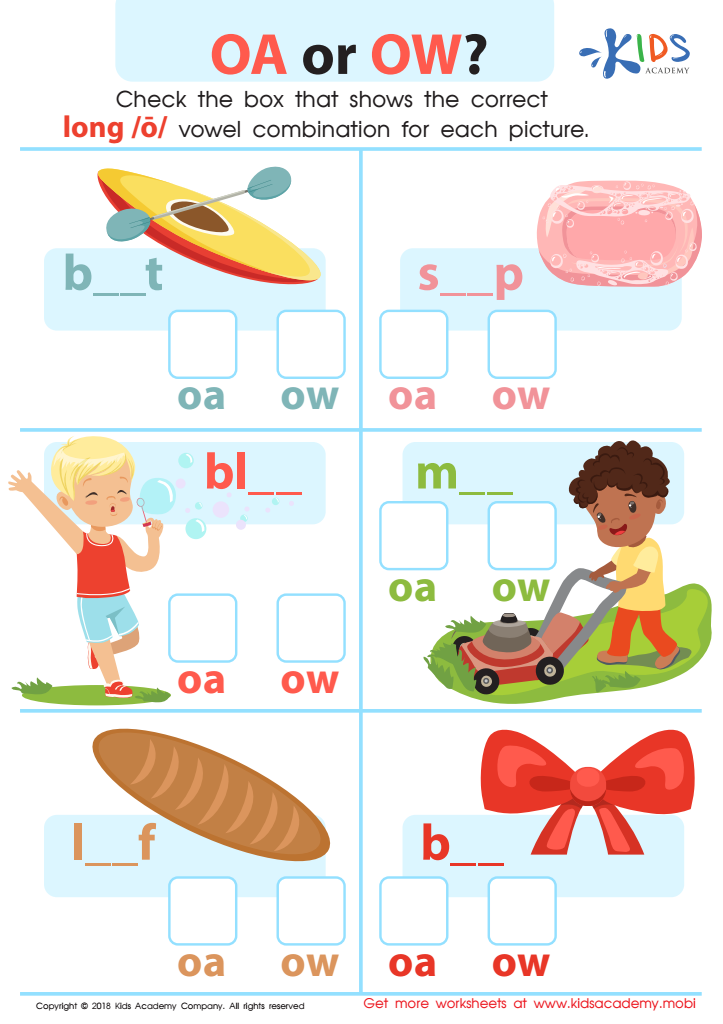
Reading: OA or OW Worksheet
This printable worksheet helps young and emergent readers with decoding words and understanding digraphs (two letters with one sound). It requires students to complete the spelling for each word based on the picture, focusing on /oa/ and /ow/ spellings. It's ideal for a reading classroom and for spelling practice.
 Assign to My Students
Reading: OA or OW Worksheet
Worksheet
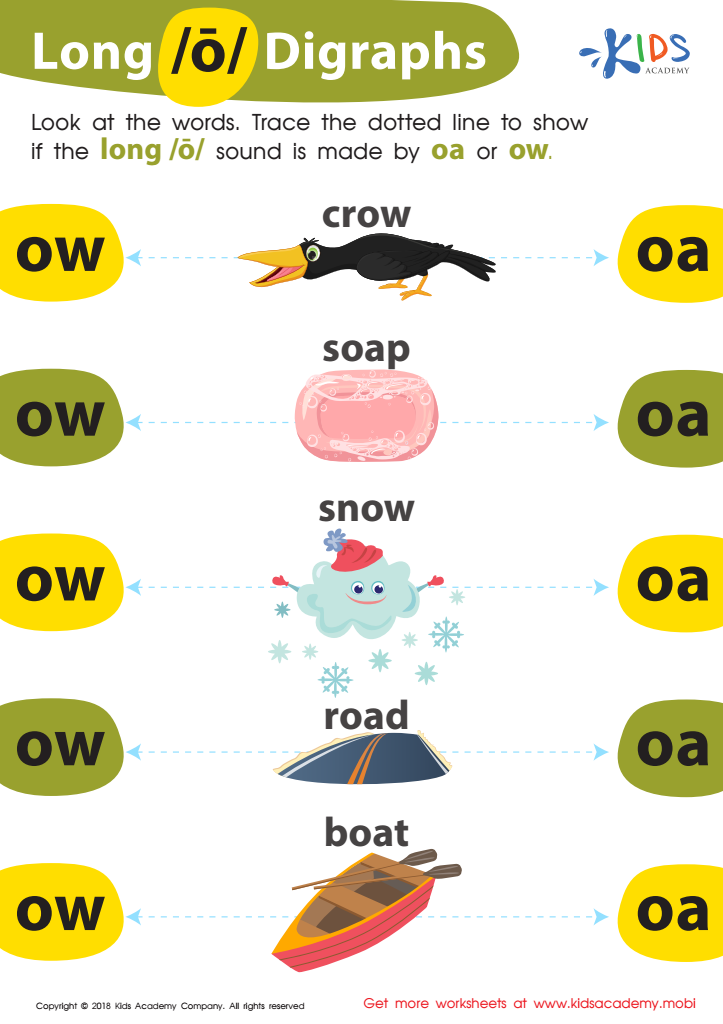
Reading: Long O Digraphs Worksheet
Reading and decoding words can be complex for learners when they start studying digraphs, two letters that make one sound. This worksheet focuses on the long O sound, /oa/ and /ow/. With the understanding of digraphs, students can decode more words and build their reading confidence.
Reading: Long O Digraphs Worksheet
Worksheet
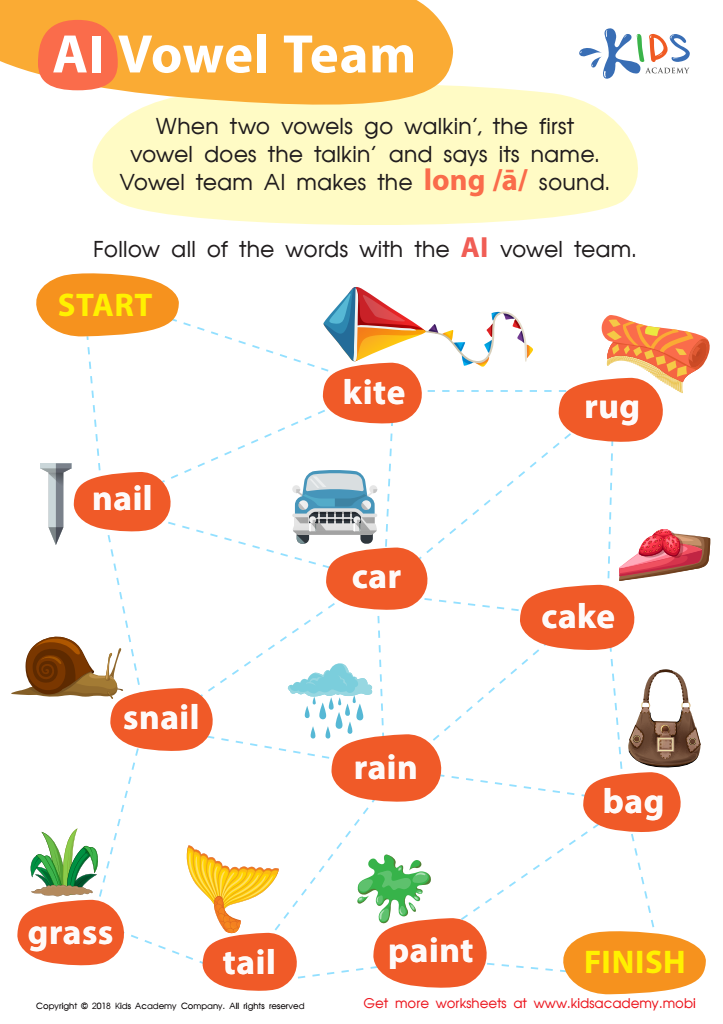
Reading: AI Vowel Team Worksheet
This worksheet focuses on the vowel team /ai/ which makes the long A sound. Students are challenged to find the correct path through the puzzle following only words with the /ai/ sound. Bright illustrations help kids understand unknown words.
Reading: AI Vowel Team Worksheet
Worksheet
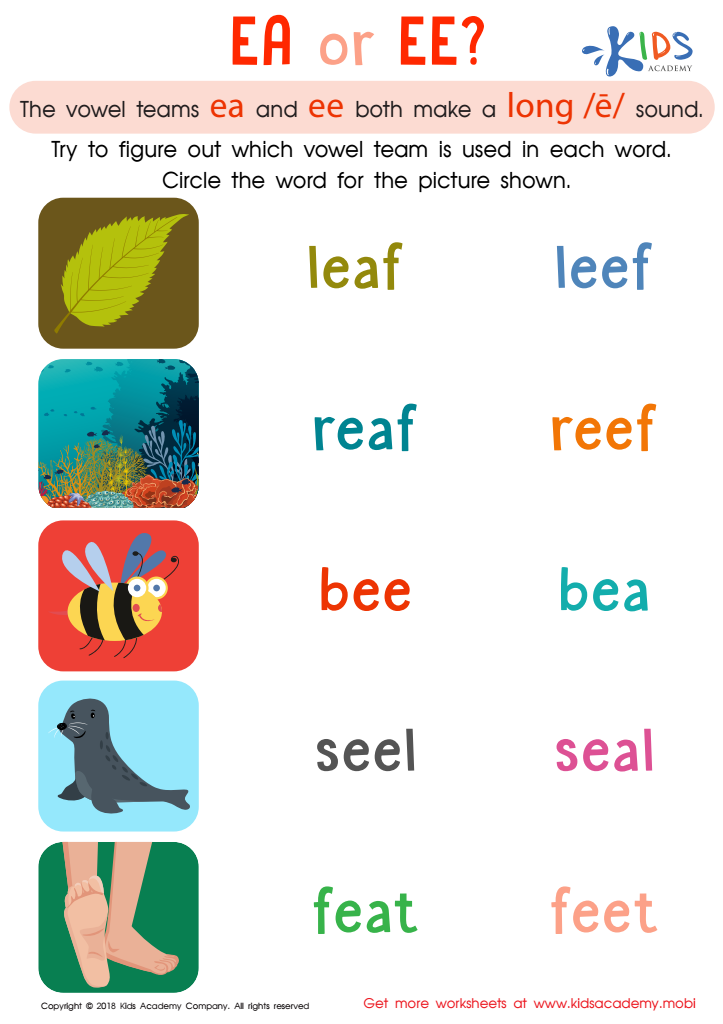
Reading: EA and EE Worksheet
Confused by the long E sound's varying spellings? Give students practice with this printable. It will improve their reading and spelling skills by helping them identify the correct spellings for words with the /ee/ and /ea/ vowel teams. Clear up the confusion and sharpen their skills.
Reading: EA and EE Worksheet
Worksheet
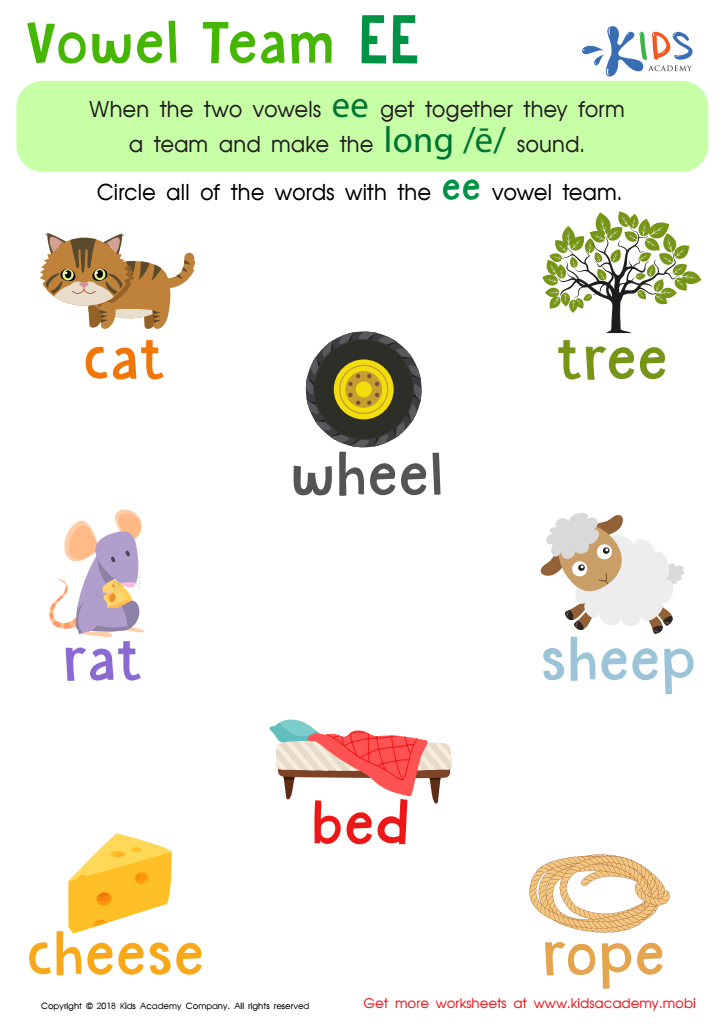
Reading: Vowel Team EE Worksheet
This worksheet is perfect for helping young learners master the /ee/ vowel team. It shows the first vowel with a long sound and the second vowel silent. It also provides pictures for unfamiliar words for readers of all levels. It's an ideal resource for teaching phonics skills.
Reading: Vowel Team EE Worksheet
Worksheet
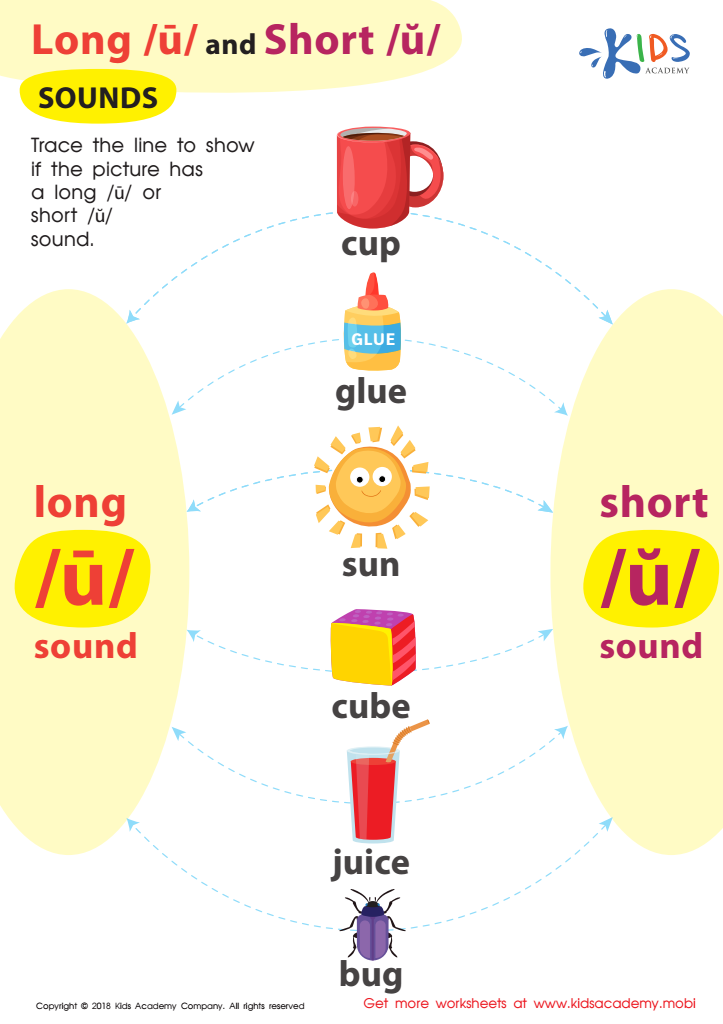
Reading: Long U and Short U Sounds Worksheet
Learning about long and short vowel sounds can be tricky, especially with the letter U. Extra practice with this worksheet is recommended for mastering this sound. Children read words with the different vowel sounds and categorize them. Great for instruction, practice and reteaching in reading classes.
Reading: Long U and Short U Sounds Worksheet
Worksheet
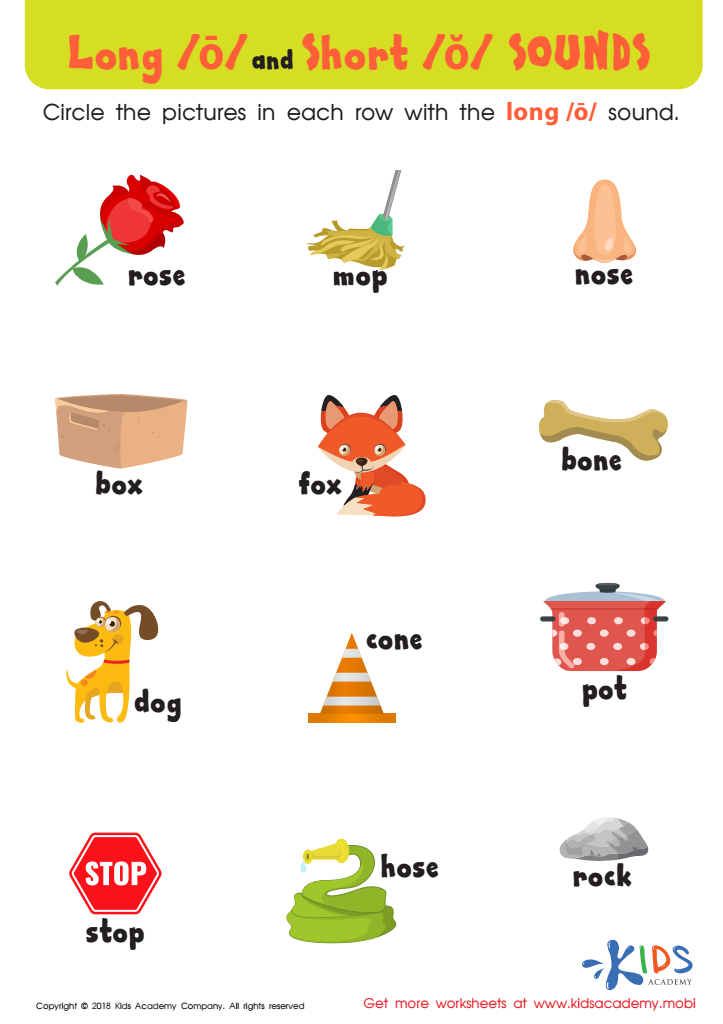
Reading: Long O and Short O Sounds Worksheet
Students practice distinguishing between short and long O sounds with this reading worksheet. They sound out each word, then circle the pictures with the long O sound. Perfect for individual practice or to work with peers! Improves understanding of this skill and helps avoid confusion.
Reading: Long O and Short O Sounds Worksheet
Worksheet
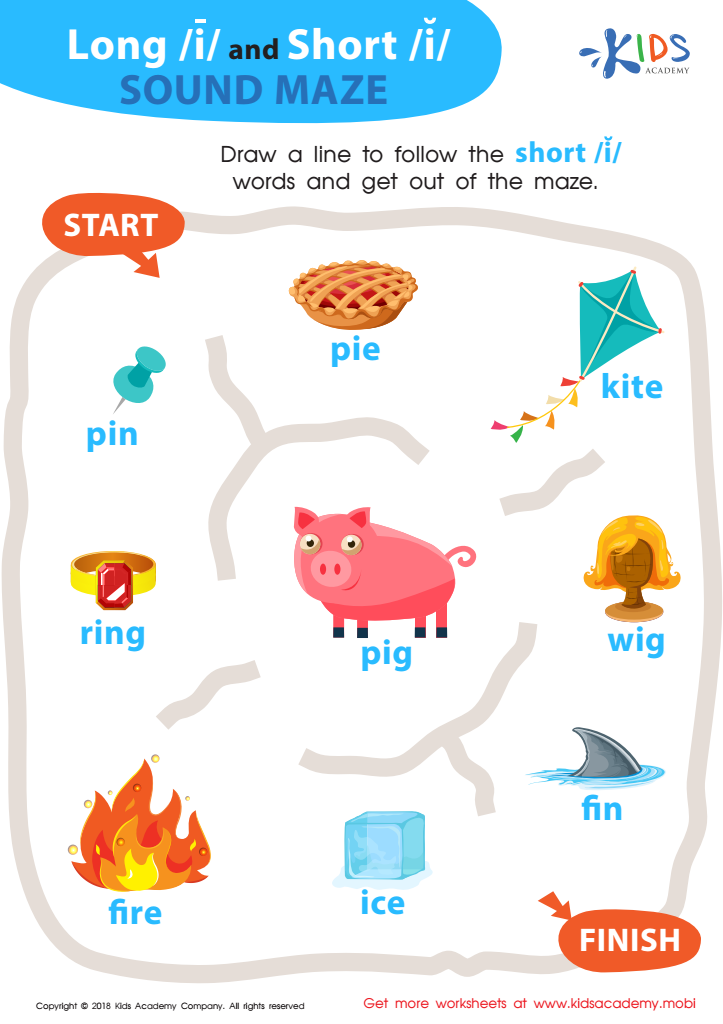
Reading: Long I and Short I Sound Maze Worksheet
Question your students if the worksheet is entertaining. They may respond negatively! Nonetheless, this activity will bring satisfaction while learning the distinction between a long and short I sound. Students read the words in the maze and only follow the words with the short I sound to finish the exercise. Grasping the difference between long and short vowels is demanding, but this worksheet helps students understand this reading skill.
Reading: Long I and Short I Sound Maze Worksheet
Worksheet
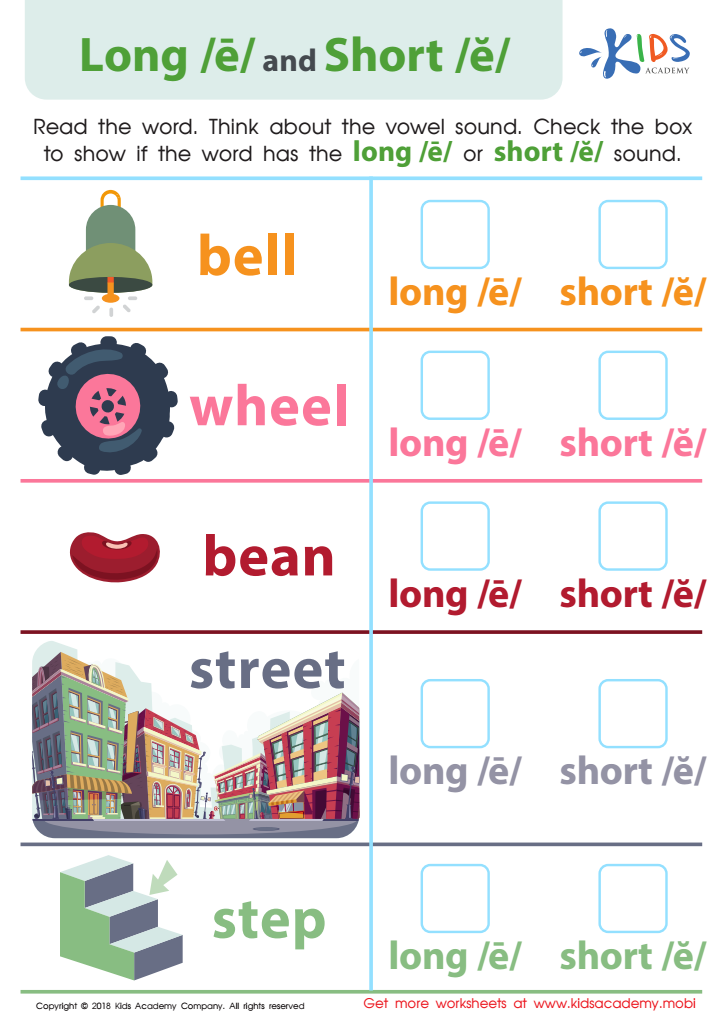
Reading: Long E and Short E Worksheet
Provide your students with valuable practice in distinguishing long and short E sounds with this worksheet. They'll look at pictures and read the words, then decide which sound is being used. It's an effective tool to help them master a difficult concept.
Reading: Long E and Short E Worksheet
Worksheet
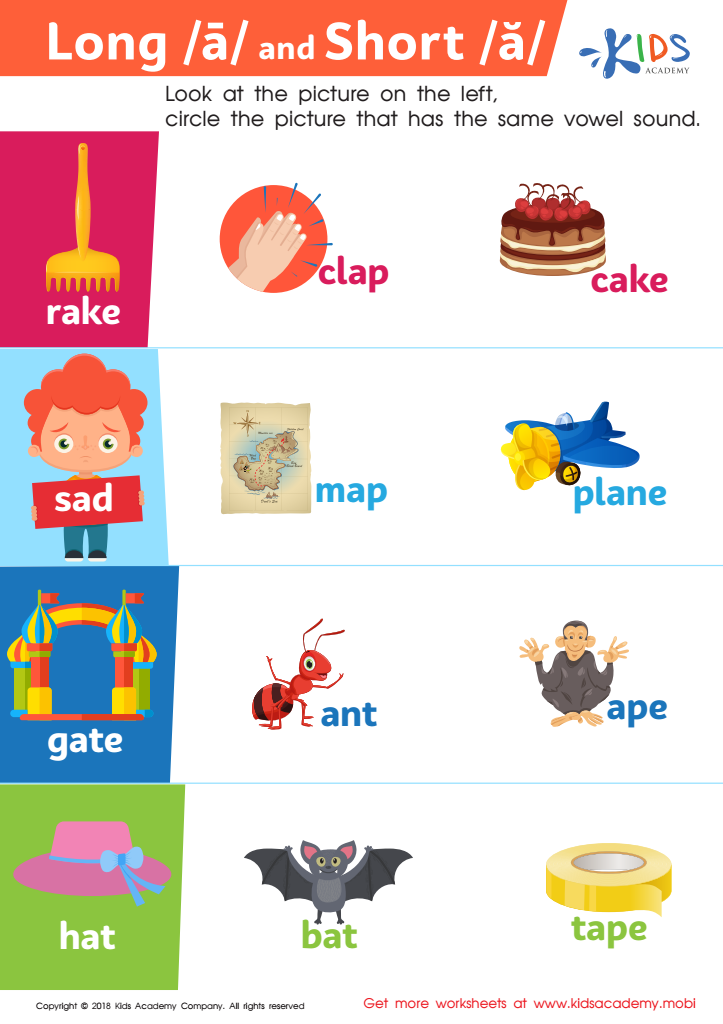
Reading: Long a and Short a Worksheet
This printable helps students practice distinguishing the long and short A sound. Pictures provide clues to read each word and students identify if it has a short or long sound. By completing this worksheet, children gain mastery of the phonics skill.
Reading: Long a and Short a Worksheet
Worksheet
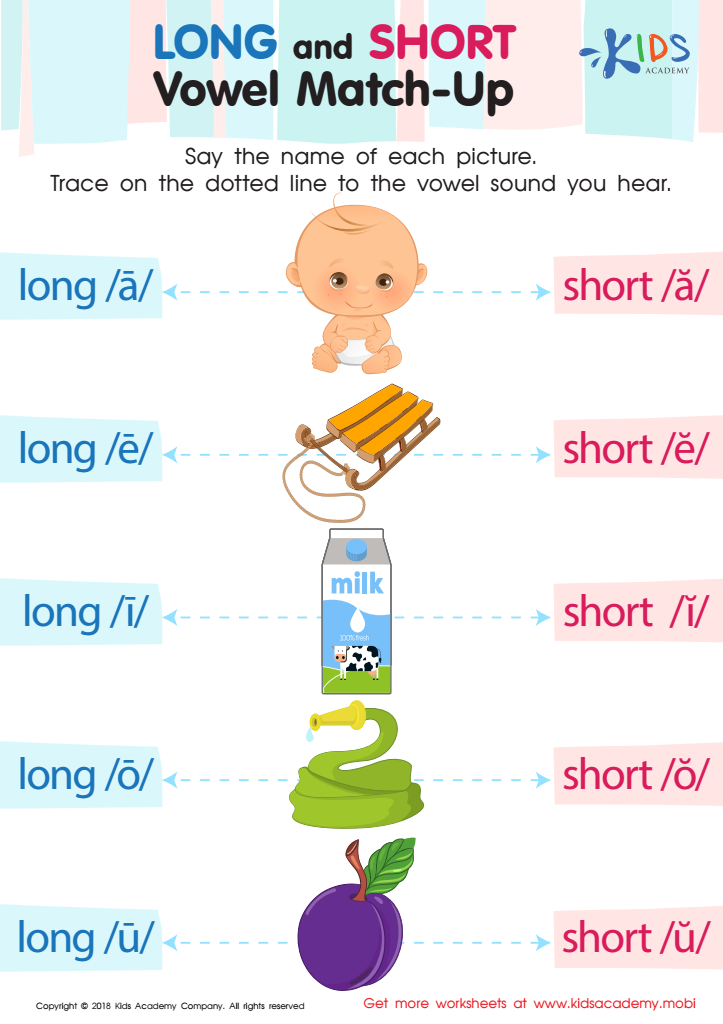
Long and Short Vowel Match up Reading Worksheet
Help your reader build confidence and refine their decoding skills! This worksheet combines long and short vowel recognition with a traceable component to improve fine motor skills. Your learner will name each picture and trace the dotted lines to get to the correct vowel sounds.
Long and Short Vowel Match up Reading Worksheet
Worksheet
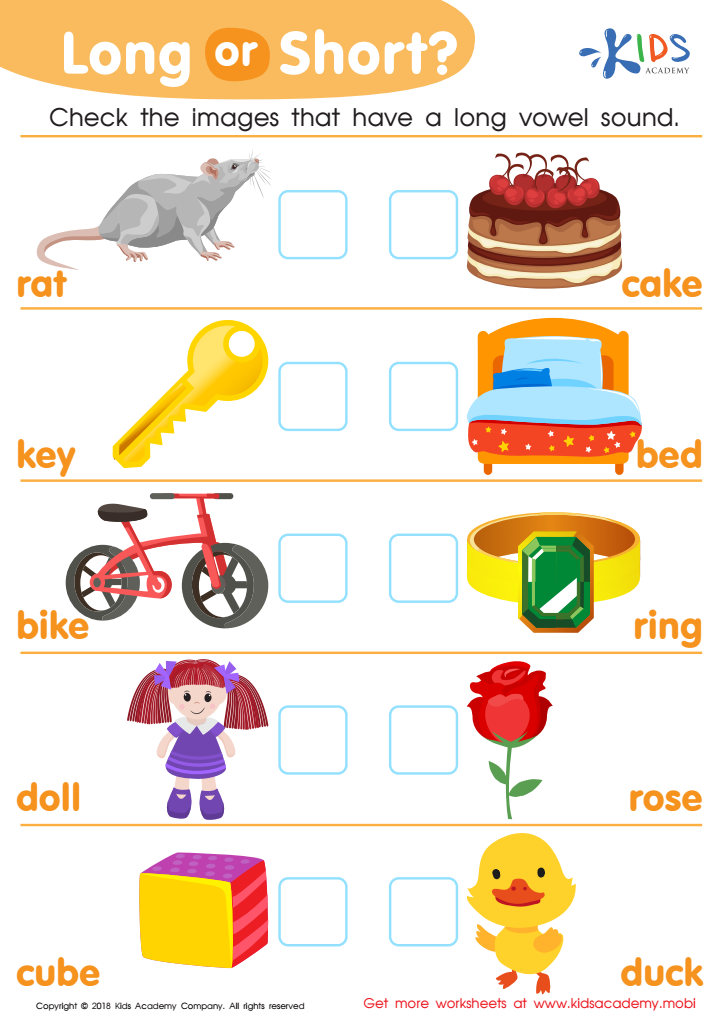
Long or Short Reading Worksheet
Every new reader needs to learn to recognize long and short vowel sounds. This phonics worksheet uses pictures of high-frequency words to help. Kids read the words and then check off images with long vowel sounds. It helps them learn to decode words and improves fine motor skills.
Long or Short Reading Worksheet
Worksheet
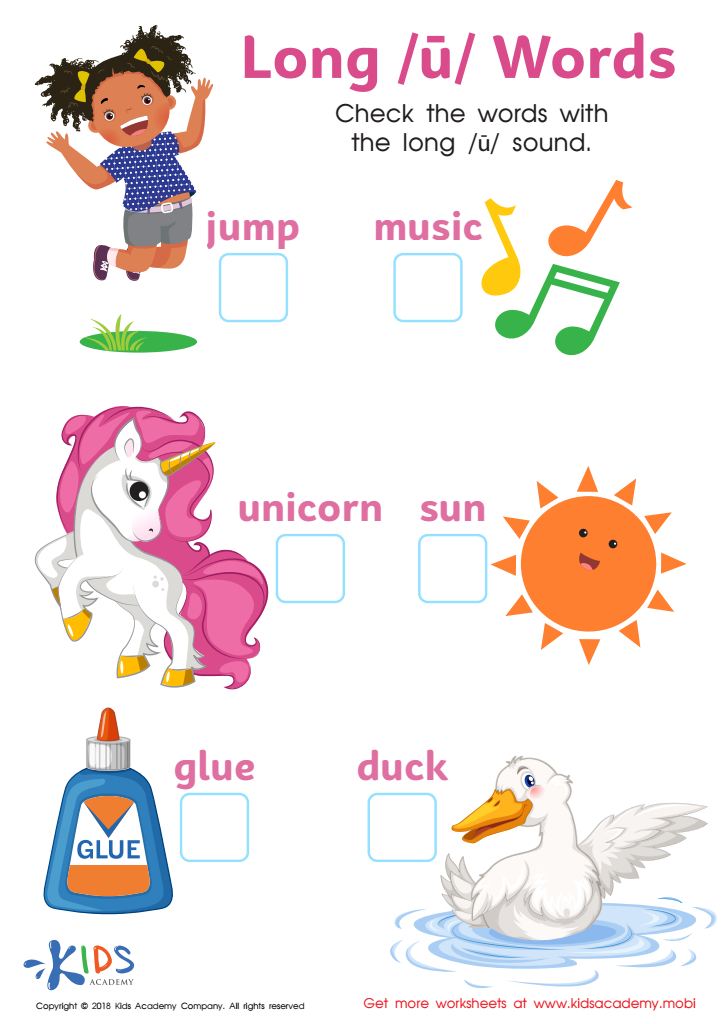
Long U Words Reading Worksheet
Emerging readers will love this free worksheet! It's a great way to practice distinguising between long and short vowel sounds, while identifying high-frequency words. They'll also get to develop fine motor skills and gain confidence in decoding and reading skills.
Long U Words Reading Worksheet
Worksheet
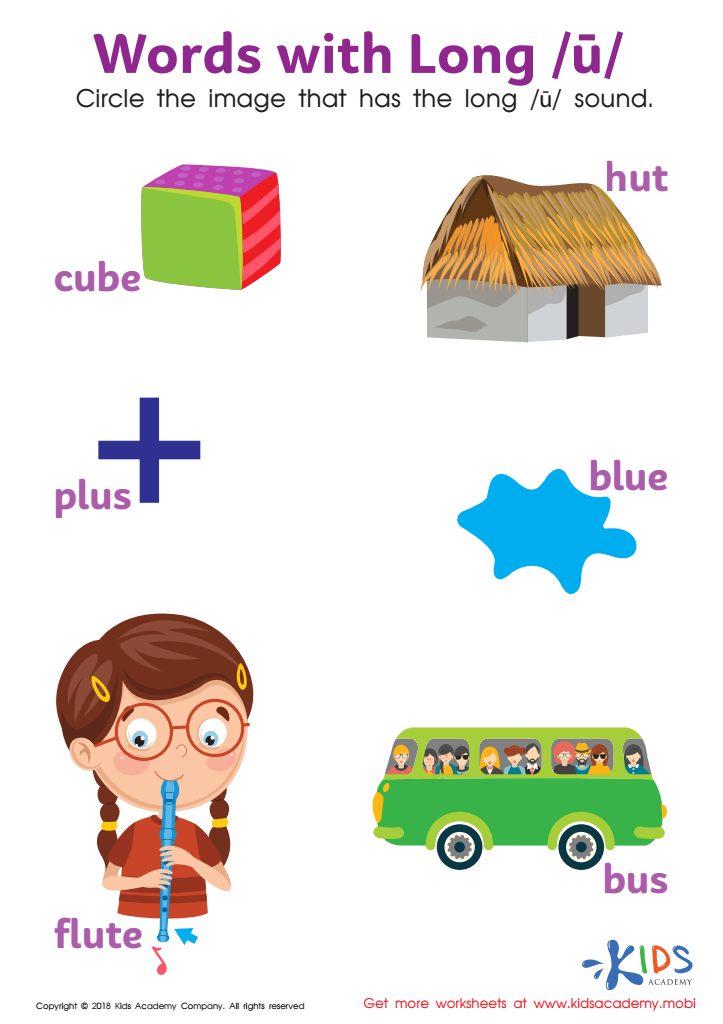
Words with Long U Reading Worksheet
Help your new reader master vowel recognition with this fun worksheet. By using picture clues and practicing fine motor skills, they'll learn to differentiate between words with the long and short «u» sound. Your learner will also get to practice vowel discrimination in high-frequency words. It's a great way to learn the importance of vowels in reading!
Words with Long U Reading Worksheet
Worksheet
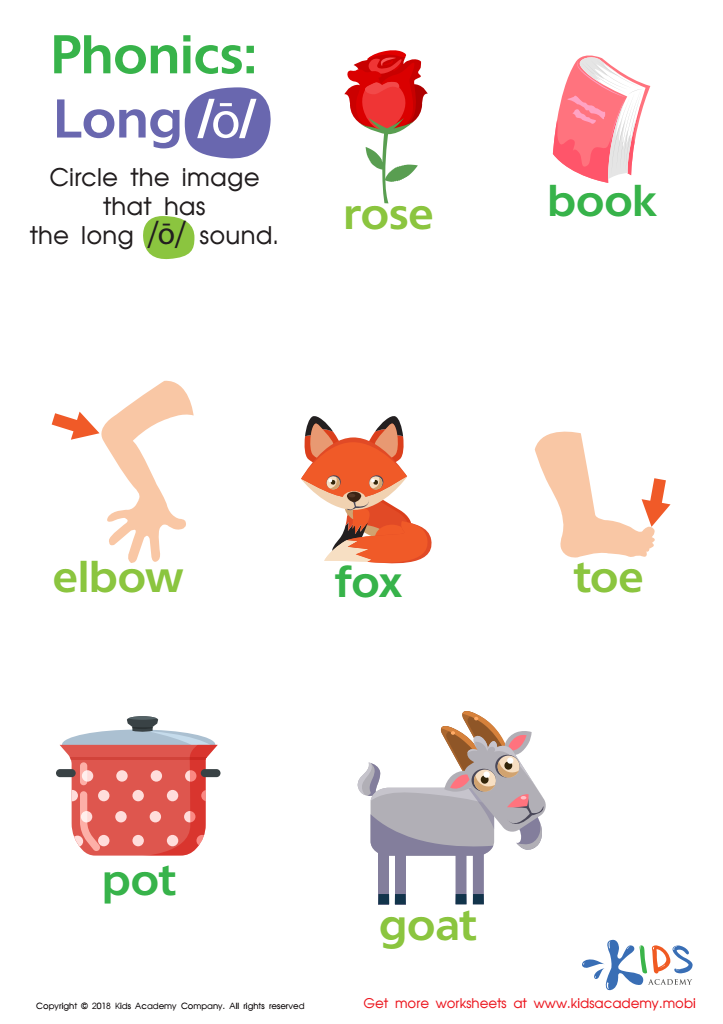
Phonics Long O Reading Worksheet
Are you ready to help your child learn the phonics long «o» sound? This worksheet is designed to aid them in getting familiar with the sound. After completing the exercise, your child should be able to differentiate letters, and recognize words with the long «o» sound. Encourage them to circle the images that have the sound.
Phonics Long O Reading Worksheet
Worksheet
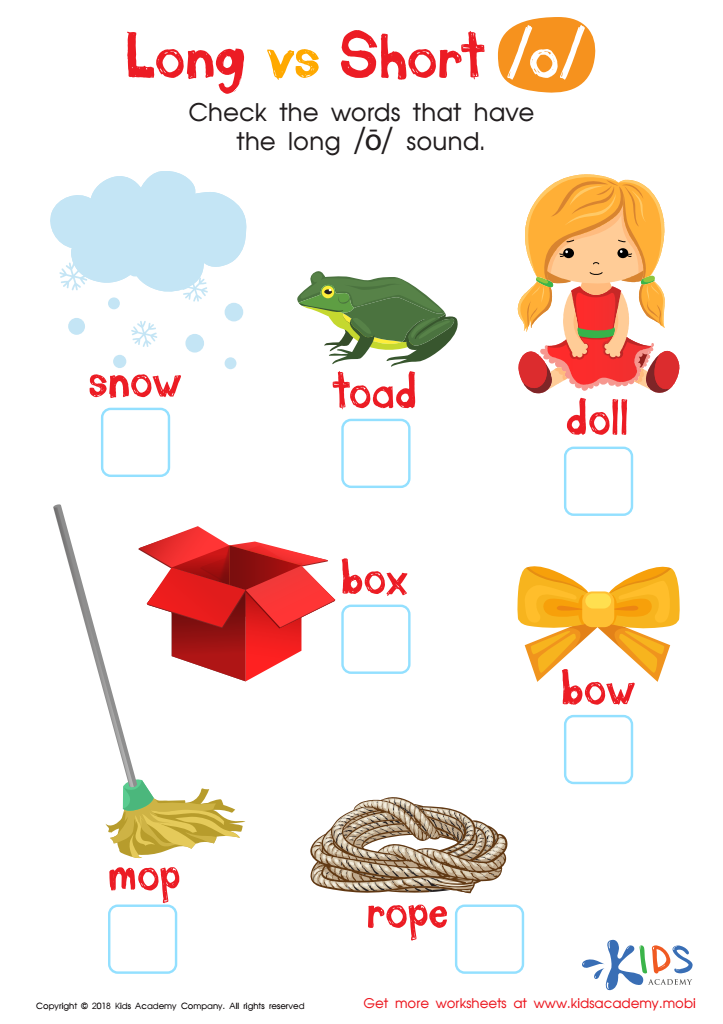
Long vs Short O Reading Worksheet
Help your child learn to identify the long and short «o» sound with this colourful worksheet. Guide them as they spot words with the long or short «o» sound. With practice, your child will find it easier to tell the difference between the two.
Long vs Short O Reading Worksheet
Worksheet
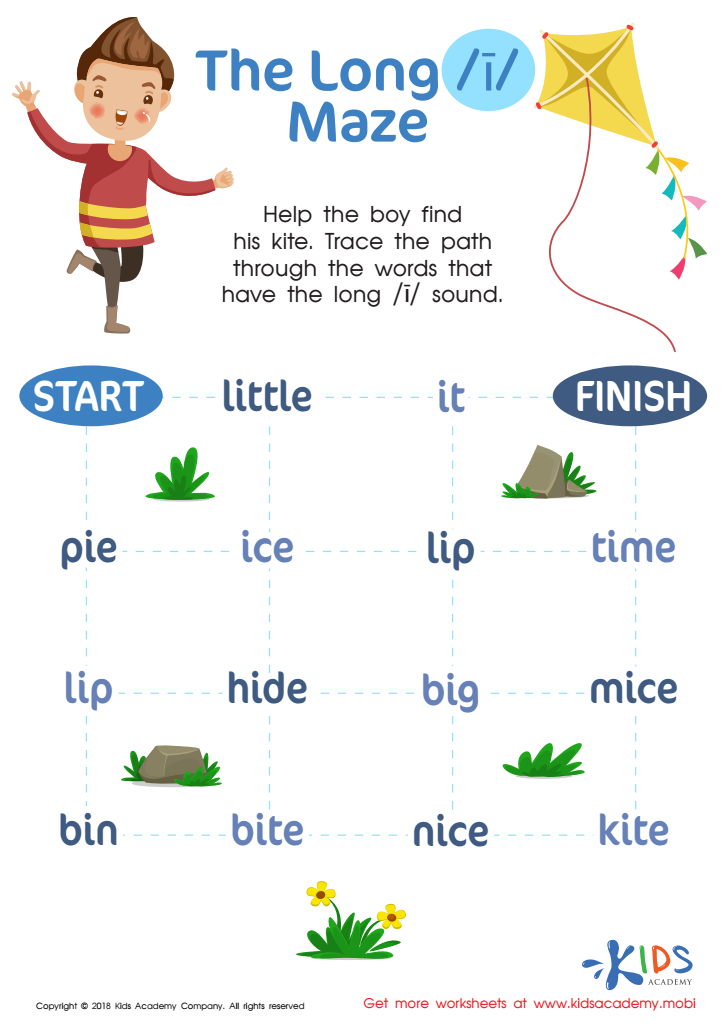
The Long I Maze Reading Worksheet
Help your child learn phonics to help them read. Show them the difference between long and short "i" sounds. Guide them as they use a pencil to trace words with the long "i:" sound in the "Help the Boy in the Picture" worksheet exercise. This will help them find the kite in the picture.
The Long I Maze Reading Worksheet
Worksheet
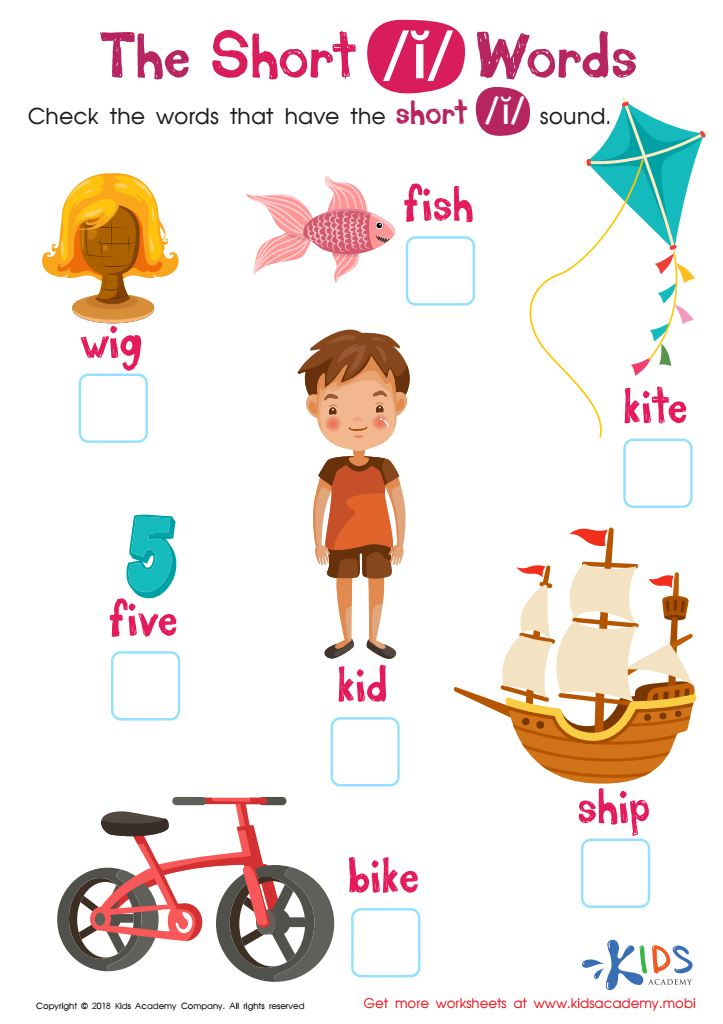
The Short I Words Reading Worksheet
Teach your kindergartner phonics with this printout worksheet! It introduces the short «i» sound and helps them differentiate and articulate sounds and letters of the alphabet. With practice, your child will soon find it easy to classify sounds into long and short vowels.
The Short I Words Reading Worksheet
Worksheet
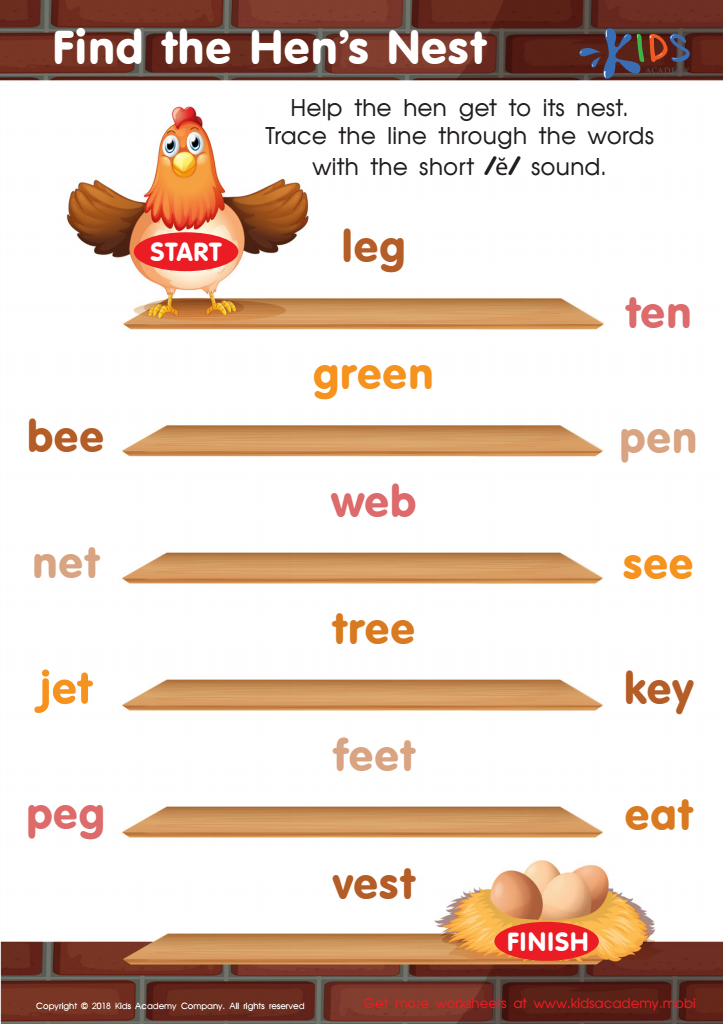
Find Hens Nest Reading Worksheet
Learning the short and long «e» sound can be tricky for kids just starting to learn the alphabet. Make it fun with this worksheet: it leads your kindergarten child to a hen's nest by following words with the short «e» sound. They'll be able to identify words with the sound by the end of the exercise.
Find Hens Nest Reading Worksheet
Worksheet
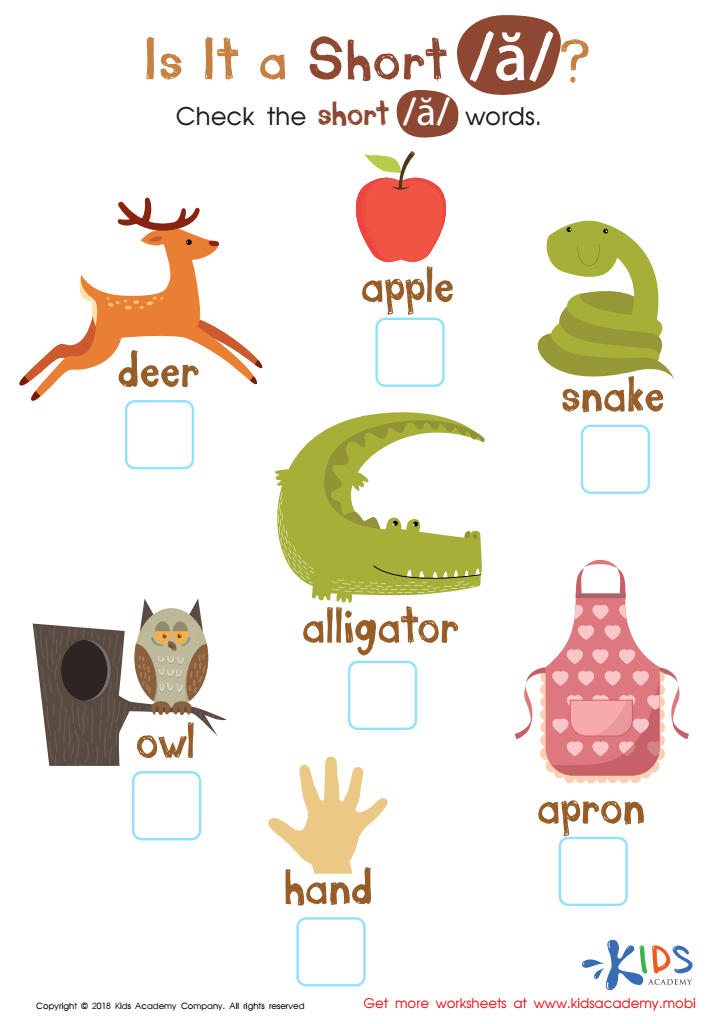
Is It Short A? Reading Worksheet
Struggling readers may have difficulty distinguishing short from long vowels. With this fun PDF worksheet, they practice identifying the corresponding short «ă» by naming each picture and ticking the right boxes. It's a great way to work on decoding and fluency skills!
Is It Short A? Reading Worksheet
Worksheet
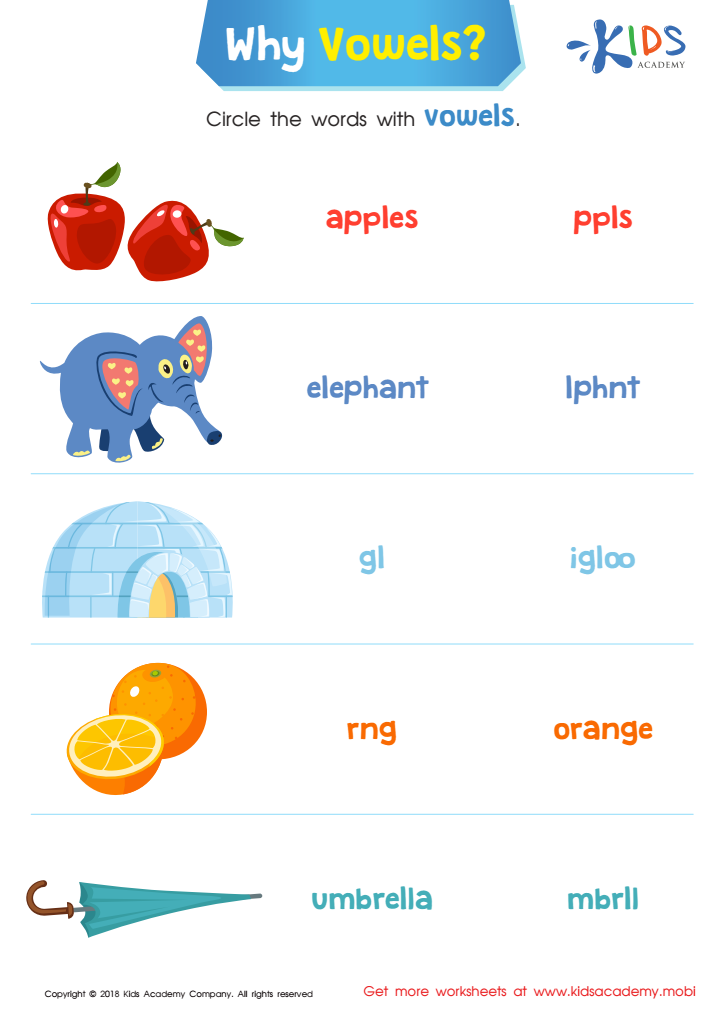
Why Vowels? Reading Worksheet
This worksheet teaches kids to spell words with vowels. It features familiar pics for them to recognize, and they practice fine motor skills by circling the correct spelling. It's an enjoyable way for kids to learn how to spell and promote reading skills.
Why Vowels? Reading Worksheet
Worksheet
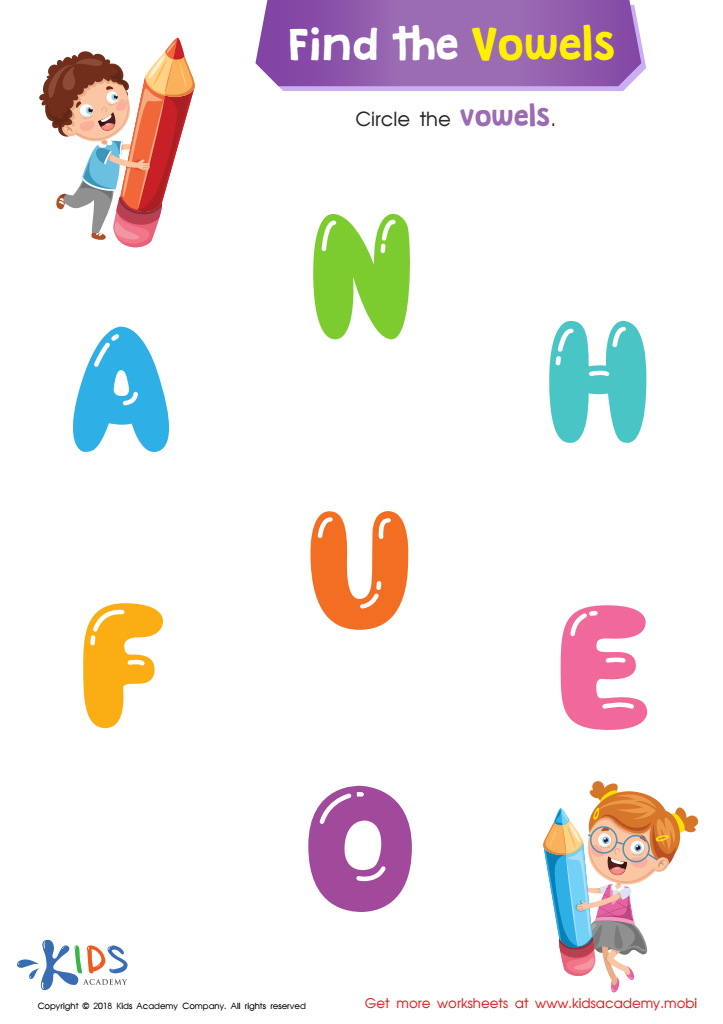
Find the Vowels Reading Worksheet
This worksheet helps kids identify vowels with bright colors and engaging activities to strengthen their visual discrimination and fine motor skills. Young learners will find it easy to succeed and be excited to keep reading!
Find the Vowels Reading Worksheet
Worksheet
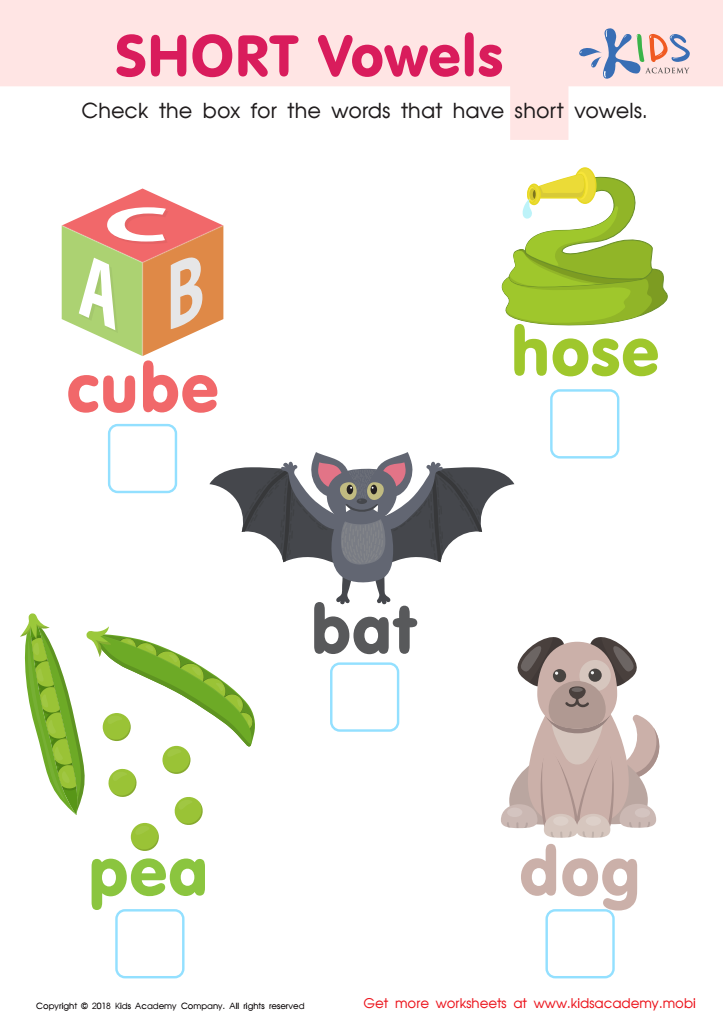
short vowels Worksheet
Say "dog" and notice how long it takes to pronounce the vowel. Is it short or long? Compare it to "pea" and use this worksheet to quickly assess your child's mastery. Have them name each picture and listen for the vowel sounds. Only check the boxes for words with short vowel sounds.
short vowels Worksheet
Worksheet
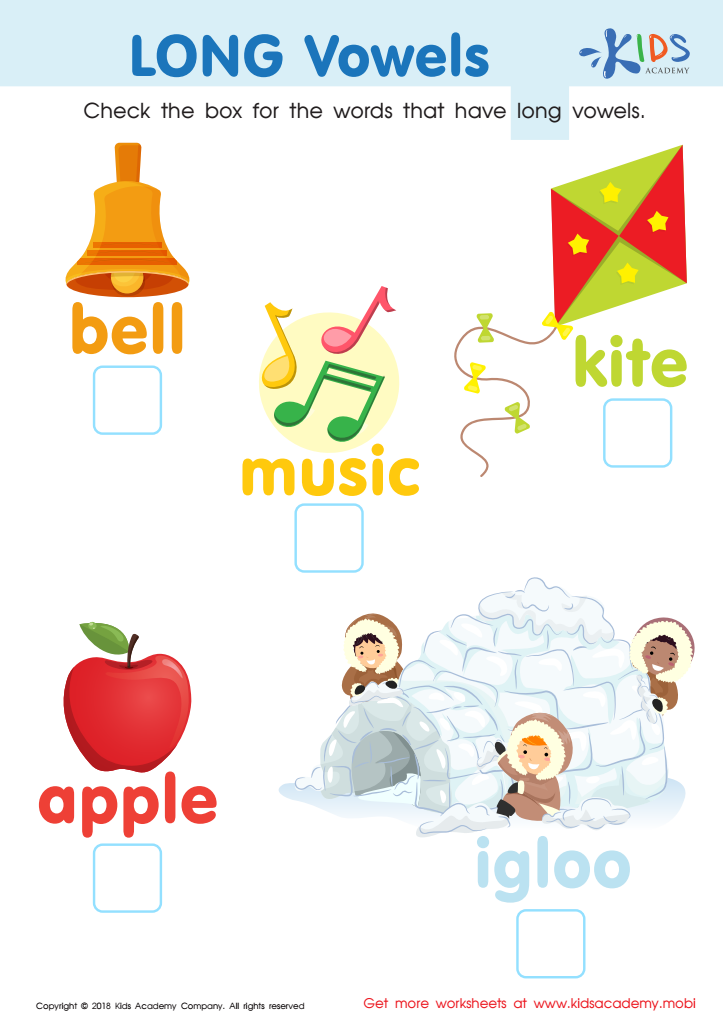
long vowels Worksheet
Have your early learner identify long vowels with this quick review. Ask them to name each picture aloud and listen out for the long vowel sounds to separate them from the shorter ones. Circle the ones that are long! Watch out for words with two vowels - they can be tricky!
long vowels Worksheet
Worksheet
Join Kids Academy for Free
Who is primarily going to use this learning content?












