
Easy Skip Counting Worksheets for Ages 4-7
4 filtered results
Difficulty Level
Grade
Age
-
From - To
Subject
Activity
Standards
Discover the joy of math with our Easy Skip Counting Worksheets designed specifically for ages 4-7! These engaging and visually appealing worksheets help young learners master the concept of skip counting through fun exercises. Perfect for home or classroom use, our resources encourage number recognition and build foundational math skills. With a variety of friendly themes and colorful illustrations, children will stay motivated as they practice counting by twos, fives, and tens. Whether you're a parent or an educator, our easy-to-use worksheets make learning to skip count both enjoyable and effective. Get started today and watch your child's confidence grow!
Favorites
With answer key
Interactive
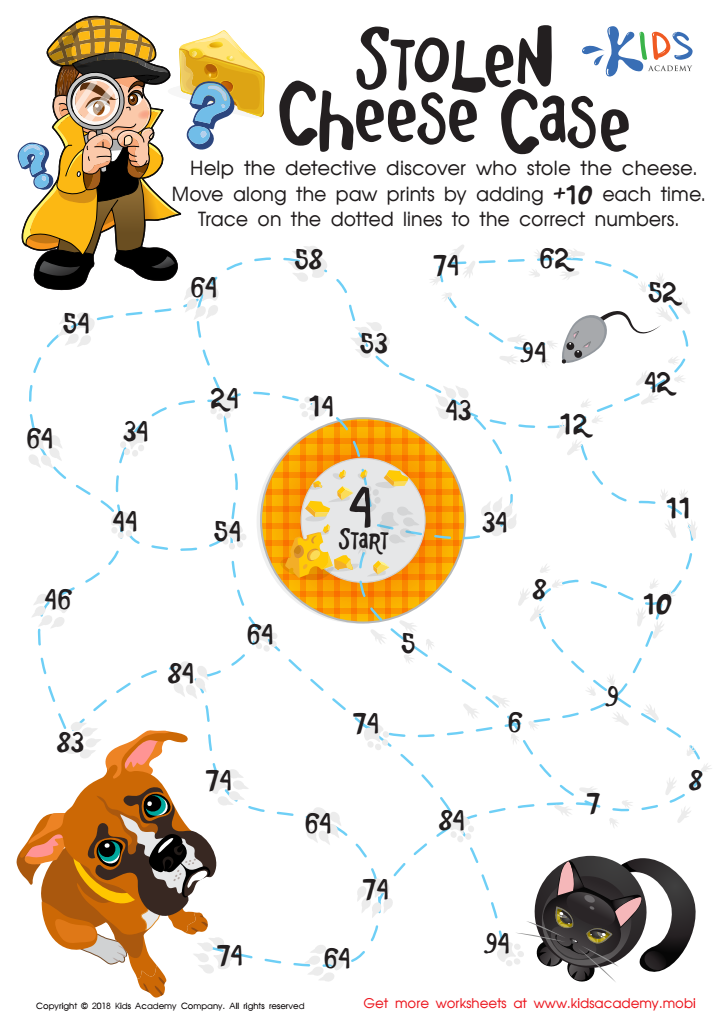
Stolen Cheese Case Maze Worksheet
Someone has stolen the cheese! Can your mathematician detective figure out who it is? Was it the dog, cat or mouse? Have them use traceable lines to skip count by 10 on this free PDF worksheet to solve the case. They'll be having fun and developing their skip-counting strategy at the same time!
 Assign to My Students
Stolen Cheese Case Maze Worksheet
Worksheet
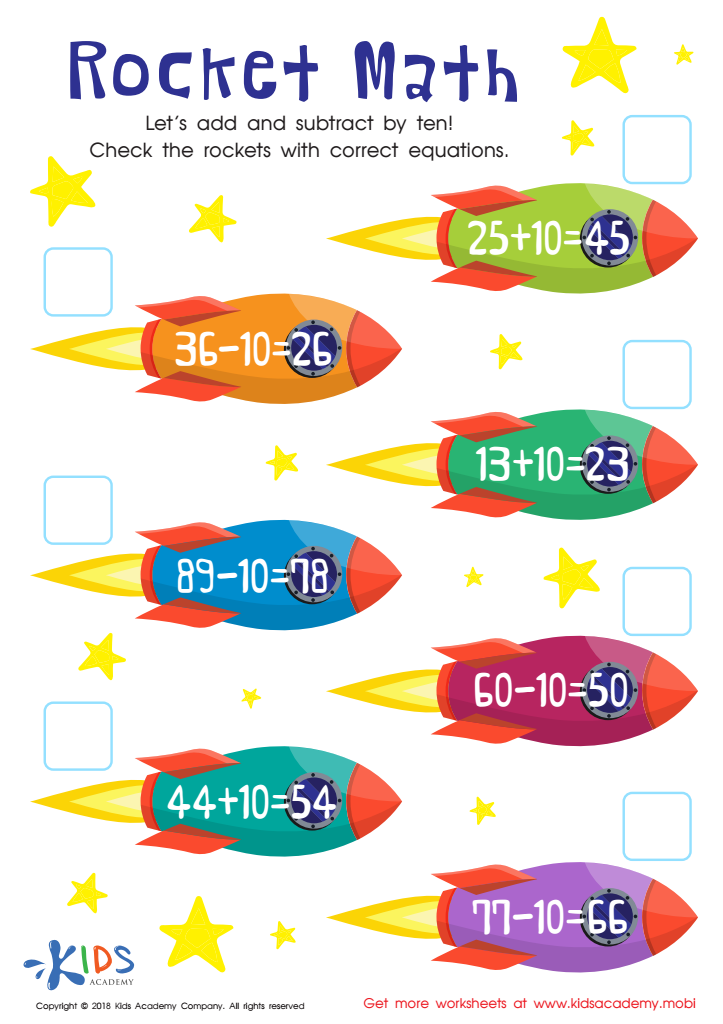
Rocket Math Worksheet
Your students will be math wizards in no time as they blast off on this exciting and colorful PDF worksheet. They'll use the 10s strategy to practice addition and subtraction, and they'll learn to skip count forwards and backwards. Keep them engaged and make learning fun!
Rocket Math Worksheet
Worksheet
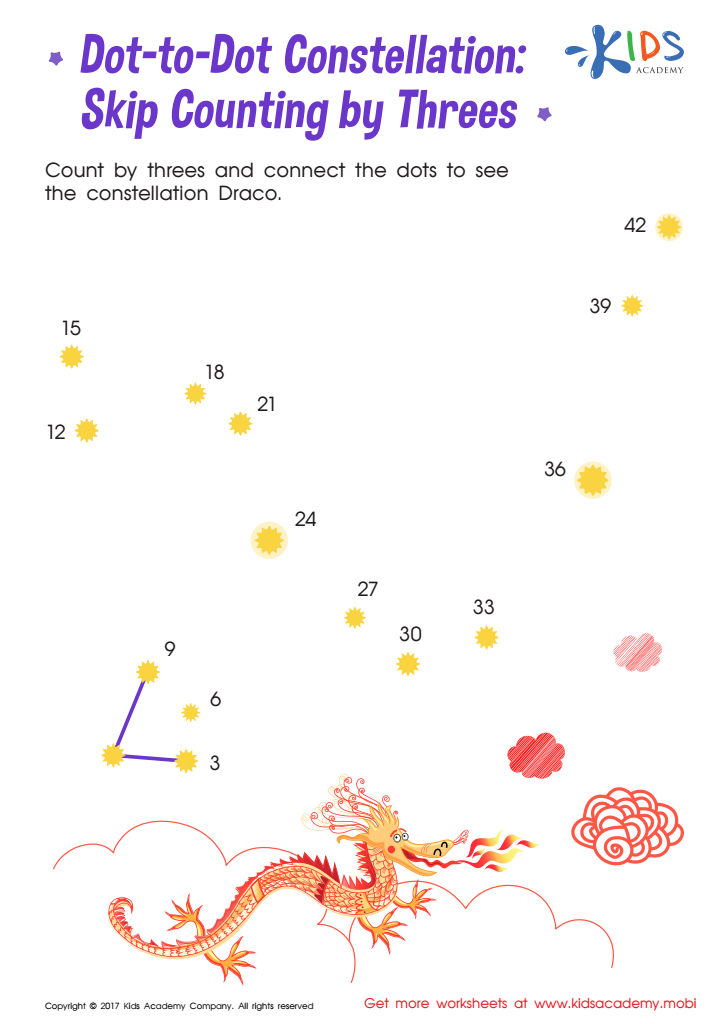
Skip Counting by 3s: Dot–to–Dot Constellation Printable
Worksheet
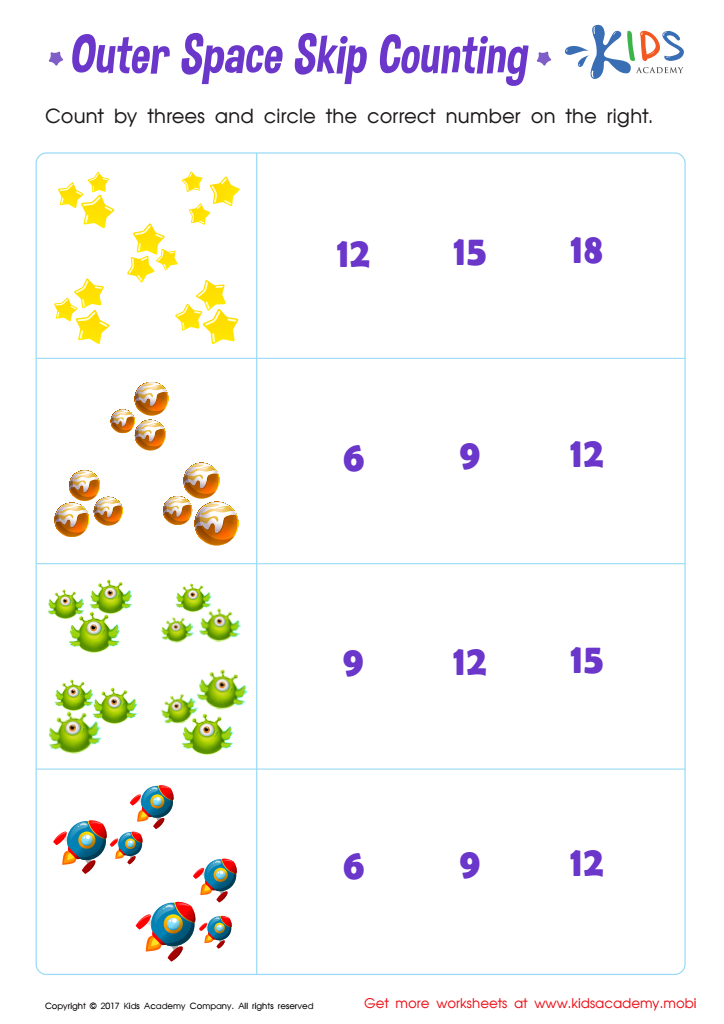
Skip Counting by 3s: Outer Space Skip Counting Printable
Want to set your child up for math success? Get them this printable worksheet that helps them practice counting in groups of 3’s, building a foundation for more advanced math skills. Skipping counting helps kids master logical reasoning and cognitive skills, making a connection between counting objects individually and in groups. The colorful images will keep them engaged and having fun - without realizing how hard they're working!
Skip Counting by 3s: Outer Space Skip Counting Printable
Worksheet
Join Kids Academy for Free
Who is primarily going to use this learning content?







.jpg)
Easy skip counting is a foundational mathematical skill crucial for children aged 4-7, as it improves their numerical fluency and paves the way for more complex mathematical concepts. Parents and teachers should prioritize this skill because it helps children recognize patterns in numbers, which is fundamental for future arithmetic operations like addition, subtraction, multiplication, and division.
Skip counting—typically by twos, fives, or tens—enhances a child's ability to understand grouping and make quick calculations, essential for everyday tasks like counting money, sorting objects, or telling time. Additionally, engaging in skip counting activities fosters critical thinking and problem-solving skills. It also provides a cognitive framework for learning larger numbers, as children grasp that numbers can be organized into manageable sequences.
Moreover, practicing skip counting can be fun and interactive. Games, songs, and hands-on activities keep children engaged and motivated in their learning journey. By incorporating easy skip counting into their educational routines, parents and teachers contribute to building strong mathematical foundations, equipping children with the essential skills they will need throughout their academic and everyday lives. Ultimately, caring about this simple yet significant skill can have a lasting impact on a child's confidence and interest in mathematics.








