
Easy Time Worksheets for Ages 4-7
8 filtered results
Difficulty Level
Grade
Age
-
From - To
Subject
Activity
Standards
Discover "Easy Time Worksheets for Ages 4-7" at Kids Academy, designed to make learning to tell time simple and fun for young children. These beautifully illustrated worksheets help kids grasp time concepts like hours, half-hours, and understanding clocks. Engaging activities include matching, drawing clock hands, and puzzles that enhance learning and keep kids motivated. Perfect for both classroom and at-home practice, our printable sheets build a strong math foundation and boost confidence. Encourage your child's progress with these enjoyable and educational worksheets, tailored just for budding learners. Visit Kids Academy for more exciting resources today!
Favorites
With answer key
Interactive
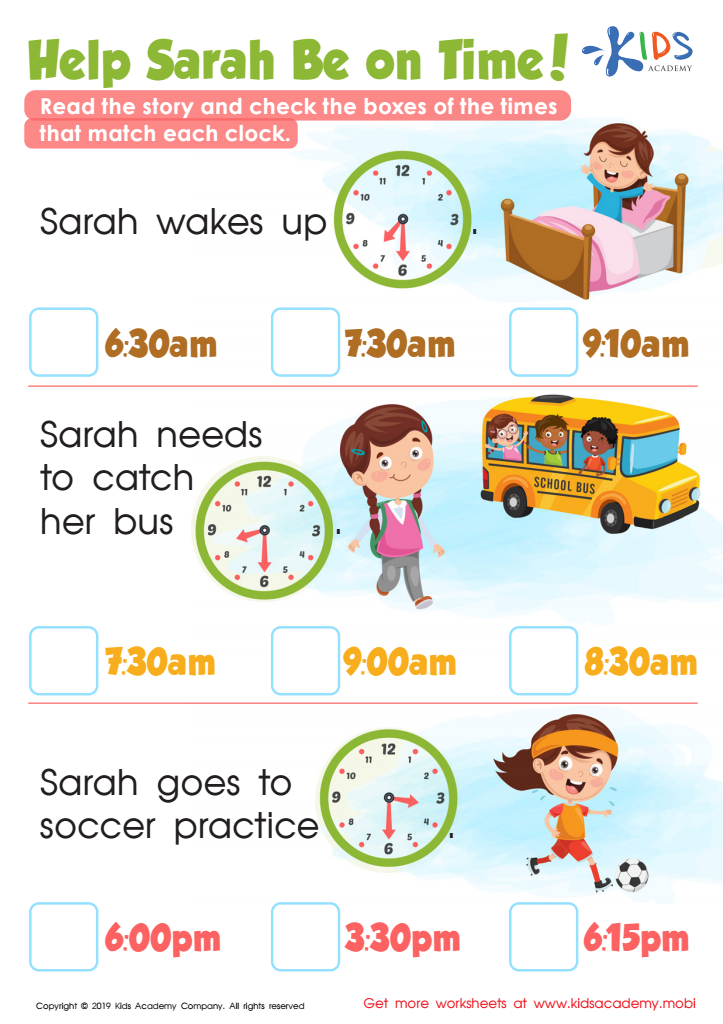
Help Sarah Be on Time! Worksheet
Humans are social creatures and need to be punctual for things to run smoothly. For instance, a meeting with a friend requires a time to be agreed upon. Ask your kids what else needs to be punctual. Then, show them the worksheet and read the accompanying story. Get them to match clocks with the correct times.
 Assign to My Students
Help Sarah Be on Time! Worksheet
Worksheet
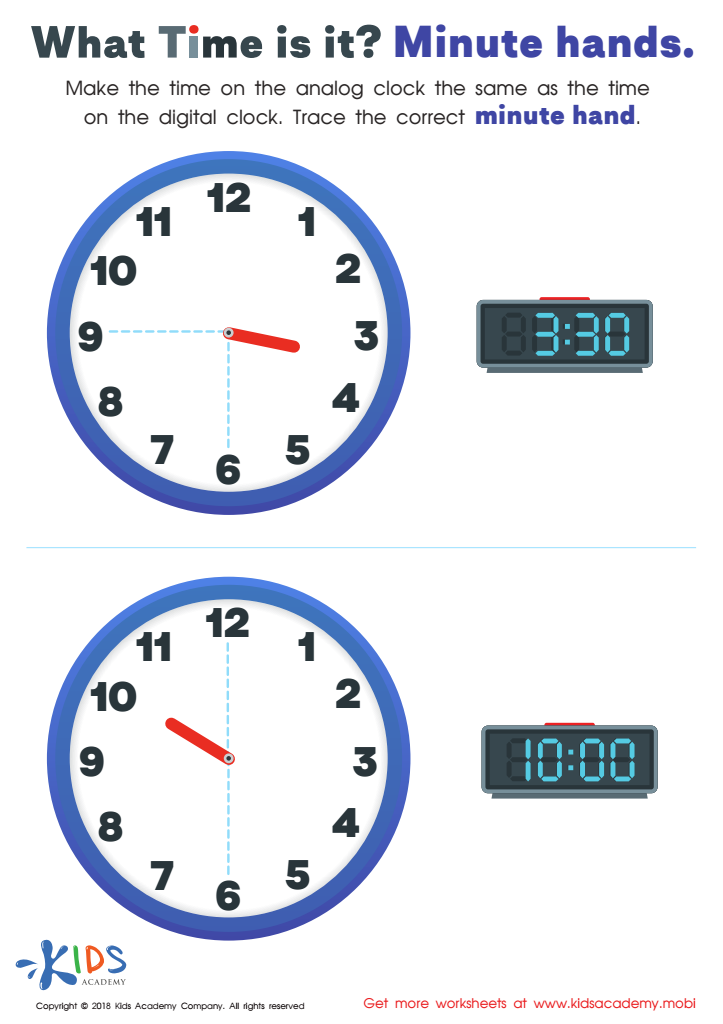
What Time Is it? Minute Hands Worksheet
Help your kids telling time with the minute hand correctly with this tracing sheet. Trace the correct minute hand to make the time on the analog clock the same as the time on the digital clock. Give them a pictured demonstration of how to do it and you'll be all set!
What Time Is it? Minute Hands Worksheet
Worksheet
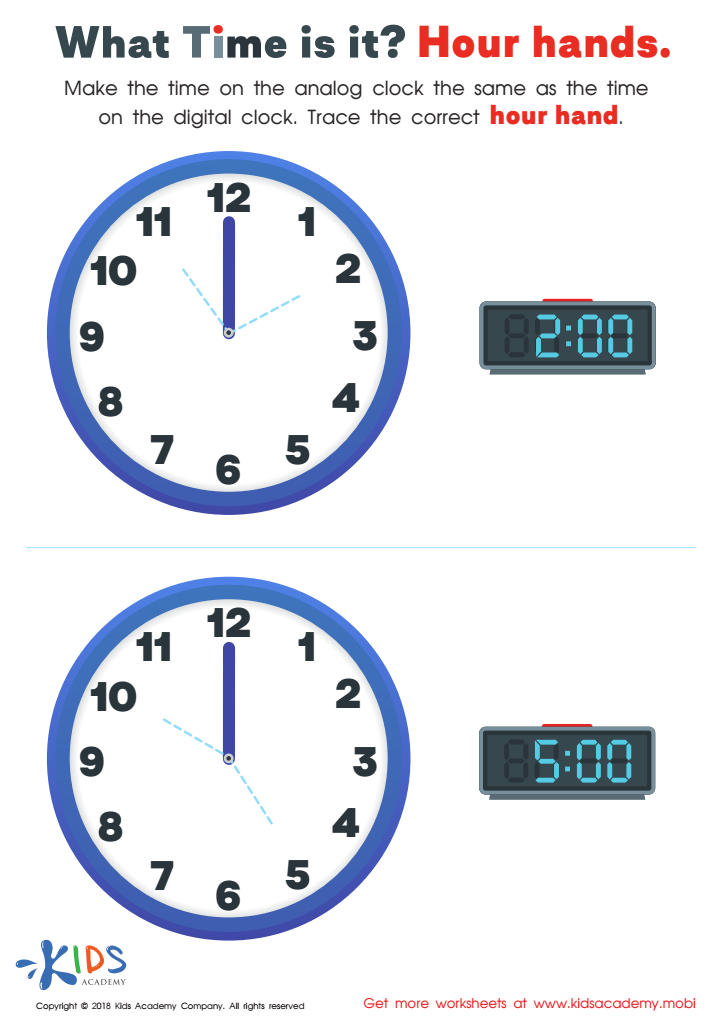
What Time Is it? Hour Hands Worksheet
Does your child know how to read analogue and digital clocks? This worksheet will help them learn. Trace the correct hour hand to match the time on a digital clock to the analogue clock. Help them read the time correctly, both on analogue and digital clocks.
What Time Is it? Hour Hands Worksheet
Worksheet
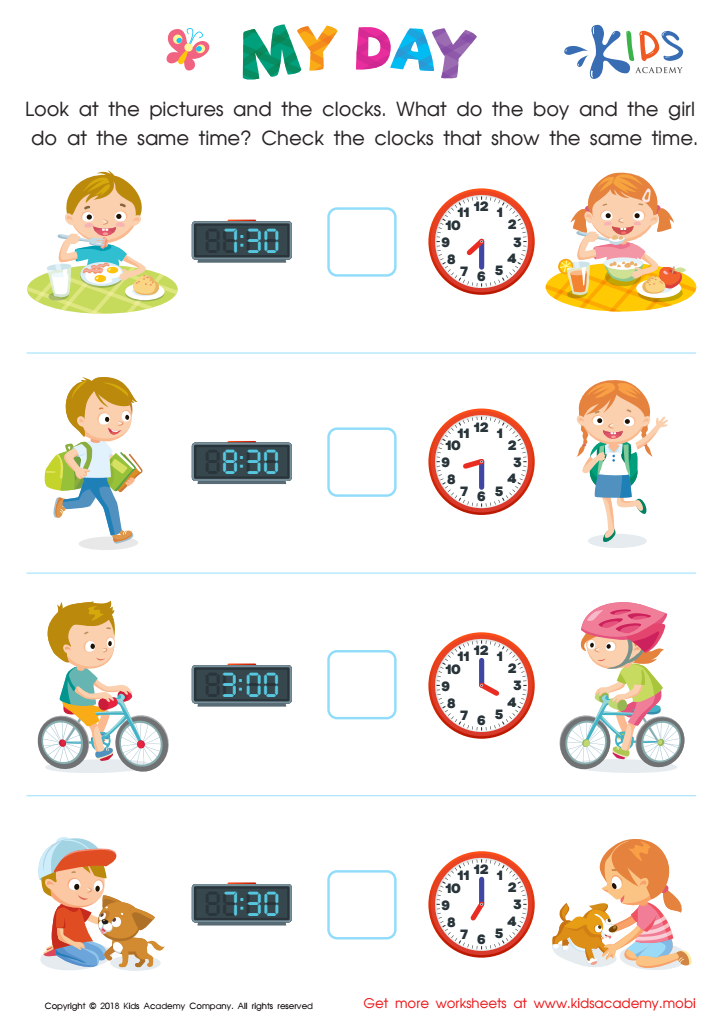
My Day Worksheet
Show your students the pictures and clocks in the colorful worksheet. Ask what the boy and girl are doing in each, then what time the clocks show. Finally, ask what activities they both do at the same time. Help them check the clocks showing the same time in both pictures.
My Day Worksheet
Worksheet
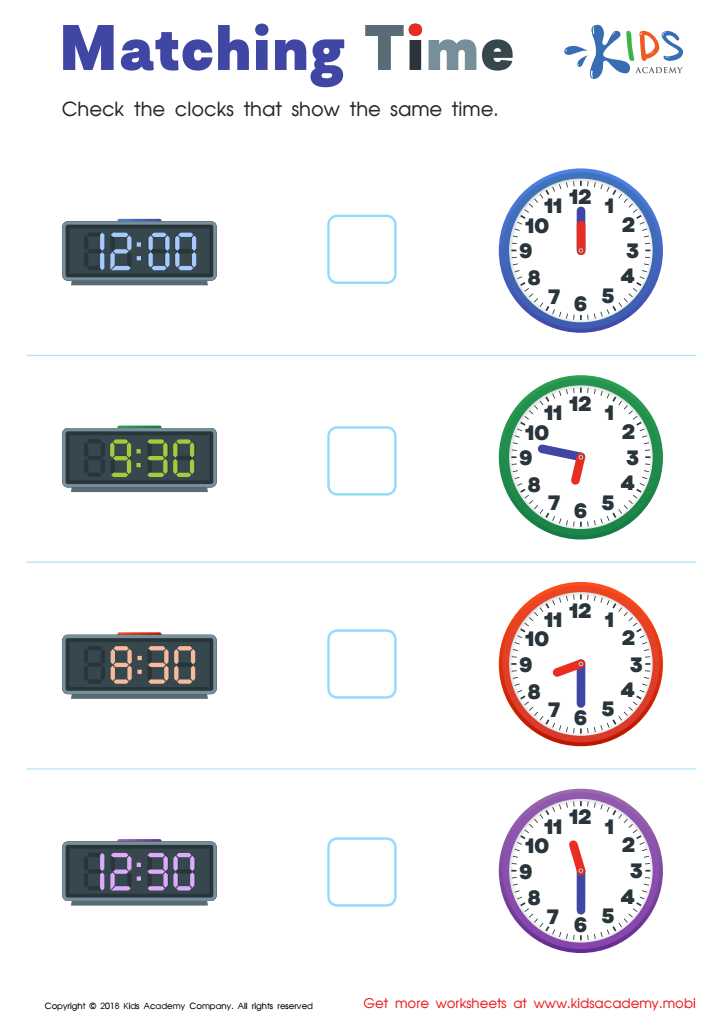
Matching Time Worksheet
Teach your child to read time in both digital and analog formats with this helpful printout. They'll identify clocks that match in both formats and check them off. Colorful and engaging, it's a great way to help your child understand the concept of time-telling.
Matching Time Worksheet
Worksheet
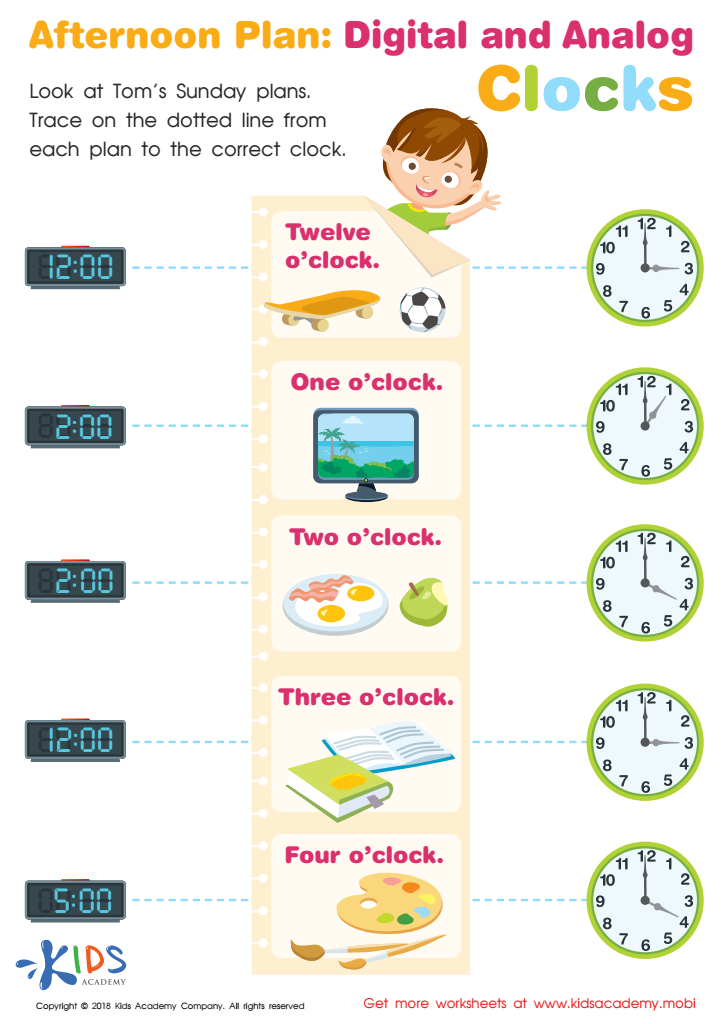
Afternoon Plan: Digital and Analog Clocks Worksheet
Tom's got Sunday plans and your kids can use this worksheet to help them learn how to tell the time. With tracing dotted lines from plans to the correct clock, they'll gain the skills to accurately convert digital time to analog. It'll be a great way to get them better at telling the time.
Afternoon Plan: Digital and Analog Clocks Worksheet
Worksheet
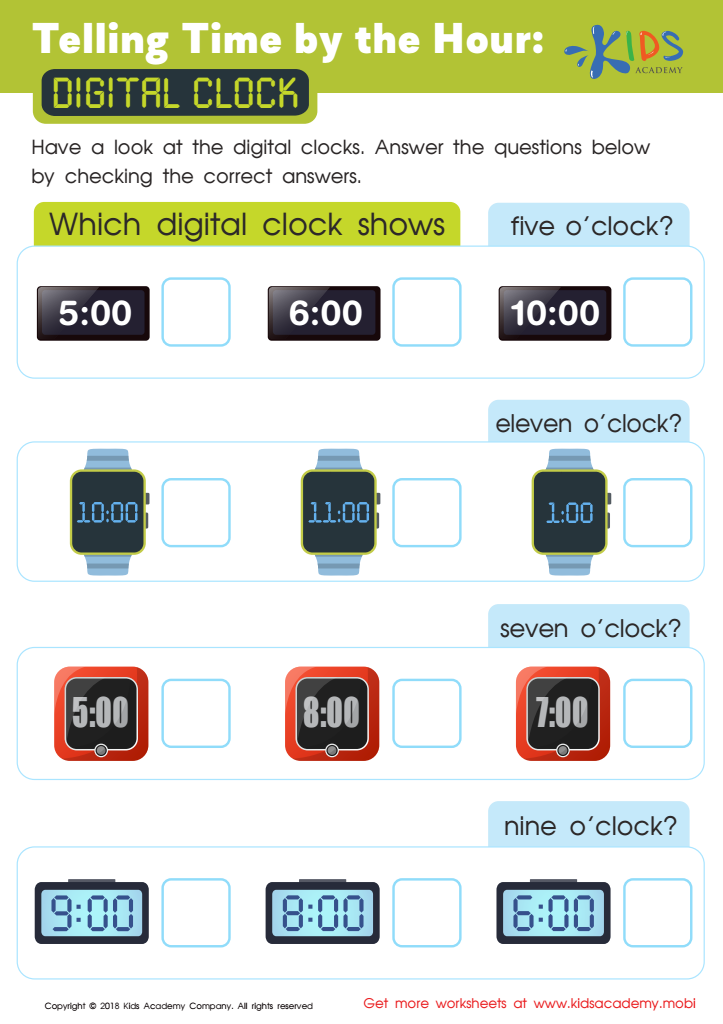
Telling Time by the Hour: Digital Clock Worksheet
Introduce your students to digital clocks. This worksheet will help them become familiar with them. Guide them through answering the questions - they're simple and stimulating. Encourage their young minds to explore the digital clocks in the exercise.
Telling Time by the Hour: Digital Clock Worksheet
Worksheet
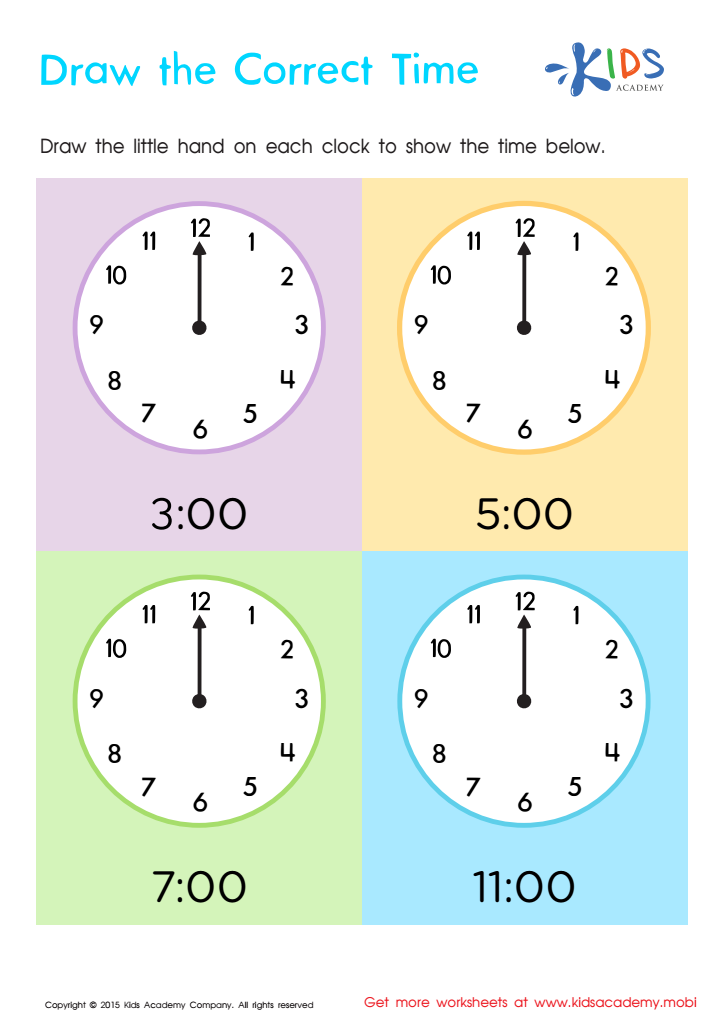
Telling The Time Worksheet: Part 1
Practice telling the time with Kids Academy. Our worksheets make it fun for kindergarteners to learn about clocks and reading the time. Find our free math worksheets on telling the time and draw the little hand on the clock faces to show the time. Let's learn together!
Telling The Time Worksheet: Part 1
Worksheet
Join Kids Academy for Free
Who is primarily going to use this learning content?


.jpg)

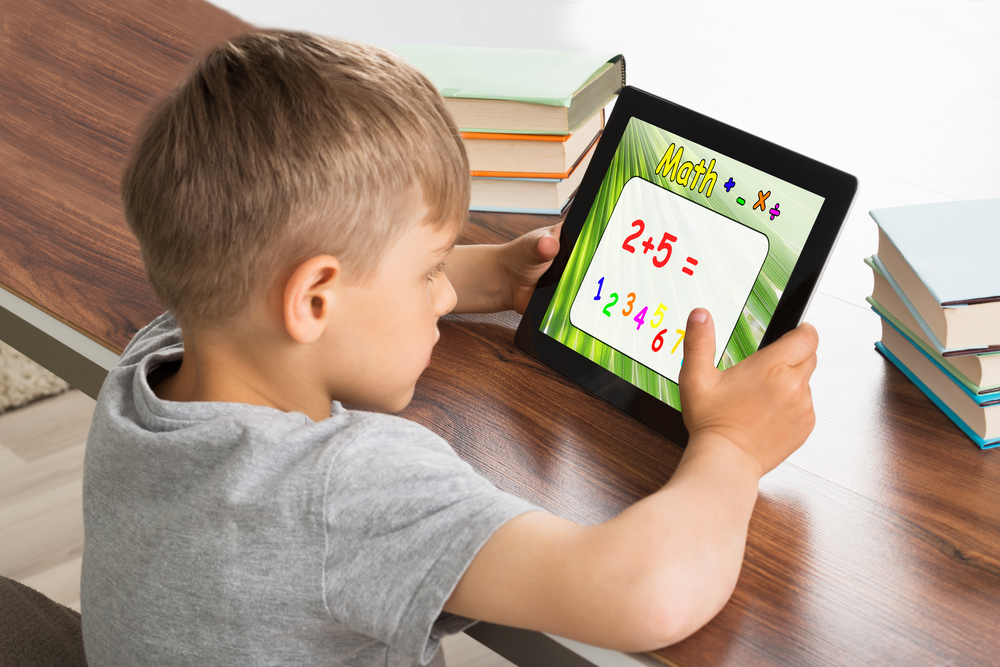



"Easy Time" for children aged 4-7 is crucial due to its role in healthy development. At this age, children are rapidly growing both physically and mentally, developing foundational skills that will support their future learning. Here's why parents and teachers should prioritize this:
-
Cognitive Development: During easy, unstructured playtime, children explore their creativity, problem-solving skills, and critical thinking. Activities like building blocks or simple puzzles stimulate brain function and help enhance cognitive abilities.
-
Emotional Growth: Easy time allows kids to express their emotions and practice self-regulation. It teaches them to handle frustration, develop patience, and build self-confidence as they achieve small tasks independently.
-
Social Skills: During easy time, children interact with peers in a relaxed environment, learning invaluable social skills like sharing, cooperation, communication, and empathy. These interactions set the groundwork for healthier relationships in future school and social settings.
-
Physical Health: Active play during easy time is essential for physical health. It helps in building motor skills, strength, and coordination. Whether it's running around at a park or engaging in imaginative play, children's physical well-being is greatly enhanced.
Investing time in easy time helps create a supportive space where children experience growth in a balanced way. It builds a strong foundation for academic success and personal well-being, making it indispensable for early childhood development.








