
Easy Skip Counting Worksheets for Ages 4-8
6 filtered results
Difficulty Level
Grade
Age
-
From - To
Subject
Activity
Standards
Introduce young learners to the joys of mathematics with our "Easy Skip Counting Worksheets for Ages 4-8." These engaging and thoughtfully designed printable worksheets make learning skip counting fun and accessible. Perfectly tailored for early learners, each worksheet helps children practice counting by 2s, 5s, 10s, and more, fostering their numerical fluency and pattern recognition. With vibrant illustrations and progressively challenging activities, these worksheets ensure kids stay motivated while grasping essential math concepts. Ideal for both classroom and home use, our skip counting worksheets are a great tool to build a strong mathematical foundation. Explore and download now to make learning number patterns enjoyable!
Favorites
With answer key
Interactive
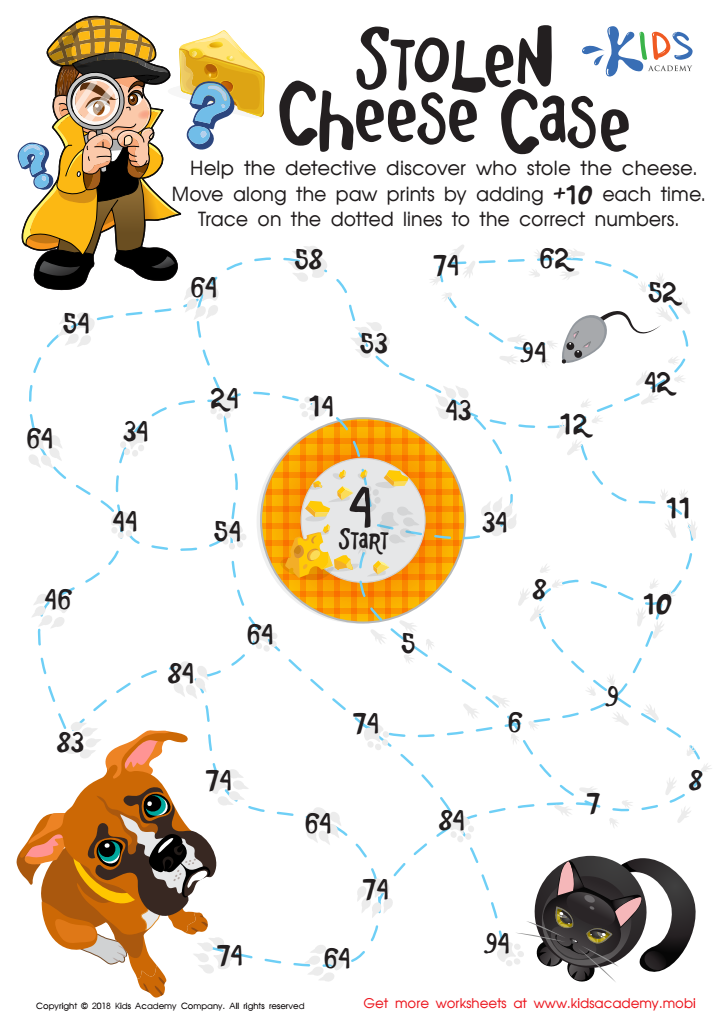
Stolen Cheese Case Maze Worksheet
Someone has stolen the cheese! Can your mathematician detective figure out who it is? Was it the dog, cat or mouse? Have them use traceable lines to skip count by 10 on this free PDF worksheet to solve the case. They'll be having fun and developing their skip-counting strategy at the same time!
 Assign to My Students
Stolen Cheese Case Maze Worksheet
Worksheet
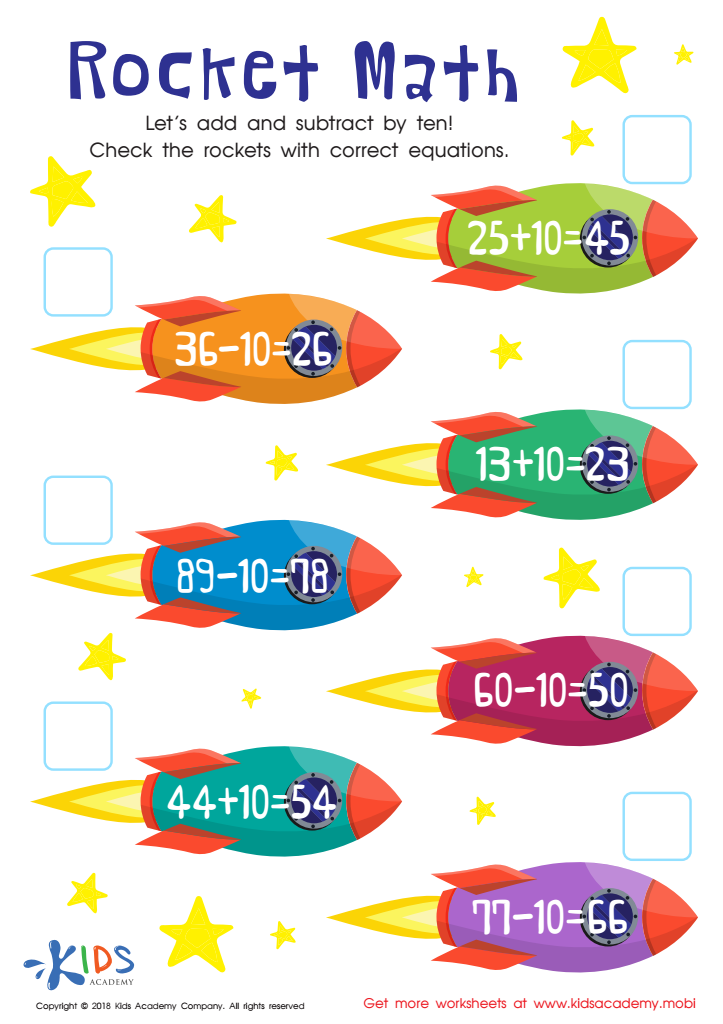
Rocket Math Worksheet
Your students will be math wizards in no time as they blast off on this exciting and colorful PDF worksheet. They'll use the 10s strategy to practice addition and subtraction, and they'll learn to skip count forwards and backwards. Keep them engaged and make learning fun!
Rocket Math Worksheet
Worksheet
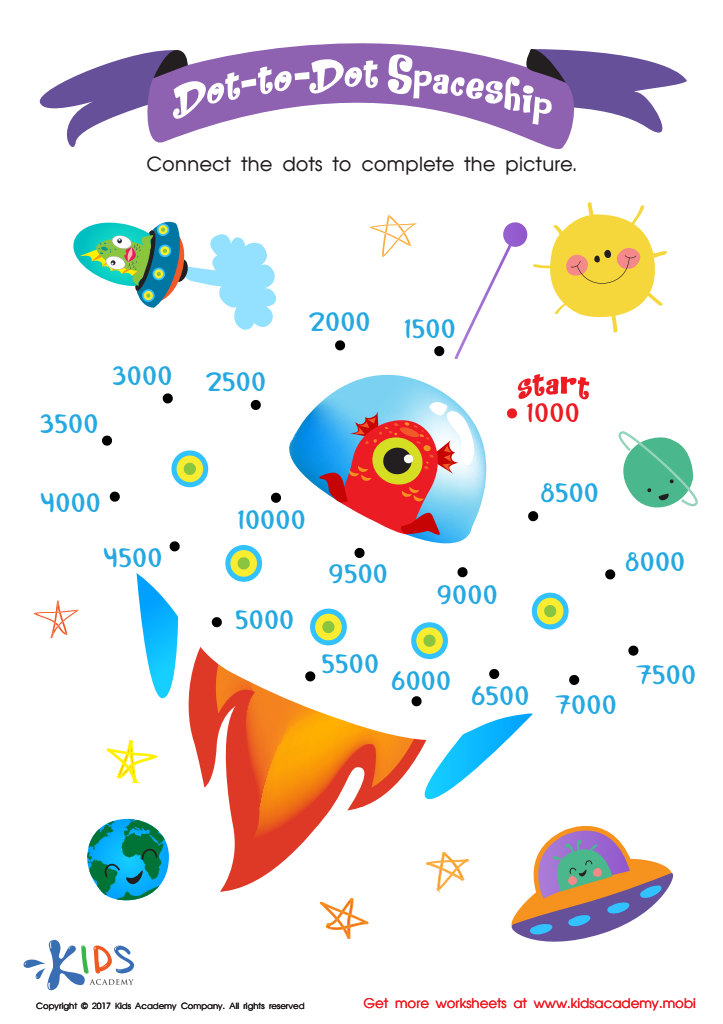
Dot to Dot Worksheet for 3rd Grade
Let your 3rd grader develop better number skills with this dot-to-dot worksheet! They can have fun outlining a spaceship as they skip count by 500 up to 10,000. It's a great way to boost their number sense and make learning more exciting.
Dot to Dot Worksheet for 3rd Grade
Worksheet
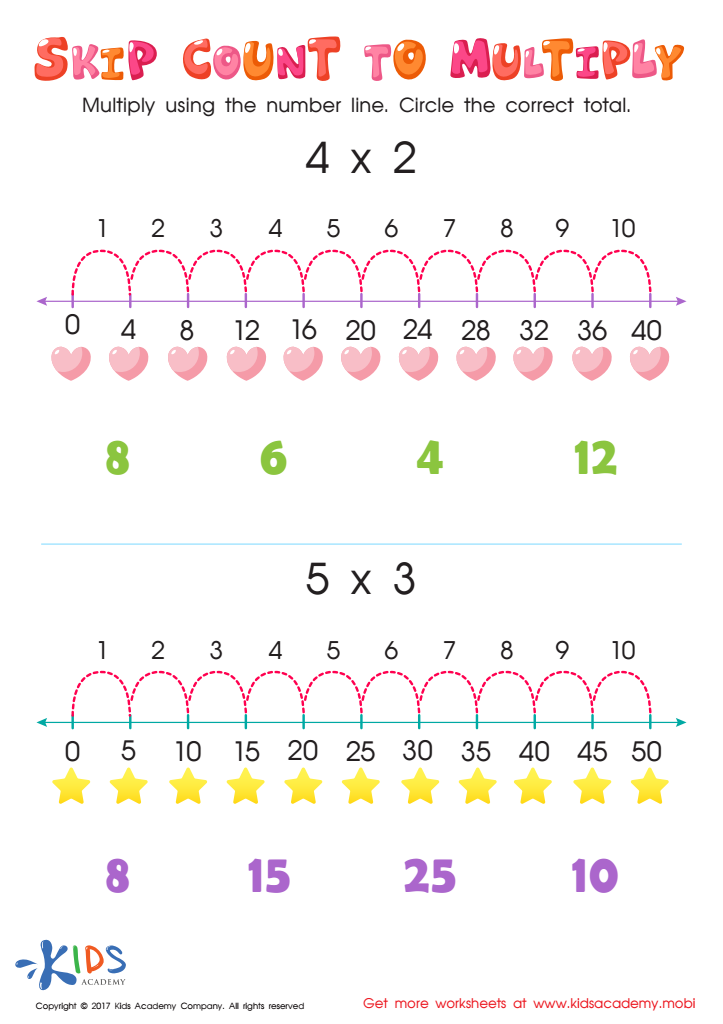
Skip Count Multiplication Worksheet
This colorful worksheet helps kids multiply by skip counting on a number line. Kids gain a better understanding of multiplication by seeing how the answer is calculated.
Skip Count Multiplication Worksheet
Worksheet
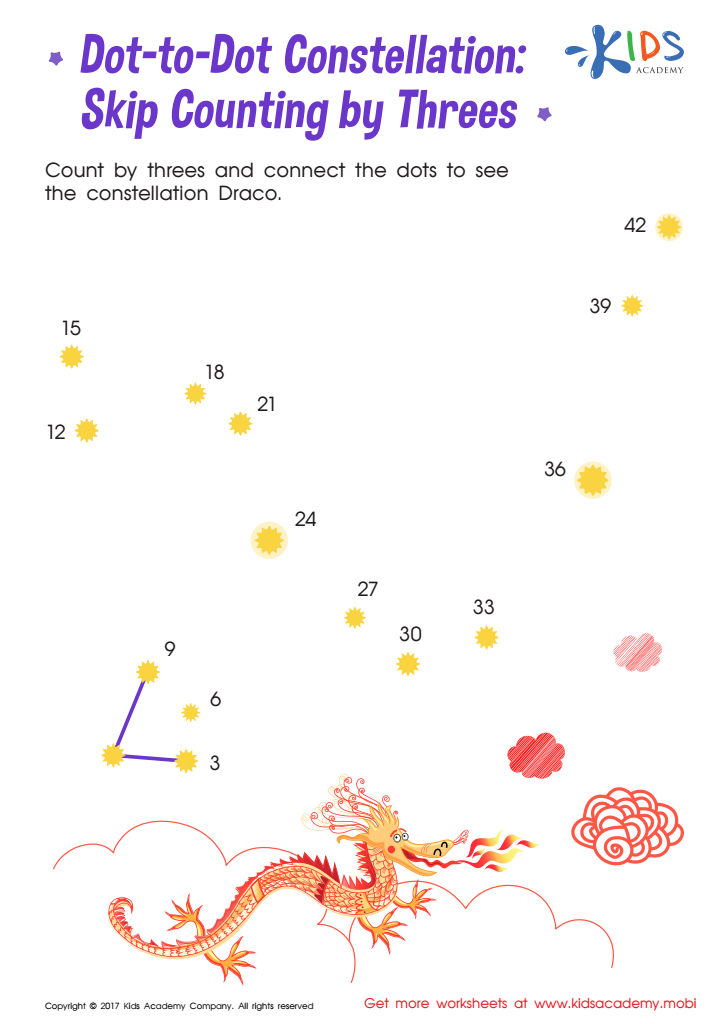
Skip Counting by 3s: Dot–to–Dot Constellation Printable
Worksheet
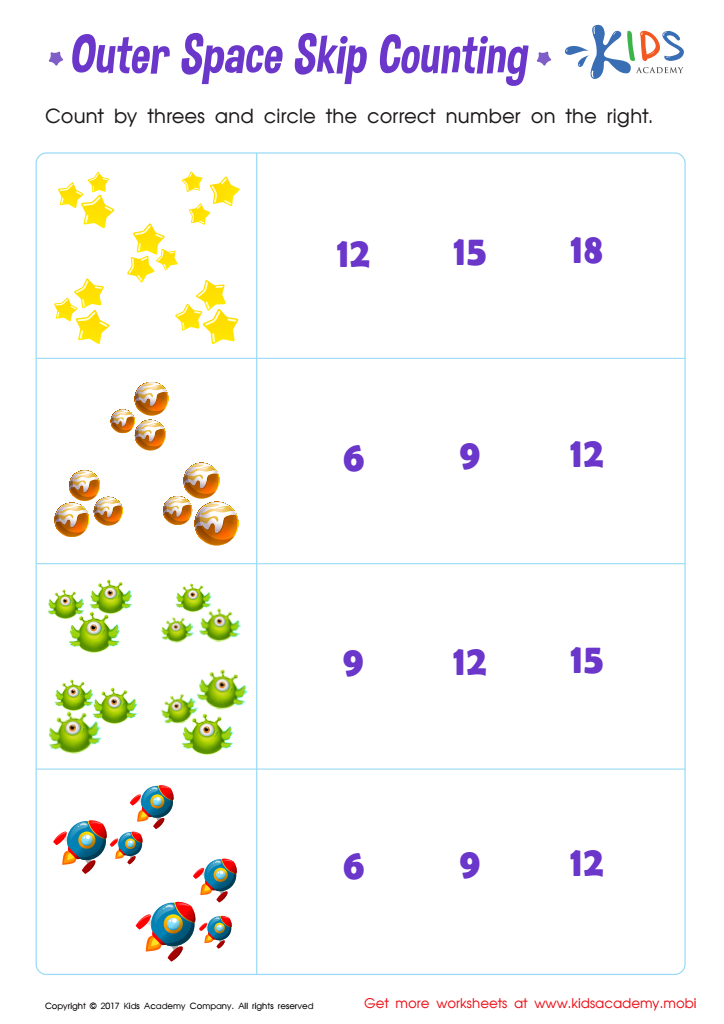
Skip Counting by 3s: Outer Space Skip Counting Printable
Want to set your child up for math success? Get them this printable worksheet that helps them practice counting in groups of 3’s, building a foundation for more advanced math skills. Skipping counting helps kids master logical reasoning and cognitive skills, making a connection between counting objects individually and in groups. The colorful images will keep them engaged and having fun - without realizing how hard they're working!
Skip Counting by 3s: Outer Space Skip Counting Printable
Worksheet
Join Kids Academy for Free
Who is primarily going to use this learning content?


.jpg)





Easy skip counting is an essential mathematical skill for children aged 4 to 8, and parents or teachers should prioritize its development for several reasons. First, skip counting lays the groundwork for understanding multiplication and division, which are fundamental arithmetic operations. When children practice skip counting by 2s, 5s, or 10s, they begin to recognize numerical patterns and relationships, making it easier for them to grasp the concepts of grouping and sharing that are central to multiplication and division.
Additionally, skip counting enhances number sense, helping children understand the magnitude of numbers and their positions in the number sequence. This enhanced number sense can improve their ability to solve mathematical problems and reason quantitatively in everyday situations.
Moreover, skip counting can make learning math more engaging and enjoyable. By incorporating songs, games, and visual aids, educators can create a dynamic learning environment that captures young learners' interest and encourages active participation. This can cultivate a positive attitude towards math from an early age, reducing anxiety and fostering a growth mindset.
In summary, focusing on easy skip counting for young children helps build essential numerical skills, strengthens conceptual understanding, and promotes a fun learning atmosphere, ultimately setting a solid foundation for future mathematical success.








