
Easy Sorting Worksheets for Ages 5-8
5 filtered results
Difficulty Level
Grade
Age
-
From - To
Subject
Activity
Standards
Discover our collection of Easy Sorting Worksheets designed specifically for children ages 5-8! These engaging and educational worksheets help young learners grasp fundamental sorting concepts through fun and interactive activities. From color and shape sorting to categorizing objects, these resources promote critical thinking and enhance fine motor skills. Perfect for at-home learning or classroom use, our worksheets encourage children to work independently while developing essential early math skills. Explore a variety of printable options that cater to different learning styles and boost your child’s confidence in sorting. Start their educational journey today with our exciting, easy-to-use sorting activities!
Favorites
With answer key
Interactive
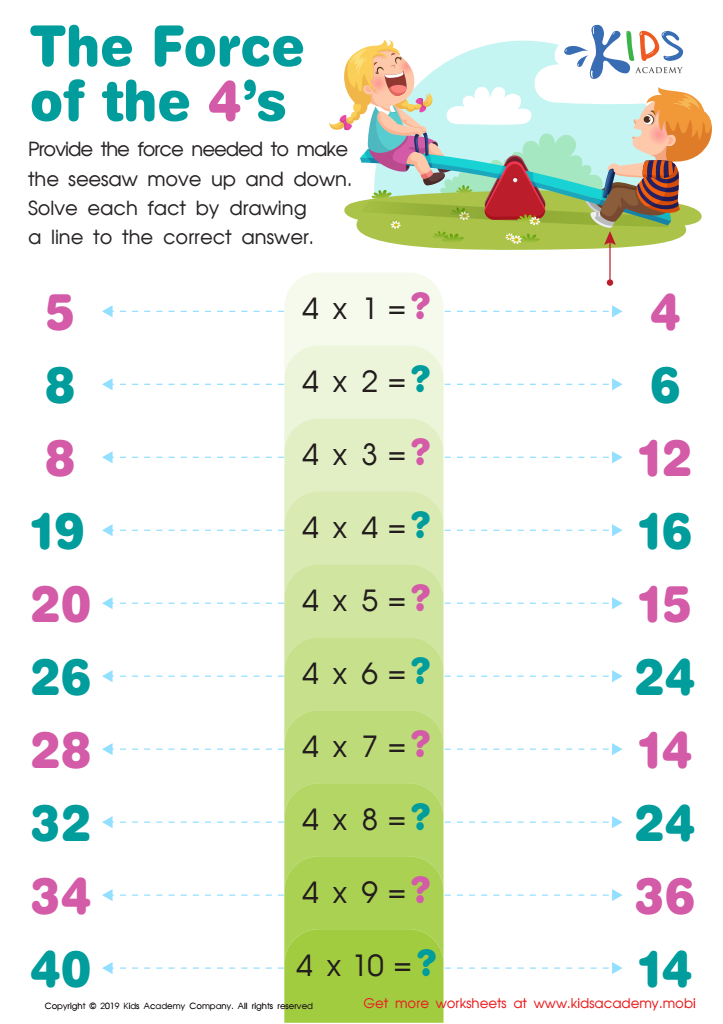
The Force of the 4's Worksheet
Ride a seesaw with your child and explore the physics behind it! Explain how it needs two people and how force makes it go up and down. Use the memories of the pleasurable experience to teach your kid a lesson in force. Show them how to solve the worksheet by drawing a line to the correct answer. This way, they'll learn the force needed for the seesaw to move.
 Assign to My Students
The Force of the 4's Worksheet
Worksheet
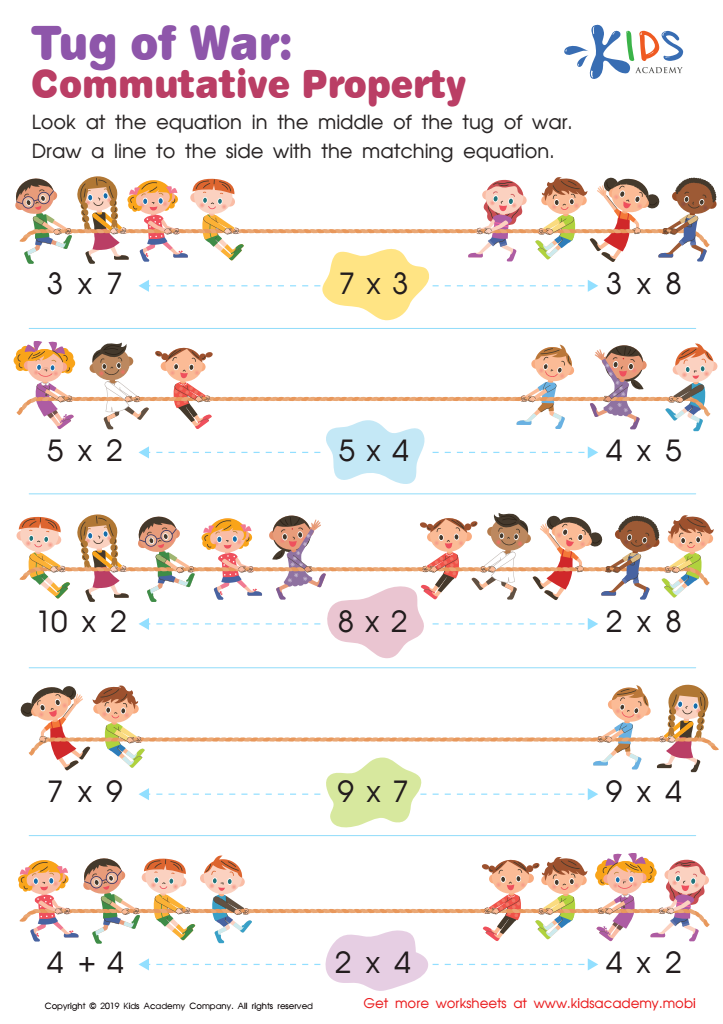
Tug of War: Commutative Property Worksheet
Tug of war is a great game to teach your child simple math. Explain the commutative property--it states that the product remains the same regardless of the order of factors. Use the equations in the middle of the worksheet and have your child draw a line to the corresponding equation. It's a fun and easy way to learn math.
Tug of War: Commutative Property Worksheet
Worksheet
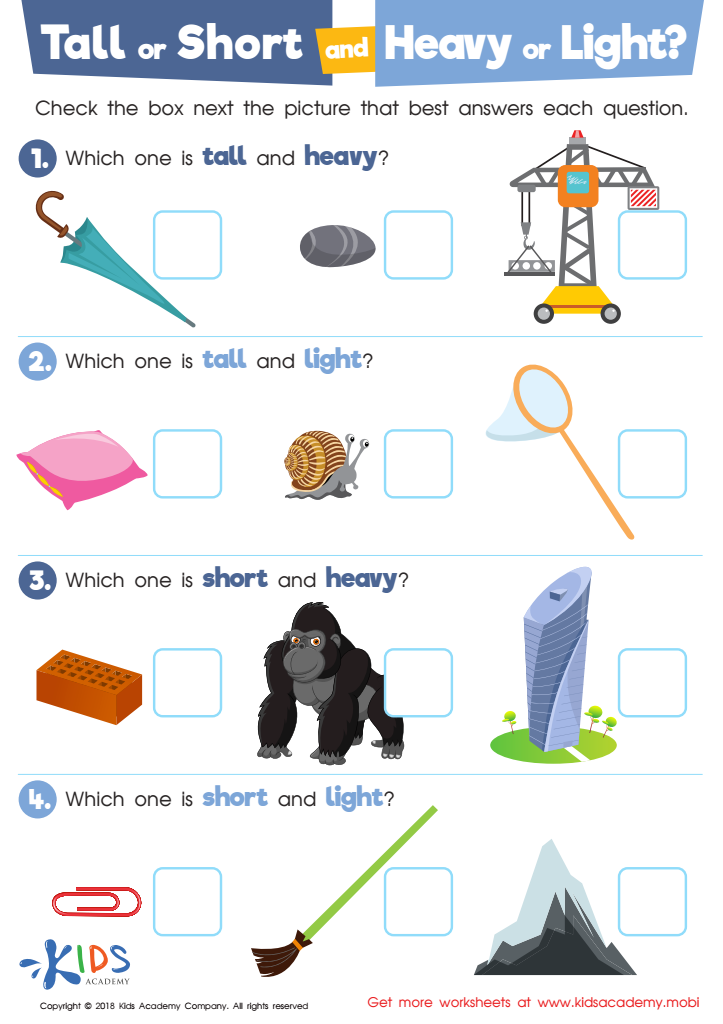
Tall or Short and Heavy or Light? Worksheet
Young children can find basic measurement concepts tricky. This PDF introduces them to the appropriate vocabulary for describing heavy, light, tall and short items, by using familiar pictures. It helps them accurately select which items fit each category.
Tall or Short and Heavy or Light? Worksheet
Worksheet
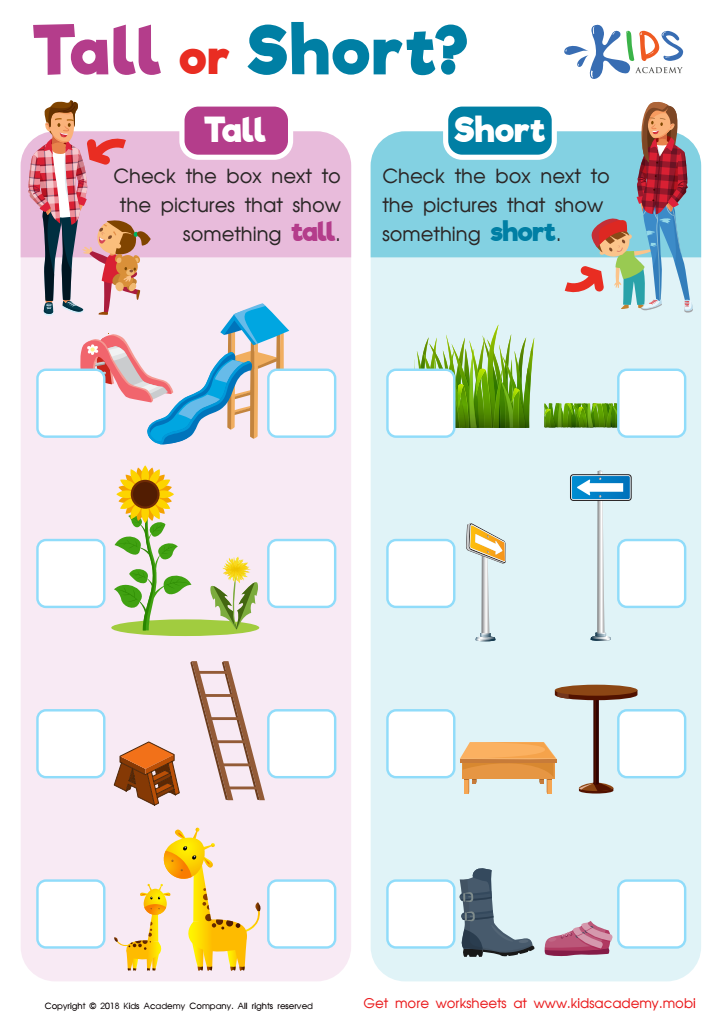
Tall or Short? Worksheet
Comparing tall and short objects is an early math skill. Our free worksheet uses fun colors and pictures to help kids practice. This will give them a head start for higher-level measurement skills, and they'll remember tangible objects for comparison.
Tall or Short? Worksheet
Worksheet
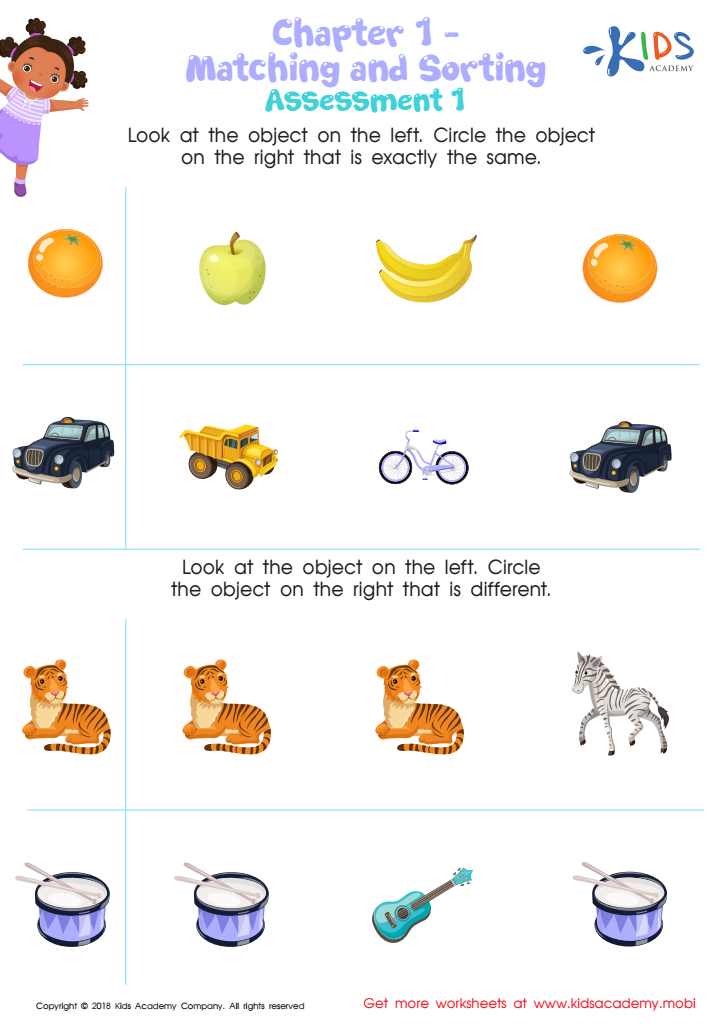
Matching and Sorting for Preschool: Assessment 1 Worksheet
Test your child's matching skills with this worksheet! Ask them to name each of the objects pictured, then circle the ones that are the same. Repeat for the second task. It's a great way to assess their skills and have fun at the same time!
Matching and Sorting for Preschool: Assessment 1 Worksheet
Worksheet
Join Kids Academy for Free
Who is primarily going to use this learning content?








Easy Sorting is a fundamental skill that significantly benefits children aged 5-8. This foundational concept involves organizing objects based on specific attributes, such as size, color, shape, or texture. By engaging in sorting activities, children enhance their cognitive development, critical thinking, and problem-solving skills.
Parents and teachers should prioritize Easy Sorting because it fosters early mathematical concepts. Sorting teaches children to recognize patterns and categorize information, which are essential skills for future mathematics and logical reasoning. Moreover, these activities promote social skills when children work in groups, encouraging cooperative play and communication.
Additionally, sorting improves fine motor skills as children manipulate various objects, enhancing hand-eye coordination. Such activities can also spark creativity and curiosity, as children explore different ways to categorize their surroundings, further cultivating an enthusiasm for learning.
Furthermore, Easy Sorting promotes confidence in decision-making. Children learn to justify their sorting choices, reinforcing their ability to think independently. For these reasons, parents and teachers should incorporate sorting games and activities into everyday learning, creating a rich educational environment that nurtures essential skills for lifelong success.








