Easy Skip Counting Worksheets for Ages 6-7
4 filtered results
-
From - To
Introducing our Easy Skip Counting worksheets, a must-have educational resource designed specifically for children aged 6-7. These worksheets are expertly crafted to make learning fun and engaging, providing a solid foundation in the fundamental skill of skip counting. With a mix of colorful illustrations and interactive activities, children will enjoy the process of mastering counting by 2s, 5s, and 10s. Perfect for young learners, our Easy Skip Counting worksheets are tailored to enhance mathematical understanding and confidence in a child-friendly format. Unlock your child's potential and make math learning a delightful experience with our Easy Skip Counting for Ages 6-7 worksheets.
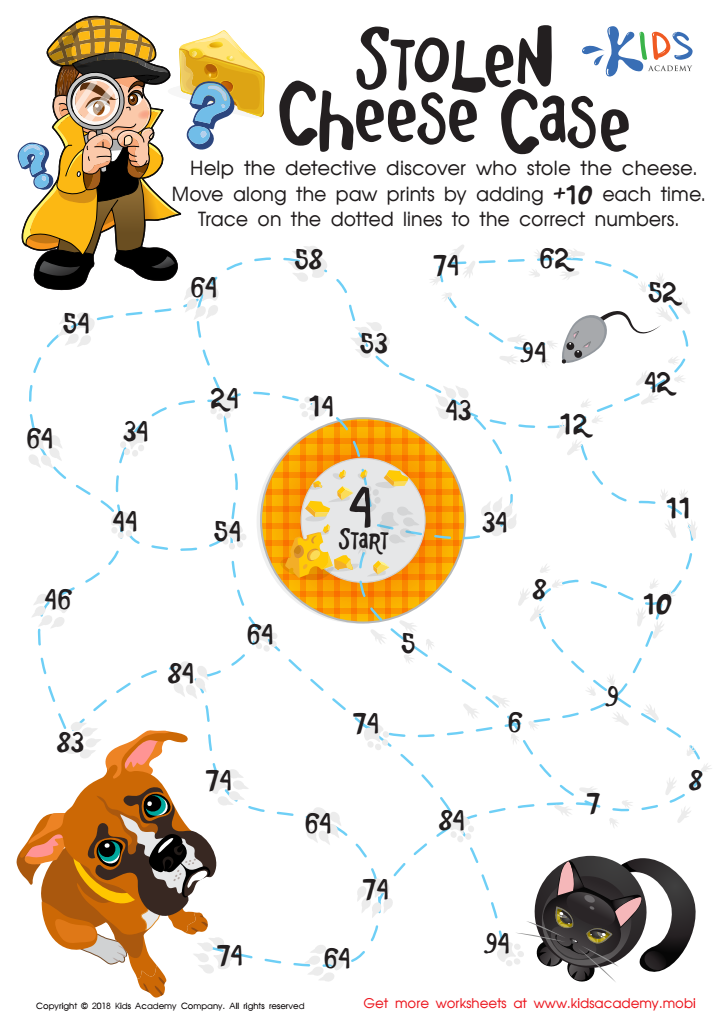
Stolen Cheese Case Maze Worksheet
 Assign to My Students
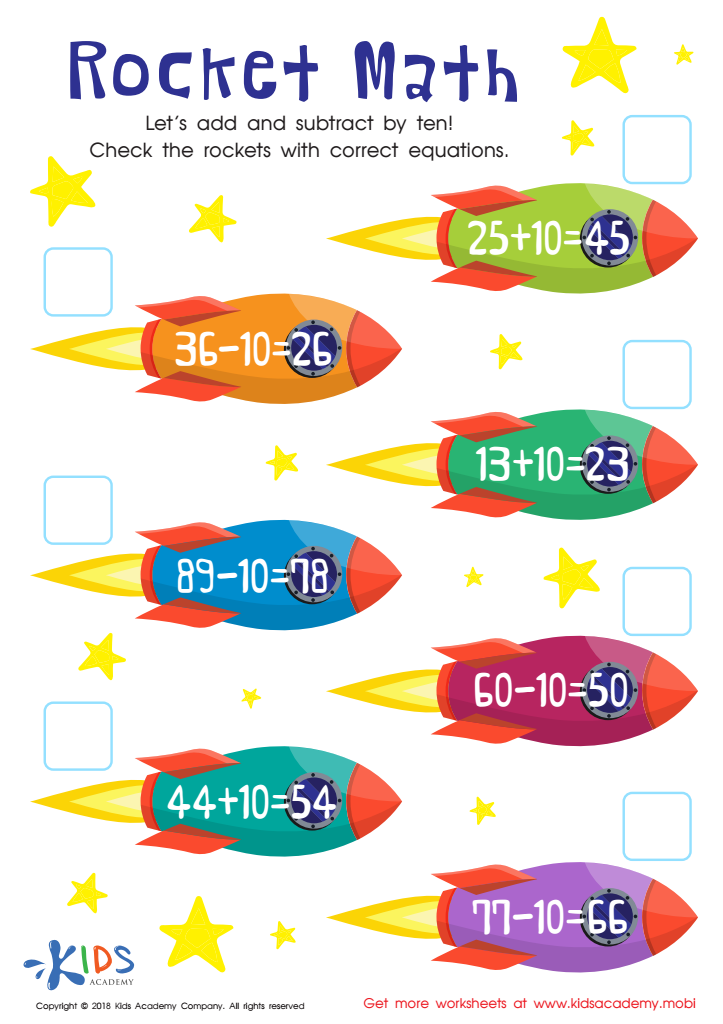
Rocket Math Worksheet
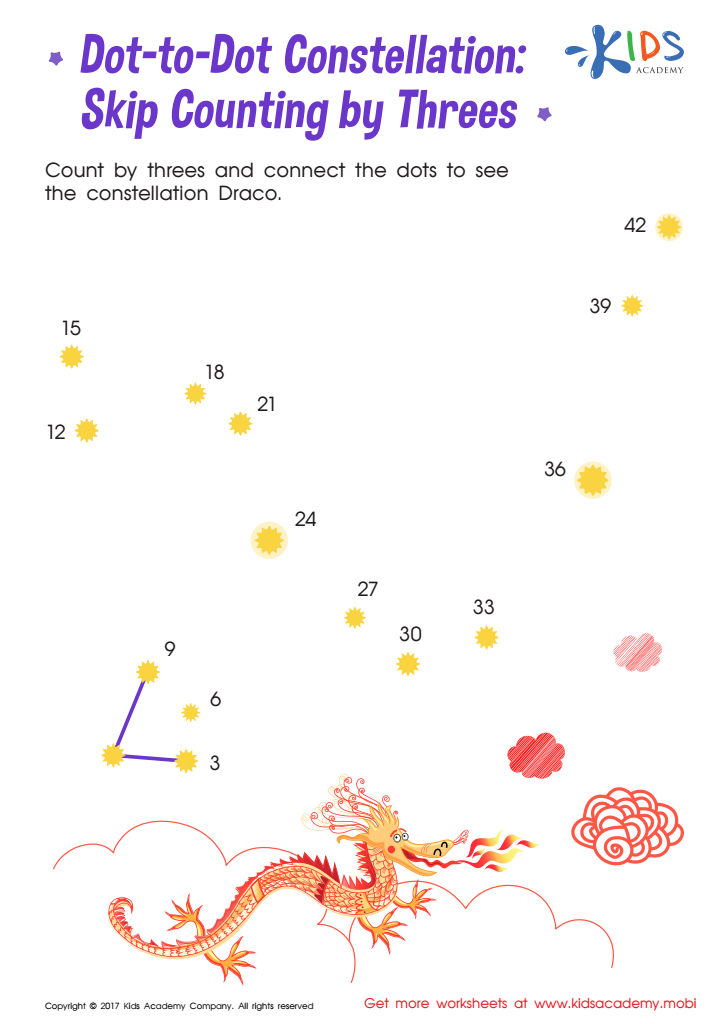
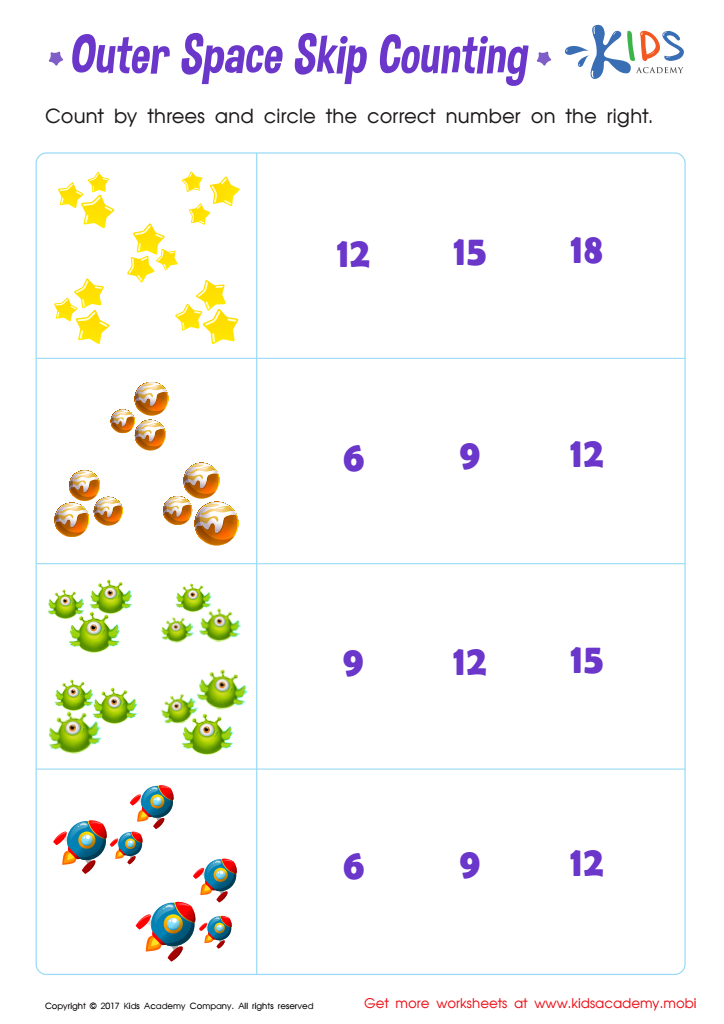
Skip Counting by 3s: Outer Space Skip Counting Printable







%20(1).jpg)
Easy Skip Counting worksheets for Ages 6-7 provide a fundamental stepping stone towards mastering basic arithmetic and numerical fluency. At this critical developmental stage, children are expanding their understanding of numbers and beginning to explore more complex mathematical concepts. Skip counting, which involves counting forward or backward by numbers other than one, is an essential skill that supports this growth.
For children aged 6-7, Easy Skip Counting worksheets make learning engaging and accessible. These worksheets are designed to reinforce counting by 2s, 5s, and 10s through a variety of playful and visually appealing activities. By integrating fun tasks, such as connecting dots, coloring sequences, and solving simple puzzles, children are more likely to stay interested and motivated.
The practical benefits of mastering skip counting are substantial. It lays the groundwork for higher-level math skills, including multiplication and division, and enhances problem-solving abilities. Additionally, these worksheets help improve memory and concentration, as children must remember sequences and patterns.
Moreover, Easy Skip Counting worksheets for Ages 6-7 are tailored to match the cognitive and motor skills of young learners. They provide just the right level of challenge to stimulate learning without causing frustration. Through repeated practice, children gain confidence in their mathematical abilities, setting a positive foundation for their future educational journey.








